• العربية
  • فارسی
Brand
  • Iran Insight
  • Politics
  • Economy
  • Analysis
  • Special Report
  • Opinion
  • Podcast
  • Iran Insight
  • Politics
  • Economy
  • Analysis
  • Special Report
  • Opinion
  • Podcast
  • Theme
  • Language
    • العربية
    • فارسی
  • Iran Insight
  • Politics
  • Economy
  • Analysis
  • Special Report
  • Opinion
  • Podcast
All rights reserved for Volant Media UK Limited
volant media logo
INSIGHT

Can Iran rebuild ties with Arab neighbours without a US deal?

Behrouz Turani
Behrouz Turani

Iran International

Jun 20, 2026, 04:55 GMT+1
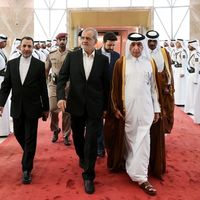
Iranian President Masoud Pezeshkian is welcomed by Qatari officials upon his arrival at Doha's airport, in Doha, Qatar, October 2, 2024.

The recent war between Iran and the United States has left Tehran facing a diplomatic challenge that extends well beyond Washington: rebuilding trust with Arab neighbors unsettled by weeks of regional instability.

Former ambassador Mohammad Irani argues that effort will depend largely on the success of negotiations between Tehran and Washington.

Speaking to Shargh on Thursday, June 18, Irani said that "the restoration of Iran's damaged relations with its Arab neighbors is directly contingent upon the success and final quality of the broader Tehran-Washington agreement."

He argued that with hostilities paused and a tentative memorandum of understanding now on the table, "Iran must adopt an optimistic and rational diplomatic approach to break out of political and economic isolation."

Iran cannot repair relations with Arab and regional neighbors "in a vacuum," he said, insisting that regional diplomacy is inseparable from the outcome of negotiations with Washington.

His comments reflect a broader theme across Iran's press, where discussions of relations with Persian Gulf states have become increasingly tied to post-war diplomacy and the emerging Tehran-Washington understanding.

A recurring argument is that the conflict exposed the vulnerability of Iran's Arab neighbors and reinforced their interest in a durable understanding between Tehran and Washington. Many voices in Tehran argue that regional states now view a sustainable agreement as the best guarantee of their own economic and technological stability.

Irani also argued that a lasting regional order cannot be imported or built through symbolic agreements alone, as smaller states remain engaged in a constant balancing act between larger regional powers, particularly Iran and Saudi Arabia.

Many commentators have likewise suggested that Persian Gulf states are reassessing their security doctrines in the aftermath of the war, particularly regarding Israel's growing strategic and technological footprint across the region.

Several outlets, including Etemad, ISNA and Eghtesad News, have argued that Iran's long-term place in the regional order will ultimately depend on the fate of the nuclear file and the broader understanding taking shape between Tehran and Washington.

At the same time, analysts warn that if the current 60-day negotiation window fails to produce a more permanent framework, Iran's Arab neighbors are likely to deepen security, cybersecurity and defense partnerships with Western and other global powers, further marginalizing Tehran.

For the talks to succeed, Irani argued, the negotiating team needs strong domestic backing to convert wartime resilience into peacetime development.

"The negotiating team must feel that it enjoys the support of the nation," he said. "We must show that the steadfastness and resistance shown during recent conflicts is now gradually bearing fruit."

Ultimately, he concluded, a durable homegrown security framework will remain elusive as long as Persian Gulf states prioritize regime survival over collective security and fundamental disparities in regional power remain unresolved.

Most Viewed

Tehran's familiar battle lines return over deal with US
1
INSIGHT

Tehran's familiar battle lines return over deal with US

2

Khamenei shifts responsibility for MoU as Iran, US implement Hormuz terms

3

US says Iran deal will end enrichment, destroy uranium stocks, cap missiles

4
ANALYSIS

Why some think a weakened Iran could emerge stronger

5
ANALYSIS

A fragile compact: ambiguities that could undermine US-Iran MoU

Banner
Banner
Banner

Spotlight

  • Can Iran rebuild ties with Arab neighbours without a US deal?
    INSIGHT

    Can Iran rebuild ties with Arab neighbours without a US deal?

  • Tehran divided over what Khamenei MoU message really meant
    INSIGHT

    Tehran divided over what Khamenei MoU message really meant

  • Trump says Iran is 'finished', experts say Tehran won big
    PODCAST

    Trump says Iran is 'finished', experts say Tehran won big

  • A US-Iran deal alone won't rescue Iran's oil economy
    ANALYSIS

    A US-Iran deal alone won't rescue Iran's oil economy

  • Iran's Qatar power link exposes a deeper energy dilemma
    ANALYSIS

    Iran's Qatar power link exposes a deeper energy dilemma

  • A fragile compact: ambiguities that could undermine US-Iran MoU
    ANALYSIS

    A fragile compact: ambiguities that could undermine US-Iran MoU

•
•
•

More Stories

Tehran divided over what Khamenei MoU message really meant

Jun 20, 2026, 02:58 GMT+1
Tehran divided over what Khamenei MoU message really meant
100%

A message attributed to Iran’s Supreme Leader suggesting he had reservations about the agreement with the United States has sparked a fierce debate in Tehran, with hardliners and moderates offering sharply different interpretations of its meaning and implications.

Supporters of the government presented it as a roadmap for the next phase of diplomacy, while critics argued it showed the leader’s preferred approach had been sidelined during negotiations.

Hardline media outlets and political figures offered a starkly different reading, arguing that the message showed the leader’s views had not been fully reflected in the negotiation process.

Read the full article here.

Tehran divided over what Khamenei MoU message really meant

Jun 20, 2026, 01:09 GMT+1
•
Maryam Sinaiee
Tehran divided over what Khamenei MoU message really meant
100%
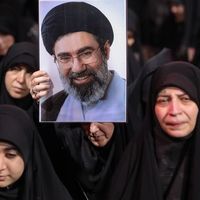
Women attend a Muharram mourning ceremony while holding a portrait of Iran's Supreme Leader Mojtaba Khamenei, Tehran, June 16, 2026

A message attributed to Iran’s Supreme Leader suggesting he had reservations about the agreement with the United States has sparked a fierce debate in Tehran, with hardliners and moderates offering sharply different interpretations of its meaning and implications.

According to the message, Mojtaba Khamenei had "a different view in principle" regarding the memorandum but approved it after receiving assurances from the Supreme National Security Council (SNSC) and its chairman, President Masoud Pezeshkian, that Iran’s rights and the interests of the "Axis of Resistance" would be safeguarded.

The statement quickly produced competing narratives. Supporters of the government presented it as a roadmap for the next phase of diplomacy, while critics argued it showed the leader’s preferred approach had been sidelined during negotiations.

Pezeshkian said the message had "clarified the responsibility of all influential components in the upcoming negotiation process."

Parliament Speaker and lead negotiator Mohammad Bagher Ghalibaf said it strengthened Tehran’s hand in holding Washington to its commitments under the memorandum.

Leader ‘ignored’

Hardline media outlets and political figures offered a starkly different reading, arguing that the message showed the leader’s views had not been fully reflected in the negotiation process.

The conservative website Raja News described Pezeshkian’s response as disrespectful, writing: "Mr. Pezeshkian, your duty is obedience and compliance, not merely consideration."

The outlet also criticized Ghalibaf’s comments, arguing that he appeared to treat the leader’s conditions as negotiating leverage rather than binding red lines.

"It seems he has forgotten that the leader’s red lines are not bargaining tools in negotiations but mandatory boundaries by which his future performance will be judged," the website wrote.

Mohsen Maghsoudi, writing for Fars News Agency, argued that opponents of negotiations had effectively been vindicated because their position had been aligned with that of the leader.

He claimed that "the compromise camp" had made decisions on behalf of both society and officials and that "the principled view of the Guardian Jurist was not followed."

Kian Abdollahi, editor-in-chief of IRGC-linked Tasnim News Agency, wrote that if officials advanced the memorandum despite knowing the leader held a different view, they bore responsibility for the consequences.

Competing narratives

Analysts offered sharply different interpretations of the political significance of the message.

Political analyst Ruhollah Rahimpour argued that Khamenei was seeking to reassure hardliners that he had not abandoned his previous positions and had accepted the agreement only because of state interests and the guarantees he received.

"But this manner of expression unintentionally reveals a reality," he wrote.

"The agreement is so costly and controversial for part of the power structure that the leader of the Islamic Republic felt compelled to clear himself of blame before defending it."

Political analyst Shahir Shahid Saless argued that the statement implicitly acknowledged direct negotiations with Washington, noting that the reference to "future face-to-face talks" amounted to recognition of direct engagement with the United States.

Historian and commentator Abdollah Shahbazi argued that the message would increase pressure on Ghalibaf, Pezeshkian and Foreign Minister Abbas Araghchi from opponents of the memorandum.

He also compared the statement to former leader Ali Khamenei’s habit of maintaining distance from controversial decisions while allowing them to proceed.

The 'poisoned chalice'

The debate quickly spread to social media, where some users compared the statement to Ayatollah Ruhollah Khomeini’s acceptance of the ceasefire that ended the Iran-Iraq War.

But while Khomeini openly accepted responsibility for the decision, famously describing it as "drinking a chalice of poison," critics argued Mojtaba Khamenei’s message emphasized his reservations before endorsing the agreement.

Moderate commentators rejected suggestions that the leader was attempting to distance himself from the memorandum.

Ahmad Zeidabadi argued that relations between the president and the leader remained "close and based on mutual trust."

He said the emphasis on the role of the president and the SNSC amounted to an expression of confidence in Pezeshkian and a reminder of the presidency’s importance as the second-highest office in the political system.

Seraj Mirdamadi similarly argued that the statement reflected trust in an elected official rather than an attempt to shift responsibility, describing it as "democratic and encouraging."

The dispute is ultimately about more than the wording of a single statement. It reflects an emerging struggle over ownership of the memorandum itself.

With talks set to enter a new phase, that battle over credit and blame may prove almost as consequential as the negotiations themselves.

Trump says Iran is 'finished', experts say Tehran won big

Jun 19, 2026, 22:02 GMT+1
•
Negar Mojtahedi
Trump says Iran is 'finished', experts say Tehran won big
100%
A crowd of mourners gather in Tehran as part of annual Muharram ceremonies to mark the death of the Shi'ite's third Imam, June 19, 2026

US President Donald Trump is defending the newly signed US-Iran Memorandum of Understanding as a diplomatic victory, insisting Iran has been weakened by months of conflict and entered negotiations out of desperation.

But some Iran experts argue the agreement risks delivering significant concessions to Tehran while leaving key disputes unresolved.

David Schenker, former US Assistant Secretary of State for Near Eastern Affairs, told Eye for Iran he was surprised by the scope of benefits Iran could receive under the agreement.

"I don't feel good about it," Schenker said.

The MOU outlines a 60-day negotiation period during which the future of Iran's nuclear program, sanctions relief, frozen Iranian assets, reconstruction funding and the administration of the Strait of Hormuz will be discussed.

According to Schenker, the agreement effectively gives Tehran major economic benefits upfront while postponing the most difficult negotiations.

"In the meanwhile, it's a tremendous win for Iran," he said.

Lebanon's role in the deal

One of the most controversial aspects of the agreement centers on Lebanon.

Earlier this month, Iran launched direct missile attacks on Israel after Israeli strikes targeted Hezbollah positions in Beirut's southern suburbs. The exchange marked a significant shift in Tehran's approach.

For decades, Iran largely relied on proxy groups such as Hezbollah and Hamas to confront Israel. This time, Iranian officials openly linked attacks on Hezbollah to direct Iranian retaliation against Israel. Many Iran experts warned the Trump administration against tying Lebanon to the Iran conflict.

Iranian leaders subsequently insisted that any broader ceasefire arrangement must also address Lebanon.

Foreign Minister Abbas Araghchi warned that negotiations could not move forward unless fighting in Lebanon ended, while other Iranian officials described Lebanon as being at the "forefront" of discussions with Washington.

Israeli Prime Minister Benjamin Netanyahu rejected what he described as Iran's attempt to impose a "new equation" in which attacks on Hezbollah would trigger direct Iranian military action.

  • Tit-for-tat under ceasefire: Experts warn of new normal in Mideast conflict

    Tit-for-tat under ceasefire: Experts warn of new normal in Mideast conflict

Schenker believes elements of that equation may now be reflected in the MOU.

"I think first and foremost it suggests that the administration wanted a deal more than Iran, so it was willing to make concessions," he said.

According to Schenker, the agreement risks strengthening Iran's regional influence despite the military setbacks it suffered during the conflict.

"They're going to point to this and say, 'Look, Iran and Hezbollah protected Lebanon,'" he said.

He argued that such a narrative could undermine Lebanon's elected government while boosting Iran's standing among Hezbollah supporters.

For Schenker, the precedent may prove as significant as any sanctions relief.

"If Iran can insulate not only Hezbollah but also its other regional partners from retaliation, it strengthens this proxy network across the region," he said.

Concerns over sanctions relief

Schenker also questioned provisions that could lead to the lifting of oil sanctions and the release of frozen Iranian assets.

"They're doing the lifting of the oil sanctions upfront," he said, warning that the move could provide billions of dollars in revenue to Tehran.

The former diplomat said several of the original objectives Washington and Israel cited at the outset of the conflict appear absent from the current framework, including limits on Iran's ballistic missile program and support for regional proxy groups.

He also raised concerns over language that could eventually allow Iran to collect fees related to maritime traffic through the Strait of Hormuz.

"It's something out of a mafia movie," Schenker said. "Iran is offering protection and will shake down international shipping."

  • German national’s body returned after death in Iran prison, daughter told

    German national’s body returned after death in Iran prison, daughter told

The Iranian perspective

While much of the debate surrounding the MOU has focused on geopolitics, oil markets and regional security, some opponents of the Islamic Republic are viewing the agreement through a different lens.

For human rights activist Gazelle Sharmahd, whose father Jamshid Sharmahd was abducted and later executed by Iranian authorities, the announcement felt deeply personal.

"Defeat," she said when asked how she reacted to news of the agreement.

"I think a lot of people feel betrayed."

Sharmahd said many Iranians had believed sustained military and economic pressure had brought the Islamic Republic to one of its weakest moments in decades.

"We had the regime on its knees," she said. "How do we go from there to giving this regime the resources, the power, the legitimacy to build up everything that we took away from them?"

She warned that sanctions relief and new funding could strengthen the state's ability to suppress dissent inside Iran.

"The execution wave will not go down," she said. "In history, we see it goes up when we appease this regime."

Message to Trump

Sharmahd reserved some of her strongest comments for Trump himself.

Speaking directly to the US president, she urged him not to abandon pressure on Tehran.

"Capitulation will not save us. It will be our end," she said.

"You have an army of Iranians. You have an army of American patriots. You have an army in the Middle East standing behind you."

She argued that any future agreement should prioritize the aspirations of ordinary Iranians rather than the interests of the government in Tehran.

"Speak to us," she said. "Not to this regime."

As negotiations move forward, the debate over the MOU is likely to intensify.

For supporters, the agreement offers a pathway away from another costly regional war. For critics, it risks rewarding Tehran while leaving unresolved many of the issues that helped trigger the conflict in the first place.

You can watch Eye for Iran on YouTube or Subscribe and listen on any podcast platform

Who in Tehran is opposing a deal with Washington?

Jun 19, 2026, 12:11 GMT+1

A message attributed to Iran's Supreme Leader Mojtaba Khamenei and the swift reactions from President Masoud Pezeshkian and chief negotiator Mohammad Bagher Ghalibaf highlighted the uneasy coalition behind the agreement with the United States and the lingering doubts about it.

The intervention comes after weeks of criticism from hardline media outlets, clerics and political factions that viewed the agreement as a dangerous concession to Washington.

While the ultraconservative Paydari Party is often portrayed as the main opponent of rapprochement with the United States, recent debate in Iran has highlighted a broader network of political, media and ideological actors resisting a Tehran-Washington understanding.

In a message issued after the signing of the memorandum, Mojtaba Khamenei warned that actions creating “pessimism among the people” effectively serve the enemy, language widely interpreted as a rebuke to hardline critics of the agreement.

Both Pezeshkian and Ghalibaf quickly issued statements pledging to follow the leader's guidance and defend the negotiating process.

The apparent effort to impose discipline on the debate has coincided with growing scrutiny of those opposing diplomacy.

Continue reading...

Iran's Qatar power link exposes a deeper energy dilemma

Jun 19, 2026, 11:46 GMT+1
•
Umud Shokri
Iran's Qatar power link exposes a deeper energy dilemma
100%
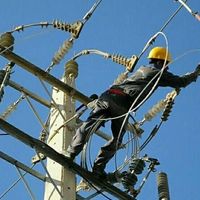
A technician works on high-voltage transmission equipment at an electricity substation in Iran.

Iran's plan to connect its electricity grid to Qatar highlights a growing paradox at the heart of the country's energy strategy: even as Tehran seeks a larger regional role through cross-border energy diplomacy, it faces one of the worst domestic power shortages in decades.

On June 16, Energy Minister Abbas Aliabadi announced that studies for a power-grid connection between Iran and Qatar were nearing completion and that implementation was beginning.

The project revives a 2022 memorandum of understanding signed during President Ebrahim Raisi's visit to Doha, which envisaged electricity exchanges of up to 1,000 megawatts through a subsea link.

The announcement comes as Iran grapples with a deepening electricity crisis, sanctions pressure and vulnerabilities exposed by recent conflict involving Iran, Israel and the United States.

Energy diplomacy under pressure

The proposed interconnection is more than a technical project.

If completed, it could allow electricity to flow in either direction during periods of peak demand or disruption. Qatar's gas-fired generation could help support Iran during shortages, while Tehran could seek to export power when domestic demand is lower.

More broadly, the project reflects Iran's effort to deepen economic ties with Gulf neighbours and reduce its regional isolation. Qatar has long maintained relations with Iran, the United States and other Gulf states while playing a recurring mediating role in regional diplomacy.

For Tehran, electricity trade offers revenue, political leverage and a way to project itself as a regional energy actor despite sanctions and mounting domestic constraints.

The project could also serve as a modest step toward wider Gulf electricity integration. Linking Iran to the GCC Interconnection Authority network would remain politically and technically difficult, but the Qatar connection would mark one of the few tangible efforts in recent years to expand energy cooperation across a region long divided by geopolitical rivalries.

Yet Iran's own power shortages raise questions about how realistic those ambitions are.

A worsening power crisis

Iran's electricity system faces mounting strain from years of underinvestment, aging infrastructure, sanctions, inefficient consumption, fuel constraints and drought-related pressure on hydropower generation.

Although installed generation capacity appears substantial on paper, actual available supply is often significantly lower because of plant outages, fuel shortages, declining efficiency and transmission losses.

The situation becomes especially acute during the summer, when air conditioning, industrial demand and urban consumption push the grid beyond available capacity.

Iran's parliamentary research center has warned that the country could face a summer electricity deficit of around 13,640 megawatts, equivalent to roughly 17% of projected peak demand.

Blackouts, industrial shutdowns and disruptions to public services have become increasingly common.

This context helps explain why the Qatar project matters. While Iranian officials often present such initiatives as evidence of the country's emergence as a regional energy hub, the interconnection may be just as important as a potential source of imported electricity during periods of domestic stress.

Without major investment in generation, transmission and fuel supply, the project could ultimately expose Iran's dependence on its neighbours rather than demonstrate export strength.

Iran has relatively few options for addressing the crisis quickly. Sanctions continue to restrict access to modern turbines, grid equipment, financing and foreign expertise, while meaningful electricity-price reforms remain politically sensitive. Expanding renewable energy would help, but doing so requires investment, storage capacity and transmission upgrades that cannot be deployed overnight.

Regional electricity trade is therefore one of the few tools available to Tehran in the short term.

The shadow of war

Recent conflict has further highlighted Iran's energy vulnerabilities.

Strikes on infrastructure linked to South Pars, the giant gas field that underpins much of Iran's electricity generation, underscored how disruptions to gas production can quickly affect power supplies.

The conflict also exposed broader risks facing Gulf energy systems. Iranian attacks on facilities linked to Qatar's energy sector demonstrated how regional infrastructure could become vulnerable during periods of military escalation.

As a result, the proposed interconnection carries both economic and strategic significance. It could strengthen resilience and create incentives for cooperation, but it would also add another piece of critical infrastructure exposed to future crises.

Opportunities and limits

An Iran-Qatar electricity link could provide benefits for both countries.

Cross-border interconnections can improve grid stability, reduce reserve requirements and provide emergency support during disruptions. Over time, they may also help integrate renewable energy by balancing supply across larger networks.

The technical challenges are significant but manageable. A subsea high-voltage connection would require substantial investment, converter stations, cybersecurity protections and close operational coordination.

The larger obstacles may be political and financial.

US sanctions could deter banks, insurers and international engineering firms from participating in Iran-linked infrastructure projects. Broader Gulf integration would face additional political hurdles after years of regional tension.

Outlook

The Qatar interconnection ultimately reveals as much about Iran's domestic weaknesses as its regional ambitions.

Faced with sanctions, underinvestment and a worsening electricity crisis, Tehran has increasingly turned to energy diplomacy, regional trade and cross-border infrastructure as tools for managing pressure at home.

The project could strengthen Iran-Qatar ties, improve energy resilience and create a modest opening toward wider regional cooperation.

But its significance lies less in the electricity it may eventually carry than in what it reveals about Iran's broader predicament: a country seeking regional influence through energy diplomacy while increasingly dependent on external partnerships to manage mounting pressures at home.