• العربية
  • فارسی
Brand
  • Iran Insight
  • Politics
  • Economy
  • Analysis
  • Special Report
  • Opinion
  • Podcast
  • Iran Insight
  • Politics
  • Economy
  • Analysis
  • Special Report
  • Opinion
  • Podcast
  • Theme
  • Language
    • العربية
    • فارسی
  • Iran Insight
  • Politics
  • Economy
  • Analysis
  • Special Report
  • Opinion
  • Podcast
All rights reserved for Volant Media UK Limited
volant media logo
ANALYSIS

A US-Iran deal alone won't rescue Iran's oil economy

Mehdi Moslehi
Mehdi Moslehi

Risk management and energy market consultant

Jun 19, 2026, 20:13 GMT+1
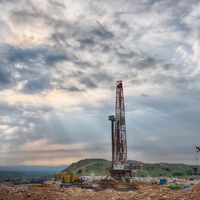
A drilling rig operated by Iran’s Exploration Operations Company is seen at an energy site in Iran.

The memorandum of understanding signed on Thursday has prompted fresh hopes of an economic revival in Iran. But even a successful US-Iran agreement may do far less for the country's oil industry than many supporters expect.

Tehran’s challenge is no longer simply one of sanctions. Iran's oil and gas sector faces a combination of structural, technical, financial and geopolitical obstacles that cannot be quickly resolved, even if the agreement ultimately leads to a broader settlement with the United States.

The reality is that Iran's energy sector is no longer constrained primarily by its ability to sell oil. Its greater challenges lie in sustaining production, attracting investment, accessing advanced technology and reconnecting to the global financial system.

Aging infrastructure, declining capacity

Much of Iran's oil and gas infrastructure has reached the latter half of its operational life. Years of underinvestment, limited access to modern technology and the departure of major international energy companies have left many fields grappling with increasingly complex technical problems.

The challenge extends far beyond the natural decline of mature fields. Veteran figures within Iran's energy industry have repeatedly warned about reservoir degradation, declining pressure, scaling, well damage and the growing difficulty of maintaining stable production.

Former oil executives and industry specialists say a significant share of the sector's efforts is now devoted to managing technical problems that require equipment and expertise not readily available inside the country.

Nowhere is this more evident than in South Pars, the giant gas field that underpins Iran's energy security. Natural pressure decline began years ago, and reversing it will require tens of billions of dollars in investment, advanced offshore infrastructure and the participation of companies that are predominantly based in the West.

Even if political barriers disappeared tomorrow, the planning, engineering and construction required for such projects would take years—time an economy struggling with inflation, budget deficits and capital shortages can ill afford.

World not waiting for Iranian Oil

Many discussions about Iran's future still view today's energy market through the lens of a decade ago.

Before sanctions tightened, a significant portion of the global market relied on Iranian crude. The world of 2026 looks very different.

The United States has become one of the world's largest energy producers and exporters. Canada, Brazil and Guyana have expanded output dramatically.

Qatar and the United States have transformed the global LNG market, while major consumers have spent years diversifying supply chains and reducing dependence on any single producer.

Many customers that found alternative suppliers during years of sanctions are unlikely to return simply because restrictions are eased. Re-entering global markets requires not only competitive pricing but confidence in Iran's long-term reliability as a supplier.

The banking problem

Even if Washington permits the return of major energy companies to Iran, another obstacle remains: the international financial system.

The experience of the 2015 nuclear deal demonstrated that political agreements do not automatically translate into investment flows. Despite official support from Western governments, many major banks remained unwilling to accept the risks associated with doing business in Iran.

Crucially, the Islamic Republic is currently on the FATF blacklist, and the process of exiting this list entails a time-consuming verification period. Iran's failure to meet FATF standards, concerns over financial transparency, money-laundering risks and the extensive role of military-linked institutions in the economy continue to discourage foreign investors.

For many global financial institutions, both credit risk and reputational risk associated with Iran remain exceptionally high.

Russia is not a substitute

In the absence of Western companies, Tehran has repeatedly looked to Russia as an alternative partner.

Yet the experience of the past two decades suggests Moscow has shown limited interest in helping Iran re-emerge as a major competitor in global energy markets.

Even Russian firms with significant technical capabilities have, at various points, slowed, suspended or withdrawn from Iranian projects.

Russia's interests do not necessarily align with a full-scale revival of Iran's energy sector.

As a major energy exporter itself, Moscow has strong incentives to preserve its own position in global markets rather than facilitate the rise of another competitor.

Regional stability

There is another actor in this equation that often receives less attention than it deserves: the Persian Gulf states.

Iran’s Arab neighbors are undertaking some of the largest investment programs in their history. Infrastructure, artificial intelligence, logistics, technology and tourism have become central pillars of their economic strategies.

From their perspective, the overriding concern is not ideology but stability.

Rising geopolitical tensions have already increased insurance costs, raised financing expenses and complicated long-term investment planning across the region.

As a result, many in the region have concluded that even a successful Tehran-Washington agreement may not, by itself, provide the level of certainty required for the massive investments envisioned under their long-term development plans.

Taken all that together, one can argue that Iran’s oil economy faces far more than a sanctions problem.

Even if the newly signed memorandum evolves into a broader deal, rebuilding Iran's lost energy capacity will require years of work, tens of billions of dollars in investment and the restoration of confidence among international investors and financial institutions.

The agreement signed this week may ease some short-term pressures and improve economic sentiment. But on its own, it is unlikely to reverse the long-term erosion confronting Iran's oil and gas sector.

Most Viewed

US says Iran won't get funds upfront under MoU
1

US says Iran won't get funds upfront under MoU

2

Khamenei shifts responsibility for MoU as Iran, US implement Hormuz terms

3
INSIGHT

Tehran's familiar battle lines return over deal with US

4

US says Iran deal will end enrichment, destroy uranium stocks, cap missiles

5
VOICES FROM IRAN

Iranians say US deal leaves people out of the equation

Banner
Banner
Banner

Spotlight

  • A US-Iran deal alone won't rescue Iran's oil economy
    ANALYSIS

    A US-Iran deal alone won't rescue Iran's oil economy

  • Iran's Qatar power link exposes a deeper energy dilemma
    ANALYSIS

    Iran's Qatar power link exposes a deeper energy dilemma

  • Who in Tehran is opposing a deal with Washington?
    INSIGHT

    Who in Tehran is opposing a deal with Washington?

  • A fragile compact: ambiguities that could undermine US-Iran MoU
    ANALYSIS

    A fragile compact: ambiguities that could undermine US-Iran MoU

  • A thaw with the US won't fill Iranian tables overnight
    INSIGHT

    A thaw with the US won't fill Iranian tables overnight

  • Why some think a weakened Iran could emerge stronger
    ANALYSIS

    Why some think a weakened Iran could emerge stronger

•
•
•

More Stories

Iran's Qatar power link exposes a deeper energy dilemma

Jun 19, 2026, 11:46 GMT+1
•
Umud Shokri
Iran's Qatar power link exposes a deeper energy dilemma
100%
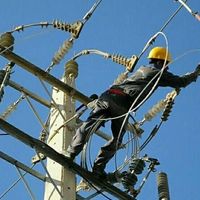
A technician works on high-voltage transmission equipment at an electricity substation in Iran.

Iran's plan to connect its electricity grid to Qatar highlights a growing paradox at the heart of the country's energy strategy: even as Tehran seeks a larger regional role through cross-border energy diplomacy, it faces one of the worst domestic power shortages in decades.

On June 16, Energy Minister Abbas Aliabadi announced that studies for a power-grid connection between Iran and Qatar were nearing completion and that implementation was beginning.

The project revives a 2022 memorandum of understanding signed during President Ebrahim Raisi's visit to Doha, which envisaged electricity exchanges of up to 1,000 megawatts through a subsea link.

The announcement comes as Iran grapples with a deepening electricity crisis, sanctions pressure and vulnerabilities exposed by recent conflict involving Iran, Israel and the United States.

Energy diplomacy under pressure

The proposed interconnection is more than a technical project.

If completed, it could allow electricity to flow in either direction during periods of peak demand or disruption. Qatar's gas-fired generation could help support Iran during shortages, while Tehran could seek to export power when domestic demand is lower.

More broadly, the project reflects Iran's effort to deepen economic ties with Gulf neighbours and reduce its regional isolation. Qatar has long maintained relations with Iran, the United States and other Gulf states while playing a recurring mediating role in regional diplomacy.

For Tehran, electricity trade offers revenue, political leverage and a way to project itself as a regional energy actor despite sanctions and mounting domestic constraints.

The project could also serve as a modest step toward wider Gulf electricity integration. Linking Iran to the GCC Interconnection Authority network would remain politically and technically difficult, but the Qatar connection would mark one of the few tangible efforts in recent years to expand energy cooperation across a region long divided by geopolitical rivalries.

Yet Iran's own power shortages raise questions about how realistic those ambitions are.

A worsening power crisis

Iran's electricity system faces mounting strain from years of underinvestment, aging infrastructure, sanctions, inefficient consumption, fuel constraints and drought-related pressure on hydropower generation.

Although installed generation capacity appears substantial on paper, actual available supply is often significantly lower because of plant outages, fuel shortages, declining efficiency and transmission losses.

The situation becomes especially acute during the summer, when air conditioning, industrial demand and urban consumption push the grid beyond available capacity.

Iran's parliamentary research center has warned that the country could face a summer electricity deficit of around 13,640 megawatts, equivalent to roughly 17% of projected peak demand.

Blackouts, industrial shutdowns and disruptions to public services have become increasingly common.

This context helps explain why the Qatar project matters. While Iranian officials often present such initiatives as evidence of the country's emergence as a regional energy hub, the interconnection may be just as important as a potential source of imported electricity during periods of domestic stress.

Without major investment in generation, transmission and fuel supply, the project could ultimately expose Iran's dependence on its neighbours rather than demonstrate export strength.

Iran has relatively few options for addressing the crisis quickly. Sanctions continue to restrict access to modern turbines, grid equipment, financing and foreign expertise, while meaningful electricity-price reforms remain politically sensitive. Expanding renewable energy would help, but doing so requires investment, storage capacity and transmission upgrades that cannot be deployed overnight.

Regional electricity trade is therefore one of the few tools available to Tehran in the short term.

The shadow of war

Recent conflict has further highlighted Iran's energy vulnerabilities.

Strikes on infrastructure linked to South Pars, the giant gas field that underpins much of Iran's electricity generation, underscored how disruptions to gas production can quickly affect power supplies.

The conflict also exposed broader risks facing Gulf energy systems. Iranian attacks on facilities linked to Qatar's energy sector demonstrated how regional infrastructure could become vulnerable during periods of military escalation.

As a result, the proposed interconnection carries both economic and strategic significance. It could strengthen resilience and create incentives for cooperation, but it would also add another piece of critical infrastructure exposed to future crises.

Opportunities and limits

An Iran-Qatar electricity link could provide benefits for both countries.

Cross-border interconnections can improve grid stability, reduce reserve requirements and provide emergency support during disruptions. Over time, they may also help integrate renewable energy by balancing supply across larger networks.

The technical challenges are significant but manageable. A subsea high-voltage connection would require substantial investment, converter stations, cybersecurity protections and close operational coordination.

The larger obstacles may be political and financial.

US sanctions could deter banks, insurers and international engineering firms from participating in Iran-linked infrastructure projects. Broader Gulf integration would face additional political hurdles after years of regional tension.

Outlook

The Qatar interconnection ultimately reveals as much about Iran's domestic weaknesses as its regional ambitions.

Faced with sanctions, underinvestment and a worsening electricity crisis, Tehran has increasingly turned to energy diplomacy, regional trade and cross-border infrastructure as tools for managing pressure at home.

The project could strengthen Iran-Qatar ties, improve energy resilience and create a modest opening toward wider regional cooperation.

But its significance lies less in the electricity it may eventually carry than in what it reveals about Iran's broader predicament: a country seeking regional influence through energy diplomacy while increasingly dependent on external partnerships to manage mounting pressures at home.

A fragile compact: ambiguities that could undermine US-Iran MoU

Jun 19, 2026, 04:08 GMT+1
•
Shahram Kholdi
A fragile compact: ambiguities that could undermine US-Iran MoU
100%
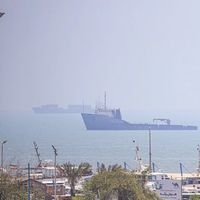
Ships sail near the Iranian shoreline overlooking the Strait of Hormuz, hours after the reopening of the strategic waterway following weeks of conflict and disruption, June 18, 2026

The Memorandum of Understanding concluded this week between Washington and Tehran may help halt active hostilities and reopen one of the world's most important waterways, but its durability is far less certain than its supporters suggest.

Built on undefined terms, deferred obligations and subjective judgments of compliance, the agreement risks becoming as much a source of future disputes as a mechanism for resolving them.

The fourteen-paragraph document promises an end to hostilities, the reopening of the Strait of Hormuz and a pathway toward broader understandings on sanctions and nuclear issues. Yet it remains a political understanding rather than a legally binding treaty, with few of the mechanisms typically used to define obligations, resolve disputes or enforce compliance.

President Trump signed the document at the Palace of Versailles on June 17, while its formal inauguration by Vice President JD Vance, Speaker Mohammad Bagher Ghalibaf and Foreign Minister Abbas Araghchi is expected in Switzerland on June 19.

In the sombre record of diplomatic striving, where the hopes of nations have often foundered on imprecise commitments and competing interpretations, the Islamabad MOU deserves close attention. A close reading reveals vulnerabilities that may yet undermine its promise.

Consider Article 1, which proclaims an “immediate and permanent termination of military operations on all fronts, including in Lebanon,” while committing the parties to respect Lebanese sovereignty and territorial integrity. On the surface, the language appears definitive. Yet Israel, which is not a party to the agreement, continues to view its positions in southern Lebanon as necessary for its security, while Washington has repeatedly affirmed Israel’s right to self-defense.

Tehran and its allies may read the clause as implying eventual Israeli withdrawal. The facts on the ground, and the separate track of Israel-Lebanon negotiations, suggest a more complicated reality. Key terms such as “all fronts,” “permanent,” and “territorial integrity” remain undefined. No mechanism exists for arbitration or adjudication when disagreements arise. Instead, implementation is largely deferred to future negotiations, even as early Iranian steps on nuclear issues or maritime security may unlock sanctions waivers and access to frozen assets.

This pattern of ambiguity runs throughout the document. The nuclear status quo is to be maintained pending a final agreement. Oil waivers and access to restricted assets are linked to implementation of initial commitments, yet the standard for satisfactory performance remains largely a matter of political judgment.

The sixty-day timetable for negotiating a broader agreement, which may be extended by mutual consent, creates space for diplomacy. It may also give both sides time to consolidate military, political or diplomatic leverage while negotiations continue. President Trump himself has emphasized that the MOU is not a final agreement and has left open the possibility of renewed military action should diplomacy fail.

"Article 5 requires the Islamic Republic to use its 'best efforts' for toll-free passage in the Persian Gulf through Hormuz for sixty days. It also commits the Islamic Republic to keeping the strait open while proposing a future convention among the Persian Gulf littoral states and the Islamic Republic to regulate safe and free navigation in this semi-closed sea.

The experience of the 2018 Convention on the Legal Status of the Caspian Sea offers a sobering precedent. After protracted negotiations, the Islamic Republic found itself a minority of one and was compelled to make substantial compromises on its claims.

A similar convention for the Persian Gulf could produce a comparable outcome, even with potential alignment from Qatar and Oman, leaving a bitter taste among many Iranians.

Article 6 calls for the development of a reconstruction and economic development plan worth at least $300 billion. Yet the figure itself remains largely aspirational. The text provides little indication of whether such funding would take the form of grants, loans, private investment or credit facilities.

The distinction matters. While supporters present the provision as evidence of a coming economic windfall, the eventual financial structure could look very different. Much will depend on future negotiations, sanctions policy and the willingness of regional and international actors to participate.

Graver still are the silences. Ballistic missiles and Iran’s regional proxy network, including Hezbollah, receive little explicit treatment in the written text. Issues that have long stood at the center of regional security debates appear to have been deferred, addressed only indirectly or left to subsequent negotiations.

In a relationship shaped by decades of mistrust, such omissions inevitably invite competing interpretations. Without automatic enforcement mechanisms, expanded verification provisions or clearly defined snapback procedures, disputes over compliance may simply return to the negotiating table.

News from Tehran suggests that ultra-hardliners have reacted with fury, while more pragmatic figures around Speaker Ghalibaf appear to regard the agreement as necessary breathing space for a battered Islamic Republic. Israel, meanwhile, has shown little inclination to subordinate its security calculations to diplomatic assurances alone.

Absent precise definitions, objective benchmarks and credible dispute-resolution mechanisms, each side retains considerable latitude in interpreting its obligations. Tehran may claim compliance while continuing activities that Washington views as problematic. Washington may delay or withhold relief based on concerns over enrichment, regional activities or implementation.

At its core, the agreement links performance to relief while providing few objective standards by which performance will be judged. The result is a framework that relies heavily on political trust at a moment when trust remains in short supply.

The Islamabad MOU may succeed in reopening the Strait of Hormuz, reducing tensions and lowering immediate risks of escalation. It may even create the conditions for a broader settlement.

But the architecture of the document suggests that its ultimate durability will depend less on the promises it contains than on the unresolved questions it leaves behind. The coming weeks in Geneva and beyond will determine whether those ambiguities serve as bridges to a lasting agreement—or pathways back to confrontation.

A thaw with the US won't fill Iranian tables overnight

Jun 19, 2026, 03:15 GMT+1
•
Maryam Sinaiee
A thaw with the US won't fill Iranian tables overnight
100%
Bakers prepare traditional flatbread at a neighborhood bakery in Tehran, where rising food prices have become a growing concern for many households, June 15, 2026

The easing of tensions between Iran and the United States has raised hopes for economic relief, but after years of declining living standards, many Iranians say any breakthrough will be judged by whether it improves their daily lives.

Iranian authorities now face growing public expectations that any diplomatic opening will translate into tangible economic gains. Many hope that sanctions relief or the release of frozen assets will ease financial pressures and improve living standards.

Economists, however, warn that even if restrictions are lifted, the benefits are unlikely to be felt immediately.

The uncertainty has been compounded by the fact that many of the memorandum's economic provisions remain unclear, including the timing and scope of any sanctions relief or asset releases.

According to a recent survey cited by Deputy Interior Minister Mohammad Bathaei during a press conference this week, 60% of respondents said they could no longer tolerate additional economic pressure.

Economist Khalil Janami wrote in Khabar Online that “the real achievement of diplomacy only becomes meaningful when people feel its results in their livelihoods, employment opportunities, and quality of life.”

Economy Minister Ali Madanizadeh also cautioned Thursday that an agreement with Washington would not return Iran's economy to normal conditions overnight.

Discussing government finances, he said Iran had already faced a budget deficit of several hundred trillion tomans before the war and that conditions have since worsened. He said the government also borrowed 100 trillion tomans from the Central Bank after the conflict, with the inflationary consequences likely to become visible in the coming months.

Analysts say Iran's economic challenges—including high inflation, unemployment and years of stagnation—are structural problems that cannot be resolved quickly through a political agreement.

Working people under pressure

Workers have been among the hardest hit by Iran's prolonged economic crisis. In recent years, wage increases have consistently failed to keep pace with inflation, steadily eroding purchasing power.

The Iranian Labour News Agency (ILNA) recently reported that a worker's daily wage after eight hours of work is not enough to buy even 250 grams of red meat. The agency said many workers struggle to cover basic living expenses even when taking on overtime shifts.

Citizen reports received by Iran International indicate that layoffs and delays in wage payments continue in some sectors. Some people approved for unemployment benefits earlier this year say they have yet to receive any payments.

The middle class has also seen its financial position deteriorate. Families that once had the ability to save, buy homes and plan for the future have increasingly been forced to cut both essential and discretionary spending.

Some economists describe the trend as the gradual erosion of the middle class.

Eroding living standards

In May, Iranian families paid nearly 84% more than a year earlier for the same basket of goods and services.

For many households, food prices remain the most immediate concern.

Official figures from the Statistical Center of Iran show that year-on-year inflation for food and beverages reached 130% in the month ending in May. Annual food inflation also climbed to around 83%, up from roughly 75% in April.

Economist Morteza Afghah told Fararu that families are increasingly under pressure as inflation outpaces wage growth.

“Food has not been completely removed from household shopping baskets,” he said, “but nutritious and valuable items are being replaced with low-quality foods that simply fill the stomach.”

He added that lower-income groups, already spending nearly all of their income on essential goods, would face even greater hardship as inflation intensified.

Skepticism and hope online

The prospect of improved relations with Washington has prompted a wave of reactions on social media, where users expressed a mix of optimism and doubt.

Iranian journalist Azadeh Mokhtari wrote on X: “The military war between Iran and the United States has, at least for now, come to an end. But real victory will be felt when the war against inflation begins and ends with its defeat.”

She added: “People feel relieved when the sound of explosions stops, but they become happy when rising prices end. Today is the time to defeat inflation and control prices.”

Another user, Amir, welcomed the memorandum and expressed hope it would lead to a formal agreement, while lamenting the economic damage, job losses and destruction caused by the conflict.

Others remained unconvinced.

One user wrote: “Based on my limited experience, I highly doubt that signing an agreement will have even a small effect on people's lives. Rest assured, this agreement will not fill people's tables either.”

Why some think a weakened Iran could emerge stronger

Jun 19, 2026, 00:37 GMT+1
Why some think a weakened Iran could emerge stronger
100%

Iran emerged from the recent conflict militarily weakened, its regional proxies battered and its deterrence challenged, yet many analysts now warn that Tehran may be turning battlefield losses into political leverage.

The central question, some observers say, is no longer whether Iran lost the war but whether it survived long enough to turn military setbacks into political gains.

"The Iranian regime is now entering the strategy of what I call surviving, recovering, and rebuilding," former Israeli intelligence official and Middle East analyst Avi Melamed said.

That assessment reflects a broader regional anxiety that after years of pressure on Iran's so-called Axis of Resistance, Tehran may now gain the time and space necessary to reconstruct its influence.

Read the full article here.

Why some think a weakened Iran could emerge stronger

Jun 18, 2026, 21:37 GMT+1
•
Negar Mojtahedi
Why some think a weakened Iran could emerge stronger
100%

Iran emerged from the recent conflict militarily weakened, its regional proxies battered and its deterrence challenged, yet many analysts now warn that Tehran may be turning battlefield losses into political leverage.

The central question, some observers say, is no longer whether Iran lost the war but whether it survived long enough to turn military setbacks into political gains.

"The Iranian regime is now entering the strategy of what I call surviving, recovering, and rebuilding," former Israeli intelligence official and Middle East analyst Avi Melamed said.

That assessment reflects a broader regional anxiety that after years of pressure on Iran's so-called Axis of Resistance, Tehran may now gain the time and space necessary to reconstruct its influence.

Since the October 7 attacks and the ensuing regional conflict, Iran's proxy network has faced unprecedented pressure. Hezbollah and Hamas have been weakened, while Iranian military infrastructure has come under direct attack.

Yet some in the region fear a return to “square one and even in the worst conditions,” as Melamed put it.

"The Iranian regime marked a triumph," Melamed added. "As far as the Iranian regime is concerned, it views itself as the victorious one."

Whether Tehran can ultimately translate survival into renewed influence will depend in part on whether the emerging understanding with Washington evolves into a durable agreement.

But the prospect alone has already prompted debate across the region about the political consequences of the war.

A changing Middle East

The implications extend beyond Iran.

Middle East analyst and ISGAP research fellow Dalia Ziada argues that one consequence of the war may be a more fragmented regional order. The familiar framework of an Iran-led axis facing Israel and moderate Arab states may no longer adequately describe the region's evolving dynamics.

"What we thought is a Gulf Cooperation Council or a unified Gulf opposition is now being dismantled, dismantled severely," Ziada said, adding that Iran's Arab neighbours will increasingly “act individually and they will not be shy about it.”

According to Ziada, the post-war Middle East may increasingly be shaped by competition between regional powers, mainly “between Turkey and the axis it represents and Israel and the axes it represents.”

This fragmentation comes at a moment of growing uncertainty over America's role in the region.

The reliability question

One theme surfaced repeatedly across interviews: concerns over US credibility.

"There is a narrative that has been already circling around for many years," Melamed said. "That narrative basically says that the United States is not a reliable ally."

Many Persian Gulf states had hoped the war would significantly reduce Iran's regional influence. Instead, the prospect of a US-Iran understanding has generated unease among some regional actors who fear Tehran could once again rebuild its capabilities.

Ziada argued that many regional actors feel abandoned.

"The US probably is not the same ally we expected it would be," she said.

For Arab monarchies, geography remains inescapable. Iran is not a distant adversary but a permanent neighbor with missile capabilities and extensive regional networks.

If the regime emerges emboldened, Persian Gulf states may increasingly feel compelled to accommodate Tehran even as they continue to view it as a threat.

Victory or strategic pause?

Not all analysts agree that Iran has emerged stronger.

Iran scholar Maj. (res.) Alex Grinberg argues that military realities still matter. In his view, Iran's ability to project power has been significantly degraded.

"Iran is now fighting for its survival and it fails to project power," said Grinberg of the Jerusalem Institute for Strategy and Security and the Turan Research Center.

He cautions against viewing the conflict through a zero-sum lens in which anything short of regime collapse constitutes failure.

"The balance of power shifted in favor of the US and Israel," he said. But, he added, "it doesn't mean that Israel and America control the Middle East."

Grinberg also argued that Tehran may be exploiting Washington's priorities.

"Iran is, of course, exploiting the weakness of the US, which resides in the mere desire to reach a deal," he said.

Whether Tehran ultimately gains influence, he argues, depends less on Iran itself than on the choices made in Washington.

A people forgotten

Lost amid discussions of geopolitics and regional balances of power are the people of Iran themselves.

Many Iranians had hoped that increased pressure on the Islamic Republic would lead to meaningful political change after years of repression and deadly crackdowns. Instead, some now express feelings of abandonment.

Melamed acknowledged those expectations.

"There has been a lot of expectations and hope," he said. "Well, it doesn't seem to be like the case at least at this point."

For many inside Iran, the post-war settlement is viewed not as a breakthrough but as a return to a status quo that has repeatedly failed to address their aspirations.

Their frustration underscores a deeper question: if military pressure, mass protests and international isolation do not alter the regime's behavior, what comes next?

The answer may determine not only Iran's future but also the future balance of power in the Middle East.

Wars do not always end with winners and losers. Sometimes they end with paradoxes.

The greatest paradox of all may be that a weakened Iran could still emerge with greater influence.