• العربية
  • فارسی
Brand
  • Iran Insight
  • Politics
  • Economy
  • Analysis
  • Special Report
  • Opinion
  • Podcast
  • Iran Insight
  • Politics
  • Economy
  • Analysis
  • Special Report
  • Opinion
  • Podcast
  • Theme
  • Language
    • العربية
    • فارسی
  • Iran Insight
  • Politics
  • Economy
  • Analysis
  • Special Report
  • Opinion
  • Podcast
All rights reserved for Volant Media UK Limited
volant media logo

US says Iran won't get funds upfront under MoU

Jun 17, 2026, 22:24 GMT+1
A rusting shipwreck lies partially submerged in the Strait of Hormuz, June 2026

Senior US officials sought to clarify key provisions of the memorandum of understanding (MoU) with Iran, pushing back against reports that Tehran would receive access to frozen assets, sanctions relief or a multibillion-dollar reconstruction package upon signing the agreement.

The clarifications came after the text of the 14-point memorandum finally emerged on Wednesday, triggering a wave of reactions, competing interpretations and political criticism in both Tehran and Washington.

Speaking on a background call after the text was made public, the officials said the agreement does not commit Washington to any immediate economic concessions, but instead creates a framework under which incentives would be tied to Iranian compliance and progress toward a final deal.

The comments appeared aimed at countering interpretations in Iranian media that the memorandum would unlock large-scale financial benefits for Tehran before a comprehensive agreement is reached.

Addressing a provision in the MoU to create a reconstruction and economic development plan worth at least $300 billion, the officials said the language does not require the United States to contribute funds or provide direct financial assistance to Iran.

Instead, they said the provision would allow sanctions relief in the future if Iran fulfills its commitments, enabling third countries and private investors to participate in projects inside Iran.

The officials also stressed that any sanctions relief would be linked directly to progress on nuclear issues, meaning Tehran would only receive economic benefits in exchange for verifiable nuclear concessions, including the disposal of its stockpile of highly enriched uranium.

Frozen assets

The administration offered its strongest clarification on the issue of frozen Iranian assets.

Iran had originally sought access to restricted funds immediately upon signing the memorandum, according to the officials, but the final text tied any release of assets to implementation of the agreement and progress toward a broader settlement.

The officials said Iran ultimately accepted that no funds would be released automatically upon signing the MoU and that access to frozen assets would depend on what they described as demonstrable good behavior and compliance with the framework.

Some frozen assets could be released during the negotiation period, they added, if Iran takes concrete steps demanded by Washington, including actions related to its nuclear program.

Strait of Hormuz

The officials also downplayed broader interpretations of the memorandum's provisions on the Strait of Hormuz, saying the relevant sections are focused on reopening the waterway and ensuring the free flow of commercial shipping.

They said the agreement is intended to restore navigation through the strait rather than establish a wider security framework for the Persian Gulf.

The officials said they beleieve regional countries would never agree to an arrangement that doesn't permit toll-free access to the Strait of Hormuz.

Miltary assets

The officials further indicated that the United States does not plan to immediately reduce its military posture in the region following the signing of the memorandum. Any future adjustments, they said, would depend on Iranian compliance and progress toward a broader agreement.

They also described direct communication channels established during the conflict between US forces and the Islamic Revolutionary Guard Corps as one of the factors that made the negotiations easier.

According to the officials, those channels reduced the risk of misunderstandings and allowed messages to be exchanged more quickly during both the fighting and subsequent diplomatic efforts.

Officials also rejected suggestions that the memorandum excludes nuclear issues, noting that the text explicitly commits both sides to negotiations over Iran's enriched uranium stockpile and broader nuclear activities.

The memorandum follows weeks of diplomacy led by regional mediators, particularly Pakistan and Qatar, aimed at ending a conflict that began on Feb. 28 when the United States and Israel launched strikes on Iran.

The framework is intended to halt the fighting, reopen the Strait of Hormuz and create a pathway toward a broader agreement.

The memorandum is expected to be formally signed later this week, after which negotiators will begin work on a final agreement envisioned under the framework.


Most Viewed

Text of US-Iran memorandum released
1

Text of US-Iran memorandum released

2
ANALYSIS

Iran hardliners rage over US deal, but experts say regime is closing ranks

3

Toronto shooting probe uncovers trail leading to Tehran

4
EXCLUSIVE

Israel to help oust Iran regime, Bennett tells Iranians frustrated by US deal

5
INSIGHT

Hope, anger and distrust: Iranians debate Iran-US memorandum online

Banner
Banner
Banner

Spotlight

  • Iran markets rally on US deal hopes, but economists warn relief is no cure

    Iran markets rally on US deal hopes, but economists warn relief is no cure

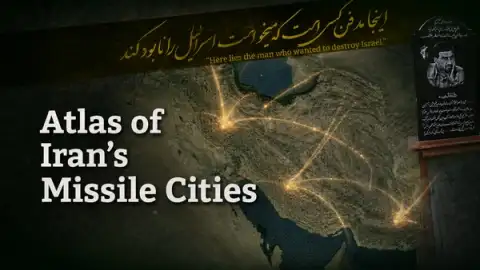
  • Atlas of Iran missile cities: The hidden network behind Tehran’s missile power
    SPECIAL REPORT

    Atlas of Iran missile cities: The hidden network behind Tehran’s missile power

  • Hope meets caution as Tehran weighs economic impact of US deal
    INSIGHT

    Hope meets caution as Tehran weighs economic impact of US deal

  • Toronto shooting probe uncovers trail leading to Tehran

    Toronto shooting probe uncovers trail leading to Tehran

  • Can Iranians cheer Team Melli without cheering the state?
    INSIGHT

    Can Iranians cheer Team Melli without cheering the state?

•
•
•

More Stories

Text of US-Iran memorandum released

Jun 17, 2026, 20:17 GMT+1
Text of US-Iran memorandum released
100%

A senior US official on Wednesday read out a 14-point memorandum of understanding between the United States and Iran that outlines a high-level understanding to halt the war in Iran and open the Strait of Hormuz.

The agreement defers many of the most difficult issues, including how to wind down Iran's nuclear program, until a final deal is reached, and paves the way for a broader 60-day negotiation period due to begin in Switzerland on Friday.

The document, titled "Islamabad Memorandum of Understanding between the United States of America and the Islamic Republic of Iran," was read out to reporters by the US official as follows:

1. The United States of America and the ​Islamic Republic of Iran and their ⁠allies in the current war, by signing this MoU (Memorandum of Understanding), declare the immediate and permanent termination of military operations on ‌all fronts, including in Lebanon, and undertake from now on not to initiate any war or any military operation against each other, and to refrain from the threat or use of force against each other, and ensuring the territorial integrity and sovereignty of Lebanon. The final deal will confirm the permanent termination of the war on all fronts, including in Lebanon, and other provisions of this paragraph.

2. The United States of America and the Islamic Republic of Iran undertake to respect each other's sovereignty and territorial integrity, ​and to refrain from interfering in each other's internal affairs.

3. The United States of America and the Islamic Republic of Iran commit to negotiating and achieving the final deal ‌in maximum 60 days extendable with mutual consent.

4. Immediately upon the signing of this MoU, the United States of America will begin the removal of its naval blockade and any disturbances or impediments against the Islamic Republic of Iran, and will fully end the naval blockade within 30 days. During this period, the traffic of vessels will be in proportion to the numbers of pre-war traffic being restored by the Islamic Republic of Iran. The United States of America further undertakes to remove ‌its forces from the proximity of the Islamic Republic of Iran within 30 days after the final deal.

5. Upon the signing of this MoU, the Islamic Republic of Iran will make arrangements using its best efforts for the safe passage of commercial vessels with no charge for 60 days only from the Persian Gulf to the Sea of Oman and vice versa. The traffic of commercial vessels will immediately start ⁠and, considering the need for removing the technical and military obstacles and de-mining by the Islamic Republic of Iran, will be instated within 30 days. The Islamic Republic of Iran will conduct dialog with the Sultanate of Oman to define the future administration and maritime services in the Strait of Hormuz, in discussion with other Persian Gulf littoral states in line with ‌the applicable international law and ​the sovereign rights of coastal states of the Strait of Hormuz.

6. The United States of America undertakes with regional partners to develop a definitive, mutually agreed plan with at least USD 300 billion for the reconstruction and economic development of the Islamic Republic of ​Iran. The mechanism for the implementation of this plan will be finalized as part of final deal within 60 days. All required licenses, waivers, and permissions needed for the relevant financial transactions will be granted by the ⁠United States of America.

7. The United States of America undertakes to terminate all types of sanctions against the Islamic Republic of Iran, including the United Nations Security Council resolutions, ‌i.e. IAEA Board of Governors resolutions, and all unilateral US sanctions, primary and secondary, in an agreed upon schedule as part ​of the final deal. The Islamic Republic of Iran and the United States of America acknowledge the critical importance of the sanctions termination issue above mentioned and express their intentions to immediately address these issues in the negotiations in order to achieve mutual agreement on them.

8. The Islamic Republic of Iran reaffirms that it shall not procure or develop nuclear weapons. The United States of America and the Islamic Republic of Iran have agreed to resolve the disposition of stockpiled enriched material pursuant to ‌a mechanism that will be mutually agreed upon, in accordance with the schedule mentioned in paragraph seven with the minimum methodology to be down blending on site under the supervision of the ​IAEA. The two parties also agreed to discuss the issue of enrichment and other mutually agreed matters related to the Islamic Republic of Iran's nuclear needs, based on a satisfactory framework being agreed upon in the final deal. The final deal will confirm the provisions of this paragraph. The United States of America and the Islamic Republic of Iran acknowledge the critical importance of the nuclear issues above mentioned and express their intention to immediately address these issues in the negotiations in order to achieve mutual agreement on them.

9. Pending the final deal, the United States of America ​and the Islamic Republic of Iran agree to maintain the status quo. The Islamic Republic of Iran will maintain the current status quo of its nuclear program and the United States of America will not impose any new sanctions and will not deploy additional forces in the region.

10. The United States of America undertakes that immediately upon the signing of this MoU and until the termination of sanctions, US Department of Treasury will issue waivers for the export of Iranian crude oil, petroleum products, and derivatives, and all associated services, including banking transactions, insurances, transportation, etc.

11. The United States of America undertakes to make fully available for use the frozen or restricted funds and assets of the Islamic Republic of Iran. Upon the implementation of this MoU, the United States of America and the Islamic Republic of Iran will mutually agree on the procedures related to the release of these funds during the negotiation. Such funds, whether retained in the original account or transferred, shall be made fully usable for payment to any ultimate beneficiary designated by the Central Bank of the Islamic Republic of Iran. The United States of America undertakes to issue all necessary licenses and authorizations accordingly.

12. The United States of America and the Islamic Republic of Iran agree that an executive mechanism will be ⁠established to monitor the successful implementation of this MoU and the future compliance of the final deal.

13. After signing this MoU, and subject to the beginning of the ⁠implementation of paragraphs 1,4,5,10 and 11 of this MoU, and ​the continuing implementation of these measures, the United States of America and the Islamic Republic of Iran will start negotiations regarding the final deal exclusively on the other paragraphs.

14. The final deal will be endorsed by a binding UNSC resolution.

Iran media split over US MoU as hardliners warn of retreat

Jun 15, 2026, 18:18 GMT+1
•
Behrouz Turani
Iran media split over US MoU as hardliners warn of retreat
100%
A woman wearing a shroud-like garment attends a rally of hardline Islamic Republic loyalists in Tehran on June 8, 2026, urging Iran’s negotiating team to adhere to Mojtaba Khamenei’s conditions.

Iranian newspapers and digital outlets split sharply over the emerging US-Iran memorandum, with hardliners denouncing it as retreat and pro-diplomacy outlets framing it as a system-backed path to end the war and ease economic pressure.

The Tehran-Washington Memorandum of Understanding, digitally signed on Sunday and expected to be formally signed in Geneva on Friday, has exposed deep divisions across Iran’s media landscape.

Editorials and opinion columns published after the announcement ranged from warnings of capitulation to claims that diplomacy had been made possible by Iran’s military deterrence and could offer the country a path out of war and economic pressure.

Hardliners warn of retreat

Kayhan, the hardline conservative daily, adopted a tone of open opposition, portraying the agreement as diplomatic capitulation under Western pressure and breaking with the official state narrative of victory.

“Surrendering to the Great Satan under the guise of an ‘antidote’ or regional de-escalation is a betrayal of our long-standing resistance,” Kayhan wrote.

“The historical track record shows that retreating before American demands never guarantees peace; it only invites further exploitation. This administration is repeating past blunders, turning a blind eye to our ultimate red lines.”

Khorasan, a conservative daily close to chief negotiator and parliamentary speaker Mohammad Bagher Ghalibaf, framed the MoU not as a peace settlement but as a tactical pause.

“The emerging agreement only aims to end the current war and does not resolve the underlying issues between Iran and the United States,” it wrote.

“This text merely delays the ‘final battle,’ giving both sides time to rebuild offensive and defensive military capabilities and prepare for a larger, full-scale war.”

Hamshahri, the conservative daily affiliated with Tehran Municipality, adopted a more cautious and technocratic tone. It neither endorsed nor rejected the agreement outright, but argued that any concessions from Washington were the result of Iran’s military deterrence rather than US goodwill.

“Let no one mistake this memorandum for a change of heart in Washington,” Hamshahri wrote.

“It is the undeniable triumph of the ‘Field’ and our defensive missile deterrence that dragged Trump’s negotiators to the table. Our economic relief is a direct dividend of our strategic strength, not a product of blind trust in foreign promises.”

Conservatives split over diplomacy

Not all conservative outlets rejected the agreement. Jomhouri Eslami, a traditional conservative newspaper, took the opposite line, criticizing hardline factions that it accused of trying to sabotage diplomacy.

“Anyone who possesses true national pride and genuine patriotism does not beat the drums of endless war,” the paper wrote.

“The remnants of past failed administrations are deliberately trying to stoke public unrest and invite economic ruin just to force their way back into power. True resilience is knowing when to secure the nation’s interests through calculated diplomacy.”

The split among conservative outlets reflected a broader divide inside the Iranian establishment: whether the MoU should be presented as a forced retreat, a tactical military pause, or a pragmatic decision backed by the state.

Reformists defend the agreement

Reformist newspaper Shargh focused on the structural pressures facing Iran, arguing that diplomacy carried costs but that continued economic siege left the country with few viable alternatives.

“We have reached a critical junction where the heavy toll of economic warfare and international naval blockades has worn down our baseline financial structures,” Sharq wrote.

“Confronted with a choice between managed tactical retreats or total systemic rupture, holding a unified defense line via calculated engagement remains our only viable shield against unchecked American geopolitical overreach.”

Etemad, a reformist daily closely aligned with President Masoud Pezeshkian’s administration, emphasized institutional cohesion and warned against internal fractures during the high-stakes implementation phase.

“The finalization of this text is not the decision of a single rogue faction or isolated ministry,” Etemad wrote.

“It is the calculated strategy of the entire sovereign system. The judiciary must act firmly against coordinated internal actors who use falsehoods, defamation, and targeted threats to undermine national unity at the very hour the country needs internal stability most.”

Arman-e Melli, a reform-leaning centrist publication, focused on the economic implications of the agreement, especially the need to ensure that sanctions relief and the lifting of shipping restrictions produce tangible results.

“While the baseline text provides a necessary safety valve for the national currency and immediate relief for global maritime commerce, the true test lies in the verification phase,” the paper wrote.

“The Foreign Ministry must ensure that the lifting of shipping blockades and primary oil sanctions occurs concurrently with our own adjustments, preventing any unilateral bad-faith maneuvers from Washington.”

Digital outlets highlight political fallout

Moderate news website Khabar Online celebrated the breakthrough while highlighting the anxiety it has created among hardliners and regional rivals.

“This historic text marks the definitive victory of collective wisdom over blind extremism,” it wrote.

“While radical elements inside the country scream betrayal, this agreement dismantles the multi-decade campaign to isolate Iran, offering a path where our core nuclear infrastructure remains intact while the economic siege is shattered.”

Fararu, a reform-leaning website, focused on the widening split within the conservative camp, saying mainstream conservative figures were increasingly distancing themselves from the hard right.

“The political landscape has completely shifted overnight,” Fararu wrote.

“Mainstream conservative pillars and major establishment figures are openly breaking away from the ultra-radical factions who are screaming ‘treason’ on the streets.”

Rouydad24 took a sharper institutional angle, arguing that opposition to the deal could isolate hardliners from the state’s decision-making structure.

“By standing against a deal approved at the highest levels of the National Security Council, the extreme right is effectively alienating themselves from the core governance architecture of the Islamic Republic,” it wrote.

Nour News, linked to the Supreme National Security Council, stayed close to the official line, presenting the agreement as a victory for Iran’s combined strategy of deterrence and diplomacy.

“Through a grueling, multi-month diplomatic campaign backed by unbreakable defense capabilities, the Islamic Republic has successfully achieved its primary strategic objectives,” Nour News wrote.

“The immediate and permanent termination of hostile operations across all fronts, coupled with the absolute lifting of the naval embargo, stands as an unvarnished testament to the efficacy of our dual strategy of active deterrence and robust negotiation.”

A deal, and a domestic battle

Taken together, the reactions show that the MoU has not only opened a new diplomatic phase between Tehran and Washington, but also triggered a domestic battle over how the agreement should be understood.

For hardliners, it risks being framed as a retreat from Iran’s red lines. For pro-diplomacy outlets, it is a state-backed attempt to end the war, ease economic pressure and prevent further escalation.

The sharpness of the debate suggests that the next stage of the MoU may be fought not only at the negotiating table, but also inside Iran’s political and media establishment.

World leaders welcome Iran-US deal, back path to final agreement

Jun 15, 2026, 01:05 GMT+1
World leaders welcome Iran-US deal, back path to final agreement
100%
A view of ships near the Strait of Hormuz at sunset, file photo, undated

World leaders welcomed the agreement between Iran and the United States to end months of conflict, expressing support for the ceasefire and the negotiations expected to follow.

The strongest endorsements came from regional mediators and European governments, which described the breakthrough as a major step toward restoring stability in the Middle East and preventing further escalation.

Qatar's Prime Minister welcomed the memorandum of understanding reached between Tehran and Washington and voiced support for the next phase of negotiations.

Doha has played a central role in diplomatic efforts throughout the conflict and was among the key countries involved in mediation.

UN Secretary-General António Guterres congratulated both sides for reaching what he described as a peace deal providing for "an immediate and permanent ceasefire, the reopening of the Strait of Hormuz, as well as a framework for further negotiations."

"This represents a critical step towards the peaceful settlement of the conflict," Guterres said, while thanking Pakistan, Qatar, Egypt, Saudi Arabia, Türkiye and other regional countries for helping facilitate the agreement.

British Prime Minister Keir Starmer also welcomed the deal, saying London stood ready to support the technical negotiations that will now begin.

"I warmly welcome today's agreement reached between the United States and Iran," Starmer said, reiterating Britain's longstanding position that Iran must never acquire a nuclear weapon.

Japan's Prime Minister Sanae ⁠Takaichi also welcomed the announcement, expressing hope that "free and ‌safe navigation through ​the Strait of Hormuz will ‌be ensured in practice, ​and that a final agreement on ​Iran's nuclear issue and other matters will be reached as soon as possible."

In a joint statement, Britain, France, Germany and Italy signaled their readiness to ease sanctions on Iran in response to steps addressing its nuclear program.

"Iran must never acquire a nuclear weapon. We stand ready to work with the US, Iran and the IAEA to this end," the four countries said.

The international reaction followed announcements by Iranian and US officials that they had reached a memorandum of understanding ending hostilities and launching a 60-day period of negotiations on a final settlement.

Tehran has said final negotiations will begin only after implementation of key provisions in the framework agreement, including the lifting of the maritime blockade and the release of Iranian funds.

US President Donald Trump described the agreement as a historic achievement, saying it would bring "peace and security" to the region and allow for the reopening of the Strait of Hormuz, one of the world's most important energy shipping routes.

While many details remain unresolved, the broad international backing suggests governments across the region and beyond are eager to see the fragile agreement evolve into a lasting settlement.

Iran media publish purported details of Iran-US draft agreement

Jun 15, 2026, 00:11 GMT+1
Iran media publish purported details of Iran-US draft agreement
100%
Motorcycles ride past a billboard depicting Iran's slain Supreme Leader Ali Khamenei, on a street in Tehran, June 2026

Iran's state-affiliated Mehr News on Sunday published what it described as details of a 14-point draft memorandum of understanding between Tehran and Washington, provides for the release of $24 billion in frozen Iranian assets during the 60-day talks

The reported draft has not been independently verified, and neither Iranian nor US officials have publicly confirmed its contents.It appears to match a version first published by Mehr News on Friday.

According to Mehr, the draft begins with an immediate and permanent end to military operations across all fronts, including Lebanon, alongside a US commitment not to interfere in Iran's internal affairs and to respect the sovereignty of the Islamic Republic.

The report says Washington would commit to lifting the naval blockade within 30 days, withdrawing forces from around Iran and allowing the reopening of the Strait of Hormuz under Iranian arrangements during the same period.

The draft also reportedly provides for the release of $24 billion in frozen Iranian assets during the 60-day talks, with half the funds becoming available before negotiations begin.

The publication comes as regional and international leaders welcomed news of the framework agreement.

Qatar's prime minister, British Prime Minister Keir Starmer and other officials have publicly endorsed the breakthrough, while US President Donald Trump described it as a "great deal" that would bring peace and security to the region and lead to the reopening of the Strait of Hormuz.

One of the most politically sensitive provisions concerns the scope of future negotiations.

According to Mehr, discussions would be limited to the fate of enriched uranium, enrichment activities, sanctions relief and economic reconstruction. Iran's missile program and support for allied armed groups would be explicitly excluded from the agenda.

On the economic front, the draft reportedly calls for the suspension of sanctions on Iranian oil, petrochemical products and related exports, allowing Tehran full access to the resulting revenues. It also includes a requirement for the United States and its allies to present reconstruction plans worth at least $300 billion for Iran.

Mehr reported that the two sides would then enter a 60-day period of negotiations aimed at reaching a final agreement covering Iran's nuclear program and the lifting of US primary and secondary sanctions, as well as UN Security Council and IAEA-related restrictions.

Under the reported framework, Iran would reiterate its commitment under the Nuclear Non-Proliferation Treaty not to pursue nuclear weapons. During the negotiating period, the United States would reportedly refrain from deploying additional forces to the region or imposing new sanctions.

The contents published by Mehr, however, remain unconfirmed and could still be subject to change as both sides move toward formal negotiations.

The uneasy mix of diplomacy and pressure in Canada’s Iran policy

Jun 13, 2026, 02:21 GMT+1
•
Mahsa Mortazavi
The uneasy mix of diplomacy and pressure in Canada’s Iran policy
100%

Canada’s response to the latest Iran crisis reflects the contradiction at the heart of Western policy toward Tehran: a continued call for diplomacy with a government it simultaneously treats as a source of terrorism, repression and regional instability.

In a written response to Iran International, the Canadian government said all parties involved in the latest exchanges between Iran, Israel and the United States must comply with international humanitarian law, including the protection of civilians and civilian infrastructure.

Ottawa also stressed the need for diplomacy and dialogue to resolve the crisis. But in Canada’s case, that language does not signal a softer approach toward Tehran. It sits alongside one of the most restrictive Iran policies among Western governments, built around sanctions, terrorist designations and a long-standing diplomatic rupture.

That tension is especially visible in Canada’s concern over the Strait of Hormuz.

Global Affairs Canada said Ottawa remains worried about disruptions in the strategic waterway and emphasized that respect for international navigation rights under international law is essential. It said the free flow of maritime traffic through the corridor is critical to global energy stability and supply chains.

For Canada, the crisis is therefore not only about preventing a wider war or limiting civilian harm. It is also about protecting the rules and routes that underpin global trade, energy flows and maritime security.

That is where Ottawa’s call for diplomacy begins to narrow. Canada supports de-escalation, but not in a way that separates the current crisis from Tehran’s broader conduct in the region.

Global Affairs Canada said Ottawa will continue working with allies and partners, both bilaterally and multilaterally, to support a diplomatic solution while countering what it describes as destabilizing activities by the Islamic Republic.

Those activities include Iran’s support for terrorist organizations, its ballistic missile program, nuclear activities and systematic human rights violations.

In other words, Canada’s message is not simply that the fighting should stop. It is that any diplomatic path must exist alongside continued pressure on the structures Ottawa believes drive Iran’s regional behavior.

That pressure is not only rhetorical.

Canada lists Hamas, Hezbollah and Yemen’s Houthi movement, also known as Ansarallah, as terrorist organizations. Ottawa has accused Iran of providing political, financial or military support to such groups.

In June 2024, Canada also listed the Islamic Revolutionary Guard Corps as a terrorist organization, following years of pressure from victims’ families of Flight PS752, human rights advocates and the Iranian-Canadian community.

Since 2012, Canada has designated Iran as a foreign state supporter of terrorism under the State Immunity Act, a legal framework that allows victims of terrorism to pursue civil action against the Iranian state in Canadian courts.

Together, those measures make Canada’s diplomatic language more constrained than it may first appear. Ottawa can call for dialogue, but it is doing so with a state it has legally and politically framed as a sponsor of terrorism and a source of transnational threats.

The sanctions record points in the same direction.

In March 2026, Canada sanctioned five individuals and four entities involved in procurement networks supplying technology used in IRGC weapons production, including drone-related systems. Canada said some Iranian arms, drones and technology have been transferred to Russia for use in the war against Ukraine.

A month earlier, Ottawa sanctioned seven individuals linked to Iranian state bodies responsible for intimidation, violence and transnational repression targeting dissidents and human rights defenders.

These measures show why Canada’s Iran policy cannot be read only through its latest call for restraint. The government is trying to prevent escalation in the short term while preserving the tools it has built over years to isolate and pressure Tehran.

The relationship has been moving in that direction for more than a decade.

Canada severed diplomatic relations with Iran in September 2012, closed its embassy in Tehran and declared Iranian diplomats in Canada persona non grata. Relations have not been restored since.

The gap widened further after the downing of Flight PS752, crackdowns on protests in Iran, allegations of transnational repression, Tehran’s regional activities, and concerns over its missile and nuclear programs.

Against that backdrop, Canada’s latest response is less a change in policy than a reminder of its limits. Ottawa wants diplomacy to contain the crisis, but it has little trust in the government with which diplomacy would have to be conducted.

That is the uneasy mix shaping Canada’s approach: avoid direct military involvement, keep channels for de-escalation open, and continue working with allies to restrict Iran’s room for maneuver.

The unresolved question is whether diplomacy can contain the crisis if Tehran is unwilling to make lasting changes, or whether negotiations will again become a way to delay pressure while preserving the policies that brought the region to this point.