• العربية
  • فارسی
Brand
  • Iran Insight
  • Politics
  • Economy
  • Analysis
  • Special Report
  • Opinion
  • Podcast
  • Iran Insight
  • Politics
  • Economy
  • Analysis
  • Special Report
  • Opinion
  • Podcast
  • Theme
  • Language
    • العربية
    • فارسی
  • Iran Insight
  • Politics
  • Economy
  • Analysis
  • Special Report
  • Opinion
  • Podcast
All rights reserved for Volant Media UK Limited
volant media logo
INSIGHT

Who in Tehran is opposing a deal with Washington?

Behrouz Turani
Behrouz Turani

Iran International

Jun 19, 2026, 08:14 GMT+1
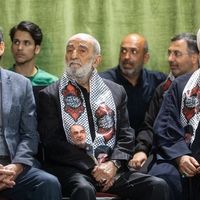
Hossein Shariatmadari (centre), editor of hardline daily Kayhan, and one of the most prominent anti-US voices in Iran, attends an event to commemorate slain IRGC commander Hossein Salami, June 18, 2026

A message attributed to Iran's Supreme Leader Mojtaba Khamenei and the swift reactions from President Masoud Pezeshkian and chief negotiator Mohammad Bagher Ghalibaf highlighted the uneasy coalition behind the agreement with the United States and the lingering doubts about it.

The intervention comes after weeks of criticism from hardline media outlets, clerics and political factions that viewed the agreement as a dangerous concession to Washington.

While the ultraconservative Paydari Party is often portrayed as the main opponent of rapprochement with the United States, recent debate in Iran has highlighted a broader network of political, media and ideological actors resisting a Tehran-Washington understanding.

In a message issued after the signing of the memorandum, Mojtaba Khamenei warned that actions creating “pessimism among the people” effectively serve the enemy, language widely interpreted as a rebuke to hardline critics of the agreement.

Both Pezeshkian and Ghalibaf quickly issued statements pledging to follow the leader's guidance and defend the negotiating process.

The apparent effort to impose discipline on the debate has coincided with growing scrutiny of those opposing diplomacy.

'Negotiation is haram'

One of the most detailed assessments came from Khabar Online, which argued that resistance to the ongoing negotiations should not be viewed as ordinary criticism but as an organized campaign to undermine diplomacy, attack key officials and deepen national divisions.

The report identified state television, IRIB, as the leading institutional opponent of an agreement. It cited remarks by hardline clerics who used the broadcaster's platforms to denounce negotiations with the United States.

Among them was cleric Gholamreza Ghassemian, who declared on state television that “negotiation is haram,” while arguing that those pursuing talks were acting contrary to divine principles. Another cleric, Sheikh Esmail Ramezani, insisted that relations with Washington were impossible.

Khabar Online accused IRIB of functioning as the mouthpiece of a single political faction rather than a national broadcaster and even alleged that portions of the leader's recent warnings against discord were downplayed to preserve a hardline narrative.

The report also pointed to figures associated with the late president Ebrahim Raisi's administration, arguing that some remained more focused on domestic political rivalries than on supporting diplomacy endorsed by the state's highest institutions.

Messianic detractors

The Paydari Party appeared third on the list. The article described it as a rigidly ideological parliamentary bloc that has used its network of lawmakers and media outlets to challenge the negotiating team and question the merits of engagement with Washington.

Yet even Paydari represents only part of the opposition.

In a separate interview with Rouydad24, former lawmaker and security official Mansoor Haghighatpour argued that resistance to a Tehran-Washington agreement also reflects the influence of the messianic Hojatiyeh association, whose legacy remains the subject of recurring debate in Iran.

The article did not mention several familiar hardline voices who have also opposed diplomacy. Among them are Kayhan editor Hossein Shariatmadari, a longtime critic of engagement with the United States, and MP Esmail Kowsari, who continued issuing threats against Washington and regional states during the war and subsequent ceasefire.

'Harsh response'

The divisions echo debates surrounding the 2015 nuclear agreement, when hardline factions accused negotiators of capitulation while supporters argued diplomacy was necessary to ease pressure on the country.

Ghalibaf was more explicit in defending the current process, warning that those acting against the leader's guidance “under the guise of obeying the Leadership” would face a “harsh response from the nation.”

For now, however, public criticism appears to have subsided. The day after the memorandum was signed, Iranian media largely fell silent on opposition to a possible agreement.

Whether that reflects a direct effort by the leadership to quiet dissent, or merely a temporary pause as political factions adjust to the new reality, may become clearer in the days ahead.

What is already apparent is that resistance to a deal with Washington extends well beyond any single party or faction—and that the leadership has signaled it expects those disputes to remain contained.

Most Viewed

Text of US-Iran memorandum released
1

Text of US-Iran memorandum released

2

Toronto shooting probe uncovers trail leading to Tehran

3

US says Iran won't get funds upfront under MoU

4
INSIGHT

Can Iranians cheer Team Melli without cheering the state?

5

US says Iran deal will end enrichment, destroy uranium stocks, cap missiles

Banner
Banner
Banner

Spotlight

  • Who in Tehran is opposing a deal with Washington?
    INSIGHT

    Who in Tehran is opposing a deal with Washington?

  • A fragile compact: ambiguities that could undermine US-Iran MoU
    ANALYSIS

    A fragile compact: ambiguities that could undermine US-Iran MoU

  • A thaw with the US won't fill Iranian tables overnight
    INSIGHT

    A thaw with the US won't fill Iranian tables overnight

  • Why some think a weakened Iran could emerge stronger
    ANALYSIS

    Why some think a weakened Iran could emerge stronger

  • Atlas of Iran missile cities: The hidden network behind Tehran’s missile power
    SPECIAL REPORT

    Atlas of Iran missile cities: The hidden network behind Tehran’s missile power

  • Toronto shooting probe uncovers trail leading to Tehran

    Toronto shooting probe uncovers trail leading to Tehran

•
•
•

More Stories

A thaw with the US won't fill Iranian tables overnight

Jun 19, 2026, 04:15 GMT+1
A thaw with the US won't fill Iranian tables overnight
100%

The easing of tensions between Iran and the United States has raised hopes for economic relief, but after years of declining living standards, many Iranians say any breakthrough will be judged by whether it improves their daily lives.

Iranian authorities now face growing public expectations that any diplomatic opening will translate into tangible economic gains. Many hope that sanctions relief or the release of frozen assets will ease financial pressures and improve living standards.

Economists, however, warn that even if restrictions are lifted, the benefits are unlikely to be felt immediately.

The uncertainty has been compounded by the fact that many of the memorandum's economic provisions remain unclear, including the timing and scope of any sanctions relief or asset releases.

According to a recent survey cited by Deputy Interior Minister Mohammad Bathaei during a press conference this week, 60% of respondents said they could no longer tolerate additional economic pressure.

Read the full article here.

A fragile compact: ambiguities that could undermine US-Iran MoU

Jun 19, 2026, 04:08 GMT+1
•
Shahram Kholdi
A fragile compact: ambiguities that could undermine US-Iran MoU
100%
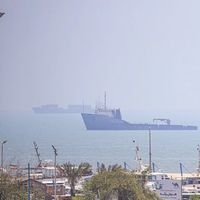
Ships sail near the Iranian shoreline overlooking the Strait of Hormuz, hours after the reopening of the strategic waterway following weeks of conflict and disruption, June 18, 2026

The Memorandum of Understanding concluded this week between Washington and Tehran may help halt active hostilities and reopen one of the world's most important waterways, but its durability is far less certain than its supporters suggest.

Built on undefined terms, deferred obligations and subjective judgments of compliance, the agreement risks becoming as much a source of future disputes as a mechanism for resolving them.

The fourteen-paragraph document promises an end to hostilities, the reopening of the Strait of Hormuz and a pathway toward broader understandings on sanctions and nuclear issues. Yet it remains a political understanding rather than a legally binding treaty, with few of the mechanisms typically used to define obligations, resolve disputes or enforce compliance.

President Trump signed the document at the Palace of Versailles on June 17, while its formal inauguration by Vice President JD Vance, Speaker Mohammad Bagher Ghalibaf and Foreign Minister Abbas Araghchi is expected in Switzerland on June 19.

In the sombre record of diplomatic striving, where the hopes of nations have often foundered on imprecise commitments and competing interpretations, the Islamabad MOU deserves close attention. A close reading reveals vulnerabilities that may yet undermine its promise.

Consider Article 1, which proclaims an “immediate and permanent termination of military operations on all fronts, including in Lebanon,” while committing the parties to respect Lebanese sovereignty and territorial integrity. On the surface, the language appears definitive. Yet Israel, which is not a party to the agreement, continues to view its positions in southern Lebanon as necessary for its security, while Washington has repeatedly affirmed Israel’s right to self-defense.

Tehran and its allies may read the clause as implying eventual Israeli withdrawal. The facts on the ground, and the separate track of Israel-Lebanon negotiations, suggest a more complicated reality. Key terms such as “all fronts,” “permanent,” and “territorial integrity” remain undefined. No mechanism exists for arbitration or adjudication when disagreements arise. Instead, implementation is largely deferred to future negotiations, even as early Iranian steps on nuclear issues or maritime security may unlock sanctions waivers and access to frozen assets.

This pattern of ambiguity runs throughout the document. The nuclear status quo is to be maintained pending a final agreement. Oil waivers and access to restricted assets are linked to implementation of initial commitments, yet the standard for satisfactory performance remains largely a matter of political judgment.

The sixty-day timetable for negotiating a broader agreement, which may be extended by mutual consent, creates space for diplomacy. It may also give both sides time to consolidate military, political or diplomatic leverage while negotiations continue. President Trump himself has emphasized that the MOU is not a final agreement and has left open the possibility of renewed military action should diplomacy fail.

"Article 5 requires the Islamic Republic to use its 'best efforts' for toll-free passage in the Persian Gulf through Hormuz for sixty days. It also commits the Islamic Republic to keeping the strait open while proposing a future convention among the Persian Gulf littoral states and the Islamic Republic to regulate safe and free navigation in this semi-closed sea.

The experience of the 2018 Convention on the Legal Status of the Caspian Sea offers a sobering precedent. After protracted negotiations, the Islamic Republic found itself a minority of one and was compelled to make substantial compromises on its claims.

A similar convention for the Persian Gulf could produce a comparable outcome, even with potential alignment from Qatar and Oman, leaving a bitter taste among many Iranians.

Article 6 calls for the development of a reconstruction and economic development plan worth at least $300 billion. Yet the figure itself remains largely aspirational. The text provides little indication of whether such funding would take the form of grants, loans, private investment or credit facilities.

The distinction matters. While supporters present the provision as evidence of a coming economic windfall, the eventual financial structure could look very different. Much will depend on future negotiations, sanctions policy and the willingness of regional and international actors to participate.

Graver still are the silences. Ballistic missiles and Iran’s regional proxy network, including Hezbollah, receive little explicit treatment in the written text. Issues that have long stood at the center of regional security debates appear to have been deferred, addressed only indirectly or left to subsequent negotiations.

In a relationship shaped by decades of mistrust, such omissions inevitably invite competing interpretations. Without automatic enforcement mechanisms, expanded verification provisions or clearly defined snapback procedures, disputes over compliance may simply return to the negotiating table.

News from Tehran suggests that ultra-hardliners have reacted with fury, while more pragmatic figures around Speaker Ghalibaf appear to regard the agreement as necessary breathing space for a battered Islamic Republic. Israel, meanwhile, has shown little inclination to subordinate its security calculations to diplomatic assurances alone.

Absent precise definitions, objective benchmarks and credible dispute-resolution mechanisms, each side retains considerable latitude in interpreting its obligations. Tehran may claim compliance while continuing activities that Washington views as problematic. Washington may delay or withhold relief based on concerns over enrichment, regional activities or implementation.

At its core, the agreement links performance to relief while providing few objective standards by which performance will be judged. The result is a framework that relies heavily on political trust at a moment when trust remains in short supply.

The Islamabad MOU may succeed in reopening the Strait of Hormuz, reducing tensions and lowering immediate risks of escalation. It may even create the conditions for a broader settlement.

But the architecture of the document suggests that its ultimate durability will depend less on the promises it contains than on the unresolved questions it leaves behind. The coming weeks in Geneva and beyond will determine whether those ambiguities serve as bridges to a lasting agreement—or pathways back to confrontation.

A thaw with the US won't fill Iranian tables overnight

Jun 19, 2026, 03:15 GMT+1
•
Maryam Sinaiee
A thaw with the US won't fill Iranian tables overnight
100%
Bakers prepare traditional flatbread at a neighborhood bakery in Tehran, where rising food prices have become a growing concern for many households, June 15, 2026

The easing of tensions between Iran and the United States has raised hopes for economic relief, but after years of declining living standards, many Iranians say any breakthrough will be judged by whether it improves their daily lives.

Iranian authorities now face growing public expectations that any diplomatic opening will translate into tangible economic gains. Many hope that sanctions relief or the release of frozen assets will ease financial pressures and improve living standards.

Economists, however, warn that even if restrictions are lifted, the benefits are unlikely to be felt immediately.

The uncertainty has been compounded by the fact that many of the memorandum's economic provisions remain unclear, including the timing and scope of any sanctions relief or asset releases.

According to a recent survey cited by Deputy Interior Minister Mohammad Bathaei during a press conference this week, 60% of respondents said they could no longer tolerate additional economic pressure.

Economist Khalil Janami wrote in Khabar Online that “the real achievement of diplomacy only becomes meaningful when people feel its results in their livelihoods, employment opportunities, and quality of life.”

Economy Minister Ali Madanizadeh also cautioned Thursday that an agreement with Washington would not return Iran's economy to normal conditions overnight.

Discussing government finances, he said Iran had already faced a budget deficit of several hundred trillion tomans before the war and that conditions have since worsened. He said the government also borrowed 100 trillion tomans from the Central Bank after the conflict, with the inflationary consequences likely to become visible in the coming months.

Analysts say Iran's economic challenges—including high inflation, unemployment and years of stagnation—are structural problems that cannot be resolved quickly through a political agreement.

Working people under pressure

Workers have been among the hardest hit by Iran's prolonged economic crisis. In recent years, wage increases have consistently failed to keep pace with inflation, steadily eroding purchasing power.

The Iranian Labour News Agency (ILNA) recently reported that a worker's daily wage after eight hours of work is not enough to buy even 250 grams of red meat. The agency said many workers struggle to cover basic living expenses even when taking on overtime shifts.

Citizen reports received by Iran International indicate that layoffs and delays in wage payments continue in some sectors. Some people approved for unemployment benefits earlier this year say they have yet to receive any payments.

The middle class has also seen its financial position deteriorate. Families that once had the ability to save, buy homes and plan for the future have increasingly been forced to cut both essential and discretionary spending.

Some economists describe the trend as the gradual erosion of the middle class.

Eroding living standards

In May, Iranian families paid nearly 84% more than a year earlier for the same basket of goods and services.

For many households, food prices remain the most immediate concern.

Official figures from the Statistical Center of Iran show that year-on-year inflation for food and beverages reached 130% in the month ending in May. Annual food inflation also climbed to around 83%, up from roughly 75% in April.

Economist Morteza Afghah told Fararu that families are increasingly under pressure as inflation outpaces wage growth.

“Food has not been completely removed from household shopping baskets,” he said, “but nutritious and valuable items are being replaced with low-quality foods that simply fill the stomach.”

He added that lower-income groups, already spending nearly all of their income on essential goods, would face even greater hardship as inflation intensified.

Skepticism and hope online

The prospect of improved relations with Washington has prompted a wave of reactions on social media, where users expressed a mix of optimism and doubt.

Iranian journalist Azadeh Mokhtari wrote on X: “The military war between Iran and the United States has, at least for now, come to an end. But real victory will be felt when the war against inflation begins and ends with its defeat.”

She added: “People feel relieved when the sound of explosions stops, but they become happy when rising prices end. Today is the time to defeat inflation and control prices.”

Another user, Amir, welcomed the memorandum and expressed hope it would lead to a formal agreement, while lamenting the economic damage, job losses and destruction caused by the conflict.

Others remained unconvinced.

One user wrote: “Based on my limited experience, I highly doubt that signing an agreement will have even a small effect on people's lives. Rest assured, this agreement will not fill people's tables either.”

Tehran's familiar battle lines return over deal with US

Jun 19, 2026, 01:58 GMT+1
Tehran's familiar battle lines return over deal with US
100%

Hardline opposition in Iran to the Islamabad MoU increasingly resembles the reaction of ultraconservatives to the 2015 nuclear deal.

The parallels now extend beyond the critics themselves: a message attributed to Supreme Leader Mojtaba Khamenei on Thursday offered cautious backing for the agreement while signaling reservations about its terms, recalling the balancing act performed by his father during the JCPOA debate.

When then–Foreign Minister Javad Zarif returned to Tehran after the JCPOA was announced in Vienna in July 2015, vigilante groups gathered at the airport, threatening to lynch him on arrival.

Eleven years later, similar militant factions in Tehran and Mashhad have been heard chanting death threats against chief negotiator Mohammad Bagher Ghalibaf and Foreign Minister Abbas Araghchi, denouncing them as “traitors” and “mercenaries of the United States.”

Read the full article here.

Tehran's familiar battle lines return over deal with US

Jun 19, 2026, 00:44 GMT+1
•
Behrouz Turani
Tehran's familiar battle lines return over deal with US
100%
Worshippers attend a Muharram mourning ceremony in Tehran, commemorating the martyrdom of Imam Hussein, a central figure in Shia Islam, June 17, 2026

Hardline opposition in Iran to the Islamabad MoU increasingly resembles the reaction of ultraconservatives to the 2015 nuclear deal.

The parallels now extend beyond the critics themselves: a message attributed to Supreme Leader Mojtaba Khamenei on Thursday offered cautious backing for the agreement while signaling reservations about its terms, recalling the balancing act performed by his father during the JCPOA debate.

When then–Foreign Minister Javad Zarif returned to Tehran after the JCPOA was announced in Vienna in July 2015, vigilante groups gathered at the airport, threatening to lynch him on arrival.

Eleven years later, similar militant factions in Tehran and Mashhad have been heard chanting death threats against chief negotiator Mohammad Bagher Ghalibaf and Foreign Minister Abbas Araghchi, denouncing them as “traitors” and “mercenaries of the United States.”

The comparison is striking despite the very different nature of the two agreements.

The JCPOA was a comprehensive, multilateral non-proliferation accord negotiated in peacetime. The June 2026 MoU, by contrast, is a rapid bilateral framework designed to halt a destructive war, reopen the Strait of Hormuz and create a 60-day window for broader negotiations on Iran’s nuclear program.

In 2015, Supreme Leader Ali Khamenei ultimately shielded Zarif and his team, praising their “services to the nation and Islam” despite earlier criticism. A decade later, Mojtaba Khamenei appears to be performing a more cautious version of the same role.

In doing so, he echoed a familiar formula: approving diplomacy while distancing himself from its potential costs. He said he had authorized the agreement despite reservations in principle, after receiving assurances that Iran’s rights and the interests of the “Resistance Front” would be protected.

Hardline outlets and figures have recycled much of the same language deployed against the JCPOA, warning of “capitulation,” “retreat” and repeated “betrayals,” while more pragmatic and reformist-leaning voices defend the MoU as a system-approved effort to secure economic relief and end the war.

Notably, some of the loudest opponents of the Islamabad MoU, including ultraconservative MP Mahmoud Nabavian and Kayhan editor Hossein Shariatmadari, played a similar role in 2015.

Ultraconservative factions continue to accuse negotiators of falling into a Western trap. Elements within the Islamic Revolutionary Guard Corps (IRGC) view provisions requiring a freeze on enrichment levels and the return of IAEA inspectors to damaged facilities as an unacceptable concession.

The parallels are not exact, but the political script has proved remarkably durable. In both periods, opponents of diplomacy have framed engagement with Washington as a threat to national sovereignty and security.

The JCPOA sought to resolve a long-running nuclear dispute through a detailed and legally complex framework. The Islamabad MoU is a temporary political arrangement intended to stop active hostilities and create space for further negotiations.

Yet some critics on both sides have approached it through the same lens that shaped the debate over the JCPOA.

Similar concerns surfaced at the ongoing G7 summit in France, where several European leaders urged President Trump to adopt a tougher stance toward Tehran and ensure that any future agreement contains sufficient safeguards against the potential weaponization of Iran’s nuclear activities.

Trump may feel free to dismiss such concerns, believing European governments have offered limited support for his campaign against Tehran. Ghalibaf, by contrast, is clearly attempting to persuade domestic hardliners to accept the agreement.

Addressing the Chamber of Commerce on Wednesday, he declared: “All of us must take over the trench that was held by the battlefield warriors, stand firm, lift the people out from under economic pressures, and build the country with power.”

Mojtaba Khamenei’s statement appeared designed to contain opposition from within the conservative camp. While emphasizing that he had approved the agreement only after receiving specific assurances from Iranian officials, he portrayed the decision as a conditional endorsement rather than a strategic shift, signaling to critics that support for the memorandum should not be mistaken for acceptance of broader concessions to Washington.

By invoking the language of wartime sacrifice while defending a diplomatic agreement, Ghalibaf appeared to be making a familiar argument: that negotiation, however unpopular among hardliners, may sometimes be necessary to preserve the very system they seek to defend.