Its implementation began Thursday, Vance told reporters at the White House, opening a 60-day negotiation period in which the two sides are expected to work out the terms of a final agreement. Talks are set to start Friday, with the US vice-president expected to join the negotiations Sunday.
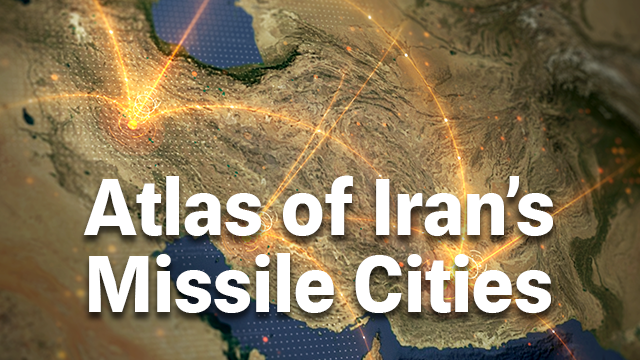
Vance said the final deal, unlike the interim MoU, would have to settle the core US demands on Iran’s nuclear and missile programs: no uranium enrichment, the destruction of enriched uranium stocks and limits on the range of Iranian missiles.
“This is not the Obama deal,” Vance said, contrasting Trump’s approach with the 2015 nuclear agreement. “The Obama deal allowed the Iranians to enrich uranium. This deal will not allow the Iranians to enrich uranium.”
He said Tehran would also have to give up its existing enriched material under any final agreement.
“The enriched uranium stockpile has to be destroyed,” Vance said.
Vance added that the final deal would also restrict Iran’s missile program, saying, "We do expect that as part of the final deal they are not going to be able to build the kind of missiles that can broadly threaten the entire world."
No money without compliance
Vance rejected suggestions that Iran would automatically receive major financial benefits under the MoU, saying Tehran would get no US money and would only gain access to sanctions relief or outside investment if it fully complied and changed its behavior.
“The part of this MOU that I think have been most misrepresented by certain parts of the media is the idea that the Iranians get all these benefits,” Vance said. “You will hear things about $300 billion or $24 billion or this or that number of money or amount of money.”
“The simple fact is that the only way the Iranians get any of those resources, not a single penny, by the way, from the United States of America under any circumstances, but the only way that they would ever get any benefit of the bargain is if they comply fully and change their behavior,” he added.
Vance said the arrangement left Washington in a strong position regardless of Tehran’s choice.
“If the Iranians don’t change their behavior, their military and their nuclear program is still destroyed,” he said. “If they do change their behavior, then they are going to have a transformative relationship with the Middle East, and the Middle East will have a transformative relationship with the people of Iran.”
US sign-off for investment
Vance said any future foreign investment in Iran would require US approval because sanctions relief, waivers or exemptions would be needed before governments or companies could proceed.
He gave the United Arab Emirates as an example, saying Abu Dhabi could invest in Iran only if Tehran changed its behavior and Washington signed off on the necessary sanctions relief.
“Let’s say the United Arab Emirates, who have been a great ally over the last, not just a few months, but over the last many years. Let’s say that they would like to invest in building a power plant,” Vance said in earlier remarks. “That actually is impossible right now, because of the way that US sanctions work.”
“What we’re saying is that if you behave, and if the Emiratis themselves want to build a power plant, then we will do the sanctions relief necessary to make that possible,” he added.
Vance said such investment would not simply reward Iran but create regional leverage over Tehran.
“The good thing about that is that it actually creates integration, which is leverage,” he said. “A world where the Gulf Coast Coalition has greater leverage into the Iranian economy is a world where the Iranians are going to be heavily prevented from misbehaving.”
Waivers and transparency
Vance argued that sanctions alone had failed to force Iran to change its behavior, while the new approach would give Washington a clearer view of where money goes once restrictions are lifted.
Under the approach described by Vance, economic openings would depend on specific US approvals, including sanctions waivers, rather than broad or automatic relief. That would allow Washington to track which countries or companies invest in Iran, what projects they fund and whether Tehran is complying with its commitments.
“So, what I’d ask all of you is just to report honestly that the United States isn’t giving up a cent of money to Iran,” Vance said. “And even the economic benefits, the sanctions relief, and so forth, that comes along with this bargain only happens if the Iranians perform.”
Pragmatists gaining ground in Iran
He also said there were “real divisions” inside Iran over how to proceed and argued that “pragmatists” in the Iranian system were gaining ground.
“What we’ve seen over the last couple of months is that the pragmatists within the Iranian system, the people who really do want to transform their relationship with the Middle East and within the world, those people are winning the argument,” Vance said.
“The United States wants those people to win the argument,” he added. “The United States wants to have a better relationship, but in order for that to happen, the Iranians have to perform, and if they don’t perform, as we’ve said before, they don’t get any of the benefits of the bargain.”
Hormuz traffic resumes
Vance said Iran was complying with its early commitments in the Strait of Hormuz, where shipping traffic began to recover after weeks of confrontation.
“Last night, 12.5 million barrels of oil were through the Strait of Hormuz,” Vance said, describing it as the highest level since the beginning of the conflict.
“The Iranians, for the second night in a row, did not shoot at any ships in the Strait of Hormuz,” Vance said. “So far they are honoring their end of the commitment.”
Vance said US Central Command had allowed more than a dozen ships to pass through the naval blockade, saying Washington was also honoring its side of the early military provisions of the agreement.
US Central Command said separately that American forces had lifted the blockade on all maritime traffic entering and exiting Iranian ports and coastal areas in accordance with Trump’s direction.
“American forces are not impeding the transit of vessels to or from Iranian ports on the Persian Gulf and Gulf of Oman,” CENTCOM said in a post on X.
“All U.S. military blockade enforcement efforts have ceased,” it added.
CENTCOM said US naval ships would remain in the area to ensure all aspects of the agreement were “adhered to, obeyed and in full force and effect.
Iran’s Supreme National Security Council, in turn, said traffic through the Strait of Hormuz would be increased gradually and that vessels should pass at the time and along the route allocated to them due to security issues.
Technical details about passage through the strait will be announced by the Persian Gulf Strait Authority, the council said.
Measures on mine clearance will be carried out under the Islamabad memorandum of understanding, it added.