Tehran divided over what Khamenei MoU message really meant
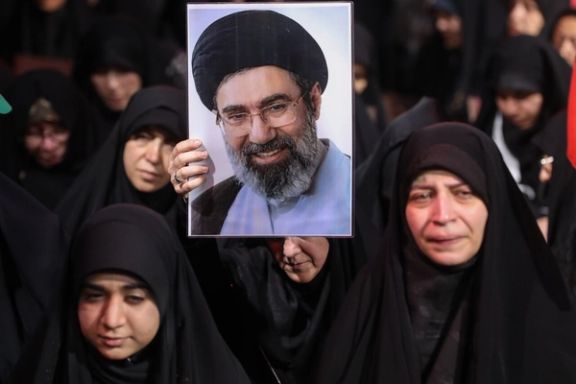
A message attributed to Iran’s Supreme Leader suggesting he had reservations about the agreement with the United States has sparked a fierce debate in Tehran, with hardliners and moderates offering sharply different interpretations of its meaning and implications.
Supporters of the government presented it as a roadmap for the next phase of diplomacy, while critics argued it showed the leader’s preferred approach had been sidelined during negotiations.
Hardline media outlets and political figures offered a starkly different reading, arguing that the message showed the leader’s views had not been fully reflected in the negotiation process.
Read the full article here.





A message attributed to Iran’s Supreme Leader suggesting he had reservations about the agreement with the United States has sparked a fierce debate in Tehran, with hardliners and moderates offering sharply different interpretations of its meaning and implications.
According to the message, Mojtaba Khamenei had "a different view in principle" regarding the memorandum but approved it after receiving assurances from the Supreme National Security Council (SNSC) and its chairman, President Masoud Pezeshkian, that Iran’s rights and the interests of the "Axis of Resistance" would be safeguarded.
The statement quickly produced competing narratives. Supporters of the government presented it as a roadmap for the next phase of diplomacy, while critics argued it showed the leader’s preferred approach had been sidelined during negotiations.
Pezeshkian said the message had "clarified the responsibility of all influential components in the upcoming negotiation process."
Parliament Speaker and lead negotiator Mohammad Bagher Ghalibaf said it strengthened Tehran’s hand in holding Washington to its commitments under the memorandum.
Leader ‘ignored’
Hardline media outlets and political figures offered a starkly different reading, arguing that the message showed the leader’s views had not been fully reflected in the negotiation process.
The conservative website Raja News described Pezeshkian’s response as disrespectful, writing: "Mr. Pezeshkian, your duty is obedience and compliance, not merely consideration."
The outlet also criticized Ghalibaf’s comments, arguing that he appeared to treat the leader’s conditions as negotiating leverage rather than binding red lines.
"It seems he has forgotten that the leader’s red lines are not bargaining tools in negotiations but mandatory boundaries by which his future performance will be judged," the website wrote.
Mohsen Maghsoudi, writing for Fars News Agency, argued that opponents of negotiations had effectively been vindicated because their position had been aligned with that of the leader.
He claimed that "the compromise camp" had made decisions on behalf of both society and officials and that "the principled view of the Guardian Jurist was not followed."
Kian Abdollahi, editor-in-chief of IRGC-linked Tasnim News Agency, wrote that if officials advanced the memorandum despite knowing the leader held a different view, they bore responsibility for the consequences.
Competing narratives
Analysts offered sharply different interpretations of the political significance of the message.
Political analyst Ruhollah Rahimpour argued that Khamenei was seeking to reassure hardliners that he had not abandoned his previous positions and had accepted the agreement only because of state interests and the guarantees he received.
"But this manner of expression unintentionally reveals a reality," he wrote.
"The agreement is so costly and controversial for part of the power structure that the leader of the Islamic Republic felt compelled to clear himself of blame before defending it."
Political analyst Shahir Shahid Saless argued that the statement implicitly acknowledged direct negotiations with Washington, noting that the reference to "future face-to-face talks" amounted to recognition of direct engagement with the United States.
Historian and commentator Abdollah Shahbazi argued that the message would increase pressure on Ghalibaf, Pezeshkian and Foreign Minister Abbas Araghchi from opponents of the memorandum.
He also compared the statement to former leader Ali Khamenei’s habit of maintaining distance from controversial decisions while allowing them to proceed.
The 'poisoned chalice'
The debate quickly spread to social media, where some users compared the statement to Ayatollah Ruhollah Khomeini’s acceptance of the ceasefire that ended the Iran-Iraq War.
But while Khomeini openly accepted responsibility for the decision, famously describing it as "drinking a chalice of poison," critics argued Mojtaba Khamenei’s message emphasized his reservations before endorsing the agreement.
Moderate commentators rejected suggestions that the leader was attempting to distance himself from the memorandum.
Ahmad Zeidabadi argued that relations between the president and the leader remained "close and based on mutual trust."
He said the emphasis on the role of the president and the SNSC amounted to an expression of confidence in Pezeshkian and a reminder of the presidency’s importance as the second-highest office in the political system.
Seraj Mirdamadi similarly argued that the statement reflected trust in an elected official rather than an attempt to shift responsibility, describing it as "democratic and encouraging."
The dispute is ultimately about more than the wording of a single statement. It reflects an emerging struggle over ownership of the memorandum itself.
With talks set to enter a new phase, that battle over credit and blame may prove almost as consequential as the negotiations themselves.
A message attributed to Iran's Supreme Leader Mojtaba Khamenei and the swift reactions from President Masoud Pezeshkian and chief negotiator Mohammad Bagher Ghalibaf highlighted the uneasy coalition behind the agreement with the United States and the lingering doubts about it.
The intervention comes after weeks of criticism from hardline media outlets, clerics and political factions that viewed the agreement as a dangerous concession to Washington.
While the ultraconservative Paydari Party is often portrayed as the main opponent of rapprochement with the United States, recent debate in Iran has highlighted a broader network of political, media and ideological actors resisting a Tehran-Washington understanding.
In a message issued after the signing of the memorandum, Mojtaba Khamenei warned that actions creating “pessimism among the people” effectively serve the enemy, language widely interpreted as a rebuke to hardline critics of the agreement.
Both Pezeshkian and Ghalibaf quickly issued statements pledging to follow the leader's guidance and defend the negotiating process.
The apparent effort to impose discipline on the debate has coincided with growing scrutiny of those opposing diplomacy.
A message attributed to Iran's Supreme Leader Mojtaba Khamenei and the swift reactions from President Masoud Pezeshkian and chief negotiator Mohammad Bagher Ghalibaf highlighted the uneasy coalition behind the agreement with the United States and the lingering doubts about it.
The intervention comes after weeks of criticism from hardline media outlets, clerics and political factions that viewed the agreement as a dangerous concession to Washington.
While the ultraconservative Paydari Party is often portrayed as the main opponent of rapprochement with the United States, recent debate in Iran has highlighted a broader network of political, media and ideological actors resisting a Tehran-Washington understanding.
In a message issued after the signing of the memorandum, Mojtaba Khamenei warned that actions creating “pessimism among the people” effectively serve the enemy, language widely interpreted as a rebuke to hardline critics of the agreement.
Both Pezeshkian and Ghalibaf quickly issued statements pledging to follow the leader's guidance and defend the negotiating process.
The apparent effort to impose discipline on the debate has coincided with growing scrutiny of those opposing diplomacy.
'Negotiation is haram'
One of the most detailed assessments came from Khabar Online, which argued that resistance to the ongoing negotiations should not be viewed as ordinary criticism but as an organized campaign to undermine diplomacy, attack key officials and deepen national divisions.
The report identified state television, IRIB, as the leading institutional opponent of an agreement. It cited remarks by hardline clerics who used the broadcaster's platforms to denounce negotiations with the United States.
Among them was cleric Gholamreza Ghassemian, who declared on state television that “negotiation is haram,” while arguing that those pursuing talks were acting contrary to divine principles. Another cleric, Sheikh Esmail Ramezani, insisted that relations with Washington were impossible.
Khabar Online accused IRIB of functioning as the mouthpiece of a single political faction rather than a national broadcaster and even alleged that portions of the leader's recent warnings against discord were downplayed to preserve a hardline narrative.
The report also pointed to figures associated with the late president Ebrahim Raisi's administration, arguing that some remained more focused on domestic political rivalries than on supporting diplomacy endorsed by the state's highest institutions.
Messianic detractors
The Paydari Party appeared third on the list. The article described it as a rigidly ideological parliamentary bloc that has used its network of lawmakers and media outlets to challenge the negotiating team and question the merits of engagement with Washington.
Yet even Paydari represents only part of the opposition.
In a separate interview with Rouydad24, former lawmaker and security official Mansoor Haghighatpour argued that resistance to a Tehran-Washington agreement also reflects the influence of the messianic Hojatiyeh association, whose legacy remains the subject of recurring debate in Iran.
The article did not mention several familiar hardline voices who have also opposed diplomacy. Among them are Kayhan editor Hossein Shariatmadari, a longtime critic of engagement with the United States, and MP Esmail Kowsari, who continued issuing threats against Washington and regional states during the war and subsequent ceasefire.
'Harsh response'
The divisions echo debates surrounding the 2015 nuclear agreement, when hardline factions accused negotiators of capitulation while supporters argued diplomacy was necessary to ease pressure on the country.
Ghalibaf was more explicit in defending the current process, warning that those acting against the leader's guidance “under the guise of obeying the Leadership” would face a “harsh response from the nation.”
For now, however, public criticism appears to have subsided. The day after the memorandum was signed, Iranian media largely fell silent on opposition to a possible agreement.
Whether that reflects a direct effort by the leadership to quiet dissent, or merely a temporary pause as political factions adjust to the new reality, may become clearer in the days ahead.
What is already apparent is that resistance to a deal with Washington extends well beyond any single party or faction—and that the leadership has signaled it expects those disputes to remain contained.
The easing of tensions between Iran and the United States has raised hopes for economic relief, but after years of declining living standards, many Iranians say any breakthrough will be judged by whether it improves their daily lives.
Iranian authorities now face growing public expectations that any diplomatic opening will translate into tangible economic gains. Many hope that sanctions relief or the release of frozen assets will ease financial pressures and improve living standards.
Economists, however, warn that even if restrictions are lifted, the benefits are unlikely to be felt immediately.
The uncertainty has been compounded by the fact that many of the memorandum's economic provisions remain unclear, including the timing and scope of any sanctions relief or asset releases.
According to a recent survey cited by Deputy Interior Minister Mohammad Bathaei during a press conference this week, 60% of respondents said they could no longer tolerate additional economic pressure.
Read the full article here.
The easing of tensions between Iran and the United States has raised hopes for economic relief, but after years of declining living standards, many Iranians say any breakthrough will be judged by whether it improves their daily lives.
Iranian authorities now face growing public expectations that any diplomatic opening will translate into tangible economic gains. Many hope that sanctions relief or the release of frozen assets will ease financial pressures and improve living standards.
Economists, however, warn that even if restrictions are lifted, the benefits are unlikely to be felt immediately.
The uncertainty has been compounded by the fact that many of the memorandum's economic provisions remain unclear, including the timing and scope of any sanctions relief or asset releases.
According to a recent survey cited by Deputy Interior Minister Mohammad Bathaei during a press conference this week, 60% of respondents said they could no longer tolerate additional economic pressure.
Economist Khalil Janami wrote in Khabar Online that “the real achievement of diplomacy only becomes meaningful when people feel its results in their livelihoods, employment opportunities, and quality of life.”
Economy Minister Ali Madanizadeh also cautioned Thursday that an agreement with Washington would not return Iran's economy to normal conditions overnight.
Discussing government finances, he said Iran had already faced a budget deficit of several hundred trillion tomans before the war and that conditions have since worsened. He said the government also borrowed 100 trillion tomans from the Central Bank after the conflict, with the inflationary consequences likely to become visible in the coming months.
Analysts say Iran's economic challenges—including high inflation, unemployment and years of stagnation—are structural problems that cannot be resolved quickly through a political agreement.
Working people under pressure
Workers have been among the hardest hit by Iran's prolonged economic crisis. In recent years, wage increases have consistently failed to keep pace with inflation, steadily eroding purchasing power.
The Iranian Labour News Agency (ILNA) recently reported that a worker's daily wage after eight hours of work is not enough to buy even 250 grams of red meat. The agency said many workers struggle to cover basic living expenses even when taking on overtime shifts.
Citizen reports received by Iran International indicate that layoffs and delays in wage payments continue in some sectors. Some people approved for unemployment benefits earlier this year say they have yet to receive any payments.
The middle class has also seen its financial position deteriorate. Families that once had the ability to save, buy homes and plan for the future have increasingly been forced to cut both essential and discretionary spending.
Some economists describe the trend as the gradual erosion of the middle class.
Eroding living standards
In May, Iranian families paid nearly 84% more than a year earlier for the same basket of goods and services.
For many households, food prices remain the most immediate concern.
Official figures from the Statistical Center of Iran show that year-on-year inflation for food and beverages reached 130% in the month ending in May. Annual food inflation also climbed to around 83%, up from roughly 75% in April.
Economist Morteza Afghah told Fararu that families are increasingly under pressure as inflation outpaces wage growth.
“Food has not been completely removed from household shopping baskets,” he said, “but nutritious and valuable items are being replaced with low-quality foods that simply fill the stomach.”
He added that lower-income groups, already spending nearly all of their income on essential goods, would face even greater hardship as inflation intensified.
Skepticism and hope online
The prospect of improved relations with Washington has prompted a wave of reactions on social media, where users expressed a mix of optimism and doubt.
Iranian journalist Azadeh Mokhtari wrote on X: “The military war between Iran and the United States has, at least for now, come to an end. But real victory will be felt when the war against inflation begins and ends with its defeat.”
She added: “People feel relieved when the sound of explosions stops, but they become happy when rising prices end. Today is the time to defeat inflation and control prices.”
Another user, Amir, welcomed the memorandum and expressed hope it would lead to a formal agreement, while lamenting the economic damage, job losses and destruction caused by the conflict.
Others remained unconvinced.
One user wrote: “Based on my limited experience, I highly doubt that signing an agreement will have even a small effect on people's lives. Rest assured, this agreement will not fill people's tables either.”