Dozens of women in Tehran and Shiraz have reported receiving personalized text messages in recent days from Iran's Headquarters for the Promotion of Virtue and Prevention of Vice warning them about hijab violations.
What began as a pilot surveillance project in the conservative city of Isfahan is now quietly extending its reach to the Iranian capital.
The emergence of these messages in Tehran and Shiraz has triggered widespread concern that Iran’s hardline factions are laying the groundwork for a high-tech nationwide surveillance system to enforce mandatory hijab laws.
“I was visiting my father’s grave in the early hours of the morning when I received the warning,” wrote one woman posting under the handle @jesuisminaaa on X. “I sat there, crying and crushed. Someone there had reported me. How can a person think only about my headscarf in a place filled with grief?”
The message she and others received is stark: remove your hijab in public, and you may face legal action.
From cars to the streets
Since 2023, Iran’s police have used traffic cameras to detect unveiled women in cars. Registered vehicle owners receive automated warnings. If three warnings are logged, the car is impounded for up to four weeks. Tens of thousands of cars have been seized under the measure.
Many male owners report that no women—veiled or unveiled—were in their cars on the dates cited in the warning messages. Some female drivers also say they were not using their vehicles at the time the alleged violations occurred.
According to multiple experts and reports on social media, the institution is now identifying individuals by cross-referencing surveillance footage with mobile phone geolocation data, smart card usage including subway and bank cards as well as government identity databases.
The result: personalized messages delivered to women’s phones within hours of their appearances in public spaces.
Legal and ethical questions
The scale and precision of the operation have provoked an outcry from legal experts, activists and ordinary citizens.
“Law experts, please answer this: does the Headquarters for the Promotion of Virtue and Prevention of Vice even have legal access to people’s personal data?” wrote Abdollah Ramezanzadeh, a reformist former government spokesman and law professor on X. “Let the country be in peace!”
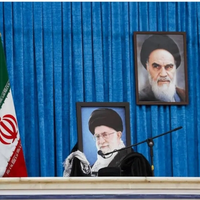
The head of the powerful, hardline institution is appointed by Supreme Leader Ali Khamenei and appears to operate independently of the government.
Both the Minister of Telecommunications, Sattar Hashemi, and government spokesperson Fatemeh Mohajerani have denied the administration’s involvement or authorization for the expanded surveillance.
“It has been proven that the use of force in the realms of culture and society leads to counterproductive results. In the field of education, police and judicial measures have not been effective and will not be,” the president’s deputy chief of staff for communications said in a post on X.
“Blaming the administration and the president for the costs of repeating failed experiences is both inaccurate and unethical,” Mehdi Tabatabai added.
But critics argue that even if the government, parliament and the judiciary have no direct control and are not formally endorsing the measures, they are doing little to intervene.
Tehran's iconic Milad tower in a typically polluted day
Tehran and Washington are set to resume talks this weekend, but growing calls to condition any agreement on the dismantling of Iran’s nuclear infrastructure are casting a shadow over early optimism.
The hard line on full dismantlement is the newly stiffened public stance of the White House and US envoy Steve Witkoff and has also been pushed by Israel's prime minister, Benjamin Netanyahu, who asserted on Monday that nothing less would be acceptable to his government.
His intervention did not sit well with Tehran.
“Israel’s fantasy that it can dictate what Iran may or may not do is so detached from reality that it hardly merits a response,” Iranian Foreign Minister Abbas Araghchi posted on X, calling Netanyahu "brazen" for telling a US president what to do.
Somewhat surprisingly, he went on to criticize the Democratic administration of Joe Biden in what appeared to be an attempt to court Donald Trump.
“Netanyahu’s allies in the failed Biden team—who failed to reach a deal with Iran—are FALSELY casting our indirect negotiations with the Trump administration as another JCPOA,” Araghchi wrote.
The significance of this public gesture from an Iranian official—at the expense of the man accused of appeasing Tehran almost every week of his term—cannot be overstated.
This shift in tone may be partly driven by the economic fallout from the port fire in Bandar Abbas, which observers believe has deepened Tehran’s financial strain.
The Islamic Republic, and its chief negotiator Araghchi, have every reason to be apprehensive about a breakdown in talks, given the "very bad" alternative mooted by Trump.
The desire to project cautious optimism was also evident in an editorial on Iran Diplomacy, a website closely aligned with the foreign ministry.
The article outlined two scenarios: the U.S. targeting Iran's nuclear sites, or accepting a “new regional order” in which Tehran becomes a key energy supplier to the West. The latter, it said, is the more likely outcome.
In this scenario, according to Iran Diplomacy, Iran-allied armed groups in the region would be redefined and gradually integrated into formal military structures.
Curiously, the piece framed all this as proof of Tehran's deterrent power and Washington's surrender to Iran’s demands, while cautioning against overconfidence when dealing with a president who has a “bad record of undermining commitments.”
Two reformist publications, Sharq and Etemaad, published similar stories on the same day.
Sharq said there was room for cautious optimism while talks continue, noting that major issues remain unresolved.
Etemaad reported that a recent poll showed 8 in 10 respondents support the talks and a potential agreement, provided it protects Iran’s interests and preserves advances in nuclear science and missile technology.
The pro-government publication pointed out that in a similar poll conducted just before the 2015 nuclear deal, fewer people - 7 in 10 - said they favored a deal.
Iranian authorities have refused to register a newborn named Guntay, denying him a birth certificate and healthcare access over what they called the name's non-compliance with Iranian and Islamic cultural norms.
The child, born on April 22, remains without official identification over a week later.
The parents from Parsabad, a city in Iran’s northwestern Ardabil province, were informed that the name Guntay was deemed unsuitable by the national registry on the grounds that it did not align with what authorities classify as “Iranian and Islamic naming conventions," according to HRANA, a US-based news outlet focused on human rights in Iran.
“This is not the first time the government has interfered in our choice of names,” a source told HRANA. The source said the parents have filed a formal complaint and are pursuing the matter through legal channels.
Without a birth certificate, the child is unable to access basic services including healthcare and legal identity, HRANA reported.
The outlet added that the experience has imposed psychological and administrative strain on the family.
Iran's civil registry system has a documented pattern of rejecting names perceived to originate from non-Persian ethnic traditions. A similar case last year in Tabriz saw authorities block issuance of birth certificates for triplets named Elshen, Elnur, and Sevgi, all Turkish names.
Although a court later ruled in favor of the parents, the registry appealed the decision, sending the case to a higher court.
Under the UN Convention on the Rights of the Child, which Iran has signed, every child must be registered immediately after birth and has the right to a name and nationality. Article 7 of the convention specifically affirms these entitlements, while Article 2 prohibits discrimination based on language or ethnicity.
Iran’s civil registry defends its policies by citing cultural preservation. "The selection of names that insult Islamic sanctities, as well as titles, epithets, and obscene or gender-inappropriate names, is prohibited. Individuals bearing such names must take action to change them," it says on its website.
The agency maintains a name selection database and offers a name interaction system designed to guide parents toward what it calls Iranian and Islamic options.
Critics, including human rights groups and legal scholars, say the law reinforces state control over cultural expression and disproportionately affects the country's wide array of ethnic minorities in provinces with higher populations of them such as Kordestan, Khuzestan, and Sistan and Baluchestan.
A currency dealer poses for a photo with a U.S one dollar bill and Iranian rials in an exchange shop in Tehran, Iran December 25, 2022.
Foreign exchange rates, which have a critical impact on economic life, fluctuate frequently depending on where they are traded, adding to the anxiety of businesses and ordinary Iranians enduring inflation and sanctions.
The Iranian rial hit an all-time low in March, trading at one million per US dollar in March as tensions with the United States flared.
Now ahead of a third round of Iran-US nuclear talks in Oman on Saturday, the open market rate for the dollar was around 810,000 rials, while two government-controlled rates, the EST and the official rate for importing basic goods stood at 692,000 and 280,000 respectively.
Ordinary people, who often convert their savings into hard currency or gold during periods of political and international uncertainty, generally only have access to the open market.
Many businesses — and even some semi-official entities — also turn to the open market when they cannot access foreign currency through official channels or when they require immediate liquidity.
In recent years, successive governments have attempted to reform Iran’s tangled foreign exchange system to curb corruption fueled by cronyism, where favored individuals, groups and state entities secure access to cheaper rates to import goods that are later sold at much higher open market prices.
The reforms have mostly failed because entrenched political networks benefiting from the system oppose them.
The open market
Iran’s open or free foreign exchange market operates largely outside government control. It consists of authorized currency exchange shops or sarrafi as well as informal street-level transactions.
The open market -- where currencies like the US dollar, Euro, and UAE dirham are the most actively traded -- reflects real-time supply and demand. Prices in the open market are heavily influenced by inflation expectations, political risks, sanctions developments and broader economic conditions.
Open market rates typically run significantly higher than the officially controlled rates, particularly during times of instability and often provide the clearest snapshot of Iran’s underlying economic and political realities.
They serve as a crucial, unofficial benchmark that influences pricing, import costs, and inflation across the country.
The government occasionally intervenes, injecting foreign currency through selected sarrafi or cracking down on street traders they deem illegal when volatility escalates amid ramped up political tension or rapid devaluation.
Official rates for staples, medical goods
This rate, currently 285,000 rials to the dollar, is provided through designated banks to importers of basic goods such as wheat, rice, and animal feed as well as medicine and medical supplies.
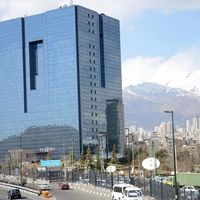
The decision on allocation of this type of currency lies with related ministries and the Central Bank of Iran (CBI).
An earlier preferential rate for these imports fixed at 48,000 rials has now been almost completely scraped.
Electronic Trading System (ETS) rates
The ETS rate, closer to the free-market rate, is set by supply and demand within the Electronic Trading System (ETS) of the Iran Center for Currency and Gold Exchange.
Established in late February 2022, the center was intended to provide a formal platform for cash currency exchanges to undercut the open market.
While exchange rates on ETS are determined by market forces, the CBI actively supervises the platform, intervening by injecting or limiting foreign currency supplies to influence rates.
This managed market — accessible to licensed banks and exchange offices — handles both cash transactions and informal transfers called hawala. Transactions that previously took place through a system dubbed NIMA are now also routed through ETS.
The defunct NIMA system
The NIMA system, an acronym for integrated system of foreign exchange, was created to regulate foreign currency earned through exports and allocate it for imports of non-essential goods and services. It was officially scrapped in January.
Within NIMA, transactions occurred between exporters and importers under CBI supervision, with the central bank setting a floor and ceiling for permissible exchange rates.
For years, NIMA served as the government’s primary tool for managing the trade balance and controlling the flow of foreign currency.
Its elimination marked a significant shift toward market-based pricing mechanisms — albeit still heavily managed — through the ETS platform.
Corruption amid multiple rates
Several major corruption scandals have rocked Iran in recent years, many of which stem from its multi-tiered exchange rate system.
The Debsh Tea Company scandal is one of the most recent and possibly largest embezzlement cases in the history of the Islamic Republic.
High-ranking officials from various ministries, the Customs Administration and the Central Bank were implicated in the scandal that first came to public attention in 2023.
The family-owned company received $3.37 billion in subsidized foreign currency (at the NIMA rate) to import tea and machinery but sold $1.4 billion of the currency it had received in the open market at higher rates, did not import the promised equipment and allegedly imported low-quality tea it labelled as premium-grade.
Iran executed a political prisoner accused of spying for Israel at Ghezel Hesar prison near Tehran on Wednesday.
Mohsen Langarneshin had previously spoken of being coerced into confessing under the threat of torture and harm to his family.
Iran International reported on Monday that Langarneshin had been moved to solitary confinement, signaling the imminent execution.
Langarneshin had been arrested by security forces in Tehran on July 3, 2023 and was initially held at a Ministry of Intelligence safehouse.
He later recounted being threatened with torture on the first night of detention and said he was warned he would be subjected to severe torture unless he confessed.
“In the interrogations, they put me under so much pressure,” Langarneshin said in a voice message from prison. “They said they would arrest every member of my family and keep them until I no longer recognize them.”
He said that he was ultimately forced into making false confessions, including to buying a motorcycle equipped with a camera and transporting explosive materials.
A Revolutionary Court in Tehran accused Langarneshin of spying for Israel and sentenced him to death on charges of “waging war against God” and “spreading corruption on Earth”, according to the judiciary’s media outlet Mizan.
Mizan said Langarneshin had been recruited by Israel's Mossad. The judiciary accused him of “supporting the assassination of a person named Sayyad Khodaei, facilitating attacks on a Defense Ministry-linked industrial site in Isfahan, and handling logistics, equipment, safehouses, and money transfers for Mossad operatives.”
In the past four decades, numerous reports have documented the torture of political detainees in Iran, often leading to severe injury or death. The Islamic Republic has consistently denied responsibility.
Forced confessions have long tainted the Islamic Republic. In March, Iran Human Rights said: "The Islamic Republic has used televised confessions as a propaganda tool aimed at creating fear and justifying the heavy sentences handed down to its political opponents and activists since its inception in 1979."
"Such confessions are extracted after physical and/or psychological torture, lengthy solitary confinement, threats or promises of reduction in the gravity of sentences and threats against family members," according to the rights group.
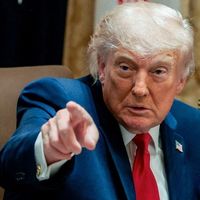
Talks with Tehran aim to deprive Washington's Middle East nemesis of a nuclear weapon, but time will tell whether US President Donald Trump will carry through on his threat to bomb the country.
After a stunning political comeback landed Trump back in the White House for a second term, the outcome of a typically Trumpian, bumpy dash for a deal is not yet known after 100 days.
Trump’s new term began with a reinstatement of his so-called “maximum pressure” campaign, this time aggressively targeting Iran’s energy and oil sectors, including Chinese importers and independent refineries processing Iranian crude.
Since Trump took office, the Iranian currency initially plummeted by 80,000 rials to the dollar. However, it has recently clawed back some value due to growing optimism around nuclear negotiations between Washington and Tehran.
This diplomatic track is being pursued alongside potential military contingency plans, with Trump repeatedly warning that if a deal is not reached, "there will be bombing."
"It will be bombing the likes of which they have never seen before," the president said during an NBC news interview in March.
Signs of military posturing are evident: strategic bombers positioned near Iran in Diego Garcia, a surge of US aircraft in Doha, and intensified strikes against the Iran-backed Houthis in Yemen—all serving as a backdrop to the ongoing negotiations.
'Rushed, inconsistent'
Trump’s Iran policy so far appears muscular but inconsistent, said retired Major General Andrew Fox in an interview with Iran International.
“Trump is showing military flex but he’s not using all the leverage America has,” Fox argued. “In terms of timing, the Iranian economy was already struggling. That could have been leveraged further. We saw the rial jump 20% as soon as the talks were announced—so potentially a negotiating lever was given away too easily."
Fox described Trump's approach so far as "mixed, rushed, and inconsistent."
“We know Trump values a deal above all else. He’s super anti-war. He doesn't like using the military lever of governance,” said Fox, now a research fellow at the Henry Jackson Society.
One reason for the haste may be Trump’s self-imposed 60-day deadline for reaching a nuclear agreement with Iran's Supreme Leader Ayatollah Khamenei. Trump issued this timeline in a letter delivered shortly after taking office, news outlet Axios reported.
Speed versus Substance
Holly Dagres, creator of the newsletter The Iranist and a senior fellow at The Washington Institute, warned that Trump's fast-track approach risks overlooking critical issues like human rights.
“This hurry might meet the 60-day deadline Trump wants,” Dagres said. “But it risks rushing past key issues that deserve deeper negotiation.”
Dagres suggested human rights benchmarks could be tied to sanctions relief—crediting Nobel laureate Narges Mohammadi and other activists inside Iran for pushing to include human rights in the nuclear discussions.
Mixed Messaging from Trump's Team
Adding to the confusion, US Special Envoy to the Middle East Steve Witkoff recently issued conflicting public statements on the goal of the negotiations.
On April 14, Witkoff told Fox News the US might accept Iran maintaining uranium enrichment at those permitted by a 2015 nuclear deal (3.67%) under stringent verification.
Yet a day later he insisted on social media that a "Trump deal" must require Iran to "stop and eliminate" its enrichment program entirely.
The apparent contradiction could be strategic, according to Behnam Ben Taleblu, senior fellow at the Foundation for Defense of Democracies (FDD).
“The president actually likes to cultivate uncertainty,” Taleblu said, arguing it is too early to fully grade Trump’s Iran policy—or even predict where it is headed.
Ironically, Taleblu added, Trump’s biggest success so far has gone largely unrecognized.
“The most successful element of the Iran policy has not been celebrated even by die-hard politicos who believe in the president, and that is getting the Islamic Republic of Iran under Ali Khamenei to engage, be it directly or indirectly, with the Trump administration."
Early Days, Uncertain Outcomes
For Iranian-American policy director Cameron Khansarinia of the National Union for Democracy in Iran (NUFDI), it’s simply too soon to judge.
Trump’s unpredictable style, Khansarinia said, makes it difficult to forecast his next move. But he praised Trump’s first-term Iran policy as the most effective against Iran's theocratic rulers —and sees similar themes emerging now.
“I think he does have a strategy. It just hasn't had time yet to bear fruit," Khansarinia said. "For a successful Iran strategy, all he has to do is go back to his first term and implement those policies.”
President Trump’s unpredictable style arguably may have forced Tehran into negotiations—an achievement or a mishap depending on where one sits on the political spectrum.
His current Iran policy reflects a strategic shift from his first term, combining diplomatic overtures with overt threats of attack, the wisdom of which remains unclear.