Iran blocks newborn’s birth certificate over ‘banned’ name
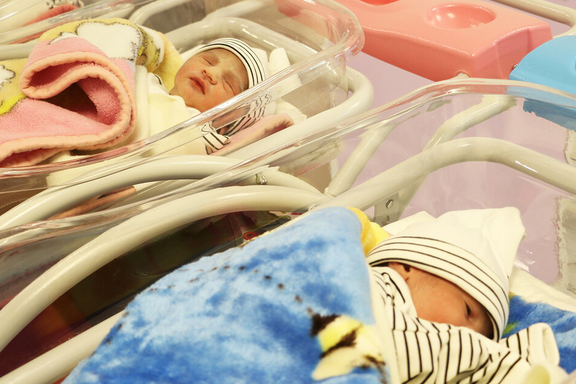
Iranian authorities have refused to register a newborn named Guntay, denying him a birth certificate and healthcare access over what they called the name's non-compliance with Iranian and Islamic cultural norms.
The child, born on April 22, remains without official identification over a week later.
The parents from Parsabad, a city in Iran’s northwestern Ardabil province, were informed that the name Guntay was deemed unsuitable by the national registry on the grounds that it did not align with what authorities classify as “Iranian and Islamic naming conventions," according to HRANA, a US-based news outlet focused on human rights in Iran.
“This is not the first time the government has interfered in our choice of names,” a source told HRANA. The source said the parents have filed a formal complaint and are pursuing the matter through legal channels.
Without a birth certificate, the child is unable to access basic services including healthcare and legal identity, HRANA reported.
The outlet added that the experience has imposed psychological and administrative strain on the family.
Iran's civil registry system has a documented pattern of rejecting names perceived to originate from non-Persian ethnic traditions. A similar case last year in Tabriz saw authorities block issuance of birth certificates for triplets named Elshen, Elnur, and Sevgi, all Turkish names.
Although a court later ruled in favor of the parents, the registry appealed the decision, sending the case to a higher court.
Under the UN Convention on the Rights of the Child, which Iran has signed, every child must be registered immediately after birth and has the right to a name and nationality. Article 7 of the convention specifically affirms these entitlements, while Article 2 prohibits discrimination based on language or ethnicity.
Iran’s civil registry defends its policies by citing cultural preservation. "The selection of names that insult Islamic sanctities, as well as titles, epithets, and obscene or gender-inappropriate names, is prohibited. Individuals bearing such names must take action to change them," it says on its website.
The agency maintains a name selection database and offers a name interaction system designed to guide parents toward what it calls Iranian and Islamic options.
Critics, including human rights groups and legal scholars, say the law reinforces state control over cultural expression and disproportionately affects the country's wide array of ethnic minorities in provinces with higher populations of them such as Kordestan, Khuzestan, and Sistan and Baluchestan.
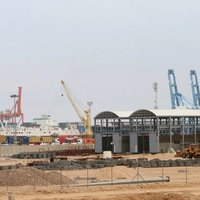
The Iranian government confirmed a media ban on coverage regarding last week's explosion at Rajaei port in Bandar Abbas where at least 70 people have died and more than 1,000 injured, with the threat of prosecutions confirmed by the judiciary.
Fatemeh Mohajerani, Iran's government spokeswoman, said the decision is aimed at “maintaining a single voice across state institutions.”
She described the directive not as a news blackout, but as a mechanism to “manage the issue properly.”
“The government is not interested in withholding information from the people,” she said, adding that provincial bodies have been instructed not to release information about the explosion’s cause until further notice.
Iran International reported earlier this week that journalists and outlets had received warnings about covering the incident, and described a heavy security presence in Bandar Abbas.
Judiciary spokesman Asghar Jahangir said on Wednesday that legal cases have been opened against several media figures for reporting on the blast, with warnings issued to individuals on social media.
Mizan, the judiciary’s official news agency, reported that violators of the media ban would face prosecution for “spreading illegal news.”
“An incident of this scale, with such casualties, demands precise and documented investigation,” he said. “We are waiting for the results to be finalized and announced." Jahangir said.
On Tuesday, The Guardian quoted a Tehran-based reporter speaking on condition of anonymity, who said, “Not only were we warned against ground reporting, we were also banned effectively from sharing reports on social media.”
“In the face of a tragedy such as this, what is there to hide? Either the death toll is way more than 70, or they are suppressing the real cause of the explosion. Following the filing of charges, our newsrooms are also self-regulating in fear that they’ll be facing legal consequences.”
No official casualty figures have been released by the health ministry, which, along with its subsidiaries, was ordered on Sunday to withhold all related information.
Iran International has been contacted independently from a worker at the port citing 29 deaths in one office alone.
Iran executed a political prisoner accused of spying for Israel at Ghezel Hesar prison near Tehran on Wednesday.
Mohsen Langarneshin had previously spoken of being coerced into confessing under the threat of torture and harm to his family.
Iran International reported on Monday that Langarneshin had been moved to solitary confinement, signaling the imminent execution.
Langarneshin had been arrested by security forces in Tehran on July 3, 2023 and was initially held at a Ministry of Intelligence safehouse.
He later recounted being threatened with torture on the first night of detention and said he was warned he would be subjected to severe torture unless he confessed.
“In the interrogations, they put me under so much pressure,” Langarneshin said in a voice message from prison. “They said they would arrest every member of my family and keep them until I no longer recognize them.”
He said that he was ultimately forced into making false confessions, including to buying a motorcycle equipped with a camera and transporting explosive materials.
A Revolutionary Court in Tehran accused Langarneshin of spying for Israel and sentenced him to death on charges of “waging war against God” and “spreading corruption on Earth”, according to the judiciary’s media outlet Mizan.
Mizan said Langarneshin had been recruited by Israel's Mossad. The judiciary accused him of “supporting the assassination of a person named Sayyad Khodaei, facilitating attacks on a Defense Ministry-linked industrial site in Isfahan, and handling logistics, equipment, safehouses, and money transfers for Mossad operatives.”
In the past four decades, numerous reports have documented the torture of political detainees in Iran, often leading to severe injury or death. The Islamic Republic has consistently denied responsibility.
Forced confessions have long tainted the Islamic Republic. In March, Iran Human Rights said: "The Islamic Republic has used televised confessions as a propaganda tool aimed at creating fear and justifying the heavy sentences handed down to its political opponents and activists since its inception in 1979."
"Such confessions are extracted after physical and/or psychological torture, lengthy solitary confinement, threats or promises of reduction in the gravity of sentences and threats against family members," according to the rights group.
A new poll showed that nearly half of Israelis support a strike on Iran's nuclear facilities, even without US support, though divides between the Jewish and Arab demographic were stark.
Asked whether Israel should carry out a military strike on Iran’s nuclear facilities, even without American backing, 45% of Israelis believe Israel should do so and 41.5% do not.
Within the Jewish population, support for potential attacks reached 52% among proponents, with 34.5% expressing opposition. A significantly different perspective prevails among Arabs, where 76% are against the attacks and only 9% are supportive.
The data came from the April 2025 Israeli Voice Index, conducted by the Viterbi Center for Public Opinion and Policy Research.
Additionally, against the backdrop of talks between the United States and Iran on the Iranian nuclear program, 45.5% of Israelis think that Israel's security will be among President Trump's main considerations, while 44% think it will not.
Last month, US President Donald Trump openly threatened to bomb Iran if it did not agree to a new nuclear deal. It has since emboldened Israel to step up its rhetoric.
Earlier this week, Israeli premier Benjamin Netanyahu said, “A real deal that works is one that removes Iran’s capacity to enrich uranium for nuclear weapons... Dismantle all the infrastructure of Iran’s nuclear program. That is a deal we can live with.”
Iran's Parliament Speaker Mohammad Bagher Ghalibaf dismissed the remarks on Tuesday. “Netanyahu, in a desperate attempt to avoid political extinction, has resorted to threats. These worthless tirades are not taken seriously,” he said.
A new explosion at a gunpowder company operating under Iran's top security body in central Isfahan province killed two people on Tuesday, marking the latest in a wave of blasts across the country that have killed at least 73 people in just four days.
The incident occurred at the Ava Nar Parsian Chemical Industries warehouse in the Meymeh district of Isfahan province, according to the provincial crisis management office.
Emergency services and firefighters were dispatched to the site. No official cause has been announced.
Screengrab from state media footage showing the aftermath of the explosion at the Ava Nar Parsian warehouse in Meymeh, Isfahan province, on 29 April 2025.
The blast comes amid a wave of explosions across Iran, including a deadly fire at a fuel depot in Zahedan on Monday that killed one person and critically injured two others, according to the local rights group Hal Vash.
Over the past four days, at least 73 people have been reported killed in similar incidents nationwide, including 70 killed in Saturday’s massive explosion at Rajaei port in the southern city of Bandar Abbas.
The site of Tuesday’s blast, Ava Nar Parsian, according to its website, manufactures fireworks and gunpowder and operates under the supervision of Iran’s National Security Council—the country’s highest decision-making body on security matters.
However, investigations by Iran International suggest the company may also be linked to Iran's security and military apparatus.
One of Ava Nar Parsian’s top executives, Damoun Beheshtnejad, previously held a managerial position at Nargostar Sepahan, another chemical facility in Isfahan that was the site of a major explosion in June 2021.
At the time, British newspaper The Guardian reported that the complex housed the Iran Aircraft Manufacturing Industrial Company (HESA), a key player in the Islamic Republic’s drone program.
According to official company filings, certain decisions at Ava Nar Parsian fall under the authority of the "Intelligence Protection Organization for Weapons and Ammunition Management of Isfahan Province." The company is licensed to produce, trade, import, and export commercial, industrial, and chemical explosives.
The Iranian president said that Nagorno-Karabakh is an inseparable part of Azerbaijan's territory during a meeting with his counterpart, supporting the country's rights over the disputed region as the two nations attempt to mend ties.
"We believe that the rights of the people of Azerbaijan must be respected, and Karabakh must belong to the country of Azerbaijan. Karabakh is an inseparable part of the soil of Azerbaijan, and we respect that," Masoud Pezeshkian said during a meeting with Azerbaijani officials in Baku on Monday.
Azerbaijani President Ilham Aliyev officially welcomed Pezeshkian at the Zagulba Presidential Palace on Monday afternoon, followed by a private meeting between the two leaders and a joint session of their high-ranking delegations.
Tensions between Tehran and Baku have run high for years, largely due to Baku's close ties with Iran's nemesis Israel and a January 2023 attack on Azerbaijan's embassy in Tehran.
Last week, Pezeshkian expressed hopes for a rapid improvement in relations and cooperation between the two countries as part of a broader effort to mend ties.
Iran and Azerbaijan held two-day joint naval exercises in the Caspian Sea in November, in moves towards rapprochement.
Iranian and Azerbaijani presidents during a meeting in Baku on April 28, 2025
Pezeshkian’s remarks come a month after Iran welcomed a peace agreement between Azerbaijan and Armenia.
The Nagorno-Karabakh conflict, a decades-long dispute rooted in the aftermath of the Soviet Union's dissolution, saw a significant development in March when both Azerbaijan and Armenia announced an agreement on the text of a peace treaty.
Nagorno-Karabakh, internationally recognized as part of Azerbaijan but historically with a majority ethnic Armenian population, had long been a flashpoint between the two South Caucasus nations.
Iran, sharing a northern border with both countries, has consistently underscored its interest in regional stability, particularly along its 44-kilometer frontier with Azerbaijan.