• العربية
  • فارسی
Brand
  • Iran Insight
  • Politics
  • Economy
  • Analysis
  • Special Report
  • Opinion
  • Podcast
  • Iran Insight
  • Politics
  • Economy
  • Analysis
  • Special Report
  • Opinion
  • Podcast
  • Theme
  • Language
    • العربية
    • فارسی
  • Iran Insight
  • Politics
  • Economy
  • Analysis
  • Special Report
  • Opinion
  • Podcast
All rights reserved for Volant Media UK Limited
volant media logo

About half of Israelis back strike on Iran's nuclear facilities, poll shows

Apr 29, 2025, 13:56 GMT+1
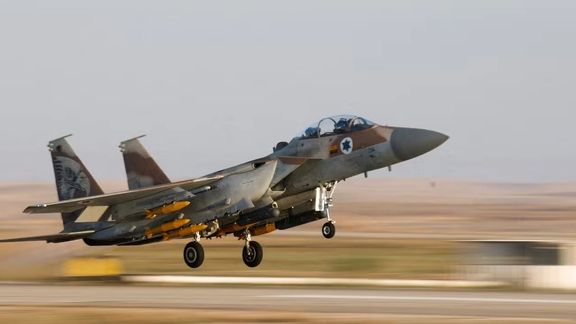
An F-15 fighter jet at Hatzerim Airbase in southern Israel

A new poll showed that nearly half of Israelis support a strike on Iran's nuclear facilities, even without US support, though divides between the Jewish and Arab demographic were stark.

Asked whether Israel should carry out a military strike on Iran’s nuclear facilities, even without American backing, 45% of Israelis believe Israel should do so and 41.5% do not.

Within the Jewish population, support for potential attacks reached 52% among proponents, with 34.5% expressing opposition. A significantly different perspective prevails among Arabs, where 76% are against the attacks and only 9% are supportive.

The data came from the April 2025 Israeli Voice Index, conducted by the Viterbi Center for Public Opinion and Policy Research.

Additionally, against the backdrop of talks between the United States and Iran on the Iranian nuclear program, 45.5% of Israelis think that Israel's security will be among President Trump's main considerations, while 44% think it will not.

Last month, US President Donald Trump openly threatened to bomb Iran if it did not agree to a new nuclear deal. It has since emboldened Israel to step up its rhetoric.

Earlier this week, Israeli premier Benjamin Netanyahu said, “A real deal that works is one that removes Iran’s capacity to enrich uranium for nuclear weapons... Dismantle all the infrastructure of Iran’s nuclear program. That is a deal we can live with.”

Iran's Parliament Speaker Mohammad Bagher Ghalibaf dismissed the remarks on Tuesday. “Netanyahu, in a desperate attempt to avoid political extinction, has resorted to threats. These worthless tirades are not taken seriously,” he said.

Most Viewed

Ghalibaf defends Iran-US talks amid hardline backlash
1
INSIGHT

Ghalibaf defends Iran-US talks amid hardline backlash

2
INSIGHT

Iran diplomacy wobbles as factions compete to avoid looking soft on US

3
VOICES FROM IRAN

Bread shortages, soaring prices strain households in Iran, residents say

4
ANALYSIS

The politics of pink: how Iran uses cuteness to rebrand violence

5

Scam messages seek crypto for ships’ safe passage through Hormuz, firm warns

Banner
Banner

Spotlight

  • Diplomacy tolls at Hormuz as conflict returns to its doorstep
    OPINION

    Diplomacy tolls at Hormuz as conflict returns to its doorstep

  • Opposition to US talks grows in Tehran as ceasefire deadline nears
    INSIGHT

    Opposition to US talks grows in Tehran as ceasefire deadline nears

  • Tehran moderates see ‘no deal–no war’ limbo as worst outcome
    INSIGHT

    Tehran moderates see ‘no deal–no war’ limbo as worst outcome

  • The future has been switched off here
    TEHRAN INSIDER

    The future has been switched off here

  • Lights out, then gunfire: Witnesses recount Mashhad protest crackdown
    VOICES FROM IRAN

    Lights out, then gunfire: Witnesses recount Mashhad protest crackdown

  • Is Iran entering its Gorbachev moment?
    INSIGHT

    Is Iran entering its Gorbachev moment?

•
•
•

More Stories

Gunpowder factory explosion kills two as Iran faces string of deadly blasts

Apr 29, 2025, 12:17 GMT+1

A new explosion at a gunpowder company operating under Iran's top security body in central Isfahan province killed two people on Tuesday, marking the latest in a wave of blasts across the country that have killed at least 73 people in just four days.

The incident occurred at the Ava Nar Parsian Chemical Industries warehouse in the Meymeh district of Isfahan province, according to the provincial crisis management office.

Emergency services and firefighters were dispatched to the site. No official cause has been announced.

Screengrab from state media footage showing the aftermath of the explosion at the Ava Nar Parsian warehouse in Meymeh, Isfahan province, on 29 April 2025.
100%
Screengrab from state media footage showing the aftermath of the explosion at the Ava Nar Parsian warehouse in Meymeh, Isfahan province, on 29 April 2025.

The blast comes amid a wave of explosions across Iran, including a deadly fire at a fuel depot in Zahedan on Monday that killed one person and critically injured two others, according to the local rights group Hal Vash.

Over the past four days, at least 73 people have been reported killed in similar incidents nationwide, including 70 killed in Saturday’s massive explosion at Rajaei port in the southern city of Bandar Abbas.

The site of Tuesday’s blast, Ava Nar Parsian, according to its website, manufactures fireworks and gunpowder and operates under the supervision of Iran’s National Security Council—the country’s highest decision-making body on security matters.

However, investigations by Iran International suggest the company may also be linked to Iran's security and military apparatus.

One of Ava Nar Parsian’s top executives, Damoun Beheshtnejad, previously held a managerial position at Nargostar Sepahan, another chemical facility in Isfahan that was the site of a major explosion in June 2021.

At the time, British newspaper The Guardian reported that the complex housed the Iran Aircraft Manufacturing Industrial Company (HESA), a key player in the Islamic Republic’s drone program.

According to official company filings, certain decisions at Ava Nar Parsian fall under the authority of the "Intelligence Protection Organization for Weapons and Ammunition Management of Isfahan Province." The company is licensed to produce, trade, import, and export commercial, industrial, and chemical explosives.

Tehran's red lines dominate parliament's closed-door session on US talks

Apr 29, 2025, 09:57 GMT+1

Iran's parliament convened a closed-door session on Tuesday to review the ongoing indirect negotiations between Tehran and Washington, with lawmakers expressing firm red lines on domestic nuclear enrichment, lifting of sanctions and foreign oversight.

Speaking to reporters after the session, Abbas Goudarzi, spokesperson for the Iranian Parliament's presiding board, said the meeting included a briefing from the National Security and Foreign Policy Committee, emphasizing the Islamic Republic’s core demands in the talks.

“Iran remains committed to negotiations as long as the other side remains committed,” Goudarzi said. “Our emphasis is on peaceful domestic enrichment. Our definition may differ from the Americans; enrichment means internal production, not the import of enriched material.”

He underlined that any final deal must include the removal of sanctions, unfreezing of blocked assets, and restoration of banking ties. “These are fundamental pillars of our position,” he said.

Goudarzi added that regional issues, Iran’s defensive capabilities, and the suspension of enrichment are not open for negotiation. “The talks are strictly nuclear in scope. We reject any inspection outside of those by the International Atomic Energy Agency,” he added.

Parliament Speaker Mohammad Bagher Ghalibaf echoed this stance, saying that the legislature’s role is supervisory. “The government must remain within the framework of the Strategic Action Law to lift sanctions and protect the Iranian nation’s interests,” he said.

The Strategic Action Law to Lift Sanctions and Safeguard the National Interests of Iran, passed in 2020 and aimed at more parliamentary influence on nuclear policy, mandated a rapid escalation of nuclear activities and a significant reduction in IAEA monitoring in reaction to the US' withdrawal from the JCPOA and the subsequent reimposition of sanctions in 2019.

Ghalibaf also addressed recent remarks by Israeli Prime Minister Benjamin Netanyahu, who has stepped up rhetoric against Iran, dismissing the comments as attempts to influence the Iran-US talks.

Earlier this week, Netanyahu said, “A real deal that works is one that removes Iran’s capacity to enrich uranium for nuclear weapons... Dismantle all the infrastructure of Iran’s nuclear program. That is a deal we can live with.”

Ghalibaf brushed off the remarks. “Netanyahu, in a desperate attempt to avoid political extinction, has resorted to threats. These worthless tirades are not taken seriously”, he said.

Drawing attention to the alignment between US and Israel, Ghalibaf said, "The Zionist regime cannot take independent action without US permission," in spite of threats.

However, it is US President Donald Trump who has said outright that if Iran does not agree to a nuclear deal, the US will bomb Iran.

Ghalibaf also delivered a stark warning: "Should even a fraction of these threats be executed, Iran’s response will be decisive. Any aggression would be akin to igniting a powder keg, putting not just the Zionist regime, but all US bases in the region squarely in the crosshairs of Iranian retaliation."

France warns of renewed Iran sanctions as IAEA chief says time running out

Apr 29, 2025, 08:44 GMT+1

France warned on Monday that it would reimpose sanctions on Iran if European security interests are not guaranteed under the expiring nuclear deal, while the head of UN nuclear watchdog said time was running out to prevent military conflict over the issue.

"We will not hesitate for a second to reapply all the sanctions that were lifted ten years ago," French minister for Europe and Foreign Affairs Jean-Noel Barrot told reporters, referring to the snapback mechanism that can reactivate sanctions lifted under the 2015 nuclear deal, set to expire in October.

"These sanctions would then permanently close Iranian access to European technologies, investments and markets, with devastating effects on the country’s economy."

IAEA Director General Rafael Grossi, speaking alongside Barrot, stressed the urgency of the situation, saying, "It's not a matter of months or years. It's perhaps a matter of weeks whether we can really come to something that is doable, is feasible, and above all, avoids the spectre of more military conflicts."

Barrot, however, said there was no military solution to the Iranian nuclear issue, calling the diplomatic path "a bumpy road" but necessary as France is coordinating closely with Britain, Germany, and US Secretary of State Marco Rubio to support the ongoing dialogue with Iran.

"Iran is on the verge of acquiring nuclear weapons. Ten years ago, Iran made a commitment to the international community to contain its nuclear activities," Barrot said.

"Today, Iran has exceeded all the thresholds to which it committed itself. According to IAEA reports, Iran now has 6,000 kilograms of enriched uranium, thirty times more than the limit set by the agreement ten years ago," Barrot added.

Last week, speaking at the US-based think tank Council on Foreign Relations, Grossi said Iran has enough enriched uranium to produce several nuclear warheads and could do so within months.

Iran and the United States opened a third round of nuclear negotiations in Oman over the weekend with the next round expected to be held in Rome on Saturday.

Iran, Israel race to court Azerbaijan as rivalry in Caucasus heats up

Apr 28, 2025, 19:33 GMT+1
•
Umud Shokri

The Iranian president’s visit to Azerbaijan, soon to be followed by the Israeli prime minister's trip, highlights Baku’s sophisticated geopolitical maneuvering as Tehran and Tel Aviv vie for influence in the strategically vital South Caucasus.

It is a region where energy corridors, security alignments, and infrastructure ambitions increasingly converge.

President Masoud Pezeshkian’s trip—the first by an Iranian president since 2022—marks a cautious effort to mend a strained relationship.

Restoring Iran-Azerbaijan ties

Central to the distrust is Tehran’s long-standing fear that Azerbaijan could serve as a launchpad for Israeli operations against Iran, given Baku’s deepening military cooperation with Tel Aviv.

Relations further deteriorated after the 2023 attack on Azerbaijan’s embassy in Tehran, prompting a mutual expulsion of diplomats.

Equally important is Baku's accusation that Iran's Revolutionary Guards (IRGC) seeks to destabilize Azerbaijan through groups like the Huseyniyyun. Azerbaijani authorities assert that these groups have been involved in plotting attacks, fomenting unrest, and targeting foreign officials.

Another flashpoint is the Turkish-backed Zangezur Corridor, a proposed route connecting mainland Azerbaijan to Nakhchivan via Armenia.

Iran opposes the project, viewing it as a threat to its regional influence and access to Armenia. However, signs of de-escalation include joint Iranian-Azerbaijani naval drills in the Caspian Sea in late 2024 and progress on the North-South Transport Corridor with Russia.

While the Zangezur dispute remains unresolved, Pezeshkian’s visit focuses on practical cooperation, particularly in energy, rather than contentious territorial issues.

Israel's strategic countermove

Israeli Prime Minister Benjamin Netanyahu’s upcoming visit reflects Israel’s intention to bolster Azerbaijan’s role as a regional partner amid escalating tensions with Iran. The timing of this trip appears as a direct counter to Tehran's outreach.

Israel seeks to deepen its footprint near Iran’s borders, using Azerbaijan’s strategic geography as both a listening post and an energy partner.

Key goals of Netanyahu's visit include strengthening intelligence-sharing on Iran’s nuclear program, encouraging Baku to formalize its long-covert security ties with Israel, and leveraging Azerbaijani diplomacy to ease Turkish-Israeli frictions.

Expanding the Abraham Accords network to include Azerbaijan remains an aspirational longer-term objective.

Competing regional visions

These high-profile visits reflect a broader contest for influence across the South Caucasus.

Turkey and Israel favor the Zangezur Corridor as a means to enhance connectivity and weaken Iranian leverage, while Iran views the project as a direct challenge to its regional role.

Israel has consistently backed Azerbaijan’s position in the Nagorno-Karabakh conflict, while Iran—historically closer to Armenia—has taken a more pragmatic approach toward Baku.

In Syria, Israel and Turkey seek to curb Iranian entrenchment. Armenia’s gradual alignment with the West further deepens Tehran’s strategic anxiety.

For Israel, Azerbaijan offers a critical hub for intelligence gathering and diversification of energy supplies, anchoring its evolving South Caucasus strategy.

Enduring tensions, strategic risks

Despite gestures toward normalization, structural tensions between Iran and Azerbaijan remain deep.

The $9.3 billion in arms deals signed by Baku and Tel Aviv between 2020 and 2024 remains a major obstacle to trust. Iran has repeatedly threatened military action if the Zangezur Corridor advances without its involvement, underscoring how infrastructure projects have become proxies for larger geopolitical rivalries.

Meanwhile, regional flashpoints—such as Israel’s military operations in Gaza and Iran’s nuclear escalation—could further complicate Azerbaijan’s delicate balancing act.

As external pressures mount, Baku’s strategy of engaging both Tehran and Tel Aviv becomes increasingly fraught with risk.

Pezeshkian’s visit signals Iran’s pragmatic attempt to recalibrate its relationship with Azerbaijan after years of estrangement. It is less a breakthrough than a tactical reassessment in response to shifting regional dynamics.

Netanyahu’s impending trip adds another layer to the strategic competition, reinforcing Azerbaijan’s emergence as a pivotal mediator between rival powers.

Ultimately, the interaction between these two visits will shape not only the future of Iran-Azerbaijan ties but also the broader geopolitical realignment underway in the South Caucasus.
Iran, US continue talks but major hurdles complicate a deal

Apr 28, 2025, 17:35 GMT+1
•
Ali Afshari

Negotiations between Iran and the United States are making cautious progress, but the outcome remains highly uncertain as fundamental divisions persist and any overlap between the two sides’ red lines remains elusive.

The third round of talks took place in Muscat on Saturday, marking the first time that technical experts engaged directly.

Although the initiation of technical discussions is a positive development, addressing detailed issues exposed deep divisions, slowing the momentum. Statements by Oman’s Foreign Minister Badr al-Busaidi and Iran’s Foreign Minister Abbas Araghchi were notably cautious, signaling limited optimism.

Araghchi emphasized the substantial gap between the two sides' demands, noting that goodwill alone will not bridge it. Talks are scheduled to continue next week at both expert and chief negotiator levels.

Potential breakthrough?

Despite the uncertainties, a deal could be easier to forge compared to the one in 2015, for several reasons:

  1. Regional dynamics have shifted, with Arab states now largely supporting an agreement.
  2. Iran’s frozen assets are significantly lower—$10–20 billion today, compared to $80–150 billion in 2015.
  3. Iran’s regional influence through proxy groups has weakened.
  4. Domestic unrest has eroded the IRI’s internal position, increasing its incentive to negotiate.
  5. The reduced intensity of US-Russia rivalry removes a complicating factor.
  6. The US-China trade war may hamper Washington’s ability to apply maximum pressure.

Both Washington and Tehran prefer a diplomatic outcome over military confrontation. However, historical, political, and ideological differences complicate the path forward.

Core obstacles

First, the legacy of mistrust remains deep. Decades of conflict, sanctions, and failed diplomacy have hardened suspicions on both sides.

President Trump's withdrawal from the 2015 deal heightened Iranian concerns about American reliability. Meanwhile, US officials remain wary of Iran’s actions. Any agreement would require both sides to genuinely believe that commitments will be honored—an especially tall order given the political volatility in both countries.

Second, Tehran is unwilling to fully dismantle its nuclear infrastructure, resisting a repeat of Libya’s disarmament model. It may agree to reduce uranium enrichment and degrade highly enriched stockpiles but will preserve advanced centrifuge capabilities.

Iran’s regional influence, although waned, still concerns Washington, particularly with regard to Israel. Many in Benjamin Netanyahu's cabinet believe the current window offers a rare chance to cripple Iran’s nuclear capabilities and may push for covert or limited military operations to derail negotiations.

European powers are another factor. Britain, Germany, and France, alarmed by Iran’s growing military cooperation with Russia, are considering reimposing UN sanctions if no progress is made. Though not directly involved in current talks, their support will be critical to any final agreement.

Sanctions are another obstacle. While economic pressure has hurt Iran deeply, many sanctions, particularly those linked to terrorism, were codified by Congress and cannot be lifted by the administration alone. A complex framework for phased sanctions relief will be necessary.

Interim agreement?

In sum, while opportunities for a breakthrough exist, formidable challenges remain. Mistrust, nuclear safeguards, regional tensions, domestic politics, and sanctions enforcement all complicate diplomacy.

An interim agreement—laying the groundwork for a broader, binding deal—appears the most realistic short-term path.