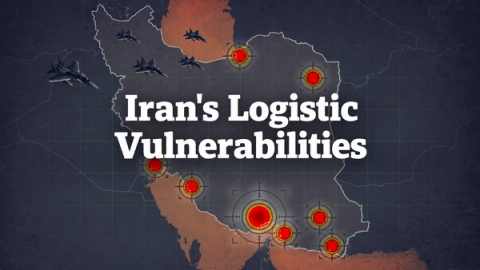
The report, published on Wednesday, focused on the Strait of Hormuz not only as an energy chokepoint but as a critical corridor for submarine cables serving countries around the Persian Gulf, including the UAE, Qatar, Bahrain, Kuwait and Saudi Arabia.
It argued that several major cable systems pass through or near the waterway and said the southern side of the Persian Gulf depends far more heavily than Iran on maritime internet routes.
Rather than reading as a neutral technical explainer, the article appeared to frame those cables, landing stations and data hubs as strategic pressure points in the conflict.
Tasnim also drew attention to the concentration of cloud and data-center infrastructure in states on the southern side of the Persian Gulf, especially the UAE and Bahrain, effectively sketching a map of assets whose disruption could carry major economic and communications consequences.
That warning carries added weight because digital infrastructure has already come under attack in this war.