• العربية
  • فارسی
BrandBrand
  • Iran Insight
  • Politics
  • Economy
  • Analysis
  • Special Report
  • Opinion
  • Podcast
  • Live TV
  • Iran Insight
  • Politics
  • Economy
  • Analysis
  • Special Report
  • Opinion
  • Podcast
  • Live TV
  • Theme
  • Language
    • العربية
    • فارسی
  • Iran Insight
  • Politics
  • Economy
  • Analysis
  • Special Report
  • Opinion
  • Podcast
  • Live TV
All rights reserved for Volant Media UK Limited
volant media logo

Iran hardliners push tanker convoy to defy US blockade

Maryam Sinaiee
Maryam Sinaiee

Iran International

Nov 21, 2026, 02:29 GMT+0
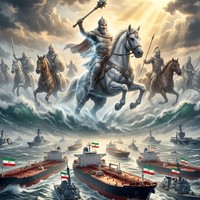
 An illustration published by the Revolutionary Guards-affiliated Fars News Agency depicts the mythical Persian hero Fereydoun leading a convoy of Iranian oil tankers escorted by warships
An illustration published by the Revolutionary Guards-affiliated Fars News Agency depicts the mythical Persian hero Fereydoun leading a convoy of Iranian oil tankers escorted by warships

Iranian hardliners are calling for a convoy of oil tankers to challenge the US naval blockade, threatening military retaliation against regional energy infrastructure if Washington attempts to stop the vessels.

The proposal, published Thursday by the Revolutionary Guards-affiliated Fars News Agency, calls for tankers to sail to China and threatens strikes on oil facilities in the United Arab Emirates, Saudi Arabia and Qatar if the US intervenes. It emerged shortly after reports that an unsanctioned tanker had been loaded at Iran's Kharg Island oil terminal.

Fars dubbed the plan “Operation Fereydoun,” after a legendary hero in the Persian epic Shahnameh.

No official plans for a convoy have been announced, although Foreign Minister Abbas Araghchi said Friday that Iran would break the blockade.

“A blockade is a military action. A military action also has a military response,” political and military analyst Nima Akbarkhani said during a Thursday night discussion on Iranian state television.

Akbarkhani described a previously discussed scenario in which Iranian tankers would sail individually with their Automatic Identification System (AIS) signals switched on and Iranian flags displayed, while Tehran announced in advance which regional facilities it would target if any vessel were attacked.

During the Be Vaght-e Iran program, host Ruhollah Razavi suggested placing media teams, members of the public and international anti-war activists aboard the tankers to increase the political and media costs of any US intervention.

Akbarkhani endorsed the idea, arguing that unlike vessels sent to Gaza, which Israel prevented from reaching their destination despite extensive media coverage, Iran could deter attacks on blockade-breaking tankers by threatening military retaliation.

Support for confrontation grows

Political analyst Mostafa Najafi, recently described in Iranian media as an adviser to Supreme National Security Council Secretary Mohsen Rezaei, wrote on X that Supreme Leader Mojtaba Khamenei had ordered an end to the “neither war nor peace” situation some time ago.

Najafi suggested that the effort extended beyond diplomacy, with military options also under consideration.

“Apparently, Tehran no longer wants to sit back and watch the blockade and threats,” he wrote.

Majid-Reza Hariri, president of the Iran-China Chamber of Commerce, called on Iranians across the political spectrum to support efforts to break the blockade.

“After months of pursuing negotiations in various ways, every Iranian patriot, regardless of political outlook, should support the government in breaking the naval blockade imposed by the aggressive United States by any means possible,” he wrote Friday.

Media analyst Alireza Shiva argued that Iran was signaling that energy security in the Persian Gulf could not be defined unilaterally.

“You cannot target Iran's oil exports while expecting the energy exports of others to continue in complete security,” he wrote on X.

A high-risk strategy

Hardline journalist Parisa Nasr argued that Iran had made a strategic mistake by treating the blockade as a negotiating issue rather than a wartime measure intended to weaken the country and force its surrender.

She advocated a strategy of “bringing the crisis to the brink” to pressure Washington into easing the blockade while strengthening Iran's deterrence against attacks on its tankers.

Energy analyst Abdullah Babakhani offered a more cautious assessment, suggesting that US forces might initially allow some Iranian tankers through before pursuing and potentially seizing them in international waters.

He compared the scenario to operations involving the pursuit and seizure of tankers linked to Venezuela last year, saying Iran's response to such an eventuality remained unpredictable.

China, Iran's largest oil buyer before the blockade, has been identified as the intended destination for the proposed convoy. Whether Beijing would accept the shipments remains unclear.

The proposal therefore presents Tehran with a potentially consequential choice: continue seeking a negotiated end to the blockade or test Washington's willingness to enforce it at the risk of a wider military confrontation.

Most Viewed

Tanker loads Iranian crude in Persian Gulf as Tehran weighs resuming exports
1

Tanker loads Iranian crude in Persian Gulf as Tehran weighs resuming exports

2
ANALYSIS

A tough winter for Iran's cement industry, a tougher one for steel

3

Houthi missile attack damages Riyadh’s tallest building

4

GTA 6 costs, slow internet frustrate Iranian gamers, fuel satire

5

Iran readies tankers to run US blockade, threatens Persian Gulf oil if fired on

Banner
Banner
Banner
Banner
Banner
Banner
Banner

Spotlight

  • Iran hardliners push tanker convoy to defy US blockade

    Iran hardliners push tanker convoy to defy US blockade

  • War damage leaves Iran with few options to avert winter gas crunch
    ANALYSIS

    War damage leaves Iran with few options to avert winter gas crunch

  • Ideology or history? Analysts clash over the roots of Iran’s enmity with the US

    Ideology or history? Analysts clash over the roots of Iran’s enmity with the US

  • A test of power: Who will control Iran's state TV?
    INSIGHT

    A test of power: Who will control Iran's state TV?

  • A tough winter for Iran's cement industry, a tougher one for steel
    ANALYSIS

    A tough winter for Iran's cement industry, a tougher one for steel

  • How Iranians are turning grief into defiance
    OPINION

    How Iranians are turning grief into defiance

  • Iran could launch dirty-bomb attack, but risks make it unlikely
    ANALYSIS

    Iran could launch dirty-bomb attack, but risks make it unlikely

•
•
•

More Stories

Who is Mohammad Javad Bavand, the ex-IRGC official sanctioned by US?

Nov 21, 2026, 00:10 GMT+0
100%

Mohammad Javad Bavand, a former IRGC intelligence official sanctioned by the United States on Friday, has played a key role in Iran's sanctioned oil trade, working through a network of intermediaries to sell crude and recover revenues held abroad.

The US Treasury sanctioned Bavand alongside three other Iranians — Majid Taj, Mojtaba Arabnejad and Mohammadhossein Servati — over their roles in networks supporting Iran's oil trade and sanctions evasion.

The Treasury said Bavand worked with intermediaries, including Taj, the brother of Iranian Football Federation president Mehdi Taj, to recover proceeds from Iranian oil sales held abroad, despite members of the network owing billions of dollars from previous transactions.

Iran International investigations have documented Bavand's rise from the Revolutionary Guards Intelligence Organization to senior positions overseeing oil sales, including the allocation of millions of barrels of crude to intermediaries with billions of dollars in outstanding debts.

From intelligence officer to oil trader

Bavand previously served as deputy head of the economic directorate of the Revolutionary Guards Intelligence Organization under Mostafa Ahadi.

Following the US withdrawal from the nuclear agreement in 2018, he represented Guards intelligence on a Supreme National Security Council committee responsible for overseeing sanctioned oil sales.

He later became a special assistant to the oil minister under former President Ebrahim Raisi. After leaving the position under President Masoud Pezeshkian, Bavand returned to the Oil Ministry in June 2026 to oversee oil trading.

Millions of barrels entrusted to indebted traders

In September, Iran International published confidential documents raising questions about the allocation of sanctioned crude to four intermediaries who had failed to return billions of dollars from earlier sales.

The documents showed that the traders were offered unusually steep discounts despite their outstanding debts.

A subsequent investigation found that Bavand and oil-trading official Ali Akbar Pour-Ebrahim had assigned 86 million barrels of Iranian crude to four intermediaries, including Hossein Shamkhani and Mohammad Hadi Momenin.

The findings formed part of Iran International's reporting on a struggle between networks linked to the Revolutionary Guards Intelligence Organization and the Intelligence Ministry for control of Iran's sanctioned oil trade.

A November 9 investigation revealed further details of Iran's efforts to use oil terminals and storage facilities in China to circumvent US sanctions.

It cited an earlier document showing that Bavand had instructed Momenin, an oil intermediary who owed $2 billion in outstanding proceeds, to use a vessel linked to Hossein Shamkhani to deliver oil for storage at a Chinese port.

Treasury names Bavand's associates

The Treasury said Bavand had worked with the Revolutionary Guards and Sepehr Energy Jahan Nama Pars, a previously sanctioned company tasked with selling oil for Iran's Armed Forces General Staff.

Its designation of Majid Taj also brought renewed attention to a relationship documented in Iran International's earlier investigations into the oil-trading network.

Bavand and Taj were sanctioned under Executive Order 13902, which targets designated sectors of Iran's economy. Arabnejad, who was linked to Mahan Air, and Servati, who was linked to Sepehr Energy Jahan Nama Pars, were sanctioned under counterterrorism-related authorities.

The measures block any assets the four hold under US jurisdiction and generally prohibit Americans from conducting transactions with them.

War damage leaves Iran with few options to avert winter gas crunch

Nov 20, 2026, 20:14 GMT+0
•
Dalga Khatinoglu
100%
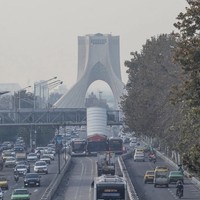
Traffic moves along a smog-covered highway near Tehran's Azadi Tower, as air pollution blankets the Iranian capital, November 18, 2026

Iran faces a worsening winter energy crisis after wartime damage to its gas infrastructure cut production capacity, with officials warning of shortages in 11 provinces and limited options to make up the shortfall.

The country's daily gas deficit, estimated at around 300 million cubic metres last winter, is expected to reach 430 million cubic metres this winter.

Mohammad Sadegh Azimifar, head of the National Iranian Oil Products Distribution Company (NIOPDC), has announced that 60 million litres of kerosene have been stockpiled in some provinces facing severe gas shortages.

He said LPG reserves for household consumption would also be increased.

Azimifar also reported that 3.2 billion litres of diesel and mazut (fuel oil) have been stockpiled to compensate for gas shortages at power plants.

Production below prewar levels

Iranian officials say gas processing facilities in Asaluyeh were targeted during the recent war, reducing the country's daily gas production capacity by 230 million cubic metres.

Some facilities have returned to operation in recent weeks, bringing the daily production shortfall down to 130 million cubic metres.

The latest figures released by Iranian gas officials indicate that the country is currently producing around 690 million cubic metres of gas per day (mcm/d), compared with 793 mcm/d during the same period last year.

During the peak winter consumption period, Iran normally raises daily gas production to more than 830 mcm/d.

It remains unclear whether all production facilities are operating at their full technical capacity. Nevertheless, the available figures suggest that Iran's gas production capacity has declined by at least 100 mcm/d.

These figures refer to raw gas extracted from fields, rather than processed gas delivered to the national network. Non-methane components are removed during processing, while some gas is consumed by production and transmission facilities.

Last winter, for example, Iran extracted around 837 mcm/d of raw gas but delivered approximately 750 mcm/d of processed gas to the national network.

Of that amount, just under 700 mcm/d reached domestic consumers, with around 40 mcm/d exported and the remainder lost through the country's ageing transmission and distribution network.

Winter demand forces cuts to industry

According to Statistical Center data, Iran's daily household gas consumption in winter is more than 2.5 times its average level during other seasons. A similar seasonal pattern applies to the commercial, public and agricultural sectors.

To meet this demand, the government sharply curtails gas supplies to industries, petrochemical plants and power stations.

Last winter, combined gas consumption by households and the agricultural, commercial and public sectors reached 388 mcm/d, compared with an average of 154 mcm/d during other seasons.

By contrast, daily gas deliveries to power plants, petrochemical facilities, industries and the transport sector fell to 311 million cubic metres, down from an average of 493 mcm/d during other seasons.

With little scope to restrict household consumption during winter, the government has to absorb the seasonal surge by reducing supplies to other sectors.

Limited alternatives to natural gas

Iran already made extensive use of alternative fuels in power plants and industrial facilities last winter, leaving limited room to compensate for further gas shortages.

Only 15% of the country's thermal power generation capacity can operate on liquid fuels, namely mazut and diesel, according to the report's figures.

These power plants already switch to alternative fuels during peak winter demand, leaving little additional scope to increase their use.

Meanwhile, half of the industrial sector's winter gas consumption comes from small-scale industries, many operating within urban areas and unable to switch to alternative fuels.

According to Kpler data, Iran exported an average of approximately 256,000 barrels per day of mazut and 378,000 barrels per day of propane and butane (LPG) by sea last year.

These exports have been halted by the US naval blockade. The combined energy content of the fuels is equivalent to around 85 million cubic metres of natural gas per day.

In theory, retaining these fuels for domestic use could help offset part of the winter gas deficit. But doing so would require industries and power plants to substitute mazut and LPG for natural gas wherever possible, alongside a suspension of natural gas exports.

Both scenarios face significant obstacles.

Many industries lack the technical capacity to switch fuels, while Iran urgently needs gas export revenues, particularly given the severe disruption to its oil revenues.

With alternative fuels already widely used last winter, power plants and industrial facilities are unlikely to have much additional capacity to absorb them this year.

Greater reliance on liquid fuels would also come against the backdrop of Iran's winter air pollution crisis. Last winter, government offices and schools were closed for approximately four weeks because of air pollution and energy shortages.

Eleven provinces face gas supply stress

Iranian officials say 11 provinces will face gas supply stress this winter, with the situation expected to be particularly severe in the northern provinces of Mazandaran, Gilan and North Khorasan.

An examination of Ministry of Energy data shows that these three provinces consumed an average of around 50 mcm/d of gas in 2023, including 21 mcm/d used by households and the commercial, public and agricultural sectors.

Azimifar's announcement that 60 million litres of kerosene have been stockpiled in some provinces facing severe shortages underscores the government's preparations for possible supply disruptions.

The stockpile has an energy content equivalent to approximately 59 million cubic metres of natural gas, although the extent to which it can replace gas consumption depends on the availability of suitable equipment and the sectors receiving the fuel.

Eight other provinces are also expected to face supply stress.

Together, the 11 provinces consumed around 240 million cubic metres of gas per day in 2023, accounting for 37% of the country's total consumption that year.

Iran readies tankers to run US blockade, threatens Persian Gulf oil if fired on

Nov 20, 2026, 14:13 GMT+0
100%
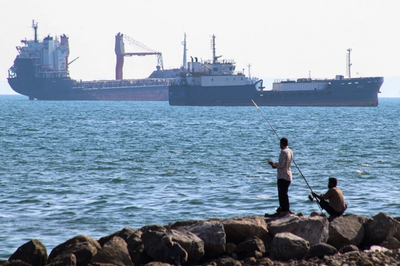
Children play on the beach in Bandar Abbas, on the Strait of Hormuz, as tankers sit offshore, November 19, 2026.

Guards-linked media, lawmakers and Friday prayer leaders signaled this week that Iran is preparing to send tankers through the US naval blockade, and warned that any attack on them would bring strikes on oil facilities across the Persian Gulf.

“The blockade must be broken,” Foreign Minister Abbas Araghchi told the ILNA news agency on Friday, when asked about reports that Iranian oil was being loaded for export. Iran would make every effort to export oil and to pursue negotiations, he said.

No Iranian official has confirmed a convoy. But the idea has moved in days from commentary by Revolutionary Guards-affiliated outlets to parliament and, on Friday, to prayer leaders in several cities, a path that decisions taken at the top in Tehran often follow before they are announced. Friday sermons are coordinated nationally by a council that answers to the supreme leader.

‘If a single bullet hits’

The campaign began on Wednesday, when the Guards-affiliated Fars news agency published a commentary urging Tehran to send a convoy of tankers through the blockade.

Iran should announce it officially, Fars said, and warn that any attack on the convoy would bring strikes on the region’s energy infrastructure, “especially UAE oil,” and on communications networks in Dubai.

On Thursday, the oil tracker TankerTrackers said Iran “appears to be preparing to ship out oil again.”

Its co-founder, Samir Madani, told Reuters that a tanker was taking on Iranian crude from another vessel in the Persian Gulf. If it cleared the blockade, it would be the first seaborne export of Iranian crude since mid-July. Al-Monitor reported that more than 14 Iranian tankers were gathered near Kharg Island, Iran’s main oil terminal, most with their tracking transponders switched off.

  • Iran war could cut global oil demand by over 4% by 2035 - IEA

    Iran war could cut global oil demand by over 4% by 2035 - IEA

  • Tanker loads Iranian crude in Persian Gulf as Tehran weighs resuming exports

    Tanker loads Iranian crude in Persian Gulf as Tehran weighs resuming exports

The Guards-affiliated Sabereen News, in a post labeled “unofficial,” said dozens of tankers were preparing to sail for China, and that Tehran had warned governments across the region it would go to war if the United States attacked them.

A Fars report said that any disruption to a tanker’s voyage would mean explosions at oil facilities in the UAE, Saudi Arabia, Qatar, Kuwait, Oman and Bahrain. Fars illustrated its commentary with an image of Fereydun, the hero of the Persian epic the Shahnameh, on horseback in the sea, guarding Iranian ships.

Mostafa Najafi, described in Iranian media as an adviser to Mohsen Rezaei, secretary of the Supreme National Security Council, linked the plan to the top. The supreme leader had ordered an end to the state of “neither war nor peace,” he wrote, and “the military option is also on the agenda.” Tehran, he wrote, “no longer wants to watch the blockade and the threats.”

From parliament to the pulpit

Mohammad Bayat, a lawmaker on the presiding board of parliament’s Internal Affairs Committee, called on Friday for tankers to be readied and for “an ultimatum” to Washington and the region’s governments. Iran, he said, “must be the initiator” of practical steps to end the blockade.

In the northwestern city of Ardabil, prayer leader Hassan Ameli, a member of the Assembly of Experts, went furthest.

  • Iran's oil output plunges below pre-war domestic needs

    Iran's oil output plunges below pre-war domestic needs

  • Bessent says Iran economy will contract by more than 25%

    Bessent says Iran economy will contract by more than 25%

Officials had taken “a very important decision to break this siege,” he said, and tankers would soon set sail from Kharg for China.

“Our armed forces have warned the Americans that if a single shot is fired at them, all oil centers in the Persian Gulf countries will be Iran’s legitimate target,” he said.

In Tehran, Friday prayer leader Mohammad-Javad Haj-Aliakbari said the armed forces were ready “at sea, on land, in the air, everywhere,” with orders “to take unlimited, unrestricted action, at a time of our own choosing.” “If they want to test us, they can go ahead and test us,” he said.

In Khorramabad, in the west, Friday prayer leader Ahmadreza Shahrokhi urged the armed forces not to let the blockade continue, and said that if any attack came from the territory of the Persian Gulf states, the armed forces should target “the palaces” of their rulers.

In Yasuj, in the southwest, Nasir Hosseini said Iranians wanted the blockade broken “with the power of the nation and the armed forces” and spoke of nuclear deterrence. In Tabriz, Ahmad Motahari-Asl warned that Iran had “not yet closed” the Bab el-Mandeb strait at the mouth of the Red Sea.

The Guards’ commander, Ahmad Vahidi, said: “Today we have put part of a great battle behind us, and part of it lies ahead.”

Why now

The blockade has cut Iran off from its main source of foreign currency. Iran loaded about 2 million barrels of crude and condensate a day in March, Reuters reported, citing Kpler and Vortexa. By September, Kpler recorded no loadings at all, the first full month without any since the 1979 revolution. Production has fallen to about 1.8 million barrels a day, roughly half its prewar level.

Chinese refiners usually pay one to two months after delivery, so payments for Iran’s last cargoes could arrive by mid-December, Homayoun Falakshahi, Kpler’s head of crude oil analysis, has told Iran International. After that, Tehran stands to lose $3 billion to $6 billion a month.

  • Qatar turns to US LNG to cushion Iran war losses

    Qatar turns to US LNG to cushion Iran war losses

  • Once US blockaded Iran, China’s ‘Malaysian’ oil imports dried up

    Once US blockaded Iran, China’s ‘Malaysian’ oil imports dried up

Alihossein Ghazizadeh, an Iran International analyst, said Tehran had concluded that time was against it. Washington wants to keep the blockade in place until the state is weak enough to collapse, give in or face mass protest, he said, and fighting later would cost the United States less.

“If a war is going to happen in three months, it’s better that it happens today,” he said, describing Tehran’s thinking. Iran could provoke a clash, he said, but the decision to start a full-scale war would rest with the United States and Israel.

Washington tightens, and waits

The United States has moved the other way. On Wednesday, US Central Command widened the blockade to cover ship-to-ship transfers at sea. “Such ships may be stopped, boarded, diverted, captured, or directed to proceed to the Iranian port where the cargo originated,” it said, warning that ships failing to comply could face force. CENTCOM says it has redirected 150 merchant vessels and disabled five since June, and in September US forces struck several Iranian tankers near Kharg and Jask after the Guards fired missiles at a US warship.

President Donald Trump has signaled patience. He told Axios this week that he was in no rush to decide on Iran and would see what happened after the new year.

On Thursday he said he could end the war “immediately,” but that Saudi Arabia had asked him “to please just let it be the way it is now for a while, because [Iran is] disintegrating.”

Treasury Secretary Scott Bessent, who runs the economic campaign, told CNBC this month that death threats against him from Iran’s leadership showed the pressure was working. Of the Guards, he said: “They’re like a dangerous cornered animal.”

Israel has pressed the other way. Mossad chief Roman Gofman was in Washington last week to urge a resumption of joint strikes, Axios and the Wall Street Journal reported.

If the tankers sail, Washington faces a choice it has so far avoided: let the blockade break, or fire on Iranian ships and test whether Tehran will carry out its threat against the Persian Gulf states.

Iraq begins taking back town held for a decade by Iran’s strongest militia ally

Nov 20, 2026, 10:24 GMT+0
100%
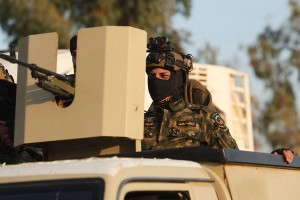
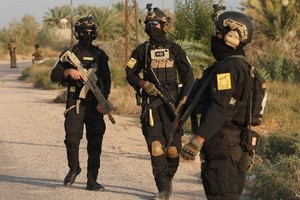
Members of the Iraqi police take part in a security deployment on the outskirts of Jurf al-Sakhar, Babil province, Iraq, November 20, 2026.

Iraqi forces began deploying on Friday in Jurf al-Sakhar, a town south of Baghdad held for more than a decade by Iran’s most powerful militia ally in Iraq, under a deal brokered by Shiite leaders days after the head of Iran’s Quds Force arrived in Baghdad.

A convoy flying Iraqi flags drove toward Jurf al-Sakhar on Friday, and hundreds of soldiers took up positions on the outskirts.

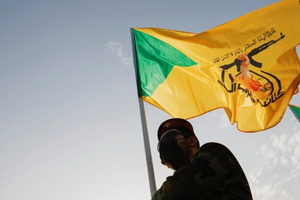
The yellow flags of Kataib Hezbollah were still flying farther inside the town, and none of the group’s fighters were visible. A security headquarters is due to open on Saturday to oversee the handover, with a unit assigned to protect energy facilities.

Under the deal, Kataib Hezbollah fighters are to withdraw to other parts of Iraq, Reuters reported, citing security officials. Al Arabiya, citing sources, said the withdrawal would be phased over a month. A joint command of the army, federal police, energy police and units of the Popular Mobilization Forces is taking over the town.

The standoff began on Monday, when Prime Minister Ali al-Zaidi ordered troops to prepare to enter Jurf al-Sakhar after an investigation accused Kataib Hezbollah of running a network that siphoned off hundreds of millions of dollars’ worth of state oil through tampered pipelines.

Nine senior security and oil officials were dismissed, and arrests linked to the case raised fears of an armed confrontation. The group denies the accusations and had warned it would resist any attempt to enter the town.

The same day, Esmail Qaani, commander of the Revolutionary Guards’ Quds Force, which runs Iran’s network of allied armed groups abroad, arrived in Baghdad to help defuse the crisis, Iraqi Shiite political sources told Reuters. Kataib Hezbollah said its leader, Abu Hussein al-Hamidawi, met Qaani and Hadi al-Amiri, head of the Iran-backed Badr Organization, in the talks that led to the deal.

A town nobody could enter

Jurf al-Sakhar, a Sunni farming town on the Euphrates about 50 kilometers south of Baghdad, was retaken from Islamic State in 2014 by the army and Shiite militias, Kataib Hezbollah among them. Its residents were never allowed back. More than 100,000 people from the town and surrounding villages remain displaced, Shafaq News reported, and even government officials have rarely been let in.

  • Iraq’s move on militia stronghold may do little to curb Iran’s influence

    Iraq’s move on militia stronghold may do little to curb Iran’s influence

  • Baghdad readies for ‘zero hour’ at militia stronghold after IRGC Qaani visits Iraq

    Baghdad readies for ‘zero hour’ at militia stronghold after IRGC Qaani visits Iraq

  • Iraq reaches deal with Iran-backed militia over Baghdad stronghold

    Iraq reaches deal with Iran-backed militia over Baghdad stronghold

The town sits near the roads linking Baghdad with Karbala and Anbar province, and has served as a financial hub for evading sanctions on Iran, said Omar Mohammed, an Iraqi historian known for documenting life under Islamic State as Mosul Eye. He called the move “a theatrical show.”

“I think maybe the Iranian-backed militias will allow them some cosmetic gains, but there’s no way that Iran is going to allow its footprint in Iraq to disappear,” David Patrikarakos, a journalist and author of a book on Iran’s nuclear program, told Iran International earlier this week.

Iran’s strongest arm in Iraq

Kataib Hezbollah was founded after the 2003 US-led invasion of Iraq by Abu Mahdi al-Muhandis, who was killed alongside Quds Force commander Qassem Soleimani in a US drone strike at Baghdad airport in January 2020. Washington designated it a terrorist organization in 2009 and blamed it for a January 2024 drone attack that killed three US soldiers at a base in Jordan.

It is among the most influential members of the Islamic Resistance in Iraq, an umbrella of Iran-backed factions that has claimed more than 150 attacks on US forces since the Gaza war began in 2023, and more recently on US troops in the Persian Gulf states.
The militias report directly to Iran’s Revolutionary Guards. Their arsenals include anti-tank guided missiles, precision-guided rockets, armed drones and some short-range ballistic and cruise missiles, according to Iraqi security officials.

Kataib Hezbollah has thousands of fighters and no announced leadership structure. It forms several battalions of the Popular Mobilization Forces, an umbrella of mostly Shiite armed factions set up in 2014 to fight Islamic State and later made an official state force.

Its fighters draw state salaries, and some of its members designated as terrorists by the United States hold senior posts in the PMF. It also has a political party, Huquq, with five lawmakers, and business interests in construction, housing, trade and currency exchange, according to an Iraqi official report. The group denies these.

Since the United States and Israel went to war with Iran on February 28, Iraqi militias have struck US troops and facilities in Saudi Arabia and the United Arab Emirates. President Donald Trump has pressed Zaidi to disarm them, and the factions have refused to hand over their weapons.

100%
Members of the Iraqi police take part in a security deployment on the outskirts of Jurf al-Sakhar, Babil province, Iraq, November 20, 2026.

A risky test for Baghdad

Moving against the militias carries a price. In November 2021, after then-Prime Minister Mustafa al-Kadhimi ordered a crackdown, his Baghdad home was hit by an armed drone in what officials called an assassination attempt.

In August, Iraqi special forces arrested the intelligence chief of another Iran-aligned faction, Harakat al-Nujaba, over drone attacks on US targets. He was released 48 hours later after threats of retaliation and the intervention of senior Shiite politicians.

Iraq is also tied to Iran in ways that a single town cannot change. It imports Iranian gas and electricity, and the militias’ access to dollars and to trade has made Iraq one of Iran’s main routes around sanctions. The US Treasury barred 14 Iraqi banks from dollar transactions in 2023 over suspected links to Iran, and in 2025 it sanctioned a businessman accused of smuggling Iranian oil disguised as Iraqi crude.

John Craig, a former US ambassador, called Baghdad’s move “about 10 years overdue.” Whether Zaidi can do more, he said, would show how serious he is.

Ideology or history? Analysts clash over the roots of Iran’s enmity with the US

Nov 20, 2026, 09:35 GMT+0
•
Maryam Sinaiee
100%
A screenshot from the debate between Shahram Ettefagh and Jafar Shiralinia, published by Azad on November 18, 2026.

Is Iran’s four-decade confrontation with the United States a product of the Islamic Republic’s ideology, or of an older conflict over Iran’s place in the world? Two Iranian analysts clashed over the question in a debate published online on Wednesday.

Political researcher Shahram Ettefagh, whose views are close to liberalism and free-market economics, argued that the hostility is rooted in the ideology of the state founded after the 1979 revolution.

Historian Jafar Shiralinia, who studies Iran’s contemporary history, said it reflects a longer struggle between Iran and Western powers that began well before 1979. The prerecorded debate was released on the YouTube channel of Azad, a popular online political debate and talk show.

‘A system of beliefs’

Anti-Americanism became inseparable from the Islamic Republic’s political ideology after the revolution, Ettefagh said, first shaped by leftist ideas and then built into the state’s founding paradigm.

He pointed to the attacks on the United States, Israel and Arab governments in the revolution’s first months, the creation of an annual Quds Day for Jerusalem, calls for people across the region to rise against their rulers, and the seizure of the US Embassy in Tehran, where diplomats were held hostage for 444 days.

That framework would block any real change in relations with the West, he said, even if the two sides reached a deal to end the current war.

“Any reflection on the present moment in Iran, or on Iran’s future, is undoubtedly dependent on this paradigm, this system of beliefs and ideas that still governs the Islamic Republic,” he said.

The ideology was also an obstacle to Iran’s development, Ettefagh said. Iran had worked with the West at various points in its history, and its troubles with Western countries should not be blamed on a permanent hostility toward Iran.

‘An issue involving Iran, not the Iranian government’

Shiralinia rejected the idea that the conflict should be read mainly through the events of 1979. “I see this as an issue involving Iran, not the Iranian government,” he said.

Iran’s efforts to industrialize, build national power and develop strategic technologies had long met resistance from major powers, including the United States, he said, rooted in a strategic and civilizational outlook toward non-Western societies rather than in disagreement with any one government’s policies.

He cited moments when Tehran had sought to ease tensions and relations soured anyway: Iran’s cooperation with the United States in Afghanistan after the September 11 attacks, which was followed months later by President George W. Bush naming Iran part of an “axis of evil,” and the outreach of President Mohammad Khatami’s government.

Iran’s own mistakes, including the embassy seizure, should not be defended, Shiralinia said, but they had to be weighed alongside Washington’s military, political and economic policies, which he said many analyses overlook.

The 1953 coup

The sharpest disagreement was over 1953, when Prime Minister Mohammad Mossadegh, who had nationalized Iran’s oil industry, was removed from power.

Shiralinia called the US-backed coup a turning point that turned clerics, leftists and nationalists alike against Washington. “Before the coup, public opinion and even intellectuals did not view America as negatively as they did afterward,” he said.

Ettefagh rejected that account. “I do not accept the idea that America came and carried out a coup in Iran,” he said.

“The coup that took place was Mossadegh’s coup against the Shah, and the Shah, as the higher authority, had the right under the constitutional monarchy to dismiss him.”

The Shah did issue a decree dismissing Mossadegh in August 1953. The operation to remove him was organized by American and British intelligence, a role the CIA acknowledged in documents declassified in 2013.

The debate left the two men divided on whether the confrontation would outlast the Islamic Republic. For Ettefagh, it is the product of the state’s ideological choices. For Shiralinia, it is a conflict involving Iran as a country, one that could survive a change of government.