Iran is using oil terminals and storage facilities in China to keep sanctioned tankers operating despite US restrictions, according to a confidential document obtained by Iran International and information from Oil Ministry sources.
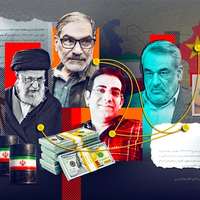
The document is a confidential letter from Hamid Bovard, the former head of the National Iranian Oil Company and current acting oil minister, responding to a highly confidential letter Ali Shamkhani, a former secretary of the Supreme National Security Council, sent to then-supreme leader Ali Khamenei.
Shamkhani, who served as Khamenei's political adviser, had described oil sales under President Masoud Pezeshkian as disastrous. Both Shamkhani and Khamenei were killed in US-Israeli strikes on February 28, 2026.
In his letter, Bovard criticized the administration of former President Ebrahim Raisi for its policy of using newer vessels and described an arrangement developed under Pezeshkian with what he characterized as covert cooperation from China.
According to Bovard, Iranian authorities instructed trusted oil intermediaries to continue using sanctioned vessels capable of docking at designated ports.
Bovard said Iran's Foreign Ministry negotiated with China to acquire port facilities and oil terminals, establishing a hub for sanctioned Iranian crude.
Tehran also secured long-term leases on large oil storage facilities in several Chinese locations, allowing it to sell Iranian crude directly in the Chinese market.
Under the arrangement, vessels belonging to Hossein Shamkhani, Ali Shamkhani's son and the owner of a fleet of tankers commonly described as a shadow fleet, transport Iranian oil to docks in China controlled by Tehran. The facilities allow the vessels to continue delivering oil despite US sanctions.
The arrangement is designed to reduce the impact of US sanctions on Hossein Shamkhani's shipping operations. The US Treasury has sanctioned 51 vessels linked to him.
For years, Iran has worked with China to sell oil through trusted intermediaries to small independent Chinese refineries, known as "teapot" refineries. The United States has repeatedly sanctioned companies involved in these transactions, but the use of intermediaries helps shield China's major banks and three largest oil companies from US sanctions.
Iran's oil terminals and storage facilities in China
Two sources in Iran's Oil Ministry told Iran International that Tehran has acquired control of port facilities at three locations in China. One is in the Ningbo-Zhoushan free trade zone, where Iran gained control of a terminal by helping build several smaller transit facilities.
Tehran also secretly acquired stakes in smaller docks at the ports of Qingdao and Pant in China's Shandong province, according to the sources.
The docks are located near pipelines, allowing Iranian crude to reach Chinese refineries quickly without being transferred to other vessels.
Iran has also purchased seven oil storage tanks in China, allowing it to ship crude to the country before securing buyers.
Four large Iranian-owned oil storage tanks are located at the ports of Dalian and Huizhou and in the coastal cities of Dongying and Weifang.
The Oil Ministry controls three other large storage tanks in the Zhoushan area of the Ningbo-Zhoushan archipelago, according to Iran International's sources. They are the Kamergi tank on Aoshan Island, a tank at the Shulanghu Island terminals and another in the Zengyamuo oil zone.
Two months ago, Iran International published a document showing that Mohammad Javad Bavand, a special assistant to the oil minister, instructed oil intermediary Mohammad Hadi Momenin, who owed $2 billion, to use a vessel belonging to Hossein Shamkhani to deliver oil for storage at one of the Chinese ports.
China also earns revenue from storing Iranian oil. Nearly two years ago, Reuters reported that 25 million barrels of Iranian crude were stranded in storage facilities in China and that Tehran had paid $450 million in storage fees.
China distances itself from Iranian oil
Despite these arrangements, the confidential correspondence suggests that Tehran was facing growing pressure from its main oil buyer.
Bovard's confidential letter to Khamenei's office indicates that China had begun distancing itself from Iranian oil even before the 40-day war. According to the letter, Beijing rejected Tehran's request to increase crude oil import quotas for Chinese refineries, increased imports from Venezuela and demanded deeper discounts on Iranian oil.
Two months ago, US Treasury Secretary Scott Bessent said at the launch of an initiative to economically isolate Iran that China and the United States had more in common than differences. He said China obtained 50 percent of its energy needs from the Persian Gulf and supported the free flow of maritime trade through the Strait of Hormuz.
Hossein Shamkhani's grip on Iranian oil trading in Dubai
Throughout the confidential letter, Bovard criticizes Ali Shamkhani, suggesting that his primary concern was protecting his son's interests in the oil trade rather than Iran's oil sales.
Bovard alleged that Hossein Shamkhani used Iranian government loans to purchase vessels but deployed them to transport Russian oil rather than Iranian crude.
According to Bovard, Hossein Shamkhani received Iranian oil on consignment without providing collateral and sold it on the market. Bovard portrayed the United Arab Emirates as Shamkhani's exclusive trading domain, saying the Oil Ministry had effectively become his agent rather than the other way around.
Former lawmaker Ahmad Amirabadi Farahani recently said the then-head of NICO, the National Iranian Oil Company's international trading arm, had barred Hossein Shamkhani and three other oil intermediaries from selling Iranian crude because they owed several billion dollars.
According to Bovard's confidential letter, Ali Shamkhani told Khamenei that Iranian oil had been sold at a discount of 50 cents per barrel under former President Ebrahim Raisi, compared with $9 per barrel under Pezeshkian. The Oil Ministry disputed Shamkhani's figures.
In September, Iran International reported that Mohammad Javad Bavand, a special assistant to the oil minister, had assigned four oil intermediaries, including Hossein Shamkhani, to sell 86 million barrels of Iranian crude at an 8.5 percent discount. The arrangement followed the transfer of oil sales from a network linked to the Intelligence Ministry to one linked to the intelligence arm of the Islamic Revolutionary Guard Corps.
Oil intermediaries discussed possible collapse of Islamic Republic
Former lawmaker Ahmad Amirabadi Farahani said during a debate that four oil intermediaries met at Charlie restaurant in Dubai hours after Ali Khamenei was killed in US-Israeli strikes. He said they declared that the Islamic Republic was collapsing and that they no longer needed to return proceeds from Iranian oil sales.
The Islamic Republic remained in power, but Oil Minister Mohsen Paknejad was later dismissed following Shamkhani's letter to Khamenei.
Two weeks ago, Hossein Ghorbanzadeh, a board member of Persian Gulf Petrochemical Company and an associate of parliament speaker Mohammad Bagher Ghalibaf, told the Fars news agency that Paknejad's dismissal, carried out three weeks earlier, had originally been planned for Esfand, the Iranian calendar month spanning February and March.
Ghorbanzadeh said President Masoud Pezeshkian had told a cabinet meeting that Khamenei asked him to dismiss Paknejad over his handling of the crisis involving oil intermediaries. Khamenei's death and the outbreak of the 40-day war delayed the dismissal, he said.
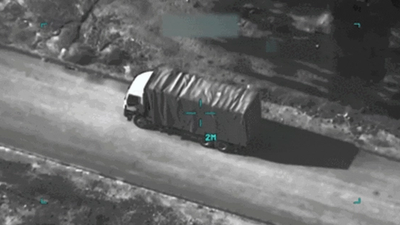
تصویری از ویدیوی منتشرشده سنتکام در ۱۴ اسفند ۱۴۰۴ که به گفته ارتش آمریکا، یک پرتابگر موشک ایرانی را نشان میدهد
Task Force Iron Gate, a new US team targeting weapons shipments and other illicit flows across Iran’s land borders and the Caspian Sea, may not fully close Iran’s northern supply routes but could make the arms and equipment Tehran needs harder to obtain.
Success will depend less on Washington’s ability to track shipments than on persuading governments, banks and suppliers to stop them.
According to CENTCOM’s November 7 announcement, Iron Gate consists of roughly 20 civilian and military personnel based in Tampa, coordinating with other US agencies.
It follows a naval blockade that CENTCOM estimates has prevented more than $25 billion in crude exports, giving Tehran greater incentive to develop alternative supply routes.
The task force adds coordination capacity, but its announcement offers no indication of new authority to board vessels in the Caspian or access neighboring countries’ ports.
A graphic released by CENTCOM on November 7, 2026, outlining Task Force Iron Gate’s focus on Iran’s land borders and the Caspian Sea alongside the existing US naval blockade.
Washington’s leverage lies upstream
A June CSIS assessment argues that Iran needs imported machine tools, electronics and engines to rebuild its military industries. It identifies the Caspian and Pakistan as possible alternatives to disrupted procurement through the United Arab Emirates.
Washington’s strongest leverage may lie with suppliers before those goods reach the region. A distributor with customers in Europe or access to American finance has more to lose than an Iranian shipping company already under sanctions.
Finding that distributor and giving its government evidence of a prohibited sale may achieve more than tracking the vessel carrying the goods.
In September 2024, the State Department designated Russian shipping companies and identified vessels it said transported Iranian military equipment across the Caspian to Russia.
Those measures targeted supplies leaving Iran rather than entering it, but provide an enforcement precedent. They can expose suppliers and discourage businesses from handling their cargo, while offering less leverage over operators whose owners and host governments accept the consequences.
Iron Gate’s better opportunity lies in equipment Iran struggles to replace. A factory awaiting an essential component may remain idle even while food imports grow.
The distinction matters: restricting military procurement does not require closing ordinary commerce, and rising trade volumes would not necessarily mean the task force had failed.
Russia’s role limits US options
Russia poses the hardest problem. Its military relationship with Iran gives Moscow reasons to keep transport connections open, limiting Washington’s prospects of securing cooperation along a major northern route.
In an October analysis for the Yorktown Institute, Nikita Smagin describes expanding Caspian commerce alongside shipping shortages, port limitations and rising freight costs.
The corridor offers Tehran relief but lacks the capacity to replace its southern gateways. That does not mean it cannot carry smaller volumes of militarily important equipment and components.
These constraints could make individual shipments more vulnerable to disruption. They also complicate any assessment of enforcement: congestion, shallow water and seasonal conditions can slow deliveries without American intervention.
Pressure could leave Tehran more reliant on Moscow if other suppliers withdraw while Russian routes stay open.
Iran would then have less room to bargain, while the military partnership Washington hopes to weaken could survive. Economic dependence and military supply would not necessarily move in the direction Washington intends.
Neighbors need different bargains
Kazakhstan illustrates the tension between financial pressure and regional transport ambitions. In May, Deputy Prime Minister Serik Jumangarin said payment risks had stalled contracts with Iran.
A month later, Kazakhstan signed an agreement for a logistics terminal at Iran’s Shahid Rajaee port.
Although the port is on Iran’s southern coast, the project demonstrates Astana’s wider interest in maintaining transport links through Iran. Financial pressure can discourage traders even while their government pursues closer connections.
Washington may therefore have more influence over specific prohibited transactions than over Kazakhstan’s broader commitment to those links.
Azerbaijan suspended cargo crossings on March 5, 2026, after accusing Iran of a drone attack on its territory, then reopened them on March 9.
That episode was a security dispute rather than a sanctions-enforcement test, so it does not establish how Baku would respond to US requests.
The brief closure nevertheless cautions against assuming Azerbaijan would sustain a broad interruption of trade. Requests to inspect specific suspect shipments may have better prospects than demands to shut a major route indefinitely.
Turkmenistan also sees value in keeping Iranian routes open. Its foreign ministry reported talks in September 2025 on increasing transit cargo and developing the China–Kazakhstan–Turkmenistan–Iran railway.
These projects are not evidence of wrongdoing, but they help explain why Ashgabat might resist sweeping restrictions.
Requests to stop weapons shipments backed by clear evidence may find a more receptive audience, although the task force announcement offers no indication that Turkmenistan has agreed to cooperate.
The test is military production
Iranian buyers can change intermediaries more easily than they can replace scarce equipment or technical expertise. Enforcement needs to follow those dependencies rather than simply add names to sanctions lists.
Useful measures of success would include documented procurement failures, interrupted payments, longer waits for critical components and confirmed interceptions of prohibited shipments.
The ultimate test is whether those obstacles constrain the restoration of Iranian military production.
Iron Gate’s best chance lies in restricting difficult-to-replace military inputs while securing cooperation neighboring governments can sustain.
Otherwise, Washington risks making trade more cumbersome—and Iran more dependent on Russia—while leaving its essential military supply relationships intact.
File photo: A view shows Gazprom's Amur Gas Processing Plant near the town of Svobodny in the Amur Region, Russia September 13, 2023.
Iran, home to the world's second-largest natural gas reserves, is turning to Russia for supplies as war damage and years of underinvestment threaten to deepen an energy crisis ahead of winter.
After meeting President Vladimir Putin in Moscow on November 5, Iranian security chief Mohsen Rezaei said the two countries had discussed pipelines to ease Iran's gas shortages and supply neighbouring markets.
The proposal offers potential relief, but raises a larger question: whether Russian imports will help Iran repair its struggling energy system or merely postpone the reforms needed to make it work.
On November 1, National Iranian Gas Company chief Saeed Tavakoli said attacks on four processing facilities had removed 230 million cubic metres of daily capacity. Repairs had restored 100 million, leaving 130 million unavailable.
Tavakoli warned that Iran could face a peak winter shortfall of around 400 million cubic metres a day. The figure is an official estimate for periods of maximum demand, not a year-round deficit.
The consequences are already visible. Gas supplies to cement plants were cut from October 23, according to an industry representative, forcing factories to switch to fuel oil. Such rationing protects household heating but disrupts production, increases costs and worsens air pollution.
The US Energy Information Administration estimated that the country produced 9.4 trillion cubic feet of gas in 2023 while consuming 8.9 trillion, leaving a narrow margin that conceals much sharper winter shortages.
Heavily subsidised prices encourage consumption, while inadequate investment, limited storage and restricted access to technology constrain supply. The giant South Pars field also needs investment to counter declining reservoir pressure.
Sanctions have obstructed financing and equipment purchases, but Tehran's policies have compounded the problem. Expanding dependence on cheap gas without sufficient investment in efficiency and production has left the economy vulnerable whenever temperatures fall.
Russian imports could provide breathing space. They cannot correct those weaknesses by themselves.
Iran and Russia have discussed gas cooperation for more than two years, but announcements have repeatedly outpaced delivery. Gazprom and the National Iranian Gas Company signed a memorandum in June 2024.
In January 2025, Putin outlined initial supplies of 2 billion cubic metres annually, potentially rising to 55 billion. Iranian officials announced further progress in October 2026, but a firm delivery date and financing for a major pipeline remain unclear.
Two billion cubic metres annually averages just 5.5 million cubic metres a day, less than 2% of Iran's estimated peak winter shortfall. Even the ambitious target of 55 billion annually averages about 151 million cubic metres a day.
These comparisons illustrate scale rather than guaranteed winter deliveries, which would depend on contracts, pipeline capacity and seasonal demand. Initial imports could help particular regions or industries but would make only a modest difference nationally.
Existing infrastructure through Azerbaijan could carry limited initial supplies. Reaching the larger target would require substantial investment in pipelines and equipment, transit agreements and reliable delivery arrangements.
Commercial terms also remain uncertain. Pricing and payment arrangements were still unresolved earlier this year, and subsequent announcements have not disclosed the details. Selling imported gas into Iran's heavily subsidised domestic market could increase pressure on public finances.
US sanctions could complicate financing and payments, although certain natural gas transactions are exempt from specific restrictions. Other sanctions affecting banks, contractors and designated companies would still need to be navigated.
For Moscow, the attraction is clear. Having lost much of its European pipeline market, Russia needs alternative buyers. Iran offers substantial demand and potential access to neighbouring markets.
But the partnership could come with unequal leverage. Tehran urgently needs gas, infrastructure and financing, while Moscow has supplies to sell. Dependence on Russian equipment, funding and deliveries could leave Iran with fewer options when negotiating prices and future commitments.
The arrangement also fits Tehran's ambition to become a regional gas trading hub. Yet that ambition faces a basic credibility test: can Iran reliably supply neighbouring countries when it struggles to meet domestic demand during winter?
Russian gas could support regional trade, but Iran risks becoming primarily a route for Russian exports without gaining meaningful control over prices or supply.
Ultimately, imports could help keep factories operating and reduce emergency fuel switching. Lasting energy security, however, requires repairing damaged facilities, sustaining production at South Pars and improving efficiency, alongside gradual subsidy reform that protects poorer households.
For a country with the world's second-largest gas reserves, the need to import is itself a measure of striking energy system deterioration. Whether the arrangement helps reverse that decline or just deepens Tehran's dependence on Moscow matters far more than the volume of gas promised.
File photo: Iran's Bandar Imam petrochemical plant
Iran may be able to repair much of its war-damaged energy infrastructure without new Western technology. Whether it can rebuild a modern, reliable energy industry is another question.
Successive rounds of US and Israeli strikes have damaged oil storage facilities, gas-processing plants and petrochemical infrastructure.
Iranian engineers, supported by suppliers from China and Russia, may be able to restore substantial capacity.
But sanctions, limited investment, ageing equipment and the threat of further attacks complicate the prospects for lasting recovery.
Satellite analysis by the Conflict and Environment Observatory (CEOBS) following the June 14, 2025 attacks confirmed the destruction of four storage tanks at Tehran's Shahran depot.
The same analysis documented damage at South Pars Phase 14, where Iranian state media reported a temporary halt to 12 million cubic metres of daily gas production.
Further attacks in March 2026 damaged oil storage facilities at Shahran, Aqdasieh and Karaj, as well as the Tehran refinery site, according to CEOBS.
The International Energy Agency also identified damage to South Pars gas-processing facilities following strikes on Asaluyeh.
Petrochemical infrastructure suffered additional damage. Industry publication ICIS reported that April 4 strikes hit the Fajr 1 and Fajr 2 utility plants in Mahshahr, while the Bandar Imam complex sustained partial damage.
The Fajr facilities supply essential utilities to other industrial plants, meaning damage to them can disrupt production well beyond the immediate impact sites.
Challenges ahead
Some recovery has already been reported. On September 23, Reuters cited an Iranian official as saying that half the damaged South Pars capacity had been restored, although independent verification remained limited.
Iran has considerable domestic engineering expertise. Local contractors have continued developing oil and gas fields despite sanctions, while engineers at MAPNA have reported successful tests of upgraded heavy-duty turbines.
But repairing the physical damage caused by war is only one of the challenges facing an industry already struggling with years of underinvestment and restrictions on access to specialised technology.
As gas reservoirs mature, declining pressure can reduce production unless additional compression equipment is installed. Maintaining output therefore requires investment even at facilities that have escaped military attacks.
The problem is particularly acute at South Pars, the vast gas field shared with Qatar.
According to the US Energy Information Administration (EIA), the withdrawal of foreign partners disrupted plans for offshore compression at South Pars Phase 11.
The gap is even more pronounced in liquefied natural gas (LNG).
Iran has long sought to develop LNG exports, but sanctions-related technology restrictions have helped stall those ambitions, according to the EIA.
Restoring damaged gas-processing equipment could help recover domestic supplies. It would not, however, create a competitive LNG export industry, which requires specialised liquefaction technology, financing, shipping arrangements and long-term customers.
Moscow and Beijing to the rescue?
China and Russia offer potential alternatives to Western suppliers, but neither can be assumed to finance or rebuild Iran's energy industry on the scale required.
China is a major buyer of Iranian oil and could provide equipment, engineering services and project financing. Yet purchasing discounted crude does not necessarily translate into a willingness to undertake expensive, long-term infrastructure projects.
The EIA has documented the withdrawal of China's CNPC from South Pars Phase 11 after US sanctions were reimposed. Chinese companies considering new projects must still assess payment security, access to equipment and the returns available from investments elsewhere.
Russian assistance faces similar constraints.
A $40 billion memorandum of understanding signed between Gazprom and the National Iranian Oil Company in 2022 raised expectations of extensive Russian involvement. But the Congressional Research Service has questioned Russia's financial resources and commercial interest in expanding Iranian gas exports.
Reconstruction depends not on the value of memoranda but on financing secured, equipment delivered and facilities brought back into operation.
Damage, repair, repeat
Sanctions and restrictions on international payments limit Iran's access to foreign capital and imported equipment, while disruptions to oil exports further constrain the revenues available for reconstruction.
Even where Iran has the money and technical capacity to rebuild, the possibility of renewed military attacks creates another obstacle.
Although President Donald Trump has expressed skepticism about renewed strikes, US and Israeli planners have reportedly considered further attacks on Iranian petrochemical facilities.
The possibility of renewed strikes complicates long-term reconstruction. Companies may be reluctant to finance projects, supply specialised equipment or deploy personnel to facilities that could be attacked again.
This makes reconstruction priorities particularly important. Restoring gas treatment facilities and shared industrial utilities may bring multiple downstream operations back online, while repairing an isolated export facility may offer limited benefits if its supply connections remain disrupted.
Recovery timelines will also vary considerably. Some damaged units could restart within weeks or months if equipment is available, while major replacements and technological upgrades may take years.
Iran's engineers and its Chinese and Russian partners may be able to restore much of the damaged infrastructure.
But without sustained investment, specialised technology and protection against further attacks, Tehran risks becoming trapped in a cycle of destruction and repair rather than achieving lasting recovery.
US Treasury Secretary Scott Bessent attends a press conference at government quarters Rosenbad after the trade talks between the U.S. and China concluded, in Stockholm, Sweden, July 29, 2025. Magnus Lejhall/TT News Agency/via REUTERS
The US Treasury says a pressure campaign launched against Iran two months ago has sharply reduced its oil revenue and access to international trade and financial channels, deepening the country’s economic isolation.
Treasury said Iran has loaded no oil onto vessels since August 25, while overland trade has faced border bottlenecks and restrictions have expanded across aviation and banking.
The assessment, titled Operation Economic Outcast: Iran’s Isolation by the Numbers, also points to a roughly 25% fall in the rial since the operation began on August 24 and rising inflation as signs of broader economic pressure.
The report said the rial reached 2,687,000 to the US dollar on the unofficial market in October, while year-on-year inflation rose to about 90% in September, citing data from the Statistical Center of Iran.
President Masoud Pezeshkian has also acknowledged the economic impact of sanctions.
“Some say sanctions have no effect at all; to those people, I really don’t know what to say,” he told state television in August.
Oil and trade routes come under pressure
Oil has been a central focus of Operation Economic Outcast, which Treasury launched on August 24 as part of a broader effort to cut Iran off from sources of revenue and foreign currency.
Iran has loaded no oil onto vessels since August 25, Treasury said, adding that the country had reportedly sold its remaining oil stranded at sea.
Separate data on deliveries shows the decline in Iranian oil reaching overseas destinations. Kpler data and Treasury staff calculations show the 30-day moving average of Iranian or suspected Iranian-origin oil unloaded at known locations falling to about 400,000 barrels per day by October 19, from more than 1 million barrels per day around the launch of the operation.
Treasury attributed the disruption to the US naval blockade and targeted economic sanctions.
With maritime routes restricted, the report says Iran has sought to reroute more trade overland, encountering bottlenecks at its borders with Turkey, Pakistan, Afghanistan and Turkmenistan.
Thousands of trucks were reportedly stranded at the Turkish crossing, with delays of up to 20 days, while hundreds were waiting at the Pakistani border, according to the Treasury assessment.
Restrictions extend to aviation
The pressure campaign has also affected Iran's international aviation links, according to the Treasury, which said it had sent teams abroad to coordinate enforcement with foreign governments.
The UAE, Oman, Iraq (with certain religious-travel exemptions for Najaf), Georgia and Azerbaijan have barred all Iranian airlines and canceled all flights to Iran, the report said. Turkey has stopped all Mahan Air flights.
Foreign carriers including Qatar Airways, Emirates, Turkish Airlines and Pegasus have also extended suspensions of routes to Iran.
Treasury said Iran Air, the country's flag carrier, was struggling to cover operating costs with a limited fleet. It added that the restrictions have had wider consequences for industries that rely on air cargo.
An Iranian Chamber of Commerce official told Donya-e-Eqtesad that “the circle of containment is tightening day by day,” warning that supply disruptions could affect production and access to essential goods.
Financial pressure shifts to alternative channels
As trade and transport links have narrowed, Washington has also stepped up efforts to restrict the financial channels Iran uses to move money abroad.
Turkish regulators took control of the US-sanctioned Golden Global Investment Bank and revoked the operating license of US-designated Bank Mellat, while Lebanon revoked the operating license of an Iranian branch of Bank Saderat, according to the report.
The UAE imposed enforcement measures against Bank Melli Iran branches and launched an investigation into Banque Misr UAE following Treasury action. The UK also introduced a presumption of denial for licenses involving designated Iranian banks.
Treasury has separately targeted financial institutions it says facilitate Iran’s access to foreign currency and international banking. The report cited its designation of Iraq's private International Development Bank, which Treasury accused of supporting Iran and armed groups aligned with Tehran.
As conventional channels narrow, Treasury says Iranian networks have increasingly sought alternatives, including digital assets.
The department has targeted cryptocurrency exchanges, wallets and financial facilitators it says are used to circumvent sanctions. The report highlights five Iranian exchanges designated by the US in June and August.
According to the report, Nobitex, Wallex, Bitpin and Ramzinex were designated on June 2, while Aban Tether was designated on August 7. It also cited the designation of the Iranian cryptocurrency exchange BitBank as part of efforts to disrupt sanctions evasion.
Treasury says falling oil revenue, the weaker rial and restrictions on financial channels together show the cumulative impact of Iran’s growing economic isolation. It said the operation would continue and warned entities knowingly enabling sanctions evasion to expect further US action.
Women carry models of Iranian missiles during a public procession in Iran.
Iran has used a secret network of more than 5,000 military agencies to import at least $2 billion worth of equipment, explosives and heavy-duty trucks since January 2025, bypassing Western sanctions and the US naval blockade, a Reuters investigation published on Thursday found.
One agency alone, identified as MOD 346428, imported $2.3 billion in military-related goods between January 2025 and June 2026, according to shipping records examined by Reuters.
The shipments included rocket fuel ingredients, explosives, aircraft parts, industrial machinery and hundreds of heavy-duty trucks that could be adapted for military use, with goods recorded as originating in China, Russia, Germany and other countries.
The findings provide details of how Iran has continued to obtain materials used in missile and drone production during the US-Israeli war, which began in February, despite attacks on its weapons production facilities.
Thousands of agencies linked to defense ministry
Reuters identified more than 5,000 agencies whose names begin with MOD, referring to Iran's Ministry of Defense, and which share the Tehran address of the Ministry of Defense and Armed Forces Logistics.
Although their registration records list February 11, 1979, as their founding date, most were established in 2013, when Iran was facing severe economic sanctions, the investigation found.
Reuters and Israeli-American risk consultancy 240 Analytics traced the agencies through Iranian banking records, corporate filings and shipping documents, including around 19,000 import records.
Some entities were linked to the Islamic Revolutionary Guard Corps (IRGC) and large Iranian foundations known as bonyads.
The agencies use intermediaries and overseas companies to purchase goods with proceeds from oil sales that bypass sanctions, according to the investigation.
In 97% of the shipments reviewed, transactions were recorded as settled "without currency transfer," allowing purchases to be made using funds held outside Iran.
Banking records also showed that 36 agencies held about $1.2 billion in foreign currency deposits at the end of 2024, while the wider network held around $1.8 billion in local currency, Reuters reported.
The news agency said it found no evidence that the numbered agencies identified in the documents had been individually sanctioned by Western governments.
A satellite image taken on February 8, 2025, shows a customs yard containing Iveco trucks imported by Irans military, in Tehran, Iran. The yard matches the location of a video posted the same day and verified by Reuters showing the trucks. Janes, the UK-based open-source defence intelligence company, confirmed the make of the trucks seen in the social media video.
Missile materials and hundreds of trucks imported
The investigation found that Iran continued importing materials that could be used in missiles and drones after the war began on February 28.
In the first six months of 2026, deliveries included detonators, explosives, aircraft engine components and rocket fuel ingredients.
In February, shortly before the war, Iran imported 93 metric tons of Chinese titanium and hundreds of tons of chemicals that could be used in rocket propellants and explosives, according to customs records.
Between January 2025 and June 2026, MOD 346428 also imported 435 Iveco trucks, some of which matched models used as disguised mobile missile launchers, Reuters reported.
The same agency imported thousands of Toyota Hilux and Land Cruiser vehicles, as well as Toyota Tundra trucks, models that Iranian forces have used for military purposes.
The investigation also traced imports of chemicals to the port of Bandar Abbas, where an explosion in April 2025 killed at least 70 people and injured more than 1,200.
Reuters said it could not determine whether chemicals in one of the shipments it identified were responsible for the explosion.
A combination image shows a projectile reaching an imported Iveco truck (left) and explosion after imported Iveco truck was hit by a projectile at a location given as Iran during what US Central Command (CENTCOM) says are strikes targeting Iranian mobile missile-launch capabilities, in this screengrab taken from a handout video released on March 5, 2026. U.S. Central CommandHandout via REUTERS
It also could not establish that all imported goods were intended for weapons production, noting that many materials and machines have both civilian and military uses.
Imports continued during war and blockade
The materials entered Iran through several routes, including cargo vessels crossing the Caspian Sea from Russia, trucks traveling from Central Asia and freight aircraft arriving from China, Reuters reported.
Monthly imports by the identified military agency fell by 47% to $54 million in March, shortly after the war began, but recovered to $77 million by May.
The investigation identified five shipments of Russian detonators worth $7.6 million since January 2025, including a $1.9 million delivery in June 2026.
An Iveco truck is parked in a parking yard in Tehran, Iran in this screengrab obtained from a social media video released on February 8, 2025. Social Mediavia REUTERS
Since the war began, $27 million worth of goods purchased by Iran's military were recorded as originating in the United Arab Emirates, mostly arriving by sea.
The Reuters data also listed hundreds of millions of dollars in trucks, aircraft components and electronics as coming from Germany and other European Union countries.
Reuters cautioned that some customs records identified shipments only through product codes and declared countries of origin, which it could not always independently verify.
Western companies and governments respond
China's Foreign Ministry told Reuters it was unaware of the reported shipments and rejected attempts to link Beijing to the regional conflict.
"We firmly oppose attempts to maliciously link regional hostilities to China or smear China's reputation," the ministry said.
Italian truck manufacturer Iveco said it had safeguards to prevent its vehicles from reaching prohibited users and destinations but could not control products resold by third parties.
Toyota said it did not conduct business in Iran and had no knowledge of the purchases described in the investigation.
The European Union said it was examining information about Iran's efforts to strengthen its missile and drone programs.
A US Treasury spokesperson said Washington had cut off Iran's economic lifelines and would continue enforcing sanctions.
"While the regime may continue its desperate attempts to evade our powerful sanctions, fund its military and weapons programs, and access foreign currency, we are always 10 steps ahead," the spokesperson said.
Iranian government bodies and companies contacted by Reuters, including the country's presidency and its UN delegation in Geneva, did not respond to requests for comment.