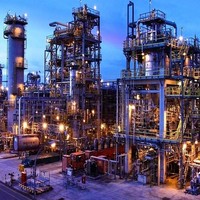
File photo: Iran's Bandar Imam petrochemical plant
Iran may be able to repair much of its war-damaged energy infrastructure without new Western technology. Whether it can rebuild a modern, reliable energy industry is another question.
Successive rounds of US and Israeli strikes have damaged oil storage facilities, gas-processing plants and petrochemical infrastructure.
Iranian engineers, supported by suppliers from China and Russia, may be able to restore substantial capacity.
But sanctions, limited investment, ageing equipment and the threat of further attacks complicate the prospects for lasting recovery.
Satellite analysis by the Conflict and Environment Observatory (CEOBS) following the June 14, 2025 attacks confirmed the destruction of four storage tanks at Tehran's Shahran depot.
The same analysis documented damage at South Pars Phase 14, where Iranian state media reported a temporary halt to 12 million cubic metres of daily gas production.
Further attacks in March 2026 damaged oil storage facilities at Shahran, Aqdasieh and Karaj, as well as the Tehran refinery site, according to CEOBS.
The International Energy Agency also identified damage to South Pars gas-processing facilities following strikes on Asaluyeh.
Petrochemical infrastructure suffered additional damage. Industry publication ICIS reported that April 4 strikes hit the Fajr 1 and Fajr 2 utility plants in Mahshahr, while the Bandar Imam complex sustained partial damage.
The Fajr facilities supply essential utilities to other industrial plants, meaning damage to them can disrupt production well beyond the immediate impact sites.
Challenges ahead
Some recovery has already been reported. On September 23, Reuters cited an Iranian official as saying that half the damaged South Pars capacity had been restored, although independent verification remained limited.
Iran has considerable domestic engineering expertise. Local contractors have continued developing oil and gas fields despite sanctions, while engineers at MAPNA have reported successful tests of upgraded heavy-duty turbines.
But repairing the physical damage caused by war is only one of the challenges facing an industry already struggling with years of underinvestment and restrictions on access to specialised technology.
As gas reservoirs mature, declining pressure can reduce production unless additional compression equipment is installed. Maintaining output therefore requires investment even at facilities that have escaped military attacks.
The problem is particularly acute at South Pars, the vast gas field shared with Qatar.
According to the US Energy Information Administration (EIA), the withdrawal of foreign partners disrupted plans for offshore compression at South Pars Phase 11.
The gap is even more pronounced in liquefied natural gas (LNG).
Iran has long sought to develop LNG exports, but sanctions-related technology restrictions have helped stall those ambitions, according to the EIA.
Restoring damaged gas-processing equipment could help recover domestic supplies. It would not, however, create a competitive LNG export industry, which requires specialised liquefaction technology, financing, shipping arrangements and long-term customers.
Moscow and Beijing to the rescue?
China and Russia offer potential alternatives to Western suppliers, but neither can be assumed to finance or rebuild Iran's energy industry on the scale required.
China is a major buyer of Iranian oil and could provide equipment, engineering services and project financing. Yet purchasing discounted crude does not necessarily translate into a willingness to undertake expensive, long-term infrastructure projects.
The EIA has documented the withdrawal of China's CNPC from South Pars Phase 11 after US sanctions were reimposed. Chinese companies considering new projects must still assess payment security, access to equipment and the returns available from investments elsewhere.
Russian assistance faces similar constraints.
A $40 billion memorandum of understanding signed between Gazprom and the National Iranian Oil Company in 2022 raised expectations of extensive Russian involvement. But the Congressional Research Service has questioned Russia's financial resources and commercial interest in expanding Iranian gas exports.
Reconstruction depends not on the value of memoranda but on financing secured, equipment delivered and facilities brought back into operation.
Damage, repair, repeat
Sanctions and restrictions on international payments limit Iran's access to foreign capital and imported equipment, while disruptions to oil exports further constrain the revenues available for reconstruction.
Even where Iran has the money and technical capacity to rebuild, the possibility of renewed military attacks creates another obstacle.
Although President Donald Trump has expressed skepticism about renewed strikes, US and Israeli planners have reportedly considered further attacks on Iranian petrochemical facilities.
The possibility of renewed strikes complicates long-term reconstruction. Companies may be reluctant to finance projects, supply specialised equipment or deploy personnel to facilities that could be attacked again.
This makes reconstruction priorities particularly important. Restoring gas treatment facilities and shared industrial utilities may bring multiple downstream operations back online, while repairing an isolated export facility may offer limited benefits if its supply connections remain disrupted.
Recovery timelines will also vary considerably. Some damaged units could restart within weeks or months if equipment is available, while major replacements and technological upgrades may take years.
Iran's engineers and its Chinese and Russian partners may be able to restore much of the damaged infrastructure.
But without sustained investment, specialised technology and protection against further attacks, Tehran risks becoming trapped in a cycle of destruction and repair rather than achieving lasting recovery.
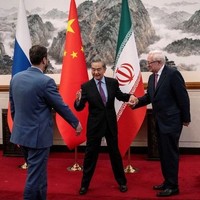
Chinese Foreign Minister Wang Yi welcomes Russian Deputy Foreign Minister Sergey Ryabkov and Iranian Deputy Foreign Minister Kazem Gharibabadi, before a meeting regarding the Iranian nuclear issue at Diaoyutai State Guest House on March 14, 2025, in Beijing, China. Pool via REUTERS
Iran has turned to Beijing and Moscow for backing in talks with Washington over the Strait of Hormuz. Mediators are weighing whether China could help guarantee that Washington delivers on sanctions relief in return for Iranian nuclear concessions.
Al Hadath reported on October 30 that mediators were considering a plan to match each Iranian nuclear concession with a US step to ease sanctions. The draft raised the possibility of China serving as a guarantor. Beijing’s account of its talks with an Iranian envoy on Monday gave no indication it had accepted that role.
The question has practical consequences for Tehran. In 2018, President Donald Trump withdrew the United States from the 2015 nuclear agreement and reimposed sanctions. Matching concessions step by step could limit how much Iran gives up before it sees an economic return. What China would do if Washington later restored sanctions remains unclear.
Beijing also has a stake in reopening Hormuz
Ali Bagheri Kani, deputy secretary of Iran’s Supreme National Security Council, told Chinese Foreign Minister Wang Yi in Beijing on Monday that Tehran wanted China to play a greater role in regional diplomacy. According to China’s foreign ministry, Wang backed Iran’s sovereignty and urged all sides to make concessions to avoid renewed fighting.
Wang’s separate meeting that day with Saudi national security adviser Musaed al-Aiban helps explain the limits of that backing. Wang stressed the need to protect energy supplies and shipping routes. China relies on oil shipped through Hormuz, giving it an interest in reopening the waterway even if Tehran would prefer to keep it closed until Washington meets its demands.
Beijing also announced plans to send its Middle East envoy, Zhai Jun, to Iran, Oman and Saudi Arabia. Oman’s Sultan Haitham bin Tariq welcomed a larger Chinese role during his own visit to Beijing. Qatar, meanwhile, continues to mediate between Tehran and Washington.
Where Moscow and Tehran agree
Mohsen Rezaei, who heads Iran’s Supreme National Security Council, spoke by phone with Russian President Vladimir Putin on Monday. The council said they discussed regional developments. Its public account gave no details of any agreement on the US naval blockade.
Putin said in October that he wanted shipping through Hormuz to resume and sanctions on Iran eventually lifted. Russia has also offered to take custody of Iran’s enriched uranium, giving Moscow a potential role if Tehran and Washington can agree on what happens to the stockpile.
For Tehran, the order of concessions matters. Rezaei said Tuesday that Washington must act on Iran’s seven conditions before the strait reopens. A senior Iranian official told Reuters the demands include oil sanctions waivers, an end to the naval blockade and the release of frozen funds. Moscow supports sanctions relief, but Putin has stopped short of endorsing Tehran’s demand that Washington move first.
Iranians responding to an Iran International appeal said they could not afford emergency supplies or had nowhere safe to go if wider war resumes with the United States and Israel, with others describing exhaustion after repeated rounds of fighting.
Iran International asked its Instagram followers whether they would prepare emergency kits in the event of another war, drawing around 4,000 replies, many of which cited poverty, rising prices and a lack of public shelters.
Others described growing exhaustion after the 12-day war in June 2025 and the 40-day conflict from February to April 2026, both involving the United States and Israel, as well as decades of political and economic uncertainty.
The responses come after The Atlantic reported last month that the Trump administration was considering renewed strikes on Iran following the US midterm elections, with energy infrastructure among the potential targets.
Some respondents said they would not prepare emergency supplies, although their reasons varied.
‘We buy yogurt in four installments’
Financial hardship was a recurring reason cited by respondents, many of whom said meeting everyday needs had become difficult, let alone stockpiling food, medicines and emergency equipment.
"We buy yogurt in four installments, and then they expect us to stockpile three months' worth of food!" one respondent wrote.
Several Iranians pointed to the considerable cost of putting together even a basic emergency kit containing a flashlight, radio, canned food and other essential supplies.
"Putting together this bag costs 200 million rials [about $73]. Where are we supposed to get that money?" another respondent said.
One person questioned how anyone earning 250 million rials ($91) a month could afford an emergency kit costing at least 150 million rials ($55).
Another estimated the cost of a kit at nearly 300 million rials ($109), saying it was difficult for people who could not afford food for the following day.
The concerns reflect a broader cost-of-living crisis in Iran.
Iran's Statistical Center reported that point-to-point inflation, which compares prices with the same month a year earlier, reached 88.7% in the Iranian month of Mehr, which ended in October.
"We have no money, we're unemployed, and even covering the cost of daily food has become difficult," one respondent said.
Some said they could afford only a few basic items.
"Only things like sanitary pads, pills, tissues and biscuits. I can't afford the rest," one person wrote.
Others said they intended to prepare emergency kits despite the costs, particularly because of concerns about prolonged disruptions to water, electricity and gas supplies.
Several respondents with cardiovascular conditions, diabetes or epilepsy said they had stockpiled several months' worth of essential medication.
‘Where are we supposed to go?’
A lack of safe shelter was another major concern among respondents, with some questioning the purpose of preparing emergency supplies when they had nowhere to escape to.
"Even if we pack a bag, where are we supposed to go? The main question is, where do we go?" one person wrote.
Another said sarcastically: "During a war, all I can do is move from one room to another."
The shortage of public shelters has been acknowledged by Iranian officials.
On September 15, Tehran City Council Chairman Mehdi Chamran said metro stations should be equipped to serve as emergency shelters. He had previously acknowledged that the capital lacked fully equipped and ready-to-use shelters for residents.
Some respondents questioned whether emergency supplies would make any meaningful difference if strikes damaged essential infrastructure, leaving households without electricity, running water or gas for extended periods.
"If they strike the infrastructure, what can you possibly do with a backpack that, at most, can get you through one week?" one wrote.
Iran’s First Vice President Mohammad Reza Aref said on September 27 that damage to gas infrastructure during the two recent wars had reduced supplies, adding to the country’s energy shortages.
‘Our entire lives have been a state of emergency’
Beyond financial hardship and the lack of shelter, many responses reflected psychological exhaustion and a growing sense of resignation after repeated conflicts.
Some joked that preparing emergency kits was something only people experiencing war for the first time would do.
"It was only during the 12-day war that the anxiety felt new," one respondent wrote.
Another recalled preparing supplies during the first conflict but gradually abandoning the effort.
"We only packed one the first time. Then we needed our belongings and kept taking them out of the bag. The second time, we just entrusted ourselves to God," the respondent said.
Iran International documented similar sentiments in a June 8 report, when respondents described exhaustion with war, economic pressures and uncertainty about the future.
Despite concerns about the consequences of further fighting, some expressed hope that another conflict could bring political change.
That contradiction was also evident in the latest responses, with some saying they no longer feared renewed war and were instead waiting for it to begin.
"Now I'm more stressed about the possibility that war might not happen," one person wrote.
Others spoke of growing fatigue with the uncertainty surrounding the country's future.
Several respondents blamed the Islamic Republic for keeping Iran in what they described as a state of "suspension and crisis," "constant anxiety" and "living on red alert" throughout its 47 years in power.
One respondent summed up the sentiment shared by many: "Our entire lives have been in a state of emergency."
Russian President Vladimir Putin and Chinese President Xi Jinping attend a reception at the Kremlin in Moscow, Russia March 21, 2023.
Putin’s rare call to Iran’s security chief and a state TV commentator’s account of Chinese preparations for the Islamic Republic’s possible collapse raise a question about Tehran’s most powerful partners: how far would Moscow and Beijing go to ensure its survival?
Iranian state media said Putin’s conversation with Mohsen Rezaei, secretary of the Supreme National Security Council, covered regional developments and continued strategic cooperation. No new military commitments were announced.
The call came days after the Wall Street Journal reported that US Vice President JD Vance had reached out to Rezaei to revive negotiations, which may explain why Putin wanted to speak to him directly.
Two days earlier, on Saturday, Rouhollah Amin Saeedi, a political analyst, told viewers of Iran’s state broadcaster that Chinese officials had believed the Islamic Republic was close to collapse during the January protests, and that diplomats at China’s embassy in Tehran had prepared for that possibility. Neither China nor Russia wants Iran to have nuclear weapons, he added.
China buys most of the oil Iran sells abroad and signed a 25-year cooperation agreement with Tehran in 2021. Moscow’s ties run through security, and through Rezaei.
Why Putin called Rezaei
The protocol was unusual. Putin normally speaks to presidents, not security chiefs. Alex Vatanka, a senior fellow at the Middle East Institute, said the call could reflect Rezaei’s growing weight in Iran’s leadership, including his rivalry with Parliament Speaker Mohammad Bagher Ghalibaf over who handles talks with Washington.
Tanya Lukyanova, an associate producer at CBS’s 60 Minutes who covers Russia, suggested that Putin may see Rezaei, with his reported line to the Trump administration, as useful in his own negotiations over ending the war in Ukraine on Moscow’s terms.
The two countries have traded heavily in war. Iran supplied Russia with drones and the technology to build them for use in Ukraine; Moscow has been reported to give Tehran intelligence and military help in its war with the United States.
But Vatanka cautioned against reading the call as a promise of more. Moscow will help Tehran, he said, as long as it does not risk a direct confrontation with the United States.
A nuclear Iran or no Islamic Republic
The conventional wisdom is that Russia and China do not want Iran to have a bomb. Vatanka said that may no longer hold.
“That’s the conventional wisdom that they don’t want Iran to become a nuclear weapon state,” he told Iran International. Moscow’s confrontation with Washington has changed the calculation.
“If they had to choose between an Islamic Republic that’s nuclear armed versus an Islamic Republic gone and replaced with a pro-US, pro-Western entity, they’d rather have this regime with a nuclear weapon,” he said.
Ilan Berman, senior vice president of the American Foreign Policy Council, said the Kremlin benefits from leaving the nuclear question unresolved. An Islamic Republic that keeps challenging Washington and the region pulls American attention and weapons away from Ukraine, which serves Moscow without Iran having to cross the threshold.
Russia’s growing role
The call followed Russian Foreign Minister Sergei Lavrov’s visit to Tehran this month and President Masoud Pezeshkian’s meeting with Putin in Moscow.
In an analysis published on Monday by Chatham House, Aniseh Bassiri Tabrizi argued that the war has changed how Tehran sees Russia. Once regarded by some Iranian officials as an unreliable partner, Moscow is now seen as essential to Iran’s military survival, its reconstruction and its future deterrence.
Russia has been reported to supply satellite imagery, targeting intelligence and military components, and its expertise could help Iran rebuild its air defenses and missile sites.
Berman also pointed to reports that Russian intelligence has helped the Houthis in their attacks on Saudi targets, as a sign that Moscow is willing to support Tehran’s allies too.
That help comes at a price. In an analysis published on Sunday in Lawfare, Carol R. Saivetz of MIT and Kimberly Marten of Barnard College argued that Moscow has gained from higher oil prices and from American air defenses being diverted from Ukraine, but that backing Tehran puts its relations with Saudi Arabia and other Persian Gulf states at risk. They described the partnership as one built on wartime advantage, not lasting trust or binding commitments.
Support without guarantees
None of this means Moscow would rescue Tehran if it faced collapse.
Saivetz and Marten identified several developments that could lead Putin to cut his support: a deal that reopens the Strait of Hormuz, an Iranian military or economic collapse, or a ceasefire in Ukraine on terms he likes. Bassiri Tabrizi argued, by contrast, that Russian military cooperation could become a lasting part of Iran’s security as it rebuilds.
On Monday Moscow again stressed diplomacy, with Foreign Ministry spokeswoman Maria Zakharova calling for greater efforts to end the conflict.
The picture is lopsided. The Islamic Republic increasingly depends on Russia for its security; Russia keeps the freedom to decide how much support serves its own interests. And by the account of a commentator on Iran’s own state television, China was already planning for the day it would no longer be there.
Putin may prefer the Islamic Republic to survive, and may profit from its confrontation with Washington. Preserving it at any cost is a different calculation.
QatarEnergy's liquefied natural gas (LNG) production facilities, amid the US-Israeli conflict with Iran, in Ras Laffan Industrial City, Qatar March 2, 2026.
Qatar is securing long-term supplies of US liquefied natural gas to protect revenues against disruptions in the Strait of Hormuz, while pursuing mediation between Tehran and Washington to end the war.
The country’s dependence on the waterway leaves its gas industry exposed to prolonged shipping disruptions. For state-owned QatarEnergy, buying supplies produced outside the Persian Gulf offers a way to earn trading income when its own exports are constrained.
The new contracts will begin delivering in 2030 or later. They offer protection against future losses, but cannot restore shipments from Qatar’s damaged facilities or reopen its export route.
The risks were underscored on Friday, when a Qatari LNG carrier was struck by “unidentified objects” in the Persian Gulf, the same day Qatari mediators held talks in Tehran aimed at reaching a deal between Iran and the United States.
The Al Mayeda was hit Friday evening, its owner Nakilat said Sunday. No crew members were injured or environmental damage reported, and the vessel remained operational.
Qatar condemned the attack as a “dangerous act” threatening maritime navigation and global energy supplies, saying investigations were underway to identify those responsible.
War exposes Qatar’s dependence on Hormuz
Qatar is particularly vulnerable to disruption in the Strait of Hormuz. LNG accounts for half of its foreign-currency export revenues, and shipments to markets beyond the Persian Gulf must pass through the waterway.
Unlike some neighboring oil exporters, Qatar has no pipeline route capable of replacing those shipments. Its oil exports amounted to just 530,000 barrels per day last year, leaving its foreign-currency revenues largely dependent on gas.
According to official Qatari government statistics, the country exported 79 million tonnes of LNG last year, supplying 17% of global LNG consumption. Another 20 billion cubic metres of natural gas, equivalent to approximately 15 million tonnes, was delivered to the UAE and Oman through the Dolphin pipeline. By volume, LNG accounted for nearly 84% of Qatar’s total gas exports.
Qatar was forced to almost completely halt LNG exports for three months starting in March, with shipments gradually recovering from June. According to Kpler data, however, it exported only 4.58 million tonnes in the third quarter, less than a quarter of the volume recorded a year earlier.
September exports reached 1.6 million tonnes, the highest monthly level since the war began. That was still less than a quarter of the pre-war monthly average, with around one-third of shipments going to Kuwait and remaining within the Persian Gulf.
Damage to infrastructure has also been substantial. Iranian missile strikes in March damaged Ras Laffan’s liquefaction units, known as trains, 4 and 6, knocking 12.8 million tonnes of annual capacity offline—about 17% of Qatar’s pre-war capacity.
Energy Minister and QatarEnergy chief executive Saad al-Kaabi initially estimated repairs would take three to five years. In an October 29 interview with Reuters, he put the repair period at about three years.
QatarEnergy has extended force majeure on deliveries to Italy’s Edison until the end of December, the Italian company said on October 27. Shipping has also come under attack: in July, the LNG carrier Al Rekayyat was struck while transiting the Strait of Hormuz.
Qatar has ruled out a pipeline bypass on commercial and technical grounds. Kaabi said in September that transporting gas to another coast would require new liquefaction facilities, duplicating infrastructure already being built in Qatar. He has also warned that pipelines and associated facilities could themselves become targets.
US supplies offer protection against lost revenue
Qatar’s overseas investments predate the war, but its latest purchase agreements form part of a strategy to protect income against future shipping disruptions.
The first major overseas source is the Golden Pass LNG project in Texas. QatarEnergy owns a 70% stake, while ExxonMobil holds the remaining 30%. LNG production began on March 30, 2026.
The project has a total planned capacity of 18 million tonnes per year, giving QatarEnergy an equity share equivalent to 12.6 million tonnes of annual capacity once fully operational. The first train has a capacity of approximately 6 million tonnes per year, of which QatarEnergy’s share is 4.2 million tonnes.
The second element is long-term purchases from US producers. QatarEnergy signed two agreements with Cheniere Energy on October 22 to purchase a combined 4 million tonnes annually, split equally between its Sabine Pass terminal in Louisiana and Corpus Christi terminal in Texas.
Deliveries will begin in the early 2030s and continue through 2054. One million tonnes of the annual Sabine Pass supply is conditional on a final investment decision for an expansion project.
A week later, QatarEnergy signed a 20-year agreement to purchase up to 3 million tonnes annually from Woodside’s Louisiana LNG project. QatarEnergy expects deliveries to begin in 2030, with volumes increasing as additional production units start operating.
Together, the agreements provide for up to 7 million tonnes annually.
The Cheniere purchase price is linked to the US Henry Hub gas benchmark, plus a fixed fee. Both companies’ agreements provide for free-on-board deliveries, meaning QatarEnergy arranges transportation.
Lower US gas prices can create opportunities for profitable sales into Europe and Asia, although returns depend on liquefaction fees, shipping costs and destination-market prices.
Kaabi told Reuters the purchases were intended to generate revenue during future Hormuz disruptions. He cautioned that US cargoes could not simply replace supplies under existing long-term contracts specifying particular export terminals and destinations.
QatarEnergy is also negotiating with Venture Global. Kaabi said he expected further 20- to 25-year supply agreements with US and other producers before the end of 2026.
Qatar has overseas options Iran lacks
Iran’s own gas sector is also under pressure, but it has far fewer options to offset damage through foreign investment and overseas projects.
According to the National Iranian Gas Company, attacks in March knocked around 230 million cubic metres per day of production capacity offline at four gas processing plants. Approximately 100 million cubic metres has since been restored.
That leaves around 130 million cubic metres per day unavailable, equivalent to about 16% of last year’s daily production. Iran already faces substantial gas shortages during colder months, and the company has warned that around 11 provinces could experience supply problems this winter.
Iran’s financial capacity to rebuild damaged infrastructure is limited, while foreign participation in its energy projects is virtually nonexistent. Qatar has substantially greater financial resources to repair its damaged LNG trains and invest overseas.
Those differences do not establish how long Tehran can sustain disruptions to shipping. They do, however, give Qatar more commercial options for managing the consequences.
QatarEnergy’s equity share of Golden Pass will represent 12.6 million tonnes of annual capacity once all three trains are operational, while the Cheniere and Woodside agreements provide for purchases of up to another 7 million tonnes annually.
Those volumes will become available gradually and remain modest compared with Qatar’s pre-war annual capacity of 77 million tonnes and its planned expansion to 142 million tonnes by 2030.
Overseas trading can help cushion the financial impact of disruption. But repairing Qatar’s production facilities and securing passage through Hormuz remain essential to restoring its own exports.
US Vice President JD Vance’s reported bid to meet Iran’s security chief Mohsen Rezaei for peace talks with Tehran raises a troubling question for Washington: Does it understand the man it would face across the table?
For more than four decades, Rezaei has occupied positions of power from which he could make decisions that imposed extraordinary human and economic losses on Iranians, while he and his factional allies in the Islamic Republic remained largely insulated from their consequences.
Understanding this track record and how he calculates the costs of diplomacy is essential to understanding how he might negotiate with Washington, how much he is prepared to tolerate, and what could finally persuade him to compromise.
The wartime calculus
The origins of Rezaei’s cost-benefit calculus go back to 1981, when the founder of the Islamic Republic, Ruhollah Khomeini, appointed the 27-year-old Rezaei as commander of the Islamic Revolutionary Guard Corps (IRGC). The IRGC was at the time a newly established institution in which revolutionary commitment and willingness to sacrifice often carried greater weight than professional military judgment.
Rezaei flourished in that environment and, in turn, helped consolidate a command culture that treated heavy casualties as an acceptable cost of pursuing ideological or factional objectives. The relationship was mutually reinforcing, as the institution rewarded commanders willing to endure enormous losses, while those commanders perpetuated a system in which the political consequences of those losses rarely affected the people responsible for them.
That high threshold for enduring costs paid by others became particularly consequential in 1982, after Iranian forces recaptured the city of Khorramshahr and Iraq subsequently offered negotiations. As IRGC commander, Rezaei was among those who argued for entering Iraqi territory rather than halting at the border. A war begun by Saddam Hussein's invasion now became another six years of bloody battles for goals extending beyond Iran's capacity.
During the catastrophic Operation Ramadan near the port city of Basra in July 1982, Iranian troops, including forces under Rezaei's IRGC command, repeatedly attacked entrenched Iraqi positions. Historians Anthony H. Cordesman and Abraham R. Wagner estimate between 20,000 and 30,000 Iranian troops were killed or critically wounded. Some Iranian leaders nevertheless saw progress in exhausting Iraq.
Mohsen Rezaei (second from left) alongside Ali Khamenei (center) during the Iran-Iraq War.
One of my uncles was killed in Operation Ramadan, and another in the offensive campaigns Rezaei had advocated after Khorramshahr. In this calculation, a battlefield disaster became an investment in a hypothetical victory in the long run. That victory never came.
Iranian forces did improve tactically, as a US National Defense University study demonstrates in its account of the successful 1986 assault on Iraq’s Faw Peninsula. Yet those improvements rarely prompted Iranian commanders to reconsider whether their objectives justified the mounting human suffering and material losses, allowing the same strategic mistakes to persist even as battlefield methods evolved.
Later that year, Operation Karbala-4 proceeded despite warnings that Iraqi forces anticipated the assault and that the operation had been exposed. Thousands of mostly Iranian youths were killed, wounded or went missing. Decades afterward, Rezaei called the operation a “diversion” preceding Operation Karbala-5, before acknowledging that it began as a principal attack.
File photo of Iranian forces preparing for Operation Karbala-4 during the Iran-Iraq War.
Here was another early expression of a dangerous institutional habit among Iranian decision-makers: a battlefield defeat could be treated as an investment in eventual victory, regardless of whether that victory was becoming more attainable or not.
The following year, Iranian forces continued operations toward Iraq’s Basra. A 2009 US National Defense University study, based on extensive interviews with former Iraqi Republican Guard commander Ra'ad Hamdani, described the fighting as the "Somme of the Iran-Iraq War," recalling frontal assaults with high casualties, enormous artillery concentrations and extraordinary destruction.
The National Defense University researchers concluded that repeated attacks reflected Iran’s persistent unwillingness to learn from previous failures. By 1987, they observed, Iranian political and military leaders were struggling to motivate soldiers who had suffered heavy losses without any meaningful gains.
Rezaei’s demands in the final year of the Iraq war exposed the deeper problem with his leadership style. In 1988, Rezaei set out requirements for rebuilding Iran’s offensive capacity over the following five years, including 350 infantry brigades, 2,500 tanks and 300 combat aircraft, while Prime Minister Mir-Hossein Mousavi’s government warned it could no longer finance the war.
Rezaei merely counted the weapons necessary for victory without offering a comparable accounting of the human cost of continuing the war. Ruhollah Khomeini accepted a ceasefire, and Rezaei remained commander until 1997.
Power and privilege
Peace brought Rezaei new positions and privileges, but the wartime mentality that allowed him to accept enormous costs borne by others followed him into politics. He served as secretary of Iran's Expediency Council from 1997 to 2021 and expanded his influence beyond the military.
He ran unsuccessfully for president in 2009, 2013 and 2021, but those electoral defeats did little to diminish his access to senior positions within the Islamic Republic.
Mohsen Rezaei displays his identification document and inked finger as he registers to run in Iran’s presidential election.
A Tehran Bureau investigation identified him as the owner of Tabnak, a major news website whose corporate structure included relatives and associates. He now had assets and networks worth protecting, even as he continued to regard sacrifice by others as an acceptable price for pursuing political objectives.
Rezaei’s response to his son’s dissent also illustrated the tension between family ties and political loyalty. Ahmad Rezaei had publicly criticized the Islamic Republic and fled the country. Mohsen Rezaei denounced him and declared that he would be treated like any dissident if he returned. Ahmad subsequently returned to Iran in 2005 and was not prosecuted, before leaving the country again.
Ahmad was found dead in Dubai in 2011. Police reported an apparent suicide, although questions persisted. Nevertheless, Rezaei's public response to his son's dissent suggested that even family ties could be subordinated to his position in a political order he had devoted his career to building.
In peacetime economic policy, the same institutional tolerance for high costs borne by Iranian citizens found another arena. Rezaei carried his understanding of costs into economics. Former associates of his presidential campaigns told me he conceived what became slain Supreme Leader Ali Khamenei's "resistance economy" and brought the idea to him.
As vice president for economic affairs under President Ebrahim Raisi from August 2021 to June 2023, he helped direct economic policy amid inflation and declining purchasing power. Once again, ordinary people financed the "resistance," while Rezaei retained his position and influence.
In an interview for this article, former Kayhan editor-in-chief and representative of Ali Khamenei Mehdi Nasiri alleged that Rezaei sought a share of Tehran’s roughly €2 billion electric-vehicle procurement deal with China under hardline Mayor Alireza Zakani in 2024, but declined to elaborate on the basis for his allegation. Separately, investigative journalist Yashar Soltani reported that the deal bypassed standard procurement procedures and involved intermediaries whose selection and financial qualifications were unclear. His report did not name Rezaei.
In August 2026, Rezaei became secretary of Iran's Supreme National Security Council, returning to decisions over war and diplomacy. The body, chaired by President Masoud Pezeshkian, coordinates Iran's security and foreign policy. Rezaei brings decades of relationships within the IRGC into its deliberations, along with the same institutional mentality that shaped his earlier career.
His recent words reveal how much of his wartime calculation survives. In an October 2026 interview, Rezaei acknowledged that a prolonged blockade would hurt Iranian families and investment, then insisted that "economic pain and strategic collapse are not the same thing". Four decades after the Iran-Iraq war, he continues to distinguish between the suffering of ordinary Iranians and the ability of their rulers to continue costly confrontations.
Yet Rezaei also has reasons to protect what he himself has acquired. Political scientist Robert A. Pape's influential research showed that even suicide terrorism can follow strategic calculations. The broader point is that ideological commitment need not exclude strategic calculation. Rezaei’s record suggests a high tolerance for losses borne by Iranians and a potentially much lower threshold when his survival, wealth and the political institutions he serves face danger.
Implications for Washington
Pressure directed mainly at Iranian households may therefore leave his incentives intact, since the leadership has long learned to transfer the consequences of its decisions to the population. His estrangement from his son Ahmad Rezaei also makes family ties an uncertain source of restraint.
The calculation changes when leaders themselves face costs they can no longer transfer, particularly when the institutions and networks sustaining their power are directly threatened. This may help explain why Parliament Speaker Mohammad Bagher Ghalibaf, also a former IRGC commander, met JD Vance in Switzerland in June 2026, a few months after US-Israeli strikes killed Supreme Leader Ali Khamenei and other IRGC commanders.
A “credible threat” can bring Tehran to the negotiating table, although the problem of durability remains. Once the threat recedes, the incentives that sustained decades of confrontation may return, leaving agreements vulnerable to reversal. Any lasting settlement therefore needs verification and enforceable consequences for reneging, even after the immediate threat has passed.
For Washington, the implication is that a credible threat must alter the calculations of those making decisions in Tehran. Pressure that the leadership can transfer to civilians has repeatedly proved insufficient. A lasting agreement requires the regime's decision-makers to understand that renewed confrontation would carry sustained consequences for themselves. Those consequences must remain credible even after the immediate danger has receded.
Iranian state media eagerly repeat the claim that Iranian politicians are exceptionally tough negotiators. Much of that toughness comes from their ability to draw on other people’s wealth and lives, which allows them to prolong confrontation without personally bearing its consequences.
Mohsen Rezaei's career illustrates the extraordinary bargaining advantage of making decisions while others pay the price. Anyone who negotiates with other people’s lives and resources can afford to be a tough negotiator.