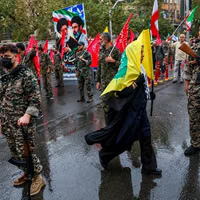
Iraq’s move on militia stronghold may do little to curb Iran’s influence

Iraq ordered troops on Monday to enter a stronghold of Iran-backed Kataib Hezbollah south of Baghdad following an investigation into suspected oil smuggling.

Iraq ordered troops on Monday to enter a stronghold of Iran-backed Kataib Hezbollah south of Baghdad following an investigation into suspected oil smuggling.
US pressure may have pushed Baghdad to act, but experts told Iran International that even if Iraqi forces take control of the town, the militias are likely to retain much of their power.
“It’s going to be once again a theatrical show,” said Omar Mohammed, an Iraqi historian who documented life under Islamic State through his blog Mosul Eye. He directs the Antisemitism Research Initiative at George Washington University’s Program on Extremism.
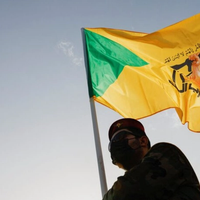
Senior Iraqi officials told Reuters that Kataib Hezbollah had operated an oil-smuggling network for years, generating hundreds of millions of dollars since 2021. The US-designated terrorist organization, which has attacked American forces in the region, has long controlled Jurf al-Sakher, also known as Jurf al-Nasr, in Babil province south of Baghdad. Kataib Hezbollah denied the smuggling allegations, Anadolu reported.
Why Jurf al-Sakher matters
Mohammed described Jurf al-Sakher as a financial hub Iran has used to evade sanctions. He said the town’s location near roads linking Baghdad with Karbala and Anbar gives whoever controls it strategic leverage over the capital. He also pointed to the displacement of Sunni residents, whose prolonged exclusion has fueled sectarian tensions.
More than 100,000 people from Jurf al-Sakher and surrounding communities remain unable to return more than a decade after Iraqi forces retook the area from Islamic State in 2014, Shafaq News reported. Government committees have entered the area in recent months, but such visits have been unusual and required high-level security and political coordination, the outlet said.
Prime Minister Ali al-Zaidi “ordered the armed forces to enter” Jurf al-Sakher, government spokesman Haidar al-Aboudi told the Iraqi News Agency, adding that “a deadline has been set for the armed faction to exit the area.” A security source told AFP the deadline was Friday.
Al-Aboudi said investigators found evidence of pipeline tampering. Nine security and oil officials were dismissed following the investigation, Reuters reported.
Sources told The New Arab that fighting between Iraqi forces and Iran-backed factions was possible. A senior Iraqi official told the outlet that the government had deployed armored vehicles to the town’s outskirts.
The militias’ reach beyond the town
David Patrikarakos, a special correspondent for the Daily Mail and author of Nuclear Iran: The Birth of an Atomic State, recalled seeing a separate line of commercial trucks at a checkpoint outside Mosul when he reported from Iraq a few years ago. His local contacts told him the truck drivers had to pay Iran-backed militias a levy to enter the city.
Patrikarakos welcomed Baghdad’s attempt to push back but said the government had limited room to maneuver. He pointed to the factions’ political wings and their role in the Popular Mobilization Forces, a state-funded security body that formally answers to the prime minister. Some factions, he said, retain their own weapons, separate chains of command and ties to Iran.
“I think maybe the Iranian-backed militias will allow them some cosmetic gains, but there’s no way that Iran is going to allow its footprint in Iraq to disappear,” he told Iran International.
Patrikarakos said Tehran sees Iraq as part of its strategic depth and that Iran-backed factions could make limited concessions while retaining much of their power. He said clashes were possible and questioned whether the Iraqi government could prevail in an armed confrontation.
Mohammed, whose recent memoir is Mosul Eye: A Scholar’s Clandestine War Against ISIS, said al-Zaidi’s reach was limited by how deeply the militias were embedded in Iraq’s economy and politics. He cited their access to US dollars and what he described as their grip on commerce in Mosul. In his view, taking Jurf al-Sakher would leave much of that influence intact.
Even if al-Zaidi is sincere, Mohammed said, his government lacks the political will and institutional capacity to rein in the Iran-backed factions. “Militias are still in control,” he said.
US pressure puts al-Zaidi to the test
Former US Ambassador John Craig called Baghdad’s move “about 10 years overdue.” He said Washington was putting significant pressure on al-Zaidi and that the prime minister appeared to understand that Iraq’s stability depended on reining in Iran-backed militias.
Craig questioned whether Iraqi forces had the training and resources to push back against factions that have had years to entrench themselves. He said some doubt al-Zaidi’s independence from the militias and see the order as an effort to satisfy Washington. The prime minister’s actions, Craig said, would show how serious he was.
Al Arabiya, citing unnamed sources, reported that al-Zaidi left a meeting of the ruling Shiite Coordination Framework after disagreements over Jurf al-Sakher.
An Iranian delegation arrived in Baghdad on Monday for talks aimed at defusing the standoff, Al Arabiya reported, citing sources. The delegation was expected to meet Iraqi officials, Shiite Coordination Framework leaders and armed factions to prevent a military confrontation.
Some Coordination Framework leaders proposed replacing Kataib Hezbollah fighters with Popular Mobilization Forces units affiliated with Iraq's religious shrines as a compromise, according to the report.
Mohammed said the troop order gave Baghdad something to show Washington. He argued that sustained pressure from the United States and Iraq’s neighbors could push the government toward more substantive action.
A lasting crackdown, he said, would require political will, a clear strategy and institutions capable of carrying it out.
The immediate test is whether Kataib Hezbollah leaves by the deadline. For families displaced from Jurf al-Sakher and nearby communities, a more lasting measure of Baghdad’s control is whether they can finally go home.
Iran’s extensive network of dams and water-transfer projects may have been built partly to support underground missile bases, the New York Times reported on Monday, citing experts who identified overlaps between water infrastructure and areas targeted in US-Israeli airstrikes.
Water and military experts told the newspaper that projects with no clear civilian justification could help sustain Iran’s underground military facilities. The report stressed, however, that the connection remains speculative.
Nima Shokri, a water security expert at Germany’s Hamburg University of Technology, said his team had tracked at least 533 dams across Iran. Examining a map of strikes on suspected military sites this year, he noticed that their locations closely resembled the pattern on his map of dams.
“It was always puzzling to me,” he told the Times. “Why were they building so many dams?”
The airstrikes prompted another question: “Why does it seem that wherever we have dams, there is a missile strike close by?”
Supplying the ‘missile cities’
Seven water and military experts interviewed by the newspaper said dams could provide the steady water and electricity supplies needed by sprawling military complexes.
Iran’s underground “missile cities” house facilities for producing, storing and launching missiles and drones, protected by tunnels dug deep beneath mountains.
Danny Citrinowicz, a former Iran analyst for Israeli military intelligence, said access to independent supplies would give Tehran “operational continuity.”
“Iran has a strong incentive to ensure that its missile complexes are not dependent on the broader national infrastructure for essential services,” he said.
One example examined by the newspaper was a large project transferring water from the Zagros mountains to Yazd.
Amir Aghakouchak, a water expert at the University of California, Irvine, said March airstrikes and reporting about a major missile facility in the area led him to suspect that the project “may have been influenced, at least in part, by military considerations.”
Shokri cautioned that many dams serve essential civilian needs in a country facing water shortages, providing drinking water, irrigation and electricity.
“Any potential military role should not overshadow these functions,” he said.
Civilian infrastructure in military planning
Iran International reported in March on a leaked 33-page directive attributed to the Revolutionary Guards’ missile command that appeared to make civilian locations part of a structured system for concealing and supporting missile operations.
The document, supplied by the hacktivist group Edalat-e Ali, identified industrial facilities, sports centers, sheds and warehouses as potential cover positions. Its criteria included keeping equipment out of view of surrounding buildings and ensuring surveillance cameras were absent or could be switched off.
A separate Iran International investigation compiled accounts of security and military forces moving personnel, weapons and equipment into at least 70 civilian sites across 17 provinces, including 34 schools.
Iran International geolocated visual evidence from seven locations, all schools.
In September, Tehran Governor Mohammad-Sadegh Motamedian called for schools used by other state bodies to be returned before the academic year began. He did not identify the institutions involved or say how many schools remained occupied.
Iranian officials have denied using civilians as shields and accused Israel and the United States of targeting civilian infrastructure.
Questions over conservationists’ arrests
The Times report also explored whether proximity to concealed military sites could help explain the Guards’ arrests of wildlife conservationists in 2018. It established no definitive connection.
Morad Tahbaz, a founder of the Persian Wildlife Heritage Foundation who spent more than five years in prison, recalled interrogators’ fixation on his team’s work protecting rare wild sheep in Hormozgan province.
“They were incredibly sensitive about that area,” he said.
The newspaper reported that US strikes hit the province’s Tarom Protected Area on July 14, killing a wildlife ranger’s family. Washington said it was targeting military infrastructure and coastal defenses. Military expert Farzin Nadimi told the Times the location was near a suspected underground missile base.
“I think it is possible that the Guards saw anyone doing fieldwork near these sites, even wildlife conservationists, as a potential security threat,” environmental analyst Nik Kowsar told the newspaper.
The US Army is urgently seeking contractors to build 17 reinforced concrete bunkers in Israel, Saudi Arabia and Lebanon to protect American and coalition troops from missile and drone attacks, Military Times reported Monday.
According to an Army procurement notice posted Friday, the project calls for 10 bunkers in Israel, five in Saudi Arabia and two in Lebanon, replacing existing personnel shelters made from converted shipping containers.
“Due to elevated regional force protection conditions, there is an urgent, high-priority requirement to replace nonstandard personnel protection shelters,” the Army said in the notice.
The military said the objective was to protect US and coalition service members operating in potentially hostile environments across the US Central Command's area of responsibility.
The project follows Iranian missile and drone attacks on US military installations across the Persian Gulf that have killed at least 23 American personnel, according to the report.
Among the incidents was a March 2026 drone strike on an Army command post at Kuwait's Port of Shuaiba that killed six US service members. Subsequent reports alleged that the facility lacked adequate protection against aerial attacks.
The Army said the bunkers would be installed at five primary military sites, including one in Israel and two each in Saudi Arabia and Lebanon. Their exact locations were not disclosed.
Each bunker will consist of three reinforced concrete sections, steel entrance doors and protective concrete barriers, with additional sandbags along the exterior walls and at least 18 inches of overhead cover.
The Army wants construction completed within 45 days of issuing the task order and expects to give contractors just three days to submit price quotations.
“Due to extreme operational urgency (soldiers currently at risk using non-standard containerized shelters), the subsequent solicitation is anticipated to have an expedited 3-day quote turnaround window,” the notice stated.
The Army is seeking construction and engineering firms capable of mobilizing immediately in the three countries, with responses due by November 25.
A senior Revolutionary Guards commander acknowledged extensive intelligence infiltration across Iran's military, intelligence and government institutions, saying surveillance technology has made it virtually impossible to remain hidden.
"Enemy infiltration has occurred at high levels. There is infiltration even within the Revolutionary Guards, the Intelligence Ministry, state broadcasting and various government institutions. This infiltration is sometimes direct and sometimes indirect," Mohammad Jafar Asadi, a former deputy inspector of the Khatam al-Anbiya Central Headquarters, told Defa Press outlet.
Asadi said Israel could use its influence in European countries to obtain passports and identity documents for operatives, allowing them to enter Iran disguised as tourists or businesspeople.
His remarks follow two wars lasting 12 and 40 days, during which dozens of senior Islamic Republic officials, including Revolutionary Guards commanders, were killed, raising questions about the extent of intelligence penetration within Iran's security establishment.
Foreign Minister Abbas Araghchi acknowledged in a July 19 interview that US and Israeli knowledge of scheduled meetings at a government complex on February 28, the first day of the 40-day war, pointed to a security breach that may remain unresolved.
Araghchi said the infiltration could extend beyond access to classified information to influence government decision-making and its psychological environment.
The New York Times previously reported that the operation that killed Ali Khamenei and other senior Islamic Republic officials involved close intelligence cooperation between Israel's Mossad and the CIA.
Surveillance systems leave nowhere to hide
Mobile phones, surveillance cameras and digital records have become powerful intelligence-gathering tools, Asadi said, describing how artificial intelligence can process footage from cameras installed along streets and inside shops and homes.
Information collected through electronic prescriptions, fuel purchases and airline bookings can also be used to track individuals, he added.
"We ourselves are providing services and information, and we can no longer say there is anywhere left to hide," Asadi said, adding that control over some of the systems and their hardware rests with outside parties.
The Islamic Republic has itself used surveillance equipment to monitor citizens and suppress protests.
The Financial Times reported on June 8, citing an informed source, that Iranian authorities installed additional surveillance cameras during the December 2025-January 2026 uprising to monitor protesters.
Israel subsequently used footage from those cameras to identify Basij militia personnel stationed at checkpoints during the latest war, the source said.
Revolutionary Guards member abducted and questioned
Asadi also described the abduction and interrogation of a Revolutionary Guards member inside Iran, saying the kidnappers had been paid to seize the man under the pretext that he owed money.
"One of our Guards members was abducted with a sack over his head and taken to a house as someone who owed money. From inside that house, direct contact was established with Tel Aviv," Asadi said.
The abducted Guards member was later blindfolded and taken to a desert area in Varamin, near Tehran, where his captors threatened to shoot him if he moved within two hours, according to Asadi.
The man began shouting after approximately 10 to 15 minutes and eventually escaped, Asadi said, without identifying the individual or specifying when the abduction occurred.
Previous accounts have described Mossad operatives interrogating individuals linked to the Revolutionary Guards inside Iran.
In April 2022, Israeli media reported the interrogation of Mansour Rasouli in Iran. Iran International subsequently identified Rasouli as a member of a network linked to the Revolutionary Guards tasked with assassinating an Israeli in Turkey, an American general in Germany and a journalist in France.
In July 2022, Iran International reported that Mossad operatives had interrogated Revolutionary Guards official Yadollah Khedmati inside Iran for several hours, obtaining information about weapons transfers to Syria, Iraq, Lebanon and Yemen.
Asadi's account adds to disclosures by senior Iranian officials about the scale of intelligence penetration within the Islamic Republic, including vulnerabilities in the security institutions responsible for protecting its leadership.
Iran's state-linked shipping company sold a damaged container vessel for less than $6 million to a firm owned by the sons of a senior Iranian official, raising questions over asset sales and shareholder interests, an Iranian news outlet reported Monday.
The Shahraz vessel was sold to Admiral, a company owned by the sons of Ali Shamkhani, a former secretary of Iran's Supreme National Security Council who was killed in Israeli attacks, and returned to commercial service after repairs costing several million dollars, Rouydad24 reported on November 16.
"Each of these cases raises serious questions about decision-making, pricing, the selection of buyers or recipients, the financial recording of transactions and the responsibility of managers," Rouydad24 wrote.
The website called for the publication of transaction documents and financial assessments to establish whether the sales served the interests of shareholders in the publicly listed Islamic Republic of Iran Shipping Lines (IRISL).
Damaged vessel sold below $6 million
The Shahraz container ship ran aground near the Singapore Strait on May 11, 2020, sustaining extensive hull damage.
The vessel was subsequently sold to Admiral for less than $6 million after incurring salvage and maintenance costs, Rouydad24 reported.
The outlet said the ship's recoverable scrap value may have exceeded its sale price, while shareholders received insufficient information about salvage expenses and insurance compensation.
Admiral subsequently spent several million dollars repairing Shahraz before returning it to commercial operations.
Rouydad24 questioned why IRISL had not undertaken the repairs itself and whether the vessel's commercial viability had been assessed before its sale.
It also sought details on whether the transaction involved a public auction or direct negotiations, how the buyer was selected and whether conflicts of interest existed.
Shamkhani shipping network faces US sanctions
Hossein Shamkhani, a son of Ali Shamkhani, has operated internationally under the aliases Hugo Hayek and Hector.
The US Treasury Department announced on July 14 that it was intensifying efforts to disrupt his network over shipping activities that circumvent US sanctions.
The network remains a major participant in Iranian oil exports and has expanded into container shipping and global commodities trading, according to the Treasury Department.
The measures followed earlier US sanctions against Shamkhani and much of his financial and shipping network in July 2025 and April 2026.
Bloomberg reported in August 2024 that the Dubai-based Milavous Group, where Shamkhani is a senior executive, had generated billions of dollars trading commodities from Iran, Russia and other countries.
A confidential document obtained by Iran International on November 9 showed that Shamkhani had long dominated Iranian oil sales in the United Arab Emirates and used a vessel purchased with an Iranian government loan to transport Russian oil.
Iran International has also detailed an oil trading network linked to Revolutionary Guards intelligence, including a confidential letter from Shamkhani to Supreme Leader Ali Khamenei.
Fuel sales raise shareholder questions
IRISL continued supplying fuel to Admiral from its international operations allocation for a period after selling Shahraz, Rouydad24 reported.
The website said supplying fuel to a potential commercial competitor was not necessarily a violation, but questioned the pricing, revenue, authorizations and economic rationale.
"In a publicly listed company, the company's resources and commercial capacities must be used in accordance with its economic interests," Rouydad24 wrote.
The report called for disclosure of the sale proceeds received, Admiral's ultimate beneficial owners and any potential conflicts of interest involving those who approved the transaction.
The questions follow Iran International investigations into oil trading networks involving relatives of senior Islamic Republic officials, including the son of former Revolutionary Guards commander Mohsen Rezaei and relatives of two ministers.
Reports of organized corruption involving politically connected figures have drawn public anger as Iranians face mounting economic pressure and difficulties affording basic necessities.
The Shahraz transaction has renewed questions over the management of state-linked commercial assets and whether their sale benefits shareholders or politically connected buyers.
A third US aircraft carrier arrived in the Middle East Sunday, joining forces enforcing a blockade of Iranian ports, while Treasury Secretary Scott Bessent warned of a historic economic collapse in Iran, predicting a 25 percent contraction over the coming year.
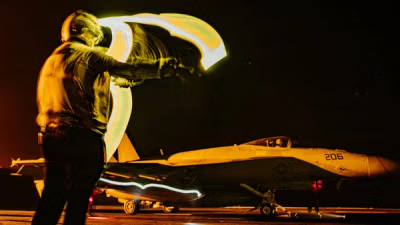
The USS Theodore Roosevelt entered the US Central Command's area of operations on Sunday, ABC News reported, citing a US official. It joined the USS George H.W. Bush and USS George Washington, which have been operating in the Arabian Sea.
The naval deployment comes as Washington maintains economic pressure on Tehran. Bessent told Fox News on Sunday that Iran's economy could contract by 25 percent over the coming year.
“So this is one of the fastest collapses in history,” he said.
The remarks echoed a warning Bessent made in an interview with Iran International last month.
“I would predict that from March of '26 until March of '27, the economy would contract more than 25 percent, which is more than the Soviet Union contracted after its collapse,” he told Iran International on October 26.
Reuters reported Saturday that President Donald Trump was considering holding off on further strikes unless Iran or Yemen's Iran-backed Houthis launched new provocations. Saudi Crown Prince Mohammed bin Salman and Turkish President Tayyip Erdogan had urged him not to resume attacks, according to the report.
The risk of renewed fighting remains, however. Bahrain, home to the US Navy's Fifth Fleet, said its air defenses intercepted several Iranian aerial attacks Sunday, while the IRGC claimed to have targeted a US radar installation with six drones. The claimed strike was not independently confirmed.
Two days earlier, the US military said it had intercepted two drones without damage, rejecting a separate Iranian claim that it had struck an American early-warning radar.
Israel has also continued consultations with Washington over Iran. Mossad chief Roman Gofman returned from talks with senior US officials, Israeli outlet Ynet reported, while Axios said Prime Minister Benjamin Netanyahu had sought discussions about renewed strikes.
In Tehran, Parliament Speaker Mohammad Bagher Ghalibaf warned Sunday that another US attack could widen the conflict.
“If the Americans make a mistake this time, the geography of the battle will be determined by the capabilities and will of our armed forces,” he said.
Iranian Foreign Minister Abbas Araghchi is expected to visit Oman on Tuesday for talks with his counterpart, according to state media. Oman has previously mediated between Tehran and Washington.