• العربية
  • فارسی
BrandBrand
  • Iran Insight
  • Politics
  • Economy
  • Analysis
  • Special Report
  • Opinion
  • Podcast
  • Live TV
  • Iran Insight
  • Politics
  • Economy
  • Analysis
  • Special Report
  • Opinion
  • Podcast
  • Live TV
  • Theme
  • Language
    • العربية
    • فارسی
  • Iran Insight
  • Politics
  • Economy
  • Analysis
  • Special Report
  • Opinion
  • Podcast
  • Live TV
All rights reserved for Volant Media UK Limited
volant media logo

Ideology or history? Analysts clash over the roots of Iran’s enmity with the US

Maryam Sinaiee
Maryam Sinaiee

Iran International

Nov 20, 2026, 09:35 GMT+0
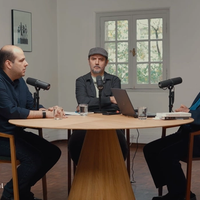
A screenshot from the debate between Shahram Ettefagh and Jafar Shiralinia, published by Azad on November 18, 2026.

Is Iran’s four-decade confrontation with the United States a product of the Islamic Republic’s ideology, or of an older conflict over Iran’s place in the world? Two Iranian analysts clashed over the question in a debate published online on Wednesday.

Political researcher Shahram Ettefagh, whose views are close to liberalism and free-market economics, argued that the hostility is rooted in the ideology of the state founded after the 1979 revolution.

Historian Jafar Shiralinia, who studies Iran’s contemporary history, said it reflects a longer struggle between Iran and Western powers that began well before 1979. The prerecorded debate was released on the YouTube channel of Azad, a popular online political debate and talk show.

‘A system of beliefs’

Anti-Americanism became inseparable from the Islamic Republic’s political ideology after the revolution, Ettefagh said, first shaped by leftist ideas and then built into the state’s founding paradigm.

He pointed to the attacks on the United States, Israel and Arab governments in the revolution’s first months, the creation of an annual Quds Day for Jerusalem, calls for people across the region to rise against their rulers, and the seizure of the US Embassy in Tehran, where diplomats were held hostage for 444 days.

That framework would block any real change in relations with the West, he said, even if the two sides reached a deal to end the current war.

“Any reflection on the present moment in Iran, or on Iran’s future, is undoubtedly dependent on this paradigm, this system of beliefs and ideas that still governs the Islamic Republic,” he said.

The ideology was also an obstacle to Iran’s development, Ettefagh said. Iran had worked with the West at various points in its history, and its troubles with Western countries should not be blamed on a permanent hostility toward Iran.

‘An issue involving Iran, not the Iranian government’

Shiralinia rejected the idea that the conflict should be read mainly through the events of 1979. “I see this as an issue involving Iran, not the Iranian government,” he said.

Iran’s efforts to industrialize, build national power and develop strategic technologies had long met resistance from major powers, including the United States, he said, rooted in a strategic and civilizational outlook toward non-Western societies rather than in disagreement with any one government’s policies.

He cited moments when Tehran had sought to ease tensions and relations soured anyway: Iran’s cooperation with the United States in Afghanistan after the September 11 attacks, which was followed months later by President George W. Bush naming Iran part of an “axis of evil,” and the outreach of President Mohammad Khatami’s government.

Iran’s own mistakes, including the embassy seizure, should not be defended, Shiralinia said, but they had to be weighed alongside Washington’s military, political and economic policies, which he said many analyses overlook.

The 1953 coup

The sharpest disagreement was over 1953, when Prime Minister Mohammad Mossadegh, who had nationalized Iran’s oil industry, was removed from power.

Shiralinia called the US-backed coup a turning point that turned clerics, leftists and nationalists alike against Washington. “Before the coup, public opinion and even intellectuals did not view America as negatively as they did afterward,” he said.

Ettefagh rejected that account. “I do not accept the idea that America came and carried out a coup in Iran,” he said.

“The coup that took place was Mossadegh’s coup against the Shah, and the Shah, as the higher authority, had the right under the constitutional monarchy to dismiss him.”

The Shah did issue a decree dismissing Mossadegh in August 1953. The operation to remove him was organized by American and British intelligence, a role the CIA acknowledged in documents declassified in 2013.

The debate left the two men divided on whether the confrontation would outlast the Islamic Republic. For Ettefagh, it is the product of the state’s ideological choices. For Shiralinia, it is a conflict involving Iran as a country, one that could survive a change of government.

Most Viewed

Tanker loads Iranian crude in Persian Gulf as Tehran weighs resuming exports
1

Tanker loads Iranian crude in Persian Gulf as Tehran weighs resuming exports

2
ANALYSIS

A tough winter for Iran's cement industry, a tougher one for steel

3

Killing of Iranian schoolgirl sparks calls for legal reform

4

Houthi missile attack damages Riyadh’s tallest building

5

GTA 6 costs, slow internet frustrate Iranian gamers, fuel satire

Banner
Banner
Banner
Banner
Banner
Banner
Banner

Spotlight

  • Ideology or history? Analysts clash over the roots of Iran’s enmity with the US

    Ideology or history? Analysts clash over the roots of Iran’s enmity with the US

  • A test of power: Who will control Iran's state TV?
    INSIGHT

    A test of power: Who will control Iran's state TV?

  • GTA 6 costs, slow internet frustrate Iranian gamers, fuel satire

    GTA 6 costs, slow internet frustrate Iranian gamers, fuel satire

  • A tough winter for Iran's cement industry, a tougher one for steel
    ANALYSIS

    A tough winter for Iran's cement industry, a tougher one for steel

  • Tehran seizes on NYT dam report to widen retaliation threats

    Tehran seizes on NYT dam report to widen retaliation threats

  • How Iranians are turning grief into defiance
    OPINION

    How Iranians are turning grief into defiance

  • Iran could launch dirty-bomb attack, but risks make it unlikely
    ANALYSIS

    Iran could launch dirty-bomb attack, but risks make it unlikely

•
•
•

More Stories

A test of power: Who will control Iran's state TV?

Nov 19, 2026, 17:27 GMT+0
•
Behrouz Turani
100%
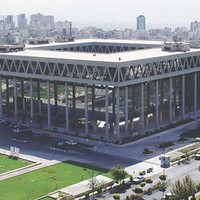
File photo: The headquarters of Iran's state broadcaster IRIB in northern Tehran

Nearly two months after the expiration of Iranian state broadcaster chief Peyman Jebelli's term, it remains unclear whether he will stay in office or be replaced, fueling speculation about a struggle over control of one of the country's most influential institutions.

His five-year term, which began in September 2021, ended on September 29 amid criticism over declining audiences, political imbalance and the perceived domination of the broadcaster by figures associated with the ultrahardline Paydari Front.

The eventual appointment, which must be made by Supreme Leader Mojtaba Khamenei, could signal whether the leadership intends to curb the influence of hardline factions associated with Saeed Jalili or preserve their dominance over the Islamic Republic of Iran Broadcasting (IRIB), which holds a constitutional monopoly over domestic radio and television broadcasting.

Jalili, who has promoted the idea of a “shadow government,” is a key member of the Supreme National Security Council. His brother, Vahid Jalili, serves as the broadcaster's deputy chief and oversees much of its content.

Several other figures associated with the hardline faction were appointed to senior positions across the broadcaster's channels after 2021.

IRIB is a central instrument for agenda-setting, elite messaging and crisis management, and one of the principal platforms through which the Supreme Leader's office communicates with the public.

Its leadership also controls a vast patronage network encompassing thousands of managerial, editorial and production appointments.

How an IRIB chief is selected

Unlike ministers or executives of state-owned companies, the head of IRIB is not selected by parliament, the government or the broadcaster's supervisory council.

Under Article 175 of the Iranian Constitution, the head of IRIB is appointed directly by the Supreme Leader.

The six-member supervisory council, whose members are drawn from the executive, legislative and judicial branches, oversees the organization but does not choose its chief executive and generally exercises little influence over day-to-day management.

In practice, informal consultations take place among key political, security and cultural actors. The Supreme Leader's office assesses potential candidates, while factional lobbying emerges through media leaks and elite networks.

Ultimately, the Supreme Leader issues a decree either appointing a new chief or extending the incumbent's term.

Why the appointment remains unresolved

The political realignment following the crises of 2025–26 has made the succession unusually consequential.

In mid-October, Jomhouri Eslami, citing unofficial sources, reported that the decision to replace Jebelli had already been made and that several names were under consideration. Yet no announcement has followed.

One possible explanation is factional deadlock. Reappointing Jebelli would likely upset parts of the establishment that have criticized his tenure, while removing him could provoke resistance from Jalili's supporters.

Another factor may be uncertainty over decision-making authority under Mojtaba Khamenei. More than eight months after becoming Supreme Leader, he has made no public appearance, and no authenticated audio or video recording of him has been released. Whether this has contributed to the delay remains unclear.

Delays in senior appointments also occurred under Ali Khamenei. Yet the contrast with other recent decisions is notable. Mojtaba Khamenei reappointed Judiciary Chief Gholamhossein Mohseni-Ejei in June, just three days after the expiration of his previous term.

A similar institutional limbo has surrounded the Intelligence Ministry for more than eight months since the death of former Intelligence Minister Esmaeil Khatib.

The prolonged silence over IRIB may therefore reveal something about the new Supreme Leader's authority and decision-making style, particularly his ability or willingness to resolve competing demands within the political establishment.

What the appointment could signal

Under Jebelli, the broadcaster became a stronghold of the anti-negotiation camp. For years, hardline factions skeptical of engagement with the United States have used IRIB as a platform to undermine pragmatic efforts to improve relations with Washington.

The next appointment could therefore serve as an early indicator of the postwar balance between advocates of confrontation and supporters of diplomacy, as well as the new leadership's broader orientation toward negotiations with the United States.

Other factors heighten the importance of the decision, including significant audience erosion and IRIB's strained relationship with President Massoud Pezeshkian's administration.

Several senior officials, including Pezeshkian, have publicly criticized aspects of its coverage, while critics argue that IRIB has increasingly functioned as a platform for specific ideological factions rather than a genuinely national broadcaster.

Although Iranian media outlets have identified several potential successors, most speculation remains tentative. Few observers have a clear understanding of Mojtaba Khamenei's views, making predictions particularly difficult.

Three scenarios

Broadly speaking, three scenarios could shape the broadcaster's future.

The first is that Jebelli remains in office, suggesting that the leadership is broadly satisfied with the current direction despite mounting criticism.

The second involves appointing a successor from the Jalili network. Selecting someone already serving within IRIB's senior leadership would signal continuity with the ideological transformation that began after 2021.

The third is the emergence of a consensus candidate with a more institutional profile. Appointing someone such as former IRIB Deputy Chief Ali Darabi, a pragmatic conservative, or another veteran administrator could indicate an effort to broaden the broadcaster's appeal, reduce factional tensions and address audience decline.

Such a move would not necessarily represent liberalization, but it could signal a managerial recalibration.

Ultimately, the most important question is not which individual prevails, but which political tendency does. The succession has become a proxy struggle over control of the Islamic Republic's most influential domestic media institution.

One particularly useful indicator may be the subsequent selection of key deputies and channel heads.

Positions such as the political and cultural deputies, the heads of prominent channels One and Three and the news network IRINN may provide a clearer indication of IRIB's future editorial direction than the formal appointment decree alone.

Historically, these secondary appointments have often revealed more about the broadcaster's strategic trajectory than the choice of chief executive itself.

Iran's wartime rallies turn against officials, fuel political feuds

Nov 18, 2026, 09:02 GMT+0
•
Maryam Sinaiee
100%
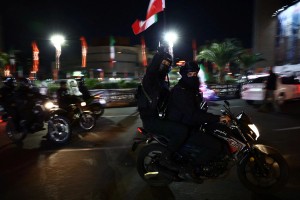
Supporters of the Islamic Republic wave Iranian flags during a nighttime rally.

Iran's nightly rallies by Islamic Republic loyalists have become platforms for opposing negotiations with Washington and targeting senior officials, drawing criticism over their political agenda, use of public resources and disruption to daily life in recent months.

The gatherings began in early March after the announcement that Supreme Leader Ali Khamenei had been killed in US and Israeli strikes. Supporters of the Islamic Republic took to streets and squares across the country and have continued gathering nightly.

Calls for revenge over Khamenei's killing and opposition to an agreement ending the war have become prominent features of the rallies, alongside attacks on officials involved in diplomatic efforts.

“A minority in the streets wants war, but the majority of people, who have no voice, just want to live their lives,” Mohammad-Ali Abtahi, a former first vice president under President Mohammad Khatami, said in an interview with Hamshahri television.

Abtahi's remarks circulated widely on social media and drew a backlash from supporters of the gatherings. Some Iranian media have also reported declining attendance, raising questions about the rallies' appeal beyond their most committed participants.

Khorasan newspaper, which is close to Parliament Speaker Mohammad-Bagher Ghalibaf, accused speakers of exploiting the gatherings for political score-settling.

“Turning an atmosphere of solidarity into an arena for political score-settling has not only reduced public participation but also endangered national cohesion,” the newspaper wrote.

  • Iran’s nightly pro-state rallies become factional battleground

    Iran’s nightly pro-state rallies become factional battleground

During an online debate on the Azad platform, economist Mousa Ghaninejad challenged philosophy professor Bijan Abdolkarimi, who opposes negotiations with Washington, over the significance of the nightly crowds.

Ghaninejad argued that gathering in the streets did not make participants' positions correct and accused them of presenting themselves as the sole representatives of what was right while dismissing opposing views.

Protesters target senior officials

The rallies have increasingly targeted President Masoud Pezeshkian, Foreign Minister Abbas Araghchi and Ghalibaf, who is Iran's chief negotiator.

Placards have accused the officials of being too accommodating toward the enemy, with some demonstrators demanding their dismissal or resignation.

  • Iran ultra-hardliners accuse Ghalibaf, Pezeshkian of ‘coup’ over US deal

    Iran ultra-hardliners accuse Ghalibaf, Pezeshkian of ‘coup’ over US deal

Organizers have also staged smaller daytime protests outside government and military institutions, extending their pressure beyond the nightly gatherings.

The conservative Jomhouri Eslami newspaper last week described the protests as unjustifiable, arguing that they threatened national interests and prevented Iran from “translating its military achievements into diplomatic gains.”

The newspaper wrote that the United States and Israel had infiltrated the gatherings, turning slogans against Washington and Israel into calls for the deaths of current and former Iranian officials.

It urged the judiciary and security agencies to intervene against those it accused of undermining national unity.

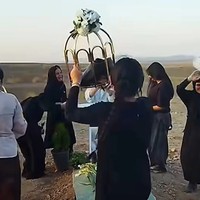
Khorasan also demanded judicial action after women wearing burial shrouds gathered outside the Armed Forces General Staff headquarters and accused military commanders of compromising with the enemy.

Khorasan urged the judiciary to take action against the protesters and organizers, as well as those it said had encouraged accusations of betrayal against military commanders and senior officials.

Public funding faces scrutiny

The rallies have also raised questions about the use of public resources to support political mobilization.

Rouydad24 news website last week described the gatherings as an “electoral campaign for the ultra-hardline faction,” questioning the use of public facilities to advance a particular group's political agenda.

The website highlighted the role of Tehran Mayor Alireza Zakani and his political allies in organizing and promoting the demonstrations.

It said no transparent financial information was available about their costs or the extent of direct funding by Tehran Municipality.

Residents complain of disruption

Beyond political infighting, residents have complained on social media about loudspeakers, traffic congestion and the nightly occupation of streets and public squares.

  • Armed patrols and nightly pro-government rallies spread fear across Iranian cities

    Armed patrols and nightly pro-government rallies spread fear across Iranian cities

Some rally supporters have dismissed these objections, portraying participation as a wartime duty and criticism as disloyalty.

“The nightly gatherings are Iran's defensive shield, like air defenses, fighter jets and missiles whose noise we hear and fear, but they are on our side,” Kobra Asoupar, a journalist and defender of the nightly gatherings, wrote on X.

“If someone says during a war that we should not defend ourselves because we are being disturbed, that person is either an idiot or a traitor,” she added.

Daily reports secret bread rationing in two Iranian provinces

Nov 17, 2026, 10:37 GMT+0
100%
File photo: People queue to buy bread outside a bakery in Iran.

Bread rationing has been introduced without public notice in two Iranian provinces, triggering queues and disputes at bakeries, the hardline daily Kayhan reported, as government officials confirmed a nationwide bread purchase management system on Tuesday, November 17.

Kayhan, published under the supervision of a representative of Iran's Supreme Leader, reported that the restrictions had been introduced in Khuzestan province in southwestern Iran and Zanjan province in the northwest without informing bakers or consumers in advance.

The measures prompted residents to rush to bakeries and led to verbal confrontations, the newspaper reported.

Under the system described by Kayhan, each person receives a monthly allocation equivalent to approximately eight kilograms of subsidized flour, priced at 23,000 rials ($0.009) per kilogram.

Purchases exceeding the allocation are charged at the commercial rate of 126,500 rials ($0.047), more than five times the subsidized price, with the additional payments transferred to government accounts, Kayhan reported.

The newspaper questioned why the measures had been introduced without informing bakers or consumers and accused “elements within the government” of contributing to “public anxiety” through simultaneous changes affecting bread, gasoline and electronic food vouchers.

Local media had previously reported restrictions in Shadegan, Andimeshk, Omidiyeh and Zeydun in Khuzestan province, where daily bread allocations were set at between two and 2.5 loaves per person.

Purchases exceeding those amounts were priced at 131,500 rials ($0.049), according to the local reports.

Officials confirm nationwide rollout, deny household restrictions

The bread purchase management system is being implemented across Iran, but ordinary households face no restrictions on their daily purchases, Omid Jahannejadian, director-general of Khuzestan's Grain and Commercial Services Department, told the official IRNA news agency on Tuesday.

The program is intended to regulate subsidized flour consumption, prevent potential misuse and identify purchases exceeding normal household needs, Jahannejadian said.

Consumption thresholds are calculated using purchasing data collected over the past two years, taking account of differences between urban and rural areas.

The system calculates allocations at the household level, with purchases by family members counted toward a combined household allowance, Jahannejadian added.

100%
File photo: A baker prepares traditional bread at a bakery in Iran.

In Zanjan province, Ali Eyvazi, director-general of the provincial Grain and Commercial Services Department, also confirmed that unusually large bread purchases would be charged at commercial rates.

Ordinary household purchases would not face higher prices, Eyvazi told IRNA.

The guidelines were issued on November 15, with the system subsequently updated at bakeries and flour mills.

Although the average monthly flour allocation per Iranian is approximately eight kilograms, applying an identical limit to every person without accounting for household circumstances and regional differences would be inaccurate, Eyvazi said.

The program was initially tested in Markazi province before authorities decided to expand its implementation to other provinces following an evaluation.

In a separate interview with the Mehr news agency, Eyvazi rejected descriptions of the measures as a two-tier bread pricing system, saying ordinary household consumption would remain unrestricted despite the introduction of purchasing thresholds.

Supermarkets must obtain bread from bakeries operating without government subsidies, while commercial purchases from subsidized bakeries must comply with the new rules, Eyvazi added.

Rising food costs put pressure on households

The introduction of bread purchase controls comes as Iranians face increasing difficulties affording basic food products.

Iran's minimum monthly base wage stands at about 166 million rials ($62), following a 60 percent increase in March. The cost of a basic monthly basket of goods for a working-class family had reached approximately 906 million rials ($337) by July, more than five times the minimum base wage, according to calculations cited by Iranian media.

Accounts sent to Iran International describe households turning to installment payments to purchase essential items, including bread, meat, chicken and eggs.

  • Inflation pushes Iranians to buy food in installments

    Inflation pushes Iranians to buy food in installments

In a video showing a bakery queue in Tehran, one resident described shortages alongside rising prices and shrinking loaf sizes.

"Bread has become scarce, and we have to stand in line to buy it. At the same time, the loaves have become smaller and more expensive. Can someone tell us how we are supposed to feed our children?" the resident said.

Other citizens have described reductions in flour allocations and changes in the taste and color of bread.

  • Flour shortages force bakeries to close across Iran

    Flour shortages force bakeries to close across Iran

Economic hardship is also affecting social relations as more households struggle to meet their basic needs, sociologist Hossein Ghazian told Iran International.

When survival becomes people's primary concern, competition increasingly replaces cooperation, potentially contributing to domestic violence, street confrontations and crime, Ghazian said.

The economic pressures can also contribute to depression, suicide, declining marriage and birth rates, and migration, reflecting diminishing confidence in the future, Ghazian added.

  • Food, medicine, hope: what Iran's economic crisis is costing its people

    Food, medicine, hope: what Iran's economic crisis is costing its people

The nationwide bread controls introduce new purchasing thresholds for a staple food even as officials insist that ordinary household consumption will remain unaffected.

Iran’s daily hardships find a voice in IRGC-linked media

Nov 16, 2026, 21:28 GMT+0
100%
A man, a woman and a child wearing face masks ride a motorcycle in Iran, November 15, 2026. ISNA

The depth of hardship in Iran is evident even in messages published by the Revolutionary Guards-affiliated Fars news agency, which is airing accounts of families struggling to survive without examining the responsibility of its powerful patron.

Children leaving education to support their families, teachers struggling to afford their commute and a disabled parent awaiting assistance feature in the complaints, echoing what Iran International audiences have long described in its Voices from Iran coverage.

Their appearance in Fars brings those grievances into an outlet aligned with an institution that holds extensive political and economic power, and whose own role goes unexamined in the roundup.

Published under the heading “Messages you sent to Fars,” the accounts describe a recurring gap between promised support and what people say they can actually obtain.

The selection offers a bleak picture of daily life even through the accounts an establishment outlet chooses to publish.

The writers were not named in the roundup, and their individual accounts have not been independently verified by Iran International.

Children working, assistance falling short

One contributor, identifying himself as a painter, said his children had been unable to continue their education because the family could no longer afford it.

“Because I am a simple painter, my children had to work, and we pool our earnings to keep things going,” he wrote.

He said he paid 120 million rials (nearly $45) a month in rent and questioned his household’s placement in the fifth and sixth income deciles under the classification system used to determine eligibility for state assistance.

Iran's minimum monthly base wage stands at around 166 million rials ($62).

“For God’s sake, is it fair?” he asked, citing his rental deposit, several loans and two children of marriageable age.

Another contributor said shops were refusing electronic food vouchers, undermining assistance intended to help households buy essential goods.

“Most shops that supplied meat and chicken through food vouchers have stopped accepting them because they have not received their money,” the message said.

A parent with a severe physical disability said payments for care, living expenses and hygiene supplies had still not arrived.

“I am the head of a household with two schoolchildren and have a severe physical and mobility disability, meaning that even if I wanted to work, I could not,” the contributor wrote.

The accounts raise questions not only about the adequacy of assistance, but also whether it reaches recipients and can be used when they need it.

Struggling to get to work

Two teachers described the difficulty of meeting basic expenses despite being employed.

“I am a permanent teacher with 14 years of service. I earn 245 million rials ($91), part of which goes on commuting,” one wrote. “How can I live on this salary? How can I get married? How can I buy a car?”

Another, teaching in a nomadic community, said traveling to school and back required driving about 100 kilometers (62 miles) a day in a private vehicle.

“Without the stations’ fuel cards, how can I do this?” the teacher asked. “How much monthly gasoline allowance do I have to cover my car’s fuel needs?”

The complaint comes amid tighter restrictions on access to gasoline. Iran International reported on November 15 that shared station fuel cards, which allow motorists to refuel without using their personal cards, had been withdrawn in 11 provinces. A parliamentary energy committee official acknowledged that the restrictions had fueled public dissatisfaction.

Elsewhere, contributors described public services failing and officials passing responsibility between agencies.

A resident of a village in Bushehr province said fixed internet service had been disconnected for more than a month.

“Nobody answers. They keep putting us off until tomorrow.”

A resident of Rafsanjan in southeastern Iran described drinking-water pipes left broken for months despite persistent water shortages. The village administration referred residents to the water utility, which the writer said also failed to respond.

Grievances without accountability

The messages largely appeal to authorities for help. One contributor explicitly invoked what they described as workers’ support for the political system.

“The biggest supporters of this system are workers, the poor and the middle class,” the message said, before questioning why employers were not paying workers’ insurance contributions and why arduous jobs were not receiving special pension treatment.

The appeal highlights the contradiction in Fars’s role: it offers a platform for people seeking relief while being affiliated with an institution deeply embedded in the structures governing their lives.

The Revolutionary Guards’ influence extends beyond military and security affairs. Reports and investigations by Iran International, Reuters and many other outlets have documented its sprawling business empire across oil, construction, shipping, telecommunications and ports, alongside its growing political power.

Yet the roundup does not examine how that power is exercised, how the Guards’ economic interests affect ordinary Iranians or what responsibility the institution bears for public policy. Nor does it include responses from the agencies concerned or evidence that the complaints have been resolved.

The selection alone cannot establish whether Fars is seeking to pressure the government, retain readers’ trust or compete with independent media as a channel for public grievances.

Whatever the intention, the presentation allows an outlet tied to a major center of power to cast itself as an advocate for people seeking help, while leaving that center of power outside its scrutiny.

2019 crackdown failed to break cycle of Iran street protests

Nov 15, 2026, 11:45 GMT+0
•
Ata Mohamed Tabriz
100%
People protest against increased gas price, on a highway in Tehran, Iran November 16, 2019.

Iran's deadly crackdown on protests in November 2019 failed to prevent successive uprisings, fueling a cycle of unrest driven by economic hardship, restrictions on personal freedoms and increasingly forceful repression.

The November 2019 protests marked a turning point in Iran's political landscape, widening the divide between the Islamic Republic and much of society.

Authorities sought to deter further demonstrations through mass arrests, lethal force and nationwide internet shutdowns. But the grievances that brought people into the streets persisted, and new sources of discontent accumulated.

  • Grieving Mothers Speak Out On Anniversary Of Iran’s Bloody November

    Grieving Mothers Speak Out On Anniversary Of Iran’s Bloody November

The cycle continued through protests in 2021, the Woman, Life, Freedom uprising in 2022 and another nationwide wave in January 2026, which began over economic hardship and faced the deadliest crackdown in recent decades.

November 2019: From fuel prices to mass killings

The November 2019 protests erupted against a backdrop of rising inflation, regional inequality and growing poverty on the outskirts of major cities.

On November 15, authorities announced overnight increases of 200 percent in the price of unsubsidized gasoline and 50 percent for subsidized fuel, without prior public notice.

The decision triggered demonstrations that rapidly expanded beyond opposition to fuel prices into a broader rejection of the political system and Supreme Leader Ali Khamenei.

Within 48 to 72 hours, protests had spread to between 100 and 200 cities across 22 to 28 provinces, with major centers in Khuzestan, the outskirts of Tehran, Alborz and several western and central provinces.

Many participants came from what sociologists describe as the impoverished middle class: residents of smaller cities and urban peripheries whose expectations resembled those of the middle class but whose economic circumstances were closer to those of lower-income groups.

The demonstrations lacked established organizations and coordinated leadership, contributing to their rapid, decentralized spread.

The rejection of Iran's political establishment had already emerged during protests in December 2017 and January 2018, when demonstrators chanted that both reformists and conservatives had exhausted their political relevance.

  • Anatomy of a massacre, and the mothers who refuse to let November end

    Anatomy of a massacre, and the mothers who refuse to let November end

By November 2019, opposition to the Islamic Republic itself was evident from the beginning.

The government, backed by reformist political forces, implemented the fuel price increase and internet shutdown before distancing itself from responsibility for the consequences.

Officials described protesters as "thugs" and characterized the demonstrations as "urban warfare," presenting the crackdown as necessary to protect national security and public order.

Authorities imposed a nationwide shutdown of international internet access under a decision by the country's security council.

Special police units, the Revolutionary Guards and the Basij militia deployed alongside armed personnel using live ammunition. Between 7,000 and 8,600 people were arrested.

In Mahshahr, southern Iran, security forces fired bursts from heavy weapons at protesters and residents who had sought refuge in nearby marshlands.

Reuters subsequently reported, citing sources familiar with the decision-making, that Khamenei had ordered the protests stopped at any cost.

The scale of the killings became a central source of public anger, compounded by the absence of accountability for those responsible.

"Well, shots were fired at their legs too," then-Interior Minister Abdolreza Rahmani Fazli said when questioned about why protesters had been shot in the head, according to former lawmaker Mahmoud Sadeghi.

The remarks did not lead to the prosecution of officials who ordered the crackdown. An effort to impeach Rahmani Fazli also failed to advance in parliament.

Mojtaba Zolnouri, then head of parliament's national security committee, defended the minister's actions as implementation of presidential orders and decisions by the country's security authorities.

Estimates of the death toll varied widely. Then-Interior Minister Abdolreza Rahmani Fazli put the figure at between 200 and 225, while Amnesty International documented hundreds of deaths. Reuters, citing Iranian Interior Ministry officials, reported that approximately 1,500 people had been killed.

The wide differences between official and independent estimates of the death toll, coupled with the lack of accountability, helped sustain demands for justice long after the protests had subsided.

How the memory of 2019 shaped the 2022 uprising

The legacy of November 2019 extended beyond the immediate political consequences of the crackdown.

Cultural sociologist Jeffrey Alexander argues that suffering can become a collective trauma when a wider community identifies with the victims through a shared narrative of their suffering and those responsible.

Families seeking justice for those killed in November 2019 helped construct such a narrative.

Annual commemorations, repeated publication of victims' names and accounts shared by grieving mothers on social media transformed the losses of hundreds of families into a wider public concern.

The protest slogan "Aban continues," referring to the Iranian calendar month in which the killings occurred, captured the persistence of that memory.

The anniversary of the crackdown helped determine the timing of protest calls in November 2022, during the Woman, Life, Freedom uprising.

Families of those killed in 2019 also provided a model for relatives seeking accountability after subsequent crackdowns.

In April 2025, Kamelia Sajadian, whose son Mohammad Hassan Torkaman was killed during the 2022 protests, launched the "I too am someone's mother" campaign.

The initiative drew on words associated with Pouya Bakhtiari, killed in November 2019, and subsequently repeated by his mother, Nahid Shirpisheh. Mothers of victims from both the 2019 and 2022 protests joined the campaign.

But the persistence of protest cannot be explained by collective memory alone.

Economic conditions that helped fuel the 2019 demonstrations deteriorated over the following three years.

Persistent inflation, the declining value of the national currency and shrinking household purchasing power pushed more middle-class Iranians toward poverty and deepened hardship among those already struggling.

The Islamic Republic also consolidated political power following the 2021 presidential election, leaving reformist political forces with little remaining capacity to mediate between the state and society.

At the same time, authorities intensified restrictions on personal freedoms, particularly women's clothing.

A July 2022 decision tightening enforcement of mandatory hijab rules, alongside an expanded presence of morality police patrols, increased pressure on women.

  • Iran's Raisi Orders Strict Enforcement Of Hijab Amid Crackdown

    Iran's Raisi Orders Strict Enforcement Of Hijab Amid Crackdown

The death of Mahsa Amini in September 2022 after her detention by morality police triggered another nationwide uprising.

Unlike the initial fuel-price protests of 2019, the 2022 movement brought together women, young people, middle-class Iranians, lower-income communities and protesters from different ethnic backgrounds.

Its demands centered on personal freedom, dignity and opposition to compulsory hijab, alongside rejection of the Islamic Republic's political structure.

A younger generation with limited attachment to official ideology or traditional political organizations occupied a central role.

The decentralized character of the demonstrations resembled November 2019, although tactics such as nighttime rooftop chanting also drew on earlier protest movements, including those of 2009.

Repression contains protests but leaves grievances unresolved

The November 2019 crackdown did not end nationwide protest in Iran.

Demonstrations over water shortages in Khuzestan in 2021, the 2022 uprising and the protests of January 2026 demonstrated the continued importance of the streets as a place of confrontation between citizens and the state.

Each wave involved different immediate grievances, but all unfolded against a backdrop of accumulated economic and political dissatisfaction.

Authorities repeatedly used arrests, violence and communications restrictions to contain demonstrations.

  • Tehran quelled street protests but economic troubles persist

    Tehran quelled street protests but economic troubles persist

Those measures increased the risks of participation and disrupted protesters' ability to organize, without addressing the conditions that had brought them into the streets.

The January 2026 protests followed the same broader trajectory.

Beginning with economic grievances, the demonstrations developed into a wider challenge to the political establishment and were met with the deadliest crackdown in decades.

The recurrence of protest also highlights the limits of interpreting the absence of demonstrations as public acceptance of existing conditions.

Participation depends not only on the depth of dissatisfaction but also on people's assessment of personal risk, their ability to communicate and their expectations about whether others will join them.

Lethal repression raises the perceived cost of taking to the streets, while internet shutdowns make it harder to coordinate gatherings or learn where protests are taking place.

Such measures can temporarily reduce demonstrations even when the underlying grievances remain.

Economic hardship continues to affect access to basic necessities, while restrictions on clothing and personal behavior sustain another source of dissatisfaction.

Authorities have also linked opposition to some of these restrictions with espionage or cooperation with foreign adversaries, extending security enforcement into everyday life.

That approach can increase the consequences of dissent while generating additional resentment over state interference.

The continuing economic strain, restrictions on personal freedoms and reliance on security measures have left the conditions for renewed protest largely intact.

From November 2019 to January 2026, the Islamic Republic has repeatedly demonstrated its capacity to suppress demonstrations, but not to prevent the emergence of new ones.

The central pattern remains unchanged: authorities can regain control of the streets through force, but suppressing a protest movement has not eliminated the grievances that brought it into being.