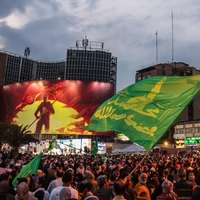
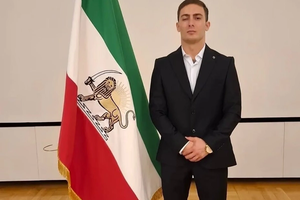
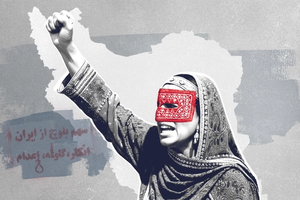
The findings are contained in a new joint report by Human Rights Watch and the Abdorrahman Boroumand Center for Human Rights in Iran examining executions following the nationwide protests that erupted in late 2025 and January 2026.
Between March 18 and the end of August, Iranian authorities announced the executions of 29 people arrested in connection with the protests. Several were just 18 or 19 years old, and five were executed in public.
In 16 cases, authorities did not allege that the defendants had killed anyone. Instead, young protesters have been executed over allegations including setting fire to buildings or vehicles, possessing or using Molotov cocktails, entering or damaging government buildings, throwing stones and blocking streets.
The organizations say the speed with which some defendants have gone from arrest to execution has been extraordinary.
Saleh Mohammadi, a 19-year-old wrestling champion, was executed about five weeks after his arrest. Amir Hossein Hatami, 18, was executed 84 days after his arrest.
Sasan Azadvar Jonaqani, a 21-year-old karate champion, was arrested, convicted and executed in under four months. Authorities accused him of acts including breaking the windows of a police bus with stones and a baton.
‘War against God’
The executions mark a new phase in the crackdown that followed the January protests, when Iranian authorities killed thousands and detained tens of thousands as they sought to suppress the unrest.
Human Rights Watch and the Boroumand Center found that at least 59 men were executed during the same period on what they described as politically motivated and vaguely defined national security charges following grossly unfair trials.
At least three had reportedly been arrested in connection with the 2022 Woman, Life, Freedom protests.
Iranian courts have relied heavily on broadly defined capital offenses including “waging war against God” and “corruption on earth.”
Human Rights Watch and the Boroumand Center said those charges have allowed courts to impose death sentences without establishing that defendants were responsible for intentional killings.
‘Helping hostile states’
The report also points to Iran's 2025 Espionage Law as an increasingly important tool in protest-related prosecutions.
At least eight protesters executed following the recent demonstrations were convicted under the law, which expanded the range of conduct punishable as cooperation with “hostile states” and provides for expedited proceedings.
It can also impose lengthy prison terms for sending footage, images or information to foreign media, citizen journalists or foreign social media pages when authorities deem the activity contrary to national security.
‘Torture, forced confessions’
Human Rights Watch and the Boroumand Center documented defendants being denied independent lawyers of their choosing and courts relying on confessions allegedly extracted through torture, as well as unsubstantiated reports from security and intelligence agencies.
Detainees were allegedly beaten, subjected to electric shocks and mock executions, held for prolonged periods in solitary confinement and threatened with sexual violence against themselves or family members.
Some defendants later retracted their confessions in court and said they had been tortured. The report says authorities failed to investigate those allegations.
The organizations also documented the use of televised confessions before cases had concluded.
In one recording broadcast by state media, an interrogator told 18-year-old Shervin Bagherian that he was accused of “waging war against God.”
Bagherian appeared not to know what the charge meant. When the interrogator told him it meant execution, the teenager pleaded not to be put to death.
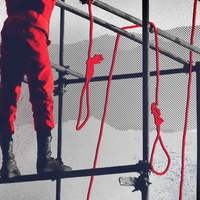
Public hangings
The report places particular emphasis on the return of public executions in protest-related cases, which the organizations say is intended to instill fear in the wider population.
On July 28, authorities executed Abolfazl Sepahi and Amir Hossein Safari in Alikhani Square in Isfahan, where four members of the security forces were reported killed during protests on January 8.
Three other men — Saleh Mohammadi, Saeed Davoudi and Mehdi Ghasemi — were executed in March “in the presence of a group of people in Qom,” according to the judiciary's Mizan news agency, language the report says indicated a public execution.
Scores could be next
Scores of protesters and political dissidents, including women and children, remain at risk of execution, according to the report.
Amnesty International said in July that it had identified 60 people, including three children, at risk of execution in connection with protests. Iran Human Rights has reported that more than 70 protesters were at risk in Isfahan Prison alone.
The actual number could be substantially higher.
Among those who could still be executed is 26-year-old mixed martial arts fighter and kickboxer Benyamin Naghdi.
A revolutionary court in Shiraz sentenced Naghdi to death for “corruption on earth” after accusing him of using a fire extinguisher as a makeshift flamethrower against security forces riding motorcycles during protests on January 3.
His lawyer, Mostafa Nili, said prosecutors initially accused Naghdi of attempted murder but later dropped charges related to bodily injury. Nili said no one was injured.
Nevertheless, the court concluded that the remaining allegations collectively amounted to “corruption on earth,” and Iran's Supreme Court upheld Naghdi's death sentence in July, according to the report.
Lawyers taking protest-related cases have also faced threats of arrest, while the Boroumand Center documented the arrests of at least 19 lawyers in the month following the January crackdown. Others have faced renewed prosecution or disbarment.
Human Rights Watch and the Boroumand Center describe the campaign as the “weaponization of the death penalty” in the aftermath of the January crackdown, intended to instill fear and deter further dissent.