• العربية
  • فارسی
Brand
  • Iran Insight
  • Politics
  • Economy
  • Analysis
  • Special Report
  • Opinion
  • Podcast
  • Iran Insight
  • Politics
  • Economy
  • Analysis
  • Special Report
  • Opinion
  • Podcast
  • Theme
  • Language
    • العربية
    • فارسی
  • Iran Insight
  • Politics
  • Economy
  • Analysis
  • Special Report
  • Opinion
  • Podcast
All rights reserved for Volant Media UK Limited
volant media logo
TEHRAN INSIDER

Tehran’s youth emerge from war more cynical, not more hopeful

Tehran Insider
Tehran Insider

Firsthand reports from contributors inside Iran

May 10, 2026, 02:40 GMT+1Updated: 04:09 GMT+1
File photo by ISNA shows people attending Tehran's Design Week event

On Sanaei Street in central Tehran, young people spill onto pavements and crowd around tiny tables late into the evening, smoking and laughing as if the war never happened.
The street has become a kind of world within a world, a haven where people briefly lose sight of what is happening outside.

At times it almost feels normal—with one tiny but crucial difference: fewer phones are out. There is no internet to warrant the persistent scrolling.

The music is low. The coffees are overpriced. Couples flirt. Groups of teenagers debate politics and migration plans over cheesecake and iced americanos as if the country around them were not still carrying the shock of war.

But the conversations are different now.

“We thought it would be over in a few days,” says Mani, 17, referring to the January protests that were brutally crushed. “It wasn’t.”

He says he was on the streets with many of his school friends but would think twice if there were another call to action.

“If the US and Israel couldn’t get rid of them, no one can,” Mani says. “I don’t think I’d go out again. I’ll leave Iran as soon as I can.”

That appeared to be the dominant mood among the Gen Zs I met in one cafe this week. One was my best friend’s daughter. The others were her friends.

Their worldview is hard to grasp and harder to explain. The best phrase I can find for it is “suspended expectation”: a belief that the Islamic Republic may eventually fall, paired with almost no confidence that they themselves can bring it down.

The January massacre and the war that followed appear to have fundamentally altered how many young opponents of the system think about change.

“I still like the Prince,” says Saba, another 17-year-old, referring to Iran’s most prominent opposition figure, Reza Pahlavi. “I think he’s a decent man. But I don’t think he can beat this seven-headed dragon.”

The contempt for Iran’s ruling elite is unmistakable. It may be the closest thing to a shared political feeling in the cafe.

Saba and her friends describe moments of fear during the bombings, but also flashes of exhilaration after reports that senior officials had been killed.

“We partied hard when Khamenei was killed,” says Tannaz, 19. “We danced through the night wearing headphones so no music could be heard from outside the apartment.”

File photo by ISNA shows a woman leaving a cafe in Tehran
100%
File photo by ISNA shows a woman leaving a cafe in Tehran

Tannaz says she protested too and saw a friend badly injured with pellets. The crackdown, she says, “shattered” her emotionally.

“After January 10, I couldn’t get out of bed for days,” she says. “Then there was a ray of hope when Khamenei was killed. But not anymore. I really don’t know what’s going to happen to Iran. I’m trying to take it day by day until I can leave.”

That last sentiment may be the most common political position among parts of Tehran’s urban youth today: not revolution, not reform, but exit.

The war does not appear to have softened hostility toward the ruling system among these circles. If anything, it deepened it. But it also reinforced a conclusion many seem to have reached after January: that the state is far harsher and more durable than they once believed.

So they “chill,” as Mani puts it with a laugh. “What else can one do?”

They are still hanging out when I leave—no doubt drifting from politics to names and trends non-Gen Zs would struggle to decipher.

Tehran has regained its noise after the war. But beneath it sits a generation that no longer seems to believe history belongs to them.

Most Viewed

Iran-UAE breakdown leaves Iranian expats in limbo
1
INSIGHT

Iran-UAE breakdown leaves Iranian expats in limbo

2
ANALYSIS

Iran runs dry as Islamic Republic funds ideology and foreign proxies

3
INSIGHT

Ghalibaf pushes for the role many thought he already had

4

US and Israeli strikes hit Iran sites tied to nuclear weapon work, think tank says

5

Iran war delivers windfall profits to energy, banks and defense firms - BBC

Banner
Banner

Spotlight

  •  Tehran’s youth emerge from war more cynical, not more hopeful
    TEHRAN INSIDER

    Tehran’s youth emerge from war more cynical, not more hopeful

  • Iran-UAE breakdown leaves Iranian expats in limbo
    INSIGHT

    Iran-UAE breakdown leaves Iranian expats in limbo

  • Canada’s Middle East role: From Pearson’s legacy to passive diplomacy
    ANALYSIS

    Canada’s Middle East role: From Pearson’s legacy to passive diplomacy

  • Iran runs dry as Islamic Republic funds ideology and foreign proxies
    ANALYSIS

    Iran runs dry as Islamic Republic funds ideology and foreign proxies

  • Ghalibaf pushes for the role many thought he already had
    INSIGHT

    Ghalibaf pushes for the role many thought he already had

  • Internet shutdown pushes Iranians onto distrusted domestic apps
    VOICES FROM IRAN

    Internet shutdown pushes Iranians onto distrusted domestic apps

•
•
•

More Stories

Iran-UAE breakdown leaves Iranian expats in limbo

May 9, 2026, 06:01 GMT+1
•
Maryam Sinaiee

The war has pushed relations between Iran and the United Arab Emirates close to rupture, disrupting one of the region’s most important commercial relationships and leaving ordinary Iranians who built lives and businesses caught in the fallout.

Hundreds of thousands of Iranians who built lives and businesses in the UAE now face visa cancellations, frozen finances and mounting uncertainty as relations between Tehran and Abu Dhabi deteriorate.

According to several affected residents, Iranian nationals who left the UAE during the recent conflict—whether for Iran or third countries—are no longer being allowed to return, even to collect their belongings. In some cases, families still inside the Emirates have reportedly been given only weeks to leave.

Many Iranian residents say they have also been instructed to transfer funds abroad and are increasingly unable to use UAE bank accounts.

While properties and businesses have not formally been confiscated, some owners can no longer manage them directly and must rely on proxies or powers of attorney to sell assets.

Foreign companies operating in the UAE are also becoming increasingly reluctant to deal with Iranian individuals or firms, particularly those connected to trade with Iran. Many export orders involving Iran have reportedly been canceled.

“No one knows what tomorrow will bring”

Reza, a 40-year-old Iranian who has lived in Dubai with his wife for more than eight years, said Iranians still inside the UAE have not yet been deported but remain under constant pressure.

“For now, our residency status in Dubai has not changed,” he said. “But my friends say Sharjah, Abu Dhabi and other emirates are cancelling visas even for Iranians who are still inside the country.”

Reza said he and his wife, a physician, have effectively lost their livelihoods despite retaining residency permits. His wife’s hospital declined to renew her contract, while his own import-export business has ground to a halt.

“My situation is very unclear,” he said. “No one knows what tomorrow will bring.”

He added that although his company’s licence has not officially been revoked, it can no longer function because trade involving Iran has effectively stopped.

“With work permits cancelled, people can no longer use their own assets,” he said. “A food wholesaler’s store has been shut down and, because he no longer has a business licence, he cannot even sell the goods sitting in his warehouse.”

According to Reza, the pressure is even greater on intermediaries accused of helping Iran circumvent sanctions by selling oil or moving funds abroad. He said many have already been expelled from the UAE and had their bank accounts frozen.

A critical trade relationship disrupted

For years, Dubai, particularly Jebel Ali port, served as one of Iran’s most important commercial gateways, handling a large share of Iranian imports and transit trade. The UAE was often Iran’s largest or second-largest trading partner after China.

That trade route now appears severely disrupted amid rising regional tensions and what Iranian media describe as a tightening maritime blockade.

The UAE said Friday it had intercepted new missile and drone attacks allegedly launched from Iran, adding that three residents were injured.

Earlier this week, Iran’s Khatam al-Anbiya Central Headquarters denied carrying out attacks on the UAE but warned that any operation launched from Emirati territory against Iranian islands, ports or coastlines would receive a “crushing and regret-inducing response.”

Iranian media have meanwhile intensified criticism of Abu Dhabi. Jam-e Jam newspaper described the alleged seizure of Iranian assets as “modern-day robbery and open hostility,” while Abolfazl Khaki of Iran’s Chamber of Commerce accused the UAE of showing “maximum hostility” toward Iranian traders during the recent conflict.

“The recent experience showed that the UAE is no longer a safe place for Iranian investors,” Khaki said.

Iranian officials are now openly discussing alternative trade hubs. Nadir Pourparcham of Iran’s Chamber of Commerce said trade ties with the UAE “will never return to the way they were” and pointed to Qatar’s Hamad Port as a possible replacement. Iranian media have also promoted Pakistan’s ports as alternative corridors for Iranian trade.

The conservative outlet Mashregh News argued that Iran no longer needed “unreliable intermediaries” such as the UAE and said closer ties with China and Pakistan could help Tehran withstand economic pressure.

“It is time for Dubai to understand that Iran’s geography is not for sale,” the outlet wrote.

Iranians vent frustration as Trump revives talk of Tehran deal

May 7, 2026, 14:58 GMT+1
•
Hooman Abedi

Renewed deal talk between Washington and Tehran has angered many Iranians, who questioned in messages to Iran International whether another agreement would reward the Islamic Republic while ordinary people bear the cost.

Trump said there was “never a deadline” for negotiations and suggested an agreement could still emerge before his planned trip to China next week, while also keeping open the possibility of renewed strikes.

His remarks followed an Axios report saying the White House believes a one-page memorandum to end the war may be within reach and could create a framework for broader nuclear talks within 30 days.

The reaction from Iranians inside and outside the country exposed deep divisions over diplomacy, military pressure and expectations surrounding Trump’s approach toward the Islamic Republic.

  • US, Iran near one-page deal to end war - Axios

    US, Iran near one-page deal to end war - Axios

Comments show fatigue and distrust

Many people writing or speaking to Iran International described emotional exhaustion after months of war, economic pressure and shifting rhetoric from Washington.

“Mr. Trump, either fight like a man or leave us alone. You’ve exhausted us,” one person from Arak wrote.

Another questioned why discussions that could shape Iran’s future appeared to be taking place privately.

People walk on a street after US President Donald Trump said that he had agreed to a two-week ceasefire with Iran, in Tehran, Iran, April 8, 2026.
100%
People walk on a street after US President Donald Trump said that he had agreed to a two-week ceasefire with Iran, in Tehran, Iran, April 8, 2026.

“If the fate of the Iranian people is being decided through this agreement, why is it happening behind closed doors?” the sender wrote. “People have the right to know what concessions are being exchanged.”

A citizen from Shiraz described the current moment as existential for many Iranians.

“The nation has endured years of sanctions and pressure and paid the price in blood like a war,” the comment read. “Every single day of delay is a matter of life and death.”

US President Donald Trump checks his watch during an event in the White House in Washington, DC, US, November 6, 2019.
100%
US President Donald Trump checks his watch during an event in the White House in Washington, DC, US, November 6, 2019.

Others focused on the humanitarian and psychological toll of the conflict.

“Trump said help was on the way, but not only did no help come, the attacks led to two months of internet shutdowns,” one person wrote. “People suffered, people were killed and we became poorer.”

Another from Mashhad urged Iranians to rely on each other rather than foreign powers or the government.

“In this situation, neither the government nor America is thinking about the people,” the message said. “We Iranians should look after each other.”

Some appealed directly to opposition figures abroad.

  • Iran's war hawks dominate state TV as diplomacy inches forward

    Iran's war hawks dominate state TV as diplomacy inches forward

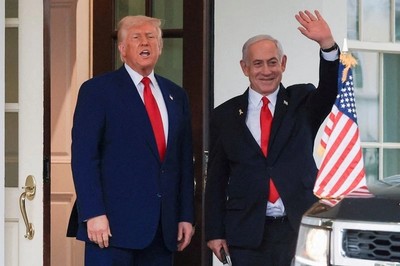
One from Tehran called on exiled Prince Reza Pahlavi to speak with Trump and Israeli Prime Minister Benjamin Netanyahu “so people do not lose hope.”

Others argued the confrontation remained unresolved regardless of diplomacy or ceasefire efforts.

“This battle is not over and it continues,” one person wrote. “Whether there is war, ceasefire or negotiations, the conflict still continues.”

‘Iranians lack representation in talks’

Asieh Amini, a Norway-based social affairs analyst speaking to Iran International, said assessing public opinion inside Iran has become increasingly difficult because internet restrictions and censorship have narrowed the available space for measuring sentiment.

A man sit at his shop in a street, after US President Donald Trump said that he had agreed to a two-week ceasefire with Iran, in Tehran, Iran, April 8, 2026.
100%
A man sit at his shop in a street, after US President Donald Trump said that he had agreed to a two-week ceasefire with Iran, in Tehran, Iran, April 8, 2026.

“When we talk about the reaction of the Iranian people, naturally we should rely on polling or evidence,” Amini said. “Unfortunately because of internet shutdowns, even the virtual space that could provide a relative statistical picture no longer exists.”

Amini argued that Iran is simultaneously experiencing two separate conflicts: one between the Islamic Republic and foreign powers, and another between the Iranian state and its own citizens.

“One side has a loud voice in international media – those opposing war and criticizing Trump and Netanyahu,” Amini said. “But the second conflict, which many believe is the main war inside Iran, has no representative in these negotiations.”

Amini described that internal struggle as a long-running confrontation marked by executions, repression, internet shutdowns and economic pressure.

People walk past a caricature depicting US President Donald Trump, in Tehran, Iran, May 4, 2026.
100%
People walk past a caricature depicting US President Donald Trump, in Tehran, Iran, May 4, 2026.

“The main victims are defenseless Iranian people,” Amini said, adding that many Iranians now feel excluded from decisions that could shape their future.

Discussing the possible domestic impact of any agreement, Amini said economic hardship has overtaken nearly every other public concern inside Iran.

“The issue is no longer simply poverty,” she said. “Many people’s incomes have reached zero or below zero. People are surviving off savings if they have any left.”

Amini said many Iranians who once hoped for stronger international intervention have become increasingly disillusioned.

“Despair is the first thing reflected back from society,” she said. “People feel abandoned.”

Users accuse Trump of inconsistency

Posts circulating on X reflected a broader and often harsher backlash, with many accusing Trump of worsening conditions inside Iran without producing meaningful political change.

A Pakistani official stands during the arrival of the US Vice President JD Vance for talks with Iranian officials in Islamabad, Pakistan, April 11, 2026.
100%
A Pakistani official stands during the arrival of the US Vice President JD Vance for talks with Iranian officials in Islamabad, Pakistan, April 11, 2026.

One widely shared post listed what the writer described as the results of Trump’s “half-finished war”: internet blackouts, inflation, unemployment, declining incomes, poverty, intensified repression, executions and worsening mental health conditions.

Another user wrote that hearing phrases such as “agreement,” “negotiations” and “we’ll see what happens” now caused disgust after months of uncertainty.

Some posts argued Trump had weakened US credibility by alternating between military threats and diplomacy.

“Trump destroyed the reputation and military credibility of America as a superpower,” one user wrote.

Another accused Washington of trapping “90 million people between sanctions and clerics” after withdrawing from the 2015 nuclear deal only to pursue negotiations again years later.

Several users dismissed the latest reports of possible diplomacy as unrealistic given the scale of disagreements between Washington and Tehran.

One post summarized what it described as Washington’s demands – ending enrichment, dismantling nuclear facilities and transferring enriched uranium abroad – before concluding that the Islamic Republic would never accept such terms.

“If you think these two sides will reach an agreement, then maybe I’m the one who thinks differently,” the post read.

Others suggested the latest reports were intended mainly to stabilize markets and calm fears of renewed conflict.

“The whole Axios story looks like a game to control the markets,” one wrote.

  • Hope and hostility collide in Tehran over possible deal with US

    Hope and hostility collide in Tehran over possible deal with US

‘Washington balancing pressure, diplomacy’

Amir Hamidi, a national security specialist speaking to Iran International, said Trump’s latest comments appeared aimed at maintaining pressure on Tehran while leaving room for diplomacy.

“Recent remarks by President Trump about giving the Islamic Republic a final opportunity reflect a calculated strategy by the United States,” Hamidi said. “A strategy that preserves maximum pressure while keeping the final diplomatic path open.”

Hamidi said Washington was attempting to present itself as avoiding war while pressuring Tehran politically, economically and diplomatically.

“The message from Washington is clear,” Hamidi said. “There is still a path for negotiations and preventing crisis, but this opportunity cannot be unlimited.”

According to Hamidi, Trump is also seeking to frame the United States as responding to regional instability rather than initiating conflict.

“The United States wants to show that it is not the side starting wars,” he said, adding that Washington’s stated objective remains changing what it sees as destabilizing regional behavior by Tehran.

  • Trump says Iranian people must have guns to fight

    Trump says Iranian people must have guns to fight

Netanyahu praised

A large number of posts contrasted Trump with Israeli Prime Minister Benjamin Netanyahu, who was often portrayed as more committed to confronting the Islamic Republic militarily.

“Finish the job, Bibi,” several users wrote in English and Persian.

One argued Trump “can never match Bibi,” while another said Israel appeared more determined than Washington to maintain pressure on Tehran.

“The goal of Israel is the destruction of the Islamic Republic,” one post read. “That’s why they stay calm despite America’s mixed signals.”

Some argued any agreement that preserves the current political system in Iran would ultimately fail and damage US deterrence globally.

“If America gives concessions to the Islamic Republic and leaves, then Washington must say goodbye to its deterrence,” one person wrote.

Another argued Tehran would eventually resume efforts toward nuclear weapons capability if it survives the current confrontation intact.

“Immediately after surviving this war, the regime will go toward the atomic bomb,” the user wrote.

  • The future has been switched off here

    The future has been switched off here

Calls for restraint compete with despair

Not all reactions condemned Trump outright. Some users argued Washington’s softer rhetoric may reflect tactical calculations rather than retreat.

“One should not panic or insult Trump for now,” one post said, arguing the administration’s priority appeared to be securing Iran’s stockpile of enriched uranium.

Another urged people to avoid emotional swings driven by daily headlines.

“We should not judge too quickly or expect too much,” the user wrote.

How to beat Iran’s internet kill switch

May 6, 2026, 19:51 GMT+1
•
Len Khodorkovsky

Washington and the tech industry have the means to help Iranians: expand the tools that bypass censorship and raise the price Tehran pays for shutting the internet down.

I grew up in the Soviet Union and learned early that the walls had ears, letters were opened, and you never knew who was listening to your phone calls. My parents and grandparents spoke in half‑sentences. We were what Soviet dissident Natan Sharansky called “doublethinkers,” saying what the state wanted to hear while thinking the opposite.

But at night, doublethinkers like my family would gather around a shortwave radio and twist the dial until the static gave way to the sounds of Radio Free Europe and Voice of America. The signal may have faded in and out, but the message was clear: the world was bigger than the one the regime allowed us to see.

That same hunger for an unfiltered signal is palpable today in Iran. Since Feb. 28, 2026, the Islamic Republic has flipped the kill switch, keeping 92 million Iranians at roughly 1% connectivity—the longest nationwide shutdown ever recorded.

The question for the West is whether we will help them hear the signal or let the regime kill it.

The Iran playbook

Circumvention today is a layered game. No single tool defeats a full shutdown. What works is redundancy and creativity.

Software that adapts under fire. Cheap VPNs are largely dead. The regime deploys military-grade jamming to hunt them down. But purpose-built tools persist. Psiphon and Conduit allow diaspora activists to share their laptop connections with users inside Iran—roughly 400,000 used Psiphon to pull people through. FreeGate, built on a peer-to-peer proxy network, leaves no trace.

Obfuscation protocols like V2Ray and Shadowsocks hide traffic by making it look like standard web browsing. Direct Tor connections are blocked, but bridges with pluggable transports open during the brief windows when international routes flicker back on.

Satellite with discipline. Starlink was a lifeline during Iran’s 2022 “Woman, Life, Freedom” protests. Now it faces 30% packet loss from sustained RF jamming. The operational fix is rigorous: hide dishes, camouflage them, power on only briefly, never reuse a location.

We should also utilize satellite data broadcasting, like Toosheh, which allows users to “record” news and software from standard satellite TV dishes, bypassing the internet entirely. The next frontier is Direct-to-Cell—satellites that connect to standard smartphones, requiring no visible terminal and leaving no dish to confiscate.

Low-tech resilience. When bandwidth is throttled, Iranians switch to text-only news, email digests, RSS feeds, and messaging apps running in “light” modes. Users are also distributing "offline Wikipedias" and content packages via high-capacity SD cards.

When the internet goes dark entirely, they build offline networks using Bluetooth mesh apps, Wi-Fi Direct file sharing, and USB drives passed hand to hand. Near the Azerbaijan border, some Iranians roam onto foreign towers. Private rooms inside multiplayer video games become covert chat channels.

The bread emoji (🍞) once organized food-price protests in Iran beneath the radar of automated filters. Code evolves faster than censors.

This cat-and-mouse dynamic has always defined information warfare under repression. In China, students held up blank white sheets of paper—a silent protest against a regime that had made even the simplest words illegal. In Hong Kong during the 2019 protests, AirDrop became a political tool, pushing messages directly to strangers in public spaces without relying on open networks.

Censors ban words, dissidents find symbols. They block a platform, activists find a workaround. During Romania’s Ceaușescu era, Irina Margareta Nistor secretly dubbed thousands of banned Western films. Her grainy VHS tapes, smuggled apartment to apartment, helped puncture a system built on lies. Today’s dissidents have different tools, but the same ingenuity.

What US and Silicon Valley should do

A growing ecosystem in the free world is building tools to keep information flowing under pressure. The Open Technology Fund and Tor Project support censorship-resistant networks and rapidly deployable bridges, while SpaceX pushes satellite connectivity toward direct-to-cell models. Jigsaw and the Electronic Frontier Foundation are advancing tools that make platforms harder to block and safer under surveillance.

Washington’s task is to scale, coordinate, and sustain this stack so the signal gets through even under a full blackout.

Fund the stack that works under fire. The US should maintain Psiphon, Conduit, FreeGate, and Tor bridges, rotating them rapidly during thaw windows. This means supporting mirror sites, secure hosting, and offline content packages—and requiring low-bandwidth, offline-first design as a condition for any platform operating in high-risk markets.

Accelerate Direct-to-Cell. Streamline spectrum allocation and licensing so D2C technology can scale quickly. The goal is connectivity without hardware the regime can seize or jam.

Sanction the enablers. Target firms selling RF jammers, deep packet inspection systems, and surveillance technology to Tehran. Make information control a balance-sheet risk, not just a diplomatic talking point

Empower diaspora networks. Iranian diaspora communities verify video footage, translate eyewitness accounts, and run independent media that is trusted inside the country. During Belarus’s 2020 protests, SMS chains, printed leaflets, and neighborhood word-of-mouth coordinated action when connectivity collapsed. Iran’s diaspora is running the same model now and deserves structured support.

Pre-bunk, don’t just debunk. Companies like Jigsaw have pioneered inoculation-style media literacy—teaching people to recognize manipulation before they encounter it. In a world of deepfakes and synthetic media, this preparation is essential. This “pre-bunking” content should be scaled through diaspora-run news channels to reach users before the regime's propaganda takes root.

The crack of light

Václav Havel famously wrote that the “power of the powerless” is the ability to live in truth. For those of us in the free world, that imposes more than a moral obligation; it creates a strategic necessity.

The Cold War was won, in part, because a static-filled shortwave radio delivered the sound of freedom to those behind the Iron Curtain. Today, the “signal” is digital, but the stakes are identical.

Washington and Silicon Valley must act now to scale the tools of circumvention, raise the economic cost of censorship through data-driven diplomacy, and strengthen the “mental immune system” of those under fire. We have the technology to puncture the digital Iron Curtain. Our job is to ensure the crack of light gets through.

Iran’s wartime unity push collides with hijab hardliners

May 6, 2026, 16:04 GMT+1
•
Maryam Sinaiee

A hardline cleric’s attack on unveiled women, even as Iranian state media showcased them at pro-government rallies to signal broad wartime support, has exposed tensions within the establishment over hijab enforcement.

In the northern city of Rasht, Friday prayer leader Rasoul Fallahi delivered a fiery speech during one of the nightly pro-government gatherings held since the outbreak of the recent war.

Speaking to supporters, he accused unveiled women of standing against “the system and the Quran,” calling them “immoral and immodest.” He also attacked male relatives of such women, describing their fathers, husbands and brothers as “dishonorable.”

Addressing women seen without hijab at the events and elsewhere, Fallahi warned: “Do not think these people will put up with you.” He escalated his rhetoric further by saying that if the public decided to confront them, “they would do something that would make you no longer dare to leave your homes.”

The speech, broadcast live on provincial television, quickly spread across Iran’s domestic online space and reignited debate over hijab enforcement during wartime.

The conservative-leaning outlet Fararu addressed the issue in an article titled, Why Are Unveiled Women Being Attacked?

“From the parade of ‘Self-Sacrificing Volunteer Girls’ to nightly gatherings supporting fighters, camera lenses seek out women with such appearances to show that all segments of society are present among supporters of the homeland,” the editorial read.

The apparent contradiction—highlighting unveiled women in official imagery while condemning them from the pulpit—has not gone unnoticed.

Supporters of stricter dress codes, including clerics like Fallahi, argue that hijab compliance is mandated by Iranian law. They often cite remarks by Supreme Leader Ali Khamenei, who said several years ago that failing to observe hijab was both “religiously and politically forbidden.”

But Fallahi’s remarks have also drawn criticism from some clerics aligned with the government who argue that emphasizing such issues during wartime risks undermining national unity.

Abdolreza Pourzahabi, the Supreme Leader’s representative in Kurdistan province, cautioned against divisive rhetoric.

“We should not focus on points of division and disturb social calm, causing people already dealing with war to also have to answer for their hijab,” he said.

The debate has also fueled backlash online.

One user wrote: “So if there were no war, the law should be enforced and unveiled women would be beaten, arrested and imprisoned—but because the country is at war and needs people’s presence, it’s temporarily acceptable?”

The broader backdrop dates to September 2022, when the death of Mahsa Amini in custody triggered the nationwide “Woman, Life, Freedom” protests. Since then, authorities have largely avoided aggressive street enforcement of hijab laws for fear of reigniting unrest.

Restrictions nevertheless remain firmly in place in official settings. Women without hijab can still be denied entry to government offices, hospitals and courts, while mandatory hijab rules continue to apply in schools.

Enforcement also varies sharply across the country. In more religious cities such as Qom, stricter measures are still reported.

A user recently wrote on X that while shopping in Qom, an officer shouted at her to observe hijab. When she ignored him, she said he placed his hand on his weapon and threatened to impound her car if she could not find something to cover her head, photographing both her and her license plate.

The dispute reflects a deeper uncertainty within the Islamic Republic: whether the wartime softening around hijab is merely tactical, or a recognition that strict enforcement now carries political risks the state can no longer fully control.

Iran’s labor market cracking under layoffs and inflation

May 5, 2026, 10:57 GMT+1
•
Hooman Abedi

Iranians described layoffs, unpaid wages and rising food and medical costs in messages to Iran International, while labor market data and local media reports pointed to a widening employment shock after the ceasefire.

“We do not know how we can go on with these prices. Yesterday I bought two sausages. It cost 1 million rials,” one viewer told Iran International, an amount equal to about 60 cents.

The strain is deepening as Iran’s minimum wage has fallen below $90 and the rial continues to lose value, hitting a new low this week.

Another message said workers at a glass factory had still not received their March wages and that supplementary insurance had been cut.

Several citizens linked the deterioration to factory closures after the ceasefire, shortages of raw materials and rising rents.

“Since the ceasefire, most factories have shut down, especially in industrial estates. Everyone has become unemployed because of shortages of raw materials. Daily goods have become more expensive, deposits and rents have gone up, and medical and drug costs have soared,” one message said.

  • Tehran media break silence on war’s toll on livelihoods

    Tehran media break silence on war’s toll on livelihoods

Service platforms absorb jobseekers

Shargh daily reported that new registrations on the home-services platform Achareh rose sharply in late April compared with the same period last year, especially in lower-barrier work such as cleaning and catering.

Registrations for cleaning and catering rose 239 percent from April 21 to May 2, while electrical work rose 220 percent, plumbing 176 percent, cooling services 150 percent, and building maintenance 140 percent, according to figures provided to Shargh.

File photo: Construction workers take a break at a site in Iran
100%
File photo: Construction workers take a break at a site in Iran

Bahman Emam, the platform’s chief executive and co-founder, told Shargh that overall job registrations had risen 30 percent.

“We witnessed widespread layoffs this year, and it seems a significant share of applicants are seeking a first job,” Emam said.

Shargh also reported that some workers who had left the platform for traditional markets were seeking to return, while others who could no longer afford life in Tehran asked to activate their profiles in other cities.

Experts warn shock may endure

Ashkan Nezamabadi, an economic journalist in Berlin, told Iran International that Iran’s labor market had entered a dangerous phase.

“Only one of the two main job platforms in Iran announced a few days ago that it had 318,000 new job applications in one day, which was a new record,” Nezamabadi said.

He said new job opportunities had fallen by about 80 percent, while economic losses and internet disruptions added to the strain.

“These changes clearly show something is breaking in the labor market,” he said.

Government plans to issue loans worth 220 million rials (around $120) per worker were unlikely to prevent layoffs or create durable jobs, according to Nezamabadi.

He said assistance would be more effective if directed toward consumers to preserve demand, contrasting it with pandemic-era support programs in Europe and the United States.

  • Internet shutdown drives Iranians to leave country for access

    Internet shutdown drives Iranians to leave country for access

Wages fall below subsistence costs

Iran’s Labor News Agency (ILNA) reported that the cost of a basic household livelihood basket had reached 713 million rials (about $385), up from 450 million rials (about $240) used in wage talks earlier this year.

Faramarz Tofighi, a labor activist who calculates livelihood costs, told ILNA that even the earlier estimate was not realistic and that wages did not reach 60 percent of it.

“That same unrealistic 450 million rial basket has today reached 713 million rials,” Tofighi said.

ILNA said the minimum wage including benefits had fallen to about $88 after the rial’s decline, leaving workers unable to cover rent and food.

Workers cited in the report said they were struggling to buy even bread and eggs, with meat and rice removed from many household shopping lists.

File photo: Seasonal workers wait for daily jobs in Tehran
100%
File photo: Seasonal workers wait for daily jobs in Tehran

Political fallout grows

Milad Rasaei-Manesh, a political activist based in Stockholm, linked the downturn to broader structural issues.

“Today the economy is effectively destroyed, and the war and policies pursued have led to widespread unemployment and deeper poverty,” Rasaei-Manesh told Iran International.

He said internet restrictions had compounded the crisis by cutting off income sources.

“Internet shutdowns have directly caused job losses and pushed more people into poverty,” he said.

He said economic pressures could drive coordinated protest action. "If workers organize through strikes and collective action, they can accelerate change,” he added.

The mounting evidence points to a labor market squeezed from both ends: more people seeking work, and fewer households able to pay for services.