I grew up in the Soviet Union and learned early that the walls had ears, letters were opened, and you never knew who was listening to your phone calls. My parents and grandparents spoke in half‑sentences. We were what Soviet dissident Natan Sharansky called “doublethinkers,” saying what the state wanted to hear while thinking the opposite.
But at night, doublethinkers like my family would gather around a shortwave radio and twist the dial until the static gave way to the sounds of Radio Free Europe and Voice of America. The signal may have faded in and out, but the message was clear: the world was bigger than the one the regime allowed us to see.
That same hunger for an unfiltered signal is palpable today in Iran. Since Feb. 28, 2026, the Islamic Republic has flipped the kill switch, keeping 92 million Iranians at roughly 1% connectivity—the longest nationwide shutdown ever recorded.
The question for the West is whether we will help them hear the signal or let the regime kill it.
The Iran playbook
Circumvention today is a layered game. No single tool defeats a full shutdown. What works is redundancy and creativity.
Software that adapts under fire. Cheap VPNs are largely dead. The regime deploys military-grade jamming to hunt them down. But purpose-built tools persist. Psiphon and Conduit allow diaspora activists to share their laptop connections with users inside Iran—roughly 400,000 used Psiphon to pull people through. FreeGate, built on a peer-to-peer proxy network, leaves no trace.
Obfuscation protocols like V2Ray and Shadowsocks hide traffic by making it look like standard web browsing. Direct Tor connections are blocked, but bridges with pluggable transports open during the brief windows when international routes flicker back on.
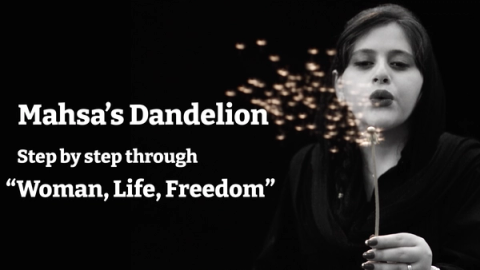
Satellite with discipline. Starlink was a lifeline during Iran’s 2022 “Woman, Life, Freedom” protests. Now it faces 30% packet loss from sustained RF jamming. The operational fix is rigorous: hide dishes, camouflage them, power on only briefly, never reuse a location.
We should also utilize satellite data broadcasting, like Toosheh, which allows users to “record” news and software from standard satellite TV dishes, bypassing the internet entirely. The next frontier is Direct-to-Cell—satellites that connect to standard smartphones, requiring no visible terminal and leaving no dish to confiscate.
Low-tech resilience. When bandwidth is throttled, Iranians switch to text-only news, email digests, RSS feeds, and messaging apps running in “light” modes. Users are also distributing "offline Wikipedias" and content packages via high-capacity SD cards.
When the internet goes dark entirely, they build offline networks using Bluetooth mesh apps, Wi-Fi Direct file sharing, and USB drives passed hand to hand. Near the Azerbaijan border, some Iranians roam onto foreign towers. Private rooms inside multiplayer video games become covert chat channels.
The bread emoji (🍞) once organized food-price protests in Iran beneath the radar of automated filters. Code evolves faster than censors.
This cat-and-mouse dynamic has always defined information warfare under repression. In China, students held up blank white sheets of paper—a silent protest against a regime that had made even the simplest words illegal. In Hong Kong during the 2019 protests, AirDrop became a political tool, pushing messages directly to strangers in public spaces without relying on open networks.
Censors ban words, dissidents find symbols. They block a platform, activists find a workaround. During Romania’s Ceaușescu era, Irina Margareta Nistor secretly dubbed thousands of banned Western films. Her grainy VHS tapes, smuggled apartment to apartment, helped puncture a system built on lies. Today’s dissidents have different tools, but the same ingenuity.
What US and Silicon Valley should do
A growing ecosystem in the free world is building tools to keep information flowing under pressure. The Open Technology Fund and Tor Project support censorship-resistant networks and rapidly deployable bridges, while SpaceX pushes satellite connectivity toward direct-to-cell models. Jigsaw and the Electronic Frontier Foundation are advancing tools that make platforms harder to block and safer under surveillance.
Washington’s task is to scale, coordinate, and sustain this stack so the signal gets through even under a full blackout.
Fund the stack that works under fire. The US should maintain Psiphon, Conduit, FreeGate, and Tor bridges, rotating them rapidly during thaw windows. This means supporting mirror sites, secure hosting, and offline content packages—and requiring low-bandwidth, offline-first design as a condition for any platform operating in high-risk markets.
Accelerate Direct-to-Cell. Streamline spectrum allocation and licensing so D2C technology can scale quickly. The goal is connectivity without hardware the regime can seize or jam.
Sanction the enablers. Target firms selling RF jammers, deep packet inspection systems, and surveillance technology to Tehran. Make information control a balance-sheet risk, not just a diplomatic talking point
Empower diaspora networks. Iranian diaspora communities verify video footage, translate eyewitness accounts, and run independent media that is trusted inside the country. During Belarus’s 2020 protests, SMS chains, printed leaflets, and neighborhood word-of-mouth coordinated action when connectivity collapsed. Iran’s diaspora is running the same model now and deserves structured support.
Pre-bunk, don’t just debunk. Companies like Jigsaw have pioneered inoculation-style media literacy—teaching people to recognize manipulation before they encounter it. In a world of deepfakes and synthetic media, this preparation is essential. This “pre-bunking” content should be scaled through diaspora-run news channels to reach users before the regime's propaganda takes root.
The crack of light
Václav Havel famously wrote that the “power of the powerless” is the ability to live in truth. For those of us in the free world, that imposes more than a moral obligation; it creates a strategic necessity.
The Cold War was won, in part, because a static-filled shortwave radio delivered the sound of freedom to those behind the Iron Curtain. Today, the “signal” is digital, but the stakes are identical.
Washington and Silicon Valley must act now to scale the tools of circumvention, raise the economic cost of censorship through data-driven diplomacy, and strengthen the “mental immune system” of those under fire. We have the technology to puncture the digital Iron Curtain. Our job is to ensure the crack of light gets through.