• العربية
  • فارسی
Brand
  • Iran Insight
  • Politics
  • Economy
  • Analysis
  • Special Report
  • Opinion
  • Podcast
  • Iran Insight
  • Politics
  • Economy
  • Analysis
  • Special Report
  • Opinion
  • Podcast
  • Theme
  • Language
    • العربية
    • فارسی
  • Iran Insight
  • Politics
  • Economy
  • Analysis
  • Special Report
  • Opinion
  • Podcast
All rights reserved for Volant Media UK Limited
volant media logo

Producer of Israeli thriller Tehran found dead in Athens mid-shoot

Feb 16, 2026, 08:48 GMT+0Updated: 10:33 GMT+0

Israeli television producer and “Tehran” co-creator Dana Eden was found dead in a hotel room in Athens on Sunday at age 52 while the series’ fourth season was being filmed in Greece, Greek police officials said.

Police said a relative found Eden after making several failed attempts to reach her.

The case is being treated as a suicide based on evidence and testimonies, police officials said. Greek investigators found pills at the scene and a coroner found bruises on her neck.

Greek police ordered an autopsy to determine the exact cause of death and are reviewing security camera footage and taking testimony from hotel staff.

Kan, Israel’s public broadcaster, said Eden had traveled to Greece to oversee the production of the hit spy thriller.

Some Greek outlets had suggested police were examining the possibility she was murdered by agents of the Iranian government, citing Tehran’s past criticism of the television series.

International production company Donna and Shula Productions said in a statement, “This is a moment of great sorrow for the family, friends, and colleagues.”

The company said rumors of a criminal or nationalistic motive were not true and urged media and the public to refrain from publishing unverified reports.

Most Viewed

US blockade enters murky phase as tankers spoof signals and buyers hesitate
1
ANALYSIS

US blockade enters murky phase as tankers spoof signals and buyers hesitate

2

US tightens financial squeeze on Iran, warns banks over oil money flows

3
INSIGHT

Ideology may be fading in Iran, but not in Kashmir's ‘Mini Iran'

4
INSIGHT

Hardliners push Hormuz ‘red line’ as US blockade tests Iran’s leverage

5
VOICES FROM IRAN

Hope and anger in Iran as fragile ceasefire persists

Banner
Banner

Spotlight

  • Hardliners push Hormuz ‘red line’ as US blockade tests Iran’s leverage
    INSIGHT

    Hardliners push Hormuz ‘red line’ as US blockade tests Iran’s leverage

  • Ideology may be fading in Iran, but not in Kashmir's ‘Mini Iran'
    INSIGHT

    Ideology may be fading in Iran, but not in Kashmir's ‘Mini Iran'

  • War damage amounts to $3,000 per Iranian, with blockade set to add to losses
    INSIGHT

    War damage amounts to $3,000 per Iranian, with blockade set to add to losses

  • Why the $100 billion Hormuz toll revenue is a myth
    ANALYSIS

    Why the $100 billion Hormuz toll revenue is a myth

  • US blockade targets Iran oil boom amid regional disruption
    ANALYSIS

    US blockade targets Iran oil boom amid regional disruption

  • Iran's digital economy battered by prolonged blackout
    INSIGHT

    Iran's digital economy battered by prolonged blackout

•
•
•

More Stories

‘Good cop, bad cop’: Is Trump-Netanyahu Iran policy a ruse?

Feb 15, 2026, 09:23 GMT+0
•
Negar Mojtahedi

The latest US-Iran diplomacy may reflect coordinated pressure rather than compromise, analysts told Iran International’s Eye for Iran podcast, describing Washington and Jerusalem as playing a potential “good cop, bad cop” strategy.

Middle East analyst Dr. Eric Mandel said the contrasting public tones adopted by US President Donald Trump and Israeli Prime Minister Benjamin Netanyahu should not necessarily be read as disagreement.

“This could be a giant ruse — Netanyahu and Trump playing bad cop, good cop,” Mandel said, arguing that diplomacy may be designed to demonstrate that all political options were exhausted before stronger measures are considered.

Former US ambassador John Craig echoed that assessment.

“The pressure is deliberate,” Craig said, adding that talks could represent “a prequel… to military action,” as Washington increases its force posture in the region.

Military buildup alongside diplomacy

That military posture has become increasingly visible. President Donald Trump has said he is considering sending a second US aircraft carrier to the Middle East as tensions with Tehran escalate, describing an expanding naval deployment intended to reinforce American leverage.

“We have an armada that is heading there and another one might be going,” Trump said in an interview with Axios, signaling that additional forces could be deployed if diplomacy fails.

The United States has already positioned the USS Abraham Lincoln carrier strike group, accompanied by destroyers armed with long-range Tomahawk missiles, within the US Central Command area covering the Middle East.

The Pentagon has also moved additional fighter jets, air defense systems and other military assets into the region.

Defense planners are weighing further options should Trump authorize a broader buildup, including the possible deployment of additional carrier groups.

The military movements come as Washington pursues indirect talks with Iranian officials over Tehran’s nuclear program — the first such discussions since US strikes targeted three major Iranian nuclear facilities last June was held in Oman last week. A second meeting is set to continue this week in Geneva.

At the same time, the Trump administration has warned US commercial vessels to avoid parts of the Strait of Hormuz and the Gulf of Oman.

Netanyahu struck a notably cautious tone following his meeting with Trump in Washington, the seventh between the two leaders since the US president returned to office.

Speaking before departing the United States, the Israeli prime minister said Trump believes Iran could still be pushed into accepting what he called “a good deal,” but made clear he remains doubtful.

“I do not hide my general skepticism about the possibility of reaching any agreement with Iran,” Netanyahu said, stressing that any deal must address ballistic missiles and Tehran’s regional proxy network in addition to its nuclear program.

Trump, meanwhile, warned that failure to reach an agreement would be “very traumatic for Iran,” while urging Tehran to move quickly toward accepting US conditions.

Pressure grows as unrest inside Iran deepens

The diplomacy is unfolding against the backdrop of one of the deadliest crackdowns in the Islamic Republic’s history. Iranian security forces opened fire on nationwide protests on January 8-9 with at least 36 thousand killed in a matter of days as demonstrations spread across multiple cities.

Voices connected to people inside Iran, shared on Eye for Iran, suggest that the internal crisis is shaping how many Iranians now view international negotiations.

Mina, an Iranian speaking on the program whose friends were killed or imprisoned during the protests, described a level of desperation.

“There are people in Iran who watch the air traffic every night to see if there are fewer airplanes in the sky,” she said. “Maybe tonight intervention will come.”

Her account reflects a growing sentiment among some protesters who, after years of failed reform movements and escalating repression, say they no longer believe internal change alone is possible.

Many, she said, now see outside pressure — including potential military action — as the only remaining path to ending the rule of the Islamic Republic.

Analysts say that reality adds urgency to the current diplomatic moment. Washington emphasizes negotiations, while Israel highlights the risks of delay, creating what Mandel described as a coordinated messaging strategy rather than a clear policy divide.

“The president wants to show he has gone to the nth degree diplomatically,” Mandel said.

“But that doesn’t mean other options disappear.”

Craig argued the visible military buildup is intended to shape Iranian calculations during talks, warning Tehran may attempt to prolong negotiations to buy time — a pattern seen in previous nuclear negotiations.

Netanyahu’s skepticism mirrors longstanding Israeli concerns that agreements focused narrowly on nuclear restrictions fail to address broader threats posed by Iran’s missile program and proxy forces operating across the region.

The Israeli leader also announced he would not return to Washington next week for a planned Board of Peace gathering and will instead address the AIPAC conference virtually, a move that has fueled speculation about the urgency surrounding current Iran discussions.

“If you told me tonight something dramatic happened,” Mandel said, “I wouldn’t be surprised.”

The night gunfire silenced a lifetime of music in Tehran

Feb 12, 2026, 18:18 GMT+0
•
Azadeh Akbari

The night air on Jan. 8 in northeastern Tehran filled with chants rising in defiance. Among them stood Pooya Faragerdi, a violinist whose life was measured in music and a heart that beat for Iran. Then came the gunfire.

Faragerdi, 44, was shot by security forces near a police station in Pasdaran that night.

Videos verified by Iran International from Pasdaran on Jan. 8 showed wounded protesters lying bloodied on the street as others tried to help, with gunfire audible in the background.

“At first we thought he had been killed in Majidiyeh… but later I learned he went to Pasdaran and was shot there,” his brother Payam Fotouhiehpour told Iran International.

A bullet pierced the right side of his abdomen around 11 p.m., and he was taken to a hospital. He died the following day, Jan. 9, his brother said, but for days the family did not know where he was.

Nearly 12 days later, they learned his body was at Kahrizak — a forensic medical complex south of Tehran where many protest victims were taken.

Footage verified by Iran International from Kahrizak showed families searching among rows of black body bags as the complex filled with protest victims.

Searching through darkness

While Faragerdi joined protests in Tehran, his brother was in the United States, cut off by a nationwide internet blackout imposed on Jan. 8 as demonstrations intensified.

Connectivity dropped to near zero, with tens of millions cut off from global internet access and phone communication severely disrupted. Rights groups said the shutdown aimed to prevent information from leaving the country and obscure the scale of the crackdown.

“I was unaware of everything,” he said.

Only days later, when limited international calls were partially restored, he learned his brother was missing.

“I convinced myself he had gone somewhere with a friend… I told myself he would show up and I would scold him for ten or fifteen minutes.”

He never did.

“Every moment his image was in front of my eyes. I had to go into the storage room or my office to cry so my wife and daughter would not lose themselves.”

On Jan. 20, authorities informed the family that Faragerdi’s body was in Kahrizak. He was buried the following day at Tehran’s Behesht-e Zahra cemetery.

“These days, images of his childhood come to my mind more and more. Even his childhood voice is in my ears — ‘Dada Payam.’”

Defiance through music

Long before the protests, Faragerdi had resisted Iran’s cultural licensing system, which requires artists to obtain approval from the Ministry of Culture and Islamic Guidance before performing or releasing music.

Born on Sept. 7, 1981, he trained in violin from childhood, developing a foundation in classical performance. Though he held a degree in agricultural machinery engineering, music remained central to his life.

“He decided to play the violin professionally - and teach,” his brother said. “He taught my daughter Baran as well.”

Faragerdi played classical music—from Baroque to modern—and had a taste for all types, his brother said: jazz, blues, rock.

But the permit system pushed him away from formal stages.

“He hated that,” his brother said. “It was insulting to him that these creatures would decide what he could do.”

Faragerdi redirected his creativity into craftsmanship. Skilled with tools, he began carving wooden instruments by hand, including ocarinas he built and played himself.

A fellow musician who performed with him, speaking on condition of anonymity, said Faragerdi had once been part of an independent orchestra in Tehran.

“He was part of an independent orchestra—meaning no government body oversaw it. It was private,” the musician said.

Following the 2019 crackdown, during which at least 1,500 protesters were killed, many artists moved away from orchestras requiring ministry permits, the musician added.

'Your bow is still, but not our rage'

Tributes from fellow musicians and students have surfaced across social media.

“We shared a stage, a stand, a country. We played side by side for years, and we still hear your velvet voice in the pauses between movements,” two of his fellow musicians told Iran International.

“On January 8, you were shot for daring to breathe free… They might have silenced your body but not your echo. They killed a musician, not sound itself. Your bow is still, our rage is not.”

Faragerdi’s final Instagram post showed him burning an Iranian banknote bearing the image of Ruhollah Khomeini, founder of the Islamic Republic, holding it over a toilet before dropping the ashes into the bowl. The clip was captioned: “Let us count the life that has passed,” and set to “The Final Countdown” by Swedish band Europe.

In text messages, his brother shared memories with care.

Asked why Pooya joined the protests, his brother said he was not someone who would stay home while others took to the streets.

“I think on Jan. 8 he fell in love with his people again,” he said. “I wish he had lived to see freedom as well.”

The last sounds Pooya heard were not drawn from his violin, but from chants rising through the streets. Perhaps that was the music he had wanted to hear all along — a chorus of voices rising through the streets.

Why were ‘Baal’ statues burned at Iran’s revolution anniversary rallies?

Feb 12, 2026, 14:44 GMT+0

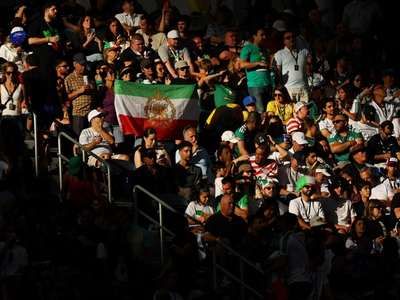
During state-organized rallies marking Iran’s 1979 revolution anniversary, demonstrators in several cities burned large statues of a horned, bull-headed figure identified by organizers as “Baal,” an ancient deity referenced in biblical and Islamic tradition.

The burnings, some reported to have taken place at the same time in different cities, were presented by organizers as a symbolic protest linked to renewed online conspiracy theories surrounding the late financier Jeffrey Epstein and alleged child abuse by Western elites.

Iranian news agency Mehr said the effigy represented “the idol of Baal,” described in religious texts as a false god associated with deviation from monotheism.

Participants, chanting “Death to Israel” and “Death to America,” were quoted as saying the act symbolized resistance to what they described as corrupt Western systems and Zionist ideology.

Images circulated by Iranian and foreign media showed a giant statue with a bull’s head engulfed in flames in Tehran’s Azadi Square. Some versions included additional imagery such as the number “666” and references to US President Donald Trump.

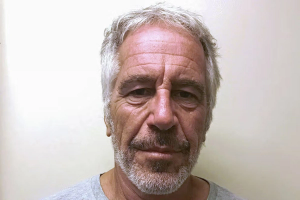
Hardline outlets and channels said the burning was a symbolic reference to documents recently released by the US Justice Department related to Epstein, who was charged in 2019 with running a sex trafficking ring involving underage girls. Epstein died in jail later that year.

  • The Epstein files: what we know about his links to Iran

    The Epstein files: what we know about his links to Iran

  • Iran marks 1979 anniversary under deepening legitimacy strain

    Iran marks 1979 anniversary under deepening legitimacy strain

Online speculation in recent weeks has revived unverified allegations linking Epstein to ancient deities such as Baal or Moloch, figures that in some traditions are associated with child sacrifice.

Fact-checkers and mainstream media have previously reported that many such claims stem from misinterpretations of financial documents or from longstanding internet conspiracy theories, including allegations about a “temple” on Epstein’s private island that US media said was designed as a music pavilion.

100%

Baal, a title meaning “lord” in ancient Semitic languages, was worshipped by Canaanite peoples in the ancient Near East and is portrayed in Jewish, Christian and Islamic texts as a false deity. Some scholars say there is limited archaeological evidence of child sacrifice practices in parts of the ancient Levant, though interpretations remain debated.

Iranian organizers described the statue burning as a “symbolic protest” aimed at drawing attention to alleged moral corruption in the West.

One conservative outlet linked the initiative to the Masaf Institute, a group associated with propagandist Ali Akbar Raefipour, which has promoted anti-Western and anti-Zionist narratives.

The coordinated burnings formed part of broader anniversary events that included anti-US and anti-Israel slogans, flag burnings and displays criticizing Western governments.

While state media framed the act as a message from Tehran to the world, some Iranian clerics expressed concern about the symbolism, and online users debated whether the act itself risked unintended religious connotations.

UN stresses protocol after Iran anniversary letter draws criticism

Feb 11, 2026, 21:07 GMT+0
•
Maryam Rahmati

The United Nations said a congratulatory letter sent by Secretary-General António Guterres to Iranian President Masoud Pezeshkian on the anniversary of Iran’s 1979 Revolution was a routine diplomatic gesture and should not be interpreted as an endorsement of Tehran’s policies.

UN spokesperson Stéphane Dujarric told Iran International that the message, sent on Iran’s national day, followed a decades-long protocol applied uniformly to all UN member states.

According to the spokesperson’s office, each country receives an identically worded letter on its national day. The messages are prepared in advance and do not signal any shift in the United Nations’ position toward a particular government.

“The letter should not be interpreted by anyone who receives it as an endorsement of whatever policies that government may be putting in place,” Dujarric said during the UN’s daily noon briefing.

The clarification came as Iran faces renewed scrutiny over crackdowns, arrests and reports of repression.

In recent weeks, families across the country have mourned losses, while human rights groups have documented detentions and what they describe as heavy-handed security measures.

News of the letter triggered backlash from activists and members of the Iranian diaspora, who argued that even if the message followed established administrative practice, its timing appeared insensitive given the political tension and public grief inside Iran.

They said the congratulatory tone risked being seen as disconnected from the reality faced by many Iranians demanding accountability and political change.

State-affiliated media in Iran widely amplified the letter, portraying it as a sign of international legitimacy. The coverage further fueled criticism from those who say such messaging can be instrumentalized for domestic political purposes.

The United Nations has repeatedly raised concerns about Iran’s human rights record, including through reports by the Office of the High Commissioner for Human Rights and discussions at the Human Rights Council and General Assembly.

UN officials maintain that diplomatic protocol operates separately from the organization’s human rights monitoring mechanisms.

Still, the episode underscores the tension between institutional diplomatic practice and the sensitivities surrounding governments facing sustained domestic unrest and international criticism.

This keeps it firmly in straight news territory, sharpens the opening, clarifies the backlash, and tightens the language without shifting tone.

China’s digital playbook helps shape Iran’s online repression - rights group

Feb 11, 2026, 11:49 GMT+0

Free expression group ARTICLE 19 said China has spent more than a decade helping Iran build one of the world’s most restrictive internet control systems, supplying technology and a governance model used for censorship, surveillance and shutdowns.

The report released on Monday, titled “Tightening the Net: China’s Infrastructure of Oppression in Iran,” traces cooperation dating back to at least 2010 and says Chinese firms supplied or supported equipment and know-how used for internet filtering, deep packet inspection, centralized traffic management, and mass surveillance.

It named companies including ZTE, Huawei, Tiandy, and Hikvision, and describes how Iran built out a tightly controlled “National Information Network” designed to function as a domestic intranet while progressively limiting access to the open, global internet.

“In its pursuit of total control over the digital space, Iran borrows directly from the Chinese digital authoritarian playbook,” Michael Caster, head of ARTICLE 19’s China program, said in the report.

The organization said Tehran’s embrace of Beijing’s “cyber sovereignty” concept – the idea that governments should have near-total authority over online information flows within their borders – has helped normalize censorship and surveillance in international forums.

“Emulating China’s infrastructure of oppression helps Iran entrench power, sidestepping accountability and exercising full control over the information environment. That way, dissent is not just silenced, it is prevented from ever surfacing,” said Mo Hoseini, the head of the group’s Resilience department said.

ARTICLE 19 said the technology and institutional alignment have become more visible during major crackdowns, including the recent wave of protests that began late December.

The group said authorities responded with widespread violence and arrests, and then escalated to nationwide network interference on January 8, 2026, followed by broad disruption of internet, phone, and mobile networks by January 11, cutting off communications as security forces moved to suppress dissent.

The report said the latest blackout showed a level of centralized control that reached beyond social media and messaging, affecting essential services including banking, healthcare, and emergency response.

It added that Iran has repeatedly used shutdowns during earlier periods of unrest, including during the 2022 “Woman, Life, Freedom” protests and demonstrations in 2019-2020, but argued the 2026 disruption was broader and more aggressively enforced than previous episodes.

ARTICLE 19 said Iran also intensified efforts to restrict satellite connectivity. It said Starlink traffic was heavily disrupted during the crackdown and that the sophistication of the disruption suggested military-grade capabilities.

The report said authorities also seized satellite equipment door-to-door and imposed harsh penalties under a 2025 law criminalizing the possession of satellite internet terminals.

While the group said China’s direct role in the specific Starlink disruption was not confirmed, it argued that Chinese assistance has been central to the foundations of Iran’s internet control architecture, and that Beijing continues to provide a template for the state’s approach to “digital authoritarianism.”

The report describes Iran’s Supreme Council of Cyberspace – established in 2012 and chaired by Supreme Leader Ali Khamenei – as structurally similar to China’s Cyberspace Administration of China, with both bodies overseeing centralized filtering, restrictions on foreign platforms, and the expansion of state-approved domestic alternatives.

It said Iran’s National Information Network increasingly mirrors features associated with China’s “Great Firewall,” including embedded surveillance and mechanisms to compel service providers to share data or throttle traffic.

The organization said the spread of surveillance and censorship tools risks entrenching repression inside Iran while eroding broader norms of internet freedom.

It also called for stronger export controls and sanctions enforcement targeting suppliers of surveillance and filtering technologies, greater corporate transparency, and increased support for secure circumvention tools and resilient connectivity options for Iranians during shutdowns.