• العربية
  • فارسی
Brand
  • Iran Insight
  • Politics
  • Economy
  • Analysis
  • Special Report
  • Opinion
  • Podcast
  • Iran Insight
  • Politics
  • Economy
  • Analysis
  • Special Report
  • Opinion
  • Podcast
  • Theme
  • Language
    • العربية
    • فارسی
  • Iran Insight
  • Politics
  • Economy
  • Analysis
  • Special Report
  • Opinion
  • Podcast
All rights reserved for Volant Media UK Limited
volant media logo
INSIGHT

No breakthrough yet, but Iranians are betting on one

Behrouz Turani
Behrouz Turani

Iran International

Jun 1, 2026, 02:04 GMT+1
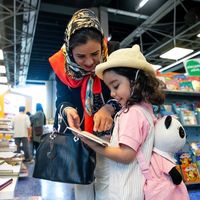
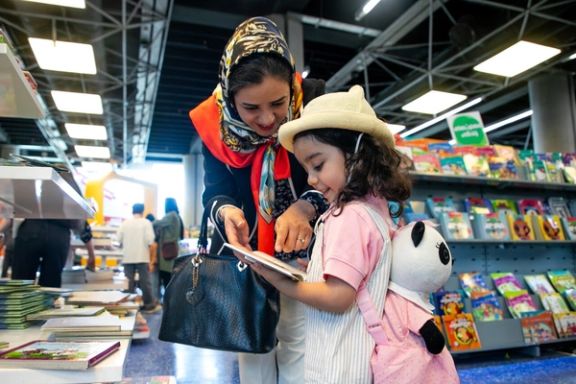
A mother and child browse children's books at a book fair in Tehran, Iran, May 29, 2026

Despite continued uncertainty over the outcome of the Iran-US talks, signs that some Iranians are positioning for a possible diplomatic breakthrough are emerging in markets, public debate and government-linked circles.

One of the clearest indicators has come from Iran’s real-estate market, traditionally viewed as one of the safest destinations for capital during periods of uncertainty. According to Tehran-based media, a growing number of property listings have been withdrawn in recent days.

Estate agents told local newspapers that many owners have instructed them to pause sales, believing that easing tensions and the possibility of a diplomatic opening could push prices higher. Similar behavior has been reported in parts of the rental market.

Sharq reported that some owners had previously hesitated to sell amid conflicting signals from Washington and uncertainty surrounding President Donald Trump’s statements, fearing renewed volatility.

Financial markets have also responded. Reports from both sides about a possible memorandum of understanding have helped lift sentiment on the Tehran Stock Exchange.

Expectations were further fueled after chief negotiator Mohammad Bagher Ghalibaf, Foreign Minister Abbas Araghchi and Central Bank Governor Abdolnasser Hemmati traveled to Doha, where Tehran hopes to secure access to billions of dollars in frozen assets.

At the same time, some analysts have begun debating the structure of a potential agreement as though its broad outlines are already taking shape.

Former diplomat Kourosh Ahmadi argues that while a deal could benefit Iran, particularly if it results in sanctions relief without major additional nuclear concessions, the two-stage format reportedly under discussion carries significant risks.

He warned that a phased agreement could prolong the uncertainty that has weighed on Iran’s economy for years because the success of an initial understanding would depend on reaching a later nuclear settlement.

Ahmadi said a more effective approach would have been “a single, comprehensive package negotiated over a defined period as a final settlement that ends 25 years of uncertainty for Iran and its people.”

He also contended that the emerging framework suggests Trump’s primary objective remains Iran’s nuclear program rather than broader issues such as missiles or regional alliances.

Whether such assessments prove correct or not, they have contributed to a growing perception that a narrower agreement may be more achievable than previously thought.

The government’s recent decision to lift the 88-day internet blackout has also been interpreted by many activists, technology analysts and political commentators as a sign that officials expect a period of reduced tension.

Some critics argue, however, that the move is intended to ease public frustration at a sensitive political moment, while others see it as preparation for possible concessions in negotiations with Washington.

Still, among many politically engaged Iranians, the restoration of connectivity has been viewed less as a technical decision than as a political signal. In a political environment where even minor policy shifts are closely scrutinized, the move has reinforced perceptions that officials believe the country may be entering a less confrontational phase.

Whether those expectations prove justified remains unclear. What is clear is that many Iranians are increasingly behaving as though a diplomatic opening may be approaching—even if few are ready to assume it is guaranteed.

Most Viewed

Iran’s president offers resignation, citing total takeover by IRGC commanders
1
EXCLUSIVE

Iran’s president offers resignation, citing total takeover by IRGC commanders

2

Tehran cafe sealed over gig deemed ‘satanic activity’

3

Hardline MP draws backlash over post seen as swipe at Mojtaba Khamenei

4
ANALYSIS

Millions face poverty as Iran’s economy reels from war and sanctions

5
PODCAST

Was the Iran war leverage or a lifeline for Tehran?

Banner
Banner

Spotlight

  • No breakthrough yet, but Iranians are betting on one
    INSIGHT

    No breakthrough yet, but Iranians are betting on one

  • Leaked documents link Chinese firms to IRGC missile fuel network
    EXCLUSIVE

    Leaked documents link Chinese firms to IRGC missile fuel network

  • Hardline MP draws backlash over post seen as swipe at Mojtaba Khamenei

    Hardline MP draws backlash over post seen as swipe at Mojtaba Khamenei

  • Was the Iran war leverage or a lifeline for Tehran?
    PODCAST

    Was the Iran war leverage or a lifeline for Tehran?

  • Names of some Iran protest victims vanish from Tehran cemetery database

    Names of some Iran protest victims vanish from Tehran cemetery database

  • How four Khamenei family names map the Islamic Republic’s inner circle
    INSIGHT

    How four Khamenei family names map the Islamic Republic’s inner circle

•
•
•

More Stories

Iran’s president offers resignation, citing total takeover by IRGC commanders

May 31, 2026, 18:24 GMT+1
Iran’s president offers resignation, citing total takeover by IRGC commanders
100%
Iranian President Masoud Pezeshkian

Iranian President Masoud Pezeshkian has submitted an official letter of resignation to the Office of the Supreme Leader, a source familiar with the matter told Iran International.

In the letter sent on Sunday, Pezeshkian stressed that the president and the government have effectively been excluded from major and vital decision-making processes in the country, and that the vacuum created by this situation has enabled hardline factions within the IRGC to take control of affairs, the source said.

Pezeshkian added that under such circumstances he is unable to run the government and carry out his legal responsibilities, and for that reason has requested to step down immediately.

It is not yet clear whether Mojtaba Khamenei will accept the president's resignation, but the contents of the letter point to a deep and unprecedented rift at the highest levels of power.

This comes after months of tensions between the government and the Islamic Republic’s military-security institutions. Iran International previously reported that the IRGC had gradually restricted many presidential powers and effectively taken control of key parts of the government.

According to informed sources, the situation has left Pezeshkian’s administration trapped in a political and executive deadlock, preventing diplomatic negotiations from moving forward and the completion and implementation of desired changes to the cabinet structure.

Tehran cafe sealed over gig deemed ‘satanic activity’

May 31, 2026, 08:53 GMT+1
Tehran cafe sealed over gig deemed ‘satanic activity’
100%
A screengrab from video released by Iran’s state media shows a live music performance at a cafe on Tehran’s Valiasr Street before authorities sealed the venue.

Police in Iran sealed a cafe over accusations that it promoted what authorities called “satanic activities,” state media reported on Sunday.

A video from inside the cafe on Tehran’s Valiasr Street was also released, which appeared to show men and women seated around tables during a live music performance.

In the footage, some audience members could be seen clapping, filming with phones and moving their heads to the music as a performer performed near a microphone and music stand.

The report said Tehran’s public venues police acted after receiving reports about the cafe’s activities.

Authorities accused the cafe of holding Western music events and providing a setting for what officers described as “deviant sects,” involving young men and women.

They also said customers at the cafe had been seen making “strange and unusual movements.”

In May 2024, police arrested over 260 people at an underground rock music festival, branding the event a “satanist gathering.”

  •  Iran Labels Rock Music Fans Satan Worshippers in Mass Arrest

    Iran Labels Rock Music Fans Satan Worshippers in Mass Arrest

Hardline MP draws backlash over post seen as swipe at Mojtaba Khamenei

May 31, 2026, 01:20 GMT+1
•
Maryam Sinaiee
Hardline MP draws backlash over post seen as swipe at Mojtaba Khamenei
100%
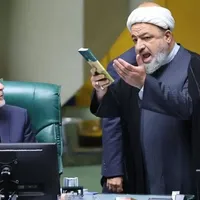
Hardline lawmaker Hamid Rassaei and Parliament Speaker Mohammad-Bagher Ghalibaf

Hardline Iranian lawmaker Hamid Rasaei has sparked intense controversy after publishing a social media post that many interpreted as an indirect swipe at Mojtaba Khamenei, drawing sharp criticism from supporters of the Islamic Republic.

The backlash began after Rasaei shared a post titled "Who is Qualified for Leadership?" on his Telegram channel on Thursday. Many observers interpreted the post as a veiled reference to Mojtaba Khamenei, Iran's new Supreme Leader.

In the post, Rasaei highlighted a verse from Surah Hud containing God's direct response to Noah regarding his drowned son. In the verse, God states that the son is not truly part of Noah’s family due to his disbelief and unrighteous conduct, warning Noah against questioning divine matters beyond his knowledge.

Because this religious story is widely known among Iranians, the idiom “Noah’s son” is frequently used in Iranian culture to describe a wicked or rebellious child who falls into bad company despite having pious parents.

Allegations of disrespecting the Leader

Some media outlets, several political figures from various factions, and many social media users said that in this post, he had implicitly characterized Mojtaba Khamenei as an unrighteous, wayward son of his father.

"What is the relevance of bringing up the issue of leadership under the current circumstances—when the late martyr-leader's righteous son has succeeded him, and especially at a time when enemies are manufacturing rumors about this every single day—and then referencing the verse about Noah’s son? What on earth was Rasaei’s motive for spinning such a ridiculous, convoluted narrative?,” Asr-e Iran website wrote.

Ruhollah Jomei, a journalist and official under the Rouhani administration, suggested that Rasaei’s post effectively revealed plans by Saeed Jalili's camp and the Paydari Front to undermine Mojtaba Khamenei's leadership.

Mohammad-Hossein Chavoshi, a conservative political activist, also wrote in a post: "What is the meaning of Mr. Rasaei’s message? No matter how we look at it, it leaves a bad impression," and he demanded accountability from him.

Attacking Ghalibaf despite Khamenei's praise

Rasaei’s post was notably published on the exact same day that Mojtaba Khamenei issued a written message to Parliament. In his statement, Khamenei expressed appreciation for Speaker Mohammad Bagher Ghalibaf’s leadership, while emphasizing the need to avoid factional disputes and maintain national unity.

“Why did he post the note right after the Leader’s message thanking Ghalibaf?” one social media user questioned.

Ghalibaf, recently appointed as the head of Iran's nuclear negotiating team, is widely considered to be Khamenei's right-hand man. Nevertheless, Rasaei—who remains fiercely critical of the parliament speaker—warned him in a separate Saturday post against "repeating the mistakes" of Hassan Rouhani and Mohammad-Javad Zarif by relying on nuclear diplomacy and "pinning hopes on talks."

Who is Hamid Rasaei?

Hamid Rasaei was one of the key members of the Paydari (Steadfastness) Front, but by his own account—left the party because of differences with other members of the party's central council over a decade ago.

By his own admission, however, he feels a strong ideological closeness to the hardline party.

The Paydari Party and like-minded groups, often referred to as “super-revolutionaries”, are vehemently opposed to any negotiation or compromise with the United States, viewing it as a betrayal of the 'ideals of the Islamic Revolution' as well as the viewpoints of Ali Khamenei.

Rasaei’s defense

Rasaei defended himself by publishing another note, saying he had simply reshared an older piece of his writing and that it was published several hours before Mojtaba Khamenei’s message.

He insisted that he was among the very first to vouch for Mojtaba’s personal qualifications for leadership, even introducing him as a suitable option for leadership two days after the news of Ali Khamenei's killing was announced.

Mehdi Ghasemzadeh, a social media activist, wrote that based on the Leader's recommendation, it might be better to accept Rasaei's explanations and avoid fueling disputes.

However, he noted that if someone from another political group had written such a note, it would have triggered protests by Rasaei's like-minded allies at nightly gatherings of government supporters.

Was the Iran war leverage or a lifeline for Tehran?

May 30, 2026, 09:42 GMT+1
•
Negar Mojtahedi
Was the Iran war leverage or a lifeline for Tehran?
100%
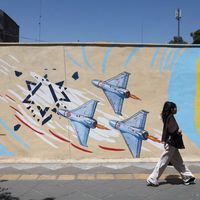
An Iranian woman walks next to an anti-Israeli mural on a street in Tehran, Iran, May 30, 2026.

The Iran war left the Islamic Republic weaker than it had been in years. The question now is whether Washington will turn that weakness into leverage – or give Tehran room to recover through a new deal.

That debate is becoming increasingly urgent as Washington and Tehran move closer to a potential agreement that could extend the current ceasefire and launch a new phase of negotiations over Iran’s nuclear program.

President Donald Trump has suggested a deal may be within reach, while officials on both sides have signaled progress despite major unresolved disputes.

For supporters of the military campaign, the logic is straightforward: Iran entered the talks weaker than it has been in years. For critics, the concern is that diplomacy could give Tehran breathing room just as years of economic pressure, domestic unrest and military setbacks had left it vulnerable.

Speaking to Eye for Iran, former US Treasury official Miad Maleki and national security expert Thomas Juneau offered different answers to the same question: what exactly did the war achieve?

A Regime under pressure

While the two experts differ on what should happen next, both agree that the Islamic Republic emerged from the conflict significantly weakened.

"They've never been so weak. They've never been so vulnerable that they are today, militarily, politically, economically," Maleki said.

The Islamic Republic, he argued, faces mounting economic pressure at home while struggling to maintain the image of strength it has projected for decades. Tehran’s military infrastructure has suffered significant damage, senior figures have been killed, and the economy was already under strain before the conflict began.

Juneau reached a similar conclusion, though from a different angle.

"The regime was clobbered," he said.

Beyond the military and economic damage, Juneau argued that one of Tehran’s core strategic assumptions collapsed during the conflict.

For decades, Iran invested heavily in Hezbollah, Hamas and other regional allies as part of what officials often described as a forward defense strategy. The idea was that any direct attack on Iran would trigger retaliation across the region, deterring adversaries from striking the country itself.

"That failed," Juneau said.

Maleki argues that the regime's losses go beyond military hardware.

The conflict exposed weaknesses in Iran’s air defenses, damaged key infrastructure and further strained a system already struggling with economic collapse, inflation and public discontent. In his view, Tehran entered negotiations not from a position of strength, but because it had few alternatives.

Victory, leverage or lifeline?

Where the two experts diverge is over what happens next.

For Maleki, the central question is why negotiations are taking place now, at a moment when many observers believe the Islamic Republic is under greater pressure than at any point in recent years.

He pointed to growing frustration among some Iranians who believe the conflict exposed vulnerabilities that could have accelerated political change.

"There's some level of disappointment that the fact that the US is negotiating with this regime is bad for the future of a free Iran," he said.

The concern is not that Iran emerged stronger from the war. Rather, it is that Tehran survived a period of extraordinary pressure and may now receive economic or diplomatic relief before those pressures fully take effect.

Juneau sees a different risk.

While acknowledging that the regime has been weakened, he argues that ordinary Iranians may ultimately bear the greatest cost.

"The Iranian people have been thrown under the bus," he said.

The economy, already battered by sanctions, corruption and years of mismanagement, now faces the additional burden of reconstruction. At the same time, Juneau warns that a weakened regime does not necessarily become a more moderate one.

In fact, he believes future protests could face even harsher repression than previous waves of unrest.

"This is a regime now that will have even less tolerance for any kind of popular protests in the future," he said.

The disagreement reflects a broader uncertainty surrounding the talks themselves.

If the objective of the war was to weaken the Islamic Republic’s military capabilities, there is broad agreement that it succeeded. Iran’s regional posture has been damaged, key infrastructure has been hit and some of its most senior figures are gone.

But if the objective was to fundamentally alter Tehran’s behavior, improve conditions for ordinary Iranians or create a pathway toward meaningful political change, the answer remains far less clear.

Maleki believes the conflict became unavoidable as Iran expanded its missile, drone and regional capabilities.

"The conflict was unavoidable. It was coming sooner or later," he said.

Juneau is more cautious.

Asked whether the war was ultimately worth it, he declined to offer a simple yes-or-no answer.

"The negative implications of the war outweigh the positive implications," he said.

That may ultimately be the central dilemma facing policymakers in Washington and the region.

The war weakened the Islamic Republic. Few dispute that.

The unanswered question is whether the diplomacy now taking shape will build on that weakness or alleviate it.

Qatar rejects Iran’s demand for unrestricted release of $12 billion in funds

May 30, 2026, 00:46 GMT+1
Qatar rejects Iran’s demand for unrestricted release of $12 billion in funds
100%
Parliament Mohammad Bagher Ghalibaf (right) and Foreign Minister Abbas Araghchi (left) depart for Doha on Tuesday, 5/25/2026

The recent high-stakes visit of a senior Iranian delegation to Doha, led by Parliament Speaker Mohammad Bagher Ghalibaf, has ended in a major diplomatic setback for Tehran, an informed source with knowledge of the negotiations told Iran International.

Despite Tehran’s firm demands for the immediate and unconditional release of $12 billion in cash upon the signing of an initial Memorandum of Understanding (MoU) with the United States, Qatari officials rejected the request, agreeing to release only half of the amount under strict limitations, the source said.

According to a source close to a Qatari official involved in the discussions, Doha refused to transfer the funds directly or in cash to Iran. Instead, the money will only be made available as credit for Tehran to purchase essential goods and products directly from Qatar.

The restriction comes amid strong US opposition to granting Iran direct, unrestricted access to liquid financial assets.

Washington raised concerns that direct cash injections would provide the Iranian government with vital economic breathing room, allowing it to pay delayed public salaries and procure military equipment or other goods from foreign countries during a time of intense regional strain.

Iran International previously reported that Tehran had set the unrestricted release of the $12 billion held in Qatar as a strict, non-negotiable precondition before it would advance any preliminary diplomatic understanding or sign the proposed framework agreement.

While Speaker Ghalibaf explicitly requested liquid financial assistance to ease Iran's severe domestic economic pressures, Qatar’s counteroffer effectively bars Iran from using the capital at its own discretion in a blow to Tehran’s strategy in US talks.

Rather than gaining direct access to the cash, Tehran is now forced to spend the capped credit line solely within the Qatari market for essential commodities.

To prevent the dispute from derailing the broader, highly sensitive framework talks with the United States, which aim to secure a regional ceasefire and reopen the strategic Strait of Hormuz, all participating parties have reportedly agreed to keep the details of this financial disagreement strictly confidential.