Iran, North Korea and China girding for confrontation, NATO chief warns
Russian President Vladimir Putin, Chinese President Xi Jinping, North Korean leader Kim Jong Un, Iranian President Pezeshkian and his daughter, and heads of foreign delegations arrive for a military parade marking the 80th anniversary of the end of World War Two, in Beijing, China
NATO Secretary General Mark Rutte on Thursday sounded the alarm over what he described as increasing military cooperation among Iran, North Korea and China, warning they are preparing for long-term confrontation with the West.
"China, Iran, and North Korea pose challenges individually and through their cooperation. Just look at the images from Beijing over the past few days and the hand-holding," Rutte said at the International Institute for Strategic Studies (IISS) Prague Defense Summit.
"They are preparing for long-term confrontation. As I said earlier, these challenges are enduring, so we must be prepared," Rutte was quoted as saying by The Guardian.
China held a major military parade in Beijing on Wednesday, marking the 80th anniversary of Japan's surrender in World War II.
President Xi Jinping, flanked by Russian President Vladimir Putin and North Korean leader Kim Jong Un, used the parade to project China's military strength.
Iranian President Masoud Pezeshkian appeared to be nearer the back of assembled heads of state and was not pictured greeting Xi.
"Russia’s unprovoked war against Ukraine is the most obvious example of this threat. But the threat will not end when this war does, nor is it limited to Russia," Rutte said.
The NATO Secretary General emphasized that the alliance’s goal is to prepare for defense, not to provoke. "Our aim is to protect and ensure we can continue to enjoy the freedom and security that NATO was founded to preserve," Rutte stated.
Pezeshkian visited China on September 1-3, attending the Shanghai Cooperation Organization (SCO) Summit. The relative moderate urged swift implementation of agreements, emphasizing resistance to countries undermining Iran-China friendship.
“Looking at President Xi standing alongside the leaders of Russia, Iran and North Korea in Beijing, these aren’t just anti-Western optics: This is a direct challenge to the international system built on rules,” EU foreign policy chief Kaja Kallas said on Wednesday.
NATO’s 2025 plans focus on strengthening collective defense, deterrence and rapid response capabilities amid heightened global threats, particularly from Russia, while the United States seeks a negotiated end to Russia’s invasion of Ukraine.
Australia’s ambassador has left Tehran after Canberra expelled Iran’s envoy last month over alleged arson attacks on Jewish sites, Foreign Ministry spokesperson Esmaeil Baghaei said on Thursday.
Baghaei said Iran reduced Australia’s diplomatic presence in response. “According to diplomatic norms and laws, in reaction to Australia’s action, we have also reciprocally reduced the level of Australia’s diplomatic presence in Iran,” he said.
He called the expulsion of Iran’s ambassador “unjustified” and added: “We do not welcome the reduction in relations, because we believe there was no reason or justification for this action, and this issue will affect the relations between the two nations.”
Canberra’s move
Australia last month ordered Iranian Ambassador Ahmad Sadeghi and three other diplomats to leave within seven days.
Prime Minister Anthony Albanese said the Australian Security Intelligence Organisation had evidence Iran directed two arson attacks on Jewish sites in Sydney and Melbourne in 2024.
Albanese said at the time that Australian diplomats had already left Tehran and were operating from a third country.
Iran dismissed the allegations as baseless and politically motivated. Baghaei said last month that “any inappropriate diplomatic action will be answered in kind,” accusing Canberra of acting under domestic political pressure.
“The concept being invoked [antisemitism] has no place in our religion,” he said, calling it part of a Western narrative. Baghaei also linked the decision to pro-Palestinian protests in Australia against Israel’s war in Gaza.
During a pro-Palestinian march across Sydney’s Harbour Bridge earlier last month, some demonstrators carried images of Iran’s Supreme Leader Ali Khamenei. Israeli Foreign Minister Gideon Sa’ar condemned the rally, calling Khamenei “the most dangerous leader of fundamentalist Islam” and accusing protesters of aligning with radical elements.
File photo of Iranian drones launched during a military drill at an undisclosed location
Venezuela’s drone industry, built on Iranian designs, is still overseen by Iranian specialists who block local staff from entering without permission amid a standoff over US warships deployed in the Caribbean, the Miami Herald reported.
The Herald said the drone program began in 2006 when Caracas signed a military deal with Tehran. Iranian firm Qods Aviation Industries supplied assembly kits, Venezuelan engineers trained in Iran, and Iranian teams later worked at the El Libertador Air Base in Maracay.
The program has since produced reconnaissance, armed and kamikaze drones modeled on Iranian systems.
“Cooperation with Iran was essential. Not only could Venezuela never have developed drones on its own, but even today it’s the Iranians who control those facilities. Venezuelan personnel can’t enter without their authorization,” one source who asked not to be identified told the Miami Herald.
The paper said it interviewed half a dozen people familiar with the ties between Caracas and Tehran and reviewed Venezuelan government documents — some signed by Chávez — that showed billions of dollars were funneled into the partnership.
Many projects were disguised as civilian ventures, such as bicycle or tractor factories, but served as fronts for more sensitive military work. At the core, Chávez sought weapons that could challenge US military power, the Herald reported.
Analysts at US think tanks, including the Center for Strategic and International Studies and the Southern Command’s Diálogo Initiative, have described the drones as a “new asymmetric threat.”
They warn that the systems could be used not only against domestic opponents but also transferred to other governments or armed groups in Latin America.
Military buildup
Defense Minister Vladimir Padrino said earlier this month that Venezuela will deploy drones, warships and about 15,000 troops near Colombia. He said the move is aimed at defending sovereignty and combating drug trafficking.
The Trump administration has ordered guided-missile destroyers, amphibious ships, a cruiser, a submarine and thousands of Marines to the region as part of what it calls anti-narcotics operations. Caracas called the buildup hostile and appealed to the United Nations to intervene.
Broader Iran-Venezuela links
Concerns about Tehran’s role in Venezuela extend beyond drones. Earlier this month, the Daily Mail reported that more than 10,000 individuals from Iran, Syria, and Lebanon were allegedly granted Venezuelan passports between 2010 and 2019. Former US officials told the paper some recipients may already be in the United States.
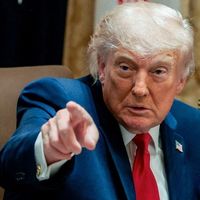
US President Donald Trump, Azerbaijan's President Ilham Aliyev, and Armenia's Prime Minister Nikol Pashinyan pose with their documents during a trilateral signing event at the White House, in Washington, D.C., August 8, 2025.
Iran has toned down its opposition to the proposed Zangezur Corridor linking Azerbaijan to its exclave of Nakhchivan, adopting a more cautious stance after years of confrontation, Turkish newspaper Daily Sabah said in an opinion article on Thursday.
The project, part of the August 8 peace agreement signed in Washington between Azerbaijan and Armenia with US mediation, has long been opposed by Tehran.
According to Daily Sabah, Iranian officials feared the corridor could sever Iran’s land link to Armenia, weaken its regional transit role and strengthen Turkish and Azerbaijani influence in the South Caucasus.
In the past, Iran reinforced border positions, staged military drills and issued sharp warnings against what one adviser to Supreme Leader Ali Khamenei called an “American corridor.”
But President Masoud Pezeshkian and his government have recently struck a more measured tone.
Government spokesperson Fatemeh Mohajerani said the Iran-Armenia border would remain intact, while Pezeshkian told reporters that Tehran’s “core concerns had been taken into account” and welcomed the peace deal as a positive step.
Pezeshkian visited Yerevan soon after the agreement, where Armenian Prime Minister Nikol Pashinyan reassured him that Armenia’s sovereignty would not be compromised and no foreign troops would be stationed in the corridor.
Analyst Mustafa Caner wrote that Iran’s new approach reflects limited capacity to confront multiple crises at once. Unlike conservative figures in Tehran who warn of foreign interference, the government has refrained from military escalation and is pursuing diplomacy to secure its position.
An aerial view of the Strait of Hormuz, a critical global oil chokepoint
Iran retains the ability to endanger freedom of navigation in the Strait of Hormuz, where about one-fifth of the world’s oil exports pass, an Israeli security think tank said after Tehran’s latest naval drills.
Persian Gulf exercise as warning
In August, Iran staged its first major naval exercise since the June war with Israel. The two-day drill covered the Strait of Hormuz, the Gulf of Oman and the Indian Ocean. State media showed launches of Qadir and Nasir anti-ship missiles, Ababil drones and electronic warfare systems.
“Iran used this exercise to demonstrate that it can target both military and commercial vessels,” Alma Research and Education Center wrote in a report. Footage of a drone tracking a container ship was described as a direct warning to global shipping companies.
The assessment comes after a representative of Supreme Leader Ali Khamenei urged restrictions on Western shipping in the strait. Hossein Shariatmadari, editor of the hardline Kayhan newspaper, told the state broadcaster last week that such a move could drive oil prices to $200.
“We can impose restrictions against the United States, France, Britain and Germany in the Strait of Hormuz and not allow them to navigate,” Shariatmadari said. “Just by announcing such a restriction, the oil price will surge to $200, and the biggest economic blow will be dealt to the enemy.”
Western governments have said any closure would have severe consequences. US Secretary of State Marco Rubio said in June that it would be “economic suicide” for Iran.
European Union foreign policy chief Kaja Kallas called the idea “extremely dangerous,” while British Foreign Secretary David Lammy said it would be “a monumental act of self-harm.”
Iran has never attempted a full closure of the Strait of Hormuz, but it has repeatedly seized merchant ships in the Persian Gulf. Security analysts say its mines, fast boats, missiles, and special forces give it multiple options to disrupt global commerce.
US Senator Tom Cotton on Wednesday called on the FBI and Defense Department to investigate what he called an Iranian campaign to influence US policy, branding it a serious national security concern.
The Arkansas Republican cited a joint investigation by Semafor and Iran International into the Iran Expert Initiative (IEI), an effort by Tehran's foreign ministry to cultivate ties with academics and think tank analysts to advance the Islamic Republic’s interests.
Cotton's letter focused on Ariane Tabatabai, a former aide to former US Special Envoy for Iran, Robert Malley. Her next post was as Pentagon Chief of Staff for the Assistant Secretary of Defense for Special Operations and Low-Intensity Conflict.
Cotton said in his letter that Tabatabai “is still working with the US intelligence community.”
"Tabatabai and other IEI affiliates should not have been in a position to influence US policy decisions and access our nation's most sensitive intelligence," Cotton wrote.
"While the Biden administration ignored repeated calls from Republicans to remove officials affiliated with IEI and the Iranian government, the Federal Bureau of Investigation (FBI) and the Department of Defense (DoD) should now correct this mistake."
It was not clear what spurred the senator, an outspoken Iran hawk, to issue the call.
"I urge the FBI and DoD to review this matter thoroughly for counterintelligence concerns and potential criminality, given that national security information may have been provided to a foreign government," Cotton continued.
He also called on the FBI and Pentagon to “investigate all current and former government officials affiliated with IEl and take appropriate actions to ensure such officials are no longer able to assist Tehran in damaging US national security.”
Last October, The Free Press reported that Tabatabai had taken on a new role in the defense department which gave her reduced access to intelligence, according to a former Pentagon official.
The Iranian-American academic in her new role oversaw force education and training within the defense secretary's office.
It is not clear if Tabatabai is still working in the same position under the Trump administration.
US President Donald Trump has repeatedly faulted his predecessors for perceived policy failings on Iran but has not explicitly alighted on the IEI in his criticisms.
Fellow Republican lawmakers have cast Iran as an implacable enemy after a justice department indictment sealed last year accused the country's Islamic Revolutionary Guard Corps of a plot to assassinate Trump - charges Tehran denies.