Iran stages missile drills, warns of stronger response in any new war with Israel
A drone is launched during a military exercise in an undisclosed location in Iran, August 20, 2025.
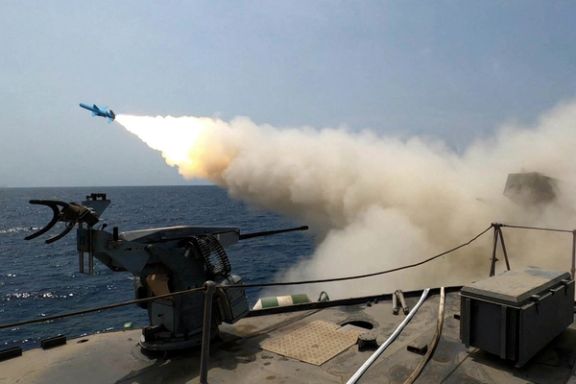
Iran’s navy test-fired a range of cruise missiles during large-scale drills on Thursday, striking surface targets in the Gulf of Oman and northern Indian Ocean, state media reported.
The exercises, dubbed Sustainable Power 1404, featured the simultaneous use of Nasir, Qadir, and Ghader anti-ship cruise missiles launched from coastal batteries and warships, including the Genaveh missile boat and the Sabalan destroyer.
“These missiles, with different ranges, successfully hit their designated targets at sea,” the semi-official Tasnim news agency said. Officials described the systems as radar-evading, high-precision and designed to counter both naval and coastal targets.
The drills took place around a month after the Iran-Russia drill under the name Casarex 2025, which took place in Iran's northern waters -- the Caspian Sea.
Marking National Defense Industry Day, Iran’s Defense Ministry said the country had advanced “from the peak of dependence on foreigners to the heights of self-sufficiency and power” in the missile, weapons and space sectors.
It warned that “any miscalculation in the region will be met with a very strong response from Iran’s powerful armed forces.”
The ministry said the 12-day war in June had demonstrated the effectiveness of Iranian weaponry, adding that Tehran’s defense industry will continue to expand without a moment of hesitation.
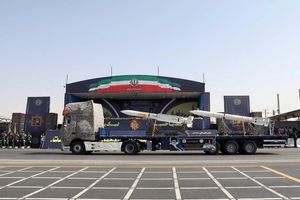
Iranian missile systems during a military exercise in an undisclosed location in Iran, August 20, 2025.
Army Navy vs Guard Navy
Iran maintains two distinct naval forces under separate command structures: the conventional Islamic Republic of Iran Navy -- a force within the traditional army --and the Islamic Revolutionary Guard Corps Navy.
While both are tasked with defending Iranian interests at sea, their missions, capabilities and areas of operation differ, according to a Defense News analysis.
“The IRGC Navy and the Iranian Navy have two separate command structures. While some of their responsibilities overlap, the primary difference is the methods and strategies of operation,” analyst Sina Azodi told Defense News.
He added that the IRGC Navy emphasizes asymmetric operations, relying on fast boats, missile-equipped vessels and hit-and-run tactics, while the traditional Navy deploys larger platforms such as frigates, corvettes and submarines.
According to Mohamed al-Kenany, head of the military studies unit at the Cairo-based Arab Forum for Analyzing Iranian Policies, another key distinction is geography.
Iran’s navy patrols the Gulf of Oman, the Indian Ocean and the Caspian Sea, while the Revolutionary Guard controls the Persian Gulf and the Strait of Hormuz, where it has seized Western vessels and shadowed US warships during past tensions.
Al-Kenany added that the IRGC’s use of naval mines and swarms of small craft makes its anti-access strategy in the Persian Gulf highly effective, while the conventional Navy remains constrained by aging 1970s-era frigates and corvettes and sanctions that block modernization.
Since 1979, the United States has imposed sanctions on Iran that restrict access to advanced military technology, forcing Tehran to rely on indigenous development and adaptations of older systems.
Top commanders call for modernization
Armed Forces Chief of Staff Major General Abdolrahim Mousavi said Iran’s only guarantee of security was to continually upgrade its systems.
“The only way to shield the country from threats is to enhance deterrence and modernize our ground, naval, aerospace, air defense, cyber and electronic warfare capabilities,” he said in a message to Defense Minister Brigadier General Aziz Nasirzadeh.
Nasirzadeh himself told reporters on Wednesday that Iran had developed a new generation of missiles with greater capabilities than those used in the June conflict.
“The missiles we used in the 12-day war were built several years ago. Today we possess missiles with far better capabilities, and if the Zionist enemy embarks on another adventure, we will certainly use them,” he said.
He added that Israel’s missile-defense systems, including the US-made THAAD, Patriot, Arrow and Iron Dome, had proven ineffective. “In the early days, about 40% of our missiles were intercepted, but by the end of the war, 90% were striking their targets,” he said.
An Iranian missile is launched during a military exercise in an undisclosed location in Iran, August 20, 2025.
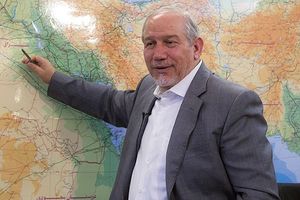
“We are not in a ceasefire, we are in a stage of war. No protocol, regulation, or agreement has been written between us and the US or Israel. I think another war may happen, and after that, there may be no more wars,” he said.
Safavi argued that Iran must continue to expand its diplomatic, cyber, missile and drone capabilities. “In the system of nature, the weak are trampled. Therefore, Iran must also become strong,” he said.
An Iranian missile system during a military exercise in an undisclosed location in Iran, August 20, 2025.
Israel vows readiness
Israel’s military chief Lt. Gen. Eyal Zamir said earlier this month the June campaign had been a preemptive strike to eliminate an “emerging existential threat” from Iran.
“If necessary, we will know how to act again with precision, intensity and lethality,” he said.
Israel launched surprise strikes on June 13 that killed senior Iranian commanders and nuclear scientists and damaged nuclear and air defense sites. Iran says 1,062 people were killed, including 786 military personnel and 276 civilians.
Iran retaliated with missile and drone attacks that killed 31 civilians and one off-duty soldier in Israel. The conflict ended with a US-brokered ceasefire on June 24.
Both Tehran and Tel Aviv claimed victory in June, but the rhetoric since then has underscored the fragile truce and the risk of a renewed confrontation in the region.
A calligraphy artwork depicting the name of the Baha’i faith’s founder
Authorities in the central Iranian city of Isfahan have begun seizing homes and assets from members of the Bahá’í religious minority by text message—an unprecedented move a community spokesperson called “economic strangulation” that has mostly targeted women.
“This is the first time we know of that the government has used text messages to order confiscations,” Farhad Sabetan, spokesperson for the Baha’i International Community (BIC) told Iran International.
“What we are witnessing is nothing less than economic strangulation of the Baha’i community—families are deprived of their livelihoods overnight, without due process, without even a court order.”
Bahais constitute the largest religious minority in Iran and have faced systematic harassment and persecution since the Islamic Revolution of 1979.
Iran does not recognize the Baha’i faith as an official religion, unlike Christianity, Judaism, or Zoroastrianism. Authorities label it a “cult” with alleged foreign ties—charges its followers reject.
The BIC said the seizures included homes, vehicles, and other assets, carried out under Article 49 of Iran’s constitution, a clause designed to reclaim property gained through illicit activities such as theft or drug trafficking. In practice, Sabetan said, it is being misused “to plunder the possessions of citizens who have committed no crime other than being Baha’i.”
According to the BIC, families were ordered by text to present themselves to court or face arrest. Some later discovered blocked bank accounts, frozen business transactions, and restrictions on selling property. In several cases, court files were not recorded in Iran’s official judicial notification system, preventing defendants and their lawyers from reviewing them.
The confiscations come as Iranian authorities step up pressure on Baha’is, accusing them without evidence of spying for Israel. While thousands of Baha’i-owned properties have been seized since the 1979 revolution, rights groups say the new reliance on digital notices reflects a more brazen, impersonal stage of repression.
Sabetan said that the majority of those targeted in Isfahan are women—many engaged in teaching and community service. “It may not be coincidental,” he said. “After the Women, Life, Freedom movement, the government has been cracking down on women broadly. Now Baha’i women are being targeted in the same way—mothers and educators denied the ability to care for their families or live normal lives.”
According to the US-based Human Rights Activists News Agency (HRANA), Baha’is account for more than 70 percent of all documented violations against religious minorities in Iran over the past three years. At least 284 Baha’is have been arrested in the past five years, receiving a combined 1,495 years in prison sentences.
“What the Iranian government is doing amounts to a gradual death sentence,” Sabetan said. “They may not execute Baha’is as they did in the early years of the revolution, but by stripping them of work, property, and dignity, they are trying to erase our community.”
A reformist-leaning Iranian Telegram channel on Wednesday published the names of 64 women it said are jailed for political reasons, challenging Iran's judiciary chief who said no more than five such detainees exist.
“This list concerns female political prisoners in Gharchak prison and a handful of other known cases. It does not cover other cities or prisons across the country,” Tahkim Mellat said in its statement, adding that the document was presented solely for civic and legal follow-up.
Qarchak Prison is a women’s facility southeast of Tehran, known for holding political prisoners in poor and overcrowded conditions, according to rights groups.
The announcement came after judiciary chief Gholamhossein Mohseni Ejei said he had asked political groups to provide names of detainees.
Ejei argued that reformist figures had admitted identifying “no more than three to five” prisoners, calling on them to announce this publicly.
Yet Tahkim Mellat countered that in Gharchak prison alone more than 60 women are held for political activity.
'No transparency'
The names include Raheleh Rahimi Pour, a 75-year-old suffering from a brain tumor, and Kobra Beigi, 70, who was excluded from a 2023 amnesty.
Several other political prisoners who face death sentences were also named including, Sharifeh Mohammadi, Pakhshan Azizi, and Varisheh Moradi.
“The demand for the release of political prisoners had previously been raised by individuals and groups within civil society as a political necessity; however, until now, the government and political parties have taken no action to recognize or pursue the rights of more than just a few political prisoners,” reads the statement by the outlet.
“This silence and lack of transparency by political officials has resulted in a large number of political prisoners remaining in detention without adequate support or attention.”
Calls for accountability
Responding last week to Ejei’s remarks, veteran reformist commentator Emadeddin Baghi said the judiciary “certainly does not need to request a list from others if it wishes to prepare a more complete and accurate one.”
Independent civic associations, if not restricted, could provide more reliable data, Baghi added.
“What matters,” Baghi said, “is to set clear criteria — such as prioritizing prisoners near the end of their sentences, those whose convictions are disproportionate, or those eligible for parole under the law — rather than debating whether the number is five or sixty.”
Tahkim Mellat said officials have a duty to respond to the list it published.
A satellite view shows holes and craters on a ridge at Fordow underground complex, after the US struck the underground nuclear facility, near Qom, Iran June 22, 2025.
The extent of damage from recent US strikes on Iran’s Fordow centrifuges remains uncertain, The New York Times reported on Wednesday, with experts questioning President Donald Trump’s assertion that the site was completely obliterated.
US aircraft dropped two cascades of six GBU-57 “bunker buster” bombs on Fordow’s ventilation shafts on June 22.
A Defense Department official told the Times the bombs likely did not penetrate into the underground centrifuge chambers, and that the plan instead relied on shockwaves, pressure, and fire to disable equipment.
The report stressed that only the Pentagon—with access to classified data and advanced computer simulations—can assess the actual scale of destruction.
Experts offered three main scenarios, depending on the shafts’ design, the surrounding geology, and the reinforcement of the concrete.
If the shafts were built in a straight line, the bombs could have penetrated more deeply, transmitting destructive force downward. But if constructed in zig-zag formations, the underground halls may not lie directly beneath the shafts, shielding them from the blasts.
For the attack to fully succeed, shockwaves would have needed to reach depths of 260 to 360 feet underground.
Shafts, rocks, concrete
Geologists cited by the Times said academic studies suggest the presence of ignimbrite, a rock formation that could have absorbed much of the explosive energy. Another expert said volcanic tuff, if present, would have had a similar shock-absorbing effect.
The report also examined Iran’s use of construction materials, noting that if steel fibers were mixed into the concrete, they would have significantly strengthened the bunkers.
That could have reduced the effectiveness of the bombs, though experts agreed the ventilation shafts were natural weak points in Fordow’s design.
Trump vs. experts
Several experts doubted the strikes amounted to a “complete obliteration.”
One mechanical engineer said if the attack was based on precise geological surveys and ventilation mapping, the damage could still be significant. Another noted that if intense fires followed the blasts, Iran might be left with little recoverable equipment.
Trump, who ordered the operation, has continued to describe the attack in absolute terms.
Iran’s communications minister confirmed on Wednesday that widespread disruptions to GPS and internet services were linked to “security considerations” and said raising tariffs for mobile operators had become unavoidable to sustain services.
“Disruptions in frequency bands and GPS signals are due to security concerns and the possible presence of drones,” Sattar Hashemi told reporters after a cabinet meeting, according to state media. “Naturally, this has created problems in providing services to the people. We are negotiating and working step by step to resolve them.”
Hashemi said Iran would not rely on a single technology, when asked about switching to China’s BeiDou navigation system. “We will naturally use all capacities that exist in the world. Sole reliance on one technology is not in our interest,” he said.
He also addressed mounting pressure from mobile operators to increase prices, noting that years of frozen tariffs and rising costs had left them struggling to maintain services.
“The significant increase in operating costs and wages, the higher price of imported equipment, and rising electricity bills have pushed operators to seek tariff reviews. Revising tariffs is essential for maintaining service quality and carrying out development projects,” he said.
The comments follow warnings from Irancell, Iran’s second-largest operator, that without a 70% rise in tariffs the country could face daily internet blackouts of up to three hours.
“If tariffs are not adjusted, operators will not be able to invest, and improving internet quality will be impossible,” CEO Alireza Rafiei said earlier this week, warning that internet outages could soon resemble Iran’s routine power cuts.
Iran has been grappling with deteriorating connectivity since a 12-day war with Israel in June. Internet speeds have slowed, blackouts have multiplied, and GPS interference has continued across major cities, disrupting everything from ride-hailing services and delivery apps to logistics firms and automated calls to prayer.
Ordinary Iranians say the disruptions have upended daily routines. “Even ordering food has become a pain,” a Tehran resident told Iran International. “Drivers can’t find you or show up at the wrong place. By the time it gets to you, it’s cold or your lunch break is over.”
Officials have defended the disruptions as necessary for national defense, arguing GPS jamming can prevent drones and guided missiles from hitting their targets.
“Some of the disruptions to the GPS system originate from within the country for military and security purposes,” Deputy Minister Ehsan Chitsaz said last month, adding Iran was exploring BeiDou as an alternative.
A report by Tehran’s E-Commerce Association earlier in the month ranked Iran 97th out of 100 countries for connectivity, calling its internet “unreliable, restricted and slow.” The group said more than 10 million online businesses had been damaged by systemic disruption.
Hashemi acknowledged the crisis had hurt businesses but insisted raising tariffs and diversifying technology were the only viable paths forward. “We must preserve the ability of operators to develop networks,” he said. “That requires revising tariffs and using every global capacity available.”
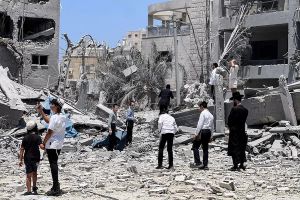
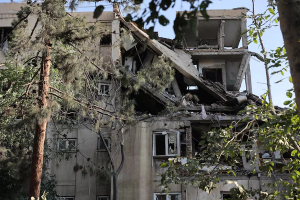
Ultra Orthodox jews look at an impacted site following missile attack from Iran on Israel, in Bnei Brak, Israel June 16, 2025.
An Iranian lawmaker warned that Tehran would resume war with Israel and withdraw from the nuclear Non-Proliferation Treaty (NPT) if European powers trigger the so-called “snapback” mechanism that would reinstate UN sanctions on Iran.
Fada-Hossein Maleki, a member of parliament’s National Security and Foreign Policy Committee, told Didban Iran that “if the Europeans want to activate the snapback mechanism, we will also continue the war with the Zionist regime.”
Maleki argued that such a step would destabilize global and regional equations. “Triggering this mechanism will entangle many players,” he warned.
He also accused Israel of undermining diplomacy by attacking Iran during ongoing nuclear negotiations, saying: “With that aggression, we practically saw the death of diplomacy.”
"Now, the activation of the snapback mechanism would once again mean abandoning diplomacy, and if the Europeans choose this path, this time we will put forward the tools of war and continue the 12-day conflict.”
He added, “The next war will not be one that ends in 12 days, or even one or two months. Dangerous events will inevitably unfold for all countries in the region.”
Iranian lawmaker Fada-Hossein Maleki
Maleki said Iran’s “first step” in response to a European move would be withdrawal from the NPT. “This issue has long been on the agenda of the commission and parliament,” he said.
Britain, France and Germany — the so-called E3 — have warned Iran that unless it returns to nuclear talks by the end of August, they will trigger the mechanism that could reimpose all UN sanctions lifted under the 2015 nuclear deal.
The lawmaker said Iran had now rebuilt its military readiness after the 12-day conflict and was “prepared for offensive operations in case of any new confrontation.”