• العربية
  • فارسی
BrandBrand
  • Iran Insight
  • Politics
  • Economy
  • Analysis
  • Special Report
  • Opinion
  • Podcast
  • Live TV
  • Iran Insight
  • Politics
  • Economy
  • Analysis
  • Special Report
  • Opinion
  • Podcast
  • Live TV
  • Theme
  • Language
    • العربية
    • فارسی
  • Iran Insight
  • Politics
  • Economy
  • Analysis
  • Special Report
  • Opinion
  • Podcast
  • Live TV
All rights reserved for Volant Media UK Limited
volant media logo
ANALYSIS

Iran’s neighbors push diplomacy, prepare for its failure

Ata Mohamed Tabriz
Ata Mohamed Tabriz

Iran analyst

Oct 27, 2026, 16:42 GMT+0
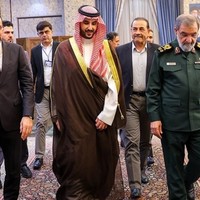
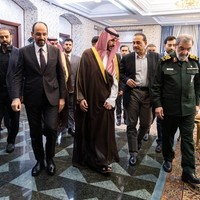
Senior officials from Iran, Turkey, Pakistan and Saudi Arabia meet in Tehran, October 26, 2026.

Regional powers are intensifying efforts to prevent a wider war with Iran, but their diplomacy comes with explicit demands of Tehran: reopen the Strait of Hormuz, stop threatening Persian Gulf states and allow international nuclear inspectors to work without obstruction.

Qatar and Pakistan, two of the principal mediators between Tehran and Washington, made those demands publicly on Tuesday, just one day after Saudi, Pakistani and Turkish officials traveled to Tehran for talks.

The military and security makeup of the delegation reflected the two tracks regional powers are pursuing: diplomacy aimed at containing the conflict alongside deeper defense cooperation in case it spreads.

The parallel efforts reveal the limits of the latest diplomatic push. These countries want to prevent another round of war, but they also want changes in Iranian behavior and are preparing to protect their interests if talks produce none.

After a Qatari delegation visited Tehran earlier this week, Doha said Tuesday that Iran needed to show “good intentions” for mediation efforts to succeed.

A Qatari Foreign Ministry spokesperson called on Tehran to stop threatening Persian Gulf Arab states and open the Strait of Hormuz.

Pakistan also set out what it expects of Tehran at the UN Security Council on Tuesday. Its representative pointed to the June Islamabad Memorandum of Understanding between Iran and the United States as evidence that diplomatic progress remained possible, while insisting that the International Atomic Energy Agency be allowed to operate without obstruction.

Islamabad said it continued to seek a ceasefire, reduce tensions and create conditions for renewed negotiations between Tehran and Washington.

Preparing for failure

Saudi Arabia, Pakistan and Turkey are strengthening military cooperation under the Mecca defense pact. Talks with Tehran therefore do not mean military preparations have stopped.

Houthi attacks on Saudi Arabia and insecurity along maritime routes have imposed serious costs on the kingdom and affected countries across the region and beyond. For Riyadh, de-escalation with Iran is closely linked to protecting infrastructure, trade and economic stability.

On October 23, Turkey, Egypt, Pakistan and Saudi Arabia, the R4 group, held talks with Britain, France, Germany and Italy in Istanbul. Their joint statement stressed resolving disputes through dialogue and reducing tensions.

The R4 statement emphasized diplomacy but also condemned Houthi attacks, expressed solidarity with Saudi Arabia and Yemen’s government and called for safe and unhindered passage through Hormuz. These are not the positions of countries offering Tehran unconditional support.

Before Istanbul, the possibility emerged of an informal division of labor: direct US and Israeli pressure on Iran on one track, with regional states seeking to contain the consequences of the war, particularly Houthi attacks, on another. The subsequent diplomacy does not rule that out.

Better protection for Saudi Arabia could indirectly benefit US operations, but that does not establish a coordinated strategy or secret agreement. Nor can regional states be treated as part of the same coalition as Israel.

Their opposition to expanding attacks on Iran and continued contacts with Tehran point to different objectives, even if some of their actions have complementary effects.

Two visions of security

The Tehran meeting also exposed sharply different interpretations of what regional diplomacy is intended to achieve.

Ali Bagheri, deputy secretary of Iran’s Supreme National Security Council, described the talks in terms of “endogenous security,” presenting Iran’s defense model as a basis for regional security and linking cooperation with Tehran to countering US and Israeli involvement.

Tehran is seeking to show that despite the war and pressure it faces, it remains indispensable to discussions about the region’s future. But the presence of foreign officials in Tehran does not by itself amount to endorsement of that vision.

Riyadh has emphasized de-escalation, a diplomatic solution and support for Qatari and Pakistani mediation, without suggesting either acceptance of Tehran’s security model or a reduced US role in the region.

Qatar’s latest demands suggest that regional diplomacy is not an embrace of Tehran’s position but an attempt to change its behavior while avoiding a wider war.

Pakistan’s position adds another condition: renewed diplomacy should go alongside unobstructed international oversight of Iran’s nuclear program.

Diplomacy, with limits

The Tehran talks were not an isolated attempt at mediation. Pakistan and Qatar helped secure the June Iran-US memorandum, and both have continued trying to revive negotiations.

The renewed mediation efforts amid a major US military buildup and Israeli threats show that regional countries still see space for diplomacy. But their public demands also demonstrate how far they remain from Tehran on some of the central issues driving the crisis.

The presence in Tehran of Saudi Defense Minister Khalid bin Salman carried particular weight. His previous visit was on April 17, 2025, less than two months before Israel launched its June attacks on Iran.

Regional governments are therefore trying to preserve the possibility of an Iran-US agreement without tying their security to its success. They want to contain Houthi attacks, protect Saudi Arabia and keep Hormuz open, while avoiding a wider confrontation with Iran.

That balancing act is becoming harder. Diplomacy remains active, but so do preparations for what happens if it fails.

Most Viewed

Bessent says Iran economy will contract by more than 25%
1
EXCLUSIVE

Bessent says Iran economy will contract by more than 25%

2

Qatar pushes for Iran deal, new US strikes remain possible

3

Oil price surge fuels Iran hardliners’ case against US deal

4

Mecca defense pact members hold talks with Iran

5
INSIGHT

'Iraq-first' message from Iran ally sparks calls for retaliation

Spotlight

  • Iran’s neighbors push diplomacy, prepare for its failure
    ANALYSIS

    Iran’s neighbors push diplomacy, prepare for its failure

  • Three members of Iranian family die within months after protest killing

    Three members of Iranian family die within months after protest killing

  • Iran talks with Mecca pact states may be ‘last chance’ before military action
    ANALYSIS

    Iran talks with Mecca pact states may be ‘last chance’ before military action

  • 'Iraq-first' message from Iran ally sparks calls for retaliation
    INSIGHT

    'Iraq-first' message from Iran ally sparks calls for retaliation

  • Oil price surge fuels Iran hardliners’ case against US deal

    Oil price surge fuels Iran hardliners’ case against US deal

Banner
Banner
Banner
Banner
Banner
•
•
•

More Stories

Israel election sees record turnout as Iran takes center stage

Oct 27, 2026, 13:55 GMT+0
100%
An advert for an Israeli television channel that will broadcast Israel's election coverage features Israeli Prime Minister Benjamin Netanyahu and former Israeli military chief Gadi Eisenkot, leader of the Yashar party, ahead of Israel's national election, on a bridge in Tel Aviv, Israel, October 21, 2026.

Israelis are voting Tuesday in an election in which Iran has emerged as a central issue, with turnout running at its highest level in decades.

The vote could bring an end to Benjamin Netanyahu’s long tenure as prime minister, with his Likud facing an opposition led by former military chief Gadi Eisenkot.

Voter turnout has reached 55.7 percent as of 4pm, Israeli media report, citing the Central Elections Committee.

Turnout at the same time in the 2022 election stood at 47.5 percent.

“We have surpassed all the records kept by the Central Elections Committee,” acting director general Dean Livne said. “There hasn’t been such a nationwide voter turnout since 1973.”

Long lines prompted election officials to say polling stations would remain open beyond their scheduled 10 p.m. closing time if voters were still waiting.

“We promise, everyone will vote,” Livne said. “If there is a line at 10 p.m., the polling stations will continue to operate until everyone who arrived by 10 p.m. has voted.”

Exit polls, normally released as voting ends, could consequently be delayed.

Iran has featured prominently in the closing days of the campaign.

Israeli media reported that Netanyahu clashed with military chief Eyal Zamir over proposed action related to Iran that Zamir feared could trigger renewed conflict. Netanyahu denied the reports, while Defense Minister Israel Katz called reports of a rift baseless.

Eisenkot backed Zamir, accusing Netanyahu of putting his political survival ahead of national security and warning that he would not allow the military to become a tool in Netanyahu’s “campaign of survival.”

Another opposition leader, Avigdor Liberman, went further, saying any attempt to drag Israel into military action to prevent the election would amount to treason.

Eisenkot, like Netanyahu, says Iran must be prevented from acquiring nuclear weapons and has backed military strikes against its nuclear program.

But he has rejected Netanyahu’s pursuit of regime change in Tehran as an achievable military objective and argued for combining economic pressure and diplomacy with military action when necessary.

Earlier this month, Eisenkot said another attack would be justified if Iran were making a dash for a nuclear weapon, but said he was unaware of any development requiring an immediate strike.

The result is being followed closely in Iran, where Israel’s next government will inherit decisions over whether and under what circumstances to resume military action against Tehran.

Kuwait sentences three to death over Iran-linked plot to kill interior minister

Oct 27, 2026, 08:38 GMT+0
100%

A Kuwaiti court sentenced three men to death after convicting them of collaborating with Iran and Hezbollah and plotting to assassinate senior officials, including First Deputy Prime Minister and Interior Minister Sheikh Fahad Al-Yousef Al-Sabah.

Kuwait Times reported that the State Security Criminal Court’s anti-terrorism division handed down the sentences on Monday over charges including espionage, planning attacks against Kuwait, membership in an outlawed organization and actions deemed harmful to national interests.

The death sentences are not final and are subject to review by Kuwait’s Court of Appeals.

Explosives alleged in assassination plan

Prosecutors accused some of the defendants of preparing to use explosives in the assassination plot, while one was accused of attempting to smuggle explosives into Kuwait for use in the planned attacks.

The court said the defendants sought to undermine state security, create instability and weaken public confidence in the authorities’ ability to maintain order, according to Kuwait Times.

AFP, citing two judicial sources, identified one of those sentenced to death as Hussein Abdallah al-Maatouq, a religious figure and secretary-general of the National Islamic Alliance. The sources said another of the three had previously been convicted on terrorism charges in 2016, later pardoned by Kuwait’s emir and arrested again in April.

Similar cases in Kuwait

The ruling follows another Iran- and Hezbollah-linked espionage case in Kuwait earlier this year.

In July, Kuwait’s State Security Court of Appeal sentenced a Kuwaiti citizen to life imprisonment after overturning an earlier 10-year term. Local reporting said he had been convicted of cooperating with Iran’s Revolutionary Guards and Hezbollah and had traveled to Qom, where prosecutors said he received weapons and drone training.

The allegations in that case included meetings with security figures linked to Iran and Hezbollah and preparations for activity deemed harmful to Kuwait’s national security.

Bahrain has also prosecuted alleged IRGC networks

Bahrain has brought several similar cases this year involving alleged cooperation with Iran’s Revolutionary Guards.

In May, a Bahraini court sentenced nine defendants to life imprisonment and two others to three years after convicting them of collaborating with the IRGC in what authorities described as hostile and terrorist activities against the kingdom.

Bahrain’s Interior Ministry had earlier said it arrested dozens of people it linked to the IRGC as authorities investigated alleged networks operating during the wider regional conflict.

The cases have unfolded amid heightened tensions between Iran and states across the Persian Gulf, with governments in the region increasing scrutiny of alleged Iranian-linked security and espionage networks.

Iran talks with Mecca pact states may be ‘last chance’ before military action

Oct 27, 2026, 05:06 GMT+0
•
Negar Mojtahedi
100%
Saudi Arabia’s Defence Minister Prince Khalid bin Salman, Pakistan’s Chief of Defence Forces Field Marshal Asim Munir, and Turkish intelligence chief Ibrahim Kalin during a meeting with Iranian officials in Tehran, Iran, October 26, 2026. (ISNA)

Talks involving Saudi Arabia and its defense partners in Tehran may offer a final diplomatic opportunity before a collective military response, a regional affairs analyst said Monday, amid attacks on Saudi territory and threats of renewed US-Iran fighting.

Mohamed Fahmy, a journalist and regional affairs analyst, described the visit as an exercise in "coercive diplomacy," arguing that the alliance was combining negotiations with preparations for a possible military response.

"This may be the last chance before a collective imminent military action," he told Iran International.

Saudi Defense Minister Khalid bin Salman, Pakistani army chief Asim Munir and Turkish intelligence chief Ibrahim Kalin met Iranian President Masoud Pezeshkian and Supreme National Security Council Secretary Mohsen Rezaei, with Rezaei hosting the four-way talks.

Riyadh said the visit by representatives of the Mecca Joint Defense Agreement was part of efforts to reduce tensions and promote dialogue.

The attacks on Saudi Arabia have presented the first major test of the agreement, signed by Saudi Arabia, Turkey and Pakistan in August, which pledges collective action when a member comes under attack.

Iranian state television reported that the four countries agreed to continue discussions on regional peace and security. No agreement to halt the Houthi attacks was announced.

The talks also unfolded against renewed threats of military action between Washington and Tehran. President Donald Trump has kept open the possibility of renewed strikes, while Iranian officials have warned of retaliation.

"The main objective is pressure," Fahmy said.

He said Saudi Arabia and its partners were attempting to exhaust diplomatic options while demonstrating that continued Houthi attacks could bring a collective response.

Professor Saad bin Tefla al-Ajmi, a former Kuwaiti information minister, told Iran International that the seniority of the delegation demonstrated the lengths to which Iran's neighbors were prepared to go to prevent another war.

He described the visit as an extraordinary diplomatic effort to prevent renewed hostilities, but said it could be interpreted in sharply different ways within Tehran, either as evidence of Iranian strength or as an opportunity to pursue a diplomatic settlement.

Iranian hardliners, he said, could portray the arrival of senior Saudi, Turkish and Pakistani officials as evidence that the Islamic Republic had gained the upper hand, forcing its neighbors to seek accommodation on Iranian territory.

A more pragmatic interpretation would see the visit as an opportunity for Tehran to demonstrate a willingness to cooperate with neighboring countries and pursue a diplomatic settlement, while portraying Washington and Israel as responsible if negotiations failed.

"It depends on whose mind you are reading in Tehran now," al-Ajmi said.

Attacks test the Mecca pact

Al-Ajmi also pointed to a hardening Saudi position toward the Houthis, arguing that Riyadh had exhausted its attempts to accommodate the group.

"I think that they have made their mind that the Houthi will have to go and they can't take it anymore," he told Iran International.

Al-Ajmi said Saudi Arabia was seeking international diplomatic and political support while demonstrating that it had been the target of aggression by the Houthis and their Iranian backers.

The urgency of the talks follows a series of deadly attacks on Saudi civilian and strategic infrastructure.

The Houthis claimed fresh attacks Monday on Saudi oil infrastructure and Riyadh airport, although Saudi authorities did not immediately confirm those claims.

The Saudi-led coalition also reported destroying Houthi missile infrastructure in Yemen, while Egypt's parliament authorized military support to help defend Saudi Arabia, potentially drawing another regional power more directly into the confrontation.

Egypt's decision, Fahmy argued, adds another dimension to the confrontation, with potential consequences for the country's already vulnerable economy.

The diplomatic effort may also involve financial concessions.

Israel Hayom reported Monday, citing unnamed Persian Gulf diplomatic sources, that Saudi Arabia was discussing a possible $1 billion payment to the Houthis through Iran as part of a ceasefire arrangement.

The Israeli newspaper said a Saudi official did not confirm any transfer but acknowledged that earlier understandings with the Houthis included financial assistance for public-sector salaries and reconstruction in exchange for an end to attacks.

Iran International could not independently verify the reported $1 billion proposal.

The possibility of a negotiated settlement comes as the Mecca pact's ability to fulfill its military commitments faces growing scrutiny.

Historian and political analyst Dr. Shahram Kholdi told Iran International that the alliance had failed to deliver the protection promised to its members.

"The Mecca Pact has effectively been a paper tiger," Kholdi said.

He argued that despite military cooperation among the three countries, Saudi Arabia remained vulnerable to Houthi missile and drone attacks.

Obstacles to a lasting settlement

Kholdi believes the delegation's principal objective is to persuade Tehran to restrain the Houthis, potentially in exchange for efforts to convince Washington to reconsider some of the conditions preventing renewed US-Iran negotiations.

He said Turkey and Pakistan were reluctant to confront the Houthis directly because of the risk of Iranian retaliation, leaving Saudi Arabia pursuing diplomacy while continuing to face attacks.

Even securing Tehran's cooperation, however, may not produce a lasting settlement.

Kholdi argued that the Houthis could demand political guarantees amounting to the effective partition of Yemen before agreeing to stop their attacks.

Such an arrangement could leave Saudi Arabia facing an entrenched hostile entity along its southern border, an outcome Riyadh has so far resisted.

Other regional diplomatic efforts have focused on the US-Iran standoff. Qatari officials visited Tehran on Sunday, while Pakistan has continued to serve as an intermediary between the United States and the Islamic Republic.

Disagreements remain over the US naval blockade of Iranian ports, access through the Strait of Hormuz and the terms of a broader settlement addressing Iran's nuclear program.

Kholdi expects the diplomatic effort could produce a temporary reduction in hostilities, but doubts it will deliver a lasting ceasefire. He warned that even a brief lull could unravel through miscalculation.

The Mecca pact was established to provide collective security. Continued attacks on Saudi Arabia are now testing that commitment while its members pursue talks with Iran.

With no announced agreement to halt the Houthi attacks and the US-Iran standoff unresolved, the risk of a military confrontation extending well beyond Yemen remains.

'Iraq-first' message from Iran ally sparks calls for retaliation

Oct 27, 2026, 02:00 GMT+0
•
Maryam Sinaiee
100%
Ammar al-Hakim (center), leader of Iraq’s National Wisdom Movement, during a visit to Tehran in September 2025

Ammar al-Hakim’s warning that Baghdad must protect Iraq from US sanctions despite its solidarity with Iran has sparked a sharp backlash on Persian-language social media, with some hardliners calling for retaliation against Iraq.

An excerpt from an interview al-Hakim gave to Iraqiya TV on September 29 has gone viral in recent days.

Al-Hakim, head of Iraq’s National Wisdom Movement and a former head of the Supreme Islamic Council of Iraq, said Washington had explicitly warned Baghdad to comply with US sanctions against Iran or risk sanctions itself.

He said Iran was justified in feeling it had been treated unfairly under what he described as a US siege, but argued that countries could not be governed by emotions and aspirations alone.

Iraq, he said, stood in solidarity with the Iranian people while also having a responsibility to shield its own population from the consequences of sanctions.

‘Honour vs dishonour’

Hardline Iranian social media users accused al-Hakim of betraying Iran and showing ingratitude for its support, with some calling for retaliatory measures against Iraq.

Ehsan Salehi, an adviser to former Iranian President Ebrahim Raisi, accused al-Hakim on X of bowing to Washington, justifying that stance and moving closer to Arab Gulf rulers.

Hardline commentator Alireza Taghavinia interpreted al-Hakim’s comments as an admission that Iraq had little choice but to comply with Washington.

“When Ammar al-Hakim, a Shiite whose position he owes to Iran, says this, what can we expect from [Pakistan’s Prime Minister] Shehbaz Sharif?” he wrote.

Filmmaker Ali Zarnegar wrote: “This is precisely the line between honor and dishonor, and unfortunately, you chose to be dishonorable.”

Another user sarcastically called for Iran to prevent Iraqi oil from passing through the Strait of Hormuz.

“Our feelings are with Iraq, too, but what can we do? We have to attack tankers associated with them,” the user wrote. “Since they are so afraid that America will freeze their oil money, we will make things easier for them and prevent even a drop of their oil from being exported through the Strait of Hormuz.”

National interest first

Other users defended al-Hakim, arguing that his remarks reflected the Iraqi government's responsibility to protect its national interests and criticizing Iran’s leaders for putting ideology ahead of Iran's own welfare.

Mohsen Salehikhah, a journalist and documentary filmmaker associated with reformists, praised the Iraqi politician.

“Ammar al-Hakim said something absolutely right,” he wrote. “If the Islamic Republic also understood that it should prioritize Iran’s interests rather than sacrifice our national interests at the altar of ideological delusions and aspirations, perhaps the situation would be different today.”

Another user pointed out that al-Hakim leads one of the Iraqi political movements closest to Iran, suggesting that other Iraqi groups could hardly be expected to put Iranian interests first.

“Some people spent years selling the public the illusion that sanctions did not matter because we could maintain relations with our neighbors instead of America,” the user wrote. “Well, this is our closest neighbor.”

‘Teach others a lesson’

The backlash comes amid a separate dispute over Iraq’s closure of the al-Shaib/Chazabeh border crossing with Iran.

An adviser to Iraqi Prime Minister Ali Faleh al-Zaidi has said the crossing was closed to prevent the smuggling of narcotics and counterfeit money from Iran, while Iran’s Interior Ministry complained that Baghdad had not informed Tehran in advance.

The closure has prompted calls from some Iranian hardliners for retaliation against Iraq.

Iranian businessman Babak Zanjani called for greater restrictions on Iraq’s access through the Strait of Hormuz, saying Baghdad should be made to understand “the real meaning of a blockade and its consequences.”

He went further, arguing that Iraq should be brought closer to collapse over what he described as a strategic mistake “so that others learn a lesson.”

Kayhan opens fire on diplomacy, warns Iran risks losing leverage

Oct 26, 2026, 19:06 GMT+0
100%
From left: Turkish intelligence chief Ibrahim Kalin, Saudi Defense Minister Prince Khalid bin Salman, Iran’s Supreme National Security Council Secretary Mohsen Rezaei, and Pakistani army chief Field Marshal Asim Munir in Tehran, October 26, 2026.

As Iran hosted senior Saudi, Turkish and Pakistani officials for security talks on Monday, an influential hardline newspaper editor warned that the diplomatic initiative could undermine Tehran's position and relieve pressure on the United States.

Hossein Shariatmadari, editor of Kayhan daily and a longtime appointee of the late supreme leader Ali Khamenei, questioned the purpose of the gathering in an article headlined “Tehran summit: Oasis or mirage?”

His criticism extended even to Ali Bagheri Kani, deputy secretary of Iran's Supreme National Security Council and himself a prominent hardliner who opposed the nuclear diplomacy of former President Hassan Rouhani.

Bagheri had presented the meeting as an opportunity to develop a new regional security framework. Shariatmadari dismissed that prospect, arguing that Turkey, Saudi Arabia and Pakistan were too close to the United States to credibly mediate between Tehran and Washington.

He accused the three countries of supporting US and Israeli military operations against Iran and questioned why Tehran would expect them to abandon their longstanding strategic ties with Washington.

100%
Iranian President Masoud Pezeshkian and Secretary of Iran's Supreme National Security Council Mohsen Rezaei during a meeting with chief of Defence Forces of Pakistan, Field Marshal Asim Munir, Saudi Arabia's Defence Minister Prince Khalid bin Salman and Turkish intelligence chief, Ibrahim Kalin in Tehran, Iran, October 26, 2026.

Iran's support for the Houthis

Shariatmadari's central objection concerned Yemen's Iran-backed Houthis.

Saudi Arabia, Turkey and Pakistan signed the Mecca mutual defense pact in August, committing themselves to collective defense. With Houthi attacks on Saudi Arabia intensifying, Shariatmadari argued that cooperation with the three countries risked weakening Iran's support for the Yemeni group.

He described Iran, Hezbollah, the Houthis, Iraqi militias and Palestinian armed factions as “one spirit in several bodies,” arguing that confronting any of them amounted to confronting Iran itself.

Shariatmadari questioned whether the visiting delegations intended to pressure Tehran into distancing itself from the Houthis and insisted Iran would never abandon them.

Yet he also portrayed the diplomatic visit as evidence of Iranian strength, arguing that the closure of the Strait of Hormuz had brought Washington and its allies close to economic suffocation and forced regional governments to seek relief through Tehran.

His argument exposed a tension in the hardline position: the arrival of foreign delegations was presented as proof that Iran's pressure was succeeding, while negotiations aimed at easing that pressure risked squandering the leverage it had created.

Against compromise

On Saturday, the hardline Paydari Front urged Iran to begin withdrawing from the Nuclear Non-Proliferation Treaty and reconsider its defense doctrine. Hardline lawmakers have also sought to impeach Foreign Minister Abbas Araghchi over his dealings with Washington.

These critics are closely tied to Iran's security establishment. Paydari Front leader Sadegh Mahsouli is a former Revolutionary Guards officer, while Shariatmadari represented the late supreme leader at Kayhan for decades.

Their criticism has continued even as President Masoud Pezeshkian and national security chief Mohsen Rezaei welcomed the visiting delegations. The four countries ended Monday's meeting with an agreement to continue discussions on regional peace and security.

The dispute exposes a growing divide within Iran's ruling establishment over what to do with the leverage created by months of confrontation.

Shariatmadari and like-minded hardliners believe that confrontation is working. In their view, diplomacy that requires Tehran to relinquish that leverage risks trading away the very gains it has produced.