A family in Iran lost three members in less than four months after one son was shot dead during protests in Tehran and his brother and father later died of heart attacks, according to information obtained by Iran International.
Ehsan Abedini, 35, was killed during protests on January 8 in Tehran’s Sattarkhan neighborhood after being shot from behind with live ammunition, sources close to the family told Iran International.
His 23-year-old brother, Danial Abedini, died of a heart attack 12 days later. Their father, Reza Abedini, also died of a heart attack on May 15, less than four months after losing both sons.
Sources close to the family said Danial and his father had been under severe emotional strain after Ehsan’s killing and that pressure from security authorities had added to their distress.
Ehsan, who ran a restaurant in the Sattarkhan area, had posted criticism of the Islamic Republic on social media and took part in the protests because he was worried about the country’s direction, according to a person close to him.
Family searched for body for a week
The family spent about a week searching for Ehsan’s body before a close friend recognized him in a video showing the bodies of protesters killed during the demonstrations, according to information received by Iran International.
Sources said the video had been obtained from the phone of a member of the security forces and showed several bloodied bodies in a street, with men identified by the sources as members of the security forces standing nearby.
According to accounts received by Iran International, authorities did not allow the family to bury Ehsan in Tehran. His body was instead taken to Jasb, near Delijan in Markazi province, for burial.
Danial died on January 20. Sources close to the family said he had been under intense emotional strain after his brother’s killing and amid continued pressure from security authorities.
Their father died on May 15 after what the sources described as months of severe emotional distress following the deaths of both sons.
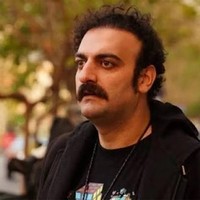
Iran's judiciary has indicted comedian Saeed Shakiba on charges including supporting Israel and the Pahlavi dynasty, state media reported on Sunday, days after authorities opened a case against him over a video impersonating former Supreme Leader Ali Khamenei.
The judiciary-affiliated Mizan news agency said Tehran prosecutors had issued the indictment following an investigation into what authorities described as insulting and offensive content published by the comedian on Instagram.
According to Mizan, the charges include knowingly expressing support for Israel on social media, insult and engaging in propaganda against the Islamic Republic through negative portrayals of the country and support for the Pahlavi dynasty, which ruled Iran until the 1979 Islamic Revolution.
Mizan said the case had been referred to court for further proceedings.
Shakiba came under scrutiny after publishing a satirical video on October 13 in which he imitated Khamenei's voice, parodying his meetings with poets.
On October 14, Mizan announced that Tehran prosecutors had opened a case against a social media personality identified only by the initials S.Sh., accusing him of publishing insulting and offensive content.
The agency said action had been taken against the individual but provided no details about the measures, the specific charges or his whereabouts.
US-based rights group Human Rights Activists in Iran (HRANA) reported on October 14 that authorities had opened a case against Shakiba following the satirical video, saying the judiciary had not disclosed details about the proceedings or his situation.
Shakiba is known for posting comedy videos and voice impressions of prominent figures on Instagram, where he had around one million followers.
Following the announcement of legal proceedings, posts on his Instagram account were removed. A notice bearing the emblem of Iran's police said the account had been restricted by judicial order over what authorities called criminal content.
The Islamic Revolutionary Guard Corps-affiliated Fars news agency also criticized the video, accusing Shakiba of insulting Khamenei and his family.
Shakiba had previously published satirical impressions of other Islamic Republic officials and expressed support for protestors killed during the January uprising.
Previous arrests and prosecutions of Iranian comedians
Iranian authorities have previously arrested and sentenced comedians and satirists over their work, drawing criticism from human rights groups.
Shaker Bori
Last month, Shaker Bori, a comedian and social media personality from the southwestern city of Abadan, was sentenced to 13 months and 20 days in prison for disseminating false information with the intent to harm others, according to the rights group HRANA.
Bori was also fined 45 million rials (approximately $17) for insulting a member of parliament. The case followed a complaint by lawmaker Mousa Ghazanfarabadi over a video Bori had published.
Bori had previously been arrested on July 31, 2023, after reporting to an Islamic Revolutionary Guard Corps intelligence office in Abadan to seek the return of his confiscated mobile phone, according to the Norway-based rights group Hengaw.
He was released on bail on August 10, 2023, after spending 10 days in detention.
Zeinab Mousavi, known for her online character Empress Kuzco
Another comedian, Zeinab Mousavi, known for her online character Empress Kuzco, was sentenced to six months in prison in November 2025 over a satirical video about Ferdowsi, the celebrated Persian poet.
In February 2026, a Tehran appeals court upheld the sentence, which also included a fine of 160 million rials (approximately $59) and an order to write a research paper about Ferdowsi, according to HRANA.
Mousavi had previously been arrested in October 2022 in the central city of Qom during nationwide protests sparked by the death of Mahsa Amini in morality police custody. She was released on bail in November that year and subsequently sentenced to two years in prison.
Mousavi said she had spent 25 days in solitary confinement during her detention.
She was arrested again in 2023 and released several days later, according to HRANA.
Kioomars Marzban
In another case, satirical writer Kioomars Marzban was arrested at his home on August 26, 2018, by Revolutionary Guard intelligence agents.
Marzban was sentenced in August 2019 to 23 years and nine months in prison on charges including insulting the supreme leader, propaganda against the Islamic Republic and cooperating with a hostile state, according to HRANA.
The sentence, of which 11 years were enforceable under Iranian law, was upheld on appeal in October 2019.
Marzban was released from Tehran's Evin prison in February 2021 after serving approximately two and a half years. His lawyer, Mohammad Hossein Aghasi, said six years of his sentence had been pardoned and the remainder suspended, according to freedom of expression organization ARTICLE 19.
Following his release, ARTICLE 19 condemned his prosecution, saying he should never have been imprisoned for his writing.
"His case is emblematic of the Iranian authorities' zero tolerance for freedom of expression and the Judiciary's lack of independence," said Saloua Ghazouani, then director of ARTICLE 19's Middle East and North Africa program.
PEN America has also criticized Iran's treatment of satirical artists. In June 2023, the organization condemned the arrest of cartoonist Atena Farghadani following the publication of a satirical drawing on Instagram.
"Cartoonists should not be persecuted for their creative expression," said Julie Trébault, then director of PEN America's Artists at Risk Connection.
PEN America said the arrest reflected broader efforts by Iranian authorities to intimidate artists, journalists and activists.
Armed Baluch groups in Iran’s southeast are adding one more strain on the Islamic Republic’s security forces just as war has stretched them thinnest, with 18 attacks in the 18 days to October 10, more than in any full month this year.
At least 63 armed incidents were documented across Sistan and Baluchestan and neighboring Kerman province between March 31 and October 10, leaving at least 94 people dead and 33 injured, according to the rights group HRANA. The attacks have grown more complex as well as more frequent: coordinated ambushes, roadside bombs and heavier weapons.
The question is whether a decades-old insurgency, long contained by force, can become a wider problem for a state fighting on other fronts.
A coalition with bigger aims
Several Baluch armed organizations joined forces in December 2025 under the People’s Fighters Front. The coalition includes Jaish al-Adl, which Iran and the United States both list as a terrorist organization.
The front has increasingly framed its goal as ending the Islamic Republic’s rule rather than winning concessions for the Baluch. Whether it can draw support beyond the southeast is unproven.
Its timing is not accidental. Iran’s security services are absorbing the consequences of war with the United States and Israel while still needing the forces they rely on to suppress dissent at home.
Rahim Bandoui, an Iranian-Baluch human rights activist and senior member of the Balochistan People’s Party, said the conflict itself is nothing new.
Speaking on Iran International’s Eye for Iran podcast, he traced it to decades of repression, arguing that Tehran has long treated peaceful political activity and armed resistance in the province as the same security threat.
What has changed, he said, is the state’s position. A government weakened by war presents armed groups with an opening they did not have before.
What the attacks can and cannot do
If the attacks keep growing, Tehran will have to send more personnel and resources to the southeast at a time when its security forces are already stretched. Those forces have contained unrest there before through military operations, mass arrests and lethal force. A sustained insurgency adds a cost on top of the war.
That cost could be felt elsewhere. Every unit tied down in Sistan and Baluchestan is one not available against protests or other opposition in the rest of the country.
The limits are real, though. There is no evidence the coalition can take and hold territory or threaten the central government’s control. Its political ambitions face a further obstacle across the border: Baluch armed groups in Pakistan differ considerably from their Iranian counterparts in ideology and aims, so a unified cross-border movement is unlikely without substantial change on both sides.
The grievances underneath
The insurgency sits on grievances that successive crackdowns have failed to address.
Sistan and Baluchestan, home to a mostly Sunni Baluch population, is among Iran’s poorest provinces despite its position on the Pakistani and Afghan borders and its natural resources. Residents face discrimination, few jobs and poor access to schools, clinics and other basic services.
Tens of thousands of people in the province have no official identity documents, Sabah Baluch, a human rights advocate with Iran House, told the podcast, which shuts them out of basic services and legal rights. For some families that has meant generations without formal schooling or work.
Hardship pushes residents into dangerous informal work, above all carrying fuel across the border, where they risk being shot by security forces or burning to death in vehicle fires.
The province has also seen some of the Islamic Republic’s deadliest violence against dissent. On September 30, 2022, during the nationwide protests that followed the death of Mahsa Amini, security forces killed at least 87 people in Zahedan, the provincial capital, most of them Baluch worshippers, in what became known as Bloody Friday.
Baluch prisoners are also executed out of all proportion to their numbers. According to Iran Human Rights, they accounted for 20 percent of recorded executions in 2023, 11 percent in 2024 and 9 percent in 2025, from a group that is a small fraction of Iran’s population.
The larger question
For now the Islamic Republic retains the military and security capacity to hold the southeast, and nothing suggests the insurgency can change the balance of power on its own.
The larger question is not whether armed groups can defeat government forces in Sistan and Baluchestan. It is whether a state that has relied on lethal force against its opponents for decades can go on containing several challenges at once while war makes new demands on the forces it uses to do so.
For Iran’s wider opposition, the answer will matter well beyond the southeast.
Armed men take part in a Janfada rally in Rasht, northern Iran, October 2026
Armed security forces and checkpoints have become more visible across Iran, according to witness reports sent to Iran International, while internet access has deteriorated amid fears of fresh unrest and another round of war.
Accounts from Tehran, Mashhad, Isfahan, Dezful, Hamedan and other cities over the past week describe armed Basij members and riot police at major intersections and public squares, new checkpoints and additional surveillance cameras.
Users in several provinces also say internet speeds have fallen sharply, circumvention tools have stopped working and access to social media has become increasingly difficult.
The individual reports cannot all be independently verified, but describe similar changes across widely separated parts of the country.
More armed forces on the streets
In Dezful in southwestern Iran, one resident said the city had become “heavily securitized,” particularly around the city center and Shariati Street.
The resident attributed the increased presence to government concern about possible protests around the anniversary of the November 2019 uprising, when demonstrations triggered by a sudden increase in fuel prices were met with a deadly crackdown.
In Tehran, a resident reported a Basij checkpoint on Khavaran Street from Thursday evening, while other accounts described increased security patrols elsewhere in the capital and neighboring Karaj.
Residents of Mashhad reported armed Basij members around Mellat Park.
In Isfahan, armed deployments were reported around major squares, while residents of Hamedan and Borujerd described increased security activity.
Iran International reported similar deployments in September around the fourth anniversary of the death in custody of Mahsa Jina Amini.
More cameras and surveillance
Residents have also reported an expansion of surveillance infrastructure.
A resident of Astara, a small city on the Caspian coast near the Azerbaijani border, said security cameras were being installed in squares and neighborhoods across the city.
“They are installing cameras neighborhood by neighborhood in a city this small,” the resident said. “Look how afraid they are of the people.”
Another resident reported more surveillance cameras around Tehran's Sadeghieh district.
Tehran municipality announced last year that it planned to install 15,000 surveillance cameras across the capital, while security agencies have used camera footage to identify protesters and enforce government restrictions.
Internet slowdown
Residents in Semnan, Shiraz, Tabriz, Kerman, Tehran and elsewhere told Iran International that connections had slowed markedly, VPNs had stopped functioning and social media platforms had become increasingly difficult to reach.
A Shiraz resident said internet access had been extremely slow for about six days, while in Kerman one user said even paid VPN services were failing.
A resident of Tonekabon on the Caspian coast said Irancell mobile internet was being cut at night. Other users reported disruption to both fixed and mobile connections.
The cause of the disruptions is unclear, and the accounts do not establish that the security deployments and deteriorating internet access are part of a coordinated operation.
But they come against the backdrop of Iran's extensive use of internet shutdowns during periods of political unrest and conflict.
Tech outlet Zooman reported this week that authorities had issued instructions for international internet access to be cut immediately in the event of another war.
When Israel and the US attacked Iran in February, authorities imposed a nationwide internet blackout that lasted about 88 days, the longest recorded in any country, according to NetBlocks.
The latest disruptions also coincide with sharp increases in the cost of getting online.
Iran's two largest mobile operators, Hamrah-e Aval and Irancell, raised prices for calls, text messages and internet packages by as much as 40% on Friday, citing higher equipment, maintenance and infrastructure costs.
“By making the internet more expensive, they have closed our last route to the free world,” one resident told Iran International. “For me, when the internet was my only comfort and source of income, even being present in this space is no longer possible.”
Mostafa Sepahvand, Shapoor Noori, and Farhad Javadi-Manesh, in a court sketch / Credit: SWNS
A man accused of plotting an attack on Iran International journalists told a London court Wednesday that he met an alleged Revolutionary Guards contact at the Iranian embassy while he was gathering information on the journalists.
Mostafa Sepahvand told Woolwich Crown Court that he visited the embassy on February 15, 2025, where he met a man he identified as Navid Emami.
Sepahvand said he told Emami that addresses provided for the journalists were incorrect but that he was still pursuing the matter. According to Sepahvand, Emami asked whether his co-defendant Farhad Javadi Manesh was working with him.
Later in his testimony, Sepahvand said Emami had supplied addresses to people he described as connected to the Revolutionary Guards. He also alleged that Emami had threatened him.
Sepahvand, 41, is on trial alongside Manesh, 46, and Shapoor Qalehali Khani Noori, 57. All three deny charges under Britain's National Security Act.
Prosecutors say the men gathered information for Iranian intelligence in preparation for serious violence against Iran International journalists Mojtaba Pourmohsen and Kambiz Hosseini.
Sepahvand accepts that he conducted surveillance but says he acted under duress and deliberately tried to undermine the operation.
The court was shown phone and vehicle location data placing Sepahvand near addresses linked to the alleged targets, as well as messages in which he passed Manesh information about Hosseini, including references to his dog and a blue Volkswagen Golf.
Sepahvand said he asked Manesh to make a video of the car. On one occasion, he said, he travelled to an address specifically so his phone's GPS would show his Iranian contacts that he had been there.
He said he was trying to convince the Revolutionary Guards that he was cooperating while actually frustrating the alleged operation.
“I played them,” Sepahvand told the court.
Sepahvand also testified that £30,000 had been sent to a money exchange in Finchley after an address linked to Pourmohsen was raised, but said he did not collect it because he did not want to carry out the task.
Asked who had sent the money and what it was for, Sepahvand named a man called Ruhollah and said it was to “go after the journalists.” Asked which journalists, he said that had not been specified.
Sepahvand said he had initially asked for £150,000. When he denied telling his Iranian contacts that he would attack a journalist if they paid him, his barrister, Tyrone Smith, pointed him to an earlier message in which he appeared to say he would carry out the attack if paid.
Sepahvand said he had no choice but to make such claims because he believed the Revolutionary Guards were monitoring his communications and waiting for him to say he would not carry out the attack.
He said he had been under duress from the beginning, citing the arrest of an associate and his younger brother, a raid on his mother's home and pressure over a criminal case against him in Iran.
“I didn't want anyone to be hurt,” Sepahvand said toward the end of his testimony. “I wanted to protect everyone.”
Asking for a divorce, refusing a marriage, speaking to a man she did not know: in Iran, each has preceded the killing of a woman or girl by her own family, according to a Shargh daily investigation that counted at least 38 dead in two months.
The Shargh daily documented at least 38 women and children killed in 28 cases over a two-month period from late August to late October in an investigation published Wednesday. Thirteen of the victims were under 18.
In most cases, the perpetrators were men close to the victims, including husbands, fathers, brothers and other relatives. Some women were killed after seeking separation, while girls were murdered after resisting decisions imposed on them by their families.
Femicide is not confined to disadvantaged areas, less educated households or traditional communities, Pegah Banihashemi, a senior legal researcher at the University of Chicago, told Iran International.
Banihashemi pointed to cases involving educated couples and professional households, saying educational achievement alone does not necessarily eliminate attitudes that treat women as subject to male authority.
Figures compiled by rights organizations indicate the wider scale of the violence. The Norway-based rights group Hengaw documented at least 207 femicides in Iran in 2025 and another 45 during the first six months of 2026.
When personal choices become grounds for killing
One of the cases examined by Shargh involved a 16-year-old girl in the western Iranian city of Kermanshah whose father shot her dead while she slept.
The girl had resisted a forced marriage and had previously been prevented by her family from continuing her education beyond the fourth grade.
In another case, a man strangled his 70-year-old wife after she spoke to an unfamiliar man. A 26-year-old woman was killed by her 50-year-old husband over what was described as her failure to carry out household duties.
In a Tehran neighborhood, a woman who had requested a divorce died in a deliberately set house fire.
Two women were beheaded by their husbands in separate cases in Mashhad and Isfahan. In the Mashhad case, two young children were also killed before the perpetrator died by suicide.
Shargh found that four killings followed requests for divorce or separation, while five cases involved previous disputes or domestic violence.
Although the motives were not established in every case, several involved women resisting demands or attempting to make independent decisions about their lives.
Education alone does not prevent violence
Whether higher levels of education and economic independence can protect women from violence remains an important question.
A 2025 review published in BMC Women's Health examined 81 Iranian studies involving more than 42,000 participants and identified a range of economic, social, psychological and cultural factors associated with domestic violence.
The review considered education and employment alongside family relationships and patriarchal attitudes, indicating that violence cannot be explained by poverty or limited schooling alone.
Another study of women who had experienced domestic violence in Ardebil, northwestern Iran, included participants whose education extended to postgraduate qualifications, while their husbands' education reached the doctoral level.
The findings do not mean that violence occurs equally across all social groups, but they show that university education does not necessarily prevent abusive relationships.
Beliefs surrounding male honor, authority and the right to control women's decisions can persist even in highly educated households, Banihashemi said.
Changing those attitudes requires public education alongside social support and effective mechanisms to prevent violence, she added.
Children among the victims
Children accounted for a substantial share of those killed in Shargh's investigation, sometimes alongside their mothers and sometimes directly at the hands of fathers or brothers.
In Dehloran, a city in western Iran's Ilam province, a 57-year-old man killed his second wife and three children, including nine-year-old twins and a 13-year-old boy, before taking his own life.
In Tabriz, a man killed his wife and their two children. Other cases included a two-year-old girl beaten to death by her father and a 13-year-old girl shot by her brother.
An October 2026 study published in Children and Youth Services Review examined the experiences of 10 Iranian girls aged 12 to 18 who had suffered domestic violence and were living in shelters.
The researchers identified patterns of parental humiliation, coercion and control, with the girls responding through silence, seeking assistance or running away from home.
Although the study did not directly examine femicide, it highlighted how unequal power relationships and limited access to support can expose girls to continuing abuse.
Violence that begins before the killing
Repeated death threats, restrictions on communication, confinement at home and isolation from relatives can signal an escalating risk of violence, women's rights lawyer Fatemeh Babakhani told Shargh.
Babakhani emphasized the importance of establishing networks of trusted people and arranging discreet emergency signals to seek help.
Social worker Leila Arshad called for expanded access to shelters, social workers in schools and earlier intervention to prevent violence.
Femicide should not be attributed solely to psychiatric illness, Amirhossein Jalali, spokesperson for the Iranian Psychiatric Association, told Shargh.
Jalali identified previous threats, coercive control, stalking and escalating violence during separation as factors that deserve attention when examining such killings.
The problem extends beyond Iran. Around 50,000 women and girls worldwide were killed by intimate partners or other family members in 2024, according to a joint report by UN Women and the United Nations Office on Drugs and Crime.
That represented approximately 60 percent of all women and girls intentionally killed worldwide that year.
Legal deterrence and demands for protection
Insufficient legal deterrence and difficulties accessing effective protection leave women in Iran particularly vulnerable when threatened by men close to them, Banihashemi said.
"If there is no deterrence, and people are certain that the cost to them will not be high, they will commit these crimes again," Banihashemi told Iran International.
Legislation intended to strengthen protections for women against violence has remained unresolved despite more than a decade of debate.
Public demands for action have continued. Sixty-three campaigns addressing femicide, domestic violence and related issues have collected more than 360,000 signatures, Hamed Bidi, chief executive of the petition platform Karzar, told Shargh.
Reports of femicide, research into domestic violence and warnings from specialists show that violence against women is neither confined to a particular social class or educational background nor simply the result of personal disputes. In many cases, it is linked to patriarchal attitudes, attempts to control women's lives and inadequate protection, factors that continue to threaten the safety and autonomy of women and girls in Iran.