• العربية
  • فارسی
BrandBrand
  • Iran Insight
  • Politics
  • Economy
  • Analysis
  • Special Report
  • Opinion
  • Podcast
  • Live TV
  • Iran Insight
  • Politics
  • Economy
  • Analysis
  • Special Report
  • Opinion
  • Podcast
  • Live TV
  • Theme
  • Language
    • العربية
    • فارسی
  • Iran Insight
  • Politics
  • Economy
  • Analysis
  • Special Report
  • Opinion
  • Podcast
  • Live TV
All rights reserved for Volant Media UK Limited
volant media logo
INSIGHT

Iranian women killed by relatives after seeking divorce or refusing marriage

Hooman Abedi
Hooman Abedi

Iran International

Oct 21, 2026, 11:51 GMT+1
Three women walk along a street in Iran.

Asking for a divorce, refusing a marriage, speaking to a man she did not know: in Iran, each has preceded the killing of a woman or girl by her own family, according to a Shargh daily investigation that counted at least 38 dead in two months.

The Shargh daily documented at least 38 women and children killed in 28 cases over a two-month period from late August to late October in an investigation published Wednesday. Thirteen of the victims were under 18.

In most cases, the perpetrators were men close to the victims, including husbands, fathers, brothers and other relatives. Some women were killed after seeking separation, while girls were murdered after resisting decisions imposed on them by their families.

Femicide is not confined to disadvantaged areas, less educated households or traditional communities, Pegah Banihashemi, a senior legal researcher at the University of Chicago, told Iran International.

Banihashemi pointed to cases involving educated couples and professional households, saying educational achievement alone does not necessarily eliminate attitudes that treat women as subject to male authority.

Figures compiled by rights organizations indicate the wider scale of the violence. The Norway-based rights group Hengaw documented at least 207 femicides in Iran in 2025 and another 45 during the first six months of 2026.

When personal choices become grounds for killing

One of the cases examined by Shargh involved a 16-year-old girl in the western Iranian city of Kermanshah whose father shot her dead while she slept.

100%

The girl had resisted a forced marriage and had previously been prevented by her family from continuing her education beyond the fourth grade.

In another case, a man strangled his 70-year-old wife after she spoke to an unfamiliar man. A 26-year-old woman was killed by her 50-year-old husband over what was described as her failure to carry out household duties.

In a Tehran neighborhood, a woman who had requested a divorce died in a deliberately set house fire.

Two women were beheaded by their husbands in separate cases in Mashhad and Isfahan. In the Mashhad case, two young children were also killed before the perpetrator died by suicide.

Shargh found that four killings followed requests for divorce or separation, while five cases involved previous disputes or domestic violence.

Although the motives were not established in every case, several involved women resisting demands or attempting to make independent decisions about their lives.

Education alone does not prevent violence

Whether higher levels of education and economic independence can protect women from violence remains an important question.

A 2025 review published in BMC Women's Health examined 81 Iranian studies involving more than 42,000 participants and identified a range of economic, social, psychological and cultural factors associated with domestic violence.

The review considered education and employment alongside family relationships and patriarchal attitudes, indicating that violence cannot be explained by poverty or limited schooling alone.

100%

Another study of women who had experienced domestic violence in Ardebil, northwestern Iran, included participants whose education extended to postgraduate qualifications, while their husbands' education reached the doctoral level.

The findings do not mean that violence occurs equally across all social groups, but they show that university education does not necessarily prevent abusive relationships.

Beliefs surrounding male honor, authority and the right to control women's decisions can persist even in highly educated households, Banihashemi said.

Changing those attitudes requires public education alongside social support and effective mechanisms to prevent violence, she added.

Children among the victims

Children accounted for a substantial share of those killed in Shargh's investigation, sometimes alongside their mothers and sometimes directly at the hands of fathers or brothers.

In Dehloran, a city in western Iran's Ilam province, a 57-year-old man killed his second wife and three children, including nine-year-old twins and a 13-year-old boy, before taking his own life.

In Tabriz, a man killed his wife and their two children. Other cases included a two-year-old girl beaten to death by her father and a 13-year-old girl shot by her brother.

An October 2026 study published in Children and Youth Services Review examined the experiences of 10 Iranian girls aged 12 to 18 who had suffered domestic violence and were living in shelters.

The researchers identified patterns of parental humiliation, coercion and control, with the girls responding through silence, seeking assistance or running away from home.

Although the study did not directly examine femicide, it highlighted how unequal power relationships and limited access to support can expose girls to continuing abuse.

Violence that begins before the killing

Repeated death threats, restrictions on communication, confinement at home and isolation from relatives can signal an escalating risk of violence, women's rights lawyer Fatemeh Babakhani told Shargh.

Babakhani emphasized the importance of establishing networks of trusted people and arranging discreet emergency signals to seek help.

Social worker Leila Arshad called for expanded access to shelters, social workers in schools and earlier intervention to prevent violence.

Femicide should not be attributed solely to psychiatric illness, Amirhossein Jalali, spokesperson for the Iranian Psychiatric Association, told Shargh.

Jalali identified previous threats, coercive control, stalking and escalating violence during separation as factors that deserve attention when examining such killings.

The problem extends beyond Iran. Around 50,000 women and girls worldwide were killed by intimate partners or other family members in 2024, according to a joint report by UN Women and the United Nations Office on Drugs and Crime.

That represented approximately 60 percent of all women and girls intentionally killed worldwide that year.

Legal deterrence and demands for protection

Insufficient legal deterrence and difficulties accessing effective protection leave women in Iran particularly vulnerable when threatened by men close to them, Banihashemi said.

"If there is no deterrence, and people are certain that the cost to them will not be high, they will commit these crimes again," Banihashemi told Iran International.

Legislation intended to strengthen protections for women against violence has remained unresolved despite more than a decade of debate.

Public demands for action have continued. Sixty-three campaigns addressing femicide, domestic violence and related issues have collected more than 360,000 signatures, Hamed Bidi, chief executive of the petition platform Karzar, told Shargh.

Reports of femicide, research into domestic violence and warnings from specialists show that violence against women is neither confined to a particular social class or educational background nor simply the result of personal disputes. In many cases, it is linked to patriarchal attitudes, attempts to control women's lives and inadequate protection, factors that continue to threaten the safety and autonomy of women and girls in Iran.

Most Viewed

Toppling Iran’s regime is ‘primary objective,’ Netanyahu says after US talks
1

Toppling Iran’s regime is ‘primary objective,’ Netanyahu says after US talks

2
ANALYSIS

Iran deal remains elusive amid risk of renewed strikes

3

Iran-Pakistan border trade halt leaves trucks and cargo stranded

4

Pakistani mediator leaves Tehran after Iran doubles down on demands

5

Iran Air chief says 30 to 40 operational aircraft destroyed in war

Spotlight

  • Toppling Iran’s regime is ‘primary objective,’ Netanyahu says after US talks

    Toppling Iran’s regime is ‘primary objective,’ Netanyahu says after US talks

  • Russia steps between Iran and US, but how far can it go?
    INSIGHT

    Russia steps between Iran and US, but how far can it go?

  • Iran in Israeli election: Netanyahu all-in on regime change, rivals want more
    INSIGHT

    Iran in Israeli election: Netanyahu all-in on regime change, rivals want more

  • Saudi Arabia should join US-led push for change in Iran, analyst says
    ONE-ON-ONE

    Saudi Arabia should join US-led push for change in Iran, analyst says

  • Teenager killed by gunshot to eye after arrest in Iran, source says

    Teenager killed by gunshot to eye after arrest in Iran, source says

  • Soaring medical costs and staff shortages strain Iran’s hospitals
    VOICES FROM IRAN

    Soaring medical costs and staff shortages strain Iran’s hospitals

Banner
Banner
Banner
Banner
Banner
  • One woman killed in Iran every other day in 2024, rights groups say

    One woman killed in Iran every other day in 2024, rights groups say

  • Breaking up is hard to do, but more Iranian women dare divorce anyway

    Breaking up is hard to do, but more Iranian women dare divorce anyway

  • At least 110 women killed in Iran over past year, rights group says

    At least 110 women killed in Iran over past year, rights group says

  • Young Iranian girl murdered by father in honor killing

    Young Iranian girl murdered by father in honor killing

  • Iran withdraws violence against women law after hardliner revisions

    Iran withdraws violence against women law after hardliner revisions

•
•
•

More Stories

Iran in Israeli election: Netanyahu all-in on regime change, rivals want more

Oct 20, 2026, 22:24 GMT+1
•
Negar Mojtahedi
100%
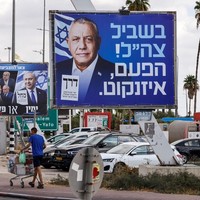
Billboards featuring Israeli Prime Minister Benjamin Netanyahu of the Likud party (left) and former Israeli military chief Gadi Eisenkot, leader of the Yashar party (right), at the entrance to Kiryat Malachi, Israel, October 20, 2026. The writing on Netanyahu's billboard reads "Right or Palestine". The writing on Eisenkot's billboard reads "for the IDF! This time, Eisenkot".

Israeli Prime Minister Benjamin Netanyahu is making regime change in Iran an explicit goal ahead of Israel’s election, while political rivals advocate tough measures against Tehran and criticize his failure to eliminate the Iranian threat.

The debate puts competing promises of security before voters whom analysts describe as exhausted by years of conflict, raising questions about what would constitute victory and how far Israel would go to achieve it.

“We must complete the elimination of the Iranian regime — that is the primary objective,” Netanyahu said Tuesday at Tel Hai University in Kiryat Shmona, near the Lebanese border.

Netanyahu has long welcomed the prospect of the Islamic Republic’s collapse. Now, with Israelis voting on October 27, he is placing the removal of Iran’s leadership at the forefront of his message.

Netanyahu argued that weakening Iran militarily would not guarantee Israel’s security. As long as the Islamic Republic remains in power, he said, it will attempt to rebuild its nuclear capabilities and regional network.

“Finishing the job means bringing down the terrorist regime in Iran,” Netanyahu said, describing Tehran as the head of a “poisonous octopus” whose removal, he argued, would also bring down Hezbollah in Lebanon.

The declaration followed discussions with US President Donald Trump and an unannounced visit by US Defense Secretary Pete Hegseth. Washington, however, has not publicly committed to regime change, emphasizing instead the prevention of a nuclear-armed Iran.

Why emphasize regime change now?

Netanyahu’s declaration comes as he seeks another term following three years of war and repeated military confrontations with Iran and its regional allies.

Itai Reuveni, director of communications and outreach at NGO Monitor, said the prime minister was articulating what many Israelis had already understood to be the broader ambition behind military operations against Tehran.

“I think he just summarized all the things that everyone meant,” Reuveni told Iran International.

Making regime change the declared objective raises questions about whether weakening Iran’s military and nuclear capabilities would be sufficient for Netanyahu to claim victory.

Yaakov Katz, former editor-in-chief of The Jerusalem Post and author of four books on Israel’s military, said repeated strikes alone cannot permanently eliminate the Iranian threat.

“You can bomb them, you can destroy facilities, you can set back nuclear programs, but they will rebuild,” Katz told Iran International.

Netanyahu is presenting regime change as the route to lasting Israeli security, a message delivered in Kiryat Shmona, a historically Likud-supporting community repeatedly targeted by Hezbollah.

Vivian Bercovici, Canada’s former ambassador to Israel and founder and editor-in-chief of State of Tel Aviv, said the location allowed Netanyahu to appeal directly to voters who have experienced the consequences of Iran’s regional influence.

But she questioned whether the declaration would persuade Israelis beyond his existing supporters.

“I really think that people have tuned him out,” she said.

A shared concern, a public tired of war

Those interviewed described opposition to the Islamic Republic as extending across much of Israel’s political spectrum, while drawing a distinction between agreement on the threat and enthusiasm for another military confrontation.

“It’s the one issue on which there’s no daylight in Israel,” Bercovici said.

Yet she described a public exhausted by years of fighting.

“I don’t think that Israel has any appetite for war,” she said. “We’ve had way too much war in the last three years.”

Reuveni described a similar tension. Many Israelis believe Iran’s immediate military threat has diminished following Israeli and American strikes, he said, complicating the case for further military action.

“People are tired from the war,” he said.

Katz said the election ultimately comes down to which leader Israelis trust to protect them, rather than any single declaration about Iran.

“What is important is the belief in which leader do Israelis think can keep them safe,” he said.

Does Netanyahu’s declaration set him apart?

Netanyahu’s explicit objective does not necessarily distinguish him from his political rivals, several of whom have advocated aggressive measures against Tehran and criticized his failure to eliminate the Iranian threat.

Former prime ministers Naftali Bennett and Yair Lapid are contesting the election together under the joint list Together (Beyachad).

Lapid has advocated striking Iran’s energy infrastructure, including Kharg Island, while Bennett has long promoted confronting Tehran directly rather than focusing on its regional proxies.

Gadi Eisenkot, the former military chief who leads the centrist Yashar party, has questioned whether regime change is achievable through military action, emphasizing the permanent dismantling of Iran’s nuclear capabilities.

Avigdor Lieberman, leader of Yisrael Beiteinu, has also advocated overthrowing the Islamic Republic and criticized previous Israeli efforts as insufficient.

Eric Mandel, founder and director of the Middle East Political and Information Network, said the broad agreement on Iran means a change of government in Israel would not necessarily produce a fundamental shift in policy.

“I think most Israelis know that it doesn’t matter who’s going to get elected, they’re going to have the same policy in Iran,” Mandel told Iran International.

But agreement on the threat is different from agreement on how to eliminate it.

Mandel said achieving regime change would require American involvement, underscoring the gap between Netanyahu’s declared ambition and Washington’s publicly stated objectives.

“Israel is a regional power, America is a superpower,” he said. “Israel could be very helpful, but Israel can’t do it on its own.”

Pakistani mediator leaves Tehran after Iran doubles down on demands

Oct 20, 2026, 20:30 GMT+1
100%
Pakistan's Chief of Army Staff Field Marshal Asim Munir is welcomed by Iran's Interior Minister Eskandar Momeni in Tehran.

Pakistan’s army chief Asim Munir left Tehran on Tuesday after Iranian leaders reiterated their conditions for negotiations with Washington and ruled out transferring enriched nuclear material abroad, as regional mediators continue efforts to ease the standoff.

Iranian state media reported that a Qatari delegation also visited Tehran after Munir’s departure, extending a flurry of regional visits that included Russian Foreign Minister Sergei Lavrov’s talks in Tehran and US War Secretary Pete Hegseth’s unannounced trip to Israel.

Qatar and Pakistan have played key roles in mediating Iran-US negotiations in recent months. Munir helped broker talks that led to a memorandum of understanding in June.

Iran reiterates conditions

President Masoud Pezeshkian told Munir that Washington must lift pressure, threats and sanctions before any negotiations, according to Iranian state media.

“Our nation does not trust America today and believes that if we negotiate, they will attack us again,” Pezeshkian said, referring to US attacks during earlier negotiations.

He thanked Pakistan for its diplomatic efforts while warning that another war would bring destruction and losses across the region.

Parliament Speaker Mohammad Bagher Ghalibaf separately told Munir that Iran had nothing new to tell Washington, which must fulfill Tehran’s seven conditions presented in New York to regain its trust.

Ghalibaf accused the Trump administration of violating the Islamabad memorandum and said military threats would not change Iran’s strategic decisions.

Supreme National Security Council Secretary Mohsen Rezaei also ruled out sending Iran’s enriched nuclear material abroad.

“Not even a particle of enriched nuclear material will leave Iran,” he told Munir, describing the stockpile as a national asset intended for domestic use.

Rezaei also said negotiations would not begin until Washington took steps to build trust, starting with fulfilling Iran’s conditions.

Mediation efforts continue

Al-Araby Al-Jadeed reported Tuesday that Qatar and Pakistan had proposed giving Iran interest on $6 billion in frozen assets held in Qatari banks in exchange for access to its nuclear facilities.

The outlet’s sources said Washington had approved the proposal and Iran had responded positively, with Munir conveying it during his visit.

Earlier Tuesday, a spokesman for Iran’s parliamentary national security committee had described Munir’s trip as solely focused on bilateral relations and border cooperation, denying it involved a new mediation initiative.

Regional visits amid military pressure

Munir’s visit followed Lavrov’s meetings with Pezeshkian and Foreign Minister Abbas Araghchi on Monday. Pezeshkian said Iran remained ready to resolve regional disputes through dialogue while rejecting attempts to impose terms by force.

Hegseth also met Israeli Prime Minister Benjamin Netanyahu on Monday at Uvda air base in southern Israel.

Netanyahu’s spokesman Doron Spielman told Reuters they discussed regional threats and US-Israeli cooperation in responding offensively and defensively. Hegseth later said he had visited US forces serving under Central Command.

Fox News reported Tuesday, citing two US officials, that a third US aircraft carrier and about 10,000 military personnel were heading to the Middle East, with arrival expected by the end of November.

The diplomatic contacts and military movements come amid mixed signals from President Donald Trump, who told a campaign rally in Kansas on Monday that the United States could already leave the war.

“Somebody said you could leave right now. It’s true. We could leave right now,” Trump said, adding that Iran would not obtain a nuclear weapon.

Iran deal remains elusive amid risk of renewed strikes

Oct 20, 2026, 01:00 GMT+1
•
Negar Mojtahedi
100%
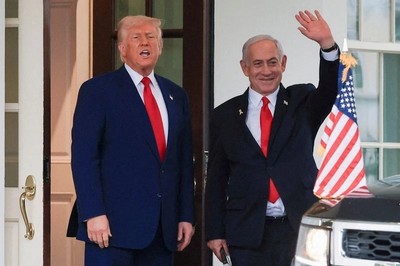
FILE PHOTO: U.S. President Donald Trump points his finger towards Israeli Prime Minister Benjamin Netanyahu as they shake hands during a press conference after meeting at Trump’s Mar-a-Lago club in Palm Beach, Florida, U.S., December 29, 2025. REUTERS/Jonathan Ernst/File Photo

Washington and Tehran may still reach a limited deal, but fundamental disagreements leave open the prospect of renewed escalation, analysts told Iran International, with the period after elections in Israel and the United States emerging as a potential turning point.

Diplomatic efforts are continuing, with Qatar and Pakistan pushing for an agreement and The New Arab reporting Monday, citing sources familiar with mediation efforts, that a breakthrough could be announced this week.

The analysts interviewed by Iran International were more cautious, however, seeing little evidence that either side has made the concessions required for a broader agreement and identifying the coming elections as a factor that could shape the timing of diplomacy or renewed military action.

Danny Citrinowicz, an Iran specialist and former head of the Iran branch in Israeli Defense Intelligence, said continuing diplomatic exchanges did not amount to evidence of an imminent breakthrough because neither side appeared ready to make the compromise required for one.

"In order to have a breakthrough, one side needs to show significant compromise. And I don't see that in the Iranian side," he told Iran International.

Washington wants substantial restrictions on Iran's uranium enrichment capabilities, while Tehran is prioritizing relief from the US blockade and sanctions, alongside the restoration of maritime traffic through the Strait of Hormuz.

Iranian Foreign Minister Abbas Araghchi said Sunday that Tehran's seven-day proposal remained on the table. Under the proposal, Iran would reopen the strait within seven days if Washington accepted Tehran's conditions, paving the way for renewed negotiations.

Alex Vatanka, director of the Iran Program at the Middle East Institute, saw greater scope for a limited arrangement than a comprehensive settlement, arguing that both Trump and Tehran have short-term incentives to reduce tensions without resolving their fundamental differences.

Trump, he argued, faces political pressure ahead of the November 3 midterm elections and could benefit from a diplomatic achievement. Tehran, meanwhile, needs economic relief as the blockade continues to undermine its finances.

"You might have a deal that could create ceasefire conditions for a short period of time, of weeks and months," Vatanka told Iran International.

But he said he had seen little indication that Tehran was willing to accept the kind of comprehensive agreement Trump could present as a major improvement over the 2015 nuclear deal.

Iran's leadership, Vatanka argued, believes it has paid a heavy price for its nuclear program while demonstrating its ability to disrupt the global economy through the Strait of Hormuz. Economic pressures could encourage a narrow agreement, but sweeping concessions risk exposing divisions within the Islamic Republic's leadership.

A deal under the threat of force

The diplomatic activity comes as US President Donald Trump and Israeli Prime Minister Benjamin Netanyahu have intensified warnings of renewed military action.

On Sunday, Trump threatened to "soon finish the job" against Iran unless Tehran changed course, while giving Netanyahu his endorsement ahead of Israel's October 27 election.

Netanyahu, who has explicitly identified the removal of the Islamic Republic as an Israeli objective, has said Israel is prepared to act independently of Washington if necessary.

On Monday, Netanyahu released a video of a telephone conversation with Trump following the US president's endorsement of his reelection campaign.

"Donald, we have a job to finish, you said it, and we'll finish it together. We'll finish it, and no one else will do it," Netanyahu told Trump.

Shayan Samii, a geopolitical and national security analyst, said Trump's combination of negotiations and military threats allowed him to preserve both outcomes: claiming a diplomatic victory if talks succeed or demonstrating resolve through military action if they fail.

"The United States wants to keep the diplomatic avenue still open and valid. Why? Because it helps for domestic political purposes," Samii told Iran International.

"It allows Trump to say, I'm giving diplomacy all the chances in the world, but at the same time I'm keeping the pressure on them."

He also interpreted Trump's endorsement of Netanyahu as an attempt to increase Washington's leverage over the Israeli leader should he remain in power.

Samii suggested Iran or its regional allies could provoke a confrontation ahead of Israel's election, potentially providing a pretext for renewed strikes. He presented this as a possible scenario, not evidence of a planned operation.

Russia could influence the diplomatic track

Russian Foreign Minister Sergei Lavrov's visit to Tehran on Monday added another dimension to the diplomatic maneuvering.

Vatanka said Russia possesses considerably greater leverage over Iran than mediators such as Pakistan, Qatar or Oman, partly because Tehran depends on Moscow for diplomatic support.

That influence could become significant if negotiations require difficult concessions, including a possible arrangement to transfer Iran's highly enriched uranium to Russia.

But Vatanka questioned whether Moscow's interests necessarily aligned with Tehran's.

Russia would mediate "primarily to use it to get what Putin wants from Trump on the Ukraine front," he said.

Vatanka suggested Moscow could seek concessions from Washington over Ukraine in exchange for helping facilitate an agreement with Iran.

Tehran, however, may resist being used as a bargaining chip, particularly if Russian pressure requires abandoning positions the Islamic Republic considers fundamental.

Why the post-election period could prove decisive

If diplomacy fails to produce a breakthrough, Citrinowicz sees renewed escalation as increasingly difficult to avoid — but the elections may affect when it happens.

"With no breakthroughs, escalation is inevitable, because the status quo is unstable," he said.

He cautioned, however, that inevitable did not necessarily mean imminent.

The upcoming elections could influence the timing of any military operation. Israelis vote on October 27, followed by the US midterms on November 3.

Citrinowicz identified the period after the November 3 US midterms but before the newly elected Congress takes office in January as a possible window for military action, particularly if Republicans lose control of one or both chambers.

Vatanka similarly identified the post-election period as a potential turning point, arguing that Washington and Israel could consider additional pressure against Tehran once immediate electoral calculations had passed.

He said options could include continued enforcement of the blockade, limited military strikes and other measures designed to weaken or divide the Iranian establishment.

Yet the prospect of renewed military action raises a deeper question: whether Trump and Netanyahu ultimately seek the same outcome.

Citrinowicz argued that while the two leaders might agree on military targets, their strategic objectives could diverge.

"Netanyahu seeks to topple the regime, and Trump seeks to reach a good agreement with the same regime that Netanyahu seeks to topple," he said.

"Operationally, maybe there will be eye to eye in terms of what to attack, but strategically, I'm not sure if they see eye to eye."

That divergence leaves a central question unresolved: even if Washington and Israel agree on another round of strikes, they may not agree on what those strikes are ultimately meant to achieve.

Over a dozen Iranian women and girls killed in 30 days, many by male relatives

Oct 19, 2026, 21:23 GMT+1
100%

At least 15 women and girls have been reported killed across Iran over the past month, many allegedly by husbands, brothers or other male relatives, Iranian news outlet Rokna reported, as legislation aimed at protecting women from violence remains stalled.

The killings come amid renewed calls to pass legislation aimed at protecting women from violence, which has remained stalled for more than a decade.

Rokna documented cases in Tehran, Isfahan, Tabriz, Kermanshah and Qeshm, among other locations, with victims ranging from teenage girls to elderly women.

The cases included suspected so-called “honor” killings and killings reportedly linked to disputes over separation and family finances. The motives behind several deaths remain unclear, and investigations are ongoing.

100%
Yeganeh Hosseinzai, a 16-year-old victim of child marriage, who was killed in Bakharz, northeastern Iran.

Among the victims was 16-year-old Yeganeh Hosseinzai, who died on October 9 in Bakharz, in northeastern Iran's Razavi Khorasan province, with signs of severe physical assault.

Hosseinzai had been married to a relative at the age of 10 and began living with him at 14. Her husband was arrested on suspicion of her murder.

100%
Mina Soltani, who was killed by her husband in Isfahan, central Iran.

In the central city of Isfahan, 40-year-old Mina Soltani, a mother of two, was killed by her husband on October 8. Before the killing, the man reportedly sent their 21-year-old son out of the house and locked their younger child, aged 10, in a room.

100%
Maryam Yarmohammadi, who was killed by her brother on Qeshm island, southern Iran.

On Qeshm island in southern Iran's Hormozgan province, 28-year-old Maryam Yarmohammadi, a mother of two, was stabbed to death by her brother on October 5. Reports cited a suspected so-called "honor" motive.

An 18-year-old woman was shot dead in Shahroud, in north-central Semnan province, on October 4. Her 19-year-old brother confessed to killing her the following day, with financial and family disputes cited as possible motives.

In Tehran's Majidiyeh neighborhood, a man confessed to strangling his 70-year-old wife, citing suspicions about her as the motive.

In another incident in the capital's Khak-e Sefid neighborhood, a 47-year-old man set fire to a building where his mother-in-law lived after his wife refused to resume their marriage. The September 30 attack killed four people, including two women. The perpetrator also died.

100%
Fereshteh Yousefzadeh and her two daughters, who were killed in a family shooting in Dehloran, western Iran.

In Dehloran, in western Iran's Ilam province, 38-year-old Fereshteh Yousefzadeh and her three children, aged nine and 14, were shot dead by her husband, Mohammad Mohammadi, who subsequently died by suicide.

100%

In the western city of Kermanshah, 46-year-old Fatemeh Lotfi and her 26-year-old daughter, Zahra Shahbazi, were shot dead. The family's 18-year-old son was identified as the main suspect.

100%
A woman and her two children were killed by the father of the family in Tabriz, northwestern Iran.

In Tabriz, northwestern Iran, a 45-year-old man killed his wife and two children before dying by suicide. The children's genders were not disclosed.

In a separate case in the same city, a man killed his wife and moved her body onto a street in an attempt to make her death appear to have resulted from a traffic accident.

100%
Fatemeh-Sadat Tabatabaei was killed in Bam, southeastern Iran.

In Bam, in southeastern Kerman province, the husband of Fatemeh-Sadat Tabatabaei was arrested in connection with her killing. Investigators were also reportedly examining the possible involvement of her father-in-law.

Not all the reported killings involved relatives.

In Tehran, a 27-year-old woman was shot dead at her workplace on October 10 by a man with whom she had previously been in a romantic relationship.

In Saravan, in southeastern Iran's Sistan and Baluchestan province, Mahsa Bozorgzadeh, a young mother, died on October 11 after unidentified assailants poured gasoline over her and set her on fire. The perpetrators and their motive remain unknown.

Rokna said it had excluded additional reported killings because investigations were ongoing or details about the victims and circumstances could not be confirmed. The exact dates of some of the killings it documented were also unavailable.

Separate report highlights wider toll

Separately, the Iranian newspaper Sazandegi reported Friday that at least nine women and girls had been killed by family members or people close to them since September 23.

The newspaper warned that the true scale of femicide in Iran remained unknown because of the lack of comprehensive and transparent official statistics.

The two reports should not be treated as separate tallies, as the extent of overlap between them is unclear

The human rights organization Hengaw documented at least 207 femicides across Iran in 2025, including 31 involving suspected so-called "honor" motives.

According to Hengaw, at least 13 women were killed after rejecting marriage proposals, 10 after seeking divorce, and 10 victims of child marriage were killed by their husbands during the year.

The organization said many of the killings were committed by people close to the victims, including husbands, former husbands, fathers, brothers and other family members.

Lawmaker urges action on stalled protection bill

The reported killings come as legislation intended to protect women against violence remains stalled after more than a decade of disagreements between the government and parliament.

Iranian lawmaker Ahmad Bigdeli, a member of parliament's Social Affairs Committee, called for the bill's passage on October 14, saying it could help prevent killings of women by family members.

"We should not wait for an incident to occur before thinking about legislation or amending the law," Bigdeli told Iranian news outlet Jamaran.

He said the legislation had been moving between parliament and the government for 12 years, with disagreements over its name and wording, including the use of terms such as "violence" and "crime," contributing to delays.

Bigdeli said the proposed law included measures aimed at prevention, criminalization and punishment, arguing that disputes over wording should not stand in the way of its passage.

Iran has no comprehensive domestic violence law to prevent abuse and protect survivors, according to Human Rights Watch, which has criticized discriminatory legal provisions affecting women.

Under Iranian law, fathers and paternal grandfathers who kill their children or grandchildren are exempt from qisas, or retaliatory punishment, although other penalties may apply.

Iranians react to French protests with ‘karma’ and memories of 1979 revolution

Oct 19, 2026, 16:56 GMT+1
100%
A person walks as flames rise during civil unrest, the day after a national day of demonstrations against the cost of living and rising fuel prices, in Paris, France, October 18, 2026.

Ongoing protests and unrest in France prompted Iranian commenters to revisit the country’s role in the 1979 Islamic Revolution and criticize Western responses to crackdowns in Iran, with many calling the turmoil “karma” in response to an Iran International Instagram question.

A review of nearly 3,000 comments on the post suggests that many respondents viewed events in France through Iran’s political history and their own experiences, focusing more on Western governments’ policies than on the French protesters’ demands.

Humor and sarcasm featured prominently, alongside anger over France’s hosting of the Islamic Republic’s founder Ruhollah Khomeini before the revolution and frustration with international responses to the suppression of Iranian protests.

Others emphasized the right to protest and the different risks demonstrators face in France and Iran. The comments reflect the views of those who responded, rather than a representative sample of Iranian public opinion.

Memories of the 1979 revolution

One recurring theme was France’s decision to host Khomeini in the months leading up to Iran’s 1979 revolution.

Many respondents interpreted the unrest through that historical experience, arguing that France was now facing the consequences of its past policies toward Iran.

100%
A demonstrator wearing a costume stands in front of burning flames, in Paris, France, October 18, 2026.

One respondent wrote: “France should pay the price for decades of supporting extremist groups, including Islamists, leftists and communists.”

Another drew a direct comparison: “The protests in France are exactly reminiscent of 1979 in Iran.”

Commenters also invoked expressions associated with the revolution, including the refrain “The scent of flowers, lilies and jasmine is in the air,” promises of free water and electricity, and sarcastic suggestions that France should establish its own Islamic Republic.

Unrest viewed as ‘karma’

“Karma” was a recurring word in the responses. Some users described the unrest as France’s past policies coming back to haunt it, while others expressed satisfaction without addressing the protesters’ demands.

One respondent wrote: “The world is round. Now they’ll suffer as we have for the past 47 years.”

Another said: “When responses to the Islamic Republic’s crimes are limited to words, statements and expressions of concern, the whole world should see the consequences.”

These comments linked satisfaction at France’s troubles to accumulated anger over Western governments’ dealings with the Islamic Republic.

‘We are deeply concerned’

Other respondents mocked the diplomatic language Western governments and international organizations have used in response to the killing and repression of protesters in Iran.

Phrases such as “We express concern,” “We call on both sides to exercise restraint,” “We are closely monitoring developments,” and “These are their internal affairs and none of our business” appeared repeatedly.

100%
Bodies of victims killed in Iran’s January protests – Kahrizak, Iran.

One respondent wrote: “We are closely monitoring developments in France. It seems they are not ready for democracy yet.”

Another said: “I’m sure the United Nations has expressed concern about the situation and called on both sides to exercise restraint.”

The sarcasm reflected frustration with what commenters viewed as inadequate international responses to repression in Iran.

Immigration and Islamism

Some respondents linked the unrest to France’s immigration policies and what they described as the growing influence of Islamist movements and extremism in Europe.

Their comments combined concerns about Europe’s future with criticism of the French government’s approach to immigration and religious and political groups. These were commenters’ interpretations, rather than established explanations for the protests.

Different risks for protesters

Other respondents emphasized the differences between protesting in France and Iran.

One user asked: “Why can young people in France return home after protesting?”

Amid the sarcasm and expressions of anger, the question drew attention to the risks Iranian demonstrators face at the hands of security forces.

Protests in Iran over the past decade, including demonstrations over economic hardship and labor grievances, have repeatedly faced violent crackdowns.

Iran International previously reported that at least 36,500 Iranians were killed during the January protests, describing the killings as the largest street massacre in Iran’s history.