• العربية
  • فارسی
BrandBrand
  • Iran Insight
  • Politics
  • Economy
  • Analysis
  • Special Report
  • Opinion
  • Podcast
  • Live TV
  • Iran Insight
  • Politics
  • Economy
  • Analysis
  • Special Report
  • Opinion
  • Podcast
  • Live TV
  • Theme
  • Language
    • العربية
    • فارسی
  • Iran Insight
  • Politics
  • Economy
  • Analysis
  • Special Report
  • Opinion
  • Podcast
  • Live TV
All rights reserved for Volant Media UK Limited
volant media logo
ONE-ON-ONE

Saudi Arabia should join US-led push for change in Iran, analyst says

Kambiz Tavana
Kambiz Tavana

Iran International

Oct 20, 2026, 12:09 GMT+1Updated: 20:39 GMT+1
Hussain Abdul-Hussain in an interview with Iran International's Kambiz Tavana (right) in Washington DC

Saudi Arabia should join forces with the United States, Israel and the United Arab Emirates to help bring about political change in Iran, rather than continue policies that have failed to contain Tehran's regional influence, an analyst told Iran International.

The Islamic Republic's support for Yemen's Houthis has exposed the limits of Saudi military power and diplomacy, making a broader coalition against Iran necessary, said Hussain Abdul-Hussain, a research fellow at the Foundation for Defense of Democracies.

“I'm not saying the Marines should land anywhere in Tehran,” Abdul-Hussain said. “I'm just saying push the regime enough so that the other Iranians can take over.”

The proposed strategy, he said, would draw on the US-led coalition that expelled Iraqi forces from Kuwait in 1991, with Saudi Arabia providing regional political support for a campaign aimed at weakening the Islamic Republic and enabling Iranians to determine their country's political future.

Such a coalition could fundamentally alter the regional balance of power and influence the calculations of China and Russia, Abdul-Hussain added.

Iran's Houthi leverage

The Houthis have emerged as one of the Islamic Republic's most effective regional allies, maintaining their military capabilities despite years of Saudi-led operations and pressure on other Iran-backed armed groups.

Their geographical distance from Israel has also made them more difficult to weaken than Hezbollah in Lebanon or Iran-aligned militias in Iraq, according to Abdul-Hussain.

The challenge, he said, has become more pronounced since the withdrawal of Emirati forces from Yemen following divisions within the Saudi-led coalition.

Pro-UAE militias had provided some of the coalition's most effective ground forces, leaving Saudi Arabia increasingly dependent on air power and Yemeni government forces weakened by corruption, inflated troop numbers and divisions, Abdul-Hussain said.

Airstrikes alone cannot defeat an armed group operating from mountainous terrain and fortified positions, he argued, drawing comparisons with Israel's experience fighting Hezbollah in 2006 and 2023.

The absence of reliable ground partners has therefore allowed the Houthis to remain a persistent military challenge despite Saudi Arabia's superior conventional capabilities.

The group's operations also serve Iran's wider regional strategy by placing Saudi energy infrastructure and shipping routes within reach of an Iranian ally.

Recent Houthi advances and strikes on Saudi territory reflect a broader Iranian message that disruptions to its own oil exports could be accompanied by pressure on other regional producers, particularly as Saudi Arabia shifts exports toward the Bab el-Mandeb shipping route, Abdul-Hussain added.

Saudi diplomatic failures

Saudi Arabia's continued diplomatic engagement with the Islamic Republic has failed to reduce the security challenge posed by Iran's regional allies, Abdul-Hussain said.

Maintaining an ambassador in Tehran and inviting Revolutionary Guards officials to Saudi National Day celebrations, even as Saudi energy infrastructure faces missile strikes, sends a message of weakness rather than diplomatic pragmatism, he argued.

100%
Armed Houthi fighters carry rocket-propelled grenade launchers in Yemen.

The UAE, despite its smaller size and closer geographical proximity to Iran, had previously demonstrated greater willingness to sever diplomatic relations with the Islamic Republic, according to Abdul-Hussain.

Saudi Arabia's diplomatic outreach to Turkey and Pakistan has also produced limited practical support against the Houthis and the Revolutionary Guards, he said.

Abdul-Hussain attributed part of the problem to a Saudi leadership structure in which advisers are reluctant to challenge prevailing assumptions, leaving decision-makers without a credible alternative to their existing strategy.

“They have to swallow their pride with the Emiratis and the Israelis,” Abdul-Hussain said. “This is the key.”

Restoring cooperation with Abu Dhabi and establishing open relations with Israel would provide the foundation for a more effective regional alignment against Iran, he added.

Such cooperation would need to be public rather than confined to private security arrangements, particularly because Israeli participation could expose Israeli shipping to additional Houthi operations.

Saudi Arabia's decision to condition normalization with Israel on Palestinian statehood has further complicated the formation of an anti-Iran coalition, Abdul-Hussain said.

The shift, he noted, has moved Riyadh away from Crown Prince Mohammed bin Salman's earlier emphasis on prioritizing Saudi national interests, without producing corresponding security benefits for the kingdom.

Coalition against Iran

A coalition modeled on the international military campaign that expelled Saddam Hussein's forces from Kuwait in 1991 could provide a framework for confronting the Islamic Republic without a US ground invasion of Iran, Abdul-Hussain said.

Saudi Arabia played a central role in assembling regional support for that campaign, lending political legitimacy to a military operation led by the United States.

A similar alignment involving Washington, Riyadh, Abu Dhabi and Israel could apply sustained pressure on Iran's ruling establishment while leaving the ultimate outcome to Iranians themselves, according to the analyst.

“Throw all the chips behind President Trump and the war on Iran, and push for regime change,” Abdul-Hussain said.

The proposed approach would mark a departure from Saudi Arabia's efforts to balance diplomatic relations with Iran against military operations targeting its regional allies.

Rather than continuing to absorb the costs of confronting the Houthis without weakening their principal backer, Saudi Arabia should help organize a broader campaign directed at the Islamic Republic itself, Abdul-Hussain argued.

The central objective, in his view, would not be a foreign occupation of Iran but sufficient external pressure to create an opportunity for Iranians to replace the country's ruling establishment.

Most Viewed

US and Israel threaten renewed Iran strikes, Tehran warns of response
1

US and Israel threaten renewed Iran strikes, Tehran warns of response

2

Iran threatens stronger response to new US attack as Lavrov visits Tehran

3

Russia vows continued Iran ties as Trump welcomes limits on support

4
VOICES FROM IRAN

Iranians report mass security warnings over social media activity

5
ANALYSIS

Iran deal remains elusive amid risk of renewed strikes

Spotlight

  • Iran in Israeli election: Netanyahu all-in on regime change, rivals want more
    INSIGHT

    Iran in Israeli election: Netanyahu all-in on regime change, rivals want more

  • Saudi Arabia should join US-led push for change in Iran, analyst says
    ONE-ON-ONE

    Saudi Arabia should join US-led push for change in Iran, analyst says

  • Ex-president's remarks expose divide over costs of Iran’s Palestine policy

    Ex-president's remarks expose divide over costs of Iran’s Palestine policy

  • Teenager killed by gunshot to eye after arrest in Iran, source says

    Teenager killed by gunshot to eye after arrest in Iran, source says

  • Soaring medical costs and staff shortages strain Iran’s hospitals
    VOICES FROM IRAN

    Soaring medical costs and staff shortages strain Iran’s hospitals

  • Architect of Guards' missiles becomes Iran's defense minister

    Architect of Guards' missiles becomes Iran's defense minister

Banner
Banner
Banner
Banner
Banner
  • Iran giving Houthis targeting intelligence for Saudi attacks - WSJ

    Iran giving Houthis targeting intelligence for Saudi attacks - WSJ

  • Iran’s weakened axis still bites as Houthis escalate against Saudi Arabia

    Iran’s weakened axis still bites as Houthis escalate against Saudi Arabia

  • Houthis more effective Iran ally than Hezbollah, Yemen expert says

    Houthis more effective Iran ally than Hezbollah, Yemen expert says

•
•
•

More Stories

Iran deal remains elusive amid risk of renewed strikes

Oct 20, 2026, 01:00 GMT+1
•
Negar Mojtahedi
100%
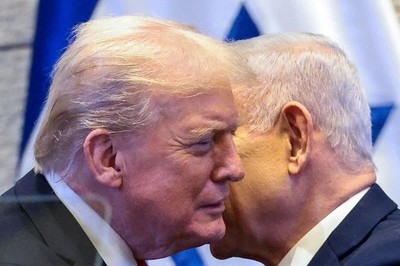
FILE PHOTO: U.S. President Donald Trump points his finger towards Israeli Prime Minister Benjamin Netanyahu as they shake hands during a press conference after meeting at Trump’s Mar-a-Lago club in Palm Beach, Florida, U.S., December 29, 2025. REUTERS/Jonathan Ernst/File Photo

Washington and Tehran may still reach a limited deal, but fundamental disagreements leave open the prospect of renewed escalation, analysts told Iran International, with the period after elections in Israel and the United States emerging as a potential turning point.

Diplomatic efforts are continuing, with Qatar and Pakistan pushing for an agreement and The New Arab reporting Monday, citing sources familiar with mediation efforts, that a breakthrough could be announced this week.

The analysts interviewed by Iran International were more cautious, however, seeing little evidence that either side has made the concessions required for a broader agreement and identifying the coming elections as a factor that could shape the timing of diplomacy or renewed military action.

Danny Citrinowicz, an Iran specialist and former head of the Iran branch in Israeli Defense Intelligence, said continuing diplomatic exchanges did not amount to evidence of an imminent breakthrough because neither side appeared ready to make the compromise required for one.

"In order to have a breakthrough, one side needs to show significant compromise. And I don't see that in the Iranian side," he told Iran International.

Washington wants substantial restrictions on Iran's uranium enrichment capabilities, while Tehran is prioritizing relief from the US blockade and sanctions, alongside the restoration of maritime traffic through the Strait of Hormuz.

Iranian Foreign Minister Abbas Araghchi said Sunday that Tehran's seven-day proposal remained on the table. Under the proposal, Iran would reopen the strait within seven days if Washington accepted Tehran's conditions, paving the way for renewed negotiations.

Alex Vatanka, director of the Iran Program at the Middle East Institute, saw greater scope for a limited arrangement than a comprehensive settlement, arguing that both Trump and Tehran have short-term incentives to reduce tensions without resolving their fundamental differences.

Trump, he argued, faces political pressure ahead of the November 3 midterm elections and could benefit from a diplomatic achievement. Tehran, meanwhile, needs economic relief as the blockade continues to undermine its finances.

"You might have a deal that could create ceasefire conditions for a short period of time, of weeks and months," Vatanka told Iran International.

But he said he had seen little indication that Tehran was willing to accept the kind of comprehensive agreement Trump could present as a major improvement over the 2015 nuclear deal.

Iran's leadership, Vatanka argued, believes it has paid a heavy price for its nuclear program while demonstrating its ability to disrupt the global economy through the Strait of Hormuz. Economic pressures could encourage a narrow agreement, but sweeping concessions risk exposing divisions within the Islamic Republic's leadership.

A deal under the threat of force

The diplomatic activity comes as US President Donald Trump and Israeli Prime Minister Benjamin Netanyahu have intensified warnings of renewed military action.

On Sunday, Trump threatened to "soon finish the job" against Iran unless Tehran changed course, while giving Netanyahu his endorsement ahead of Israel's October 27 election.

Netanyahu, who has explicitly identified the removal of the Islamic Republic as an Israeli objective, has said Israel is prepared to act independently of Washington if necessary.

On Monday, Netanyahu released a video of a telephone conversation with Trump following the US president's endorsement of his reelection campaign.

"Donald, we have a job to finish, you said it, and we'll finish it together. We'll finish it, and no one else will do it," Netanyahu told Trump.

Shayan Samii, a geopolitical and national security analyst, said Trump's combination of negotiations and military threats allowed him to preserve both outcomes: claiming a diplomatic victory if talks succeed or demonstrating resolve through military action if they fail.

"The United States wants to keep the diplomatic avenue still open and valid. Why? Because it helps for domestic political purposes," Samii told Iran International.

"It allows Trump to say, I'm giving diplomacy all the chances in the world, but at the same time I'm keeping the pressure on them."

He also interpreted Trump's endorsement of Netanyahu as an attempt to increase Washington's leverage over the Israeli leader should he remain in power.

Samii suggested Iran or its regional allies could provoke a confrontation ahead of Israel's election, potentially providing a pretext for renewed strikes. He presented this as a possible scenario, not evidence of a planned operation.

Russia could influence the diplomatic track

Russian Foreign Minister Sergei Lavrov's visit to Tehran on Monday added another dimension to the diplomatic maneuvering.

Vatanka said Russia possesses considerably greater leverage over Iran than mediators such as Pakistan, Qatar or Oman, partly because Tehran depends on Moscow for diplomatic support.

That influence could become significant if negotiations require difficult concessions, including a possible arrangement to transfer Iran's highly enriched uranium to Russia.

But Vatanka questioned whether Moscow's interests necessarily aligned with Tehran's.

Russia would mediate "primarily to use it to get what Putin wants from Trump on the Ukraine front," he said.

Vatanka suggested Moscow could seek concessions from Washington over Ukraine in exchange for helping facilitate an agreement with Iran.

Tehran, however, may resist being used as a bargaining chip, particularly if Russian pressure requires abandoning positions the Islamic Republic considers fundamental.

Why the post-election period could prove decisive

If diplomacy fails to produce a breakthrough, Citrinowicz sees renewed escalation as increasingly difficult to avoid — but the elections may affect when it happens.

"With no breakthroughs, escalation is inevitable, because the status quo is unstable," he said.

He cautioned, however, that inevitable did not necessarily mean imminent.

The upcoming elections could influence the timing of any military operation. Israelis vote on October 27, followed by the US midterms on November 3.

Citrinowicz identified the period after the November 3 US midterms but before the newly elected Congress takes office in January as a possible window for military action, particularly if Republicans lose control of one or both chambers.

Vatanka similarly identified the post-election period as a potential turning point, arguing that Washington and Israel could consider additional pressure against Tehran once immediate electoral calculations had passed.

He said options could include continued enforcement of the blockade, limited military strikes and other measures designed to weaken or divide the Iranian establishment.

Yet the prospect of renewed military action raises a deeper question: whether Trump and Netanyahu ultimately seek the same outcome.

Citrinowicz argued that while the two leaders might agree on military targets, their strategic objectives could diverge.

"Netanyahu seeks to topple the regime, and Trump seeks to reach a good agreement with the same regime that Netanyahu seeks to topple," he said.

"Operationally, maybe there will be eye to eye in terms of what to attack, but strategically, I'm not sure if they see eye to eye."

That divergence leaves a central question unresolved: even if Washington and Israel agree on another round of strikes, they may not agree on what those strikes are ultimately meant to achieve.

Russia vows continued Iran ties as Trump welcomes limits on support

Oct 19, 2026, 22:18 GMT+1
100%
Russian Foreign Minister Sergei Lavrov and Iranian Foreign Minister Abbas Araghchi attend a joint press conference in Tehran, October 19, 2026. ISNA

Russia pledged to maintain its political and economic cooperation with Iran during Foreign Minister Sergei Lavrov's visit to Tehran on Monday, as US President Donald Trump welcomed what he described as limited Russian and Chinese support for Tehran.

Trump said Moscow and Beijing had the capacity to provide Tehran with far greater assistance but had so far refrained from doing so.

“Russia could have done a lot more to help Iran. Russia's done very little for Iran,” Trump told reporters on Monday. He said China could also have provided much more assistance and described the limited help from both countries as “a very positive thing.”

Trump's remarks came as Lavrov held talks with Foreign Minister Abbas Araghchi and President Masoud Pezeshkian in Tehran, where Moscow reaffirmed its commitment to its strategic partnership with Iran while calling for a diplomatic solution to the regional conflict.

At a joint press conference with Araghchi, Lavrov said Russia had no intention of abandoning economic and investment agreements with Iran despite the war.

He said Russian specialists were gradually returning to work at Iran's Bushehr nuclear power plant and pointed to continued cooperation on energy and transport projects, including the planned Rasht-Astara railway.

Lavrov also said Moscow had provided humanitarian assistance during the war and would continue supplying food to Iran.

Tehran and Moscow call for diplomacy

Araghchi said Iran and Russia agreed that regional disputes should be addressed politically rather than through military action.

“Our shared view is that regional issues have no military solution and must be pursued through political means,” he said.

Araghchi blamed the United States for insecurity and tensions in the Strait of Hormuz and called on neighboring countries to work toward a joint security arrangement.

“We welcome any initiative that leads to security from within without the presence of foreign forces, and consider it the right move,” he said.

Lavrov said Moscow was prepared to assist efforts to resolve the conflict and called for the restoration of maritime traffic through the Strait of Hormuz.

He also reiterated a longstanding Russian proposal for a collective security framework involving Iran and the six Gulf Cooperation Council countries.

Lavrov arrived in Tehran after talks in Bahrain, where GCC countries had pressed Russia to use its influence with Iran to encourage dialogue and help restore security and navigation through the Strait of Hormuz.

Pezeshkian thanks Russia for wartime support

Pezeshkian thanked Russian President Vladimir Putin, the Russian government and people for their support during the war in his meeting with Lavrov, according to the Iranian presidency.

He called for faster implementation of agreements between Tehran and Moscow and said Iran was ready to expand political and security cooperation with Russia and China, including through BRICS and the Shanghai Cooperation Organization.

Pezeshkian also said Iran would not accept countries imposing their will on others through force and supported resolving regional disputes through dialogue and regional mechanisms.

Lavrov reaffirmed Moscow's willingness to help resolve the conflict and briefed Pezeshkian on his discussions in Bahrain with representatives of countries on the Arabian Peninsula.

The two sides also discussed expanding trade, investment and cooperation on transport, logistics and energy projects.

Iran and Russia have deepened their relationship in recent years. A 20-year Comprehensive Strategic Partnership Treaty signed by Pezeshkian and Putin in January 2025 covers defense, security, energy, trade and transport, but does not require either country to come to the other's defense.

Russia and China aid under scrutiny

Trump's description of Russian and Chinese support as limited follows months of conflicting accounts over the extent of assistance provided to Iran during the war.

Last week, Trump said he did not believe Russia or China was helping Iran “at all,” while acknowledging that any assistance could be at “a very low level.”

US intelligence assessments from recent months, however, have found that both countries have provided military support to Iran in the form of satellite imagery for targeting and components for weapons, Reuters reported, citing two people briefed on the assessments.

Trump has previously warned Moscow and Beijing against deeper involvement in the conflict. He said in July that he trusted both countries not to help Tehran, while warning that involvement would be “very bad for them.”

Trump also said last month that Chinese President Xi Jinping had assured him Beijing would not support Iran after the US president raised the issue during talks in Washington.

China has remained Iran's dominant oil customer despite US sanctions, providing Tehran with an important source of revenue. Reuters has reported that Iran arranged to acquire Chinese-made air-defense missile systems through a Hong Kong-based intermediary, though Beijing denied the report. US intelligence assessments have also found that China provided Iran with weapons components and satellite imagery for targeting, according to people briefed on the assessments.

Russia, meanwhile, has maintained economic, diplomatic and security cooperation with Tehran while stopping short of entering the war directly.

Lavrov's visit underscored that distinction: Moscow pledged to continue its partnership and economic projects with Tehran while simultaneously presenting itself as a potential intermediary in efforts to end the conflict.

At Monday's press conference, Lavrov said Russia was ready to help find a diplomatic solution, while Araghchi said Tehran and Moscow agreed that the region's disputes could not be resolved militarily.

Iran threatens stronger response to new US attack as Lavrov visits Tehran

Oct 19, 2026, 14:49 GMT+1
100%
An Iranian ballistic missile launches from a desert test site, sending clouds of dust and smoke into the air.

Iranian military officials warned of a stronger response to any renewed US attack on Monday, as Russia's foreign minister visited Tehran for talks and regional security concerns grew following Houthi attacks on Saudi Arabia.

Russian Foreign Minister Sergei Lavrov met his Iranian counterpart Abbas Araghchi during an official visit, with talks also planned with President Masoud Pezeshkian.

The visit came as Iranian officials discussed the prospect of renewed fighting with the United States and the country's military capabilities.

100%
Russian Foreign Minister Sergei Lavrov (left) and Iranian Foreign Minister Abbas Araghchi hold talks in Tehran on October 19, 2026.

Iran threatens US against new attack

The Revolutionary Guards said that Iran would respond more forcefully to any renewed US military action.

“The US entered the war with all its might, and it is certainly not in a position now to start a new conflict that would bring it any new gains,” Revolutionary Guards spokesman Hossein Mohebi said on Monday.

Mohebi said most US bases in the region were inactive and American forces had moved hundreds of kilometers away from Iran.

Revolutionary Guards deputy commander Mostafa Izadi said US naval forces had moved approximately 700 kilometers away to avoid Iranian missiles, according to the Guards-affiliated Fars news agency.

Senior Guards adviser Mohammadreza Naghdi separately said Iran's missile facilities had survived heavy bombardment and its strategic stockpiles remained intact.

Germany summons Iranian ambassador

Germany summoned Iran's ambassador on Monday over attempted attacks targeting Josef Schuster, head of the Central Council of Jews in Germany, and Volker Beck, chairman of the German-Israeli Society.

  • German court jails two men over spying for Iran's Guards

    German court jails two men over spying for Iran's Guards

“Attacks on Jewish life and on those who defend it are something we will not tolerate - anywhere, and especially not in Germany,” the German Foreign Ministry wrote on X.

The ministry condemned Iran's activities and said the attempted attacks would have legal consequences.

Israeli Foreign Minister Gideon Sa'ar also criticized Araghchi after the Iranian foreign minister accused French President Emmanuel Macron of supporting US military action against Iran.

Sa'ar accused Iran of suppressing protesters at home while criticizing France over its response to unrest.

Regional security concerns grow

Saudi Arabia's Civil Defense said the danger had passed in the southern Najran region after an earlier alert over a potential threat.

The announcement followed a Houthi attack on a Yemeni government military camp in Shabwa province that killed at least 18 people, Reuters reported, citing government and medical sources.

The US State Department urged Americans across the Middle East to exercise heightened vigilance, warning that Houthi attacks could disrupt flights and airspace.

The US Embassy in Riyadh separately warned that Iran and groups supporting it could target American interests overseas.

Economic uncertainty weighs on Iran

The prospect of renewed conflict has also affected economic activity, according to an Iranian lawmaker.

  • Russia gains from Iran war but risks more if it drags on

    Russia gains from Iran war but risks more if it drags on

“When conditions are unstable, no one can make decisions about their life and future; they cannot make a deal, invest or take action,” Mohammadmehdi Shahriari, a member of parliament's national security committee, said on Monday.

Shahriari said proposals for negotiations with Washington had been raised and officials should be allowed to formulate a response.

Another lawmaker, Mohammad Rashidi, rejected suggestions that Iran's economy was approaching collapse under US pressure.

Meanwhile, Iran Air chief executive Taher Abdolhay said the national airline had only six operational aircraft despite employing more than 9,000 people, down from a fleet of 40.

  • US–Israeli strikes test Iran’s partnerships—and their limits

    US–Israeli strikes test Iran’s partnerships—and their limits

Abdolhay cited operational restrictions and air traffic difficulties, adding that the airline had faced obstacles to flights intended to bring medicine into Iran.

The developments featured the competing pressures facing Iran, with officials emphasizing military preparedness and diplomatic engagement as concerns over renewed fighting continue to affect regional security and economic activity.

US and Israel threaten renewed Iran strikes, Tehran warns of response

Oct 19, 2026, 02:31 GMT+1
100%
FILE PHOTO: U.S. President Donald Trump and Israeli Prime Minister Benjamin Netanyahu at the Knesset on the day of Trump's address, amid a U.S.-brokered prisoner-hostage swap and ceasefire deal between Israel and Hamas, in Jerusalem, October 13, 2025. REUTERS/Evelyn Hockstein/Pool/File Photo

US President Donald Trump and Israeli Prime Minister Benjamin Netanyahu escalated threats against Iran on Sunday, and Tehran warned of retaliation even as diplomatic efforts continued over the Strait of Hormuz and the wider conflict.

Trump warned that the United States could “soon finish the job” against Iran unless Tehran changed course, while giving Netanyahu his “complete and total endorsement” ahead of Israel’s October 27 election.

“They have been systematically destroyed, both militarily and financially, and unless they change their ways, rapidly, we will soon finish the job,” Trump wrote on Truth Social.

Trump suggested Washington could take on the fight itself if Netanyahu failed to remain in power, saying that with the “wrong Leader” in Israel, “America will have to do this work ourselves.”

In a briefing with Israeli journalists on Sunday, Netanyahu said bringing down the Islamic Republic remained a key Israeli objective and that he had directed the country's security agencies to pursue it.

Netanyahu said 90% of the work required to defeat Israel's enemies had been completed, while pointing to Iran's economic crisis and protests as signs of what he described as the government's weakness.

“We must bring this regime down once and for all,” Netanyahu said, adding that Israel was prepared to act independently of Washington if necessary.

Responding later to Trump's endorsement, Netanyahu said: “Together we will complete the mission!”

Tehran answers threats

Iranian officials responded with a series of warnings against renewed US or Israeli military action.

Foreign Minister Abbas Araghchi directly challenged Trump's “finish the job” language, saying Iran had emerged stronger from the previous confrontation.

“Want to try your luck again? Be our guest. But be careful; we have unfinished jobs too,” Araghchi wrote on X.

He also accused Netanyahu of seeking to draw the United States into another war to advance his own political interests.

Iran's parliament also approved Mehrdad Akhlaghi Ketabchi as defense minister on Sunday, putting a veteran of the country's missile and aerospace industries in charge of its defense apparatus.

Akhlaghi warned Trump against another US attack, saying Washington should instead focus on getting its forces out of the region safely.

Other Iranian military officials issued similar warnings. Armed Forces Chief of Staff Ali Abdollahi said another attack would draw a response “different from, and more severe than before,” while an IRGC spokesman threatened a devastating response against Israel if Iran's energy infrastructure were targeted.

Diplomacy remains on table

Despite the escalating rhetoric, Tehran said its proposal for reopening the Strait of Hormuz and restarting negotiations with Washington remained available.

Araghchi said Iran's seven-day proposal, first presented in September, remained on the table as Tehran reviewed Washington's response. Under the plan, the strait would reopen on the sixth day and negotiations would begin on the seventh if Washington accepted Iran's conditions.

Iran's conditions include lifting the US blockade on its ports, removing sanctions on oil exports and ending hostilities across regional fronts.

Washington, meanwhile, wants Iran to agree to significant reductions in uranium enrichment, while Tehran wants initial talks focused on restoring security and oil flows through the strait.

The Gulf Cooperation Council also pushed for a diplomatic solution on Sunday during a meeting of its foreign ministers in Bahrain.

The GCC condemned continued Iranian missile and drone attacks against its member states, demanded an immediate end to the attacks and called for the restoration of maritime security and freedom of navigation through the Strait of Hormuz.

The bloc also called for a return to dialogue and diplomacy, but said any understandings with Tehran should address Iran's nuclear and missile programs, drones and support for proxies, with GCC states involved in negotiations affecting their security.

Tensions persist at sea and across region

Iran's Revolutionary Guards Navy said an oil tanker struck a naval mine south of the Strait of Hormuz on Sunday, causing an explosion and fire in its engine room. The Guards warned that vessels switching off their navigation systems while transiting the waterway would be classified as “hostile vessels.”

Separately, UK Maritime Trade Operations said a southbound tug northeast of Khor Fakkan in the UAE was struck by two unknown projectiles, damaging the vessel and causing one minor casualty. The tug continued on its route.

The regional confrontation also continued around Saudi Arabia. The GCC condemned escalating Houthi attacks and reaffirmed its collective support for Riyadh.

Egypt said it was prepared to provide “all necessary and possible forms of support” to Saudi Arabia. President Abdel Fattah el-Sisi had sought parliamentary authorization on Saturday for the military to help defend the kingdom if Riyadh requested assistance.

Iran rolls out regional Data Authority amid threats to Mideast tech infrastructure

Oct 18, 2026, 19:31 GMT+1
100%
Iran's parliament speaker Mohammad Bagher Ghalibaf

Iran's parliament speaker said a "Persian Gulf Data Authority" was coming and urged regional governments and investors to withhold resources from AI companies involved in military operations, amid Tehran threats against digital infrastructure across the region.

"The Persian Gulf Data Authority is coming," Mohammad Bagher Ghalibaf wrote on X Sunday.

"To governments, funds, and firms in the region: you are kindly advised to give no resources to any AI or data company aiding invasions or killing children. No finance, equity, land and energy."

Ghalibaf did not explain how the proposed authority would operate, what powers it would have or how Iran could enforce restrictions on companies operating elsewhere in the region.

The name echoes the Persian Gulf Strait Authority (PGSA), which Iran established to administer shipping permissions and tolls for vessels passing through the Strait of Hormuz in coordination with the Revolutionary Guards.

Ghalibaf did not say whether the proposed data authority would be linked to that body or follow a similar model for asserting control over regional digital infrastructure.

His remarks followed a series of warnings by senior Iranian officials and hardliners about targeting digital infrastructure across the Persian Gulf.

Hardliners threaten regional digital infrastructure

Last week, Mohsen Rezaei, secretary of Iran's Supreme National Security Council, warned that undersea communications cables, data centers and artificial intelligence facilities could become targets if war with the United States and Israel resumed.

"If war breaks out, many cables, data centers and artificial intelligence facilities, valued at $2 trillion, will be within range," Rezaei said, according to Iranian state media.

He said American technology assets in the United Arab Emirates and around the Strait of Hormuz had not yet been included among Iran's targets but could be struck in a renewed conflict.

The following day, Hossein Shariatmadari, editor-in-chief of the hardline Kayhan newspaper and the supreme leader's representative at the publication, endorsed Rezaei's warning.

In an article titled "Well Done, Brother Mohsen!", Shariatmadari called for using undersea fiber-optic cables running through the Persian Gulf and the Strait of Hormuz to pressure Washington and its allies.

He claimed that damaging the cables could disrupt more than 80 percent of commercial, banking, military and AI-related communications, an estimate that has not been independently verified.

The IRGC-affiliated Tasnim News Agency also backed threats against AI infrastructure, arguing in an article titled "Why Is Artificial Intelligence on the Target List?" that attacks on AI centers could undermine US technological competition with China, deter investment and put pressure on American stock markets.

Shariatmadari had previously urged Iran's military and Islamic Revolutionary Guards on September 3 to disrupt or sever international fiber-optic cables beneath the Persian Gulf and the Strait of Hormuz.

In May, Tasnim proposed imposing licensing and annual renewal fees on foreign operators of undersea internet cables passing through the strait.

It also called for major technology companies, including Meta, Amazon and Microsoft, to operate under Iranian law and proposed granting Iranian companies exclusive control over cable maintenance and repairs.

Previous threats against technology companies

Iran's Revolutionary Guards had already threatened major American technology companies operating in the Middle East during the war earlier this year.

On March 31, the IRGC published a list of 18 companies, including Microsoft, Google, Meta, Apple, Oracle, Nvidia and the UAE-based artificial intelligence company G42, warning that their regional operations could be targeted.

The Guards accused American technology and AI companies of assisting US military operations against Iran and warned employees to leave their workplaces.

The threats followed Iranian drone attacks in early March that damaged Amazon Web Services data centers in the United Arab Emirates and Bahrain.

Amazon said two facilities in the UAE were directly struck, while a nearby drone strike caused physical damage to its infrastructure in Bahrain.

The company reported structural damage, power disruptions and cloud service outages affecting customers across the region.

The Persian Gulf has become an important hub for American technology companies expanding their cloud computing and artificial intelligence operations, with the UAE among the countries hosting major investments in data centers.

Undersea fiber-optic cables are also critical to the region's digital infrastructure, carrying international internet traffic and supporting financial transactions, cloud computing and government communications.