• العربية
  • فارسی
BrandBrand
  • Iran Insight
  • Politics
  • Economy
  • Analysis
  • Special Report
  • Opinion
  • Podcast
  • Live TV
  • Iran Insight
  • Politics
  • Economy
  • Analysis
  • Special Report
  • Opinion
  • Podcast
  • Live TV
  • Theme
  • Language
    • العربية
    • فارسی
  • Iran Insight
  • Politics
  • Economy
  • Analysis
  • Special Report
  • Opinion
  • Podcast
  • Live TV
All rights reserved for Volant Media UK Limited
volant media logo

Oil price surge fuels Iran hardliners’ case against US deal

Behrouz Turani
Behrouz Turani

Iran International

Oct 26, 2026, 15:45 GMT+0
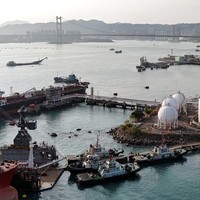
A drone view shows a Chinese-flagged oil tanker moored at an oil terminal at Tsing Yi port, with Tsing Ma bridge in the background, in Hong Kong, China March 19, 2026.

Hardliners in Tehran are hailing a surge in global oil prices as evidence that pressure on shipping is paying off, even as moderates warn that the same confrontation is inflicting mounting damage on Iran's economy and strengthening the case for a deal with Washington.

Crude prices rose above $116 a barrel on October 24 following reports of two attacks involving supertankers near Oman, prompting hardline newspaper Kayhan to portray the increase as vindication of the Islamic Revolutionary Guard Corps Navy's strategy of asymmetric pressure around the Strait of Hormuz.

Under the headline “Minefields near Musandam Prove Diplomacy Is Obsolete,” Kayhan argued that disruption to shipping and the resulting pressure on global energy markets had strengthened Iran's bargaining position rather than demonstrated the need for compromise.

The newspaper accused moderates and more pragmatic conservatives of “begging for an agreement,” singling out the centrist Sazandegi newspaper, which supports reaching a deal with the United States.

But the same confrontation is taking a growing toll on Iran's economy.

Moderate daily Shargh warned that higher crude prices offer little relief to private-sector manufacturers facing bankruptcy and argued that keeping negotiations with Washington alive is essential to Iran's economic survival.

The economic daily Donya-ye Eghtesad has also highlighted pressure on factories in industrial centers including Isfahan, Tabriz and Arak, reporting an unprecedented wave of corporate bankruptcies as the maritime blockade continues.

The competing assessments expose an increasingly important argument in Tehran: whether the economic disruption caused by the confrontation is leverage to be exploited or damage Iran can no longer afford.

Signs of diplomatic movement

The debate comes as signs of diplomatic movement feed cautious optimism among some Iranian political figures that an agreement with the United States may be becoming more likely than another round of war.

Former deputy parliamentary speaker Ali Motahari gave voice to that view on Monday, saying that for the first time in several weeks, the prospects of an agreement with Washington appeared greater than the likelihood of renewed conflict.

Speaking to reporters in Tehran, Motahari argued that war was becoming less likely because the United States was facing multiple problems and might therefore be prepared to accept some of Iran’s conditions.

Monday’s high-level talks with regional powers have added to that sense. Saudi Defense Minister Khalid bin Salman, Pakistani army chief Asim Munir and Turkish intelligence chief Ibrahim Kalin are in Tehran to meet national security chief Mohsen Rezaei and Foreign Minister Abbas Araghchi.

According to Iranian state outlets, Tehran has reiterated its proposal for reducing tensions in the Strait of Hormuz. Following technical discussions in Doha, it resubmitted a plan to restore shipping through the waterway in stages over seven days.

Foreign Ministry spokesman Esmaeil Baghaei said on Monday that Iranian technical negotiators were examining US counterproposals on procedures for lifting the naval blockade.

Tehran insists the seven-day window will not begin until $24 billion in foreign reserves becomes fully accessible and restrictions on container clearance at Bandar Abbas are lifted.

Iran has also insisted that its seven-point de-escalation plan, based on the Islamabad Memorandum of Understanding, remain separate from negotiations over uranium enrichment, International Atomic Energy Agency inspections and regional missile defense arrangements.

It remains unclear whether Washington accepts that separation. Tehran's position suggests it is seeking immediate economic relief while avoiding concessions on broader strategic issues.

The divide leaves Tehran confronting an awkward calculation. The disruption around Hormuz may be imposing higher costs on Iran's adversaries just as hardliners intended, but it is also increasing the economic pressure driving others in Tehran toward a deal.

Most Viewed

Iran sends conflicting signals on US deal as Trump raises prospect of strikes
1

Iran sends conflicting signals on US deal as Trump raises prospect of strikes

2

Iran nearing mental-health emergency, psychology chief says

3

Iran-born former Mossad officer running for Knesset urges end of Islamic Republic

4

Qatar pushes for Iran deal, new US strikes remain possible

5
ANALYSIS

From six-day victory to wars of attrition: How has Israel ended its wars?

Spotlight

  • Oil price surge fuels Iran hardliners’ case against US deal

    Oil price surge fuels Iran hardliners’ case against US deal

  • Netanyahu’s Iranian supporters pin hopes for change on his re-election

    Netanyahu’s Iranian supporters pin hopes for change on his re-election

  • Iran indicts comedian over alleged support for Israel, Pahlavi dynasty

    Iran indicts comedian over alleged support for Israel, Pahlavi dynasty

  • From six-day victory to wars of attrition: How has Israel ended its wars?
    ANALYSIS

    From six-day victory to wars of attrition: How has Israel ended its wars?

  • Baluch insurgency tests the limits of a war-weakened Islamic Republic
    PODCAST

    Baluch insurgency tests the limits of a war-weakened Islamic Republic

  • US strikes on Iran now serve the blockade
    ANALYSIS

    US strikes on Iran now serve the blockade

Banner
Banner
Banner
Banner
Banner
•
•
•

More Stories

Mecca defense pact members hold talks with Iran

Oct 26, 2026, 09:56 GMT+0
100%
Officials from Iran, Pakistan, Turkey and Saudi Arabia attend a four-way meeting in Tehran on October 26, 2026.

Senior officials from Saudi Arabia, Pakistan and Turkey opened talks with Iranian authorities in Tehran on Monday, following increased Iran-backed Houthi attacks on Saudi Arabia and renewed warnings of military action between Tehran and Washington.

Saudi Defense Minister Khalid bin Salman, Pakistani army chief Asim Munir and Turkish intelligence chief Ibrahim Kalin will travel to Tehran, Reuters reported on Monday, citing Saudi and Iranian officials.

Ali Bagheri Kani, deputy secretary of Iran's Supreme National Security Council, confirmed the visit.

The initiative was proposed during Munir's visit to Tehran last week, when he met President Masoud Pezeshkian and other senior officials, according to a senior Iranian official.

Iranian media reported that officials told Munir they would not negotiate with Washington until Tehran's demands were met.

Defense pact faces first major test

The visit marks the first high-level meeting between Iran and all three members of the Mecca defense pact since the escalation of hostilities.

Saudi Arabia, Pakistan and Turkey signed the agreement in August, establishing that a military attack on one member would be considered an attack on all three.

Pakistan has ratified the pact, while ratification remains pending in Turkey's parliament.

  • Mecca pact ties three Sunni powers together as Iran-backed attacks loom

    Mecca pact ties three Sunni powers together as Iran-backed attacks loom

Earlier this month, the three countries agreed to implement their defense commitments and rapidly deploy military personnel and capabilities to Saudi Arabia.

The agreement faces its first significant test following increased Houthi attacks on Saudi territory.

Saudi Arabia announced on Sunday that it had intercepted another wave of missiles and drones.

The visit is intended to reduce hostilities and support mediation efforts by Qatar and Pakistan, Saudi Deputy Foreign Minister for Public Diplomacy Raed bin Khalid Qarmali said earlier.

US-Iran confrontation

Qatari officials also visited Tehran on Sunday for talks with Iranian authorities.

  • Qatar pushes for Iran deal, new US strikes remain possible

    Qatar pushes for Iran deal, new US strikes remain possible

Previous mediation by Qatar and Pakistan helped secure a temporary halt to hostilities, but the agreement collapsed when fighting resumed.

Indirect contacts between Tehran and Washington have continued through both mediators, a process also referenced by Iranian Foreign Minister Abbas Araghchi.

US President Donald Trump raised the possibility of renewed military operations against Iran on Friday.

  • US and Iran trade new threats as diplomacy yields no breakthrough

    US and Iran trade new threats as diplomacy yields no breakthrough

Iranian officials have warned that any further attack would trigger a stronger response.

The diplomatic meetings come as Saudi Arabia seeks to prevent the conflict from spreading to its critical infrastructure, putting the Mecca defense pact and regional mediation efforts under growing pressure.

Iran sends conflicting signals on US deal as Trump raises prospect of strikes

Oct 25, 2026, 01:35 GMT+0
100%
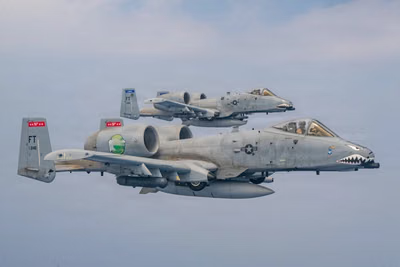
Two US Air Force A-10 aircraft patrol over the Middle East in a photo released by US Central Command.

Tehran has offered to reopen the Strait of Hormuz if Washington lifted its naval blockade, Iran’s envoy to Pakistan said Saturday, while an IRGC-affiliated outlet rejected such an exchange and President Donald Trump raised the possibility of strikes as soon as “tomorrow.”

Iran’s ambassador to Islamabad, Reza Amiri Moghadam, said Tehran had conveyed through Pakistani mediators that it was prepared to reopen the strait if Washington ended its blockade of Iranian ports, the Associated Press reported.

Speaking at a seminar in Islamabad, Moghadam said Iranian officials had communicated that position during visits to Tehran by Pakistan’s army chief, Field Marshal Asim Munir. He accused Trump of rejecting the proposal by insisting the blockade would continue.

Moghadam said Iran remained open to negotiations under a Pakistan-brokered interim agreement reached in June, according to AP’s readout of his remarks.

Pakistan and Qatar helped broker that framework, which envisaged restoring shipping through the strait, lifting the blockade and beginning negotiations on a broader deal covering Iran’s nuclear program.

Al Arabiya separately reported Saturday, citing unnamed sources, that Iran had informed Pakistan it was willing to resume negotiations with Washington and reopen the strait in exchange for the blockade being lifted.

But the IRGC-affiliated Tasnim news agency quoted an informed source rejecting Al Arabiya’s account as “lies and fantasy” and saying Tehran had made no new proposal to Pakistani mediators.

“Iran fundamentally does not accept any equation of the Strait of Hormuz in exchange for the blockade,” the source said, adding that Iran would find ways around the blockade and ultimately break it.

The source said Tehran stood by seven conditions already formally conveyed through mediators. An earlier “seven-day plan” setting out its demands for reopening the strait had been passed to Washington, the source said, adding that insecurity would persist until all Iranian demands were met, including an end to disruption of its ports and shipping.

Tasnim’s denial explicitly targeted Al Arabiya’s report, rather than the ambassador’s remarks reported by AP.

US may attack Iran tomorrow

Trump, meanwhile, kept open the possibility of both military action and an agreement, saying he wanted a permanent solution to prevent Iran from developing a nuclear weapon.

“Do you really think I’m going to tell you if I’m going to do it?” Trump told reporters Saturday. “There’s a possibility I will. There’s also a possibility we’ll have a nice big beautiful agreement.”

He said Iranian leaders wanted a deal but questioned whether they would abide by it.

“They want to make a deal. But the problem is, will they hold the deal?”

Trump argued that ending the military campaign after B-2 bomber strikes in 2025 would have allowed Iran to rebuild its nuclear capabilities and eventually develop a bomb.

“I’ve got to make it permanent. That’s the only reason I’m doing it as long as I’m doing,” he said.

The Hill reported Saturday, citing two sources familiar with the planning, that the US military had prepared options for renewed strikes on Iran after November’s midterm elections.

One source said US Central Command had follow-up strike plans ready pending White House authorization. Another said multiple options were being presented to War Secretary Pete Hegseth and that Trump would keep his options open until a final decision was required.

A Pentagon official told The Hill the department’s “job is to develop and present military options to the President.”

The Wall Street Journal reported earlier in the day that US naval forces are preparing for possible renewed strikes against Iran, with sailors loading munitions and readying aircraft aboard American warships.

The preparations include the USS George Washington aircraft carrier strike group, as Washington considers further military action against the Islamic Republic.

Pakistan talks peace with Iran, defends Saudis against Tehran’s proxies

Oct 24, 2026, 04:03 GMT+1
100%
Turkish Chief of General Staff General Selcuk Bayraktaroglu meets with Saudi Arabia's Chief of General Staff General Fayyadh bin Hamed Al-Ruwaili and Pakistan's Chief of Defence Forces and Chief of Army Staff Field Marshal Asim Munir in Riyadh, Saudi Arabia, September 25, 2026.

Pakistan is mediating between Iran and the United States even as it sends troops to defend Saudi Arabia against attacks by Tehran’s allies, placing Islamabad in the conflicting roles of peace broker and military partner to Iran’s rivals.

On Tuesday, Pakistan's military chief, Field Marshal Asim Munir, met Iranian President Masoud Pezeshkian, Foreign Minister Abbas Araghchi, Parliament Speaker Mohammad Bagher Ghalibaf and security chief Mohsen Rezaei in Tehran.

Munir has also cultivated a close relationship with President Donald Trump, including meetings at the White House.

Islamabad helped broker the June agreement between Washington and Tehran. The truce did not last, but Pakistan has kept its mediation channel open.

Commitment to Saudi Arabia

Pakistan has taken a direct military role in Saudi Arabia's defense.

Reuters reported in May that Islamabad had deployed approximately 8,000 troops, a squadron of fighter jets and air-defense systems to the kingdom under a bilateral agreement. Saudi Arabia financed the deployment, according to Pakistani officials cited by Reuters.

Pakistan’s commitment to Saudi security deepened in August when Pakistan, Saudi Arabia and Turkey signed the Makkah Joint Defense Agreement, treating an attack against one member as an attack against all.

This week, Islamabad announced that Pakistan and Saudi Arabia had completed ratification, while Turkey's remained pending. The partners have also discussed further military mobilization following attacks by Iran-aligned Houthis on Saudi territory.

On Wednesday, Pakistan signed another defense agreement, this time with Turkey, Qatar and Indonesia. The Badr agreement, signed in Doha, offers opportunities for industrial cooperation and defense production.

Together with Makkah, the agreements deepen Pakistan's military, diplomatic and economic ties across countries pursuing different regional agendas.

Pakistan's balancing act

That tension was evident during Munir's Tehran visit. Pakistani government sources told Turkey's state-run Anadolu news agency that the talks focused more on stopping Houthi attacks against Saudi Arabia than on reviving US-Iran negotiations.

Munir pressed Iranian leaders to use their influence over the Houthis, citing Pakistan's commitment to defend the kingdom.

Saudi Arabia and other Persian Gulf states supply much of Pakistan’s energy, while millions of Pakistani workers live in the region. Defense cooperation brings financial support and industrial opportunities, while diplomacy helps protect relations with competing partners.

Pakistan appears to be carving out an unusual role: mediating between Iran and the United States, helping defend Saudi Arabia against the Houthis, and joining new regional defense ventures while retaining direct access to Iranian leaders.

But the same network could become harder to manage if regional tensions escalate. The more security commitments Pakistan assumes, the greater the chance that relationships which currently give Islamabad leverage could eventually force it to choose between them.

Salvation or tragedy? Iranians debate prospect of another war

Oct 23, 2026, 21:08 GMT+1
•
Maryam Sinaiee
100%

Escalating war rhetoric from Iran, the United States and Israel, coupled with military movements across the region, has heightened fears of another conflict, as Iranians debate online whether war could bring political change or deepen the country's crises.

Iranian social media users are closely following statements by US President Donald Trump and Israeli Prime Minister Benjamin Netanyahu, as well as diplomatic and military movements across the region.

Many view the developments as possible signs of an impending US-Israeli attack.

A central debate is whether another war could bring down the Islamic Republic or simply inflict further damage on Iran.

Those supporting military action describe war as a necessary evil to end the political system, arguing that previous attempts to bring about change have failed.

Opponents warn that another conflict could destroy energy infrastructure and refineries, deepen economic hardship and leave Iranian society in an even worse position.

“We are inside Iran and face all kinds of financial, security and social problems, but we are willing to pay the price to end this nightmare,” one user wrote.

Another user wrote: “This uncertainty is really a thousand times worse than war. We cannot even plan a trip, let alone make decisions about work, education or running a business.”

Others strongly rejected that view.

“War brings destruction, chaos, disease and so many other problems,” one user wrote. “The outcome will not necessarily be what you imagine. It could be much worse than things are now.”

Another highlighted the vulnerability of people without secure salaries, who could lose their livelihoods if fighting disrupted economic activity.

One user summed up the conflicting attitudes they had encountered.

“I have seen many people in Iran waiting for an attack so that things can finally be settled… and others who wanted an agreement to be reached,” the user wrote. “Feelings differ, but everyone is tired of this situation.”

Some are urging others to stock up on water, food and medicine and keep cash on hand. Others warn people living near military or government facilities to consider leaving.

Users have also expressed concern for elderly people, those with illnesses and people living alone.

Hardliners push for confrontation

Ultra-hardline voices have also expressed enthusiasm for military confrontation, but for very different reasons.

They argue that negotiations with Washington have merely given Iran's adversaries time to regroup and prepare for a stronger attack.

Some have sharply criticized officials who pursued diplomacy and called for Iran to launch a pre-emptive strike if war appears imminent.

“Why shouldn't Iran start the war this time instead of always waiting to be caught off guard?” one user wrote.

Another argued that Iran did not need nuclear weapons to inflict serious damage on its adversaries.

“We don't even need an atomic bomb to retaliate,” the user wrote, arguing instead for strikes on nuclear power plants in Israel and the United Arab Emirates.

The calls for confrontation reflect a very different political outlook from anti-government users hoping outside military action could bring down the Islamic Republic.

But both illustrate how repeated rounds of fighting and failed diplomacy have led some on opposing sides of Iran's political divide to see another war as preferable to the current uncertainty.

Parents prepare for the worst

Parents' concerns about children's safety have intensified following the deaths of more than 100 schoolchildren in a US attack on Minab at the beginning of the recent war.

Some are urging families to keep children home from school if the likelihood of an attack increases. Others are discussing plans to collect children from schools and move them to safer locations as quickly as possible if fighting resumes.

An Instagram post featuring a firefighter has attracted particular attention. The firefighter said that while inspecting safety arrangements at a girls' high school, a school official told them instructions had been issued to prepare identification tags for students.

On Friday, an Education Ministry spokesperson denied that such measures were being implemented and accused “enemies or ignorant individuals” of spreading fear.

One user said they had checked with relatives in Tehran and concluded that the reports were accurate, claiming families they contacted had requested identification tags and were awaiting their delivery.

Fear of another internet blackout

The prospect of another shutdown of international internet access is adding to the anxiety.

Users fear authorities could cut international connectivity immediately if hostilities resume. The prospect is particularly troubling after previous shutdowns made it difficult to contact relatives and access reliable information.

One user recalled that during the war in June last year, the internet was cut several days after fighting began. When war broke out again at the end of February, the shutdown came within hours.

“Now, instead of checking the news in the morning, I open Google's domain to see whether it loads,” the user wrote, “so I can find out whether the war has started.”

Iran’s trade squeeze spreads from sea to land

Oct 22, 2026, 22:11 GMT+1
•
Maryam Sinaiee
100%
A security wall runs along the Iran-Turkey border in eastern Turkey

Border closures and transit disruptions involving Pakistan, Iraq and Turkey are raising fears that Iran’s remaining trade routes could be further restricted, deepening the impact of US maritime and air restrictions.

Although Washington has not declared a land blockade of Iran, the closure of crossings with Pakistan and Iraq and continued disruption to freight traffic at the Turkish border have raised alarm in Tehran.

Mohsen Rezaei, secretary of Iran’s Supreme National Security Council, acknowledged in an interview with Drop Site published Thursday that Iran would suffer from a prolonged blockade.

“Anyone who says otherwise is not being realistic. Families will pay the price, investment will suffer, and maintaining some sectors of the economy will become more difficult,” he said.

But Rezaei argued that economic pain did not amount to strategic defeat and that Washington was wrong to believe worsening conditions would force Tehran to accept US demands.

Agence France-Presse reported Wednesday that the United States was pressing Iran’s neighbors to close border crossings, following a maritime blockade in southern Iran and air restrictions that have grounded most Iranian flights.

President Masoud Pezeshkian has said the maritime blockade has halted trade through southern sea routes, which previously accounted for 75% to 80% of Iran’s trade.

Pakistan: transit disputes

Iran has responded cautiously to Pakistan, which has been mediating between Tehran and Washington.

Foreign Ministry spokesman Esmaeil Baghaei attributed the suspension of operations at border crossings to “technical problems” on the Pakistani side and said the two countries were discussing reopening them.

After the US maritime blockade took effect, Iranian traders increasingly used Pakistani ports as alternative routes.

But tighter requirements for electronic bills of lading and difficulties transferring money have complicated trade, according to Peyman Sanandaji, a senior official at the Tehran Chamber of Commerce.

Pakistan closed the Rimdan–Gabd and Taftan crossings on Tuesday during a visit to Tehran by Pakistani Army Chief Asim Munir, citing security concerns and efforts to prevent smuggling.

Iranian officials said Munir ordered the crossings reopened during his visit, but the latest reports indicated Pakistan was allowing only Iranian gas tankers and perishable fruit and vegetable shipments to pass.

Fada-Hossein Maleki, head of the Iran-Pakistan parliamentary friendship group, warned Thursday that Iran could close its border if Islamabad continued preventing trucks from crossing.

Such a move could also hurt Pakistan, which uses Iranian territory to move some exports toward Turkey, Central Asia and the Caucasus and receives millions of liters of Iranian gasoline and diesel through official trade and smuggling.

Iraq: conflicting signals

Iraq has not announced a general closure of its border with Iran. But Al Jazeera reported that the Chazabeh–Al-Shaib crossing was closed Wednesday on the direct orders of Prime Minister Ali al-Zaidi and that further crossings were expected to shut.

Abdul Amir Taiban, an adviser to Iraq’s prime minister, said Thursday that Chazabeh had been closed to prevent the entry of drugs and counterfeit dollars and dinars.

He accused Iran of undermining Iraq’s economy, smuggling drugs and violating Iraqi sovereignty.

Iran and Iraq have 13 official border crossings, several of them major routes for exports and commercial traffic, particularly with central and southern Iraq.

Iraq temporarily closed its crossings with Iran a month earlier after a drone attack on Saudi Arabia’s east-west pipeline from Iraqi territory was attributed to Iran-aligned groups. The crossings reopened several days later.

Iran has reacted more openly to Iraq’s latest move than to Pakistan’s restrictions.

Deputy Interior Minister Ahmad Zeynivand said Thursday Tehran had sent Baghdad an official note seeking clarification, while claiming trade in essential goods through maritime routes and northern borders continued without disruption.

Turkey: long delays

Turkey is Iran’s third-largest trading partner, with formal and informal bilateral trade estimated at between $23 billion and $30 billion.

The Bazargan crossing in West Azerbaijan province is Iran’s most important land gateway for trade with Turkey and access to European markets.

Iranian media have reported delays of as long as 20 days at Bazargan in recent months. Although Turkey has capacity to receive 1,000 Iranian trucks daily, it has reportedly allowed only 200 to 300 through, while around 600 Turkish trucks enter Iran each day.

The bottleneck threatens a crucial alternative to Iran’s restricted maritime routes even without a formal closure of the Turkish border.

Alternatives remain limited

Iran shares land borders with seven countries, but the remaining routes offer only limited alternatives to its major trade corridors.

Crossings with Turkmenistan, Azerbaijan and Armenia remain open, providing routes toward Central Asia, Russia and the Caucasus. Afghanistan also remains open, but inadequate infrastructure and chronic congestion limit its usefulness as an alternative transit corridor.

Iran had increasingly looked to road and rail links through Central Asia after restrictions on maritime and air transport. Further border closures would therefore leave Tehran with progressively fewer ways of moving goods.

The disruptions have prompted some hard-line government supporters to call for retaliation against neighboring countries, including restrictions on Iranian electricity exports and internet transit to Iraq.

But several land routes remain open, and there is no declared land blockade. Limited capacity and existing bottlenecks mean those routes cannot readily replace maritime trade, leaving further closures capable of intensifying pressure on an economy already struggling with the effects of the US blockade.