• العربية
  • فارسی
BrandBrand
  • Iran Insight
  • Politics
  • Economy
  • Analysis
  • Special Report
  • Opinion
  • Podcast
  • Live TV
  • Iran Insight
  • Politics
  • Economy
  • Analysis
  • Special Report
  • Opinion
  • Podcast
  • Live TV
  • Theme
  • Language
    • العربية
    • فارسی
  • Iran Insight
  • Politics
  • Economy
  • Analysis
  • Special Report
  • Opinion
  • Podcast
  • Live TV
All rights reserved for Volant Media UK Limited
volant media logo
PODCAST

Baluch insurgency tests a war-weakened Islamic Republic as attacks mount

Negar Mojtahedi
Negar Mojtahedi

Iran International

Oct 24, 2026, 11:03 GMT+1

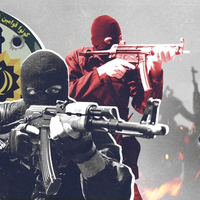
Armed Baluch groups in Iran’s southeast are adding one more strain on the Islamic Republic’s security forces just as war has stretched them thinnest, with 18 attacks in the 18 days to October 10, more than in any full month this year.

At least 63 armed incidents were documented across Sistan and Baluchestan and neighboring Kerman province between March 31 and October 10, leaving at least 94 people dead and 33 injured, according to the rights group HRANA. The attacks have grown more complex as well as more frequent: coordinated ambushes, roadside bombs and heavier weapons.

The question is whether a decades-old insurgency, long contained by force, can become a wider problem for a state fighting on other fronts.

A coalition with bigger aims

Several Baluch armed organizations joined forces in December 2025 under the People’s Fighters Front. The coalition includes Jaish al-Adl, which Iran and the United States both list as a terrorist organization.

The front has increasingly framed its goal as ending the Islamic Republic’s rule rather than winning concessions for the Baluch. Whether it can draw support beyond the southeast is unproven.

Its timing is not accidental. Iran’s security services are absorbing the consequences of war with the United States and Israel while still needing the forces they rely on to suppress dissent at home.

Rahim Bandoui, an Iranian-Baluch human rights activist and senior member of the Balochistan People’s Party, said the conflict itself is nothing new.

Speaking on Iran International’s Eye for Iran podcast, he traced it to decades of repression, arguing that Tehran has long treated peaceful political activity and armed resistance in the province as the same security threat.

What has changed, he said, is the state’s position. A government weakened by war presents armed groups with an opening they did not have before.

What the attacks can and cannot do

If the attacks keep growing, Tehran will have to send more personnel and resources to the southeast at a time when its security forces are already stretched. Those forces have contained unrest there before through military operations, mass arrests and lethal force. A sustained insurgency adds a cost on top of the war.

That cost could be felt elsewhere. Every unit tied down in Sistan and Baluchestan is one not available against protests or other opposition in the rest of the country.

The limits are real, though. There is no evidence the coalition can take and hold territory or threaten the central government’s control. Its political ambitions face a further obstacle across the border: Baluch armed groups in Pakistan differ considerably from their Iranian counterparts in ideology and aims, so a unified cross-border movement is unlikely without substantial change on both sides.

The grievances underneath

The insurgency sits on grievances that successive crackdowns have failed to address.

Sistan and Baluchestan, home to a mostly Sunni Baluch population, is among Iran’s poorest provinces despite its position on the Pakistani and Afghan borders and its natural resources. Residents face discrimination, few jobs and poor access to schools, clinics and other basic services.

Tens of thousands of people in the province have no official identity documents, Sabah Baluch, a human rights advocate with Iran House, told the podcast, which shuts them out of basic services and legal rights. For some families that has meant generations without formal schooling or work.

Hardship pushes residents into dangerous informal work, above all carrying fuel across the border, where they risk being shot by security forces or burning to death in vehicle fires.

The province has also seen some of the Islamic Republic’s deadliest violence against dissent. On September 30, 2022, during the nationwide protests that followed the death of Mahsa Amini, security forces killed at least 87 people in Zahedan, the provincial capital, most of them Baluch worshippers, in what became known as Bloody Friday.

Baluch prisoners are also executed out of all proportion to their numbers. According to Iran Human Rights, they accounted for 20 percent of recorded executions in 2023, 11 percent in 2024 and 9 percent in 2025, from a group that is a small fraction of Iran’s population.

The larger question

For now the Islamic Republic retains the military and security capacity to hold the southeast, and nothing suggests the insurgency can change the balance of power on its own.

The larger question is not whether armed groups can defeat government forces in Sistan and Baluchestan. It is whether a state that has relied on lethal force against its opponents for decades can go on containing several challenges at once while war makes new demands on the forces it uses to do so.

For Iran’s wider opposition, the answer will matter well beyond the southeast.

You can watch Eye for Iran on YouTube or listen on any podcast platform.

  • Iranian security forces face wave of deadly attacks in restive southeast

    Iranian security forces face wave of deadly attacks in restive southeast

  • Women’s Basij commander, police officer killed in southeast Iran

    Women’s Basij commander, police officer killed in southeast Iran

  • Who are the Baluch militants taking on Iran rulers, and how far can they go?

    Who are the Baluch militants taking on Iran rulers, and how far can they go?

Most Viewed

Iran’s trade squeeze spreads from sea to land
1
INSIGHT

Iran’s trade squeeze spreads from sea to land

2

Iran is running out of economic escape routes

3

US says it can sustain Iran blockade for ‘foreseeable future’

4
ANALYSIS

US strikes on Iran now serve the blockade

5
ANALYSIS

Once US blockaded Iran, China’s ‘Malaysian’ oil imports dried up

Banner
Banner
Banner
Banner
Banner

Spotlight

  • Baluch insurgency tests a war-weakened Islamic Republic as attacks mount
    PODCAST

    Baluch insurgency tests a war-weakened Islamic Republic as attacks mount

  • US strikes on Iran now serve the blockade
    ANALYSIS

    US strikes on Iran now serve the blockade

  • Salvation or tragedy? Iranians debate prospect of another war

    Salvation or tragedy? Iranians debate prospect of another war

  • More patrols, slower internet suggest Tehran is bracing for trouble
    VOICES FROM IRAN

    More patrols, slower internet suggest Tehran is bracing for trouble

  • Iran’s evasion network survives, but the crude feeding it has run dry

    Iran’s evasion network survives, but the crude feeding it has run dry

  • Once US blockaded Iran, China’s ‘Malaysian’ oil imports dried up
    ANALYSIS

    Once US blockaded Iran, China’s ‘Malaysian’ oil imports dried up

  • Istanbul meeting: A new division of labor in the Iran war?
    ANALYSIS

    Istanbul meeting: A new division of labor in the Iran war?

  • China values Iran but won't pay any price to defend it
    ONE-ON-ONE

    China values Iran but won't pay any price to defend it

•
•
•

More Stories

Pakistan talks peace with Iran, defends Saudis against Tehran’s proxies

Oct 24, 2026, 04:03 GMT+1
100%
Turkish Chief of General Staff General Selcuk Bayraktaroglu meets with Saudi Arabia's Chief of General Staff General Fayyadh bin Hamed Al-Ruwaili and Pakistan's Chief of Defence Forces and Chief of Army Staff Field Marshal Asim Munir in Riyadh, Saudi Arabia, September 25, 2026.

Pakistan is mediating between Iran and the United States even as it sends troops to defend Saudi Arabia against attacks by Tehran’s allies, placing Islamabad in the conflicting roles of peace broker and military partner to Iran’s rivals.

On Tuesday, Pakistan's military chief, Field Marshal Asim Munir, met Iranian President Masoud Pezeshkian, Foreign Minister Abbas Araghchi, Parliament Speaker Mohammad Bagher Ghalibaf and security chief Mohsen Rezaei in Tehran.

Munir has also cultivated a close relationship with President Donald Trump, including meetings at the White House.

Islamabad helped broker the June agreement between Washington and Tehran. The truce did not last, but Pakistan has kept its mediation channel open.

Commitment to Saudi Arabia

Pakistan has taken a direct military role in Saudi Arabia's defense.

Reuters reported in May that Islamabad had deployed approximately 8,000 troops, a squadron of fighter jets and air-defense systems to the kingdom under a bilateral agreement. Saudi Arabia financed the deployment, according to Pakistani officials cited by Reuters.

Pakistan’s commitment to Saudi security deepened in August when Pakistan, Saudi Arabia and Turkey signed the Makkah Joint Defense Agreement, treating an attack against one member as an attack against all.

This week, Islamabad announced that Pakistan and Saudi Arabia had completed ratification, while Turkey's remained pending. The partners have also discussed further military mobilization following attacks by Iran-aligned Houthis on Saudi territory.

On Wednesday, Pakistan signed another defense agreement, this time with Turkey, Qatar and Indonesia. The Badr agreement, signed in Doha, offers opportunities for industrial cooperation and defense production.

Together with Makkah, the agreements deepen Pakistan's military, diplomatic and economic ties across countries pursuing different regional agendas.

Pakistan's balancing act

That tension was evident during Munir's Tehran visit. Pakistani government sources told Turkey's state-run Anadolu news agency that the talks focused more on stopping Houthi attacks against Saudi Arabia than on reviving US-Iran negotiations.

Munir pressed Iranian leaders to use their influence over the Houthis, citing Pakistan's commitment to defend the kingdom.

Saudi Arabia and other Persian Gulf states supply much of Pakistan’s energy, while millions of Pakistani workers live in the region. Defense cooperation brings financial support and industrial opportunities, while diplomacy helps protect relations with competing partners.

Pakistan appears to be carving out an unusual role: mediating between Iran and the United States, helping defend Saudi Arabia against the Houthis, and joining new regional defense ventures while retaining direct access to Iranian leaders.

But the same network could become harder to manage if regional tensions escalate. The more security commitments Pakistan assumes, the greater the chance that relationships which currently give Islamabad leverage could eventually force it to choose between them.

More patrols, slower internet suggest Tehran is bracing for trouble

Oct 23, 2026, 18:21 GMT+1
•
Saba Heidarkhani
100%
Armed men take part in a Janfada rally in Rasht, northern Iran, October 2026

Armed security forces and checkpoints have become more visible across Iran, according to witness reports sent to Iran International, while internet access has deteriorated amid fears of fresh unrest and another round of war.

Accounts from Tehran, Mashhad, Isfahan, Dezful, Hamedan and other cities over the past week describe armed Basij members and riot police at major intersections and public squares, new checkpoints and additional surveillance cameras.

Users in several provinces also say internet speeds have fallen sharply, circumvention tools have stopped working and access to social media has become increasingly difficult.

The individual reports cannot all be independently verified, but describe similar changes across widely separated parts of the country.

More armed forces on the streets

In Dezful in southwestern Iran, one resident said the city had become “heavily securitized,” particularly around the city center and Shariati Street.

The resident attributed the increased presence to government concern about possible protests around the anniversary of the November 2019 uprising, when demonstrations triggered by a sudden increase in fuel prices were met with a deadly crackdown.

In Tehran, a resident reported a Basij checkpoint on Khavaran Street from Thursday evening, while other accounts described increased security patrols elsewhere in the capital and neighboring Karaj.

Residents of Mashhad reported armed Basij members around Mellat Park.

In Isfahan, armed deployments were reported around major squares, while residents of Hamedan and Borujerd described increased security activity.

Iran International reported similar deployments in September around the fourth anniversary of the death in custody of Mahsa Jina Amini.

More cameras and surveillance

Residents have also reported an expansion of surveillance infrastructure.

A resident of Astara, a small city on the Caspian coast near the Azerbaijani border, said security cameras were being installed in squares and neighborhoods across the city.

“They are installing cameras neighborhood by neighborhood in a city this small,” the resident said. “Look how afraid they are of the people.”

Another resident reported more surveillance cameras around Tehran's Sadeghieh district.

Tehran municipality announced last year that it planned to install 15,000 surveillance cameras across the capital, while security agencies have used camera footage to identify protesters and enforce government restrictions.

Internet slowdown

Residents in Semnan, Shiraz, Tabriz, Kerman, Tehran and elsewhere told Iran International that connections had slowed markedly, VPNs had stopped functioning and social media platforms had become increasingly difficult to reach.

A Shiraz resident said internet access had been extremely slow for about six days, while in Kerman one user said even paid VPN services were failing.

A resident of Tonekabon on the Caspian coast said Irancell mobile internet was being cut at night. Other users reported disruption to both fixed and mobile connections.

The cause of the disruptions is unclear, and the accounts do not establish that the security deployments and deteriorating internet access are part of a coordinated operation.

But they come against the backdrop of Iran's extensive use of internet shutdowns during periods of political unrest and conflict.

Tech outlet Zooman reported this week that authorities had issued instructions for international internet access to be cut immediately in the event of another war.

When Israel and the US attacked Iran in February, authorities imposed a nationwide internet blackout that lasted about 88 days, the longest recorded in any country, according to NetBlocks.

The latest disruptions also coincide with sharp increases in the cost of getting online.

Iran's two largest mobile operators, Hamrah-e Aval and Irancell, raised prices for calls, text messages and internet packages by as much as 40% on Friday, citing higher equipment, maintenance and infrastructure costs.

“By making the internet more expensive, they have closed our last route to the free world,” one resident told Iran International. “For me, when the internet was my only comfort and source of income, even being present in this space is no longer possible.”

US says it can sustain Iran blockade for ‘foreseeable future’

Oct 23, 2026, 12:32 GMT+1
100%
US President Donald Trump boards Air Force One for a trip to Sioux City, Iowa, at Joint Base Andrews, Maryland, US, October 22, 2026.

The United States is tightening economic pressure on Iran to bolster efforts to reach a diplomatic solution and can sustain its naval blockade for the foreseeable future, the US Ambassador to the UN said, as President Donald Trump weighs renewed strikes after midterm elections.

Mike Waltz told the Financial Times that Washington still wanted Tehran to return to negotiations and reach what he called a “meaningful agreement” on its nuclear program, but acknowledged the standoff could continue without a deal or a return to prewar shipping levels through the Strait of Hormuz.

“The president and the US Navy can maintain this blockade for the foreseeable future,” Waltz said, adding that the administration was continuing to tighten economic pressure.

He said the US would not consider its objectives achieved until Iran’s highly enriched nuclear material had been dealt with and an agreement reached over domestic uranium enrichment.

Trump considers renewed strikes after midterms

The comments come as Trump is considering several days of renewed strikes against Iran after the midterms, The Atlantic reported, citing officials and people familiar with the discussions.

Potential targets include Iran’s missile and drone arsenal, energy infrastructure and nuclear facilities, according to the report. One outside adviser told the magazine that US economic pressure was working and that additional strikes could push Iran closer to collapse.

An official and another person familiar with the talks said Trump had initially hoped Tehran would return to negotiations before the election, but that had not happened.

US officials stressed that no decision had been made on whether to resume strikes after November 3. The Atlantic said some officials also saw uncertainty over Washington’s next move as a way of keeping Tehran under pressure.

  • US blockade leaves Iran with millions of tons of surplus LPG

    US blockade leaves Iran with millions of tons of surplus LPG

  • IRGC threatens undersea cables, but can it disrupt global internet?

    IRGC threatens undersea cables, but can it disrupt global internet?

  • Iran’s trade squeeze spreads from sea to land

    Iran’s trade squeeze spreads from sea to land

Israeli Prime Minister Benjamin Netanyahu had pushed for another round of strikes before Israel’s election, according to the report, but Trump has so far declined to authorize a new attack before the US vote.

Washington and Tehran trade competing Hormuz messages

The military pressure is unfolding alongside sharply different accounts from Washington and Tehran over control of the Strait of Hormuz.

Trump said on Thursday that more oil had moved through the strait over the previous week than at any point before the war, attributing the increase to the US blockade.

“More oil came out of the Hormuz Strait over the last week than at any time previous, including before the war,” Trump told a campaign rally in Iowa. “That’s because of the blockade.”

He said the blockade had stopped Iran from exporting its own oil and again argued that US military action had destroyed Tehran’s nuclear enrichment capacity.

IRGC says US pushed away from the strait

Iran, however, presented a very different picture on Friday.

IRGC Navy commander Ali Ozmaei said US forces had been pushed hundreds of kilometers away from the Strait of Hormuz and no longer had a place there.

“Today, the Americans are not present in the Persian Gulf and have moved 600 to 700 kilometers away from the Strait of Hormuz,” Ozmaei said. “America no longer has a place in the Strait of Hormuz.”

The competing statements underscore how control of shipping and access through Hormuz have become central to both sides’ strategy, as Washington seeks to pressure Tehran economically while keeping open the possibility of renewed military action.

Reform UK donor had ties to Iran supreme leader-linked foundation - Guardian

Oct 23, 2026, 11:08 GMT+1
100%
Reform UK leader Nigel Farage

A billionaire donor to Britain’s Reform UK party was previously involved in a business venture with Astan Quds Razavi, a powerful Iranian religious foundation under the authority of the country’s supreme leader, the Guardian reported.

Hossein “Sasan” Ghandehari, an Iranian-born British businessman who has pledged millions of pounds to Reform UK, was the main investor behind a telecoms project in Iran between 2013 and 2016, according to a French arbitration ruling reviewed by the newspaper.

Ghandehari’s HP Trust ultimately owned Ori Group, which acquired a 49% stake in Omran Razavi International Co, a joint venture established to build and supply a fiber-optic network carrying telecommunications traffic across Iran.

Partnership with Astan Quds Razavi

The remaining 51% of the venture was owned by Astan Quds Razavi, or AQR, a multibillion-pound religious foundation based in Mashhad.

At the time, AQR was headed by Abbas Vaez Tabasi, who had been appointed by Islamic Republic founder Ruhollah Khomeini and remained in the post until his death in 2016.

AQR is one of Iran’s major bonyads, large quasi-public foundations with extensive economic interests. The United States sanctioned it in 2021, saying it controlled major parts of Iran’s economy and operated for the benefit of then-supreme leader Ali Khamenei and other senior officials.

Ghandehari’s lawyers told the Guardian that describing him simply as having worked with Iran would be misleading. They said the project was intended to expand access to information and promote political change, and that AQR was the only viable partner capable of enabling the project to proceed.

Venture collapsed in 2016

The joint venture ended around 2016 after Vaez Tabasi’s death and the appointment of a more hardline leadership at AQR, the Guardian reported.

  • UK Shi'ite camp with alleged Iran ties cancelled after right-wing outcry

    UK Shi'ite camp with alleged Iran ties cancelled after right-wing outcry

  • Iran-linked groups are exploiting Britain’s charity sector, UK lawmaker says

    Iran-linked groups are exploiting Britain’s charity sector, UK lawmaker says

AQR subsequently took full control of the project. Around the same period, project chairman Mohammed Reza Noory was imprisoned in Iran and later sentenced to 18 years.

Ghandehari’s lawyers said he himself was later targeted by Iran’s Supreme National Security Council with accusations that he had worked with hostile Western powers. They described those allegations as false.

Ghandehari has said he has not been to Iran for three decades and that his wealth has no connection to the country. His representatives also said family assets in Iran were confiscated in 2016.

Links to another Reform donor

The Guardian also reported that Ghandehari had business ties to another Reform UK donor, John Richard Simpson.

Ghandehari’s HP Trust had owned Orico General Trading LLC, a company contracted to supply telecommunications equipment from France’s Alcatel-Lucent and transport it from Dubai to Iran. After 2016, ownership of Orico was transferred to Simpson, who told the newspaper he had acquired the company to wind down its operations after the project ran into difficulties.

Simpson’s design firm, Interior Architecture Landscape, counts the Ghandehari family among its clients and donated £200,000 to Reform UK last year, according to the Guardian.

Farage has taken a hard line on Tehran

Ghandehari emerged as a major Reform donor this year, pledging to make regular contributions worth more than £1 million and donating £50,000 to party leader Nigel Farage for World Economic Forum passes.

Farage has taken a strongly critical position toward the Islamic Republic and has supported US pressure on Tehran.

The Guardian said Ghandehari’s past business relationship with AQR raises questions about the extent of his previous dealings with state-linked entities in Iran, although his lawyers said the project was approved by authorities in France and the United States and was intended to expand internet access rather than support the Iranian government.

Iranian state-linked hackers used US server to target dissidents, researchers say

Oct 23, 2026, 09:33 GMT+1
100%

An Iranian state-sponsored hacking group used command-and-control infrastructure hosted in the United States this year after a months-long pause in operations, according to cybersecurity firm Semperis.

The group, known as Prince of Persia and also tracked as Infy, has operated for nearly two decades and has primarily targeted Iranian dissidents, along with government and private-sector organizations in the US, Europe and the Middle East.

Semperis researcher Tomer Bar said he identified a command-and-control server in the US in August, the first time the group had been found using US-based infrastructure since 2016.

Operations resumed after months-long pause

SecurityWeek, citing Semperis, reported that the group halted activity for about three months after the US-Israel war with Iran began on February 28.

Semperis said operations resumed on May 27, when the group deployed new infrastructure and restarted data theft. Within a week, one of its malware tools had extracted more than 1,800 files from a single victim, according to SecurityWeek.

Bar said the group’s victim count remained relatively small, which could indicate highly targeted operations or difficulty compromising new systems.

New infrastructure hidden among legitimate sites

Semperis said the group changed its hosting strategy after returning to activity, moving away from virtual private servers and instead using shared hosting in the United States.

  • Freeway sign hack aims to frighten Iranians in Los Angeles, experts say

    Freeway sign hack aims to frighten Iranians in Los Angeles, experts say

  • Iranian hacker in IRGC-linked cyber case to be extradited to US

    Iranian hacker in IRGC-linked cyber case to be extradited to US

  • Iranian hackers targeted US infrastructure in recent weeks - NBC News

    Iranian hackers targeted US infrastructure in recent weeks - NBC News

The server identified in August was linked to Tornado, one of the group’s newer malware families, which can steal files through Telegram-based channels.

Bar said the use of US shared hosting was unusual for this particular group because it allowed the infrastructure to blend in with thousands of legitimate websites and other online services.

“This is the last place we expected to find Prince of Persia hiding,” he said.

Semperis also said the group later began building additional infrastructure behind Cloudflare, making its command-and-control systems harder to trace directly.

Iranian cyber activity under growing scrutiny

The findings come as US authorities and cybersecurity researchers continue to report Iranian-linked cyber activity targeting both dissidents and critical infrastructure.

In September, NBC News reported that Iranian hackers had recently targeted US water, telecommunications and energy systems, citing government and industry cyberthreat sources. Those attempts had not caused major disruption.

US prosecutors have also pursued cases against alleged Iranian hackers accused of working on behalf of state institutions.

Last month, Montenegro approved the extradition of Iranian-Turkish hacker Amir Barati to the United States, where he faces charges over an alleged campaign targeting universities and research institutions for entities including the Revolutionary Guards.

US prosecutors say that broader campaign compromised thousands of academic accounts and resulted in the theft of more than 31 terabytes of data.