• العربية
  • فارسی
BrandBrand
  • Iran Insight
  • Politics
  • Economy
  • Analysis
  • Special Report
  • Opinion
  • Podcast
  • Live TV
  • Iran Insight
  • Politics
  • Economy
  • Analysis
  • Special Report
  • Opinion
  • Podcast
  • Live TV
  • Theme
  • Language
    • العربية
    • فارسی
  • Iran Insight
  • Politics
  • Economy
  • Analysis
  • Special Report
  • Opinion
  • Podcast
  • Live TV
All rights reserved for Volant Media UK Limited
volant media logo

Iran sends conflicting signals on US deal as Trump raises prospect of strikes

Oct 25, 2026, 01:35 GMT+0
Two US Air Force A-10 aircraft patrol over the Middle East in a photo released by US Central Command.

Tehran has offered to reopen the Strait of Hormuz if Washington lifted its naval blockade, Iran’s envoy to Pakistan said Saturday, while an IRGC-affiliated outlet rejected such an exchange and President Donald Trump raised the possibility of strikes as soon as “tomorrow.”

Iran’s ambassador to Islamabad, Reza Amiri Moghadam, said Tehran had conveyed through Pakistani mediators that it was prepared to reopen the strait if Washington ended its blockade of Iranian ports, the Associated Press reported.

Speaking at a seminar in Islamabad, Moghadam said Iranian officials had communicated that position during visits to Tehran by Pakistan’s army chief, Field Marshal Asim Munir. He accused Trump of rejecting the proposal by insisting the blockade would continue.

Moghadam said Iran remained open to negotiations under a Pakistan-brokered interim agreement reached in June, according to AP’s readout of his remarks.

Pakistan and Qatar helped broker that framework, which envisaged restoring shipping through the strait, lifting the blockade and beginning negotiations on a broader deal covering Iran’s nuclear program.

Al Arabiya separately reported Saturday, citing unnamed sources, that Iran had informed Pakistan it was willing to resume negotiations with Washington and reopen the strait in exchange for the blockade being lifted.

But the IRGC-affiliated Tasnim news agency quoted an informed source rejecting Al Arabiya’s account as “lies and fantasy” and saying Tehran had made no new proposal to Pakistani mediators.

“Iran fundamentally does not accept any equation of the Strait of Hormuz in exchange for the blockade,” the source said, adding that Iran would find ways around the blockade and ultimately break it.

The source said Tehran stood by seven conditions already formally conveyed through mediators. An earlier “seven-day plan” setting out its demands for reopening the strait had been passed to Washington, the source said, adding that insecurity would persist until all Iranian demands were met, including an end to disruption of its ports and shipping.

Tasnim’s denial explicitly targeted Al Arabiya’s report, rather than the ambassador’s remarks reported by AP.

US may attack Iran tomorrow

Trump, meanwhile, kept open the possibility of both military action and an agreement, saying he wanted a permanent solution to prevent Iran from developing a nuclear weapon.

“Do you really think I’m going to tell you if I’m going to do it?” Trump told reporters Saturday. “There’s a possibility I will. There’s also a possibility we’ll have a nice big beautiful agreement.”

He said Iranian leaders wanted a deal but questioned whether they would abide by it.

“They want to make a deal. But the problem is, will they hold the deal?”

Trump argued that ending the military campaign after B-2 bomber strikes in 2025 would have allowed Iran to rebuild its nuclear capabilities and eventually develop a bomb.

“I’ve got to make it permanent. That’s the only reason I’m doing it as long as I’m doing,” he said.

The Hill reported Saturday, citing two sources familiar with the planning, that the US military had prepared options for renewed strikes on Iran after November’s midterm elections.

One source said US Central Command had follow-up strike plans ready pending White House authorization. Another said multiple options were being presented to War Secretary Pete Hegseth and that Trump would keep his options open until a final decision was required.

A Pentagon official told The Hill the department’s “job is to develop and present military options to the President.”

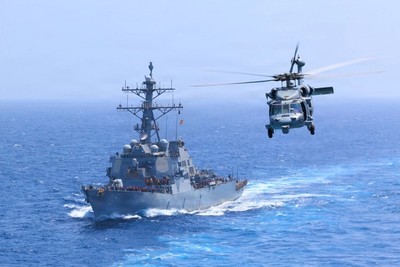
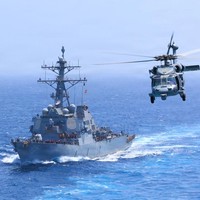
The Wall Street Journal reported earlier in the day that US naval forces are preparing for possible renewed strikes against Iran, with sailors loading munitions and readying aircraft aboard American warships.

The preparations include the USS George Washington aircraft carrier strike group, as Washington considers further military action against the Islamic Republic.

Most Viewed

US strikes on Iran now serve the blockade
1
ANALYSIS

US strikes on Iran now serve the blockade

2

US says it can sustain Iran blockade for ‘foreseeable future’

3

Iran sends conflicting signals on US deal as Trump raises prospect of strikes

4
PODCAST

Baluch insurgency tests the limits of a war-weakened Islamic Republic

5

Pakistan talks peace with Iran, defends Saudis against Tehran’s proxies

Banner
Banner
Banner
Banner
Banner

Spotlight

  • From six-day victory to wars of attrition: How has Israel ended its wars?
    ANALYSIS

    From six-day victory to wars of attrition: How has Israel ended its wars?

  • Baluch insurgency tests the limits of a war-weakened Islamic Republic
    PODCAST

    Baluch insurgency tests the limits of a war-weakened Islamic Republic

  • US strikes on Iran now serve the blockade
    ANALYSIS

    US strikes on Iran now serve the blockade

  • Salvation or tragedy? Iranians debate prospect of another war

    Salvation or tragedy? Iranians debate prospect of another war

  • More patrols, slower internet suggest Tehran is bracing for trouble
    VOICES FROM IRAN

    More patrols, slower internet suggest Tehran is bracing for trouble

  • Iran’s evasion network survives, but the crude feeding it has run dry

    Iran’s evasion network survives, but the crude feeding it has run dry

  • Once US blockaded Iran, China’s ‘Malaysian’ oil imports dried up
    ANALYSIS

    Once US blockaded Iran, China’s ‘Malaysian’ oil imports dried up

  • Istanbul meeting: A new division of labor in the Iran war?
    ANALYSIS

    Istanbul meeting: A new division of labor in the Iran war?

•
•
•

More Stories

Baluch insurgency tests the limits of a war-weakened Islamic Republic

Oct 24, 2026, 11:03 GMT+1
•
Negar Mojtahedi
100%

Armed Baluch groups in Iran’s southeast are adding one more strain on the Islamic Republic’s security forces just as war has stretched them thinnest, with 18 attacks in the 18 days to October 10, more than in any full month this year.

At least 63 armed incidents were documented across Sistan and Baluchestan and neighboring Kerman province between March 31 and October 10, leaving at least 94 people dead and 33 injured, according to the rights group HRANA. The attacks have grown more complex as well as more frequent: coordinated ambushes, roadside bombs and heavier weapons.

The question is whether a decades-old insurgency, long contained by force, can become a wider problem for a state fighting on other fronts.

A coalition with bigger aims

Several Baluch armed organizations joined forces in December 2025 under the People’s Fighters Front. The coalition includes Jaish al-Adl, which Iran and the United States both list as a terrorist organization.

The front has increasingly framed its goal as ending the Islamic Republic’s rule rather than winning concessions for the Baluch. Whether it can draw support beyond the southeast is unproven.

Its timing is not accidental. Iran’s security services are absorbing the consequences of war with the United States and Israel while still needing the forces they rely on to suppress dissent at home.

Rahim Bandoui, an Iranian-Baluch human rights activist and senior member of the Balochistan People’s Party, said the conflict itself is nothing new.

Speaking on Iran International’s Eye for Iran podcast, he traced it to decades of repression, arguing that Tehran has long treated peaceful political activity and armed resistance in the province as the same security threat.

What has changed, he said, is the state’s position. A government weakened by war presents armed groups with an opening they did not have before.

What the attacks can and cannot do

If the attacks keep growing, Tehran will have to send more personnel and resources to the southeast at a time when its security forces are already stretched. Those forces have contained unrest there before through military operations, mass arrests and lethal force. A sustained insurgency adds a cost on top of the war.

That cost could be felt elsewhere. Every unit tied down in Sistan and Baluchestan is one not available against protests or other opposition in the rest of the country.

  • Who are the Baluch militants taking on Iran rulers, and how far can they go?

    Who are the Baluch militants taking on Iran rulers, and how far can they go?

  • Women’s Basij commander, police officer killed in southeast Iran

    Women’s Basij commander, police officer killed in southeast Iran

  • Iranian security forces face wave of deadly attacks in restive southeast

    Iranian security forces face wave of deadly attacks in restive southeast

The limits are real, though. There is no evidence the coalition can take and hold territory or threaten the central government’s control. Its political ambitions face a further obstacle across the border: Baluch armed groups in Pakistan differ considerably from their Iranian counterparts in ideology and aims, so a unified cross-border movement is unlikely without substantial change on both sides.

The grievances underneath

The insurgency sits on grievances that successive crackdowns have failed to address.

Sistan and Baluchestan, home to a mostly Sunni Baluch population, is among Iran’s poorest provinces despite its position on the Pakistani and Afghan borders and its natural resources. Residents face discrimination, few jobs and poor access to schools, clinics and other basic services.

Tens of thousands of people in the province have no official identity documents, Sabah Baluch, a human rights advocate with Iran House, told the podcast, which shuts them out of basic services and legal rights. For some families that has meant generations without formal schooling or work.

Hardship pushes residents into dangerous informal work, above all carrying fuel across the border, where they risk being shot by security forces or burning to death in vehicle fires.

The province has also seen some of the Islamic Republic’s deadliest violence against dissent. On September 30, 2022, during the nationwide protests that followed the death of Mahsa Amini, security forces killed at least 87 people in Zahedan, the provincial capital, most of them Baluch worshippers, in what became known as Bloody Friday.

Baluch prisoners are also executed out of all proportion to their numbers. According to Iran Human Rights, they accounted for 20 percent of recorded executions in 2023, 11 percent in 2024 and 9 percent in 2025, from a group that is a small fraction of Iran’s population.

The larger question

For now the Islamic Republic retains the military and security capacity to hold the southeast, and nothing suggests the insurgency can change the balance of power on its own.

The larger question is not whether armed groups can defeat government forces in Sistan and Baluchestan. It is whether a state that has relied on lethal force against its opponents for decades can go on containing several challenges at once while war makes new demands on the forces it uses to do so.

For Iran’s wider opposition, the answer will matter well beyond the southeast.

You can watch Eye for Iran on YouTube or listen on any podcast platform.

Pakistan talks peace with Iran, defends Saudis against Tehran’s proxies

Oct 24, 2026, 04:03 GMT+1
100%
Turkish Chief of General Staff General Selcuk Bayraktaroglu meets with Saudi Arabia's Chief of General Staff General Fayyadh bin Hamed Al-Ruwaili and Pakistan's Chief of Defence Forces and Chief of Army Staff Field Marshal Asim Munir in Riyadh, Saudi Arabia, September 25, 2026.

Pakistan is mediating between Iran and the United States even as it sends troops to defend Saudi Arabia against attacks by Tehran’s allies, placing Islamabad in the conflicting roles of peace broker and military partner to Iran’s rivals.

On Tuesday, Pakistan's military chief, Field Marshal Asim Munir, met Iranian President Masoud Pezeshkian, Foreign Minister Abbas Araghchi, Parliament Speaker Mohammad Bagher Ghalibaf and security chief Mohsen Rezaei in Tehran.

Munir has also cultivated a close relationship with President Donald Trump, including meetings at the White House.

Islamabad helped broker the June agreement between Washington and Tehran. The truce did not last, but Pakistan has kept its mediation channel open.

Commitment to Saudi Arabia

Pakistan has taken a direct military role in Saudi Arabia's defense.

Reuters reported in May that Islamabad had deployed approximately 8,000 troops, a squadron of fighter jets and air-defense systems to the kingdom under a bilateral agreement. Saudi Arabia financed the deployment, according to Pakistani officials cited by Reuters.

Pakistan’s commitment to Saudi security deepened in August when Pakistan, Saudi Arabia and Turkey signed the Makkah Joint Defense Agreement, treating an attack against one member as an attack against all.

This week, Islamabad announced that Pakistan and Saudi Arabia had completed ratification, while Turkey's remained pending. The partners have also discussed further military mobilization following attacks by Iran-aligned Houthis on Saudi territory.

On Wednesday, Pakistan signed another defense agreement, this time with Turkey, Qatar and Indonesia. The Badr agreement, signed in Doha, offers opportunities for industrial cooperation and defense production.

Together with Makkah, the agreements deepen Pakistan's military, diplomatic and economic ties across countries pursuing different regional agendas.

Pakistan's balancing act

That tension was evident during Munir's Tehran visit. Pakistani government sources told Turkey's state-run Anadolu news agency that the talks focused more on stopping Houthi attacks against Saudi Arabia than on reviving US-Iran negotiations.

Munir pressed Iranian leaders to use their influence over the Houthis, citing Pakistan's commitment to defend the kingdom.

Saudi Arabia and other Persian Gulf states supply much of Pakistan’s energy, while millions of Pakistani workers live in the region. Defense cooperation brings financial support and industrial opportunities, while diplomacy helps protect relations with competing partners.

Pakistan appears to be carving out an unusual role: mediating between Iran and the United States, helping defend Saudi Arabia against the Houthis, and joining new regional defense ventures while retaining direct access to Iranian leaders.

But the same network could become harder to manage if regional tensions escalate. The more security commitments Pakistan assumes, the greater the chance that relationships which currently give Islamabad leverage could eventually force it to choose between them.

China values Iran but won't pay any price to defend it

Oct 22, 2026, 19:55 GMT+1
•
Kambiz Tavana
100%
Tong Zhao, a senior fellow at the Carnegie Endowment for International Peace, speaks in an interview with Iran International's Kambiz Tavana (right) in Washington DC on Oct. 22, 2026.

China regards its relationship with Iran as largely transactional and is not firmly committed to defending the current Iranian government, according to Tong Zhao, a senior fellow at the Carnegie Endowment for International Peace.

Speaking to Iran International, Zhao said Beijing shares Iran’s “common displeasure” with the United States and Western systems and values Iran’s geographic position for the Belt and Road Initiative.

Yet he described the partnership as driven by energy security, economic interests and longer-term geopolitical calculations rather than ideological solidarity.

“There is some long-term interest in there for sure,” Zhao said. “But it is a transactional relationship.”

China has become Iran's main economic lifeline under US sanctions, buying nearly all of its exported oil, while Tehran has increasingly looked to Beijing alongside Moscow for diplomatic support in the face of Western pressure.

Energy interests come first

Energy security has provided one of the clearest illustrations of the limits of that partnership.

In a recent meeting between Presidents Xi Jinping and Donald Trump, both sides publicly underscored that the Strait of Hormuz should remain open without any toll system.

“China is protecting its own economic and energy interest first and foremost,” Zhao said. “We do see China’s position evolving when its own domestic calculations about energy and overall supply chain security change over time.”

The 25-year comprehensive strategic partnership signed by China and Iran in 2021 has also under-delivered. Reports at the time suggested Chinese investment of roughly $400 billion, or about $20 billion annually.

Actual flows have been “at least one order of magnitude smaller,” Zhao said, as Chinese banks and companies have sought to avoid US secondary sanctions.

Nuclear weapons, regime change

Zhao said Beijing has come to value nuclear non-proliferation more as its global influence has grown, in part because of its experience with North Korea.

“China doesn’t want Iran to have nuclear weapons, but China eventually is sympathetic to Iran’s cause,” he said. “It thinks that Iran’s need for deterrence, including nuclear deterrence, is ultimately driven by American hostile policy.”

Beijing does not see its role as changing Iran’s calculations and has been reluctant to threaten economic or military cutoffs, Zhao said. Instead, it has emphasized that the US and Israel should alter their policies to reduce Tehran’s incentives for nuclear deterrence.

Opposition to externally imposed regime change is a higher priority for Beijing than the nuclear file itself, he said.

“China’s primary security concern is its own regime security, so it doesn’t want to see the norm of allowing foreign countries interfering in other countries’ internal affairs and toppling governments that they don’t like.”

Beijing’s initial criticism of the US-Israeli war against Iran focused heavily on the killing of the supreme leader, which China viewed as a violation of international norms.

But Zhao suggested Beijing's opposition had limits and would depend in part on whether efforts to remove Iran's government violated what China regarded as established international norms.

Influence at the lowest cost

Beijing has cultivated ties with Saudi Arabia, including joint military exercises and involvement in its missile and nuclear programs, partly as a hedge against uncertainty elsewhere in the region.

China and Russia have meanwhile provided Tehran with diplomatic cover at the UN Security Council, disputing the reimposition of UN sanctions on Iran and most recently opposing efforts to restore international monitoring of their implementation.

Yet China has shown little appetite for becoming a security guarantor for Iran or other regional partners, Zhao said, including through proposals that Iran transfer enriched uranium to Chinese custody.

“China is keenly aware of the potential risks and burdens to play a greater security role,” he said. “Its approach is to develop relations, increasing Chinese influence at the lowest cost.”

That calculation could change as the conflict develops. Zhao said China and Russia could influence its trajectory by supplying air-defense systems or missile-related materials that would help Iran deter or survive future strikes.

But he declined to predict how the confrontation over Iran's nuclear program and the Strait of Hormuz would ultimately end.

“I generally don’t have good answers about how this war will end in the long run,” Zhao said.

War warnings and talk of diplomacy compete in Tehran

Oct 21, 2026, 21:26 GMT+1
•
Behrouz Turani
100%
Iranian lawmakers and military officials attend a parliamentary session to confirm Mehrdad Akhlaghi as Iran’s new defense minister, October 17, 2026

Iranian leaders raised the conditions for negotiations with the United States and issued fresh warnings of a wider military response on Wednesday, even as signs persisted that Tehran was leaving room for diplomacy.

President Masoud Pezeshkian said threats and sanctions must be lifted in practice before conditions for negotiations could be established, while Revolutionary Guards spokesman Hossein Mohebbi said Iran would launch offensive operations against any country that attacked it as part of a shift toward asymmetric warfare.

An unnamed senior security official also told state-run Press TV that Iran was prepared for an all-out war and would respond “without restraint” to renewed attacks or assassinations.

The rhetoric coincided with high-level discussions in Tehran. Iranian media reported Wednesday that Parliament Speaker Mohammad Bagher Ghalibaf had met Supreme Leader Mojtaba Khamenei to discuss the latest military and economic developments in the confrontation with the United States and Israel.

The meeting also addressed strengthening Iran's national capabilities, maintaining social cohesion, tackling economic difficulties and “advancing relations with strategic partners,” according to the reports.

Yet diplomatic channels remain active. Russian President Vladimir Putin told US envoy Steve Witkoff on Wednesday that there was still room for diplomacy over Iran and that an agreement with Tehran was needed, according to the Kremlin.

The competing signals leave open whether Tehran is raising the price of a negotiated pause or preparing for another phase of confrontation.

Talk of a negotiated pause

The conservative daily Jomhouri Eslami reported, citing “informed sources,” that discussions mediated by Qatar and Pakistan could take place this week around a framework for halting military clashes and securing reciprocal concessions.

The report followed Pakistani Field Marshal Asim Munir's visit to Tehran on Tuesday and came amid a flurry of diplomatic activity involving Russia and other regional powers.

According to Jomhouri Eslami, the framework would seek to halt military clashes, address outstanding disputes and sequence concessions in a way that reduced the risk of fighting resuming.

The newspaper said it expected that “the region will not see an escalation of tensions under current conditions.”

The prominence given to the prospect of an agreement by a conservative establishment newspaper is notable at a time when Iranian officials publicly deny that substantive nuclear negotiations with Washington are under way.

Sobh-e No, a newspaper aligned with Parliament Speaker Ghalibaf, also linked renewed discussion of talks to diplomatic contacts involving Pakistan and Russian Foreign Minister Sergei Lavrov, who visited Tehran on Tuesday.

The newspaper reported on a Russian proposal for a joint Iranian-Russian-Chinese initiative concerning the Strait of Hormuz, although Tehran has continued to insist on maintaining its authority over the waterway.

The Pezeshkian administration's Iran newspaper argued that the country's security depended on exercising sovereignty over the strait rather than sharing responsibility with outside powers.

“To preserve our security, we have no option but to exercise sovereignty over the Strait of Hormuz,” it wrote.

That position points to one of the difficulties facing any potential agreement: Tehran wants the Strait of Hormuz and broader maritime security addressed alongside the conflict, while Washington has continued to prioritize Iran's nuclear program.

Pressure in the other direction

Hardline lawmaker Hassan Nataj called for Supreme Leader Khamenei to reconsider the religious prohibition on nuclear weapons in response to the conflict.

“We should ask the Supreme Leader to revise the fatwa prohibiting nuclear weapons in light of the current situation,” he told the Didban Iran website.

The comments come amid a wider debate among Iranian politicians and commentators over whether the country's nuclear posture still provides sufficient deterrence against further US or Israeli attacks.

The simultaneous emphasis on diplomacy and escalation does not establish which course Tehran ultimately intends to pursue.

But the pattern has become clearer: diplomatic channels remain open while Iranian officials publicly raise the conditions for negotiations and stress that renewed attacks could bring a broader military response.

Russia steps between Iran and US, but how far can it go?

Oct 21, 2026, 15:38 GMT+1
•
Maryam Sinaiee
100%
Russian Foreign Minister Sergei Lavrov and his Iranian counterpart Abbas Araghchi during talks in Tehran, October 20, 2026.

Russian President Vladimir Putin discussed Iran with US envoy Steve Witkoff on Wednesday and offered Moscow’s help, shortly after Foreign Minister Sergei Lavrov visited Tehran as Russia seeks a role in efforts to end the Iran-US conflict.

The meeting adds to signs that Moscow is positioning itself as both an ally of Tehran and a potential intermediary with Washington as diplomatic efforts remain deadlocked over Iran’s nuclear program and the sequencing of commitments.

Earlier this month, Putin said Russia was prepared to do everything it could to help resolve the crisis and subsequently conveyed Tehran’s position to US President Donald Trump. Neither the contents of the message nor Washington’s response was made public.

In Tehran on Tuesday, Iranian Foreign Minister Abbas Araghchi said the two countries had “never” worked as closely as they do now, while Lavrov described Iran’s cause as “just” and said Russian specialists who left the Bushehr nuclear power plant during the war were gradually returning.

Yet Iranian media and commentators questioned how much Moscow could achieve as an intermediary given the fundamental differences between Tehran and Washington.

Tabnak, a news website considered close to Supreme National Security Council Secretary Mohsen Rezaei, said Moscow could help by conveying messages, consulting with both capitals and supporting a political solution, but cautioned that no mediator could overcome the underlying disagreements on its own.

“As long as fundamental disagreements over the terms of an agreement persist, no mediator can guarantee success,” it wrote, citing differences over the sequencing of negotiations and the scope of commitments.

The reformist outlet Rouydad24 said there was little evidence Moscow had brought a comprehensive plan capable of breaking the deadlock.

“What has so far been presented by official Iranian and Russian sources points less to a ‘grand peace plan’ than to the continuation of Russia’s traditional role as a facilitator of dialogue,” it wrote.

Uranium emerges as key obstacle

A central obstacle in the diplomatic impasse is Iran’s stockpile of uranium enriched to 60%.

Russian officials, including Deputy Foreign Minister Sergei Ryabkov, have indicated that Moscow is prepared to receive the stockpile, a move that could address one of the central concerns surrounding Iran’s nuclear program.

Tehran, however, has rejected the idea of transferring its enriched uranium abroad and denied that nuclear negotiations with Washington are under way.

The position was reiterated during Pakistani army chief Asim Munir’s visit to Tehran on Tuesday. Rezaei told Munir that none of Iran’s enriched material would leave the country, describing it as a national asset intended for domestic use.

Before Lavrov’s arrival, conservative political activist Ali Gholhaki claimed Russia had been partly persuaded by an Iranian proposal, advanced when Ali Larijani was secretary of the Supreme National Security Council, to establish a framework for transferring uranium enriched to 60%.

But following the visit, Gholhaki said Lavrov had produced no tangible result and had left “without any particular achievement.”

The conservative newspaper Khorasan argued that negotiating over Iran’s enriched uranium could increase rather than reduce the danger of another attack.

It argued that while Iran did not possess a nuclear deterrent, its stockpile of highly enriched uranium itself acted as a form of deterrence by raising the risks of further US escalation.

Mohammad-Sadegh Alizadeh, a journalist interviewed by the conservative Farhikhtegan newspaper, said Tehran’s immediate priority should instead be ending the war on terms acceptable to Iran.

“Whether the Russians have agreed to accept Iran’s 440 kilograms of uranium enriched to 60% is a secondary issue to be addressed later,” he said. “First, the question of ending the war must be settled.”

Doubts over Moscow’s interests

Doubts about Russia’s intentions extend beyond whether it can bridge the divide between Tehran and Washington.

Reformist journalist Ahmad Zeidabadi argued that Iranian decision-makers should nevertheless welcome any Russian initiative capable of stopping another war.

“Russian interference is an evil, of course, but compared with the prospect of another war, it is the lesser evil,” he wrote on Telegram.

Commentator Mehran Tabatabaei argued that Moscow’s approach to Iran remained subordinate to its negotiations with Washington over Ukraine.

“Russia will not take any positive steps until it resolves the Ukraine issue and obtains the concessions it wants from the United States over Ukraine,” he wrote.

Journalist Mohammad Aghazadeh offered a starker assessment, saying failure by Lavrov to make progress would suggest diplomacy itself was approaching a dead end.

“Either the current state of uncertainty will continue, or an intense war will begin,” he wrote, “one that will probably not be as easy to end as it is to start.”