• العربية
  • فارسی
BrandBrand
  • Iran Insight
  • Politics
  • Economy
  • Analysis
  • Special Report
  • Opinion
  • Podcast
  • Live TV
  • Iran Insight
  • Politics
  • Economy
  • Analysis
  • Special Report
  • Opinion
  • Podcast
  • Live TV
  • Theme
  • Language
    • العربية
    • فارسی
  • Iran Insight
  • Politics
  • Economy
  • Analysis
  • Special Report
  • Opinion
  • Podcast
  • Live TV
All rights reserved for Volant Media UK Limited
volant media logo
ANALYSIS

What can Iran’s new oil chief change under the US blockade?

Umud Shokri
Umud Shokri

Senior visiting fellow, George Mason University

Oct 5, 2026, 01:58 GMT+1Updated: 12:50 GMT+1
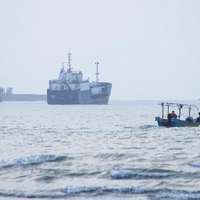
A view of the Strait of Hormuz, with vessels traveling through the waterway.

Iran’s oil minister Mohsen Paknejad resigned Sunday, leaving acting minister Hamid Bovard with crude exports choked by a US blockade and scrutiny of intermediaries used to sell sanctioned oil, raising questions over what he can change.

President Masoud Pezeshkian accepted Paknejad’s resignation on October 4 and appointed Bovard, chief executive of the National Iranian Oil Company (NIOC), to lead the ministry temporarily.

The presidential office said Paknejad had sought to resign some time earlier for personal reasons and that Pezeshkian initially wanted him to remain, eventually accepting the resignation at Paknejad’s insistence.

That leaves little verified basis for attributing his departure to the blockade or any particular dispute inside the oil industry. The more answerable question is what Bovard inherits — and which of the pressures facing Iran’s most important source of revenue are actually within the Oil Ministry’s control.

A blockade no minister can lift

The immediate problem is physical: Iran is struggling to get new oil to its customers.

Iran International reported, citing Kpler and TankerTrackers, that no Iranian crude cargo has crossed the US blockade line toward China since mid-July and that no new crude has been loaded at Iranian terminals since mid-August.

Iran initially kept deliveries going from crude already stored aboard tankers. By mid-August, around 67 million barrels had accumulated on vessels in Iran’s southern waters. But access to empty tankers became increasingly limited, bringing new loadings to a halt.

Iran’s crude production has consequently fallen to about 1.8 million barrels per day, roughly the amount required for domestic consumption and around half its pre-war output, according to Kpler.

The decline follows an already sharp fall in exports. Crude and condensate loadings were estimated at around 220,000 to 255,000 barrels per day in August, down from about 740,000 in July and roughly two million in March.

Paknejad, shortly before his resignation was announced, said revenue from oil already sold was continuing to reach Iran.

That is not necessarily at odds with the collapse in new loadings. Payments can continue for cargoes sold and delivered earlier even after the physical flow of fresh crude slows. The larger problem for the government is how long those revenues can be sustained without new oil entering the export system.

Here, Bovard’s room for maneuver is limited. A new minister cannot by himself remove a US naval blockade, provide empty tankers or reopen a route to China. Any meaningful recovery in export volumes would depend largely on a change in the conditions surrounding the blockade.

An oil-sales system Bovard can influence

The ministry has more direct control over another problem: how sanctioned oil is sold and how the proceeds are returned.

Iran has long relied on intermediaries, commonly known as trustees, to sell crude and move the proceeds because sanctions restrict its access to conventional banking channels. The system has become increasingly controversial as cases involving unpaid revenues and heavily indebted intermediaries have emerged.

Iran International reported on September 8, based on two confidential documents from the Oil Ministry and Supreme National Security Council, that large oil cargoes had been handed on credit and at steep discounts to four trustees who already carried substantial debts from earlier transactions.

One confidential letter said the four had been granted an unusually high discount of $8.50 per barrel despite outstanding debts and failures to return proceeds from previous oil sales.

The investigation also identified Mohammad Javad Bavand, appointed by Paknejad as special assistant for supervision of oil trading, as a central figure in managing a new network of intermediaries. Subsequent documents obtained by Iran International showed an 86-million-barrel oil consignment being assigned to four indebted trustees.

The cases form part of a broader dispute over oil revenues that have failed to return to the state. Iran International previously reported that the head of the State Inspection Organization had acknowledged at least $1.6 billion misappropriated by intermediaries, while 59 criminal cases had been opened.

The Oil Ministry has defended the trustee system as a necessity created by sanctions and rejected allegations that it failed to supervise the firms involved. But the controversy poses a problem that is more directly within a minister’s reach than the blockade: who receives oil to sell, on what terms, what guarantees are required and what happens when proceeds are not returned.

Bovard’s appointment is relevant here because he comes directly from NIOC, putting an official familiar with the operational side of the industry at the head of the ministry.

He also inherits a ministry that has faced disputes over appointments and authority. Iranian media have reported friction surrounding Mohammad Shariatmadari’s continued leadership of Persian Gulf Petrochemical Industries Company, including disagreement over attempts to replace him.

There is no established evidence that either the Shariatmadari dispute or the trustee controversy prompted Paknejad’s resignation, particularly given the presidential office’s account that he left for personal reasons. Their significance is instead in what they show about the management system Bovard is taking over.

What can actually change?

The two main challenges confronting Bovard therefore require very different responses.

The blockade is largely beyond the ministry’s control. Even an experienced NIOC executive cannot restore export routes or tanker access through an administrative reshuffle.

The internal oil-sales system is different. Bovard could have greater influence over how intermediaries are chosen, whether indebted trustees continue receiving cargoes, what payment guarantees they must provide, how overdue proceeds are pursued and how closely oil transactions are supervised.

No such changes were announced with his appointment.

That makes the significance of the reshuffle relatively straightforward to assess. If Iranian terminals resume loading crude and exports to China restart, the decisive factor will probably be a change in the blockade or the wider conflict.

If the ministry changes the way trustees are selected, tightens guarantees, recovers overdue revenues or alters the officials managing sanctioned oil sales, those would be changes Bovard can more directly influence.

Paknejad’s resignation therefore does not by itself explain what is happening to Iran’s oil exports or signal a new policy. Bovard inherits an external constraint he has little power to remove and an internal sales system over which he may have considerably more room to act.

Whether the change at the top matters will depend on which of those problems, if either, begins to change.

Most Viewed

Iranian currency hits another record low under US economic pressure
1

Iranian currency hits another record low under US economic pressure

2

Trump weighs Iran decision with ‘all options’ on the table

3

Iran reviews US response to seven-day proposal as officials debate next steps

4

Iran escalates Starlink threats over fears of losing internet control

5

Iran demolishes prison despite warnings of erasing evidence of mass killings

Banner
Banner
Banner

Spotlight

  • What can Iran’s new oil chief change under the US blockade?
    ANALYSIS

    What can Iran’s new oil chief change under the US blockade?

  • Islamic Republic's 'slow meltdown' leaves it fewer ways out, analysts say
    PODCAST

    Islamic Republic's 'slow meltdown' leaves it fewer ways out, analysts say

  • Officials trade blame as Iran’s economy sinks deeper

    Officials trade blame as Iran’s economy sinks deeper

  • As the rial sinks, Iranians seek shelter in almost anything else
    INSIGHT

    As the rial sinks, Iranians seek shelter in almost anything else

  • Shot in leg, forced into hiding: Iran protester recounts January crackdown

    Shot in leg, forced into hiding: Iran protester recounts January crackdown

  • Al-Qaeda is Iran's quiet backup if the war turns, expert says

    Al-Qaeda is Iran's quiet backup if the war turns, expert says

Banner
•
•
•

More Stories

Iran’s Olympiad paradox: Building scientific talent for a future abroad

Oct 4, 2026, 19:35 GMT+1
•
Umud Shokri
100%
Iran’s national Astronomy and Astrophysics Olympiad team, which won five gold medals at the 19th International Olympiad on Astronomy and Astrophysics (IOAA 2026) in Hanoi, Vietnam, October 4, 2026.

Iran’s scientific Olympiad system has become a pipeline of elite talent into universities feeding sensitive nuclear, missile and technology sectors, even as many of the same high achievers leave the country for better opportunities abroad.

The system produced another striking result this weekend, when Iran’s five-member team won five gold medals at the International Olympiad on Astronomy and Astrophysics in Hanoi, securing the world championship for a third consecutive year.

The achievement is part of a much longer record. Iran has spent decades identifying exceptional schoolchildren, training them intensively and directing them toward mathematics, physics, engineering, computer science and other technical disciplines.

International victories bring prestige, but the students themselves are arguably more valuable. They form part of the human capital on which Iran’s universities, technology sector and some of its most strategically important industries depend.

That is also where the system encounters its central contradiction. Iran has proved remarkably effective at finding and developing scientific talent. It has had considerably more difficulty keeping it.

A pipeline for elite science

Iran’s Olympiad program is not simply a collection of international competitions. It is the upper end of an extensive system for identifying gifted students while they are still in school.

The Young Scholars Club organizes national Olympiads across mathematics, physics, chemistry, biology, informatics, astronomy and other disciplines, with many successful competitors coming through Iran’s selective schools for gifted students, commonly known as Tizhooshan.

Students who advance through successive rounds receive specialized instruction well beyond the standard school curriculum. A small number are eventually selected for international teams and spend months preparing to compete against the strongest students from other countries.

Participation has grown sharply. Some 121,000 students entered Iran’s scientific Olympiads in the Iranian year ending in March 2026, up from 87,000 the previous year, an increase of about 40% and the highest participation in a decade.

There are substantial incentives for those who reach the top. International gold medalists in established scientific Olympiads can receive exemptions from Iran’s fiercely competitive national university entrance examination, or Konkoor, giving them a privileged route into the country’s leading universities and technical programs.

The results extend well beyond astronomy. Iran has repeatedly won medals in mathematics, physics, chemistry, biology and informatics, including some of the highest placements in international competition.

For the state, those performances provide visible evidence that sanctions and international isolation have not prevented Iran from cultivating world-class scientific ability.

There is substance to that claim. Repeated success shows that Iran has developed an effective mechanism for discovering exceptional students and preparing them to compete at the highest level.

But Olympiad results demonstrate concentrated excellence rather than the overall strength of Iran’s education system. A small group of highly selected students can receive intensive training and state support while ordinary schools face shortages, unequal resources and deteriorating economic conditions.

More revealing is what happens to the medalists after they leave school.

From Olympiad medals to strategic universities

Research into the careers of International Mathematical Olympiad medalists illustrates how concentrated Iran’s elite science pipeline has become.

Among 75 Iranian mathematics medalists whose undergraduate education could be established in one study covering medalists from 1986 to 2005, 71 attended Sharif University of Technology and the other four went to the University of Tehran.

The concentration provides a direct link between Iran’s Olympiad system and two of the institutions at the center of its scientific establishment.

Sharif is widely regarded as Iran’s leading engineering and technical university. It has also had longstanding connections with research areas tied to Iran’s nuclear, missile and defense sectors.

Several research bodies located at the university have been sanctioned by the United States under authorities targeting proliferation of weapons of mass destruction.

European sanctions have gone further, citing Sharif’s cooperation with organizations involved in Iran’s ballistic missile program and its connections with entities associated with nuclear research and uranium enrichment.

The University of Tehran has its own history of research touching sensitive fields. Its academics have worked in areas relevant to missiles, drones, aerospace technology and nuclear science, as well as projects connected to Iran’s space program.

The university also played an early role in the development of Iran’s nuclear infrastructure. Its Atomic Center, established in the 1960s around a US-supplied research reactor, was transferred to the Atomic Energy Organization of Iran in 1974 and became the Tehran Nuclear Research Center.

None of this means Olympiad winners are systematically recruited into nuclear or missile programs. There is no evidence of such a direct mechanism, and the overwhelming majority of teaching and research at Iran’s major universities is civilian.

The connection is one of human capital.

The mathematics, physics, computing and problem-solving skills cultivated through Olympiad training are also essential to artificial intelligence, aerospace engineering, advanced computing, cybersecurity, nuclear science and missile development.

The universities that attract Iran’s strongest students supply engineers and researchers to a broad range of institutions, from civilian technology firms and research centers to parts of the defense and nuclear establishment.

For a heavily sanctioned state, such expertise has particular value.

Restrictions on imports, technology transfers, investment and international research collaboration make indigenous scientific capacity more important. Iran may struggle to obtain certain foreign technologies or advanced equipment, but scientific expertise developed domestically is considerably harder to restrict.

The Olympiad system therefore serves a purpose beyond medals. It identifies unusually capable students early, concentrates resources on their development and helps direct them toward disciplines important both to Iran’s economy and to sectors the state considers strategically vital.

But producing that talent does not mean Iran gets to keep it.

The talent drain

Studies of Iranian Olympiad medalists suggest that a substantial proportion eventually build their lives elsewhere.

Among 82 Iranian International Mathematical Olympiad medalists whose current location could be established in one study, 49 — around 60% — were living abroad.

The same research found a strong relationship between studying abroad and permanent migration. More than 70% of Olympiad medalists who pursued either undergraduate or doctoral education overseas eventually remained abroad, while those educated entirely in their home countries were considerably more likely to stay.

Other figures circulated in Iran have been even more dramatic.

In 2022, the secretary-general of the Iranian Talent Association said that 82 or 83 members of a group of 86 Olympiad medalists tracked by the organization had emigrated, arguing that inadequate support for talented young people inside Iran was a major factor.

Iranian officials disputed that figure and cited research suggesting that a majority of a much larger group of international Olympiad winners still lived in Iran or had returned after studying abroad.

The samples and methodologies differ, making the figures difficult to compare directly. But the broader problem of migration among Iran’s most highly educated young people is widely acknowledged.

For students who spend years preparing to compete at international level, the contrast between opportunities inside and outside Iran can be stark.

At home they face inflation, currency depreciation, weakened salaries, limited research funding, shortages of modern laboratory equipment, bureaucratic restrictions and obstacles to international scientific cooperation.

Sanctions deepen many of those pressures by limiting access to equipment, software, financing and research partnerships.

The qualities that make these students valuable to Iran also make them unusually mobile.

An international Olympiad medal is a credential recognized by universities around the world. A student emerging from Sharif with an Olympiad background can compete for places at elite graduate schools, research laboratories and technology companies abroad.

The investment that makes the student valuable inside Iran therefore also increases their ability to leave it.

Maryam Mirzakhani remains the best-known example.

She won mathematics Olympiad gold medals for Iran as a teenager, studied at Sharif and later moved to the United States, where she became a professor at Stanford University and the first woman to win the Fields Medal.

Her career demonstrated both sides of Iran’s Olympiad system: its ability to identify exceptional talent and its difficulty retaining the long-term scientific benefits of that talent.

That does not mean every medalist leaves. Many remain in Iran and contribute to universities, research centers, technology companies and industry. Some who study overseas also maintain scientific ties with Iran or eventually return.

But the loss carries disproportionate weight when those leaving represent some of the most intensively selected and trained scientific talent the country produces.

The Olympiad paradox

Iran’s investment in scientific Olympiads therefore remains rational even when some of its most successful products emigrate.

The system discovers talent that might otherwise go unnoticed, raises scientific standards, gives exceptional students opportunities and produces genuine international achievements.

It also develops scientists and engineers in disciplines Iran considers essential to its economic and technological future.

Under sanctions, that logic becomes even stronger. When technology, equipment and capital are difficult to import, investing in people becomes one of the few capabilities a country can develop largely from within.

Yet that strategy depends on more than discovering talented teenagers.

Iran can identify an exceptional student at 15, provide intensive training, waive the university entrance examination, send them to Sharif and celebrate when they defeat competitors from dozens of countries.

What the Olympiad system cannot provide is the research environment, professional freedom, economic security and long-term career prospects that determine where that student chooses to live at 25 or 35.

That gap can turn Iran’s investment into an unintended subsidy for institutions abroad.

Iranian families, schools and public institutions bear much of the cost of discovering and developing globally competitive students. Foreign universities, laboratories and companies can later recruit scientists and engineers whose foundational training has already been completed.

For Iran, the implications extend beyond academia. The same talent that can strengthen a university laboratory or technology company can also contribute to aerospace, artificial intelligence, nuclear research and other strategically important sectors.

This weekend’s five astronomy gold medals show that the first part of Iran’s system continues to work exceptionally well. For a third consecutive year, Iranian students have demonstrated that they can compete with the best young scientific talent in the world.

The harder measure of success comes years later: whether Iran can offer those students a future compelling enough to keep the talent it worked so hard to discover.

Security meeting, military buildup: US weighs next move on Iran?

Oct 3, 2026, 22:04 GMT+1
•
Ardavan Roozbeh
100%
A screen-grab of a CENTCOM video shows USS George Washington conducting flight operations in the Middle East

An unannounced meeting of President Donald Trump’s senior national security team at Camp David, as another aircraft carrier and thousands more US troops move toward the Middle East, has raised the prospect of another major operation against Iran.

None of this establishes that Trump has decided to resume attacks. But together, the developments would give him substantially greater military capacity at a time when diplomatic efforts to end the war have made little progress.

Vice President JD Vance chaired Friday’s meeting at Camp David, according to Axios, with Secretary of State Marco Rubio, Defense Secretary Pete Hegseth, special envoy Steve Witkoff, CIA Director John Ratcliffe and Joint Chiefs Chairman Gen. Dan Caine among those attending.

Three US officials told Axios that Iran and the conflict involving the Houthis in Yemen were discussed during the several-hour meeting. The White House has not disclosed what, if anything, was decided.

Trump convened senior foreign-policy officials at Camp David in June 2025, just days before Israel began its war with Iran, with several of the same officials attending. The parallel does not mean events will follow the same course, but it gives Friday’s meeting added significance.

More ships, aircraft and troops

The USS Theodore Roosevelt carrier strike group and USS Makin Island amphibious readiness group are heading to the Middle East, carrying more than 7,000 sailors and 2,000 Marines, according to US officials.

The USS George H.W. Bush and USS George Washington are already in the region, along with the USS Boxer amphibious readiness group. If the deployments overlap, the United States could have three carrier strike groups and two amphibious groups in the region by the end of October.

Some of the deployments may involve replacing forces that have spent months in the region rather than preparations for an offensive. But they would leave commanders with substantially more options if Trump orders operations to intensify.

Trump keeps military option open

The deployments come as negotiations between Washington and Tehran have stalled, with Qatar attempting to bridge differences between the two sides.

Trump told TIME this week that renewed US military action after the November midterm elections was “possible” if an acceptable agreement was not reached.

“I believe right after the election we’ll win, but maybe before the election,” Trump said Thursday, while describing Iran as “ready to fold up.”

Asked Friday what he intended to do next on Iran, Trump declined to elaborate, saying reporters would have “a big story” if he gave them the answer and adding: “You’ll see.”

Preparing for retaliation

Washington is also strengthening defenses against the kind of Iranian response that could follow renewed US attacks.

Additional Patriot air-defense systems have been deployed to protect critical energy infrastructure in Saudi Arabia and Qatar, while the growing naval presence provides further defensive as well as offensive capacity.

Iran retains missiles and drones and has demonstrated its ability to threaten shipping and regional infrastructure. The Strait of Hormuz remains a major vulnerability, as recent incidents involving commercial vessels have underlined.

A US maritime blockade has severely constrained Iranian oil exports, while the Treasury Department this week widened its Operation Economic Outcast sanctions campaign into Iran’s automotive and rail industries.

Military and economic pressure are therefore increasing even as Washington continues to pursue a diplomatic route.

The question is whether that force is intended to strengthen Washington’s hand at the negotiating table or to give Trump a military option if he concludes the negotiations have failed.

Khamenei adviser warns UAE as tensions with Tehran escalate

Oct 3, 2026, 17:00 GMT+1
100%
FILE PHOTO: A general view of the luxury Burj al-Arab Hotel at Jumeirah area in Dubai, UAE December 9, 2015. Picture taken December 9, 2015.

A senior adviser to Iran’s supreme leader issued a pointed warning to the United Arab Emirates on Saturday, saying “imported security has an expiration date” as tensions between Tehran and Abu Dhabi continue to rise.

“A neighbor remains, and a guest leaves,” Ali Akbar Velayati, a former foreign minister and longtime foreign-policy adviser to the supreme leader, wrote on X.

He was referring to Israeli Prime Minister Benjamin Netanyahu’s visit to Abu Dhabi last Sunday, where he met UAE President Sheikh Mohamed bin Zayed Al Nahyan.

Supreme National Security Council Secretary Mohsen Rezaei said Wednesday that hosting US military bases had not brought the UAE security and warned that hosting Netanyahu would likewise not have “positive consequences.”

The warnings come after months of sharply deteriorating relations during the US-Israeli war on Iran.

Tehran repeatedly struck the UAE, while reports of growing Emirati-Israeli security cooperation, including Israel’s deployment of an Iron Dome battery and personnel to the UAE, fueled anger in Iran.

Tensions were further heightened by an attempted attack aboard a Flydubai flight from Dubai to Tel Aviv, with US President Donald Trump saying investigators were examining a possible Iranian connection, although no evidence of Tehran’s involvement has been made public.

Abu Dhabi has maintained that it is not a party to the war and did not allow its territory, waters or airspace to be used for attacks on Iran.

‘Imported security expires’

Velayati also attacked the UAE over its renewed claim to Abu Musa and Greater and Lesser Tunb, three strategically located Persian Gulf islands controlled by Iran and claimed by Abu Dhabi.

“A country whose political life does not reach half a century makes claims from the UN podium about islands that have been recorded under Iran’s name in historical documents and maps from past centuries,” he wrote.

“Geography does not change with statements.”

The UAE renewed its call at the UN General Assembly last weekend for the dispute to be settled through direct negotiations or the International Court of Justice. Iran rejects the UAE’s sovereignty claim.

Velayati accused the UAE of hypocrisy for invoking “Arab rights” and “Islamic solidarity” a week after hosting Netanyahu, before ending with the warning: “The experience of the region has shown that imported security has an expiration date.”

'The end of illness is not treatment. It is death': Iranian MP on the cost of care

Oct 3, 2026, 12:28 GMT+1
100%
Patients receive treatment at Imam Khomeini Hospital in Tehran.

Iranians are selling livestock, cars and furniture to pay for treatment their insurance no longer covers, and a member of parliament's health committee says the system has reached the point where falling ill can end in death rather than care.

"We have reached a point where we hope people don't get sick, because if they do, the end of that illness is not treatment. It is death," Salman Es'haghi, spokesman for parliament's Health and Treatment Committee, told the labor-affiliated news agency ILNA.

The pressure cannot simply be blamed on war and sanctions, Es'haghi said, accusing the authorities of failing to tackle corruption and poor decision-making as households struggle to pay for medicines, equipment and diagnostic tests.

A separate ILNA report from clinics in Tehran found the same thing from the other side: insured patients waiting weeks or months for diagnostic services, or paying privately for tests they could not get through the Social Security Organization, the state insurer that covers most of Iran's workers and retirees.

A couple sells their sheep and their car

Es'haghi described a rural couple who had sold their livestock and their Pride, the cheap Iranian-built car that was for decades the country's most common, after being told the wife needed a heart valve.

"A man and a woman from one of the villages came to see me," he said. "They said they had several sheep and a Pride, and they had sold them because they were told they needed to buy a heart valve for his wife."

  • Officials trade blame as Iran’s economy sinks deeper

    Officials trade blame as Iran’s economy sinks deeper

  • As the rial sinks, Iranians seek shelter in almost anything else

    As the rial sinks, Iranians seek shelter in almost anything else

  • Iran’s truck repair hub feels the squeeze as work dries up

    Iran’s truck repair hub feels the squeeze as work dries up

The couple paid 13 billion rials for the valve, about $5,000 at Saturday's open-market rate, or six and a half years of the minimum wage, Eshaghi said. They were then told it was unsuitable and that they would need another.

"A suitable, high-quality valve costs close to 42 billion rials," he said, about $16,000, or 21 years of the minimum wage. "Which patient can pay 42 billion rials?"

Many farming families were selling animals, vehicles and other assets to cover both the equipment and the surgery, he said.

"We have unfortunately closed our eyes to our people dying because of a lack of medicine and the high cost of treatment," Es'haghi said.

Insurance leaves patients exposed

Iran's health insurance funds have stopped protecting patients from the cost of care, Es'haghi said.

"Our insurance funds have effectively declared bankruptcy, but they don't say it out loud," he said. "Because they don't acknowledge their own bankruptcy, they have shifted that bankruptcy onto the people."

More than 80 percent of treatment costs are now paid directly by patients, he said, without giving a source for the figure.

ILNA's reporting on the Social Security Organization points the same way. Nearly 9.9 million people insured by the organization in Tehran province have access to just 36 medical facilities it owns, including 16 polyclinics, according to official figures the agency cited. That is roughly one polyclinic for every 620,000 insured people.

Seeing a doctor is only the beginning

For many patients, getting an appointment does not mean they can complete the treatment prescribed.

At the Abureihan Social Security clinic in Tehran, one woman told ILNA that the ultrasound service the clinic once offered had disappeared.

"This place used to have ultrasound, but it hasn't had it for some time, and now I have to pay a huge amount outside," she said.

Another patient said the clinic had no mammography.

A middle-aged woman in severe abdominal pain said she could not afford the imaging and examinations she had been prescribed.

"I am in severe pain, but further imaging, tests and doctors are beyond what I can afford," she said.

She was the household's breadwinner, she said, earning money from weaving carpets while her husband was out of work. When she was referred to another hospital, she learned the care there would not be free either.

"I have to wait until the carpet is sold and I get the money," she said.

100%
Spokesman for parliament's Health and Treatment Committee Salman Es'haghi

Weeks or months of waiting

Patients who stay inside the Social Security system face long queues instead.

  • Meat, cream, rice: Food becomes loot as prices soar in Iran

    Meat, cream, rice: Food becomes loot as prices soar in Iran

  • Disease, drug shortages grip overcrowded Iran prison

    Disease, drug shortages grip overcrowded Iran prison

  • Tehran ‘ashamed’ as Iranians struggle to make ends meet

    Tehran ‘ashamed’ as Iranians struggle to make ends meet

Those referred to larger centers such as Milad Hospital, the organization's flagship hospital in Tehran, must often start over, ILNA reported, because diagnostic departments may accept orders only from the hospital's own doctors. That means another appointment, another consultation, and another wait for imaging or tests.

"These appointments are really useful for someone with a chronic illness who needs constant monitoring, not for someone who has an acute problem right now, today," one patient said.

The squeeze is hardest on retirees and lower-income households who cannot turn to private care.

An elderly woman said she kept making the long trip to a Social Security clinic because private doctors were too expensive, even though she still had to get some medicines and tests elsewhere.

"It's crowded, it's far away and getting here is difficult for me, but because the doctors here are good and my treatment costs less, I still come," she said.

'Why don't we import medicine?'

Es'haghi rejected the argument that Iran's medicine shortages can be explained by sanctions and the war.

"Whenever something happens, we say there is a war, there is no medicine, there are sanctions," he said.

100%
Patients wait for care at the Abureihan Social Security clinic in Tehran.

Iran should be able to use its relationships with Russia and China to obtain medicines and pharmaceutical ingredients, he said.

"We can import medicine and pharmaceutical raw materials from Russia and China. Why don't we?" he said. "If we are vigilant, if there is the will and if we fight corruption, I can tell you seriously that supplying medicine and pharmaceutical raw materials has nothing to do with the war."

  • US targets Iran auto, rail and metals sectors in new sanctions blitz

    US targets Iran auto, rail and metals sectors in new sanctions blitz

  • Iran faces postwar winter with major gas capacity still offline

    Iran faces postwar winter with major gas capacity still offline

  • Iran cancer patients sell household goods to pay for treatment

    Iran cancer patients sell household goods to pay for treatment

Figures presented at official meetings showed some pharmaceutical and medical equipment companies had sharply increased their profits during the war, he said.

"Why don't they tell these companies that during wartime they should at least accept a minimum profit margin so that people don't face such hardship?"

Inflation deepens the squeeze

The health crisis is unfolding as household purchasing power collapses.

Consumer prices in September were 89.8 percent higher than a year earlier, according to the Statistical Center of Iran, and average inflation over the preceding twelve months reached 73.6 percent. Food and drink prices had already risen 127.5 percent year on year in August.

The rial's fall to record lows has raised the local cost of imported medicines, equipment and pharmaceutical ingredients.

The strain is visible in the volume of demand on a system that cannot meet it. Social Security facilities in Tehran recorded more than 18.1 million outpatient visits in the Iranian year that ended in March, including about 8.5 million doctor consultations and 9.6 million visits for diagnostic and other services.

For poorer patients, each extra appointment means transport costs, lost wages and another delay. The result, ILNA said, is that some workers and retirees are forced to choose between paying privately, waiting, or abandoning part of their treatment.

Smartwatches on Iran's security chiefs spark row within the inner circle

Oct 3, 2026, 09:58 GMT+1
100%
IRGC General Gholamreza Jalali has been heading Iran’s National Organization for Passive Defense since 2005.

Senior Iranian military and security officials have been photographed wearing smartwatches, drawing fresh criticism of their basic security discipline after years of reports that Israel has used electronic devices around Iranian commanders to track and kill them.

The images drew widespread reactions after they were posted on X on Friday by Ali Gholhaki, a conservative commentator with ties to Iran's security establishment. Some Iranian outlets describe him as close to parliament speaker Mohammad-Bagher Ghalibaf.

The pictures show smartwatches on the wrists of three men: Gholamreza Jalali, who heads the Passive Defense Organization, the body that protects Iran's critical infrastructure; Reza Farahi, a Defense Ministry official; and Ali Shamkhani, the former secretary of the Supreme National Security Council.

Shamkhani was killed in US-Israeli airstrikes on February 28, on the first day of the current war. He had survived an Israeli strike in June 2025.

Asked about his watch by a Fars News reporter, Jalali asked whether people had smart televisions at home and said his device was effectively the same thing.

Gholhaki rejected the comparison. The man in charge of protecting the country's critical infrastructure, he argued, faces a different order of risk from an ordinary citizen, and such devices are hard to justify for senior security officials when Israel has repeatedly exploited electronic lapses to track Iranian personnel.

Smartwatches can transmit location and activity data through GPS, Bluetooth, Wi-Fi or a paired phone, and some carry microphones and other sensors.

The US military has long restricted location-tracking devices, smartwatches included, in operational areas because they can expose movements and routines; in 2018, a fitness app's public heat map revealed the outlines of American bases from soldiers' running routes.

'Careless use'

The row touches a much larger argument inside the Islamic Republic about repeated intelligence failures.

During the 12-day war in June 2025, Iran's Cyber Security Command banned officials and their security teams from using any device connected to public communication or telecommunications networks, Fars reported, as concern grew that mobile tracking was being used for targeted assassinations.

The directive named smartphones, laptops and smartwatches, and warned that switching a device off might not prevent it from being located.

It came too late. The New York Times later reported, citing Iranian and Israeli officials, that Israel tracked and targeted senior Iranian leaders and nuclear scientists in that war by hacking the phones of their bodyguards and drivers.

On June 16, 2025, the Supreme National Security Council met in a bunker deep beneath a mountain in western Tehran; none of the officials carried phones, but the Israelis found the meeting through the phones of the bodyguards who had driven them there. The bodyguards had long been exempt from the strict phone bans imposed on the commanders themselves, even after earlier assassinations.

Gholhaki tied the smartwatches directly to those failures, arguing that complacency had helped Israel and the United States kill senior military, security and political figures in successive wars. He called for fundamental changes in security practice and renewed his demand for a broad postwar inquiry into how the failures happened.

Gholhaki himself was among a group of Telegram channel operators arrested by the Revolutionary Guards' counterintelligence arm in 2022, accused of disturbing public opinion and publishing classified documents.

A blogger on death row

The judiciary has shown no such tolerance for ordinary Iranians accused of far smaller breaches.

Marziyeh "Sevda" Ebrahimi Shamsabadi, a 33-year-old blogger from Bandar Abbas who has been held since March, was sentenced to death in August by a Revolutionary Court on charges including insulting the supreme leader, intelligence activity on behalf of hostile governments, and taking and sending photographs to Persian-language media abroad.

One allegation concerned a photograph she was said to have taken, from a distance, of a site hit by a missile. She was held in solitary confinement for 20 days and faced severe pressure during interrogation.