• العربية
  • فارسی
Brand
  • Iran Insight
  • Politics
  • Economy
  • Analysis
  • Special Report
  • Opinion
  • Podcast
  • Live TV
  • Iran Insight
  • Politics
  • Economy
  • Analysis
  • Special Report
  • Opinion
  • Podcast
  • Live TV
  • Theme
  • Language
    • العربية
    • فارسی
  • Iran Insight
  • Politics
  • Economy
  • Analysis
  • Special Report
  • Opinion
  • Podcast
  • Live TV
All rights reserved for Volant Media UK Limited
volant media logo
ANALYSIS

Iran faces postwar winter with a third of gas capacity lost

Umud Shokri
Umud Shokri

Senior visiting fellow, George Mason University

Sep 18, 2026, 11:49 GMT+1
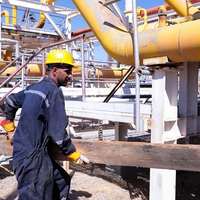
A worker during maintenance operations at facilities in Iran's northeastern Khangiran gas field, September 13, 2026

Iran is racing to restore gas infrastructure before winter after losing about a third of its pre-war production capacity, a reconstruction challenge that could force Tehran into difficult choices between keeping homes warm, power plants running and industry supplied.

Iranian officials say attacks have knocked out about 230 million cubic metres a day of gas-production capacity, compared with pre-war output of roughly 650 million cubic metres a day. That is just over a third of pre-war production.

Tehran has begun trying to claw some of that capacity back. Officials have said roughly 100 million cubic metres a day could be restored in the coming months, still less than half the capacity reported lost.

But restoring production is only part of the problem. Rystad Energy estimated in April that repairing damage to Iran’s energy infrastructure could cost as much as $19 billion, affecting gas processing, refining and export facilities.

That figure covers physical repairs rather than the wider economic consequences of lost production, disrupted exports and industrial shutdowns. Rystad has also identified shortages of critical equipment and workers as major obstacles to recovery.

Winter could provide the first major test of whether Iran can repair enough of its energy system quickly enough to prevent wartime damage from developing into a broader economic crisis.

A system already under pressure

Iran entered the war with an energy system already struggling to match supply with demand.

The US Energy Information Administration has said sanctions slowed development of the country’s natural-gas infrastructure and that limited storage capacity left Iran poorly equipped to manage seasonal swings in consumption.

In 2022, residential and commercial consumers accounted for 33% of Iran’s gas consumption, industry including petrochemicals for 27%, and electricity generation for another 28%, according to the EIA.

Household and commercial gas consumption rises during winter, while demand from the electricity sector is highest during summer.

The loss of production capacity therefore leaves Tehran having to allocate a reduced supply among households, power stations, petrochemical plants and other industrial users.

The problem is not simply how much gas Iran has underground. Gas reserves alone do not guarantee reliable supply: the country also needs functioning processing plants, pipelines and storage facilities, as well as electricity, maintenance, equipment and skilled workers to keep the system operating.

Damage beyond gas

Reduced gas supplies to power plants could constrain electricity generation, while restrictions on industrial users could hit petrochemicals and energy-intensive sectors such as steel, aluminium and cement.

That means the eventual cost of the damage cannot be measured solely by the reconstruction bill. Lower production can also translate into weaker industrial output and exports at a time when Tehran needs resources to finance repairs.

Iran's broader energy sector is already under severe financial pressure. The war and US naval blockade have sharply curtailed Iranian oil exports, leaving tens of millions of barrels stranded in storage and depriving Tehran of crude export revenue.

The combination creates the risk of a cycle in which energy shortages constrain economic activity while reduced revenues make restoring the energy system more difficult.

A longer-term problem

The war has also magnified structural weaknesses that predate the conflict.

South Pars, which Iran shares with Qatar, is the country's largest non-associated natural-gas field and the centre of its gas industry. But the EIA had already warned before the war that without additional investment Iran could struggle to satisfy domestic demand while meeting its export commitments.

Sanctions have restricted access to foreign investment, technology and specialised equipment, leaving Tehran with an existing infrastructure challenge before US and Israeli attacks added an urgent reconstruction burden.

Rystad said delays in procuring critical equipment were likely to determine how quickly damaged energy infrastructure could be restored, while shortages of workers were another major obstacle.

The winter test

For Tehran, the immediate question is how much of the reported 230 million cubic metres a day of lost gas capacity can be restored before colder weather drives household demand higher. How severe the remaining deficit becomes will depend on demand, further repairs and whether additional infrastructure is damaged.

Tehran may have to balance household heating against industrial production and electricity generation while trying to rebuild infrastructure under sanctions.

Rystad's $19 billion estimate gives a sense of the potential physical repair bill. The larger test is whether Iran can restore enough of the system to prevent damaged gas infrastructure from feeding through into electricity shortages, industrial disruption and further economic pressure.

The coming winter should provide the clearest indication yet.

Banner

Most Viewed

Video of Iran's police sexually abusing teenager draws fury
1

Video of Iran's police sexually abusing teenager draws fury

2

US House passes Iran sanctions as Trump signals war may be nearing end

3

Iran rapidly rebuilding site tied to past nuclear weapons research - report

4

Trump weighs major Iran escalation as China steps up diplomatic push

5

Calls to quit NPT grow in Iran as critics warn of strategic trap

Banner
Banner

Spotlight

  • Tehran ‘ashamed’ as Iranians struggle to make ends meet

    Tehran ‘ashamed’ as Iranians struggle to make ends meet

  • Iran faces postwar winter with a third of gas capacity lost
    ANALYSIS

    Iran faces postwar winter with a third of gas capacity lost

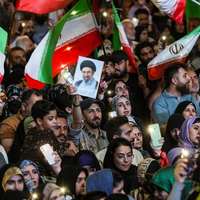
  • Iran’s nightly pro-state rallies become factional battleground
    INSIGHT

    Iran’s nightly pro-state rallies become factional battleground

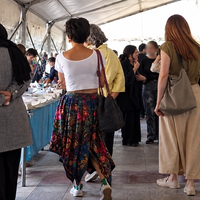
  • Woman, Life, Freedom and the Iran that cannot go back
    OPINION

    Woman, Life, Freedom and the Iran that cannot go back

  • From Halkbank to Golden Global: Turkey’s Iran banking ties under US scrutiny

    From Halkbank to Golden Global: Turkey’s Iran banking ties under US scrutiny

Banner
•
•
•

More Stories

Trump weighs major Iran escalation as China steps up diplomatic push

Sep 18, 2026, 01:03 GMT+1
100%
US Marines train on the flight deck of the USS Portland in the Arabian Sea. (CENTCOM/X)

President Donald Trump said Thursday he was weighing renewed large-scale strikes on Iran as China intensified diplomatic contacts with Washington and Tehran amid mounting pressure to contain the regional conflict.

Trump told Axios he was approaching a major decision on whether to resume broad attacks on Iran, after saying a day earlier that he hoped the war was nearing its end.

“I have a big decision coming up. Do I want to go in and annihilate them [the Iranian regime] or do I not? It's a big decision. Anything could happen with me,” Trump said in an interview published Thursday.

He is expected to meet leaders from Saudi Arabia, the United Arab Emirates, Qatar, Bahrain, Kuwait and Oman on the sidelines of the UN General Assembly next week before deciding on the next phase of the war. Axios reported that Trump wants to hear from regional allies before making his decision.

The consultations come as Washington’s partners and rivals push in different directions over whether the war should be contained or intensified.

China intensifies diplomatic push

China expanded its diplomatic engagement over the conflict Thursday, when Foreign Minister Wang Yi spoke with US Secretary of State Marco Rubio, one day after holding talks with Iranian Foreign Minister Abbas Araghchi in Beijing.

China’s Foreign Ministry said Wang and Rubio discussed preparations for the next stage of high-level exchanges between the two countries and exchanged views on the Middle East.

During Wednesday’s talks with Araghchi, Wang urged Iran and the United States to exercise restraint and resume substantive consultations, while also calling for the Strait of Hormuz to reopen.

Beijing’s diplomacy comes as the conflict threatens shipping routes at both ends of the Arabian Peninsula, increasing the risk of wider disruption to regional energy flows.

China has also privately asked Iran to use its influence to rein in Yemen’s Houthis after Saudi Arabia appealed to China for help, Reuters reported Thursday, citing three Iranian sources familiar with the matter.

The sources said Saudi Arabia sought Beijing’s intervention as Houthi advances around Bab el-Mandeb increased risks to oil exports and commercial shipping. China asked Tehran to help prevent the fighting from spreading further across energy routes important to Beijing.

The intensified diplomacy has not narrowed broader differences between Beijing and Washington over Iran.

Russia and China on Thursday vetoed a US-drafted Security Council resolution extending the mandate of the UN panel monitoring sanctions on Tehran, underscoring the continuing divide over the international sanctions framework.

Israel signals campaign is not over

While China pressed for restraint, Israel signaled that it was not ready for the military campaign to end.

Prime Minister Benjamin Netanyahu said Israel still had work to complete against Iran and its regional allies and said Israel intended to bring down Iran’s regime.

“We have done most of the work, but there is still work to complete, and we will complete it,” Netanyahu said in remarks published Thursday by his official account.

Defense Minister Israel Katz separately said Israel still had “important goals” to achieve against Iran and in other arenas, adding that the broader military campaign was not over.

“We will act with military force and political wisdom to achieve them,” Katz said.

Shipping pressure persists from Hormuz to Aden

The stakes surrounding Trump’s decision were also visible at sea, where commercial traffic remained severely depressed and new security incidents were reported along key regional shipping routes.

Only three commodity vessels transited the Strait of Hormuz Wednesday, down from 12 a day earlier and well below the 10-day average of about 17, Reuters reported Thursday, citing preliminary ship-tracking data.

The figures exclude vessels that may have crossed with their Automatic Identification System transponders switched off.

Fresh maritime security reports added to concerns over the region’s main shipping routes.

UK Maritime Trade Operations said it received a report of a security event in the Strait of Hormuz about 16 nautical miles northeast of Khasab, Oman. The crew was reported safe and no environmental impact had been confirmed while authorities investigated.

Farther west, a westbound tanker in the Gulf of Aden reported being pursued by a skiff that attempted to intercept it about 75 nautical miles east of Aden, according to UKMTO.

Trump has not said when he will decide whether to resume large-scale strikes. His meeting with six Persian Gulf leaders next Tuesday will bring him face to face with governments exposed to the economic and security costs of a wider conflict, as Washington weighs whether to intensify the campaign or pursue another diplomatic opening.

US House passes Iran sanctions as Trump signals war may be nearing end

Sep 17, 2026, 13:11 GMT+1
100%
Ukraine's President Volodymyr Zelenskiy welcomes US Senator Lindsey Graham (R-SC) before their meeting in Kyiv on July 10, 2026.

The US House of Representatives passed the Lindsey O. Graham Sanctioning Russia and Iran Act of 2026, clearing the sweeping measure for President Donald Trump’s signature as Washington also signaled that the Iran war could be approaching a diplomatic turning point.

The House approved the sweeping sanctions legislation by a vote of 262-159 on Wednesday, after the Senate passed it 86-11 last month. Fifty-eight Democrats supported the bill, while seven Republicans opposed it.

The legislation would authorize the president to impose tariffs of up to 100% on the largest purchasers of Russian oil and natural gas and sanction senior Russian officials, oligarchs, banks and financial institutions. At Trump’s request, lawmakers also expanded the measure to include sanctions targeting Iran’s energy and weapons sectors.

Republican Representative Joe Wilson welcomed its passage and said lawmakers were looking forward to Trump signing it into law.

The measure could affect major importers of Iranian and Russian energy. India said Thursday that it had noted the bill’s passage while emphasizing that it remained committed to securing energy supplies through diversified sourcing and in response to changing market conditions.

The sanctions push came alongside indications that Washington and Tehran may be exploring a path toward ending the war. Trump said on Wednesday after arriving in North Carolina that he hoped the conflict was nearing its conclusion, adding that Iran was seeking an agreement.

“Well, hopefully we’re toward the end of the war,” Trump told reporters. “Iran is very much wanting to make a deal. We’ll see how that works out.”

Trump is also expected to meet leaders or foreign ministers from the six Persian Gulf states on the sidelines of the UN General Assembly in New York next Tuesday, Axios reported. The meeting is expected to address the next phase of the war and US proposals for a postwar strategy.

Iranian Foreign Minister Abbas Araghchi, meanwhile, said consultations during his visit to China had been successful and endorsed Chinese President Xi Jinping’s proposals for ending the conflict.

China’s Foreign Ministry said Araghchi told Foreign Minister Wang Yi that Iran did not want the hostilities to continue and hoped to return to diplomacy. Wang urged Iran and the United States to revive the negotiating framework established under the Islamabad memorandum, called for the reopening of the Strait of Hormuz and backed dialogue between Iran and Persian Gulf states.

Araghchi also held separate telephone calls from Beijing with Turkish Foreign Minister Hakan Fidan and Pakistan’s army chief, Field Marshal Asim Munir, to discuss regional developments.

A parallel diplomatic channel emerged in Oman, where US officials met senior representatives of Yemen’s Iran-backed Houthis over the weekend, Reuters reported. The Houthis said they had no intention of attacking American vessels and remained committed to their 2025 ceasefire with Washington, according to the report.

Two sources told Reuters that the group promised not to target US ships. A Yemeni source said the Houthis also pledged not to attack Israeli or other commercial vessels, with the exception of Saudi ships.

The discussions took place against a backdrop of continued fighting between the Houthis and Saudi Arabia. Riyadh said it intercepted a Houthi drone near Mecca this week, an allegation the group denied. Saudi Arabia has also sought air-defense assistance from France, Britain, Pakistan and Egypt as its interceptor stocks decline, the Associated Press reported.

Houthi-run media said Saudi strikes in Yemen on Thursday hit telecommunications towers in Taiz and killed one person in Abs. The Houthis also released footage they said showed the downing of a Saudi F-15, a claim that Saudi Arabia had not confirmed.

Maritime traffic through the Strait of Hormuz remained severely constrained despite the diplomatic activity. Only three commodity vessels transited the waterway on Wednesday, down from 12 a day earlier and far below the 10-day average of about 17, Reuters reported, citing preliminary ship-tracking data.

US Central Command maintained that commercial traffic was still moving and that Iran did not control the strait. Its spokesperson said US forces had helped vessels carrying more than 900 million barrels of crude pass through the waterway since early May and had cleared mines from internationally recognized shipping lanes.

The sanctions bill, diplomatic contacts and continuing disruptions at Hormuz and in Yemen left Washington applying further economic pressure while testing whether negotiations could reduce the regional fighting.

Iran cancer patients sell household goods to pay for treatment

Sep 17, 2026, 11:27 GMT+1
100%
A cancer patient receives treatment at a hospital in Iran.

Some cancer patients in Iran are selling essential household goods or abandoning medication as soaring drug prices and gaps in insurance coverage put treatment beyond the reach of low-income families, a charity director said on Thursday.

Families have sold refrigerators and televisions to buy cancer drugs, while some patients have stopped taking medication because they can no longer afford it, Hossein Zehtaban, the head of a cancer support charity in the western province of Kermanshah, told Iran's ILNA news agency.

“We are facing patients who explicitly say they cannot afford their medication, that they are no longer taking it and are waiting to see what happens,” he said.

The warning comes during a sharp rise in pharmaceutical costs across Iran. Producer inflation in the pharmaceutical, chemical and herbal products sector reached 114% year-on-year, according to Iranian economic outlet Zooman.

A recently published price list from Iranian pharmaceutical manufacturer Loghman showed increases of more than 500% for some medicines. Donepezil, used to treat symptoms of Alzheimer's disease, rose 543% for a 10-milligram dose, while the price of clarithromycin increased 308%.

Workers struggle with treatment bills

Zehtaban cited one family with three cancer patients whose main breadwinner is a worker. Medication for each patient can cost 400 million to 500 million rials ($174-$217 at an exchange rate of 2.3 million rials to the dollar) a month, he said.

100%
A healthcare worker tends to a patient in an intensive care unit at a hospital in Iran.

Iran’s minimum base wage for workers is about 166 million rials a month, meaning the medication for just one of the three patients could cost roughly two-and-a-half to three times a minimum-wage worker’s monthly pay.

The charity has about 1,700 cancer patients registered for support, though the charity director said the figure does not represent the total number of cancer patients in Kermanshah province because other organizations also provide assistance.

Insurance problems are adding to the financial pressure, he said. Pharmacies facing unpaid insurance reimbursements have reduced provision of some medicines, forcing cancer patients to search multiple pharmacies for prescribed drugs, he added.

Drug prices surge

The financial strain described by Zehtaban extends beyond cancer treatment.

Loghman's published price changes show increases across dozens of medicines, with 23 products rising by at least 100%. Donepezil rose by 427% for the five-milligram dose and 543% for the 10-milligram dose, while Tadalafil, which is used to treat erectile dysfunction, enlarged prostates and pulmonary arterial hypertension, had the largest increase at about 706%, according to reports citing the company's regulatory disclosure.

100%

Rising medicine costs have combined with food and other household expenses to make supporting cancer patients increasingly difficult, Zehtaban said. Vitamins and nutritional supplements recommended during treatment are also often excluded from insurance coverage.

The charity provides financial assistance as well as weekly psychological and physical rehabilitation sessions, but he said its resources cannot cover the mounting treatment costs.

US officials met Iran-aligned Houthis in Oman - Reuters

Sep 16, 2026, 13:25 GMT+1
100%
Iran-aligned Houthi fighters pose next to a captured vehicle following what the source described as an attack on Saudi-backed forces in the location given by the source as al Jawf governorate, Yemen, in this screengrab taken from a video released by Houthi Military Media on September 15, 2026

US officials met representatives of Yemen's Iran-aligned Houthis in Oman over the weekend, Reuters reported on Wednesday, citing five sources familiar with the matter, days after the group seized a strategic stretch of Yemen's Red Sea coast.

The previously undisclosed meeting was held at the US Embassy in Muscat, three of the sources told Reuters. Two said Oman, a longtime regional mediator, helped organize the talks.

One source said the meeting took place on Sunday. US embassy personnel represented Washington, while the Houthi delegation included senior official Mohammad Abdulsalam, who is under US sanctions, and Abdelmalik al-Ajiri, according to Reuters.

  • Iran's Saudi leverage could become its liability

    Iran's Saudi leverage could become its liability

Houthis say US ships not a target

The Houthis told US officials they did not intend to attack American vessels and remained committed to a ceasefire reached with Washington in 2025, two sources told Reuters.

A Yemeni source said the group also said it would not attack Israeli ships or other commercial vessels, except those belonging to Saudi Arabia.

The State Department did not confirm the meeting but said protecting freedom of navigation in the Red Sea and preventing terrorism from spreading from the Middle East were core US interests.

President Donald Trump said on Saturday that the Houthis had contacted his administration and asked Washington to stay out of the Yemen war. Vice President JD Vance said on Monday that the United States was in direct contact with the group.

  • Saudi Arabia squeezed from Iraq and Yemen ahead of GCC talks with Iran

    Saudi Arabia squeezed from Iraq and Yemen ahead of GCC talks with Iran

Talks come despite terrorist designation

The Trump administration designated the Houthis a "foreign terrorist organization" in March 2025.

Washington nevertheless negotiated with the group later that year and reached a ceasefire in May after two months of US strikes aimed at stopping attacks on Red Sea shipping.

The latest talks came after the Houthis seized effective control of Yemen's Red Sea coastline, including the port of Mocha and Perim Island in the Bab el-Mandeb Strait, a key route for international shipping.

Saudi-Houthi fighting intensifies

Later on Wednesday, Houthi military spokesman Yahya Saree said that the group had attacked an airbase in Khamis Mushait as well as Aramco facilities in Yanbu. Saudi Arabia did not confirm either of the attacks.

The Houthis have fought a Saudi-led coalition for more than a decade after seizing Yemen's capital, Sanaa, in 2014.

  • Iran-backed Houthis attack Saudi cities and energy facilities, wounding at least 73

    Iran-backed Houthis attack Saudi cities and energy facilities, wounding at least 73

Fighting had largely eased under a ceasefire but resumed in July after the Houthis declared a blockade of Saudi shipping in the Red Sea in response to a Saudi blockade of Yemeni ports.

Saudi warplanes have since struck Houthi positions as the group has advanced along the Red Sea coast and launched attacks toward Saudi Arabia.

Riyadh sought US help

Saudi Crown Prince Mohammed bin Salman called Trump last week seeking US military support as the Houthi offensive accelerated, Reuters reported.

Washington told Riyadh it would not become directly involved in the fighting, according to Reuters.

The escalation has also increased pressure on global energy supplies already disrupted by the Iran war and reduced shipping through the Strait of Hormuz.

A generation shaped by Woman, Life, Freedom refuses to go back

Sep 16, 2026, 02:59 GMT+1
•
Reza Akvanian
100%
A group of Iranian women walking in public without the mandatory hijab

Four years after Mahsa “Jina” Amini’s death in Iran’s morality police custody sparked the Woman, Life, Freedom uprising, teenagers who watched her name become a rallying cry have grown up amid repression but beyond many of the social and political boundaries of pre-2022 Iran.

A girl who was just entering adolescence when the Woman, Life, Freedom protests began is now approaching adulthood. The past four years have been part of the period in which her understanding of society, government and freedom has taken shape.

Women burning their headscarves, nighttime chants from apartment windows, protests in schools and universities, young people knocking turbans off clerics’ heads and protesters standing up to security forces all became part of the memories that accompanied that generation into adulthood.

One of the most enduring changes is visible on the streets.

Many women now appear without mandatory hijab in streets, universities, cafes, shopping centers and on public transport. Some ride bicycles and motorcycles without covering their hair.

The Islamic Republic has responded to this defiance with arrests and summonses, warning text messages, vehicle seizures, restrictions on bank accounts and SIM cards, surveillance cameras and the closure of businesses.

Human rights organizations say tens of thousands of women have faced security or judicial action over their clothing during the past four years.

Abandoning mandatory hijab has become one of the clearest forms of collective disobedience to emerge from 2022, continuing in parts of society despite the security and legal costs.

As the fourth anniversary of Amini’s death approached, a coalition of Iranian Kurdish political groups called for a general strike on September 16, urging people to close shops and markets and stay away from work.

From Mahsa Amini’s death to prison and executions

Mahsa “Jina” Amini, a 22-year-old woman from Saqqez in Iran’s Kordestan province was detained by the morality police in Tehran on September 13, 2022. She was taken to hospital and died three days later.

Her gravestone bears the words: “Dear Jina, you will not die. Your name will become a symbol.”

Her father, Amjad Amini, wrote on September 14, ahead of the fourth anniversary of her death, that her name had “gone beyond our small home.”

The family, he said, was still waiting for the truth to emerge.

“The sealed secret that you and all the loved ones resting in this earth carry with you will not remain hidden forever,” he wrote.

Amini’s name quickly became a rallying cry for protests that began in Saqqez and Kordestan, spread to Tehran and then swept across Iran. The Kurdish slogan “Jin, Jiyan, Azadi” and its Persian equivalent, “Woman, Life, Freedom,” became the uprising’s defining chant.

“Death to the dictator,” “This is the final message, the target is the entire system,” “Poverty, corruption, high prices — we will go on until overthrow,” and “Don’t call it a protest, it’s called a revolution” were also heard on the streets, reflecting the political direction the protests had taken.

Supreme Leader Ali Khamenei and the Islamic Republic itself became the direct targets of many of the slogans.

The uprising also quickly became a global cause. Artists, athletes, academics, human rights activists and political figures around the world voiced support, carrying Amini’s name and the slogan Woman, Life, Freedom far beyond Iran’s borders.

The authorities answered the protests with lethal force, widespread injuries and mass arrests.

Human rights organizations have put the number of people killed in the uprising at more than 550. Many more were wounded, while shotgun pellets blinded dozens of protesters in one or both eyes.

Judiciary chief Gholam-Hossein Mohseni-Ejei said in May 2025 that more than 90,000 cases had been opened in connection with the 2022 protests, including cases involving schoolchildren, university students and teachers.

The crackdown continued in the courts after large street gatherings subsided.

Execution, imprisonment, flogging, internal exile, fines, travel bans and restrictions on social rights were among the punishments handed down to protesters and activists linked to the uprising.

Mohsen Shekari, Majidreza Rahnavard, Mohammad Mehdi Karami, Mohammad Hosseini, Saleh Mirhashemi, Saeed Yaghoubi, Majid Kazemi, Milad Zohrevand, Mohammad Ghobadlou, Reza Rasaei, Mojahed Korkor, Mehran Bahramian, Mehrab Abdollazadeh, Abdoljalil Shahbakhsh and Aref Khoshkar were among those executed in cases connected to the 2022 protests.

Others remain at risk of execution.

Among them is Ali Zarei Dozdarehsi, who suffered an eye injury from shotgun pellets during the uprising. After spending time in Germany, he returned to Iran, was arrested and was later sentenced to death by a Revolutionary Court.

Dozens of other protesters have also received death sentences or still have cases under review.

Golrokh Iraee, Nasim Simiyari, Hamid Ghareh-Hassanlou, Farzaneh Ghareh-Hassanlou and Hossein Mohammadi are among hundreds of political prisoners connected to the Woman, Life, Freedom uprising who have faced restrictions in prison, including being denied phone calls, family visits or furlough.

For some, much of the past four years has been spent behind bars, even as Iranian society outside prison has moved through new protests and new changes.

A generation that says ‘We are not going back’

The children and teenagers of 2022 have grown older. Some are now at university, some have entered the workforce and others have left Iran.

What many share is the experience of growing up in a society that lived through one of the most widespread uprisings in the history of the Islamic Republic.

Schools themselves became protest sites in 2022. Students chanted slogans, pulled down images of Islamic Republic officials from classroom walls and girls removed their headscarves.

Universities saw weeks of demonstrations, sit-ins and confrontations with security forces.

For a generation that witnessed those scenes during formative years, politics became tied to the street, the school, the university and everyday life.

German-American political thinker Hannah Arendt linked freedom to the human capacity to begin something new. In her thought, political action emerges among others in the public sphere, and revolutions are among the moments when the possibility of a “new beginning” becomes visible.

For the teenagers of 2022, an experience of that kind unfolded on a mass scale before their eyes: people who often did not know one another chanted the same slogans, supported each other and joined collective action in schools, universities, neighborhoods and streets.

Four years later, this generation lives in a society where repression continues. But the experience of 2022 has not been erased from its political memory.

What Woman, Life, Freedom gave the protests that followed

The 2022 uprising did not topple the Islamic Republic, but it changed the language and horizons of protest.

Woman, Life, Freedom entered Iran’s political vocabulary alongside slogans calling for the overthrow and end of the Islamic Republic.

Women stood at the center of a nationwide uprising. School students emerged as a visible force in protest, and acts of disobedience moved from demonstrations into everyday life.

Some of the behaviors that took shape during those months continued in the years that followed.

Rosa Luxemburg, the Marxist revolutionary and theorist, viewed the defeats of revolutionary movements as links in a historical chain that could help prepare the ground for future victories.

After the failed January 1919 uprising in Berlin, she treated the experience and political understanding gained through defeat as part of a revolutionary movement’s accumulated strength.

The protests that followed 2022 began from a point that Woman, Life, Freedom had already reached. Opposition to the Islamic Republic as a whole, and demands for its overthrow, remained present in later protest slogans.

January 2026 offered one of the clearest examples.

Protests that began over economic grievances rapidly spread across the country, with political slogans against the Islamic Republic becoming a major feature.

Estimates of those killed ranged from the government’s official figure of 3,117 to more than 36,500 in Iran International’s reporting. Tens of thousands were wounded, while around 100,000 people were arrested, summoned or interrogated.

For the generation that had experienced 2022, January 2026 became a second encounter with a nationwide uprising and a bloody crackdown within only a few years.

A generation carrying the memory of several generations

Iran’s teenagers and young adults now stand at the end of a much longer history of protest and repression: women’s protests against compulsory hijab in March 1979, the executions of the 1980s, the July 1999 university dormitory crackdown, the 2009 Green Movement, the protests of January 2018 and the bloody November 2019 crackdown.

Many learned about those events through their families, photographs, books and news reports.

Woman, Life, Freedom and the January 2026 protests, however, belong to their own lived experience.

That distinction has helped shape this generation’s political memory.

Images of protesting women, schoolgirls, young people in the streets, families demanding justice and political prisoners now sit alongside images of those killed, wounded and executed.

A girl who was just entering adolescence in September 2022 is now approaching adulthood carrying memories of Amini, protest, repression and disobedience — memories now layered alongside the stories earlier generations carried from March 1979, the 1980s, July 1999, the Green Movement and November 2019.

Four years after Amini’s death, Woman, Life, Freedom remains part of this generation’s memory: in the school and the street, in experiences of repression and defiance, and in the picture of freedom and Iran’s future that it carries into adulthood.

Above all, this generation has seen that the path to political change in Iran runs through the street, collective action and effective organization.