• العربية
  • فارسی
Brand
  • Iran Insight
  • Politics
  • Economy
  • Analysis
  • Special Report
  • Opinion
  • Podcast
  • Live TV
  • Iran Insight
  • Politics
  • Economy
  • Analysis
  • Special Report
  • Opinion
  • Podcast
  • Live TV
  • Theme
  • Language
    • العربية
    • فارسی
  • Iran Insight
  • Politics
  • Economy
  • Analysis
  • Special Report
  • Opinion
  • Podcast
  • Live TV
All rights reserved for Volant Media UK Limited
volant media logo
TEHRAN INSIDER

They can erase you without arresting you

Tehran Insider
Tehran Insider

Firsthand reports from contributors inside Iran

Sep 23, 2026, 11:27 GMT+1
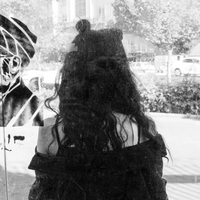
A woman with uncovered hair stands beside graffiti depicting Mojtaba Khamenei in Tehran, September 2026

One morning your phone simply stops working. There is no warning, no explanation and often no piece of paper telling you what you have done. Welcome to the Islamic Republic of Iran v.3.1.

I have been hearing versions of this story with disturbing frequency lately, from a doctor, a software engineer, an artist, a journalist and others, men and women ranging from their early twenties to their mid-forties.

Some are politically active, others barely so. What many appear to have in common is that at some point they said something online that somebody in authority did not like.

One woman in her thirties described discovering that the mobile line registered in her name had been blocked. When she tried to buy another SIM card, she learned that her national ID had also been restricted, preventing her from simply starting again with a new number.

It sounds like an inconvenience until you begin listing everything in Iran that now requires a phone number registered in your own name. Government portals routinely require text-message verification. So do university and banking services, even ride-hailing and food-delivery apps.

This is what makes the punishment so effective. The mobile phone is one of the keys to modern life here, and someone can apparently take that key away without ever coming to your door.

Life in Iran is difficult enough without inventing new ways to make it harder. People are still recovering from a brutal crackdown and war while living with the possibility of another round. Prices rise between visits to the supermarket, rent eats into salaries that were inadequate to begin with, power cuts are frequent and the internet remains unreliable.

Most people spend an extraordinary amount of mental energy simply working out how to get through another month. Now imagine trying to do all that without a functioning phone number.

A journalist in her late twenties told me she was preparing a report on SIM blocking when her own number suddenly stopped working. She knew immediately that it was not a technical glitch or an administrative accident.

"It feels as though I've ceased to exist administratively in my own country," she told me.

Others disappear even more quietly. They are not prominent activists whose names people will recognise. They are doctors, programmers, students and artists, or simply people with a few hundred followers who wrote something angry or shared something at the wrong moment.

Their phone goes dead and perhaps a handful of friends know. There is no campaign for them, and often nobody beyond their immediate circle even knows that they have been punished.

One software engineer told me that after his SIM was blocked, he began looking online for people in the same position. In about a week, he says, he came across almost 100 accounts that appeared similar to his own.

There is something particularly cruel about a punishment with no clear beginning or end. If you are charged with an offence, at least there is an accusation to confront. Here, most people are not told about the red line they crossed or how long they should suffer for it.

One person I spoke to had their SIM blocked for months after intervention by Revolutionary Guards intelligence. To have it restored, they say, they were required to delete their Twitter account and promise not to get themselves into further trouble online.

Many watching Iran from afar look at the social changes visible on Tehran's streets and conclude that the state has loosened its grip. Women now walk around without hijab in numbers that would have been difficult to imagine only a few years ago. Young men and women mix openly, and the cafés are full of people who can afford them.

None of this happened because the authorities graciously granted people more freedom of course. They fought these changes and continue to fight them, but society pushed ahead anyway and, on some fronts at least, the state appears for now to have lost.

But political dissent is a different story. There seems to be far less willingness to retreat when people challenge power itself, and the methods do not always have to be spectacular.

Repression can be something as mundane as discovering that the little device in your hand, around which so much of your life has been organised, no longer connects you to anything.

This is the latest version of the Islamic Republic: punishment hidden in plain sight, no dramatic image for the outside world to share, no prison gate for relatives to gather outside and often no official decision that can be challenged.

You can see a young woman walking down a Tehran street with her hair uncovered. What you cannot see is whether her phone still works.

Banner

Most Viewed

Iran diplomacy intensifies at UN as Hormuz crisis keeps pressure on region
1

Iran diplomacy intensifies at UN as Hormuz crisis keeps pressure on region

2

Flying to or from Iran? What to know as US pressure squeezes air links

3

Iran threatens wider war as tanker attacks test mediation efforts

4

UN says Iran committed crimes against humanity, US committed war crimes

5

Trump sees ‘momentum’ for Iran deal after New York meetings

Banner
Banner

Spotlight

  • New US-Iran talks run into old question of who speaks for Tehran
    ANALYSIS

    New US-Iran talks run into old question of who speaks for Tehran

  • They can erase you without arresting you
    TEHRAN INSIDER

    They can erase you without arresting you

  • Freeway sign hack aims to frighten Iranians in Los Angeles, experts say
    ANALYSIS

    Freeway sign hack aims to frighten Iranians in Los Angeles, experts say

  • The price of US pressure moves up Iran’s social ladder
    VOICES FROM IRAN

    The price of US pressure moves up Iran’s social ladder

  • Pezeshkian squeezed at home over meeting Trump in New York

    Pezeshkian squeezed at home over meeting Trump in New York

  • Can Iran and US find a deal while threatening escalation?
    ANALYSIS

    Can Iran and US find a deal while threatening escalation?

Banner
•
•
•

More Stories

Iran executed IT expert after months in isolation and forced confession

Sep 23, 2026, 10:10 GMT+1
•
Pooya Jahandar
100%
Hossein Pedaaran

Iranian authorities executed IT expert Hossein Pedaran after what sources familiar with his case described as months of solitary confinement, severe physical and psychological pressure and a forced confession.

Pedaran, born on June 26, 1985, was married and had two children, aged 15 and 11. He was arrested in July 2025 and executed on September 19 at Isfahan Central Prison, also known as Dastgerd Prison.

One informed source told Iran International that plainclothes agents raided Pedaran’s home when he was arrested and seized his personal and work belongings, along with electronic devices belonging to him and members of his family.

The source said Pedaran was then held for months in solitary confinement and in detention facilities run by security agencies, where he faced severe physical and psychological pressure.

Prolonged detention in dark conditions and deprivation of sunlight caused injuries and sores on his toes, the source said. Interrogators also pressured and threatened Pedaran and his wife to force him to make statements against himself, according to the source.

100%

Iran Human Rights previously reported that Pedaran spent four months at the Isfahan Intelligence Department’s detention center before being transferred to an intelligence detention facility in Tehran. He was returned to Isfahan a month later.

Work in information technology

Information obtained by Iran International shows that before his arrest, Pedaran worked in information technology at a company called Gostareh Tarahan Naghsh Almas.

His work included designing and setting up USSD codes and developing digital businesses.

Iran’s judiciary said after his execution that Pedaran had been sentenced to death for “espionage and intelligence cooperation in favor of Israel” and that the sentence was carried out after being upheld by the Supreme Court.

The judiciary accused him of providing Mossad with information about military and missile facilities in Isfahan province.

100%

An informed source rejected the judiciary’s account that Pedaran had access to military or missile information, telling Iran International that his professional work was commercial and focused on information technology and digital services.

Iranian authorities have executed dozens of people in recent months on charges including involvement in the January uprising and espionage.

Trial process

A source familiar with Pedaran’s case told Iran International that Judge Mohammadreza Tavakoli of the Isfahan Revolutionary Court issued the death sentence and that defense submissions filed by the family’s lawyer were not considered.

The family had appointed lawyers at different stages of the case, the source said.

According to the source, one of the lawyers told the family on the night before the execution that no notice confirming the final approval of the sentence or setting an execution date had appeared in the judiciary’s Sana electronic system.

Pedaran’s family therefore did not know when he would be executed until the sentence was carried out, the source said.

Security agencies had also pressured Pedaran’s wife from the time of his arrest not to publicize the case and had told the family that he might receive a pardon, according to the source.

100%

Body handed over after two days

The source said Pedaran’s family faced obstacles when trying to recover his body after the execution.

His body was handed over to the family late in the day after about two days of attempts to obtain it, the source said.

Pedaran was buried under security restrictions at Bagh-e Rezvan cemetery in Isfahan, and his family was not allowed to hold a public mourning ceremony, according to information obtained by Iran International.

Relatives described Pedaran as calm, disciplined, kind and hopeful about life. They said he remained hopeful until his final family visit before the execution.

Mizan, the judiciary-affiliated news agency, did not provide details about when Pedaran was arrested, his access to legal counsel or the conditions of his detention in its report on his execution.

After his death, state media also broadcast excerpts of what authorities described as Pedaran’s “confessions.”

The price of US pressure moves up Iran’s social ladder

Sep 23, 2026, 07:59 GMT+1
•
Saba Heidarkhani
100%
File photo: Passengers check in for flights at Tehran’s Imam Khomeini International Airport

Expanding US pressure on Iran's aviation sector is bringing a class dimension to the debate over the costs of the country's growing isolation, with some Iranians welcoming restrictions they say are finally reaching the better-off.

Washington has threatened sanctions against airports and companies that provide services to Iranian carriers as international travel options are already narrowing.

Mahan Air has suspended flights to Turkey and Oman, while Georgia has announced a halt to flights by all Iranian airlines.

Iran International asked its Instagram audience what they thought about the growing restrictions. Responses ranged from support for measures seen as increasing pressure on the state to concern about their consequences for medicine, essential goods and family travel.

“At last, the water has reached the upper decks,” one respondent wrote.

The phrase captured a recurring argument among those who welcomed the restrictions: hardships that have long affected ordinary Iranians may now be reaching wealthier or better-connected sections of society.

Others argued that air travel had already become unaffordable for much of the population and said they were prepared to tolerate further restrictions if they increased the economic and political cost for the authorities or made it more difficult for officials and those close to them to travel abroad.

The responses do not constitute a representative survey of Iranian public opinion, but they point to a revealing tension over who bears the cost of external pressure.

‘The issue isn't just travel’

US Treasury Secretary Scott Bessent said Iranian airlines would effectively be shut out of international operations from September 23, warning that airports and companies providing them with services could themselves face US sanctions.

The restrictions do not amount to the closure of Iranian airspace or automatically prohibit foreign airlines from flying to Iran. But the threat of sanctions could make it increasingly difficult for Iranian carriers to operate abroad.

For some respondents, that raised concerns extending well beyond passenger travel to medicine, raw materials, spare parts and other goods entering Iran by air.

“Everyone is thinking about passenger flights, but the real problem that will emerge is cargo flights,” one wrote.

“The issue isn't just travel,” another respondent wrote. “A lot of goods reached Iran by air, such as medicine … what is supposed to happen to patients now?”

Others pointed to higher ticket prices, longer journeys involving indirect routes and increasing difficulties visiting relatives abroad. Some feared higher import costs would feed into inflation, further squeezing household finances.

“In the war and confrontation between the government and America, it is the people who are being crushed,” one respondent wrote.

Some also pointed to congestion at land crossings such as Bazargan and Razi, fearing that further disruption to air travel would push more passengers onto already strained overland routes.

Where does tolerance for pressure end?

The responses also revealed differing interpretations of what Washington is trying to achieve.

Some saw the aviation restrictions as another sign of escalating confrontation, while others interpreted them as an attempt to increase pressure on Tehran to reach an agreement.

Several said years of sanctions and economic crisis had left society increasingly accustomed, or even numb, to new restrictions.

Measures perceived as restricting officials, state institutions or wealthier Iranians attracted support from many of those who responded to Iran International.

But that support became less straightforward when people contemplated medicine and essential goods becoming harder to obtain, more expensive travel, separation from relatives or further increases in household costs.

The responses suggest tolerance for outside pressure can be easier to sustain when its costs appear concentrated on the state. Once those costs become tangible in everyday life, the calculation becomes more complicated—even among Iranians who want greater pressure on Tehran.

Iranian test-takers head abroad as exam access shrinks

Sep 22, 2026, 12:11 GMT+1
100%
A language test center in Iran.

Iranian applicants are turning to costly overseas trips and alternative exams after access to international tests narrowed, compounding difficulties caused by internet disruption, payment restrictions and the falling value of the rial.

Students and language teachers described cancelled exams, disrupted preparation and growing reliance on overseas testing in interviews with Iranian newspaper Etemad.

TOEFL and GRE testing inside Iran stopped after the US Treasury Department suspended an authorization covering certain educational services involving Iran on August 24. Applicants have also faced restrictions affecting PTE and Duolingo, although the rules differ between providers.

“The morning she arrived at the center, they told her the test would not be held because of sanctions,” Homa, a language teacher identified only by her first name, said of a student who travelled from Gilan province in northern Iran. “That Saturday, all I could hear was students crying, some of whom had only a few weeks until their test date.”

  • Iranians tell of shrinking paths to study abroad

    Iranians tell of shrinking paths to study abroad

Some candidates had already paid for transportation and accommodation before learning their exams would not take place. Others were approaching university deadlines with little time to find alternatives.

Exam trips become a new expense

Applicants are increasingly looking to Armenia, Turkey and other nearby countries, feeding an informal business offering what Homa described as “exam tours.”

Intermediaries arrange appointments, foreign-currency payments, transportation and accommodation, sometimes allowing applicants to leave Iran, sit an exam and return within 24 or 48 hours.

Applicants travelling overland and sharing accommodation can spend around 300 million rials, about $130 at an open-market rate of roughly 2.3 million rials to the dollar. More expensive trips can reach 1 billion to 1.5 billion rials, or about $435 to $650, Homa estimated.

Those sums compare with a government-set minimum base wage of about 166 million rials, or $72, a month. With standard allowances, the minimum monthly package for a single worker is around 218 million rials, or $95.

Telegram groups have become information hubs for testing centers, accommodation and foreign payments. Homa said some operators also offer to manipulate internet or computer settings to make applicants inside Iran appear to be abroad, potentially exposing them to cancelled scores or blocked accounts.

Few alternatives without travel

Switching exams can mean losing months of specialized preparation and does not necessarily eliminate the need to travel.

IELTS is in a different position because it is jointly owned by the British Council, Australia's IDP and Cambridge University Press & Assessment rather than a US testing organization. The suspension of General License G therefore does not directly apply to it.

IELTS testing inside Iran, however, had already ended on January 31, 2026, after IDP cited separate “financial and regulatory factors” outside its control. Iranian applicants seeking the test must therefore also travel abroad.

Tabassom, identified only by her first name, had spent nine months preparing for PTE as part of plans to obtain an Australian work visa. She now expects to switch to IELTS.

100%
Students take an exam at a testing center in Iran.

“I spent an average of 150 million rials ($65) a month on language training,” Tabassom said. “Over nine months, I spent nearly one billion rials ($435) just on classes and training. I had reached the point where I was going to take the exam in another month and a half, but now I have to switch to IELTS and start preparing again.”

Domestic problems compound the disruption

The testing restrictions have landed on applicants already dealing with economic and infrastructure problems inside Iran.

Tabassom said internet outages had already disrupted contact with her immigration lawyer before the problems surrounding PTE forced her to change plans.

  • Iran sanctions reach education: Duolingo blocked, TOEFL and GRE in doubt

    Iran sanctions reach education: Duolingo blocked, TOEFL and GRE in doubt

Applicants with sufficient resources can respond by travelling abroad or paying for additional preparation. Others may have to borrow money or delay their plans. Homa said some students had sold gold or household belongings or taken loans to continue pursuing testing and migration.

For Iranians seeking to study or work abroad, the challenge is no longer only achieving the required score, but finding an affordable way to reach the examination room.

UN says Iran committed crimes against humanity, US committed war crimes

Sep 22, 2026, 00:41 GMT+1
100%
Bodies of protesters killed during Iran’s January 2026 crackdown are seen at a morgue in Tehran.

Iranian authorities committed crimes against humanity in suppressing nationwide protests in January while two US strikes on civilian sites in February amounted to war crimes, the UN fact-finding mission on Iran told the Human Rights Council on Monday.

The Independent International Fact-Finding Mission on Iran said the Islamic Republic’s response to protests that began in December 2025 amounted to a widespread and systematic attack on civilians involving unlawful killings, torture, arbitrary detention, enforced disappearances and severe restrictions on freedom of expression.

“The Iranian Government’s repression of the recent protests has led the Mission to find Iran responsible for gross human rights violations,” mission chair Sara Hossain told the council in Geneva, saying many amounted to crimes against humanity, including murder, imprisonment, torture and other inhumane acts.

The mission said the crackdown marked a significant escalation from previous patterns of repression, citing the scale of killings and violence, internet shutdowns, mass arrests and the use of the death penalty. It said it could not independently verify the overall toll but believed the number of people killed and injured was likely far higher than the government’s figures of 3,038 deaths and 25,000 injuries.

Classified government documents, field reports and accounts from medical workers, witnesses and victims’ families reviewed by Iran International’s Editorial Board showed that more than 36,500 people were killed by security forces on January 8 and 9 alone.

However, independent verification has been impossible amid communications restrictions and government pressure.

The unrest began on December 28 with protests over worsening economic conditions before spreading nationwide and turning into a broader challenge to the Islamic Republic.

In her Monday speech, Hossain said Iranians were now confronting both continued domestic repression and the large-scale US-Israeli military campaign that began on February 28.

She said Iranian authorities had also used the war to intensify persecution of protesters, describing the conflict as “a pretext for and accelerator of repression.”

Iran rejected the mission’s findings about its own conduct. Ambassador Ali Bahreini argued that economic pressure against Iran, combined with what Tehran describes as foreign manipulation and militarization of domestic unrest, amounted to crimes against humanity and accused the mission of ignoring those issues.

US war crime

The mission then turned to two US strikes carried out on the opening day of the war.

The United States and Israel launched attacks across Iran on February 28 in an operation Washington said was intended to severely weaken Iran’s military and prevent it from developing a nuclear weapon. President Donald Trump said at the outset that US forces would destroy Iran’s missile industry and navy, while Tehran denies seeking nuclear weapons. The attacks triggered Iranian retaliation against Israel and US-linked targets across the region.

Against that wider military campaign, the mission examined a US strike on the Shajareh Tayyebeh Primary School in Minab, Hormozgan Province.

Hossain said two cruise missiles hit the school, killing 157 people, including 123 boys and girls, according to sources the mission considered credible. She described it as a readily identifiable civilian building and said investigators found reasonable grounds to believe the strike amounted to the war crime of making a civilian object the object of an attack.

The school was adjacent to an Islamic Revolutionary Guard Corps naval complex, but investigators found no evidence that the building itself was being used for military purposes. The mission said the United States had failed to update information about the school in its targeting databases or adequately establish that it was a military objective, conduct it said amounted to more than mere negligence.

The mission reached a separate war-crimes finding over a US strike on a sports center in a residential area of Lamerd, Fars Province. Local authorities said 22 people — 10 women and 12 men — were killed. Investigators concluded there were reasonable grounds to believe the strike constituted an indiscriminate attack resulting in civilian deaths or damage to civilian property.

Hossain said repeated airstrikes and threats of further attacks continued to endanger civilians, destroy homes and livelihoods and disrupt access to education and healthcare. She called on all sides to conduct independent investigations into alleged violations of international humanitarian law, specifically urging Washington to investigate the two strikes and provide accountability and reparations where warranted.

Washington’s reaction

Washington rejected the conclusions. The Pentagon said its own investigation remained underway and that it had nothing further to announce, while White House spokeswoman Anna Kelly dismissed the Human Rights Council’s work and said Iran was the only party in the conflict to have committed war crimes.

US officials have maintained that American military operations comply with the law of armed conflict.

US Ambassador to the UN Mike Waltz also said Trump was expected to challenge the findings when he addresses the UN General Assembly on Tuesday, saying the president would continue to “call out the ridiculous.”

Frozen embryos advertised for sale online in Iran

Sep 21, 2026, 10:53 GMT+1
100%
An illustrative image of a fetus in an amniotic sac.

An informal market for frozen embryos appears to be emerging on Iranian social media and online marketplaces, where sellers are advertising them for cash outside the country’s donation system, local media reported on Monday.

One advertisement offered eight frozen embryos for one billion rials (about $4400), although it was unclear whether the price applied to each embryo or the entire group, Jahan-e Sanat newspaper reported on Monday.

Another seller advertised 18 frozen embryos and asked prospective buyers to suggest a price. Similar advertisements for embryos, eggs, sperm and surrogacy services have appeared on Instagram and Telegram.

The advertisements directed prospective buyers away from the original platform to continue discussions elsewhere, with little information about the people offering the embryos or how any transfer would take place.

Iranian law provides for donation, not direct sales

Iranian legislation passed in 2003 permits embryo donation to infertile married couples under specified conditions, with implementing regulations adopted the following year also covering frozen embryos.

  • Iran ‘youth population’ law linked to rise in Down syndrome births - daily

    Iran ‘youth population’ law linked to rise in Down syndrome births - daily

Under those regulations, embryo donation is defined as the voluntary and free transfer of one or more embryos to authorized infertility treatment centers. Written consent from the couple providing the embryo is required, and transfers must take place through authorized specialist centers.

100%
A newborn baby rests in a hospital neonatal care unit in Iran.

Prospective recipients must apply jointly as a married couple to a court and meet requirements covering infertility, legal capacity, health, drug use and Iranian citizenship.

The regulations therefore provide a formal route for donating frozen embryos but do not define them as commodities that can be sold directly between individuals.

Sociologist points to poverty and intermediaries

The online advertisements could reflect a combination of financial hardship among potential sellers and the desperation of couples struggling with infertility, sociologist Alireza Sharifi-Yazdi told Jahan-e Sanat.

“Behind this are a number of digital intermediaries who operate on Instagram, Telegram, and similar platforms and exploit the poverty and financial vulnerability of families, particularly women, as well as the desperation and confusion of infertile couples,” Sharifi-Yazdi said.

He distinguished regulated infertility treatment from an informal market in which intermediaries seek to profit from reproductive services.

Some infertile couples may turn to such channels after unsuccessful treatments including intrauterine insemination, or IUI, and in vitro fertilization, or IVF, he said.

Lengthy adoption procedures and the cost and waiting times associated with infertility treatment can also make unofficial alternatives appear easier, Sharifi-Yazdi added.

The financial circumstances of people offering embryos, he said, are another part of the picture, with worsening poverty potentially making them more susceptible to intermediaries seeking to profit from their situation.

Questions over oversight and identity

Sharifi-Yazdi also raised concerns about the possible consequences for children born following informal embryo transactions, including questions about their genetic parentage and legal status.

  • Missing embryos case at Tehran fertility clinic triggers legal probe

    Missing embryos case at Tehran fertility clinic triggers legal probe

Modern DNA testing could allow children conceived through such arrangements to discover that the people raising them are not their genetic parents, potentially creating psychological and legal complications later in life, he argued.

Iran also lacks a transparent centralized national system through which people seeking to donate embryos without payment can readily register and navigate the legal process.