Tehran rejects US terms as hardliners push escalation

Maryam Sinaiee
Iran International
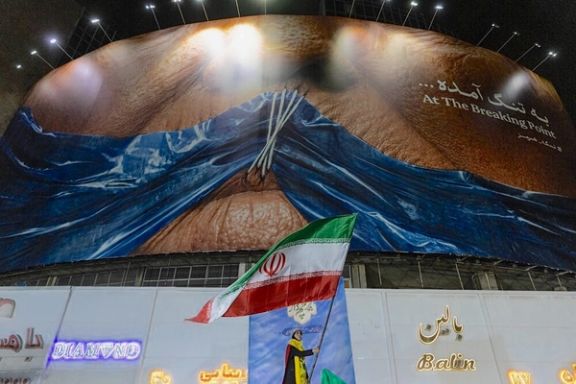
Iran’s defiant response to a US proposal on ending the conflict is fueling new fears that the fragile ceasefire could collapse and fighting resume within days.
Iran International
Iran’s defiant response to a US proposal on ending the conflict is fueling new fears that the fragile ceasefire could collapse and fighting resume within days.
Tehran handed its response to the latest US proposal to Pakistan on Sunday for delivery to Washington. Hours later, President Donald Trump dismissed the Iranian reply as “totally unacceptable” and warned Monday that “the ceasefire is on life support.”
The exchange has fueled growing expectations in Iranian media and political circles that another military confrontation may be approaching, even as officials insist they remain open to diplomacy on their own terms.
Arash, a 45-year-old engineer in Tehran, said many people were once again preparing for the possibility of war.
“Filling gasoline tanks and stocking up on food and water for emergencies has again become a priority,” he said.
Tehran rejects key US conditions
Iranian state-linked media strongly denied Western reports suggesting Tehran’s response included compromises on nuclear issues.
Tasnim News Agency, affiliated with the Revolutionary Guards (IRGC), rejected claims that Iran’s proposal addressed the future of its nuclear materials or enrichment activities.
Iran's state broadcaster IRIB described the American proposal as “meaning Iran’s surrender to Trump’s excessive demands.”
According to IRIB, Iran’s counterproposal emphasized compensation for war damages, recognition of Iran’s sovereignty over the Strait of Hormuz, the lifting of sanctions and the release of frozen Iranian assets.
Former IRGC commander-in-chief Mohammad Ali Jafari said Monday that no further negotiations would take place unless Iran’s conditions were met.
Mixed signals
President Masoud Pezeshkian struck a more conciliatory tone during a meeting with senior police commanders on Sunday.
While acknowledging deep distrust toward Washington, Pezeshkian said Iran would remain committed to any agreement reached “while taking into account the concerns of the Supreme Leader and the interests of the Iranian nation.”
“The rational, logical and nationally beneficial preference is for the victory achieved by the armed forces on the battlefield to be completed in diplomacy as well,” he added.
Foreign Ministry spokesman Esmaeil Baghaei also said Monday that Tehran’s proposal was “reasonable and generous,” but accused Washington of continuing to insist on “unreasonable demands.”
Baghaei said Iran’s immediate priority was ending the war rather than negotiating details of the nuclear program, adding that decisions regarding “the nuclear issue, enriched materials and enrichment itself” would be announced later “at the appropriate time.”
Some hardline figures, however, are increasingly arguing that Iran should openly pursue nuclear weapons capability as a deterrent against future attacks.
Ebrahim Rezaei, spokesman for parliament’s National Security and Foreign Policy Committee, said lawmakers had questioned the value of remaining in the Nuclear Non-Proliferation Treaty and stressed the need to preserve Iran’s nuclear “achievements.”
Limited optimism
Despite the dominance of hardline rhetoric in official circles, online reactions suggested skepticism toward maximalist demands and calls for escalation.
Under a commentary published by Alef News listing Iran’s conditions, one reader wrote sarcastically: “Do not expect them to accept all these conditions unless you completely defeat them and even take prisoners.”
Another commented: “These are a list of wishes, and nobody is asking what they would receive in return.”
The skeptical comments drew significantly more support from readers than hardline calls for confrontation.
State television has repeatedly discussed the possibility of renewed fighting, often portraying another conflict as likely but manageable.
Reformist website Rouydad24 wrote that “the political atmosphere inside Iran is not favorable to a quick agreement,” arguing that hardline factions view any retreat as surrender while the government is trying to avoid appearing weak without securing sanctions relief.
“For now,” the outlet concluded, “the most likely scenario is not a comprehensive agreement but continued attritional negotiations combined with temporary ceasefires and crisis management—a situation that is neither full peace nor total war.”







Foreign ministry spokesman Esmail Baghaei said Tehran’s proposal included ending the war in the region, lifting what he described as the US blockade, releasing frozen Iranian assets, ensuring safe passage through the Strait of Hormuz and restoring regional security.
“The Islamic Republic has proven that it is a responsible power in the region,” Baghaei said during his weekly briefing. “We are not bullies; we stand against bullies.”
He accused Washington of continuing to insist on “unreasonable” demands.
US President Donald Trump on Sunday dismissed Iran’s latest response to a US proposal as “totally unacceptable,” while Iranian state media said Tehran rejected what it described as Washington’s “excessive demands.”
The dispute appears to center on two of the war’s most contentious issues: Iran’s insistence on sovereignty over the Strait of Hormuz and Washington’s demands over Tehran’s nuclear program, particularly its stockpile of enriched uranium and enrichment infrastructure.
Tehran says focus remains on ending war
Baghaei said Iran was not currently focused on decisions related to uranium enrichment or the future of its nuclear activities.
“At the current stage, our focus is on ending the war,” he said. “Later, regarding the nuclear issue, Iran’s materials and matters related to enrichment, we will discuss those issues when the time comes.”
Several countries, particularly in the region, had contacted Tehran because of concerns over further escalation, he added.
“We have always appreciated parties that sincerely try to persuade the other sides to stop creating tensions,” Baghaei said.
Pakistan acting as ‘mediator’
Baghaei described Pakistan as an “official mediator” between Tehran and Washington and said other countries, including Qatar, were also maintaining contacts with both sides and sharing proposals with Iran’s foreign minister.
Baghaei also urged European countries not to be drawn into the conflict through what he described as pressure from the United States and Israel.
“We clearly told European countries not to allow temptations from the United States or Israel on regional issues to drag them into a crisis that will bring them no benefit,” he said.
Many European governments, he added, understood the war had been “illegal, immoral and aggressive” and had resisted pressure to openly support actions he said “undermined international peace and security.”

