• العربية
  • فارسی
Brand
  • Iran Insight
  • Politics
  • Economy
  • Analysis
  • Special Report
  • Opinion
  • Podcast
  • Iran Insight
  • Politics
  • Economy
  • Analysis
  • Special Report
  • Opinion
  • Podcast
  • Theme
  • Language
    • العربية
    • فارسی
  • Iran Insight
  • Politics
  • Economy
  • Analysis
  • Special Report
  • Opinion
  • Podcast
All rights reserved for Volant Media UK Limited
volant media logo

Tiered internet access given to 'unrelated' users, Iran judiciary chief says

Apr 27, 2026, 06:25 GMT+1

Privileged internet access, known as “Internet Pro,” has been given to people whose jobs are “unrelated” to the criteria set by authorities, Iran’s Judiciary Chief Gholamhossein Mohseni Ejei said on Monday, and ordered an investigation.

“They had said these lines would be given only to individuals and groups with specific qualifications, but there are now reports and information that they have been given to some people whose jobs are unrelated,” he said.

Mohseni Ejei instructed the prosecutor general and the inspection body to look into the allocation of tiered internet access, adding that such allocation could cause “corruption.”

Most Viewed

Text of US-Iran memorandum released
1

Text of US-Iran memorandum released

2

Toronto shooting probe uncovers trail leading to Tehran

3

US says Iran won't get funds upfront under MoU

4

Khamenei shifts responsibility for MoU as Iran, US implement Hormuz terms

5

US says Iran deal will end enrichment, destroy uranium stocks, cap missiles

Banner
Banner
Banner

Spotlight

  • Who in Tehran is opposing a deal with Washington?
    INSIGHT

    Who in Tehran is opposing a deal with Washington?

  • A fragile compact: ambiguities that could undermine US-Iran MoU
    ANALYSIS

    A fragile compact: ambiguities that could undermine US-Iran MoU

  • A thaw with the US won't fill Iranian tables overnight
    INSIGHT

    A thaw with the US won't fill Iranian tables overnight

  • Why some think a weakened Iran could emerge stronger
    ANALYSIS

    Why some think a weakened Iran could emerge stronger

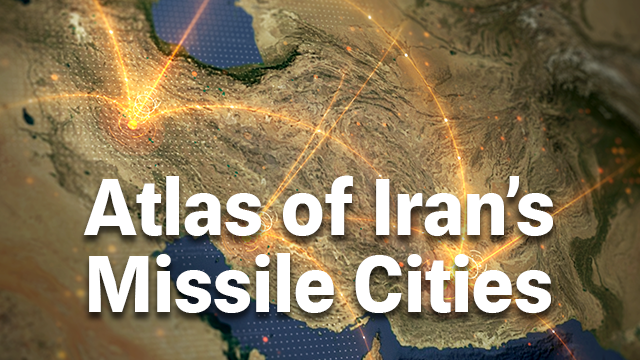
  • Atlas of Iran missile cities: The hidden network behind Tehran’s missile power
    SPECIAL REPORT

    Atlas of Iran missile cities: The hidden network behind Tehran’s missile power

  • Toronto shooting probe uncovers trail leading to Tehran

    Toronto shooting probe uncovers trail leading to Tehran

•
•
•

More Stories

Stocks rise after report of Iran’s Hormuz proposal - Bloomberg

Apr 27, 2026, 05:40 GMT+1

Stocks advanced after a report said Iran had offered the United States a proposal to reopen the Strait of Hormuz, Bloomberg reported.

MSCI’s Asia Pacific share benchmark rose 1.5%, while its emerging markets index climbed to a record after Axios reported on Iran’s proposal to end the war.

Asian chip stocks outperformed, with Taiwan Semiconductor Manufacturing Co. surging 6% to a record. A gauge of Asian tech stocks also reached an all-time high.

Bloomberg said the report eased concerns that efforts to restart peace talks had stalled.

Araghchi says Putin meeting will focus on latest war developments

Apr 27, 2026, 04:58 GMT+1

Al Jazeera reports that Iran’s Foreign Minister Abbas Araghchi said his trip to Russia is aimed at continuing close consultations between Tehran and Moscow on regional and international issues.

Speaking upon arrival, Araghchi said his meeting later today with Russian President Vladimir Putin would provide “a good opportunity” to discuss developments in the war and review the latest situation.

“I am confident that these consultations and coordination between the two countries in this regard will be of particular importance,” he added.

Dollar steady after reports of a 'new Iran proposal' to US

Apr 27, 2026, 04:14 GMT+1

The US dollar was steady on Monday as wavering hopes of a deal to end the war between the United States and Iran kept investors on edge.

US President Donald Trump scrapped a planned visit to Islamabad by his envoys over the weekend.

Sentiment improved later after Axios reported that Tehran had sent Washington a new proposal through Pakistani mediators to reopen the waterway and end the war, while postponing nuclear negotiations to a later stage.

The euro trimmed earlier losses to trade flat at $1.1724, while sterling traded at $1.3536.

Is Ghalibaf becoming Iran’s Khrushchev?

Apr 27, 2026, 04:06 GMT+1
•
Mehdi Jedinia
Is Ghalibaf becoming Iran’s Khrushchev?
100%
Former United States President John F. Kennedy (R) meets with Nikita Khrushchev, former chairman of the council of Ministers of the Soviet Union, at the US Embassy residence in Vienna, Austria in this June 1961 handout image.

Reports that Mohammad Bagher Ghalibaf may have been sidelined from Iran’s negotiations with the United States have revived an old question from Soviet history: can an insider reform a rigid ideological system without becoming one of its casualties?

Ghalibaf may be emerging not as Iran’s Mikhail Gorbachev, but as something closer to Nikita Khrushchev—an establishment figure attempting controlled change not to dismantle the Islamic Republic, but to preserve it.

The Majles speaker, a former IRGC commander with deep ties inside the security establishment, has in recent weeks appeared to sit at the center of Tehran’s debate over diplomacy or confrontation.

Supporters of diplomacy see negotiations as a way to stabilize the system and prevent further confrontation with the West. Hardline factions warn that concessions would undermine the ideological foundations of the Islamic Republic.

US President Donald Trump, intentionally or not, has helped fan the flames by publicly portraying Iran’s leadership as divided, echoing the way Washington’s rivalry with the Soviet Union often intensified internal debates in Moscow.

The comparison with Gorbachev has appeared before in Iranian politics. During the reform movement of the late 1990s, President Mohammad Khatami was frequently described as “Iran’s Gorbachev.”

Hardliners used the label to attack him, while parts of the opposition embraced it in the hope that his reforms might accelerate the system’s collapse.

In reality, neither Khatami nor his allies accepted that role. Their reforms were framed as an effort to strengthen the Islamic Republic rather than dismantle it. More importantly, the structure of power at the time made a Gorbachev-style transformation nearly impossible.

Supreme Leader Ali Khamenei held ultimate authority and maintained the balance between rival factions, limiting both reformist ambitions and hardline overreach.

The conditions today are markedly different. Iran has endured direct external military pressure, and the legitimacy of the system has been shaken by recent protests. A younger generation appears deeply alienated from the ideological foundations of the state.

At the same time, the supreme arbiter who once managed factional competition no longer appears able—or willing—to impose the same discipline.

In such circumstances, change may come not from a reformist outsider but from a figure embedded within the system itself. Ghalibaf fits that description. His background in the IRGC, his political experience, and his connections across multiple factions give him a platform few others possess.

Yet any move toward accommodation with Washington provokes resistance from ideological loyalists who view compromise as betrayal, even as warnings grow that without meaningful change the system could buckle under pressure from abroad and deepening discontent at home.

Here the Soviet analogy becomes harder to ignore.

Khrushchev’s reforms were intended to strengthen the Soviet system, not dismantle it. But attempts to modernize rigid structures often produce consequences their architects cannot control.

In 1964, Khrushchev was quietly pushed aside by his colleagues and officially “retired due to old age and ill health.”

If Iran’s leadership ultimately chooses a path of limited reform to preserve the state, Ghalibaf could still emerge in such a role. But if the system rejects even controlled adaptation, he may instead become an early casualty of its resistance to change.

Is the US blockade working? It depends who you ask

Apr 27, 2026, 03:41 GMT+1
Is the US blockade working? It depends who you ask
100%

Recent tracking data suggesting Iran is still moving millions of barrels of crude despite a US naval blockade has raised fresh questions about the effectiveness of Washington’s effort to choke off Tehran’s oil exports.

TankerTrackers.com on Sunday cited satellite images that it said showed Iran loaded at least 4.6 million barrels of crude at export terminals in recent days, with another four million barrels appearing to have crossed the US blockade line.

The figures suggest Tehran retains at least some ability to keep oil flowing despite a US naval blockade launched nearly two weeks ago and repeated claims from Washington that the operation is crippling Iran’s maritime trade.

Read the full article here.