Iran protests enter eighth day amid heavy security presence
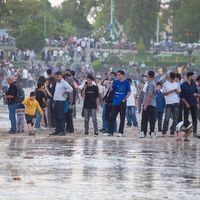
Protesters take to the streets in southern Tehran’s Naziabad neighborhood on January 6, 2026, Tehran, Iran.
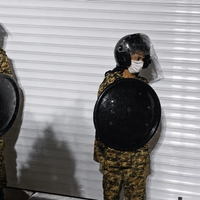
Protests continued across Tehran and other parts of the country on Sunday, with security forces deployed in large numbers around the capital’s main bazaar and major shopping centers as demonstrations entered their eighth day.
Many shops in the bazaar in Tehran remained closed, while plainclothes security agents were reported in nearby streets, according to videos and information received by Iran International.
Videos showed crowds chanting slogans at security forces as tear gas was fired and motorcycle-mounted units were deployed along Jomhouri Street in Tehran.
Overnight protests were reported in dozens of cities, with demonstrations continuing in Tehran neighborhoods including Narmak, Naziabad, and Hafez Street, as well as in provincial cities such as Sangsar in Semnan province, Nurabad-e Mamasani in Fars province, Sari in Mazandaran province, and Malekshahi in Ilam province.
Labor, retiree, civil, and teachers’ organizations inside Iran also issued statements backing the protests, citing inflation, unemployment, and economic pressure.
Internet disruptions across parts of Iran
Internet access was reduced or effectively cut off in several parts of the country on Sunday, particularly in areas where protests were more intense.
Residents in cities including Asadabad in western Iran, Kermanshah, Dezful, Malekshahi, Malard, Marvdasht, Kuhdasht, Borazjan, Mashhad, Shiraz, and parts of Tehran reported severe disruptions, with some saying it took hours to send a single text message.
Opposition figures pay tribute to slain protestors
Iran International has verified the identities 16 protestors who have been killed during the protests.
Some sources have reported a higher number of fatalities. US-based human rights group, Human Rights Activists News Agency (HRANA), reported the deaths of at least 19 protestors on Sunday.
Iran International's investigations to verify reports regarding the identities and final number of those killed in cities including Azna, Marvdasht, Malekshahi, Hefshjan, and Farsan are still ongoing.
Iran’s exiled prince Reza Pahlavi paid tribute to the slain protesters, saying in a post on X that he honored their memory and vowed to hold those responsible to account.
“I honor and keep alive the memory and names of our compatriots who were killed in Iran’s national uprising,” Pahlavi said in a post on X.
Addressing the families of slain protestors, Pahlavi said: “On this irreversible path, I stand shoulder to shoulder with you.”
“I assure you that those who ordered and carried out these crimes will be identified and, without doubt, punished,” he added.
Addressing Iran’s Supreme Leader Ali Khamenei, he said: “By spilling the blood of the purest children of this land, you and your network have brought your own downfall closer. We will not back down and will continue until the complete destruction of your anti-Iranian regime.”
Komala Party Leader Abdullah Mohtadi on Sunday offered condolences to the families of slain protesters, and condemned what he described as a “major crime” by the Iran's Revolutionary Guards in Malekshahi, Ilam province.
"The great force of the popular movement will ultimately sweep away the apparatus of oppression and crime," he added in a post on X.
An Iranian man feeds birds in a street in Tehran, Iran, December 20, 2025.
A social media post by a prominent Silicon Valley investor has ignited an unusual discussion among global entrepreneurs: what it would take to invest in a future Iran after the fall of the Islamic Republic.
Josh Wolfe, co-founder of Lux Capital, a New York-based venture capital firm known for backing deep-tech companies in fields such as artificial intelligence, semiconductors, aerospace, and biotechnology, asked fellow investors on X whether they were prepared to deploy capital in a “free Iran” once political conditions change.
Addressing American investors, family offices, and asset managers, Wolfe urged them to begin thinking about how to support Iranian technologists and entrepreneurs when Iran is free and... opportunity is unleashed.”
The post quickly drew attention from senior figures across the technology and investment world, reflecting growing interest in frontier markets shaped by geopolitical transformation.
Among the most prominent responses came from Jeff Huber, a veteran Silicon Valley executive who previously led Google Maps and Google Ads before co-founding Triatomic Capital, an investment firm focused on infrastructure, energy transition, and advanced technologies.
Huber replied in Persian, writing simply, “Count on me,” a gesture that was widely shared among Iranian users as a sign of solidarity and intent.
Another notable response came from Michael Granoff, founder and managing partner of Maniv Mobility, an Israeli venture capital firm specializing in transportation and energy technologies.
Granoff pointed to his firm’s experience investing in the United Arab Emirates following the Abraham Accords, which normalized relations between Israel and several Arab states.
“We’d love to be the first to invest in a free Iranian startup,” Granoff wrote, explicitly linking potential investment in Iran to precedents set by rapid capital flows following political normalization elsewhere in the region.
The exchange also attracted responses from Iranian entrepreneurs in the diaspora, including business founders and professionals based in Canada, Australia, and Europe, many of whom offered to contribute expertise in healthcare, technology, and management during a future reconstruction phase.
While some users criticized the discussion as premature amid ongoing repression and protests inside Iran, the reaction from high-profile investors indicated a broader shift: the idea that Iran’s post-Islamic Republic future is no longer viewed solely through a political or security lens, but increasingly as a potential economic and technological opening.
Protests continued across Iran for a seventh day and night on Saturday, with demonstrations reported in scores of cities and a sharp rise in fatalities marking one of the most violent phases of the unrest so far.
Videos and eyewitness accounts received by Iran International showed security forces opening fire on protesters in several locations, most notably in Malekshahi, a city in Ilam province, where state-linked media confirmed multiple deaths following clashes.
Based on information shared with Iran International, during protests in Malekshahi at least five protesters were killed by direct fire from security forces, and around 30 others were wounded.
Footage from the city showed wounded protesters and scenes of chaos after live ammunition was used.
Overall, at least 15 protesters and one member of the security forces have been reported killed during seven days of demonstrations, according to rights group HRANA.
Iran International was able to confirm that dozens more were wounded by live fire or pellet guns, while arrests were reported across several provinces.
The unrest, initially driven by economic grievances, has increasingly taken on a political character, with protesters chanting slogans against clerical rule and the Supreme Leader, as well as calling for a return of monarchy.
Demonstrations were reported in major cities as well as smaller provincial centers, despite heavy security deployments and warnings from authorities.
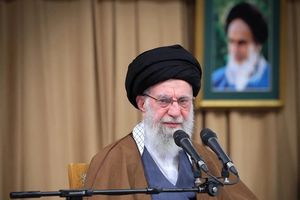
In his first public remarks since the protests began, Supreme Leader Ali Khamenei described participants as “rioters” and called for their suppression, signaling a hardening official stance as the unrest entered its second week.
Protests and street gatherings have been recorded in at least 174 locations across Iran over the past seven days, a rights group said, despite an intensified security crackdown aimed at curbing dissent.
The Human Rights Activists News Agency (HRANA) said demonstrations, labor strikes and street protests were reported in 60 cities across 25 provinces, indicating that unrest has extended beyond major urban centers into smaller cities and surrounding areas.
The group said protest activity had taken varied forms, including at least 18 student gatherings at 15 universities.
According to HRANA, at least 582 people were arrested during the past week, a figure it described as a minimum estimate, warning that the actual number is likely higher due to reporting restrictions and security pressure.
The data showed a significant number of those detained were minors. In the southwestern city of Yasouj alone, at least 81 people were arrested, including 70 under the age of 18, HRANA said.
Arrests of teenagers aged 15 to 17 were also reported in cities including Sabzevar, Izeh, Zahedan, Isfahan and Yasouj.
HRANA said it had confirmed at least 16 deaths linked to the protests during the seven-day period, including one member of Iran’s security forces. The remaining fatalities were civilians, it said.
At least 44 protesters were wounded by live ammunition or pellet fire, according to HRANA and separate reporting by Iran International. Dozens of others were injured by beatings, tear gas or during arrests, the reports said.
HRANA warned that the death toll could rise, citing conflicting official accounts, pressure on families and severe limits on information flow.
Iranian authorities have not issued comprehensive public figures on arrests or casualties.
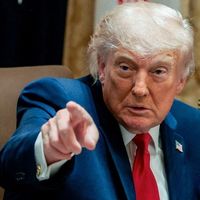
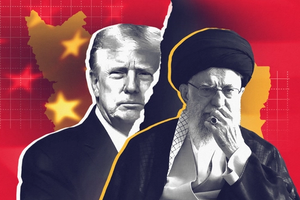
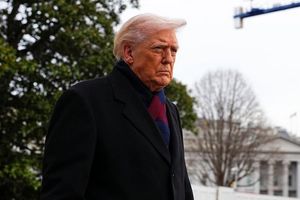
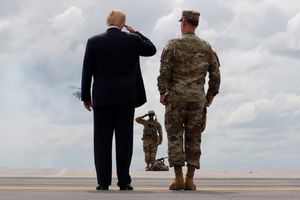
Within a week of the outbreak of protests in Iran against the Islamic Republic and its rulers, US President Donald Trump weighed in twice with direct comments.
On the second day of protests, he condemned the Iranian government for firing on demonstrators. On day six, he went further, warning that if the killing of protesters continued, US forces “will come to their rescue.”
This amounts to the fastest and most explicit reaction by an American president to a wave of unrest in Iran in the past 45 years. The question is whether this posture translates into concrete diplomatic steps or credible military pressure—or remains a largely symbolic deterrent message.
In 2009, former US president Barack Obama responded cautiously to Iran’s Green Movement protests. At the time, he had sent a second letter to Iran’s supreme leader, Ali Khamenei, and had yet to receive a reply. Obama feared that open support for protesters could undermine the secret backchannel he was attempting to establish with Khamenei to resolve the nuclear standoff.
At the same time, his advisers warned that overt US backing could backfire: protesters might be branded as “foreign agents,” giving the government a pretext to crack down even harder.
Those concerns are far less salient for Trump, at least for now. On one hand, there is currently no meaningful or active diplomatic channel between Tehran and Washington that a sharp US stance could weaken or shut down.
On the other hand, Iranian officials have for years accused protesters of being agents of hostile powers—a charge repeated by Khamenei himself in a recent speech on the unrest—rendering the label largely meaningless. There is little indication that demonstrators now fear either foreign support or accusations of outside ties.
Years later, Obama acknowledged that his cautious approach to the Green Movement had been a mistake, arguing that the United States should support popular, pro-freedom movements wherever they arise. Trump’s swift and blunt reaction suggests he has avoided a similar error.
The Obama administration’s experience also underscores another lesson: firm rhetoric is not enough. In 2012, Obama declared that the use of chemical weapons by the Syrian President Bashar al-Assad constituted a US “red line.”
Yet a year later, a sarin gas attack on Eastern Ghouta, a rebel-held suburb to the east of Damascus, killed hundreds of civilians, but the United States did not launch a military strike. Instead, Obama pursued a diplomatic route to remove Syria’s declared chemical weapons stockpiles.
That effort reduced—but did not end—the use of chemical weapons in Syria, and it significantly weakened Obama’s standing, and that of the United States, among Syrian opposition groups.
Trump, by contrast, appears keenly aware that unfulfilled threats erode both his personal authority and the projection of American power. He has acted on threats toward Iran twice: first, with the killing of Qassem Soleimani exactly six years ago, on January 3, 2020, and second, with a strike on Iranian nuclear facilities around 200 days ago.
On Saturday, Trump also followed through on recent threats against Venezuelan President Nicolas Maduro, announcing that the United States had carried out a major operation against Venezuela and detained Maduro and his wife, removing them from the country.
Tehran moved quickly to respond to Trump’s threat against the Islamic Republic’s repressive forces targeting protesters, suggesting that Khamenei is attentive to the speed and clarity of the message and the prospect of its implementation.
US President Donald Trump’s warning to Iran's rulers over violence against protesters has triggered divided reactions among Iran’s opposition and critics, with Tehran answering the remarks by issuing counter-threats against US interests in the region.
Hours after Trump posted his message on Truth Social, Ali Larijani, Secretary of Iran’s Supreme National Security Council, warned that US interference would be met with instability and the destruction of American interests across the region.
Iran’s Foreign Ministry also condemned Trump’s remarks as “interventionist,” warning that any reaction by the Islamic Republic could push “the entire region deeper into crisis and instability.”
A day later, Supreme Leader Ali Khamenei declared that Tehran would confront what he described as “riots,” while signaling limited openness to dialogue.
Exiled Prince Reza Pahlavi, whose name is being chanted by protesters as a future leader of Iran, welcomed Trump’s message. In a social media post, he thanked the US president and wrote:
“This warning you have issued to the criminal leaders of the Islamic Republic gives my people greater strength and hope—hope that, at last, a President of the United States is standing firmly by their side.”
He added: “I have the plan for stable transition for Iran and the support of my people to get it done. With your leadership of the free world, we can leave a legacy of lasting peace.”
In other messages, he urged Tehran residents to defy government efforts to prevent gatherings in the capital, calling mass street presence a vital complement to protests in smaller cities.
Amir Hossein Etemadi, an advisor to Prince Reza Pahlavi, warned Iranian officials that Trump’s message should be taken seriously, writing: “For every bullet fired at the people, they move faster toward their own death and that of their regime.”
Rejection of foreign intervention
At the same time, many reformists and government critics in Iran have strongly opposed foreign interference while urging authorities to refrain from violence.
Azar Mansouri, head of Iran’s Reformist Front, emphasized the right to protest but rejected outside interference, writing: “We stand with the protesters and do not see repression as a solution. But we explicitly and firmly condemn any foreign intervention; such interference harms non-violent protests.”
Prominent commentator Sadegh Zibakalam wrote that while he views Iran’s foreign, military, and nuclear policies as damaging to national interests, he cannot “stand alongside Trump and Netanyahu,” despite recognizing protest as a fundamental civil right.
Former vice president Mohammad-Ali Abtahi urged the government to prevent bloodshed to deny Washington any pretext.
Such statements have angered some social media users, who accuse reformist figures of aligning with the Islamic Republic against protesters.
A double-edged threat
Several analysts argue that Trump’s warning could have contradictory effects embolden some protesters and deter others.
Reformist journalist Ahmad Zeidabadi wrote that military intervention aimed at regime change is likely the last thing Trump seeks. Instead, he argued, Trump sees the protests as leverage for maximum pressure and potentially to undermine the Islamic Republic’s legitimacy.
According to Zeidabadi, such threats may push some protesters to withdraw while emboldening others.
Another commentator, Sahand Iranmehr, echoed this view, saying the message could foster “false hope” among some protesters while making others fear their movement could become “a battleground for US or Israeli geopolitical agendas.”
Journalist Bahman Amouee argued that Trump and Israeli Prime Minister Benjamin Netanyahu have effectively handed the Iranian government an excuse for harsher repression, aided by opportunists inside and outside the country.
Vali Nasr, a professor at Johns Hopkins University, summed up the concern in a post on X:
“Threatening to bomb Iran is not helping protesters… Iranians didn't revolt when Israel bombed and called on them to rise up; they are unlikely to do the same if US bombed Iran.”