Recent reports by state-linked, reformist and business-affiliated institutions suggest growing concern not only about economic hardship but also about its long-term social consequences.
One of the most striking indicators comes from Eghtesad News, which reported in May that Iran's middle class, estimated at 65% to 70% of the population at the beginning of the 2010s, now accounts for only around half of the country's population.
While the recent conflict involving Israel and the United States has intensified economic pressures, many analysts argue that the underlying deterioration long predates the war.
A separate study highlighted by the state-owned Mehr News Agency points to mounting pressure on small and medium-sized enterprises (SMEs), which remain among the largest employers of working- and lower-middle-class Iranians.
According to the Iran Chamber of Commerce Research Center, macroeconomic pressures are "systematically destroying" SMEs while leaving large state-backed entities comparatively insulated.
Unable to access affordable financing and struggling with rising costs, many businesses have resorted to what the report describes as "hidden layoffs"—reducing working hours, delaying wage payments and replacing long-term contracts with temporary arrangements.
The result, according to the report, is a gradual shift of workers out of the formal economy and into more precarious forms of employment.
That trend is explored in a separate analysis published by the reformist website Rouydad24, which traces the growth of informal labor to the sanctions shock that followed intensified international pressure in 2012.
Industries dependent on foreign trade and international supply chains increasingly turned to informal employment arrangements, hiring workers without insurance coverage or social-security protections.
According to the report, the probability of workers entering the informal economy rose by roughly 9% following the sanctions shock, with the effects becoming more pronounced over time.
While the informal sector helped absorb displaced workers and prevented a sharper rise in unemployment, the long-term costs have been significant. Analysts cited by Rouydad24 point to lower productivity, weaker tax collection and growing strain on pension funds as insurance contributions decline.
Low-skilled and less-educated workers have experienced the highest rates of displacement into insecure employment, while rural communities have seen some of the sharpest reductions in working hours and income stability.
What began as a deterioration in working-class security has increasingly spread into the middle class, leading to housing insecurity, declining consumption, shrinking access to cultural activities and growing economic pessimism.
Property prices and rents have risen far faster than incomes, forcing many households into smaller homes, peripheral neighborhoods or satellite towns on the outskirts of major cities.
Economists warn that such displacement carries broader social consequences, weakening community ties, increasing commuting times and reducing overall quality of life.
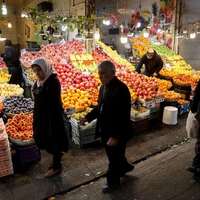
Inflation has also altered household consumption patterns. Reports increasingly describe families reducing spending on meat, dairy products and other staples, while expenditures on books, cinema, travel, restaurants and other cultural activities have become harder to sustain.
The cumulative effect is a gradual narrowing of the economic and social space traditionally associated with middle-class life.
These assessments stand in sharp contrast to recent remarks by Vice President Jafar Ghaempanah, who said that 82% of Iranians were satisfied with market management and the availability of essential goods during the war.
His comments came as government officials simultaneously acknowledged that authorities were unable to increase the purchasing power of subsidized coupons used to buy basic necessities.
For many economists, the central concern extends beyond living standards. Historically, Iran's middle class has played an important role in education, entrepreneurship, professional development and civic participation.
As economic pressures push more households downward, analysts increasingly warn of declining social mobility, weaker social trust and a growing risk of future instability.
The warnings emerging from Iranian experts converge on a similar point: the country's economic difficulties are no longer confined to the poorest segments of society and are reshaping the social foundations on which long-term stability depends.