Iran political prisoner sews lips shut to protest detention - rights group
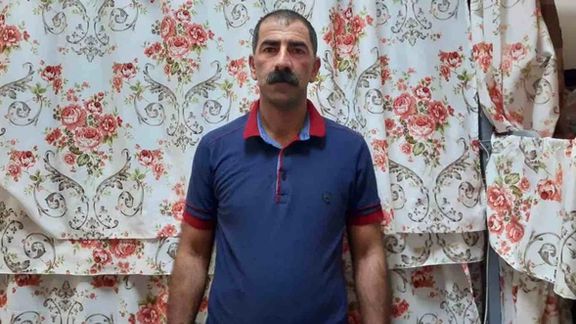
A Kurdish political prisoner in Iran began a hunger strike by sewing his lips in protest at being denied family visits and prison leave, a rights group said on Tuesday.

A Kurdish political prisoner in Iran began a hunger strike by sewing his lips in protest at being denied family visits and prison leave, a rights group said on Tuesday.
Nayeb Askari, who is serving a 15-year sentence at Orumiyeh Central Prison in northwest Iran formally informed prison authorities that he had started a hunger strike and sewed his lips on December 13, France-based rights group Kurdistan Human Rights Network (KHRN) said.
In a letter to prison officials, Askari said he had been barred from family visits for the past year without explanation and that repeated requests for temporary prison leave had gone unanswered. He launched the hunger strike after prison authorities failed to respond to his complaints, he added.
Askari, from Orumiyeh, was arrested on March 24, 2021, by intelligence agents from Iran’s Islamic Revolutionary Guard Corps (IRGC) and was initially held at the IRGC’s Al-Mahdi detention center for three months, where he was allegedly subjected to physical and psychological torture, according to KHRN.
"He was subjected to severe physical and psychological torture in order to extract forced confessions," KHRN said. "He was also denied access to a lawyer and contact with his family during this period," the rights group added.
Askari's arrest followed his return to Iran from the Kurdistan Region of Iraq after receiving what the rights group described as a “safe-conduct letter” arranged through the IRGC.
Iranian authorities initially sentenced Askari to death in absentia in 2018 on charges of “enmity against God” (moharebeh) linked to alleged membership in the Kurdistan Free Life Party (PJAK), according to KHRN. The sentence was later overturned, and the charge was amended to “armed insurrection” (baghi).
In October 2023, Askari was again sentenced to death on the same charge, prompting a brief hunger strike. The Supreme Court later overturned the ruling for a second time and referred the case to another court branch.
In mid-October 2024, Askari was sentenced to 15 years in prison and fined 900 million rials (about $700) on charges of “armed insurrection,” the rights group said.
KHRN said Askari has previously staged prolonged hunger strikes in detention, including a 32-day strike in 2021 to protest authorities’ refusal to transfer him to an external hospital for medical treatment.


A US federal judge on Monday ordered the release of an Iranian migrant held by immigration authorities for nearly six months, ruling that the government had shown no realistic prospect of deporting him to a country other than Iran in the foreseeable future.
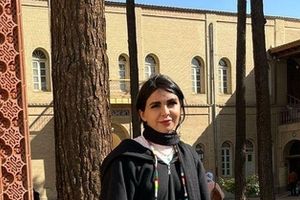
Hamid Ziaei, who was detained in June after a check-in appointment with US Immigration and Customs Enforcement in California, had been held at the Torrance County Detention Facility in New Mexico while US officials pursued possible deportation to a third country, his attorneys said.
“The US government provided no evidence that there was any likelihood of Mr. Ziaei’s removal in the reasonable, foreseeable future,” Rachel Landry, a staff attorney at Innovation Law Lab, told the court in Albuquerque, the group said.
US District Court Judge Matthew Garcia said he would issue an order for Ziaei’s release within 24 hours, Landry and fellow attorney Tiffany Wang said.
Court filings on Ziaei’s behalf say he fled Iran after speaking out against the government and entered the United States in San Diego in January 2024. His asylum request was rejected, but he was released in mid-2024 with authorization to work based on concerns he could face persecution if returned to Iran, the filings said.
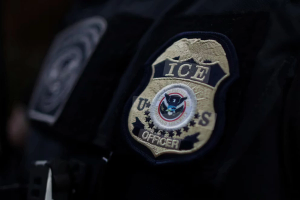
An ICE officer said in court documents that the agency began vetting Ziaei for removal to a third country in August and initiated procedures to coordinate an interview with a foreign embassy that might accept him.
The US attorney’s office in New Mexico, representing immigration authorities, declined to comment. In filings, immigration authorities cited a 2001 US Supreme Court ruling they said gives the government at least six months to make removal arrangements.
In a December 2 statement submitted to the court, Ziaei said prolonged detention led to anxiety and panic attacks, deferred dental treatment for infections, and weight and muscle loss that could affect his future income as an athlete.
The case comes as Iran’s foreign ministry has confirmed recent US detentions and deportations of Iranian nationals under tightened immigration enforcement, including groups returned to Iran via transit countries.

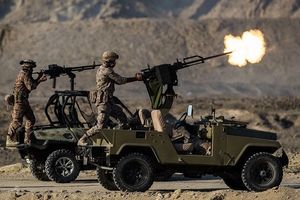
Two separate armed attacks on Iranian security forces in the country’s restive southeast killed at least three police officers and a civilian on Monday night, the latest bout in a deteriorating security picture as militant groups regroup under a new umbrella outfit.
Iran’s Revolutionary Guards confirmed an armed clash on the Zahedan-Fahraj road, saying “three law enforcement personnel and one ordinary citizen” were killed.
In a statement issued early Tuesday, the Guards’ Qods Ground Forces headquarters said security and intelligence agencies were investigating the incident.
The IRGC headquarters for the southeast is one of ten regional commands and oversees the largest geographic area, covering the provinces of Sistan-Baluchestan and Kerman, and commanding multiple provincial Guards units and key combat brigades in the region.
The rights group Haalvsh, which monitors unrest in the region, earlier reported that the Fahraj incident occurred at a checkpoint in neighboring Kerman province and said four security personnel – two intelligence officers and two police – were killed, with several others wounded. The group published video footage showing injured officers and bodies being transferred from the scene.
At the same time, a second confrontation involving armed assailants and Iranian forces was reported in the city of Iranshahr, also in Sistan-Baluchestan province.
In Iranshahr, Haalvsh said gunmen targeted three military vehicles in the early hours of Tuesday, killing and wounding an unspecified number of security personnel.
The group cited local sources and said roads leading toward Zahedan were blocked by military forces, leaving travelers stranded with no indication of when routes would reopen.
Iranian authorities have not released casualty figures for the Iranshahr attack, nor have they commented on the identity or motives of the attackers. No group has officially claimed responsibility for either incident.
The attacks are the latest in a series of armed confrontations in Iran’s impoverished southeast, which borders Pakistan and Afghanistan and has long been plagued by violence involving Sunni Baluch militant groups and Iranian security forces.
Pattern of attacks and militant regrouping
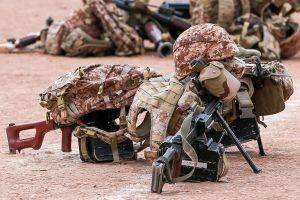
In recent months, similar clashes have intensified. Last week, the Guards said four of their members were killed and three wounded in an attack by what they described as “terrorist and hostile groups” in the Lar area near Zahedan.
A day later, Haalvsh reported that a newly formed coalition calling itself the “Popular Fighters Front” claimed responsibility, saying it had ambushed a Guards convoy.
The Popular Fighters Front announced its formation earlier this month, presenting itself as a merger of several Baluch political and militant factions, including the PADA Baluch Movement, Harakat Nasr Balochistan, Jaish al-Adl, the Mohammad Rasulallah group led by Haji Vahed Bakhsh, and self-described “spontaneous Baluch fighters.”
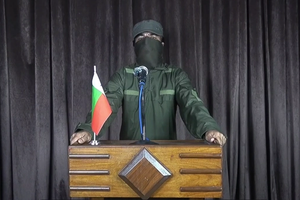
In a video message posted online, a masked spokesman identified as Mahmoud Baluch said the coalition aimed to increase the effectiveness of resistance against what he described as oppression by Iran’s ruling system.
While the group’s manifesto emphasized civil, media and political action, it did not renounce armed operations and claimed responsibility for recent attacks.
Jaish al-Adl – designated a terrorist organization by both Iran and the United States – has emerged as the dominant force within the coalition, analysts say.
The group formed around 2012 after the execution of Abdelmalek Rigi, the leader of its predecessor, Jundullah, and has since carried out bombings, ambushes and suicide attacks against Iranian police, border guards and the Revolutionary Guards.
Iranian state-linked media have sought to downplay the significance of the merger, portraying it as a rebranding of weakened factions aimed at attracting foreign backing. Some outlets have alleged links to Israeli intelligence, a claim the groups deny.
Shift in strategy
Security analysts say the emergence of the Popular Fighters Front reflects an attempt by Baluch militants to broaden their appeal beyond a narrowly defined Sunni ethnic insurgency.
Recent statements from the group have adopted more inclusive language, addressing Kurds, Arabs, Turks and other minorities and framing their struggle in terms of shared political and economic marginalization.
The shift follows years of intensified counterinsurgency operations by Iranian forces in Sistan-Baluchestan, including arrests, cross-border pressure near Pakistan, and heightened surveillance. Despite this, militant groups have continued to demonstrate the capacity to stage deadly attacks.
Iran’s southeast remains one of the country’s poorest regions, with longstanding grievances over discrimination, underdevelopment and heavy-handed security policies.
These tensions flared during the nationwide protests of 2022, when security forces carried out lethal crackdowns in Baluch and Kurdish areas.
According to an article by US-based Al-Monitor news website this week, while transforming a Baluch-based insurgency into a national movement would require organizational depth and cross-ethnic networks that militant groups have historically lacked, the new coalition “adds a layer of political complexity” for Tehran.

Canada announced a new round of sanctions on four senior Iranian officials on Monday over their alleged role in Tehran’s violent crackdown on protests and dissent.
The officials named are Mohsen Karimi (Markazi Province commander), Ahmad Khadem Seyed al-Shohada (commander of Karbala Operational Base in southwest provinces), Mostafa Mohebbi and Hassan Akharian, all described as senior figures implicated in 'gross and systematic' human rights violations, the foreign ministry said in a statement.
Foreign Minister Anita Anand said the four are being listed under the Special Economic Measures (Iran) Regulations for facilitating and directing repressive policies in the Islamic Republic.
“Iranian security forces, including the Islamic Revolutionary Guard Corps (IRGC), continue to use excessive and lethal force to suppress protests, along with beatings, arbitrary arrests and torture, including in custody,” the statement said.
Ottawa formally listed the IRGC as a terrorist entity under the Criminal Code last year, which Canada blames for human rights abuses and the 2020 downing of flight PS752.
“Canada will not hesitate to highlight Iran’s persistent disregard for the human rights of its own people and call for change," the statement said. "It is imperative that Iran investigate all violations in line with international law, ensure justice for victims, and make certain that its policies and practices uphold its human rights obligations."
Ottawa also introduced a new measure last week, requiring any transaction with Iran, no matter the amount, to be reported. The previous $10,000 reporting threshold has been eliminated in favor of a zero-dollar threshold for any financial transaction to or from Iran.
Canada shuttered its embassy and cut diplomatic ties with Iran in 2012 over what it called security concerns for its diplomats and Iran’s alleged support for terrorism and human-rights abuses.

Russia’s Foreign Minister on Monday criticized provisions in a 2015 nuclear deal which allowed Europe to trigger UN sanctions on Iran and said it was up to Iran whether to renew talks on its disputed nuclear program.
“When we realized in 2015 that such a solution had been found between the US and Iranian negotiators, we asked our Iranian friends: are you sure this is correct? We were told that Iran does not intend to violate anything, and we believed that as well,” Sergei Lavrov said in an interview with Iran’s state-run TV aired on Monday.
The veteran diplomat directly tied the controversial clause to former Iranian foreign minister Mohammad Javad Zarif’s final talks with then US Secretary of State John Kerry, saying other parties were sidelined as Washington and Tehran closed the deal.
Lavrov’s earlier comments on the issue triggered an unusually public war of words with Zarif, who said the snapback idea was originally pushed by Russian and French negotiators and accused Lavrov of lying about the history of the mechanism.
Asked about criticism that Moscow did not support Iran enough, Lavrov balked.
“Seriously, it must be said that neither current politicians nor former ones have any grounds to complain that Russia failed to support the Islamic Republic at various stages of the negotiations,” he said.
Lavrov described current Western policy towards Iran as built on pressure and said other countries in the region were not fully satisfied with the approach.
“It is very important that, in our assessment, your Arab neighbors do not support efforts to increase pressure on the Islamic Republic,” he added.
‘Our Iranian friends’
Lavrov also signaled support for renewed nuclear diplomacy involving the US and European powers, presenting Russia as ready to help end the standoff.
“Our Iranian friends are aware of our assessments. The decision about whether to resume dialogue with the United States is up to them. We have heard that Iran is interested in resuming such talks, and as for the Agency, whether to restart dialogue with the Agency – we also know Iran wants to revive that, but the decision lies with the authorities in Tehran,” he said.
Asked if it is still beneficial for Iran to remain a signatory to the Nuclear Non-Proliferation Treaty (NPT), Lavrov advised Tehran to stay committed.
“You raised the final question of whether it is worth Iran remaining in the NPT or not. We believe it is worth staying and that one should not try to drag this issue into the public arena by criticizing everything that has happened,” Lavrov said.
Lavrov also raised concerns over Iran’s decision to curb cooperation with the International Atomic Energy Agency (IAEA) under an understanding brokered by Egypt, saying Tehran should take that commitment seriously.
“The actions and positions of the Agency have, to put it mildly, generated very unpleasant feelings in Iran, and this is completely understandable to me,” he said.
“But this is a question that should be put more directly to (IAEA chief Rafael) Grossi and his colleagues, so that the principle of neutrality is fully respected and they do not, at certain moments, take political steps that help one side or the other.”
Tehran and the IAEA inked a deal in Cairo in September aimed at resuming full IAEA access but little progress appears to have been made.
Iran suspended cooperation with IAEA inspectors after a 12-day war in June against Israel and the United States in which they attacked Iranian nuclear sites, codified via a new law passed by parliament.
US President Donald Trump said last week Iran's nuclear program is "gonzo" after air attacks he ordered in June and that it faced "obliteration" if restarted, telling Tehran they could avoid more destruction with a nuclear deal.

The family of Iranian activist Pouran Nazemi says they have had no contact with her since she was violently arrested alongside Nobel Peace Prize laureate Narges Mohammadi and other activists during a memorial service on Friday.
Nazemi was detained during a memorial service in the northeastern city of Mashhad for Khosrow Alikordi, a former political prisoner and lawyer for dissidents whose sudden death left supporters suspicious of state involvement, which Tehran denies.
At the ceremony, security forces used force to dispersed mourners and arrested 39 people, including activists, lawyers and civil society figures.
Nazemi’s sister Mahshid told Iran International she was on a live video call with Pouran when security forces stormed the mosque where the commemoration was being held.
“The security officers opened the mosque’s doors and attacked the people with batons and knives,” Mahshid said. “They threw tear gas inside the mosque," Mahshid said.
Mahshid was able to record portions of the incident by capturing the live video call with her sister, though she was unable to document the alleged knife and baton attacks she described.
She did, however, provide photos showing what appear to be knife wounds and a bloodied scene.


Videos reviewed by Iran International show Pouran describing the crackdown in real time before the feed was abruptly cut. Screams and loud bangs were audible.
Mahshid said she watched plainclothes officers beat women inside the mosque and drag people away. “They attacked them very badly. We could only hear screaming and see the camera shaking,” she said.
Iran International was not immediately able to verify all aspects of her account of the raid.
Defiance, fear of death
“It was terrifying,” Mahshid said. “But I also felt proud because I saw a group of brave women, without the hijab, in a mosque, in a religious city, shouting ‘Death to the dictator’ and ‘Woman, Life, Freedom."
The Woman, Life, Freedom movement marked one of the most serious challenges the Islamic Republic has faced, with protests erupting nationwide in 2022 after the death of Mahsa Amini in morality police custody and calling for an end to clerical rule.
Nazemi's sister says they still do not know where she is being held or which security body is responsible for her detention, though they fear the case may be under the authority of the Islamic Revolutionary Guard Corps.
“We don’t know which prison she is in or which organization is holding her,” Mahshid said. “And when there is no official information, the risk of torture and fabricated charges increases,” she added.
The family is also concerned about Nazemi’s health. She has a history of stomach cancer, severe respiratory problems and life-threatening anaphylactic reactions caused by medical negligence during a previous detention, according to her sister.
During an earlier imprisonment, Nazemi suffered allergic shock after being given an antibiotic she was known to be sensitive to while undergoing surgery, Mahshid said.
“Since then, her condition has never been stable. Now I don’t know if she is receiving any medication at all,” she told Iran International.
There is also an open case against Nazemi in the southeastern city of Kerman, which her family fears could be used to impose harsher charges.
“They have already given her 14 years in prison in one case,” Mahshid said. “They don’t answer us, they don’t give court documents, and they argue with our lawyers,” she told Iran International.
From memorial to mass arrests
Iranian authorities say 39 people were arrested during the memorial ceremony. Those detained included Alikordi’s brother Javad Alikordi, Mohammadi and human rights activists Aliyeh Motallebzadeh, Sepideh Gholian, and Hasti Amiri.
Several detainees have since made brief phone calls to their families, but relatives say information about their condition and whereabouts remains limited.
In a message relayed by her family, Mohammadi said she was severely beaten during her arrest, suffering repeated blows to the head and neck with batons, and was later accused of “cooperation with the State of Israel.”
Human rights groups say the arrests followed a violent crackdown on mourners at the memorial, which had become a flashpoint amid growing controversy over Alikordi’s death.
Alikordi, a lawyer known for defending political prisoners and bereaved families, was found dead in his office in Mashhad on December 5. Authorities say he died of a heart attack, but his family and colleagues have questioned the official account, citing the removal of surveillance cameras and inconsistencies in the investigation.
Calling on the international community to act, Mahshid urged governments and rights groups to demand accountability.
“When names and locations are hidden, people are tortured and silenced,” she said. “Be a voice. Raise the cost for the Islamic Republic and demand transparency — for my sister and for the suspicious death of Khosrow Alikordi,” she told Iran International.