Iran welcomes Saudi–Pakistan security pact, calls for Muslim unity
Ali Larijani, Secretary of Iran’s Supreme National Security Council, met with Pakistan Interior Minister in Tehran on Tuesday
Iran’s security chief Ali Larijani on Tuesday endorsed a defense pact between Saudi Arabia and Pakistan, calling for unity among Muslim countries in the face of what he described as common regional threats.
"The signing of a strategic agreement between Pakistan and the Kingdom of Saudi Arabia is a matter that pleases us," Ali Larijani, Secretary of Iran’s Supreme National Security Council, wrote on X.
"The Islamic world is in need of this brotherhood. And we no longer need speeches to resolve the region's issues, but rather action and cooperation," he added following a meeting with Pakistan’s Interior Minister Mohsen Naqvi in Tehran.
Larijani also praised Pakistan’s stance during a 12-day war in June between Iran and Israel, saying it “reflects a shared understanding of the region’s strategic realities.”
Saudi Arabia and Pakistan signed a strategic defense agreement in September, pledging mutual protection in the event of external aggression.
Nuclear armed-Pakistan has one of the world's largest armies but lacks fellow Sunni state Muslim state Saudi Arabia's vast energy wealth.
Both countries have long been suspicious of the Shi'ite Muslim theocracy in Tehran, which they view as a competitor for regional influence.
Iran’s endorsement of the agreement signals a rare moment of apparent convergence amid deepening geopolitical faults in the Middle East.
Pakistan shares a 560-mile border with Iran, where both countries face persistent threats from armed groups operating in the frontier region, including cross-border militancy.
In January 2024, Iran and Pakistan exchanged missile and drone strikes targeting militant groups in one of the most serious military escalations between them in decades.
Despite the exchange, both sides moved quickly to de-escalate, activating diplomatic channels and emphasizing that the attacks aimed at non-state actors not each other’s governments.
State telecom contracts in Iraq are giving Iran-aligned companies a key role in one of Tehran's last allies in the Middle East, The Atlantic magazine reported, providing an important lifeline as sanctions and isolation deepen.
Iraq's Ministry of Communications awarded no bid contracts to state conglomerate the Muhandis General Company and an umbrella group of Iran-backed militias the Popular Mobilization Front to maintain the national fiber-optic network, the Atlantic reported.
The business gives the groups the opportunity for illegal profiteering, the magazine cited Iraqi officials and telecoms industry officials as saying, adding that it could give Tehran or its allies the possible ability to surveil Iraqis.
The US Treasury sanctioned MGC this month, accusing it of being led by Iranian Revolutionary Guards-backed militia Kata’ib Hizballah and siphoning off revenues from government contracts.
As parliamentary polls loom early next month, the Iraqi government has championed vast construction projects after decades of violence following a 2003 US invasion.
But Prime Minister Mohammed Shia al-Sudani has cemented his position by folding Iran-aligned factions including militia leaders who helped win a national fight against Islamic militants into his economic and political fold.
US Secretary of State Marco Rubio last week urged Baghdad to swiftly disarm Iran-backed militias in a phone call with al-Sudani, accusing the Shi'ite groups of diverting the Arab nation’s resources to Tehran’s benefit.
With this technical know-how, these militias or their Iranian backers could monitor civilian and government communications.
In a related development, Prime Minister Mohammad Shia al-Sudani sought to authorize a 5G mobile network contract for another consortium linked to the Popular Mobilization Front. A senior judge temporarily blocked the deal, citing national security risks, though legal experts say the suspension may not hold, The Atlantic reported.
Iran's former ambassador to Iraq said on Tuesday that Tehran aims to foster resistance far and wide.
"Resistance is not a proxy force; it transcends time and place, meaning today's resistance is not confined to the geography and ideology of the Islamic world," Tasnim News cited Hossein Kazemi Qomi, former ambassador to Iraq, as saying in Tehran.
"Westerners claim that the resistance is a proxy network backed by Iran, while their claim is baseless, as what has shaped the resistance is religious and ideological identity along with shared threats," he added.
Iran's armed affiliates in Gaza, Syria and Lebanon have suffered blows from Israeli attacks. The armed Houthi movement in Israel and Iraqi militias stand out as Tehran's more intact allies.
The British government said this week it had no evidence of Iranian support for the Polisario Front, the Algeria-backed armed movement seeking independence for Western Sahara from Morocco despite Rabat's assertions of Tehran's backing.
Foreign Office Minister of State for International Development and Africa Baroness Chapman told the House of Lords on Monday that “the UK has not seen evidence of Iranian support for the Polisario Front."
"However, we continue to monitor Iranian activity in the region," said Chapman, adding that Britain "has long condemned Iran’s destabilizing provision of political, military and financial support to its proxies and partners,” and would continue working with allies to counter Tehran.
Morocco, a Western-aligned monarchy on Europe's southern flank, joined in normalization accords with Israel during US President Donald Trump's first term.
It has occupied the territory of Western Sahara, a former Spanish colony, for decades and fought Algerian-backed insurgents whom it accuses of receiving arms and training from Tehran.
Morocco cut diplomatic ties with Iran in 2018 over the allegations, which Tehran denies.
Lord Godson, a conservative peer who had asked Labour's Baroness Chapman about Polisario in the debate on Monday, appeared unconvinced.
"I thank the Minister for her answer. However, there is much open-source evidence of a mutual admiration society between the present Iranian regime, the IRGC and the Polisario on the other side," he replied, asking the government to further investigate.
A policy brief from the Washington-based Foundation for Defense of Democracies (FDD) has argued that Tehran’s reach in North Africa has quietly expanded through proxy networks extending from Lebanon to Algeria.
The report says Hezbollah has trained Polisario fighters in Syria, some of whom later fought alongside pro-Assad forces.
It also cites past Moroccan claims that Tehran sent missiles to the Polisario via Hezbollah operatives working out of Iran’s embassy in Algiers—accusations that led
Iran has for decades sought expanded influence in the Middle East by supporting armed groups at odds with established US-backed authorities.
Retirees across Iran held protests over the past week, demanding overdue pension payments and relief from rising cost of living according to voice and video submissions sent to Iran International.
Demonstrations were reported in cities including Zanjan, Tabriz, Tehran, Esfahan, Gilan and Fars, with participants chanting slogans that reflected both economic hardship and political frustration, lapse in their pay and benefits.
In Zanjan and Tabriz, retirees gathered outside government buildings, chanting: “People's rights must be settled,” and “Yesterday's warriors are today's claimants. Yesterday's fighters are today's rights-seekers.”
The term “warriors” refers to veterans of the eight-year Iran-Iraq war, many of whom now face financial insecurity.
Iran’s Intelligence Ministry issued a confidential warning in August, anticipating serious fallout from the potential return of UN sanctions under the snapback mechanism.
In Tehran and Esfahan, protesters voiced anger at financial mismanagement, shouting: “The major shareholder devoured our rights,” and “Don't delay—settle our dues today.”
Some chants directly challenged official narratives, with demonstrators declaring: “Our enemy is right here; they lie that it's America.”
In Gilan and Fars provinces, retirees accused both parliament and the government of deceiving the public. “Parliament and government both lie to the nation,” one group chanted, while another called out: “Cry out against this endless injustice!”
Price hike on rise
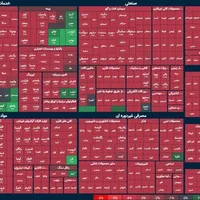
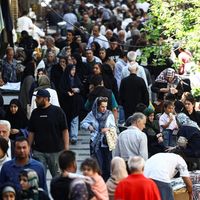
The protests come amid a sharp rise in consumer prices following the reactivation of UN sanctions by European powers last month. Basic goods have become increasingly unaffordable for many Iranians, particularly those on fixed incomes.
Rice market in Tehran
A grocer in Tehran shared a video showing his dwindling stock of rice, lamenting the price rise: “Top-grade Pakistani rice was 14.5 million rials ($13) before. A month later, it hit 21 million rials ($19). How can a head of a family with monthly income of 20 million rials ($18) could afford just for rice?”
Iran’s minimum monthly wage for 2025 stands at 104 million rials ($96), leaving many unable to cope with the rising cost of living.
Another woman posted a video comparing rice prices year-over-year: “This rice cost 11 million rials ($10) last year. Now it’s 33 million rials ($30). Khamenei, for 46 years you chased missiles, war, death to this and that, conquering this and that peak. Today, every calamity you inflicted is boomeranging on you.”
In another clip, a woman displayed two plastic bags of fruit—bananas, oranges, apples, and grapes—costing 20 million rials ($18). She narrated a comparison during the video. “In 1977, a Mercedes Benz coupe was 4 million rials (equal to $3 now). Now I pay this amount for fruit that vanishes in two days.”
A man driving through Tehran recorded a video responding to Interior Ministry claims that there has been no “visible shock” to the economy due to reimposition of UN sanctions.
“Want to see shock? Check the commodity basket. You're unfit to run the country. You must go. Islamic Republic corruption must end so someone honorable can govern.”
Meanwhile, an Iranian health official warned last week that about 120,000 Iranians die each year from nutrition-related causes, as rising food prices and declining consumption of staples such as dairy, meat, fruits and vegetables deepen the country’s public health crisis.
An Iranian state commercial body has ordered cafes, restaurants and other businesses to avoid holding Halloween-themed events or sales citing their danger to cultural values in the Islamic theocracy.
“All kinds of ceremonies, gatherings, advertising or sale of items related to what is known as ‘Halloween’ are completely prohibited in all public and business places,” Iran’s Chamber of Guilds said in a statement, citing the need to protect “cultural, religious and social values.”
It said police would take legal action against violators, including closing venues and referring managers to judicial authorities.
The move comes amid long-standing unease among Iranian authorities over the growing popularity of Western holidays such as Christmas, Valentine’s Day and Halloween among younger Iranians.
Officials and clerics have often described such events as cultural imports that conflict with Islamic values.
Despite the restrictions, public enthusiasm for Western-style festivities has continued to grow. In recent years, decorated shopfronts and cafes in Tehran, Isfahan and other cities have displayed Christmas trees and ornaments, while young people have gathered to mark holidays that once passed largely unnoticed.
The trend has fallen afoul with authorities. Two years ago, hundreds of Iranians gathered outside Isfahan’s historic Vank Cathedral, an ancient Armenian church, trying to attend a Christmas celebration before police dispersed the crowd.
Last December, social media videos showed people in Tehran’s shopping districts posing beside Christmas trees and taking photos with men dressed as Santa Claus, suggesting that such celebrations continue to grow despite official restrictions.
Christianity, Judaism and Zoroastrianism are officially recognized religions in Iran, but conversion from Islam remains punishable by death, and public displays of non-Islamic observances are tightly restricted.
US forces destroyed Iran’s nuclear capability and prevented it from acquiring a nuclear weapon, President Donald Trump said on Tuesday while addressing US troops aboard an aircraft carrier in Japan.
“They took out that nuclear capability. Iran would have had a nuclear weapon within two months. Not anymore,” Trump told cheering troops on the USS George Washington, which is stationed in Japan. “If we’re in a war, we’re going to win the war,” he said.
Trump described the strikes as part of a broader effort to “end wars all over this planet.” “I ended eight wars in eight months, the most of any president in history,” he said, listing “Kosovo and Serbia, the Congo and Rwanda, Pakistan and India, Israel and Iran” among the conflicts.
Trump made the remarks during a stop in Japan, the second leg of his three-country tour of Asia. Earlier in Tokyo, he met newly elected Prime Minister Sanae Takaichi and signed a rare earths deal, calling the partnership a “golden age” in US-Japan relations.
Iran says US threat ‘has always existed’
Hours before Trump’s speech, Iran’s Foreign Ministry spokesman Esmaeil Baghaei said the possibility of US military action “has always existed.”
“The United States has always said that all options are on the table,” Baghaei said. He added that Tehran “did not expect such a threat during previous negotiations” but must remain alert and “take past experiences into account” in any future talks.
Baghaei also said that remarks by Deputy Foreign Minister Majid Takht-Ravanchi about a letter from Trump to Supreme Leader Ali Khamenei were “reflected incorrectly.”
State media had earlier quoted Takht-Ravanchi as saying the March letter warned that if talks failed “there will be war.” Baghaei said that interpretation was inaccurate.
The message was sent three months before the 12-day war in June, when Israel launched coordinated strikes on Iran’s nuclear facilities. The United States joined the campaign, striking Iranian military and nuclear sites in support of Israel. The fighting caused heavy damage to nuclear sites and killed several senior Iranian commanders.