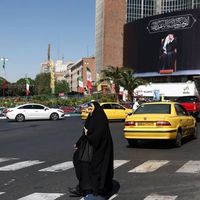
Iran-UAE ties have unraveled over the past two months, beginning with Iranian airstrikes on Emirati targets during the US-led war and escalating into a crisis that now threatens one of Tehran’s most vital trade and financial channels.
During the conflict, Iran struck civilian buildings, oil facilities, and sensitive infrastructure, including a data center linked to Oracle. In response, the UAE recalled its ambassador from Tehran, signaling a swift escalation in diplomatic tensions.
The diplomatic fallout deepened further this week when UAE state security authorities said they had arrested members of what they described as a “terrorist group linked to Iran’s ruling system” in Sharjah. The suspects were accused of planning attacks, undermining national security, and facilitating illicit financial transfers.
At the same time, Tehran has formally demanded compensation from several regional states, including the UAE, for allowing their airspace and bases to be used by the United States and Israel in strikes against Iran.
These developments have intensified a crisis that threatens to disrupt one of Iran’s most vital economic lifelines.
A deeply rooted economic partnership
Despite long-standing disputes, including disagreements over the islands of Abu Musa and the Greater and Lesser Tunbs, Iran and the UAE have built extensive and resilient economic ties over the past several decades.
Geographical proximity, advanced port infrastructure, and liberal trade regulations have transformed the UAE into a hub for Iranian commerce since the end of the Iran-Iraq War. Thousands of Iranian companies have established operations there, and a large share of Iran’s imports has flowed through re-export channels based in Dubai. Over time, the UAE became not just a trading partner but a critical gateway to global markets for heavily-sanctioned Iran.
For much of the past two decades, the UAE has ranked either first or second among Iran’s trading partners, often competing closely with China. Today, it remains one of the largest suppliers of goods to Iran, accounting for a significant share of its imports.
Roughly one-third of goods entering Iran—from mobile phones and electronics to auto parts, cosmetics, and clothing—have passed through the UAE, representing trade worth billions of dollars annually. The disruption of this flow is already being felt. In some sectors, such as mobile phones, prices have reportedly surged by 40 to 50 percent following the halt in imports.
With limited alternatives offering the same combination of proximity, infrastructure, and financial connectivity, any prolonged rupture could deepen Iran’s economic isolation and accelerate a costly realignment of its trade networks.
Trade imbalance and export structure
Iran’s exports to the UAE have largely consisted of oil products, petrochemicals such as fertilizers and industrial feedstocks, metals and minerals, agricultural goods including fresh produce and nuts, and construction materials like stone. However, much of this trade has been indirect, with the UAE serving as a re-export hub for Iranian goods destined for third markets.
At the same time, exports from the UAE to Iran have consistently exceeded Iran’s exports in the opposite direction, creating a significant trade imbalance. The UAE’s role as an intermediary—rather than a final destination—has been central to this asymmetry.
Sanctions and the UAE’s pivotal role
The importance of the UAE grew dramatically after the tightening of US and European sanctions on Iran, particularly following Washington’s withdrawal from the 2015 nuclear deal (JCPOA) in 2018. As direct trade routes narrowed, the UAE became the primary conduit for goods, capital, and financial flows into Iran.
Emirati exports to Iran rose from around $5.2 billion in 2018 to more than $20 billion in recent years. Dubai also became a financial hub for Iranian exchange houses, many of which played a key role in facilitating currency transfers and circumventing sanctions. Exchange rates set in Dubai’s markets often influenced the value of the Iranian rial domestically.
However, this system is now under pressure. UAE authorities have reportedly targeted Iranian exchange houses and so-called “trust companies,” freezing accounts, shutting offices, and detaining some operators. These actions could severely constrain Iran’s access to international financial channels.
After nearly two months of closure, Tehran’s stock market is preparing a phased reopening, but deep structural flaws, lack of transparency and uncertainty over US negotiations threaten to turn the restart into a fresh crisis.
Trading has been suspended for two months. Ticker symbols remain closed, and millions of retail investors have been unable to move their assets.
The head of the Securities and Exchange Organization said the market would reopen within ten to twelve days in phases. In the first stage, only companies not directly damaged by the war will resume trading, while steel and petrochemical firms that suffered losses will remain closed.
Reopening a damaged petrochemical company whose production has halted and whose recovery costs and timeline are unclear would likely trigger a sharp price drop and create a volatile market signal. Yet the current approach of prolonged closure presents deeper structural concerns.
There are three conceivable scenarios for reopening the Tehran Stock Market.
The first scenario envisions a comprehensive agreement and broad sanctions relief. In an optimistic case, Iran reconnects to the global financial system, oil and petrochemical exports face fewer restrictions, and foreign investment gradually returns. Market reopening could then mark the beginning of long-delayed reforms: transition from price controls to market pricing, reduced financial repression in banking, and transparent government balance sheets.
Export-oriented sectors such as steel, petrochemicals, and copper would benefit from renewed access to global markets. Banks could reassess their balance sheets and shift toward genuine credit evaluation. Foreign investors, absent for nearly two decades, might gradually return.
However, without internal coordination and structural reform, even sanctions relief would not rescue the TEDPIX.
Scenario two: Limited military and regional agreement
A more likely scenario involves a limited agreement focused on military and regional tensions. Hostilities ease, but sanctions remain largely intact and foreign investment prospects stay uncertain.
Under these conditions, reopening may trigger a new crisis. Major export-driven firms would initially remain untradeable. Downstream industries would face raw material shortages and price spikes. The automotive sector, already loss-making before the war, would struggle with supply chain disruptions and accumulated losses.
Meanwhile, limited foreign currency inflows could push the government toward inflationary financing to fund reconstruction and subsidies, either through money creation or borrowing from banks already dependent on regulatory forbearance. With high inflation ahead, questions arise about how listed firms can generate sufficient value to remain profitable, especially amid infrastructure damage and seasonal energy shortages.
Investors, having endured months of uncertainty without clear disclosure of portfolio losses, may view reopening as an exit opportunity. Investment funds facing redemption waves would be forced into selling queues, amplifying downward pressure. The market could reopen with a heavy backlog of sell orders, and each negative headline could trigger further declines.
Scenario three: Continued conflict and further escalation
If negotiations fail and conflict intensifies, prolonged closure would likely continue. In such a scenario, Tehran Stock Exchange, under its current management and policy framework, could effectively cease to function as a credible capital market.
Policymakers may believe closure prevents price collapse, but in practice, investor confidence collapses instead. Alternative investment channels gain prominence: foreign currency, gold, real estate, consumer goods, or capital flight to neighboring countries.
Even before the recent conflict, Iran’s economy faced a structural crisis. Industrial capacity was constrained by aging machinery, energy imbalances, and sanctions. Institutional trust was at its lowest level in four decades. Key industries — steel, petrochemicals, automotive, and banking — were either loss-making or dependent on hidden subsidies. War in such an environment acts as a crisis accelerator, pushing uncertainty beyond policymakers’ management capacity.
Tools available for reopening — tighter price limits, sales restrictions, targeted liquidity injections, and market-maker intervention — can at best distribute the shock and manage short-term risk. They cannot substitute for honest disclosure of losses, independent audit assessments, and credible reconstruction plans.
Reopening the Tehran Stock Exchange alone will not resolve broader economic challenges. In the best-case scenario, it could form part of a larger reform package aligned with political agreement and foreign capital inflows. In the other two scenarios, reopening may merely accelerate the crisis cycle.
The core question facing policymakers is political rather than technical: are they willing to accept the real market value of shareholders’ assets, or will they postpone the cost through opacity and suspension, only to face a larger reckoning later.
People pass by a large anti-US mural in Tehran, Iran, April 22, 2026
As debate over a ceasefire and renewed talks with the United States intensifies, the absence of a clear supreme arbiter in Tehran appears to be giving Iran’s hardliners more room to shape the narrative and to hinder any eventual agreement.
Under former Supreme Leader Ali Khamenei, ultraconservative factions were often allowed to rage in public, attack moderates and mobilize supporters in the streets. But when necessary, he could impose discipline.
Even on the 2015 nuclear deal, which he later criticized publicly, the system moved quickly once it was understood he had given at least tacit approval.
Then-speaker Ali Larijani famously pushed the JCPOA through parliament in a matter of minutes, effectively silencing opposition by invoking the Supreme Leader’s authority.
Today, who truly leads Iran—whether one man or a shifting collective—is anyone’s guess. What is clearer is that the political vacuum appears to be rewarding the loudest and most uncompromising voices.
Iranian hardliners’ arguments for continuing the war with the United States have come to dominate state television, media reports and billboards across major squares in Tehran.
Many frame negotiations as a betrayal of “red lines,” accusing “accomplices of America and Israel,” “liberals” and those intimidated by Washington of undermining the country.
Those so-called red lines are often justified through selective interpretations of new leader Mojtaba Khamenei’s April 9 message, former Supreme Leader Ali Khamenei’s past speeches rejecting negotiations and claims by individual hardliners citing unnamed “reliable sources.”
One prominent example is ultraconservative MP Amir Hossein Sabeti of the Paydari Party, who has repeatedly warned that negotiators may be crossing the Supreme Leader’s red lines.
In a post on X, he claimed to have “the most definite information” that negotiating with the United States on the nuclear issue was prohibited and demanded that Speaker Mohammad Bagher Qalibaf and Foreign Minister Abbas Araghchi publicly deny reports of talks on suspending enrichment or diluting uranium.
He implied consequences if they did not.
State television has amplified such voices while giving nightly exposure to rallies calling for the war to continue until “final victory.”
The constant need to fill airtime has also elevated more extreme or theatrical voices, including members of the public eager for their moment on air.
Meanwhile, moderate voices arguing for negotiations appear to have lost even the limited channels they once had to plead their case to the country’s highest authority.
Iranian academic Sadeq Zibakalam, speaking to the reform-leaning Fararu website, questioned why some factions remain so insistent on continuing the war despite the economic devastation already inflicted.
“Do these gentlemen know what forty days of war has done to our economy, how many production units have run into trouble, and how many have laid off their workers?” he asked.
He said it was striking that hardline revolutionaries inside Iran, opposition groups seeking regime change and Israeli officials all appeared to share an interest in prolonging the conflict.
Views such as Zibakalam’s were once represented within inner circles of power by figures like former president Hassan Rouhani, who had direct access to Ali Khamenei, even if he rarely got his way.
President Masoud Pezeshkian has no such standing as the veteran Rouhani. And whatever limited influence he might have enjoyed under Khamenei Sr. appears to have diminished further under Khamenei Jr., who—even if in good health—remains almost certainly beyond the reach of civilian leaders.
In the absence of a clear authority to impose discipline or bless compromise, political competition in Tehran increasingly appears to favor the fiercest factions.
Divisions within Iran’s leadership prevented a negotiating team from traveling to Islamabad for talks with the US, Iran International has learned.
Tensions between allies of President Masoud Pezeshkian and figures close to Supreme Leader Mojtaba Khamenei’s office derailed the trip at the last minute.
According to the sources familiar with the matter, the delegation was ready to leave when a message from Khamenei’s inner circle ruled out discussing nuclear issues and reprimanded the foreign ministry team over earlier negotiations.
Foreign Minister Abbas Araghchi warned that under such constraints, attending talks would serve no purpose and would effectively doom any chance of progress.
The report comes after earlier indications that a US delegation led by Vice President JD Vance could travel to Islamabad for talks, while President Donald Trump has since extended the ceasefire to allow time for a potential Iranian proposal.
Food prices surged and basic goods slipped out of reach across Iran, citizens told Iran International in recent days, describing shortages and daily price jumps following a ceasefire that has coincided with worsening economic conditions.
“Prices here have increased tenfold and rice and cooking oil are hard to find,” one resident wrote from Zahedan in southeastern Iran, pointing to worsening access to staple goods.
Other citizens described the rapid erosion of purchasing power. “We go to sleep and wake up to everything being twice as expensive,” one message said, reflecting widespread concern over accelerating inflation.
Food costs climb, access narrows
Messages from multiple cities highlighted steep increases in the cost of everyday items. Citizens said even the most basic foods were becoming unaffordable, with eggs, rice and cooking oil among the hardest hit.
“Eggs have become so expensive they are being removed from our tables,” one citizen wrote, describing the shrinking range of affordable protein options.
Shoppers queue at a butcher’s counter in Iran as food costs continue to climb.
Restaurant prices were also cited as an indicator of inflation. Citizens said a single serving of kebab now costs between 5,000,000 and 6,000,000 rials (about $3.10 to $3.75), while a plate of chicken with rice ranges from 3,000,000 to 4,000,000 rials (about $1.90 to $2.50). Soft drinks were reported to exceed 1,000,000 rials (about $0.60).
Based on an exchange rate of around 1,600,000 rials per dollar, the new minimum monthly wage of 162,550,000 rials is equivalent to roughly $104. This comes as annual inflation had already exceeded 70 percent before the start war on February 28, reaching its highest level since World War II.
man sells fruit at the Grand Bazaar, amid the US-Israeli conflict with Iran, in Tehran, Iran, March 18, 2026.
As of late 2025/early 2026, average Iranian incomes have contracted to roughly $200 per month.
Shortages compounded the problem. Messages described difficulty finding chicken in distribution centers and limits on purchasing cooking oil in shops. Others pointed to disruptions in supply chains linked to industrial slowdowns and rising production costs.
Economic journalist Arash Azarmi said the surge in food prices was hitting lower-income households hardest. “Eggs priced at 200,000 rials ($0.12) each are shocking. This is a basic food item, especially for lower-income households, and it is effectively being pushed out of their consumption basket,” Azarmi said.
Official data, he added, already showed food inflation exceeding 112 percent, with some categories such as cooking oil rising by more than 200 percent.
Iran’s monthly minimum wage for workers is set at one of the lowest levels compared to many countries in the region. Among Oman, Saudi Arabia, Turkey, Iraq, Qatar, Pakistan and Lebanon, the lowest minimum wage belongs to Pakistan, where workers earn at least the equivalent of $133. This figure is about $201 in Lebanon, around $275 in Qatar, about $345 in Iraq, and $625 and $585 in Turkey and Oman, respectively.
A woman shops for groceries in a store in Iran as prices continue to rise.
Pressure spreads beyond food
Beyond rising prices, citizens said financial obligations continued to tighten during and after the conflict period, adding to the strain on households and businesses.
A billboard about the Strait of Hormuz on a building in Tehran, April 22, 2026.
“During the war there was no tax relief, insurance was taken in full from the private sector, and all loans faced late penalties despite earlier promises,” one message said, describing continued pressure on businesses.
Another citizen pointed to mounting banking enforcement and legal follow-up tied to unpaid debts. “All checks were bounced, accounts were closed and legal action started. Loan installments were either collected with interest or deducted from guarantors,” the message read.
Business owners described a cycle of rising costs and falling demand. A clothing seller said prices for goods were increasing by around 35 percent each week, while customers’ ability to pay continued to decline.
A shopkeeper stands in his clothing store at the Grand Bazaar, amid the US-Israeli conflict with Iran, in Tehran, Iran, March 18, 2026.
Jobs scarce, costs rising
Citizens also pointed to a lack of job opportunities and growing difficulty in covering basic living expenses, including rent and utilities.
“There is no work and our savings are gone,” one citizen said, describing limited options for supplementing income.
Others reported rising bills even as businesses slowed or shut down. “We cannot pay rent, we cannot work,” another citizen wrote, pointing to disruptions affecting daily commerce.
Small business owners said they were increasingly operating at a loss. One restaurant operator said higher meat prices and reduced customer demand were pushing the business toward closure. “If this continues, we will shut down and pay rent from our own pockets,” the message read.
Experts warn of accelerating inflation
Economist Mohammad Machinechian said the pace of price increases had reached a point where monthly inflation was more relevant than annual figures.
“I’m no longer talking about annual inflation, but monthly inflation, and that is the reality we’re dealing with,” Machinechian said. “Even in the best-case scenario, inflation could average at least 5 percent a month, meaning prices rise around 80 percent over a year.”
Machinechian added that in a prolonged stalemate scenario, prices could triple over the year, while renewed conflict could push monthly inflation above 20 percent, leading to annual increases approaching 500 percent.
File photo of people shopping for eggs and bread at a street market in Iran amid rising food prices.
Azarmi described the situation as a “modern famine,” where goods remain available but are increasingly unaffordable for many households.
The accounts from citizens across the country depict an economy where rapid price increases, supply constraints and falling incomes are converging, leaving many struggling to secure even the most basic necessities.
A Tehran loyalist wraps herself in Iran's flag, at a state-sponsored rally, April 2026
Iran’s state broadcaster has sparked ridicule after claiming that 87% of Iranians support continuing the war with the United States, in a curious turn from early in the conflict where pro-war sentiments of an alienated populace was branded treachery.
The controversy began following a Monday broadcast on the state television, where hardline commentator Mostafa Khoshcheshm asserted that the Iranian people overwhelmingly favor military confrontation over diplomatic efforts to end the war.
“According to polls conducted by academic centers regarding the war, 87% of the people said that once and for all, this decayed tooth should be pulled out,” he said, arguing that reopening the Strait of Hormuz could leave Iran unable to close it again if needed.
No details about such a survey—its methodology, sample size or sponsoring institution—have been published, making the claim impossible to independently verify.
Yet the figure is notable less for its credibility than for what it reveals about a shifting narrative inside Iran.
Early in the conflict, some hardline factions and state-aligned voices attacked members of the Iranian diaspora and others who openly welcomed military pressure on the Islamic Republic or argued that war might weaken the system.
At some rallies and in media commentary, those seen as supporting foreign intervention were portrayed as traitors or collaborators.
Now, some of those same domestic factions are the ones most vehemently opposing negotiations with the United States and calling for the continuation of the war.
The contradiction reflects a more complicated reality.
Many Iranians may initially have supported military escalation—not out of loyalty to the Islamic Republic, but in the belief that war could weaken or even topple the regime.
That is not the kind of support state television appears to be claiming.
Instead, hardliners and state media have pointed to crowds at nightly rallies as evidence of a “majority” favoring war, though critics argue these gatherings represent a narrow and possibly organized segment of society.
At some of these rallies, participants have described the conflict with the United States as “existential” and argued it must continue until the “victory of good over evil.”
Online, many reacted with ridicule.
“When was the last time the opinion of the people of Iran—not the presenters of IRIB—was important and influential in the country’s major decisions?” one reader wrote on the Khabar Online website.
Another user sarcastically noted: “I don't know, maybe your ‘people’ are different from our ‘people.’ Who are these 87%? 87% of government supporters? … Do you even count us as part of the statistics?”
Public skepticism has been further fueled by allegations of digital manipulation by organized “commenting forces,” often referred to as the “Cyber Army.”
Readers have pointed out that while pro-negotiation comments often initially receive the vast majority of “likes,” those numbers are sometimes reversed within hours.
One user wrote: “Unfortunately, within a few hours, the ‘Zombies’ of the cyber army change the scores.”
Whether or not 87% of Iranians support continuing the war, the backlash to the claim suggests the battle over public opinion—and over who gets to define patriotism—may be intensifying alongside the conflict itself.