Energy-rich southern provinces top Iran’s misery index, official data shows
Severe water shortage crisis in Khuzestan, southern Iran.
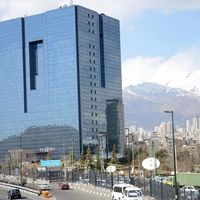
Three of Iran’s most resource-rich provinces, Khuzestan, Kerman and Hormozgan, recorded the highest levels of economic hardship in spring 2025, the news site Rokna reported Thursday, citing official statistics from the Iranian Statistics Center.
Khuzestan, home to much of Iran’s oil wealth, posted a misery index of 46.6, surpassing all other regions. The index combines unemployment and inflation to gauge pressure on livelihoods.
“While Khuzestan leans on oil, Kerman on copper and coal, and Hormozgan on its ports, the misery index in all three has reached unprecedented thresholds,” Rokna wrote.
The national index hit a 42.2 high in the same period, the report added.
The outlet warned that concurrent surges in joblessness and inflation were not only eroding consumer power, but “also endangering social and psychological stability.”
Rokna described Khuzestan’s situation as alarming. The province reported a 35.6% inflation rate and 11% unemployment in spring, despite commanding vast reserves of oil, gas, sugarcane, steel, surface water and port access.
“The water crisis and dust storms, widespread climate-driven migration, high unemployment among local populations, weak health and education infrastructure, and systemic corruption in resource allocation are among the main challenges facing Khuzestan,” the report said.
Since 2018, US sanctions have sharply curtailed Iran’s oil revenues and foreign trade, but recent developments—especially the coordinated US–Israel military strikes on nuclear sites and the threat of renewed UN snapback sanctions—have deepened the economic toll, paralyzing investor confidence and further isolating Iran from global markets.
Kerman, which ranked second with a misery index of 45.9, struggles with inflation in consumer goods, low wages in the mining sector, youth out-migration and limited rural access to credit, according to the report.
The province contains some of the country’s richest copper and mineral resources, as well as solar potential and arable land.
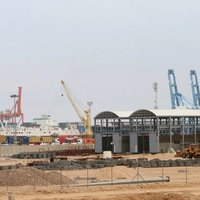
Hormozgan, in third place with a 45.8 index reading, continues to suffer despite its strategic coastal position in the Persian Gulf and role in maritime trade.
“Rising informal settlements, unregulated housing, inadequate education and high inflation” are key drivers of the hardship, Rokna wrote.
The publication cited official income data showing that disparities in Bandar Abbas, the provincial capital of Hormozgan, rank among the widest in Iran, particularly between the port’s core and surrounding settlements.
The economic struggles are also evident in the inadequate minimum wage for the current year, which is set at around 109 million rials (over $125). This amount covers only one third of the estimated cost of living for a typical household, calculated recently at about $600 based on the official data.
The rising costs of essentials such as food, housing, healthcare, and education have made it increasingly difficult for workers to make ends meet.
“The misery index is not just a number; it reflects unbalanced policies, unrealistic planning, and a social rupture in some of the country’s most resource-rich provinces,” Rokna wrote. “When regions endowed with wealth rank highest in misery, it means the distribution of resources and welfare has failed.”
The outlet warned about the intensification of “social dissatisfaction, migration, and even regional instability” in the country, and called on Masoud Pezeshkian’s government to prioritize changing the provincial governors.
A girl sits in front of a bakery in the crowd with Afghan women waiting to receive bread in Kabul, Afghanistan, January 31, 2022.
Iran’s escalating mass deportations of Afghan refugees are putting thousands of women and girls at serious risk of Taliban persecution, Amnesty International said Thursday, calling on Tehran to halt what it called flagrant violations of international law.
The human rights group condemned the forced return of more than one million Afghans from Iran so far in 2025, including unaccompanied children, dissidents, journalists, and human rights defenders—many of whom face serious threats under Taliban rule.
“All countries, including Iran, must recognize Afghan women and girls outside Afghanistan as prima facie refugees,” Amnesty said in a social media statement.
“Returning them to Afghanistan, where the Taliban are committing the crime against humanity of gender persecution, is a clear breach of the principle of non-refoulement," a concept which under international law prohibits returning anyone to a country where they would be at real risk of serious human rights violations.
The deportations have accelerated sharply in the aftermath of Iran’s 12-day conflict with Israel, with Iranian authorities citing national security concerns and alleged espionage ties to justify the crackdown.
According to the UN’s International Organization for Migration (IOM), more than 546,000 Afghans have been expelled from Iran since June 1.
Amnesty said Iranian authorities have uprooted men, women and children in home raids, street searches, and arbitrary detentions, often leaving them with nothing but the clothes they were wearing.
The deportation drive has intensified following a directive from Iran’s national police command stating that “all unauthorized foreigners must exit the country.” Brigadier General Ahmad-Ali Goudarzi, Iran’s border police chief, warned that any homes rented to Afghans would be seized.
On state television, Interior Minister Eskandar Momeni said some Afghan migrants had entered the country “with a specific intent to carry out sabotage operations” during the recent conflict with Israel.
Iranian media have aired forced confessions from individuals identified as Afghans allegedly involved in Mossad-linked operations. Rights groups say these accusations are unverified and often coercively extracted.
The UN and rights organizations have raised alarm over the humanitarian impact. UNICEF reports that over 5,000 unaccompanied minors are among those returned. The Red Cross has warned that as many as one million more Afghans could be expelled by year’s end.
In Herat and other Afghan cities now absorbing the influx, humanitarian organizations report a severe lack of food, shelter, and healthcare. Taliban officials themselves have described the situation as a looming crisis.
Anger over the expulsions has spilled over into Afghan social media, with users calling for a national boycott of Iranian goods.
Despite growing international concern, Iranian officials have stood by the crackdown, arguing that mass migration has overwhelmed the country’s infrastructure and that deportations are necessary to preserve national security and jobs.
Iran hosts millions of Afghan nationals, including an estimated 780,000 with official refugee status. But many more are undocumented workers who fled economic collapse or Taliban persecution after 2021.
Amnesty and other rights groups are urging Tehran to immediately end forced deportations and allow international agencies to monitor the process. “The world must not stay silent as Afghan women and girls are pushed back into repression and violence,” the organization said.
File photo of Iranian President Masoud Pezeshkian during the unveiling of Tehran’s new electric SUV taxis
Iranian President Masoud Pezeshkian was forced to complete part of a recent trip to Tabriz by taxi after the fuel in three official vehicles was found to be contaminated with water, leading to a mechanical failure, a senior government official said on Tuesday.
According to Mostafa Molavi, the president’s special inspector, all three vehicles carrying the president and his security convoy stalled near the city of Takestan in Qazvin province after refueling at a roadside gas station.
“The president and his security team set out by car for Tabriz. They refueled at a highway service station near the Rasht exit, and shortly after, all three vehicles broke down before reaching Takestan,” Moulavi said during a visit to Qazvin’s provincial headquarters earlier this week.
“Our investigation showed the station was distributing low-quality fuel mixed with water. It had a history of such violations,” he said.
Moulavi said the president chose not to involve local authorities and instead arranged a private taxi to complete his journey to Tabriz.“The president did not call the provincial governor’s office or request assistance. He simply took a taxi."
The National Iranian Oil Products Distribution Company (NIOPDC) confirmed that the gas station in question had previous complaints filed against it for fuel quality issues. However, no explanation was provided as to why the facility remained operational despite a history of infractions.
“This particular gas station had previous reports of similar problems,” Moulavi said.
Neither the president’s office nor the Ministry of Petroleum has commented publicly on the incident.
Fuel quality concerns
Fuel adulteration is a recurring issue in Iran, where motorists frequently complain of watered-down gasoline or manipulation of pump meters.
Videos circulated in recent years appear to show mismatches between fuel dispensed and prices charged, fueling widespread public distrust. Energy officials deny systemic shortcomings.
Former Oil Minister Bijan Zanganeh said in 2021 that up to 400 gas station operators each year faced legal action for offenses such as short-changing customers or mixing fuel types improperly.
However, industry insiders and watchdog reports point to broader issues, including the use of unauthorized chemical additives, underdeveloped refineries, and inconsistently enforced regulations.
According to a confidential oil ministry report obtained by Iran International in June, a growing mismatch between fuel production and demand, with the country relying on imports and petrochemical-derived gasoline to cover shortfalls.
Documents reviewed by Iran Open Data (IOD) show that Iran produced an average of 101 million liters of base gasoline per day in 2024, but raised the figure to 121 million liters by adding over 20 million liters of petrochemical additives—including the controversial methyl tert-butyl ether (MTBE), which is banned in many countries due to its toxicity.
MTBE is still used at Iran’s major refineries to boost octane ratings despite its environmental risks. Meanwhile, 80% of Iranian gasoline reportedly fails to meet international Euro-4 or Euro-5 standards.
Iran maintains one of the world’s lowest retail fuel prices thanks to heavy subsidies, but sanctions and aging infrastructure have made it increasingly difficult to sustain fuel quality and supply.
A man walking at an empty campus green at Georgetown University
A US professor has been suspended following comments publicly calling for Iran to carry out a "symbolic strike" on a US military base in response to recent attacks on the country’s main nuclear facilities.
"I’m not an expert, but I assume Iran could still get a bomb easily. I hope Iran does some symbolic strike on a base, then everyone stops,” Dr. Jonathan Brown, the chair of Islamic Civilization at the School of Foreign Service at Georgetown University, posted on X in June after the US struck Iran's three main nuclear sites.
The university’s Interim President Robert M. Groves testified to the House Education and Workforce Committee that Brown had been removed as chair of the department and placed on leave following the tweet while the university is now reviewing the case.
"Within minutes of our learning of that tweet, the Dean contacted Professor Brown, we issued a statement condemning the tweet. Professor Brown is no longer chair of his department, he’s on leave, and we’re beginning the process of reviewing the case," Groves testified.
It was part of a hearing titled "Antisemitism in Higher Education: Examining the Role of Faculty, Funding, and Ideology”. Other testimonies were made heard from top experts including CUNY Chancellor Dr. Félix V. Matos Rodríguez and Berkeley Chancellor Dr. Rich Lyons.
It comes in the wake of anti-Israel protests at US campuses since the outbreak of the Gaza war.
Last year in May, Iran's Supreme Leader Ali Khamenei wrote an open letter to US university students, saying they “now formed a branch of the Resistance Front,” referring to the Iran-backed militias around the Middle East seeking to destroy Israel and kill American troops.
Brown was criticized by fellow academics online. Jewish People Policy Institute fellow Dr. Sara Yael Hirschhorn went to school with him. In an angry post on X, she said: "I'm appalled to see him calling for Iran to attack US troops and his awe at attacks on Israeli civilians. Georgetown- enough!”
In the wake of the outrage following his post on X, he told Fox News Digital: "I was calling for de-escalation as I am very opposed to American involvement in foreign wars.”
Iran submitted a formal complaint to the United Nations International Telecommunication Union (ITU) over the unauthorized provision of Starlink satellite services within its territory last month amid the country's war with Israel.
Revolutionary Guards-affiliated Fars News reported Wednesday that Iran’s Ministry of Communications sent the complaint in a letter dated June 23 to the ITU’s Radio Regulations Board.
The report included a copy of the letter, which alleges that Starlink operated in Iran without the required license.
The complaint follows Starlink’s activation in Iran during the 12-day war with Israel last month, when Iranian authorities imposed widespread internet shutdowns.
On June 14, Starlink’s founder Elon Musk confirmed on X that “the beams are on,” indicating the satellite service was active inside Iran.
Starlink's role in Iran has grown significantly over recent years. The number of its users in the country has now surpassed 100,000, according to Pouya Pirhosseinlou, head of the Internet and Infrastructure Committee at Iran’s E-Commerce Association.
"Over 30,000 unique users are utilizing satellite internet, suggesting that the total number of satellite internet users exceeds 100,000," Pirhosseinlou told Iran's ILNA news agency earlier this year.
Despite being officially prohibited in Iran, Starlink’s appeal lies in its unrestricted access and high-speed service—an alternative to the heavily filtered and controlled local internet where Iran ranks among the world's lowest for internet freedom, according to Freedom House.
Last weekend, Iran's judiciary spokesman Asghar Jahangir said authorities would take legal action against individuals and entities using Starlink.
According to a new proposed espionage-related bill, penalties ranging from six months to 10 years would apply to the use or distribution of unauthorized communication equipment, including satellite internet services like Starlink, depending on scale and intent.
Yemeni forces fighting the Iran-backed Houthi movement have carried out their largest ever seizure of advanced Iranian conventional weapons bound for the group, US Central Command (CENTCOM) said on Wednesday.
CENTCOM said the National Resistance Forces (NRF) confiscated over 750 tons of advanced weaponry including anti-ship and anti-aircraft missiles, warheads, hundreds of drone engines, air defense equipment, radar systems and communications equipment.
The NRF is an anti-Houthi force led by General Tareq Saleh, nephew of Yemen’s former President Ali Abdullah Saleh, and operates independently of the internationally recognized government.
CENTCOM added that many of the systems were manufactured by a company affiliated with Iran’s defense ministry and included manuals in Farsi.
“We commend the legitimate government forces of Yemen who continue to interdict the flow of Iranian munitions bound for the Houthis," General Michael Erik Kurilla, commander of CENTCOM said in a statement.
"The interdiction of this massive Iranian shipment shows that Iran remains the most destabilizing actor in the region. Limiting the free flow of Iranian support to the Houthis is critic to regional security, stability, and freedom of navigation,” he added.
Since the outbreak of the Gaza war, Yemen’s Houthis have launched missiles, rockets, and drones toward Israel and enforced a maritime disruption in the Red Sea, in what it describes as support for Palestinians in Gaza.
Last month, the group's rivals in Yemeni government said that Iran is transferring parts of its military industry, including ballistic missile and drone production to Houthi-controlled areas in Saada, Hajjah, and the outskirts of Sanaa.
The Houthis resumed attacks on the high seas following a June 24 ceasefire ending a 12-day war between Israel and Iran.
Houthi forces sank a Liberian-flagged carrier on July 6 with rockets and explosive drone boats. The group, which controls most of Yemen's population centers, says its maritime attacks are in solidarity with Palestinians in Gaza.