Iran’s president forced to take taxi after motorcade disabled by tainted gasoline
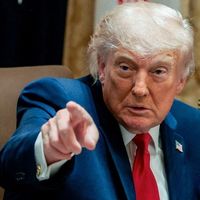
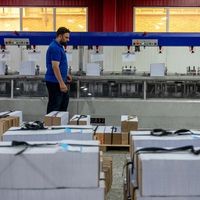
File photo of Iranian President Masoud Pezeshkian during the unveiling of Tehran’s new electric SUV taxis
Iranian President Masoud Pezeshkian was forced to complete part of a recent trip to Tabriz by taxi after the fuel in three official vehicles was found to be contaminated with water, leading to a mechanical failure, a senior government official said on Tuesday.
According to Mostafa Molavi, the president’s special inspector, all three vehicles carrying the president and his security convoy stalled near the city of Takestan in Qazvin province after refueling at a roadside gas station.
“The president and his security team set out by car for Tabriz. They refueled at a highway service station near the Rasht exit, and shortly after, all three vehicles broke down before reaching Takestan,” Moulavi said during a visit to Qazvin’s provincial headquarters earlier this week.
“Our investigation showed the station was distributing low-quality fuel mixed with water. It had a history of such violations,” he said.
Moulavi said the president chose not to involve local authorities and instead arranged a private taxi to complete his journey to Tabriz.“The president did not call the provincial governor’s office or request assistance. He simply took a taxi."
The National Iranian Oil Products Distribution Company (NIOPDC) confirmed that the gas station in question had previous complaints filed against it for fuel quality issues. However, no explanation was provided as to why the facility remained operational despite a history of infractions.
“This particular gas station had previous reports of similar problems,” Moulavi said.
Neither the president’s office nor the Ministry of Petroleum has commented publicly on the incident.
Fuel quality concerns
Fuel adulteration is a recurring issue in Iran, where motorists frequently complain of watered-down gasoline or manipulation of pump meters.
Videos circulated in recent years appear to show mismatches between fuel dispensed and prices charged, fueling widespread public distrust. Energy officials deny systemic shortcomings.
Former Oil Minister Bijan Zanganeh said in 2021 that up to 400 gas station operators each year faced legal action for offenses such as short-changing customers or mixing fuel types improperly.
However, industry insiders and watchdog reports point to broader issues, including the use of unauthorized chemical additives, underdeveloped refineries, and inconsistently enforced regulations.
According to a confidential oil ministry report obtained by Iran International in June, a growing mismatch between fuel production and demand, with the country relying on imports and petrochemical-derived gasoline to cover shortfalls.
Documents reviewed by Iran Open Data (IOD) show that Iran produced an average of 101 million liters of base gasoline per day in 2024, but raised the figure to 121 million liters by adding over 20 million liters of petrochemical additives—including the controversial methyl tert-butyl ether (MTBE), which is banned in many countries due to its toxicity.
MTBE is still used at Iran’s major refineries to boost octane ratings despite its environmental risks. Meanwhile, 80% of Iranian gasoline reportedly fails to meet international Euro-4 or Euro-5 standards.
Iran maintains one of the world’s lowest retail fuel prices thanks to heavy subsidies, but sanctions and aging infrastructure have made it increasingly difficult to sustain fuel quality and supply.
A man walking at an empty campus green at Georgetown University
A US professor has been suspended following comments publicly calling for Iran to carry out a "symbolic strike" on a US military base in response to recent attacks on the country’s main nuclear facilities.
"I’m not an expert, but I assume Iran could still get a bomb easily. I hope Iran does some symbolic strike on a base, then everyone stops,” Dr. Jonathan Brown, the chair of Islamic Civilization at the School of Foreign Service at Georgetown University, posted on X in June after the US struck Iran's three main nuclear sites.
The university’s Interim President Robert M. Groves testified to the House Education and Workforce Committee that Brown had been removed as chair of the department and placed on leave following the tweet while the university is now reviewing the case.
"Within minutes of our learning of that tweet, the Dean contacted Professor Brown, we issued a statement condemning the tweet. Professor Brown is no longer chair of his department, he’s on leave, and we’re beginning the process of reviewing the case," Groves testified.
It was part of a hearing titled "Antisemitism in Higher Education: Examining the Role of Faculty, Funding, and Ideology”. Other testimonies were made heard from top experts including CUNY Chancellor Dr. Félix V. Matos Rodríguez and Berkeley Chancellor Dr. Rich Lyons.
It comes in the wake of anti-Israel protests at US campuses since the outbreak of the Gaza war.
Last year in May, Iran's Supreme Leader Ali Khamenei wrote an open letter to US university students, saying they “now formed a branch of the Resistance Front,” referring to the Iran-backed militias around the Middle East seeking to destroy Israel and kill American troops.
Brown was criticized by fellow academics online. Jewish People Policy Institute fellow Dr. Sara Yael Hirschhorn went to school with him. In an angry post on X, she said: "I'm appalled to see him calling for Iran to attack US troops and his awe at attacks on Israeli civilians. Georgetown- enough!”
In the wake of the outrage following his post on X, he told Fox News Digital: "I was calling for de-escalation as I am very opposed to American involvement in foreign wars.”
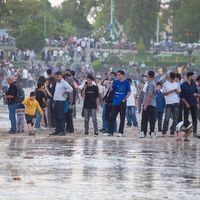
Crowds in Iran's northwestern city of Zanjan, June 2025
Tehran’s commentariat is sounding the alarm over the economic toll of renewed United Nations sanctions that European powers say they could trigger against Iran by the end of August.
The sanctions were lifted as part of a nuclear deal in 2015, which effectively unraveled in 2018 when the United States, under President Donald Trump, withdrew from it.
French Foreign Minister Jean-Noël Barrot announced on Tuesday that the E3 (France, Britain, and Germany) would trigger the so-called snapback mechanism built into that deal unless tangible progress is made on a new nuclear agreement.
“If the snapback mechanism is activated and the suspended resolutions reimposed, all UN member states—including China and Russia—will be obligated to cooperate in enforcing sanctions against Iran, and cannot opt out of compliance,” Jahan-e Sanat, Iran’s leading economic daily, warned in an editorial quoting international relations expert Ali Bigdeli.
Escalation and uncertainty
Such warnings are dismissed as signs of weakness by more hardline voices in Iran—who are instead ramping up combative rhetoric.
IRGC-affiliated Tasnim News on Tuesday warned that Iran could raise uranium enrichment from 60% to 90%, and may use its enriched uranium stockpile for what it called “non-prohibited military purposes.”
The report, widely circulated across Iranian media, was quietly removed within hours.
Foreign Ministry spokesman Esmaeil Baqaei had said a day earlier that Tehran’s response to a potential snapback would be “proportionate,” leaving the audience to guess the specifics.
Former lawmaker Heshmatollah Falahatpisheh accused Iranian diplomats of lacking expertise and slammed hardliners for propagating what he called false narratives.
“President Pezeshkian must end his passiveness in foreign policy and rescue national interests from the grip of radicals,” he wrote in the moderate daily Arman Melli, harshly criticizing the original 2015 nuclear agreement and those who signed it.
The big “if”
Prominent reformist daily Sharq quoted analyst Mohammad Irani warning of a “political earthquake” and the effective closing of the door on diplomacy.
As Europe seeks to redefine its role—after a period of watching from the sidelines—a snapback of UN sanctions would foreclose the possibility of a Tehran-Washington agreement, Irani warned.
As commentary deepens, some voices are drawing attention to the fragile assumptions behind Iran’s current posture—and the risks of miscalculation.
“The snapback poses one of Iran’s most serious challenges—politically and economically," analyst Mehdi Pazouki wrote in Arman Melli, adding that the troubled waters could be navigated if Tehran turns to “realistic and proactive diplomacy."
That “if” looms large, Pazouki warned, given the growing absence of realism in Tehran’s foreign policy.
Iran submitted a formal complaint to the United Nations International Telecommunication Union (ITU) over the unauthorized provision of Starlink satellite services within its territory last month amid the country's war with Israel.
Revolutionary Guards-affiliated Fars News reported Wednesday that Iran’s Ministry of Communications sent the complaint in a letter dated June 23 to the ITU’s Radio Regulations Board.
The report included a copy of the letter, which alleges that Starlink operated in Iran without the required license.
The complaint follows Starlink’s activation in Iran during the 12-day war with Israel last month, when Iranian authorities imposed widespread internet shutdowns.
On June 14, Starlink’s founder Elon Musk confirmed on X that “the beams are on,” indicating the satellite service was active inside Iran.
Starlink's role in Iran has grown significantly over recent years. The number of its users in the country has now surpassed 100,000, according to Pouya Pirhosseinlou, head of the Internet and Infrastructure Committee at Iran’s E-Commerce Association.
"Over 30,000 unique users are utilizing satellite internet, suggesting that the total number of satellite internet users exceeds 100,000," Pirhosseinlou told Iran's ILNA news agency earlier this year.
Despite being officially prohibited in Iran, Starlink’s appeal lies in its unrestricted access and high-speed service—an alternative to the heavily filtered and controlled local internet where Iran ranks among the world's lowest for internet freedom, according to Freedom House.
Last weekend, Iran's judiciary spokesman Asghar Jahangir said authorities would take legal action against individuals and entities using Starlink.
According to a new proposed espionage-related bill, penalties ranging from six months to 10 years would apply to the use or distribution of unauthorized communication equipment, including satellite internet services like Starlink, depending on scale and intent.
Yemeni forces fighting the Iran-backed Houthi movement have carried out their largest ever seizure of advanced Iranian conventional weapons bound for the group, US Central Command (CENTCOM) said on Wednesday.
CENTCOM said the National Resistance Forces (NRF) confiscated over 750 tons of advanced weaponry including anti-ship and anti-aircraft missiles, warheads, hundreds of drone engines, air defense equipment, radar systems and communications equipment.
The NRF is an anti-Houthi force led by General Tareq Saleh, nephew of Yemen’s former President Ali Abdullah Saleh, and operates independently of the internationally recognized government.
CENTCOM added that many of the systems were manufactured by a company affiliated with Iran’s defense ministry and included manuals in Farsi.
“We commend the legitimate government forces of Yemen who continue to interdict the flow of Iranian munitions bound for the Houthis," General Michael Erik Kurilla, commander of CENTCOM said in a statement.
"The interdiction of this massive Iranian shipment shows that Iran remains the most destabilizing actor in the region. Limiting the free flow of Iranian support to the Houthis is critic to regional security, stability, and freedom of navigation,” he added.
Since the outbreak of the Gaza war, Yemen’s Houthis have launched missiles, rockets, and drones toward Israel and enforced a maritime disruption in the Red Sea, in what it describes as support for Palestinians in Gaza.
Last month, the group's rivals in Yemeni government said that Iran is transferring parts of its military industry, including ballistic missile and drone production to Houthi-controlled areas in Saada, Hajjah, and the outskirts of Sanaa.
The Houthis resumed attacks on the high seas following a June 24 ceasefire ending a 12-day war between Israel and Iran.
Houthi forces sank a Liberian-flagged carrier on July 6 with rockets and explosive drone boats. The group, which controls most of Yemen's population centers, says its maritime attacks are in solidarity with Palestinians in Gaza.
A woman accused of contacting a foreign agent from Iran, arrives for a court hearing in the Jerusalem District Court, January 20, 2022
Israel launched a national media campaign on Wednesday warning citizens against spying for Iran, cautioning that cooperating with Tehran could lead to imprisonment.
Israeli authorities say they have uncovered more than 25 cases of Iranian recruitment over the past year, with more than 35 people indicted on serious security charges.
“The campaign carries significant national importance, especially in the aftermath of (the war with Iran), after which Iranian efforts to recruit operatives and execute missions inside Israel are expected to intensify,” said Israel's National Public Diplomacy Directorate, which along with domestic security service the Shin Bet is behind the campaign.
“For 5,000 shekels, is it worth ruining your life or family?” reads one of the campaign's video ads, referencing the reported amounts some individuals have received for passing information to Tehran.
“Easy money, heavy cost – don’t help the Iranian enemy,” another message warns, saying that cooperating with Iran can lead to imprisonment of up to 15 years.
The warnings come after Israel last month fought a 12-day war with Iran, a conflict sparked by rising tensions over Tehran’s nuclear program.
In February, two army reservists were caught allegedly passing classified information on the country’s Iron Dome defense system to an Iranian operative.