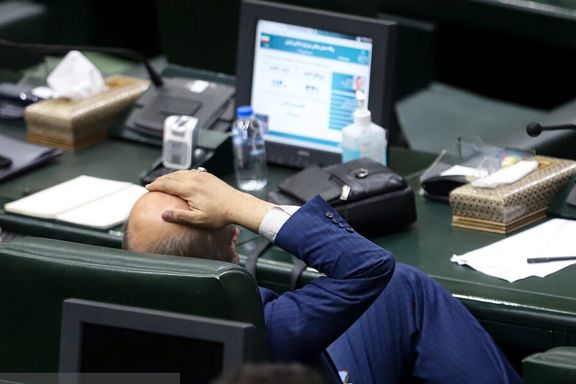
A member of Iran's parliament (Majles) scratching his head in an open session, Tehran, Iran, April 22, 2025
Iran hopes to resolve its biggest foreign affairs challenge through talks with the United States at the same time it grapples with some of the toughest domestic problems in the Islamic Republic's nearly 50-year history.
Some commentators and former officials say the government of Masoud Pezeshkian is unable to resolve even the simplest domestic political issues that could improve the lives of ordinary Iranians.
One example, noted by centrist politician and former presidential candidate Mostafa Hashemi-Taba, is the failure to adopt daylight saving time to help with Iran's energy crisis.
Iran's parliament recently discussed the importance of the measure, but lawmakers refused to prioritize the bill, with Speaker Mohammad Bagher Ghalibaf joking that the matter would be taken up at a later date.
In an interview with the news website Rouydad24, Hashemi-Taba attributed such failures to a "lack of rationality" in governance.
"The government has no principles when it comes to addressing problems," he said, accusing officials of resorting to empty slogans instead of practical solutions, and engaging in futile debates until a new crisis diverts attention from unresolved issues.
"There is no public participation in Iran. Only a select group of people make decisions," Hashemi-Taba said.
Another stalled initiative is changing the weekend from Thursday–Friday to Saturday–Sunday to facilitate international commerce.
Despite months of debate in parliament and other government offices, the measure—deemed necessary by some economists—has been dismissed by some lawmakers with bizarre arguments.
Any weekend change, some critics have asserted, could hinder population growth, since Iranians traditionally conceive children on Thursday nights, and a Saturday–Sunday weekend would disrupt this pattern, as people would have to work on Fridays.
Meanwhile, more pressing issues, such as water and energy shortages, remain unresolved.
Tehran's freshwater resources stand at just 14% of their usual levels, according to official statistics, prompting the capital's governor to declare a water shortage emergency last week.
The government has not managed to find a solution, instead proposing to divert water from other regions—an approach that could cause shortages elsewhere.
Civil unrest erupted in the historic city of Isfahan last week, as residents took matters into their own hands by blocking the flow of water from the Zayandeh Rood River to neighboring Yazd Province.
Electricity is in short supply too, causing regular power cuts in the capital and other regions. Officials have released a blackout schedule, but people say it lacks clarity, leaving them to discover outages only when they are plunged into darkness.
"Fake experts make all the wrong decisions and prevent a minority of true experts from solving problems," prominent sociologist Taqi Azad Armaki told the news website Fararu.
The problem, Armaki argued, is that the government cannot compile or prioritize the crises it faces, as those making crucial decisions lack expertise and are disconnected from what the people want.
"The majority of our society desires peace, jobs and engagement with the world, free from constant worry," Armaki said. "This group constitutes approximately 90 percent of the population. But there is a 5-percent minority that opposes such a lifestyle.
"Those elected to parliament with the support of this minority are louder and disproportionately influential," he added. "The country's resources have been distributed unfairly and unevenly between these two groups."
Iran is stepping up diplomatic outreach to the E3 group of countries—France, Britain and Germany—in an effort to delay or prevent their activation of the so-called snapback mechanism built into a 2015 deal if nuclear talks with the United States fail.
The so-called snapback of UN sanctions on Iran can technically be restored automatically if any party to the Joint Comprehensive Plan of Action (JCPOA) deems Iran to be non-compliant.
But after US President Donald Trump pulled the United States out of the deal in 2018, Washington cannot itself trigger the snapback but those European countries can, giving them key leverage as the high-stakes diplomacy rumbles on.
Appearing to recognize their clout, Tehran has proposed a meeting with the E3 in either Rome or in Tehran on the Friday before the US talks are due to enter their fourth round, Reuters reported citing diplomatic sources.
An Iranian official cited by the news agency said the E3 had yet to respond.
The initiative follows Iranian Foreign Minister Abbas Araghchi’s public offer last week to travel to Britain, France, and Germany for nuclear discussions with his counterparts. None have formally responded to his proposal yet.
French Foreign Minister Jean-Noel Barrot on Monday warned that the E3 would not hesitate to trigger the snapback clause if Iran’s nuclear escalation was deemed a threat to European security.
“Iran is on the verge of acquiring nuclear weapons,” Barrot told reporters. “There is no military solution to the Iranian nuclear problem. There is a diplomatic path to achieve it, but it is a narrow road.”
Barrot added that the E3 remains in close contact with US Secretary of State Marco Rubio on the issue, who said before the US-Iran talks began this year that Trump sought the snapback of sanctions.
Tehran faces tight deadline before JCPOA sunset
The three powers are currently negotiating with Iran about future steps to salvage the agreement, and they last met in January in Geneva.
In March, the E3 issued a joint statement expressing concerns over Iran's nuclear activities, including unprecedented enrichment levels, advanced centrifuge deployment, lack of transparency and threats to non-proliferation.
With UN Security Council Resolution 2231—which enshrined the JCPOA—set to expire in October 2025, Iran has a narrow window to persuade the countries not to trigger the sanctions.
Tehran has warned that it may withdraw from the Nuclear Non-Proliferation Treaty (NPT) in retaliation if the sanctions are triggered.
As with North Korea in 2003, leaving the NPT would lift Iran’s legal obligation to remain a non-nuclear weapons state and allow it to end IAEA inspections and monitoring entirely.
Such a move would escalate tensions dramatically, raising the risk of preemptive military action by Israel or the United States and potentially sparking a regional arms race if countries like Saudi Arabia seek to develop their own nuclear programs.
How the snapback mechanism works
Under UN Security Council Resolution 2231, any JCPOA participant—the E3, Russia, China or the United States —could file a non-compliance complaint with the UN Security Council.
The other participants in the JCPOA have argued that the United States can no longer enforce the snapback mechanism because it withdrew from it in 2018.
If no resolution is adopted to continue sanctions relief within 30 days, all previous UN sanctions are automatically reimposed, including cargo inspections on Iranian shipments, Reinstated arms embargoes and restrictions on missile-related technologies.
This automatic snapback process cannot be vetoed—even by permanent members like Russia or China, which have boosted ties with Iran in recent years and whose relationship with the West is increasingly adversarial.
Although both countries may oppose the move politically, they lack the power to stop it once initiated.
To avert snapback, the Council must pass a resolution during the 30-day review period to continue sanctions relief. But any permanent member can veto it—meaning if the US or E3 object, the resolution will fail, and sanctions will snap back by default.
An F-15 fighter jet at Hatzerim Airbase in southern Israel
A new poll showed that nearly half of Israelis support a strike on Iran's nuclear facilities, even without US support, though divides between the Jewish and Arab demographic were stark.
Asked whether Israel should carry out a military strike on Iran’s nuclear facilities, even without American backing, 45% of Israelis believe Israel should do so and 41.5% do not.
Within the Jewish population, support for potential attacks reached 52% among proponents, with 34.5% expressing opposition. A significantly different perspective prevails among Arabs, where 76% are against the attacks and only 9% are supportive.
The data came from the April 2025 Israeli Voice Index, conducted by the Viterbi Center for Public Opinion and Policy Research.
Additionally, against the backdrop of talks between the United States and Iran on the Iranian nuclear program, 45.5% of Israelis think that Israel's security will be among President Trump's main considerations, while 44% think it will not.
Last month, US President Donald Trump openly threatened to bomb Iran if it did not agree to a new nuclear deal. It has since emboldened Israel to step up its rhetoric.
Earlier this week, Israeli premier Benjamin Netanyahu said, “A real deal that works is one that removes Iran’s capacity to enrich uranium for nuclear weapons... Dismantle all the infrastructure of Iran’s nuclear program. That is a deal we can live with.”
Iran's Parliament Speaker Mohammad Bagher Ghalibaf dismissed the remarks on Tuesday. “Netanyahu, in a desperate attempt to avoid political extinction, has resorted to threats. These worthless tirades are not taken seriously,” he said.
The third round of indirect talks between Iran and the US in Muscat has been met with largely positive reactions from European officials, media, and think tanks, generating a spark of hope that Europe is determined to back the diplomatic track, according to an analysis by Iran's official IRNA news agency.
IRNA reported that the Muscat discussions, mediated by Oman, were described as positive,constructive,and showing progress by both sides, a sentiment echoed across Europe.
The analysis pointed to the European Union spokesperson’s remarks that any development increasing the likelihood of a diplomatic solution is a step in the right direction, emphasizing the EU's commitment to a diplomatic resolution.
The analysis highlighted the support expressed by France, Germany, and the United Kingdom for the continuation of dialogue.
British Foreign Secretary David Lemi's visit to Muscat after the talks and French Foreign Ministry spokesperson Christophe Lemoine's reaffirmation of Paris's commitment to a diplomatic solution shows Europe's alignment with the ongoing efforts, IRNA said.
Iran's pursuit of nuclear talks with the United States in Muscat is a strategic move leveraging "deterrence through diplomacy," according to an editorial published in the Iranian daily Donya-e-Eqtesad on Tuesday.
Authored by Mohammad-Ali Rafiei, the commentary suggests that Tehran's past actions and demonstrated military readiness have built the credibility needed to engage effectively in negotiations.
“Deterrence does not always come from military might alone,” Rafiei wrote. “A broader view shows that diplomacy itself can act as a form of deterrence, convincing adversaries that the cost of hostile action outweighs its benefits.”
Rafiei cited a series of recent military and diplomatic maneuvers as part of this deterrence strategy. These include Iran’s direct strikes on Israel in the past year and a set of joint military drills with Russia and China.
“Even when immediate agreements are not possible, diplomacy backed by credible deterrence is a vital tool for managing crises,” Rafiei wrote. “Honest dialogue and a readiness to compromise can yield mutually acceptable solutions.”
A session of the Iranian parliament on April 27, 2025
Iran's parliament convened a closed-door session on Tuesday to review the ongoing indirect negotiations between Tehran and Washington, with lawmakers expressing firm red lines on domestic nuclear enrichment, lifting of sanctions and foreign oversight.
Speaking to reporters after the session, Abbas Goudarzi, spokesperson for the Iranian Parliament's presiding board, said the meeting included a briefing from the National Security and Foreign Policy Committee, emphasizing the Islamic Republic’s core demands in the talks.
“Iran remains committed to negotiations as long as the other side remains committed,” Goudarzi said. “Our emphasis is on peaceful domestic enrichment. Our definition may differ from the Americans; enrichment means internal production, not the import of enriched material.”
He underlined that any final deal must include the removal of sanctions, unfreezing of blocked assets, and restoration of banking ties. “These are fundamental pillars of our position,” he said.
Goudarzi added that regional issues, Iran’s defensive capabilities, and the suspension of enrichment are not open for negotiation. “The talks are strictly nuclear in scope. We reject any inspection outside of those by the International Atomic Energy Agency,” he added.
Parliament Speaker Mohammad Bagher Ghalibaf echoed this stance, saying that the legislature’s role is supervisory. “The government must remain within the framework of the Strategic Action Law to lift sanctions and protect the Iranian nation’s interests,” he said.
The Strategic Action Law to Lift Sanctions and Safeguard the National Interests of Iran, passed in 2020 and aimed at more parliamentary influence on nuclear policy, mandated a rapid escalation of nuclear activities and a significant reduction in IAEA monitoring in reaction to the US' withdrawal from the JCPOA and the subsequent reimposition of sanctions in 2019.
Ghalibaf also addressed recent remarks by Israeli Prime Minister Benjamin Netanyahu, who has stepped up rhetoric against Iran, dismissing the comments as attempts to influence the Iran-US talks.
Earlier this week, Netanyahu said, “A real deal that works is one that removes Iran’s capacity to enrich uranium for nuclear weapons... Dismantle all the infrastructure of Iran’s nuclear program. That is a deal we can live with.”
Ghalibaf brushed off the remarks. “Netanyahu, in a desperate attempt to avoid political extinction, has resorted to threats. These worthless tirades are not taken seriously”, he said.
Drawing attention to the alignment between US and Israel, Ghalibaf said, "The Zionist regime cannot take independent action without US permission," in spite of threats.
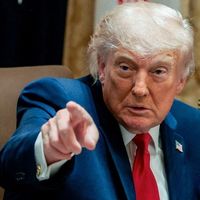
However, it is US President Donald Trump who has said outright that if Iran does not agree to a nuclear deal, the US will bomb Iran.
Ghalibaf also delivered a stark warning: "Should even a fraction of these threats be executed, Iran’s response will be decisive. Any aggression would be akin to igniting a powder keg, putting not just the Zionist regime, but all US bases in the region squarely in the crosshairs of Iranian retaliation."