Iranian mother dies after husband sets her on fire, local media reports

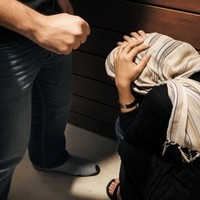
A 39-year-old Iranian mother of two died after her husband reportedly set her on fire, in the latest case of suspected femicide in Iran, according to media reports on Saturday.
A 39-year-old Iranian mother of two died after her husband reportedly set her on fire, in the latest case of suspected femicide in Iran, according to media reports on Saturday.
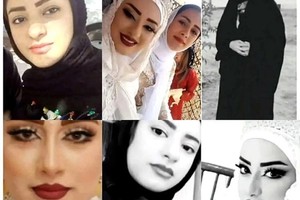
Kajal Sadeghi, a resident of Saqqez in Iran’s western Kurdistan province, died after 12 days in hospital with severe burns, the Iranian news outlet Rokna reported.
Her husband poured gasoline over her and set her alight following an argument on November 16, according to accounts cited by Rokna.
Sadeghi, who had two daughters aged eight and 15, was transferred to a hospital in Urmia with burns covering more than 90% of her body and remained in intensive care until her death.
Prosecutors in Saqqez are investigating the case, though police and judicial authorities have yet to officially confirm the circumstances of her death, Rokna reported.
The killing follows another reported case of femicide in Kordestan province. Police announced on November 24 that the parents of a young woman named Helia Fattahi had been arrested on suspicion of murdering their daughter in Sanandaj.
Police cited family disputes as the motive, while the Kurdish human rights organization Hengaw linked the killing to so-called honor-related motives.
Legislation remains stalled
A bill aimed at protecting women from violence has yet to receive final approval in Iran after more than 14 years of deliberations among successive governments, parliament and other state institutions.
“Our definition of violence is completely different from the Western view,” Iranian lawmaker Zohreh Lajevardi said on Wednesday, addressing disagreements over the legislation.
Iran’s legal and institutional shortcomings in addressing femicide and domestic violence are rooted in social and political structures that perpetuate violence against women, social affairs analyst Asieh Amini previously told Iran International.
At least 104 cases of femicide, 178 cases of domestic violence and 63 cases of rape and sexual abuse against women were documented in Iran over the past year, the Human Rights Activists News Agency (HRANA) reported on Wednesday.
Economic dependence, family pressure, a shortage of safe accommodation, limited access to judicial protection and discriminatory laws governing marriage, divorce and employment remain major obstacles preventing Iranian women from leaving abusive relationships, HRANA said.

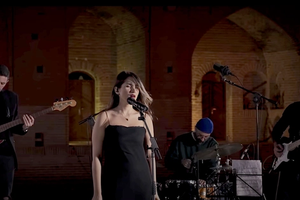
Iran’s flogging of singer Parastoo Ahmadi and four members of her production team was intended to intimidate government opponents and appease hardline supporters of the Islamic Republic, Reuters reported on Saturday, citing five establishment insiders.
The punishment reflected growing fears among Iranian authorities that worsening economic conditions and widespread defiance could trigger another wave of anti-government protests, three Iranian officials and two other establishment insiders told Reuters.
Ahmadi, 29, and her colleagues received 74 lashes each on Monday for a concert livestreamed two years ago in which she performed without a headscarf and alongside male musicians.
The approaching anniversary of last winter’s nationwide protests has heightened concerns among authorities that mounting economic grievances could spill over into renewed anti-government demonstrations, two of the officials said.
Security forces killed thousands of protesters in January, with videos showing rows of body bags at the Kahrizak morgue south of Tehran and grieving families searching for their loved ones.
An investigation published by Iran International’s Editorial Board on January 25, based on classified government documents, medical records and eyewitness testimony, put the death toll from the January 8-9 crackdown at more than 36,500.
Separate investigations by Iran International documented evidence of extrajudicial killings, including the killing of wounded protesters undergoing medical treatment, and pressure on bereaved families to prevent public mourning from becoming a focal point for further protests.
The decision to carry out the flogging exposed divisions within the ruling establishment, with some officials opposing the punishment for fear of provoking further public anger, one of the sources said.
Defiance of compulsory hijab
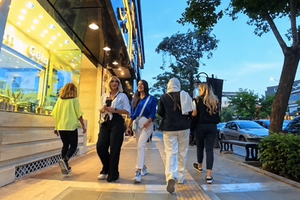
Iranian women have increasingly defied compulsory hijab laws since the nationwide protests of 2022, challenging restrictions imposed following the 1979 Islamic Revolution.
Growing anger among hardliners over the widespread defiance of those restrictions was another factor behind the punishment, three of the sources said.
Authorities may have sought to use the flogging of Ahmadi and her colleagues to appease hardliners without risking the public backlash that a nationwide crackdown on women could provoke, two establishment insiders said.
“I think the authorities are sending a message of fear through the flogging,” Saba Robatjazy, a London-based Iranian singer and childhood friend of Ahmadi, told Reuters.
The condition and whereabouts of Ahmadi and her colleagues remain unknown following the flogging.
“I think that the punishment that they gave Parastoo and her band members is only bringing up more anger from people,” Robatjazy said.
Britain’s media regulator Ofcom on Friday revoked the broadcasting licence of Arabic-language channel Lualua TV over content glorifying the October 7 attacks on Israel and the actions of Iran-backed armed groups.
The channel’s licence holder, Shells for Media Productions Limited, was no longer considered fit and proper to hold a British broadcasting licence, Ofcom said, citing antisemitic content, support for proscribed organizations and a lack of transparency during its investigation.
“Freedom of expression is something we guard fiercely in this country, and the bar for action against broadcasters is rightly set very high,” Ofcom’s Broadcasting and Media Group Director Cristina Nicolotti Squires said.
Founded by Bahraini opposition figures, Lualua TV operates from an office in northwest London.
Experts had warned the British government that the channel was a propaganda arm of Iran’s Revolutionary Guards and part of Tehran’s covert influence operations, the Telegraph reported in February.
Praise for Iran-backed groups
Lualua TV livestreamed a 45-minute speech by Yemen’s Houthi leader Abdul Malik al-Houthi on October 7, the third anniversary of the Hamas-led attacks on Israel.
The speech praised Hamas, Palestinian Islamic Jihad and Hezbollah, all proscribed terrorist organizations in Britain. A slogan containing the phrase “Death to Israel” and a curse against Jews appeared throughout the broadcast.
Ofcom found that the channel had aired antisemitic hate speech without editorial challenge or critical analysis. It also identified social media posts glorifying Hezbollah leaders and their actions.
Lualua TV is listed as a member of the Islamic Radio and Television Union, which the US Treasury sanctioned in 2020 for being owned or controlled by the Revolutionary Guards’ Quds Force.
Iran’s media influence in Britain
Ofcom found that the licence holder had failed to provide accurate recordings and did not respond to an invitation to make representations.
The decision bars Lualua TV from regulated British television platforms but does not prevent it from streaming online.
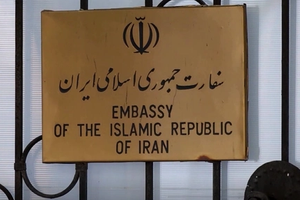
An Iran International investigation published on November 6 found that Tehran had used front companies and cash payments through its embassy in Britain to expand its media influence, including through networks involving former Press TV employees.
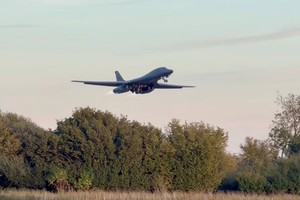
US forces repelled around six drones near a British air base in an episode suspected of having links to Iran earlier this month, the Financial Times reported on Saturday, citing people familiar with the matter.
The drones were driven away using US counter-drone systems after they were spotted flying around RAF Lakenheath in eastern England on November 13, but none were recovered by American or British personnel.
The US Air Force confirmed at the time that it had responded to “suspected unauthorised drone activity” and that “no personnel, aircraft or infrastructure were affected”.
The failure to recover the drones has left US and British authorities unable to rule out the possibility that they were carrying weapons or espionage equipment, the FT reported.
US personnel were instructed to shelter in place following a security alert. News of the episode emerged at the time, but few details were made public.
Home to the US Air Force’s 48th Fighter Wing, Lakenheath is the largest US fighter jet operation in Europe, with nearly 7,000 personnel.
Suspected Iranian plots
The episode follows a series of security threats against British military installations used by US forces, including a suspected plot to attack RAF Fairford. Tehran has denied involvement.
The US military withdrew aircraft from RAF Mildenhall over threats from Iran, the Wall Street Journal reported on November 10, weeks after US bombers were withdrawn from Fairford over similar concerns.
British Prime Minister Andy Burnham previously said the Iranian government was almost certainly behind the suspected Fairford plot.
Iran had significantly shifted its approach towards targeting British military installations this year, MI5 Director General Ken McCallum warned in October.
Britain strengthens base security
US Air Forces in Europe declined on Friday to discuss its counter-drone systems, citing operational security concerns, and urged the public to report suspicious activity.
“We continually review and strengthen our security arrangements,” Britain’s Ministry of Defence said.
Britain is investing £470 million to strengthen security at military installations, including physical protection, surveillance and counter-drone capabilities, the FT reported.
The Royal Air Force has also been moving some aircraft into hangars overnight and plans to install anti-drone netting around others left in the open, Sky News previously reported.
Iranian authorities transferred journalist, human rights activist and Oscar-nominated screenwriter Mehdi Mahmoudian to Greater Tehran Prison after severely beating and torturing him in an attempt to extract a confession, according to his mother and his Telegram channel.
In recent months, Mahmoudian had used his channel, Khabaraneh-ha, to report on political prisoners and impending executions. On Tuesday, a day before his arrest, he published an execution notice for Milad Armoon and Navid Najaran, two political prisoners detained in connection with the 2022 Woman, Life, Freedom uprising.
Mahmoudian co-wrote Iranian director Jafar Panahi’s It Was Just an Accident, which won the Palme d’Or at the 2025 Cannes Film Festival.
Security agents raided Mahmoudian’s home on Wednesday, seized his electronic devices, including his phone and laptop, and took him to a security police facility, Khabaraneh-ha reported.
Officers repeatedly slapped Mahmoudian across the face with such force that he struck nearby doors and walls, the channel said.
They repeatedly placed plastic bags over his head in an attempt to force him to confess, causing his body to shake violently. Several bags tore and were replaced, the channel said.
Officers also forced Mahmoudian’s head between his legs and beat him, according to the report. He lost consciousness, and emergency medical personnel took him to hospital.
After several hours in hospital, Mahmoudian was returned to the detention facility. The channel said the judge on duty mocked his account of the torture, disregarded his physical condition and took no action to investigate the officers’ conduct.
Mahmoudian’s mother, Fatemeh Alvandi, gave further details in a video posted on Khabaraneh-ha on Friday. She recounted a phone conversation with her son after hours of uncertainty about where he was being held.
She said officers had tried to suffocate him during his arrest by placing a plastic bag over his head and twisting it around his neck. She said he lost consciousness after a blow to the chest and spent four to five hours at Sajjad Hospital before being returned to custody.
The Committee to Protect Journalists (CPJ), citing a source close to Mahmoudian, said he told his family in a brief phone call on Thursday that beatings by security forces had left him with visible injuries.
Reporters Without Borders (RSF) condemned Mahmoudian’s arrest and reported torture and called for his immediate release.
“Journalism saves lives, and Mehdi Mahmoudian’s courage deserves to be celebrated,” Jonathan Dagher, head of RSF’s Middle East desk, said Thursday.
Oslo-based Iran Human Rights on Friday expressed grave concern over Mahmoudian’s condition and called for his immediate and unconditional release, independent medical care and unrestricted access to a lawyer.
Its director, Mahmood Amiry-Moghaddam, said Mahmoudian’s reporting had helped halt the two executions and urged the international community to demand accountability for his torture.
Arrest follows publication of execution notice
The new case against Mahmoudian stems from his publication of the execution notice for Armoon and Najaran, who were sentenced to death in what is known as the Ekbatan case. Judicial authorities described the document as confidential.
Mahmoudian was formally charged with “propaganda against the state” and “spreading falsehoods” before his transfer to Greater Tehran Prison.
In his Tuesday post, Mahmoudian denounced the death sentences as unjust and urged lawyers, journalists, civil society groups and the international community to intervene.
“Tuesday may be the last chance to save their lives,” he wrote.
Relatives and friends of the two prisoners gathered outside Ghezel Hesar Prison in Karaj that evening to protest the planned executions. Iranians abroad held similar demonstrations.
Mohammad Hossein Aghasi, Armoon’s lawyer, said early Wednesday that his client’s execution had been halted. Dadban, a legal aid and education organization, separately cited a source who said Najaran had been returned to the prison’s general ward.
The judiciary’s Mizan news agency said Wednesday that both death sentences remained in force. It also warned lawyers and political activists pursuing the case that authorities were monitoring their activities.
Alvandi said she was proud of her son’s efforts to prevent the executions and questioned why he was being punished for trying to save lives.
“My son’s crime was saving two young men from execution. Is that such a terrible crime?” she said.
Citing Mahmoudian’s injuries, loss of consciousness and hospitalization, Khabaraneh-ha called for immediate access to independent medical care, a forensic medical examination to document evidence of torture and access to a lawyer.
Greater Tehran Prison, which holds hundreds of political prisoners and detained protesters, has faced persistent overcrowding, food and drinking water shortages, poor sanitation and restricted access to medical care. Some prisoners have been forced to sleep on the floor.
Nearly two decades of reporting on abuses
Mahmoudian’s recent work on Khabaraneh-ha has included documenting death sentences handed down to people detained during the January 2026 protests, examining legal inconsistencies in the sentences of Armoon and Najaran and publishing articles opposing capital punishment.
On January 28, Mahmoudian and Panahi were among 17 Iranian activists, filmmakers and lawyers who signed a public statement condemning Supreme Leader Ali Khamenei and the violent crackdown on anti-government protesters. Mahmoudian was arrested on January 31 and released on February 17, according to CPJ.
On August 13, Mahmoudian said an eight-month prison sentence for “propaganda against the state” had been upheld. He said he had already spent eight years and three months in prison and did not expect justice from a court that had sentenced dozens of young people to death.
His latest arrest came a month after a Tehran court sentenced Panahi to five years and one month in prison and ordered the confiscation of his assets.
In a separate post on Tuesday, Mahmoudian said authorities at Tehran’s Darvazeh Dowlat metro station had searched passengers’ phones, including his own. He warned that searches long used against activists and journalists had become part of daily life for ordinary Iranians.
Over nearly two decades of reporting and advocacy, Mahmoudian has exposed the torture of detainees at the Kahrizak detention center, reported on conditions at Evin Prison and documented the obstacles members of Iran’s Baha’i community face in burying their dead.
He has also condemned the crackdown on the November 2019 protests, spoken out over the Revolutionary Guards’ downing of a Ukrainian passenger plane and sought accountability for Iranian officials’ handling of the COVID-19 pandemic.
A woman can sing a wordless melody in some settings in Iran. When she sings lyrics, authorities can weigh whether her voice might arouse men. That’s how music researcher Siavash Rokni explains the religious thinking behind restrictions on women’s singing.
Parastoo Ahmadi’s case shows how Iran enforces its rules on public decency. A court deemed her concert video obscene and immoral. Ahmadi and four men who helped stage the concert each received 74 lashes.
Ahmadi performed without a hijab at the historic Deir-e Gachin Caravanserai near Qom in December 2024. There was no audience in the courtyard. The recording drew millions of views online.
In June, a Qom court convicted Ahmadi and eight members of her concert team of “offending public decency” by producing and publishing the video. It sentenced all nine to 74 lashes each and barred them from leaving Iran or pursuing artistic and musical activities for two years.
On November 23, authorities carried out the floggings of Ahmadi and four of the men at the prosecutor’s office in Qom, their lawyer Mostafa Nili said. He identified the men as concert organizer Mohsen Lashkari and musicians Soheil Faghih-Nasiri, Amin Taheri and Amirali Pirnia.
Who decides when a woman’s voice is ‘indecent’?
Iranian authorities generally bar women from singing solo before audiences that include men. Women can sing in a chorus or perform solo for women-only audiences. They have also sung lullabies and children’s songs on television and performed at some regional folk music festivals.
In an interview with Eye for Iran, Rokni traced the distinction to the writings of Ayatollahs Ruhollah Khomeini and Ali Khamenei. “The voice of woman is not haram,” he said, describing their interpretation. “It is when the voice of women incites excitement that it becomes haram.”
A male countertenor can sing in the same range as a woman and be permitted to perform, Rokni said. The distinction he described turns in part on who is singing, whether she is singing words and how authorities judge the effect of her voice on a listener.
Rokni said the definition of public indecency gives judges room to decide what crosses the line. In Ahmadi’s case, the charge concerned the production and publication of the concert video.
The men who stood with her
“When we’re dealing with flogging, this is a form of torture or other cruel, inhuman, or degrading punishment. There is an absolute prohibition,” international human rights lawyer Gissou Nia told Eye for Iran.
Nia pointed to the International Covenant on Civil and Political Rights, which binds Iran. The UN Human Rights Committee has said the treaty’s prohibition on torture and cruel, inhuman or degrading punishment extends to corporal punishment.
The punishment of the four men, Nia said, shows how a system she describes as gender apartheid also harms men who challenge it. They helped put a woman onstage and received the same number of lashes she did.
“It’s really important to remember that men are victims of these gender crimes as well,” Nia said. “The bravery of them in expressing that solidarity with their bodies is quite significant.”
In March 2025, Iranian singer Mehdi Yarrahi also received 74 lashes, his lawyer Zahra Minooei said. He was arrested in 2023 after releasing Rousarieto, or “Take Off Your Headscarf,” a protest song challenging compulsory hijab. After Ahmadi and her team were flogged, Yarrahi shared footage of her concert in solidarity.
The fear a flogging can spread
Azadeh Afsahi, a psychotherapist and founder of Iran House who works with survivors of political violence, said the punishment was meant to instill fear and shame in people who step outside the rules. Flogging can damage a person’s sense of agency, she said, and signal to others what they risk when they speak up or support someone who does.
In Ahmadi’s case, Afsahi saw people rally around the singer. She said the men who helped stage the performance reflected a shift she has seen since the Woman, Life, Freedom movement, with men more willing to take risks in support of women’s freedom.
Afsahi said both trauma and resilience can pass from one generation to the next.
Kiyah Willis, an American fellow at the Objective Standard Institute who made videos about Ahmadi’s case, said she spoke out because Iranian women’s experiences are often overlooked in US conversations about women’s rights. Some viewers had assumed Iranian women broadly supported compulsory hijab, she said. For those viewers, Willis said, the flogging showed how far the state would go to enforce its rules.
“These Iranian stories don’t get told,” Willis said.
Condemnation abroad and a father’s pride
Amnesty International had urged Iran to halt the floggings. After the sentences were carried out, France condemned the punishment, UN human rights chief Volker Türk called it “abhorrent,” and US Ambassador to the UN Mike Waltz called it “pure medieval barbarism.”
Ahmadi’s father, Amir Ahmadi, said he was proud of his daughter’s courage. He described the flogging as a symbol of oppression against art and the women of Iran.
You can watch Eye for Iran on YouTube or listen on any podcast platform.