Femicide rates in Iran up by 60% in two years, report says

A new report has highlighted an alarming trend of increasing femicide cases amid an ongoing pattern of violence against women and girls in Iran.
Iran International

A new report has highlighted an alarming trend of increasing femicide cases amid an ongoing pattern of violence against women and girls in Iran.
According to the report by Etemad Daily, in the first three months of the Iranian calendar in 2024 alone (March 20 to June 21), at least 35 women and girls were murdered by their close male relatives, particularly their husbands.
The number is a 25 percent increase from the 28 recorded during the same period in 2023 and a 59% rise from the 22 deaths in 2022.
A massive 85 percent of the murders were committed by the victims' husbands and cases were spread across the country. In 2022, 16 women were killed by their husbands, followed by 15 in 2023, with a sharp increase to 27 in 2024 amid the climate of state crackdowns on women and girls.
Rights activists point to Iran’s laws and patriarchal society based on Islamic law as the primary cause of femicide which has worsened since 2022.
Conditions for women have become so bad that the United Nations branded Iran's policy as "gender apartheid" as state policy legitimizes violence against women.
Honor killings can be carried out for as little as not wearing the mandatory hijab, bringing shame on the family.
UN Women says these gender-related killings are the “most brutal and extreme manifestation of violence against women and girls. According to the latest UN Women report, globally on average, more than 133 women or girls are killed every day by someone in their own family.
Speaking to Iran International, Iranian feminist and human rights activist, Mina Khani, highlighted the lack of accurate statistics in Iran amid heavy censorship and corruption, and the state's own involvement in committing femicide.
Official figures suggest numbers even lower than Germany, she said, with massive discrepancies in both the reporting and recording of such crimes.
"In this context, human rights statistics are crucial," she said. "Organizations like Hengaw report femicide statistics in Iran based on the cases they document, as there is no official statistical reference for human rights organizations to rely on,” Khani stated.
Norway-based rights organization, Hengaw, identified that "at least 50 cases of femicide have been recorded in various cities of Iran since the beginning of 2024.
Khani noted "the state's failure to take legal measures to protect women from domestic violence".
She said, "Instead, the regime has legalized violence attributed to honor and gender-based violence against women, and it also engages in state-sponsored femicides".
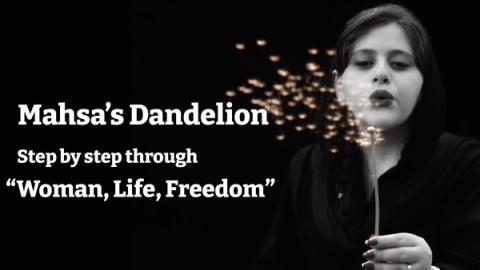
High profile cases such as Mahsa Amini and Armita Geravand, who both died in morality police custody, exemplify the role of the state, she said, which "has never been held accountable".
Soraya Fallah, an Iranian researcher and women’s rights activist touched on the surge and prevalence of femicide in Iran adding that the situation highlights an “urgent need for serious measures to change laws and address cultural issues in Iran.”
Fallah echoed Khani’s statements, blaming Iran's discriminatory laws for fueling the femicide crisis.
“The Islamic government of Iran has institutionalized unequal laws and their implementation, enabling crimes like honor killings. These laws, such as Article 630, provide legal grounds for such acts, fueling patriarchal violence," she said.
Article 630 of the Islamic Penal Code allows a man to kill his wife and her partner if he catches them in the act of consensual adultery, without facing any punishment. This law exclusively targets women. Additionally, a father or paternal grandfather who kills their child is exempt from the retribution sentence, known as Qesas.
"The Islamic Republic uses these laws to maintain power and perpetuate these issues within society. Comprehensive legal and cultural changes are crucial to address these deep-rooted problems and protect women's rights in Iran," she added.
The state’s crackdown on charities dedicated to supporting women experiencing domestic violence further add to the crisis with the UN calling for legal reform to empower women in Iran.
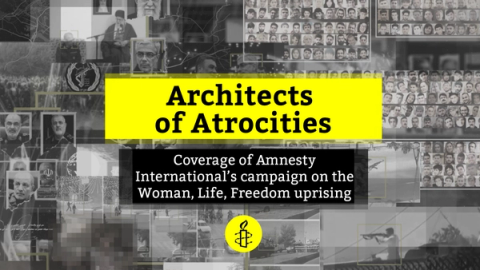
Amnesty International last year said, "The Iranian authorities’ oppressive methods of policing women and girls and punishes those who dare to stand up for their rights".
"To this day, not a single Iranian official has been held accountable for ordering, planning and committing widespread and systematic human rights violations against women and girls through the implementation of compulsory veiling," it added.
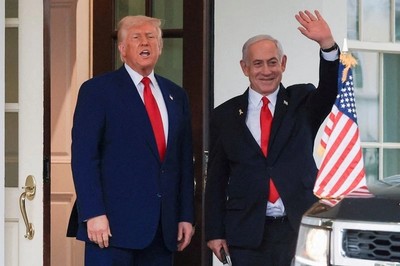
Iran’s president-elect’s praising voters for delivering a "resounding punch to the mouth" of those calling to boycott the polls, has ignited a firestorm of reactions from the public.
"I pray that God spares us from being shamed before these esteemed citizens, who, despite the widespread propaganda discouraging them from voting, turned out in force and delivered a resounding punch to the mouths of those, both domestic and foreign, who campaigned against participation," Masoud Pezeshkian said in parliament on Sunday.
Critics assert that during his campaign, Pezeshkian, presenting himself as a pro-reform politician, used softer language, acknowledging non-voters' grievances and speaking of forgiveness and national unity.
In stark contrast, his current rhetoric in the face of mass abstention, mirrors the hardline stance of the Islamic Republic, further alienating a populace already frustrated by economic hardships and political repression.
Iran’s Independent Filmmakers Association is the latest to join the critics, issuing a statement condemning Pezeshkian's "blatant insult" to Iranians who did not participate in the government elections.
Just 40 percent of Iranians came to the first round of the polls, the lowest trunout in a presidential election in the 45-year history of the Islamic Republic. In the runoff around almost 50 percent participates, according to unverifiable government numbers.
Former MP Bahram Parsaei tweeted addressing Pezeshkian, "If you believe those who voted delivered a resounding punch to non-voters, to whom did the majority who abstained deliver their blow?"
Political prisoner Hossein Razzagh took to X to voice his criticism, stating, "Pezeshkian and Zarif are the epitome of today's reformists! They eagerly seek a moment of favor from the Supreme Leader, becoming willing pawns in his disgraceful puppet shows and justifications of oppression."
Razzagh, who is currently on medical leave, added, "So enamored with the autocrat's bait, they rush to insult the majority who boycotted the elections!"
The new statesman's shift in rhetoric after the election has aggrieved the public who saw him as at least, a less hardline option for president. Before winning the runoff, Pezeshkian notably said, "I have heard, and continue to hear this doubt, dissatisfaction, and disengagement. I urge you to come forward again on Friday, for Iran, and make your choice. To me, both those who voted and those who did not are worthy of respect."
Former political prisoner Mehdi Mahmoudian also joined the chorus of critics, noting the fact that the new president has formed "the most minority-based government of the last five decades".
Slamming the change of tone, he accused Pezeshkian and the government of "deceptive promises, engineered intimidation, and government doping."
Pezeshkian has already courted controversy by dedicating his time to attending religious ceremonies, which critics argue underscores his lack of substantive political planning ahead of assuming office.
“To demonstrate solidarity with the 20% of the establishment’s supporters, he tirelessly moves from one gathering to another each night. Meanwhile, he wields an iron fist against the 60% who chose not to vote,” Mahmoudian added.
Meanwhile, Pezeshkian supporters condemned the controversial language but argued that one sentence should not define him. Pro-reform daily Shargh stood by the incoming statesman, maintaining that his remarks targeted not the non-voters but those actively campaigning to dissuade participation.
On Monday, Pezeshkian took to Twitter with a message that likely fell short of his supporters' expectations. By labeling non-voters and those advocating for a boycott as "enemies" and calling those who voted "honorable citizens", he reverted to the harsh and divisive rhetoric characteristic of the Islamic Republic. He reduced the complex political landscape to a simplistic "us vs. them" narrative, underscoring a tendency to vilify dissent and ignore the nuanced grievances of a significant portion of the populace.
Ehsan Bodaghi, a journalist and a prominent media supporter of Pezeshkian, also took to X to highlight the reasoning behind the mass abstention and called for Pezeshkian "to recognize this segment of society's rights and demands and listen to their voices".
Having voted himself, he said, "Not only was I not looking to punch those who didn't vote by casting my ballot, but I found many of their arguments logical and valid.
Journalist Hormoz Sharifian, has characterized the president-elect's remarks as an "insult" to figures like Sedigheh Vasmaghi, a former political prisoner and Islamic scholar, and Abolfazl Ghadiani, a political activist who had advocated for an election boycott.
On X, Sharifian wrote, "While journalists may not have the right to urge the public against voting, seasoned political activists like the esteemed individuals mentioned certainly do. Exercising their civic rights should not subject them to threats of being 'punched in the mouth' by the president of a minimalist government."
In the face of pressure from the authorities, multiple political prisoners abstained. High profile figures such as Nobel Peace Prize laureate Narges Mohammadi was among those who publicly declared her refusal to participate, joining many political prisoners who boycotted the elections.
Azadeh Mokhtari, a journalist at Tehran’s Rokna Press, pointed out that the mass abstention is the result of years of suffering. "For years, a significant portion of those who abstained from voting have seen one hollow promise after another burst under the relentless pressure of inflation, leaving them disillusioned and distrustful of any further assurances," referring to Iran's economic crisis amid global sanctions.
But, Pezeshkian's use of incendiary language is not out of character, even throughout his campaign. He once told his ultraconservative rival, Saeed Jalili, that if Jalili were elected and failed to keep his promises, he should be hanged.
During a televised debate on Iranian state TV in July, Pezeshkian challenged Jalili's economic promises: "I will withdraw from the election if Mr. Jalili commits to being executed if he fails to achieve eight percent growth in his government."
Supporters of Pezeshkian seem to overlook his conservative track record, including his years in parliament supporting the IRGC, harsh rules of hijab, and other contentious strategies in the Middle East.
Some supporters insist he is merely posturing to align with the Supreme Leader, hoping this will enable him to implement reforms. They are now anxiously waiting to see the composition of his cabinet, with optimists hoping for a progressive lineup. However, this appears unlikely given the power struggles, as Pezeshkian, even if inclined to appoint moderate figures, would need to persuade the predominantly conservative parliament.

Violence between Iranians and the country's Afghan community is spiralling with two deaths of Iranians in a week fueling calls for the expulsion of possibly millions of illegal immigrants.
Since the incident, Afghans in eastern Tehran have reported an increase in attacks from local residents. In interviews with Afghanistan International, several expressed their fear and described feeling under siege.
"Because I am Afghan, they broke my nose in Bisim Park," one Afghan immigrant said in a video sent to Afghanistan International.
The clash last week was sparked by unpaid building fees owed by the victim's brother, with migrants sent to collect the debt.
It has since spiralled into a wave of violence. One Afghan migrant detailed how he and his family now feel trapped in their home, afraid to venture out for work or even basic necessities like groceries.
Another individual from District 15 of Tehran, the area where the fight occurred, shared a photograph of a notice warning Afghan migrants to leave the neighborhood immediately.
While it is not known who wrote the notice, it explicitly warns Afghan migrants that failure to leave District 15 will result in their forcible expulsion from Iran, exacerbating fears among Iran's largest migrant community who feel increasingly unsafe.
Afghanistan International has also received videos purportedly showing street clashes, although these videos have not been independently verified.
Iranian media report that Afghans have now outnumbered Iranians in some impoverished areas in and around the capital, as well as in major cities and smaller towns.
In April 2023, Iran's Supreme National Security Council (SNSC) banned Afghans from living in 16 provinces.
Afghans initially came to Iran as refugees in the early 1980s and later as economic migrants. Their numbers rarely exceeded two million until the Taliban takeover of Afghanistan in 2021. Currently, around 780,000 Afghans have official refugee status and are not considered illegal.
The 2016 census recorded over 1.5 million Afghans in Iran. Officials acknowledge that this number has significantly increased since then, with unsubstantiated claims suggesting there may now be as many as 10 million Afghans in the country, thousands coming across the border each day.
In recent months, there has been an increase in criticism regarding the presence of Afghan migrants in the country, contributing to a growing atmosphere of hostility.
Two days ago, following the killing of another Iranian man, allegedly by his Afghan restaurant worker, residents of the city of Khor in Fars Province attacked the homes of migrants, setting several houses on fire.
Simultaneously, domestic media quoted Tehran police as saying that ten Afghan citizens had been arrested on charges of "street knife fights."
The current tensions are also being influenced by political rhetoric. During campaigning for snap presidential elections in Iran, Parliament Speaker Mohammad Bagher Ghalibaf and a candidate approved by the Guardian Council, made one of his main campaign promises to prevent Afghan refugees from entering Iran and to deport illegal migrants.
On April 9, the Ministry of Interior explicitly announced that Afghan refugees without residence permits would not be allowed to stay in Iran and would be expelled.
In March, the IRGC-affiliated Tasnim News Agency reported that a police plan had been initiated to round up and repatriate unauthorized immigrants from Tehran Province.
In May, it was also announced that a "special patrol" had been established in Shahr-e Rey, south of Tehran, to identify and round up illegal foreign nationals.
The government has largely turned a blind eye to the influx, sparking accusations that Iran may be planning to use Persian-speaking Afghans for political or military purposes.
Last year, Iran International exclusively reported that Unit 400 of the Quds Force of Iran's Islamic Revolutionary Guard Corps (IRGC) recruits Afghans for suicide attacks and collaborates with Al Qaeda to target Israelis.
Just last month, Al-Akhbar, a newspaper affiliated with Hezbollah in Lebanon, reported that Taliban leaders have promised Iranian officials to send fighters to Lebanon in support of Hezbollah currently fighting Israel on its northern border.
And last year, an Afghan national was arrested in connection to a Tehran-backed plot to attack the Israeli embassy in Baku as the country's poor remain vulnerable to recruitment by Iran in its global proxy war.

Last week, former Iranian Foreign Minister Javad Zarif advocated for diversity in selecting the new cabinet, despite the Islamic Republic's history of repressing dissent and even internal critics.
Appointed to propose a list of candidates for each ministry in newly elected President Masoud Pezeshkian’s administration, Zarif spoke about a kind of affirmative action, in favor of prioritizing youth, women, ethnic groups, and religious minorities in the selection process.
"If the candidate is a man, he does not get points, but if she is a woman, she gets 10 points. Likewise, if you are from other religions, you will get points, and if you are a Shia Muslim, you will not get points here... We want to give points so that we can use other ethnic groups and groups that have less presence in the cabinets, including women and youth," he said.
This criterion faced serious opposition from Supreme Leader Ali Khamenei's representative in the state-run newspaper Kayhan, as well as from "revolutionary" outlets such as Javan and Hamshahri. Additionally, several Friday prayer worshipers expressed their disapproval, some even resorting to using profanity against Zarif.
However, beyond this opposition, is this type of affirmative action a feasible possibility in the Islamic Republic?
Realities
While Zarif spoke of social diversity in the presidential administration, the Islamic Republic has systematically, and sometimes brutally, eliminated not only opponents of the clerical regime but also its own internal critics. The pool of people eligible for even mid-level positions is limited to a few hundred insiders.
When Zarif talks about diversity, he means allowing a relatively broader range of fully loyal individuals to the clerical system and Supreme Leader Ali Khamenei to be appointed.
In addition to the ideological and political impediments however, certain groups are subject to systemic discrimination in the ruling system.
In the past 45 years, since the inception of the Islamic Republic, only one woman has served in the cabinet, and this was not even in administrations claiming to be “moderate” or “reformist.” Marzieh Dastjerdi was appointed as the Minister of Health during the second term of Mahmoud Ahmadinejad's administration (2009-2013).
Over the past decades, there have been no non-Shia ministers, and few relatively high-level officials.
The ratio of women to men in the Strategic Council for determining Pezeshkian's cabinet candidates (run by Zarif) is 2 to 21, with efforts to increase the representation of women and other minorities. Only one Sunni Kurd was added to this council after a Shia Kurd protested.
Possibilities
Pezeshkian wants to appoint younger people to cabinet positions, a quest which enjoys consensus among political factions in Iran, as the revolutionary generation from the 1970s is aging and there is a need for fresh blood in the system.
Regarding female cabinet members, there is no principled opposition from Khamenei or the factions against Pezeshkian's administration. Opposition from the "Revolutionary Islamic Assembly" loyal to Khamenei would likely be directed at the specific individual proposed, rather than the concept itself.
Historically, a Shia Kurd was promoted to the position of administration spokesperson in Mohammad Khatami's cabinet, but no Sunni Kurd has held such a role.
The Islamic Republic has consistently refused to grant high political and judicial positions to Sunnis due to its official Shia religion. The likelihood of a Sunni Baluch or Kurd joining the cabinet remains very low, as Shia sources of emulation in Qom and Najaf oppose it. This would only change if Khamenei were willing to accept the risk of their opposition, which is highly unlikely.
Subtle risk
Zarif's stance on assigning negative scores to "Shia men" in the cabinet selection process challenges the established norms of the Islamic Republic.
This has resulted in strong reactions to his interview.
Unlike defending his proposed cabinet composition on the grounds of meritocracy—which could potentially appeal to public opinion or at least mitigate opposition—Zarif bases his argument on a policy of discrimination against Shia men.
This approach not only contradicts the traditional limits but also fails to present a compelling rationale that aligns with the broader values and expectations of the political landscape.
Showing off diversity in a discriminatory system
The Islamic Republic is characterized by systemic legal and institutional discrimination against various segments of its population. High judicial and legal authorities, along with the appointment of future leaders, are officially reserved for clerics and jurists. This preference extends even to public school teacher appointments, where clerics are favored over non-clerics.
Women face formal barriers to roles such as the presidency, judgeship, and membership in the army. Non-Shiites are effectively excluded from influential bodies like the Assembly of Experts, the Expediency Council, and most military, security, and diplomatic organizations. Additionally, wealth, power, and status are concentrated among a small group loyal to the Guardian Jurist.
The representation of women in the Islamic Assembly (Majles) has fluctuated between 1% and 6% over its 12 terms. Despite women occupying over 50% of university seats, their employment rate has remained between 11% and 15%. The economic contribution of Iranian women is estimated based on these employment levels.
Even if a female, Kurdish, or Sunni minister were appointed to the cabinet, it would likely serve a symbolic and deceptive purpose in a system where discrimination against women, ethnic and religious minorities, and citizens disloyal to the regime is both functional and structural.
Zarif's actions may deceive Western observers and those adhering to "woke" ideology in their so-called advocacy for social justice, but only a small percentage of Iranian citizens are likely to be convinced by this performative statement.
If the new administration is genuine in its diversification efforts, it should start by appointing Sunni governors for regions like Kurdistan and Sistan-Baluchestan, where Sunni populations are significant.

Iran's outgoing ICT Minister Issa Zarepour has tried to mislead President-elect Masoud Pezeshkian about the reason why Iranians are unhappy about the slow Internet speed.
IT Iran account on social media platform X reported on July 19 that Zarepour told Pezeshkian during a meeting with him on Thursday that Internet speed in Iran is slow because Iranian netizens use filter-breakers (VPNs). He further claimed that "most Iranian users complain that the oppressive sanctions by the West are responsible for Iranians' difficulty in accessing the Internet."
In fact, Iranians use VPNs in order to circumvent the Iranian government's ideological filtering of the Internet. The government in Iran has been censoring the Internet at least since 2003 when social media were limited to weblogs. Tens of thousands of websites were blocked initially and then social media platforms, such as Facebook, You Tube and Twitter.
Prominent Iranian journalist Saeed Arkanzadeh Yazdi wrote in a post on X that "Zarepour himself is the main culprit for the slow Internet speed in Iran. Nonetheless, he is just the tip of an iceberg and a front for the technological, economic and ideological apparatus that is behind the filtering of the Internet in Iran."
During the past years, particularly following the 2009 disputed presidential election, the government gradually banned all social media platforms. At the same time, it introduced homegrown platforms that not many Iranians use, partly out of concern that their activities can be monitored by intelligence services.
Despite the ban and filtering, millions of Iranians use foreign social media platforms for networking or for business. When Instagram was filtered during the 2022 protests, Iranians complained that tens of thousands of them were kicked out of their online businesses. Based on statistics released by government officials, more than 40 million Iranians including state officials maintain active accounts on Telegram and the number of Iranian accounts on Instagram surpassed 25 million in 2021.
Although most Iranians use social media for personal or business networking, Iranian intelligence and security organizations fear that dissidents might use them for organizing protests and mobilizing protesters.
A report on Didban Iran website on July 18 quoted the Research center of the Iranian parliament as saying that "Restrictions on the Internet is directly linked to the accrued anger of Iranian Internet users.
A study on the variables affecting the challenging situation for Iranian Internet users observed: "A high percentage of the Iranian population has access to social media [albeit using filter-breakers]; however, the low quality of connections, disruptions, limitations on Internet access, and security breaches are significant challenges."
By "security breaches," the report alluded to the constant monitoring of citizens' online activities by the Iranian government. During the latest protests in Iran, the government arrested dozens of social media users simply for "liking" political activists' posts.
One of the most frequently voiced demands of Iranians is easy access to the Internet, where they can connect with others and market their goods or intellectual property.
During his campaign for the latest presidential election in Iran, Pezeshkian promised to facilitate this. Although the President is officially the head of the Supreme Council of Cyberspace in Iran, he does not have the final say on the matter.
Before Pezeshkian, former President Ebrahim Raisi also promised to ease Internet access, particularly for online businesses. However, Internet access became more restricted under his presidency.
Pezeshkian may recall what one of his rivals said during the presidential debates: "To bring about real change for passengers, changing the train driver is not enough. The train manager, or even the track, may need to be changed as well."

The outgoing UN special human rights rapporteur Iran called for a comprehensive international investigation into the systematic human rights violations committed by Iranian authorities during the early 1980s and the 1988 massacres.
Thousands of dissidents, including members of minority groups like Baha'is, Kurds, and those affiliated with organizations such as the Mojahedin-e-Khalq (MEK) and other leftist groups, were executed in the 1980s, particularly during the summer of 1988. Political prisoners were executed following a fatwa issued by Iran's then-leader, Ruhollah Khomeini, with the approval of a four-member death committee.
Javaid Rehman's detailed report presents damning findings on human rights violations in Iran during 1981-1982 and 1988, highlighting systematic "atrocity crimes" and grave human rights abuses committed by Iranian authorities, including extrajudicial executions, torture, and enforced disappearances of political opponents.
The report focuses on the summary, arbitrary, and extrajudicial executions of thousands of political prisoners, which Rehman categorizes as crimes against humanity.
"The high-ranking state officials connived, conspired, and actively engaged to plan, order, and commit crimes against humanity and genocide against the nationals of their own state," the report said.
Historical context and continued relevance
The atrocities detailed in the report occurred during two critical periods in Iran’s history: immediately following the 1979 revolution and during the 1988 massacres. The 1981-1982 period saw mass arrests and executions as the newly-established Islamic Republic sought to consolidate power by eliminating opposition.
Rehman’s findings connect these historical atrocities to ongoing human rights violations in Iran. He notes that many officials implicated in the crimes remain in power, benefiting from a culture of impunity.
“Notwithstanding the availability of overwhelming evidence, those with criminal responsibility for these grave and most serious violations of human rights and crimes under international law remain in power and control,” he asserts.
Specific crimes and victims
The report meticulously documents various crimes, including torture, rape, and other forms of sexual violence against women and girls. It highlights the persecution of ethnic, linguistic, and religious minorities, including the Bahá'í community. Rehman emphasizes the enduring impact of these crimes on survivors and their families, who continue to suffer from psychological trauma and are often denied closure.
One poignant testimony in the report states, “Our suffering stems directly from the permanent crimes committed by the Islamic Republic, and these government-sanctioned atrocities persist to this day.”
Calls for international action
The outgoing special rapporteur who will be replaced by Mai Sato called on the international community to establish an investigative and accountability mechanism to address these crimes. He urged prompt, impartial, and thorough investigations into the crimes committed during the specified periods, focusing on the mass executions and enforced disappearances.
“The proposed international accountability mechanism must investigate the ‘atrocity crimes’ committed during 1981-1982 and in 1988 against thousands of political opponents," the report says.
Rehman also highlighted the need for universal jurisdiction, urging individual states to initiate criminal investigations against those responsible for the crimes. He points out the structural obstacles within Iran's judicial system, which make it incapable of addressing these violations.
Connection to recent protests
The report draws a direct line from the historical atrocities to the recent "Woman, Life, Freedom" protest movement, which began in September 2022. This movement, sparked by resistance to enforced veiling, mirrors the earlier resistance to oppressive measures following the 1979 revolution. Rehman underscores that the oppressive structures established during the early years of the Islamic Republic continue to facilitate human rights abuses today.
Rehman finally calls for comprehensive measures to ensure justice and accountability, including the establishment of an international investigative mechanism, demanding truth and reparations for victims, encourage states to exercise universal jurisdiction over the crime, and supporting the establishment of justice and accountability within Iran.
The UN mandate to examine Iran human rights came into effect in 1984 - the first Special Rapporteur Andres Aguilar resigned after two years because of the lack of cooperation from the Iranian authorities.
Things haven’t improved since then: the mandate has never been recognized by the Islamic Republic, which refuses entry into the country by the Special Rapporteur. But Iran has so far failed to get the mandate itself blocked, which it was able to do from 2002 until 2011 by exploiting the country's voting system within the Human Rights Council.