• العربية
  • فارسی
BrandBrand
  • Iran Insight
  • Politics
  • Economy
  • Analysis
  • Special Report
  • Opinion
  • Podcast
  • Live TV
  • Iran Insight
  • Politics
  • Economy
  • Analysis
  • Special Report
  • Opinion
  • Podcast
  • Live TV
  • Theme
  • Language
    • العربية
    • فارسی
  • Iran Insight
  • Politics
  • Economy
  • Analysis
  • Special Report
  • Opinion
  • Podcast
  • Live TV
All rights reserved for Volant Media UK Limited
volant media logo

Iran flogged singer to deter dissent, insiders tell Reuters

Nov 28, 2026, 13:11 GMT+0
Protesters gather behind a fire in the street during nationwide anti-government demonstrations in Iran in January 2026.

Iran’s flogging of singer Parastoo Ahmadi and four members of her production team was intended to intimidate government opponents and appease hardline supporters of the Islamic Republic, Reuters reported on Saturday, citing five establishment insiders.

The punishment reflected growing fears among Iranian authorities that worsening economic conditions and widespread defiance could trigger another wave of anti-government protests, three Iranian officials and two other establishment insiders told Reuters.

Ahmadi, 29, and her colleagues received 74 lashes each on Monday for a concert livestreamed two years ago in which she performed without a headscarf and alongside male musicians.

The approaching anniversary of last winter’s nationwide protests has heightened concerns among authorities that mounting economic grievances could spill over into renewed anti-government demonstrations, two of the officials said.

Security forces killed thousands of protesters in January, with videos showing rows of body bags at the Kahrizak morgue south of Tehran and grieving families searching for their loved ones.

An investigation published by Iran International’s Editorial Board on January 25, based on classified government documents, medical records and eyewitness testimony, put the death toll from the January 8-9 crackdown at more than 36,500.

Separate investigations by Iran International documented evidence of extrajudicial killings, including the killing of wounded protesters undergoing medical treatment, and pressure on bereaved families to prevent public mourning from becoming a focal point for further protests.

The decision to carry out the flogging exposed divisions within the ruling establishment, with some officials opposing the punishment for fear of provoking further public anger, one of the sources said.

Defiance of compulsory hijab

Iranian women have increasingly defied compulsory hijab laws since the nationwide protests of 2022, challenging restrictions imposed following the 1979 Islamic Revolution.

Growing anger among hardliners over the widespread defiance of those restrictions was another factor behind the punishment, three of the sources said.

Authorities may have sought to use the flogging of Ahmadi and her colleagues to appease hardliners without risking the public backlash that a nationwide crackdown on women could provoke, two establishment insiders said.

“I think the authorities are sending a message of fear through the flogging,” Saba Robatjazy, a London-based Iranian singer and childhood friend of Ahmadi, told Reuters.

The condition and whereabouts of Ahmadi and her colleagues remain unknown following the flogging.

“I think that the punishment that they gave Parastoo and her band members is only bringing up more anger from people,” Robatjazy said.

  • Flogging of Iranian singer Parastoo Ahmadi sparks outrage on social media

    Flogging of Iranian singer Parastoo Ahmadi sparks outrage on social media

  • With the war quieting, Iran's hijab crackdown gathers pace again

    With the war quieting, Iran's hijab crackdown gathers pace again

Most Viewed

Trump deploys extra aircraft carrier, says Iran is making ‘big mistakes’
1

Trump deploys extra aircraft carrier, says Iran is making ‘big mistakes’

2
INSIGHT

Iraq shuts more border crossings with Iran under US pressure to seal land routes

3

Iran’s central bank chief admits economic squeeze is hurting families

4

A dark, cold office: Pezeshkian's austerity gesture backfires

5
PODCAST

Who flogs a singer? The ‘public decency’ case against Parastoo Ahmadi

Banner

Spotlight

  • Iran cries wolf over nuclear treaty withdrawal
    ANALYSIS

    Iran cries wolf over nuclear treaty withdrawal

  • Who flogs a singer? The ‘public decency’ case against Parastoo Ahmadi
    PODCAST

    Who flogs a singer? The ‘public decency’ case against Parastoo Ahmadi

  • A dark, cold office: Pezeshkian's austerity gesture backfires

    A dark, cold office: Pezeshkian's austerity gesture backfires

  • Iranian women break silence on a lifetime of violence
    VOICES FROM IRAN

    Iranian women break silence on a lifetime of violence

  • Too poor to marry, young Iranians are offered religious workarounds
    INSIGHT

    Too poor to marry, young Iranians are offered religious workarounds

Banner
Banner
Banner
Banner
Banner
Banner
•
•
•

More Stories

Iran violently arrests Oscar-nominated writer, tortures him for confession

Nov 28, 2026, 01:35 GMT+0
100%
Mehdi Mahmoudian

Iranian authorities transferred journalist, human rights activist and Oscar-nominated screenwriter Mehdi Mahmoudian to Greater Tehran Prison after severely beating and torturing him in an attempt to extract a confession, according to his mother and his Telegram channel.

In recent months, Mahmoudian had used his channel, Khabaraneh-ha, to report on political prisoners and impending executions. On Tuesday, a day before his arrest, he published an execution notice for Milad Armoon and Navid Najaran, two political prisoners detained in connection with the 2022 Woman, Life, Freedom uprising.

Mahmoudian co-wrote Iranian director Jafar Panahi’s It Was Just an Accident, which won the Palme d’Or at the 2025 Cannes Film Festival.

Security agents raided Mahmoudian’s home on Wednesday, seized his electronic devices, including his phone and laptop, and took him to a security police facility, Khabaraneh-ha reported.

Officers repeatedly slapped Mahmoudian across the face with such force that he struck nearby doors and walls, the channel said.

They repeatedly placed plastic bags over his head in an attempt to force him to confess, causing his body to shake violently. Several bags tore and were replaced, the channel said.

Officers also forced Mahmoudian’s head between his legs and beat him, according to the report. He lost consciousness, and emergency medical personnel took him to hospital.

After several hours in hospital, Mahmoudian was returned to the detention facility. The channel said the judge on duty mocked his account of the torture, disregarded his physical condition and took no action to investigate the officers’ conduct.

Mahmoudian’s mother, Fatemeh Alvandi, gave further details in a video posted on Khabaraneh-ha on Friday. She recounted a phone conversation with her son after hours of uncertainty about where he was being held.

She said officers had tried to suffocate him during his arrest by placing a plastic bag over his head and twisting it around his neck. She said he lost consciousness after a blow to the chest and spent four to five hours at Sajjad Hospital before being returned to custody.

The Committee to Protect Journalists (CPJ), citing a source close to Mahmoudian, said he told his family in a brief phone call on Thursday that beatings by security forces had left him with visible injuries.

Reporters Without Borders (RSF) condemned Mahmoudian’s arrest and reported torture and called for his immediate release.

“Journalism saves lives, and Mehdi Mahmoudian’s courage deserves to be celebrated,” Jonathan Dagher, head of RSF’s Middle East desk, said Thursday.

Oslo-based Iran Human Rights on Friday expressed grave concern over Mahmoudian’s condition and called for his immediate and unconditional release, independent medical care and unrestricted access to a lawyer.

Its director, Mahmood Amiry-Moghaddam, said Mahmoudian’s reporting had helped halt the two executions and urged the international community to demand accountability for his torture.

Arrest follows publication of execution notice

The new case against Mahmoudian stems from his publication of the execution notice for Armoon and Najaran, who were sentenced to death in what is known as the Ekbatan case. Judicial authorities described the document as confidential.

Mahmoudian was formally charged with “propaganda against the state” and “spreading falsehoods” before his transfer to Greater Tehran Prison.

In his Tuesday post, Mahmoudian denounced the death sentences as unjust and urged lawyers, journalists, civil society groups and the international community to intervene.

“Tuesday may be the last chance to save their lives,” he wrote.

Relatives and friends of the two prisoners gathered outside Ghezel Hesar Prison in Karaj that evening to protest the planned executions. Iranians abroad held similar demonstrations.

Mohammad Hossein Aghasi, Armoon’s lawyer, said early Wednesday that his client’s execution had been halted. Dadban, a legal aid and education organization, separately cited a source who said Najaran had been returned to the prison’s general ward.

The judiciary’s Mizan news agency said Wednesday that both death sentences remained in force. It also warned lawyers and political activists pursuing the case that authorities were monitoring their activities.

Alvandi said she was proud of her son’s efforts to prevent the executions and questioned why he was being punished for trying to save lives.

“My son’s crime was saving two young men from execution. Is that such a terrible crime?” she said.

Citing Mahmoudian’s injuries, loss of consciousness and hospitalization, Khabaraneh-ha called for immediate access to independent medical care, a forensic medical examination to document evidence of torture and access to a lawyer.

Greater Tehran Prison, which holds hundreds of political prisoners and detained protesters, has faced persistent overcrowding, food and drinking water shortages, poor sanitation and restricted access to medical care. Some prisoners have been forced to sleep on the floor.

Nearly two decades of reporting on abuses

Mahmoudian’s recent work on Khabaraneh-ha has included documenting death sentences handed down to people detained during the January 2026 protests, examining legal inconsistencies in the sentences of Armoon and Najaran and publishing articles opposing capital punishment.

On January 28, Mahmoudian and Panahi were among 17 Iranian activists, filmmakers and lawyers who signed a public statement condemning Supreme Leader Ali Khamenei and the violent crackdown on anti-government protesters. Mahmoudian was arrested on January 31 and released on February 17, according to CPJ.

On August 13, Mahmoudian said an eight-month prison sentence for “propaganda against the state” had been upheld. He said he had already spent eight years and three months in prison and did not expect justice from a court that had sentenced dozens of young people to death.

His latest arrest came a month after a Tehran court sentenced Panahi to five years and one month in prison and ordered the confiscation of his assets.

In a separate post on Tuesday, Mahmoudian said authorities at Tehran’s Darvazeh Dowlat metro station had searched passengers’ phones, including his own. He warned that searches long used against activists and journalists had become part of daily life for ordinary Iranians.

Over nearly two decades of reporting and advocacy, Mahmoudian has exposed the torture of detainees at the Kahrizak detention center, reported on conditions at Evin Prison and documented the obstacles members of Iran’s Baha’i community face in burying their dead.

He has also condemned the crackdown on the November 2019 protests, spoken out over the Revolutionary Guards’ downing of a Ukrainian passenger plane and sought accountability for Iranian officials’ handling of the COVID-19 pandemic.

Who flogs a singer? The ‘public decency’ case against Parastoo Ahmadi

Nov 27, 2026, 21:55 GMT+0
•
Negar Mojtahedi
100%
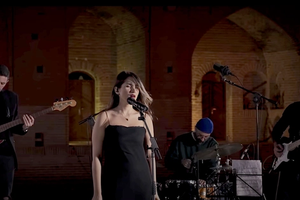
Parastoo Ahmadi is an Iranian artist and singer.

A woman can sing a wordless melody in some settings in Iran. When she sings lyrics, authorities can weigh whether her voice might arouse men. That’s how music researcher Siavash Rokni explains the religious thinking behind restrictions on women’s singing.

Parastoo Ahmadi’s case shows how Iran enforces its rules on public decency. A court deemed her concert video obscene and immoral. Ahmadi and four men who helped stage the concert each received 74 lashes.

Ahmadi performed without a hijab at the historic Deir-e Gachin Caravanserai near Qom in December 2024. There was no audience in the courtyard. The recording drew millions of views online.

In June, a Qom court convicted Ahmadi and eight members of her concert team of “offending public decency” by producing and publishing the video. It sentenced all nine to 74 lashes each and barred them from leaving Iran or pursuing artistic and musical activities for two years.

On November 23, authorities carried out the floggings of Ahmadi and four of the men at the prosecutor’s office in Qom, their lawyer Mostafa Nili said. He identified the men as concert organizer Mohsen Lashkari and musicians Soheil Faghih-Nasiri, Amin Taheri and Amirali Pirnia.

Who decides when a woman’s voice is ‘indecent’?

Iranian authorities generally bar women from singing solo before audiences that include men. Women can sing in a chorus or perform solo for women-only audiences. They have also sung lullabies and children’s songs on television and performed at some regional folk music festivals.

In an interview with Eye for Iran, Rokni traced the distinction to the writings of Ayatollahs Ruhollah Khomeini and Ali Khamenei. “The voice of woman is not haram,” he said, describing their interpretation. “It is when the voice of women incites excitement that it becomes haram.”

A male countertenor can sing in the same range as a woman and be permitted to perform, Rokni said. The distinction he described turns in part on who is singing, whether she is singing words and how authorities judge the effect of her voice on a listener.

Rokni said the definition of public indecency gives judges room to decide what crosses the line. In Ahmadi’s case, the charge concerned the production and publication of the concert video.

The men who stood with her

“When we’re dealing with flogging, this is a form of torture or other cruel, inhuman, or degrading punishment. There is an absolute prohibition,” international human rights lawyer Gissou Nia told Eye for Iran.

Nia pointed to the International Covenant on Civil and Political Rights, which binds Iran. The UN Human Rights Committee has said the treaty’s prohibition on torture and cruel, inhuman or degrading punishment extends to corporal punishment.

The punishment of the four men, Nia said, shows how a system she describes as gender apartheid also harms men who challenge it. They helped put a woman onstage and received the same number of lashes she did.

“It’s really important to remember that men are victims of these gender crimes as well,” Nia said. “The bravery of them in expressing that solidarity with their bodies is quite significant.”

In March 2025, Iranian singer Mehdi Yarrahi also received 74 lashes, his lawyer Zahra Minooei said. He was arrested in 2023 after releasing Rousarieto, or “Take Off Your Headscarf,” a protest song challenging compulsory hijab. After Ahmadi and her team were flogged, Yarrahi shared footage of her concert in solidarity.

The fear a flogging can spread

Azadeh Afsahi, a psychotherapist and founder of Iran House who works with survivors of political violence, said the punishment was meant to instill fear and shame in people who step outside the rules. Flogging can damage a person’s sense of agency, she said, and signal to others what they risk when they speak up or support someone who does.

In Ahmadi’s case, Afsahi saw people rally around the singer. She said the men who helped stage the performance reflected a shift she has seen since the Woman, Life, Freedom movement, with men more willing to take risks in support of women’s freedom.

Afsahi said both trauma and resilience can pass from one generation to the next.

Kiyah Willis, an American fellow at the Objective Standard Institute who made videos about Ahmadi’s case, said she spoke out because Iranian women’s experiences are often overlooked in US conversations about women’s rights. Some viewers had assumed Iranian women broadly supported compulsory hijab, she said. For those viewers, Willis said, the flogging showed how far the state would go to enforce its rules.

“These Iranian stories don’t get told,” Willis said.

Condemnation abroad and a father’s pride

Amnesty International had urged Iran to halt the floggings. After the sentences were carried out, France condemned the punishment, UN human rights chief Volker Türk called it “abhorrent,” and US Ambassador to the UN Mike Waltz called it “pure medieval barbarism.”

Ahmadi’s father, Amir Ahmadi, said he was proud of his daughter’s courage. He described the flogging as a symbol of oppression against art and the women of Iran.

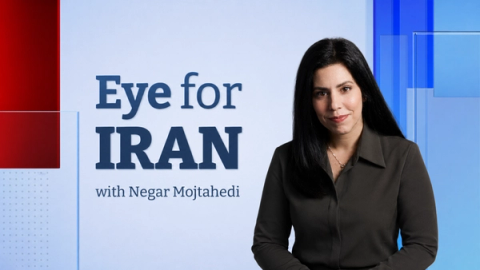
You can watch Eye for Iran on YouTube or listen on any podcast platform.

France urges Iran to halt executions at Paris gathering that drew Tehran’s ire

Nov 26, 2026, 17:17 GMT+0
•
Sajedeh Sharifi
100%
“Liberté” (freedom) lights up the facade of the Arab World Institute in Paris on November 25, 2026, as part of a projection of the Iranian protest slogan “Woman, Life, Freedom.” Screengrab from a video shared on X by French Foreign Minister Jean-Noël Barrot.

France urged Iran to halt executions immediately at a Paris gathering of Iranian artists on Wednesday, drawing a rebuke from Tehran’s foreign minister, who accused his French counterpart of lecturing Iranians about their rights.

French Foreign Minister Jean-Noël Barrot opened the “Iranian Voices” event at the Arab World Institute by naming Milad Armoon and Navid Najjaran, two protesters facing execution in a case dating back to the 2022 uprising.

He said the Islamic Republic had failed to crush the protest movement.

“France stands with Iranian women and men who are rightly calling for justice, freedom and dignity,” Barrot wrote on X on Wednesday. His post included a video showing the slogan “Woman, Life, Freedom” projected onto the facade of the Arab World Institute in Paris.

In a separate Instagram post, Barrot shared a clip pairing his French television interview with footage of Iranian singer Parastoo Ahmadi performing. “Caught between repression and war, Iranian voices must not fall silent,” he wrote.

Iranian Foreign Minister Abbas Araghchi mocked the gathering in a post on X on Thursday, pointing to the French foreign ministry’s role in organizing it.

Araghchi shared footage of chanting during a dispute at the gathering and said Barrot should focus on protecting freedom of expression for Iranians in France before lecturing Tehran about the rights of Iranians at home.

Barrot’s appeal came hours after Armoon’s lawyer said he had received word by phone that his client’s execution had been suspended shortly before it was due to take place.

Iran’s judiciary-affiliated Mizan news agency disputed reports about the timing and said the death sentences against both men, who were detained over protests in Tehran’s Ekbatan neighborhood, remained in force.

Barrot also spoke about Iranian singer Parastoo Ahmadi, who received 74 lashes on Monday for performing without a headscarf in a concert streamed online in 2024.

Ahmadi’s voice accompanied a video Barrot shared on Instagram showing the words “Woman, Life, Freedom” projected onto the institute’s facade. France stood with Iranian women and men demanding “justice, freedom and dignity,” he wrote.

100%
A photo of Mahsa "Jina" Amini at the Paris event held on Nov. 25, 2026.

The event marked the International Day for the Elimination of Violence against Women. The Arshid Azarine Trio performed “Song to Jina,” and actor Mina Kavani read Iranian poet Forough Farrokhzad’s “Earthly Verses” in Persian and French. A short film by Tanin Torabi showed a young woman dancing in public spaces in Iran.

Barrot had announced the gathering in Brussels on November 16, when he sought European Union sanctions over an October cyberattack on refrigeration systems at about 700 French supermarkets.

Paris blamed Iran’s Revolutionary Guards, an accusation Tehran rejected. Barrot said he hoped EU foreign ministers would approve sanctions against those responsible at their December 14 meeting.

Iranian women break silence on a lifetime of violence

Nov 25, 2026, 16:42 GMT+0
•
Saba Heidarkhani
100%
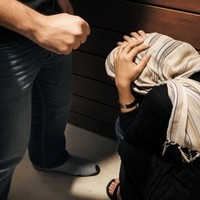
A woman shields her head from a man's raised fist in an image depicting domestic violence in Iran.

From childhood sexual abuse to violence at the hands of husbands and fathers, Iranian women have shared experiences they say they kept secret for years, revealing how fear, stigma and discrimination have silenced victims.

The accounts emerged after Iran International asked women on Instagram to describe violence they had experienced but never spoken about, ahead of the International Day for the Elimination of Violence Against Women on November 25.

Many women said fear of social judgment, pressure to protect their families' reputation and a lack of legal protection had prevented them from speaking out.

“I had so many painful experiences within my family and society that I did not want to have a daughter, fearing she might experience what I did, even at the hands of those closest to her,” one woman wrote.

When home is not safe

Many respondents described violence inflicted by their closest relatives, including fathers, brothers and husbands.

One woman said her father repeatedly struck her on the head with a clothes iron when she was 18 following an argument over her wearing makeup, leaving her hospitalized. Despite his subsequent apologies, she said she had never forgiven him.

Another described severe beatings by her husband during pregnancy, including an assault that damaged her amniotic sac when she was six months pregnant.

A third said abuse by her mother and older brother had driven her to attempt suicide at 15. She married at 17 to escape her family, only to find herself trapped in another cycle of violence that eventually ended in divorce.

The accounts emerged against a backdrop of killings of women and girls by relatives and other people known to them.

100%
A woman sits inside a shelter for survivors of domestic violence in Iran. (NCRI Women’s Committee)

At least 84 women and girls killed in seven months

According to figures compiled from media reports, at least 84 women and girls were killed in Iran between March 21 and October 13 this year. In 75 cases, the perpetrator was someone known to the victim. Twelve victims were under 18, eight of whom were killed by fathers, brothers or other blood relatives.

The figures cover only cases made public through media reports.

One respondent said that had she not married, her abusive brothers might have subjected her to the same fate as Sogand Sayyadi, a 16-year-old girl who died earlier this month after falling from a fifth-floor window in Kermanshah.

Sayyadi's father is under investigation on suspicion of assault and murder, allegations he denies.

100%
An illustrative image depicting sexual harassment against women in Iran.

Abuse beyond the home

Childhood sexual abuse, rape by relatives and harassment in public spaces also featured prominently in the responses.

One woman described being sexually abused by her grandfather and later harassed by men on the streets while looking for work.

A 24-year-old said she had experienced sexual harassment since the age of eight, on her way to school, in taxis, on the metro, at work and even among relatives.

For some, financial dependence made confronting abuse particularly difficult.

“Given the situation in the country, I could not change jobs,” one woman wrote. “The person harassing me knew I was silent out of fear and financial necessity, and continued his behavior.”

100%
Hijab enforcers confront a woman without a headscarf near Tehran’s Grand Bazaar.

Discrimination begins at school

Several women traced their earliest experiences of violence and discrimination to school and the enforcement of compulsory hijab.

One recalled how her middle school principal took her to the school office and cut her hair with scissors because her thick, curly hair protruded beneath her head covering.

Another woman recalled being required to wear a headscarf from the age of six. “There, they taught us that because we were girls, we had no right to speak loudly, laugh or protest,” she wrote of her school.

Others described restrictions on education, employment and personal freedom imposed by their families.

“My family forced me into marriage without caring that I wanted to go to school and continue my education,” a woman who experienced child marriage wrote.

Several respondents also pointed to discriminatory laws under the Islamic Republic, which they said left women with little protection against abuse.

100%
Women at a safe house for survivors of domestic violence in Iran. (NCRI Women’s Committee)

The price of speaking out

Fear of the consequences of reporting violence was a recurring theme, with women describing victim-blaming, family pressure, possible prosecution and the risk of further abuse.

One woman who had been physically assaulted at a social gathering said she abandoned plans to file a complaint after being told that a court might question her for attending an event with men unrelated to her.

Some respondents pointed to insulting comments and attempts to justify violence beneath Iran International's Instagram post itself as examples of why women often remain silent.

Others expressed solidarity with survivors and encouraged them to share their experiences.

But for many, escaping an abusive relationship or bringing physical violence to an end had not meant an end to their suffering. The psychological consequences, they said, continued years later.

Iran keeps student protesters off campus, with no clear path back

Nov 25, 2026, 12:32 GMT+0
100%
A scene of protests at Khajeh Nasir University

Students who joined this year's campus protests will stay barred from Iran's universities unless they show "remorse," the Science Ministry said on Wednesday, without saying how remorse would be shown, who would judge it or how a decision could be challenged.

The ministry was responding to President Masoud Pezeshkian, who said in Mashhad on Tuesday that he had blocked a move to bar thousands of students. His remarks, the ministry said, applied only to some of them.

"The honorable president's remarks apply only to students who have expressed remorse and realized they fell into the enemy's media trap. Opponents of the system who planned and instigated unrest will not return to university," it said in a statement.

In Iran, disciplinary cases against students are decided by university disciplinary committees, with campus security offices, known as herasat, which work with the intelligence services.

Students disciplined in earlier crackdowns have said they were asked to sign pledges, write letters of repentance or give recorded statements. There is no independent body to which students can appeal.

  • Tehran students stage sit-in as dozens summoned in southeastern Iran

    Tehran students stage sit-in as dozens summoned in southeastern Iran

  • Names against silence: Teachers document student deaths in January crackdown

    Names against silence: Teachers document student deaths in January crackdown

'Inviolable red lines'

The ministry named two red lines: the Islamic Republic's flag and respect for Ali Khamenei, the supreme leader killed in US-Israeli strikes on February 28.

"The sacred flag of the Islamic Republic of Iran and respect for the revolution's martyred imam are firm and inviolable red lines for the Science Ministry. There will be no leniency in taking legal action against those who hurl insults or show disrespect," it said.

An "educational approach" toward students who regretted their actions did not rule out prosecuting those who had crossed those lines, the ministry added. It had already made remorse a condition for reducing some penalties.

Iran has barred students from campus for their political activity before. Since the mid-2000s, students marked with "stars" in their files for political activity have been suspended, expelled or denied places in further study.

Earlier this month, student councils at eight Tehran universities wrote to Pezeshkian asking him to review disciplinary rulings and clarify the limits of campus security officials' powers.

"University security cannot be achieved through intimidation and extralegal controls," they wrote.

  • What protesters in Iran are chanting

    What protesters in Iran are chanting

Protests after the January massacre

The campus protests began in late February, when students returned for the new term about 40 days after the January massacre. The 40th day after a death is a traditional day of mourning in Iran, and students in Tehran, Mashhad, Isfahan and other cities gathered to commemorate those killed.

At Sharif University in Tehran, students raised Iran's pre-1979 Lion and Sun flag and chanted against Khamenei. At the University of Tehran, protesters burned the Islamic Republic's flag on February 23. The next day, government spokeswoman Fatemeh Mohajerani said students had a right to protest but that the flag was a red line.

In February, Sadegh Zibakalam, a reformist political commentator, said he had never imagined that slogans in support of Iran's exiled prince Reza Pahlavi would be heard on Iran's campuses.