Iran court sentences 21-year-old protester to death

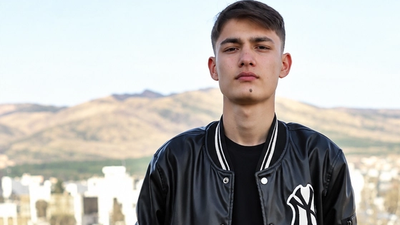
A court in Iran has sentenced 21-year-old protester Omran Amani to death on a charge of "moharebeh," or "waging war against God," according to information obtained by Iran International.
A court in Iran has sentenced 21-year-old protester Omran Amani to death on a charge of "moharebeh," or "waging war against God," according to information obtained by Iran International.
Amani was sentenced on October 24 by Branch 26 of Tehran's Revolutionary Court, presided over by Judge Iman Afshari.
Amani was arrested on February 11, following Iran's nationwide December-January protests, when Basij and intelligence officers raided his shared home in Tehran and detained him alongside two friends, Alireza Dolati and Mohammad Khalizadeh, a source familiar with the case told Iran International.
The three men worked as motorcycle couriers for SnappBox, an Iranian delivery service, the source said.
According to the source, security personnel severely beat the men during their arrest, and Amani was subsequently held in solitary confinement for two months.
The source said Amani's right shoulder was broken during torture aimed at extracting a forced confession at Tehran's Evin Prison and that he had not received adequate medical treatment for the injury.
His case also includes accusations of conspiracy against national security and conducting operational or intelligence activities on behalf of Israel or other hostile governments or groups.
After the US-Iran war began on February 28, Amani was transferred from Evin Prison to Greater Tehran Prison, where he remains held in Ward 6, according to the source.
UN warns of executions and mass trials
The sentence comes amid growing international scrutiny of Iran's treatment of protesters arrested during nationwide demonstrations earlier this year.
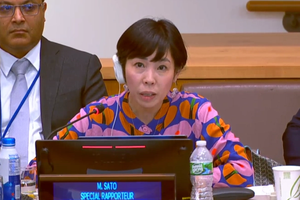
UN Special Rapporteur on human rights in Iran Mai Sato told the UN General Assembly on Wednesday that Iranian authorities had executed at least 34 people in connection with the January protests and conducted mass trials resulting in death sentences.
She cited one case in which 34 defendants were tried in five days, with 12 sentenced to death and seven subsequently executed.
Sato said the proceedings failed to establish individual criminal responsibility and warned that thousands of detainees had been held on national security charges, often without access to their families or lawyers.
"The result is that there is no lawful way left to dissent," she said.
The UN's Independent International Fact-Finding Mission concluded that the suppression of the January protests amounted to crimes against humanity, a finding Sato supported.


Prison air is “fetid” and “suffocating,” Mahvash Sabet writes in her new memoir, Open Wide the Doors, offering a rare account by a Baha’i prisoner of life inside Iran’s prisons and the persecution of the country’s religious minority.
The book, launched in London on October 21, was written inside prison “on scraps of newspaper and tissue paper and whatever else she could find,” according to Payam Akhavan, the international human rights lawyer who hosted the event.
The fragments were later smuggled out of Iran and assembled by Azita Mottahedeh, a scholar, and writer Bahiyyih Nakhjavani., the book’s translators
Sabet trained as a teacher and was a member of the “Yaran,” or “Friends” of Iran, a group tasked, with the government's knowledge, with caring for the Baha’i community’s basic needs.
More than 200 Baha’is were executed after the 1979 Islamic Revolution, and the community continues to face widespread discrimination and persecution.
After Sabet’s arrest in 2008, the other six members of the Yaran were also detained. All seven were jailed for a decade on charges including conspiring against national security. Their former lawyer, Nobel Peace Prize laureate Shirin Ebadi, has said no evidence was presented to substantiate the charges.
Released in 2017, Sabet was arrested again in 2022 and sentenced to another decade in prison alongside fellow former Yaran member Fariba Kamalabadi. She is currently on medical furlough but could be recalled to prison at any time.
The book offers an unflinching account of prison conditions. In solitary confinement, the stench is so “noxious” that Sabet tries to breathe through a slit in her door. Other prisoners’ faeces lie in piles in her cell, and cockroaches crawl across the floor.
Remembering hours of blindfolded questioning early in her detention, Sabet writes that “the hair rose on the back of my neck” each time her interrogator drew close.
But alongside the degradation and violence, the memoir describes Sabet’s efforts to preserve compassion for those around her, including fellow prisoners and even her jailers.
At the London launch, two former cellmates and another former prisoner spoke about Sabet’s influence on their lives.
Roxana Saberi, a journalist imprisoned in Evin in 2009, recalled being “dumbfounded” when Sabet and Kamalabadi told her they were “trying to turn their experiences [in prison] into an opportunity.”
As Sabet showed “kindness and compassion to everyone, from her fellow cellmates to her captors,” Saberi came to believe that such an approach could help lay the foundations for “democracy, freedom and understanding” in Iran.
One episode in the memoir captures that compassion. When an “emaciated” crack addict, with “a head like a prop for an anatomy class … eyes set back in deep rings of darkness,” reaches toward Sabet from a lower bunk, she climbs down to hold the woman’s hand.
Although Sabet has only just secured a bed in an overcrowded ward, she also holds the woman’s wounded, “festering” feet, describing how her heart breaks and fills with love.
Sabet does not conceal her own suffering. After a brutal interrogation in which she endures insults and blows from six “sweating, stinking” men, she recalls how “desperate” she had been for “fresh air.”
Iqan Shahidi, an Iranian Baha’i imprisoned between 2012 and 2017, described Sabet as “like a light in the darkness for me.”
Now an academic in the United Kingdom, Shahidi said he had studied at the informal Baha’i university where Sabet taught before her imprisonment.
The institution illustrated how Baha’is responded to persecution, he said. Rather than resorting to political confrontation or violence, “instead they built something,” providing education to young Baha’is barred from public universities.
“Mahvash kept everybody so hopeful through very simple things in life,” said Nazanin Zaghari-Ratcliffe, the Iranian-British former prisoner who spent six years in detention.
Every year in prison, Zaghari-Ratcliffe recalled, Sabet invited the entire ward to a Nowruz feast. Tables were pushed together, and Sabet supervised the careful slicing of potatoes for traditional Persian dishes.
She continued paying for the annual celebration even after her release, sending money to jailed activist and future Nobel Peace Prize laureate Narges Mohammadi.
For Zaghari-Ratcliffe, the gatherings represented something larger than a shared meal.
Iran’s political prisoners, drawn from different ethnic and religious communities and political backgrounds, were forced to live together for years despite their differences.
Sabet, she said, would “make sure that we [were] all part of the same community.”
“We are against this oppression that has put us in this place … regardless of our differences, we are all one.”
That commitment extended even to prison staff.
Sabet recounts returning to a jail where she had previously been held and receiving a warm welcome from guards. One officer, who tells her that “all my life I have been a good Muslim,” confesses that he has come to hate religion and works for the government only to support his family.
Sabet tries to reassure him, expressing her belief that Iran has a better future and that its people will one day rebuild the country together.
The officer says he wishes he could believe her.
“So allow yourself to,” Sabet replies, “instead of wasting energy on your doubts!”
In the book’s final pages, Sabet recalls an unexpected encounter in prison with Jamaloddin Khanjani, the eldest member of the Yaran.
“The sheer wonder of what had happened felt like a recompense for all the beatings, a reward after all that solitude; it was like breathing fresh air in the suffocating corridors of Evin.”
An Iranian cleric and former Revolutionary Guards member arrested during January's nationwide protests has been sentenced to death twice in separate cases, including for apostasy, US-based rights group HRANA reported Thursday.
The cleric, identified only as Mehdi, was sentenced to death alongside two other protesters, Amirreza Rezaei and Vahid Ghahremani, by Branch 23 of Tehran's Revolutionary Court, according to HRANA.
The charges against the three included allegedly carrying out operations on behalf of Israel, HRANA said. They were informed of their sentences in prison on Monday.
Mehdi, whose surname remains unknown, received a second death sentence from Iran's Special Clerical Court on a charge of apostasy. HRANA provided no further details about the circumstances of that case or his previous service in the Islamic Revolutionary Guard Corps (IRGC).
All three were arrested separately by security forces during the nationwide protests in January. They were transferred from Greater Tehran Prison to Ghezel Hesar Prison in Karaj on Wednesday.
The sentences come amid warnings from the United Nations that Iranian authorities have intensified executions and prosecutions linked to the protests during the war with the United States and Israel.
UN Special Rapporteur Mai Sato told the General Assembly on Wednesday that at least 34 people had been executed in connection with the nationwide protests.
Sato cited one case in which 34 defendants were tried in just five days, with 12 sentenced to death and seven already executed. She raised concerns about mass trials, forced confessions and the lack of due process in capital cases.
"The war has provided cover for the authorities to intensify their crackdown and tighten the repression," Sato said, adding that protesters had been portrayed as agents of foreign powers and peaceful dissent prosecuted as a national security threat.
The protests began in late December with strikes by merchants in Tehran before spreading across the country. At least 36,500 people were killed during the subsequent crackdown by security forces, according to Iran International's reporting, while tens of thousands were arrested or summoned.
Iranian authorities have executed at least 34 people in connection with the January protests, conducted mass trials resulting in death sentences and detained thousands, UN Special Rapporteur Mai Sato said Wednesday.
Addressing the UN General Assembly, Sato described the scale of human rights violations during her two-year Iran mandate as extraordinary. “I struggled to find its precedent in recent history,” she said, warning that her findings represented only a fraction of the abuses committed against Iranians.
Her report, covering February through August 2026 following the December-January nationwide protests, detailed how the Islamic Republic used the war with the United States and Israel to intensify repression, treating peaceful protesters as agents of hostile foreign powers.
In just one case, 34 defendants were tried in five days, with 12 sentenced to death and seven already executed. She said such proceedings could not establish individual criminal responsibility, rendering the death sentences arbitrary.
Sato said senior Iranian officials had publicly demanded expedited trials, while courts conducted mass proceedings and broadcast alleged confessions within days of arrests. She added that lawyers defending protesters had been summoned, threatened and, in some cases, arrested.
The special rapporteur also reported thousands of arrests on national security charges, with many detainees held incommunicado at undisclosed locations, a pattern she described as enforced disappearance. She said families of protesters killed in the crackdown faced threats of prosecution and asset confiscation for demanding accountability, while some were denied the right to hold funerals.
Sato also described prisoners left locked inside overcrowded cells during airstrikes, with bars reportedly welded to ward doors. Government-imposed internet shutdowns prevented civilians from receiving warnings about incoming attacks and made documenting abuses dangerous. Under Iranian espionage legislation, sharing information with foreign media can carry the death penalty.
She said the authorities continued withholding information about executions and killings by security forces while publishing protest death tolls far below independent estimates.
“The result is that there is no lawful way left to dissent,” Sato said.
The UN's Independent International Fact-Finding Mission, which addressed the same session, concluded that the suppression of January's nationwide protests amounted to crimes against humanity. Sato said she saw no reason to depart from that finding.
Iran and allies challenge UN findings
Iran's representative, Ali Karimi Magham, rejected both UN investigative mechanisms, describing them as illegitimate and politically engineered instruments unrelated to genuine human rights protection.
Russia accused the investigators of advancing Western political interests and disregarding Iran's “complex and unique sociocultural context.”
North Korea similarly rejected the investigations, accusing the UN of the “weaponization of human rights.” Its representative argued that countries should determine their own societal models free from external interference and that country-specific investigations violated national sovereignty.
China concentrated on the consequences of war and sanctions, urging respect for Iran's sovereignty and calling for the removal of unilateral economic restrictions. Beijing said such measures violated economic and social rights and worsened the population's hardship.
Sato responded to Tehran's objections by pointing out that Iranian authorities had engaged with her office throughout her mandate, including extensively over the war, while continuing to withhold information about killings carried out by their own security forces.
Western governments condemn Iran’s crackdown
Other delegations focused on the violations documented by the UN investigators, particularly the killing of protesters, executions and torture.
Britain described the killing of children during the January crackdown as “abhorrent” and condemned the torture of detainees, widespread violence against peaceful protesters and the authorities' internet shutdowns.
Australia accused Iranian authorities of using lethal force, mass arrests and a nationwide communications blackout to silence dissent and isolate Iranians from the outside world.
The European Union called for an immediate halt to executions, condemning the use of capital punishment and torture to suppress political opposition. It also warned about reprisals against critics, including those living abroad.
The Netherlands said the findings confirmed gross human rights violations, particularly a dramatic escalation in lethal force and mass arrests during the protests.
Canada raised concerns about proposed legislation that would criminalize contact with foreign organizations, civil society groups and diplomatic missions, potentially further restricting communication between Iranians and the outside world.
Sato also documented discrimination against Kurds, Baluch, Arabs and Azerbaijani Turks, alongside continuing persecution of Baha'is and Christian converts.
In her concluding remarks, Sato called on the United States and Israel to end hostilities and investigate their strikes, while urging Iranian authorities to halt executions and repression and investigate deaths caused by their forces.
Instead, she said, repression had deepened the grievances driving people into the streets.
Iran's two biggest soccer rivals met in their first women's derby on Wednesday, a historic occasion overshadowed by restrictions on male spectators and journalists and uncertainty over live television coverage.
Persepolis defeated Esteghlal 2-1 at Shahr-e Qods Stadium west of Tehran, marking the first-ever meeting between the women's teams of two clubs whose rivalry has dominated Iranian men's soccer for decades.
Fatemeh Rezaei and Somayeh Esmaeili scored for Persepolis in the first half before Niloufar Azimi pulled one back for Esteghlal after the break.
Female spectators were eventually allowed to attend following days of uncertainty and intervention by government officials. Men, however, remained barred from women's soccer matches under restrictions that also extended to journalists, photographers and technical personnel.
Prosecutor threatens legal action
Tehran prosecutor Ali Salehi on Tuesday sent separate letters to Sports Minister Ahmad Donyamali and Iranian Football Federation President Mehdi Taj demanding that men be barred from women's soccer matches.
The restrictions covered male spectators, journalists, photographers, camera operators, security personnel and event staff. Salehi warned that prosecutors would take legal action if they were violated.
The warning followed reports of female spectators attending women's league matches without the headscarves required under Iran's mandatory hijab laws, as well as men being present at the games.
Prosecutors described the incidents as violations of Islamic regulations and public decency.
The Iranian Football League Organization had already issued a directive prohibiting men from attending women's soccer matches, including male media workers and club executives.
Farideh Shojaei, the Football Federation's vice president for women's affairs, confirmed ahead of the derby that men would not be permitted to attend.
The restrictions also raised practical questions about organizing the match, particularly the use of video assistant referee (VAR) technology, which relies on technical personnel and match officials.
The league had previously called for a male official to be removed from the VAR team for the derby, adding to uncertainty over how the technology would be operated.
The dispute over attendance came after a series of changes to the arrangements for the historic fixture.
Originally scheduled for Friday, October 23, at Kazemi Stadium, the home ground of Persepolis' women's team, the match was moved to Wednesday, October 28, at Shahr-e Qods Stadium.
The league organization cited anticipated demand from supporters and the need for better facilities, although the change also shifted the match from Iran's weekly day off to a working day.
Ticket sales were suspended twice in the days leading up to the game, while the final decision on whether female spectators could attend was referred to the Tehran Provincial Security Council.
At one point, there were concerns that the encounter could take place behind closed doors despite the anticipated interest from supporters.
Women were eventually permitted to attend following discussions involving Vice President for Women and Family Affairs Zahra Behrouz-Azar and Sports Ministry officials.
Government spokesperson Fatemeh Mohajerani also attended the match, according to Iranian media reports.
Government spokesperson Fatemeh Mohajerani also attended the match, according to Iranian media reports.
Women's soccer struggles for television exposure
The restrictions extended beyond stadium access, raising questions about how widely the first women's derby would be seen.
Iran's state broadcaster, IRIB, had announced no plans to televise the match, while reports ahead of the game indicated restrictions on broadcasts through the two clubs' own platforms.
The uncertainty contrasted with the men's Esteghlal-Persepolis derby, one of Iran's biggest sporting events, which regularly attracts large television audiences.
For the women's teams, limited broadcasting and media access also restrict opportunities to build a following, attract commercial sponsors and gain wider public recognition.
Female soccer players in Iran are required to wear mandatory hijab while competing and have long faced unequal access to sporting facilities and limited media exposure.
The first meeting between the women's teams of Esteghlal and Persepolis offered an opportunity to showcase their talents to a national audience. Instead, much of the attention ahead of the match centered on restrictions over who could attend, photograph or broadcast it.
A different picture elsewhere in the region
The restrictions surrounding Iran's first women's derby contrast with similar fixtures involving major soccer clubs elsewhere in the region, where women's competitions have attracted television coverage, government support and spectators of both sexes.
In December 2021, Turkish rivals Fenerbahce and Galatasaray held their first women's derby as a friendly match at Istanbul's Nef Stadium.
Organized as part of a campaign against violence toward women, the match was attended by male and female supporters, broadcast on national television and watched by Turkey's justice and family ministers.
Then-Justice Minister Abdulhamit Gul said afterward: "Whatever the result, women are the winners."
Saudi Arabia staged its first women's Jeddah derby between Al-Ittihad and Al-Ahli in October 2022, during the opening week of the country's Women's Premier League.
The match took place at King Abdullah Stadium, with spectators attending without gender restrictions.
Saudi women's soccer subsequently secured wider television exposure. Beginning with the 2023-2024 season, Women's Premier League matches were broadcast domestically on SSC sports channels and internationally through streaming platform DAZN outside the Middle East and North Africa.
Alia Al-Rasheed, head of women's soccer at the Saudi Football Federation, described the agreement as an opportunity to attract new audiences and inspire future generations of female players.
While Turkey and Saudi Arabia have expanded opportunities for women's soccer, Iranian female athletes continue to face mandatory hijab requirements, unequal facilities and restrictions on media exposure.
For Iran's women footballers, the first derby between the country's two biggest clubs was a milestone. But the restrictions surrounding it showed how far the women's game remains from enjoying the visibility routinely afforded to its male counterpart.
Iranian authorities have arrested a female fitness blogger after videos showing women exercising without hijab at a Tehran sports exhibition sparked criticism from hardline media.
The judiciary's Mizan news agency said the woman was arrested on charges including propaganda against the state and offending public sentiment by publishing photographs and videos from the Fitex exhibition.
An arrest warrant was also issued for another person involved in planning the exhibition, Mizan said, without identifying either individual or specifying which images or videos prompted the action.
The fifth edition of Fitex, a fitness and sports equipment exhibition, was held from October 21 to 23 at Goftogoo Park in western Tehran.
Photographs and videos circulated on social media showed female athletes performing fitness routines and acrobatic movements, some without headscarves and others exercising to music.
Under Iran's mandatory hijab laws, women are required to cover their hair in public, including at sporting and cultural events.
The footage prompted criticism from hardline media outlets and supporters of the Islamic Republic, some of whom demanded judicial action against the organizers.
Hardline media demand action
The IRGC-affiliated Tasnim news agency criticized what it called "widespread violations of social norms" at the exhibition on October 25 and urged sports authorities and other institutions to intervene.
The Student News Network, affiliated with the student branch of the Basij militia, quoted one of its reporters as saying anyone viewing the images would experience "secondhand embarrassment."
As criticism intensified, Iran's Sports Ministry issued a statement on October 25 distancing itself from the event, saying neither the ministry nor Tehran's provincial sports authorities had organized the exhibition or granted it a permit.
Tehran prosecutors subsequently opened a criminal case against the organizers and others involved, citing alleged violations of legal and Islamic regulations, and summoned them for questioning.
Mizan said online pages associated with Fitex had been blocked as part of the proceedings and that investigations were continuing.
Restrictions extend to art exhibitions
The action against Fitex comes amid wider pressure on cultural activities and women's public appearance in Iran.
On October 26, Tehran prosecutors initiated legal proceedings against the organizers of Art Fair Tehran, also citing alleged failures to comply with legal and Islamic regulations.
Organizers were summoned to the prosecutor's office, while the exhibition's ticketing website and the organizer's social media account were blocked.
Earlier this month, the US-based Center for Human Rights in Iran said authorities were intensifying their crackdown on artists, writers, musicians and other cultural figures as part of a broader campaign to silence dissent and intimidate communities.
The rights group cited a source in Iran who linked the arrests of cultural activists to authorities' fears of renewed protests, particularly in economically disadvantaged areas amid worsening living conditions.