Vance offers to meet Iran's Rezaei for peace talks as Qatar renews mediation efforts
US Vice President JD Vance delivers remarks during a midterm campaign rally at JRJ Construction in Weatherford, Texas, US, October 29, 2026.
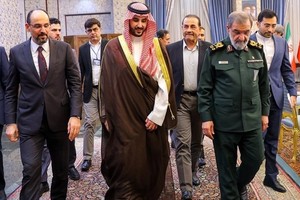
US Vice President JD Vance has offered to meet Iran's top security official Mohsen Rezaei to discuss ending the war, the Washington Post reported, as Qatari mediators returned to Tehran on Friday to pursue a deal.
Vance sent a letter last week to Rezaei, secretary of Iran's Supreme National Security Council and a former commander of the Islamic Revolutionary Guard Corps (IRGC), outlining the interests of both countries in possible negotiations, the newspaper reported on Thursday, citing a US official familiar with the discussions.
The letter stressed that Washington's main objective was to prevent Iran from obtaining a nuclear weapon, while recognizing Tehran's interests in rebuilding its economy and preserving its national sovereignty.
The vice president also told Iran it needed to appoint representatives authorized to negotiate over its nuclear program, according to the report.
Istanbul or Doha could host a meeting between Vance and Rezaei if the two sides agree to direct talks, the official said.
The Washington Post reported that US officials regarded Rezaei as an important contact because of his influence within Iran's security establishment and his access to Supreme Leader Mojtaba Khamenei.
Qatar returns to Tehran for new talks
Qatari mediators returned to Tehran on Friday to advance efforts toward an agreement between Iran and the United States, Reuters reported, citing an official briefed on the negotiations.
The mediators have been coordinating their efforts with Washington as they seek to narrow differences over the nuclear program and the economic restrictions imposed on Iran.
The two sides remain divided over the order of steps needed to reach an agreement. Washington wants nuclear issues addressed from the outset, while Tehran insists that the US first end its naval blockade and lift restrictions on Iranian oil exports.
Qatar presented Iran with a draft peace plan on Sunday, but a senior Iranian official subsequently described the ideas as unacceptable and said Tehran would not change its position on the nuclear issue.
Iranian Foreign Minister Abbas Araghchi said on Wednesday that Tehran was consulting closely with intermediaries on ideas for implementing its own seven-day proposal to end the war.
The Washington Post reported that Qatari representatives have maintained regular contact with Rezaei and other senior Iranian officials.
According to the newspaper, Iranian leaders regarded Vance's direct letter as a sign of respect, although there was no indication they had changed their nuclear position.
Washington sees Rezaei as central to negotiations
The Trump administration believes Rezaei could help secure support within Iran's leadership for a nuclear agreement, the Washington Post reported, citing the US official.
US intelligence officials believe Rezaei has maintained regular contact with Supreme Leader Mojtaba Khamenei, including discussions in recent days after receiving Vance's letter.
Rezaei, a former commander of the IRGC, has gained influence within Iran's political and security establishment and maintains connections with officials overseeing the economy, according to the report.
The newspaper said US officials viewed him as someone capable of securing agreement among Iranian leaders on sensitive nuclear issues.
Vance previously led US negotiations with Iran, including an April meeting in Islamabad with Iranian Parliament Speaker Mohammad Bagher Ghalibaf.
Those discussions involved possible sanctions relief and economic cooperation in exchange for a nuclear agreement, but they failed to produce a lasting settlement.
The Washington Post reported that US officials believe the opportunity to reach an agreement without further military action could be narrowing.
Trump says contact focused on medical supplies
US President Donald Trump confirmed Wednesday that he had approved Vance's outreach to Iran but said the contact concerned medical supplies rather than instructions to restart peace negotiations.
"They need help with medical supplies and various things. He asked me what I thought. I said, 'if you want to do that, that's OK,'" Trump told reporters.
"Basically, it's getting supplies in to help people that are not well," he added.
The Wall Street Journal first reported the letter to Rezaei, saying the contact was intended to explore whether Washington and Tehran could agree on a framework for negotiations.
Axios separately reported that Vance stressed the need for any renewed negotiations to address Iran's nuclear program.
The discussions come as Trump considers possible renewed strikes against Iran after the November 3 US midterm elections, according to reports by US media outlets.
Vance says Trump will not allow prolonged Iran war
Speaking at a Fox News town hall in Fort Worth, Texas, on Thursday, Vance said Trump would not allow the conflict with Iran to become a prolonged US military engagement.
"We've been involved in Iran in some form for seven months. The United States has been dealing with Iran for 47 years, and I promise you that Donald Trump is not going to let Iran become a forever war," Vance said.
He said opposing lengthy military interventions did not mean ruling out the use of force.
"I think there's a difference between criticizing foreign military misadventures and saying that you can never ever use the American military," he said.
"He's going to accomplish America's objectives, and then we're going to focus on the other things that we're doing," Vance added.
His comments came as US military officials prepared options for possible further strikes against Iran, with Trump yet to announce a decision.
An Iranian cleric and former Revolutionary Guards member arrested during January's nationwide protests has been sentenced to death twice in separate cases, including for apostasy, US-based rights group HRANA reported Thursday.
The cleric, identified only as Mehdi, was sentenced to death alongside two other protesters, Amirreza Rezaei and Vahid Ghahremani, by Branch 23 of Tehran's Revolutionary Court, according to HRANA.
The charges against the three included allegedly carrying out operations on behalf of Israel, HRANA said. They were informed of their sentences in prison on Monday.
Mehdi, whose surname remains unknown, received a second death sentence from Iran's Special Clerical Court on a charge of apostasy. HRANA provided no further details about the circumstances of that case or his previous service in the Islamic Revolutionary Guard Corps (IRGC).
All three were arrested separately by security forces during the nationwide protests in January. They were transferred from Greater Tehran Prison to Ghezel Hesar Prison in Karaj on Wednesday.
The sentences come amid warnings from the United Nations that Iranian authorities have intensified executions and prosecutions linked to the protests during the war with the United States and Israel.
UN Special Rapporteur Mai Sato told the General Assembly on Wednesday that at least 34 people had been executed in connection with the nationwide protests.
Sato cited one case in which 34 defendants were tried in just five days, with 12 sentenced to death and seven already executed. She raised concerns about mass trials, forced confessions and the lack of due process in capital cases.
"The war has provided cover for the authorities to intensify their crackdown and tighten the repression," Sato said, adding that protesters had been portrayed as agents of foreign powers and peaceful dissent prosecuted as a national security threat.
The protests began in late December with strikes by merchants in Tehran before spreading across the country. At least 36,500 people were killed during the subsequent crackdown by security forces, according to Iran International's reporting, while tens of thousands were arrested or summoned.
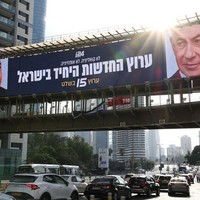
An advert for an Israeli television channel that will broadcast Israel's election coverage features Israeli Prime Minister Benjamin Netanyahu and former Israeli military chief Gadi Eisenkot, leader of the Yashar party, ahead of Israel's national election, on a bridge in Tel Aviv, Israel, October 21, 2026.
Iranian media have highlighted Benjamin Netanyahu's weakened position following Israel's election, but analysts in Tehran say his departure would be unlikely to change Israel's approach to Iran, even if it weakened its ability to pursue the confrontation.
Reports by the Tasnim and Fars news agencies, both affiliated with the Revolutionary Guards (IRGC), as well as state radio and television, have focused on the failure of either of Israel's two main electoral blocs to secure a governing majority, raising the prospect of prolonged political deadlock.
These outlets have also devoted considerable attention to gains by Arab parties and the possibility that their increased representation could help bring about Netanyahu's removal as prime minister.
They have largely avoided discussing whether the election outcome could increase or reduce the risk of further escalation in the war with Iran.
Senior Iranian officials have yet to comment on the result. Before the vote, Foreign Ministry spokesman Esmail Baghaei said Tehran did not care who led Israel, stressing that Iran was at war and would not hesitate to defend itself.
Netanyahu or Eisenkot?
Iranian analysts have generally argued that the election outcome could affect the timing, scope or objectives of potential Israeli military action, but would not fundamentally change Israel's approach to Iran's nuclear and missile programs or its regional influence.
Masoud Asadollahi, a Middle East expert and university professor, told Nour News, an outlet close to Iran's Supreme National Security Council: “From a military and security perspective, one cannot simply conclude that the mutual threats or strategic differences between Iran and Israel will disappear because a prime minister leaves office.”
He said Netanyahu's opponents differed from him mainly in how they would manage the war and make strategic decisions, rather than in their fundamental approach to Iran.
The conservative Khorasan newspaper addressed the question in a Thursday article titled “Which Is Better for Iran: Netanyahu or Eisenkot?”
It argued that Netanyahu's removal should not be equated with the end of the Israeli threat to Iran. Gadi Eisenkot, it said, was neither an outsider to Israel's political establishment nor opposed to confrontation with the Islamic Republic.
“The experience of coalition governments and political disagreements in Israel has shown that diversity within the cabinet can increase the costs of decision-making,” the newspaper wrote.
Khorasan argued that Netanyahu's departure could benefit Iran by weakening the political and diplomatic capacity he had accumulated during the confrontation, even if his successor pursued similar policies.
But it also acknowledged that internal political rivalries could produce more aggressive policies.
“Sometimes removing one player does not end the game, but it can make the game more difficult for the other side,” the newspaper wrote.
Other analysts warned that political uncertainty could itself increase the risk of military escalation.
Morteza Makki, an international affairs analyst, told the Iranian Labor News Agency (ILNA) that delays in forming Israel's next government could work to Netanyahu's advantage by giving him a potential window to attack Iran.
Makki said the uncertainty could also affect the prospects for coordination with the United States in any such operation.
“Overall, the likelihood of war is high, and one cannot judge whether war will or will not occur solely on the basis of which political camp wins the election, because both camps are inclined toward war,” foreign policy analyst Alireza Komeili told the conservative Nameh News website.
Hardliner claims Iran drove Israeli turnout
Ali Akbar Raefipour, an ultra-hardline political figure, claimed in a social media post that concerns about Iran were behind the high turnout in Israel's election.
“The highest voter turnout in Israel's elections in the past 28 years has been recorded so far. And the main reason for it is Iran alone. Yes, Iran,” he wrote on X.
His claim drew responses from Iranian social media users who contrasted Israeli participation with low turnout in Iranian elections.
“We have influence over elections all over the world, and the results of elections everywhere in the world affect our lives, except for the results of our own elections,” one user wrote.
Yellow warning tape cordons off a damaged section of pavement in Tehran.
The prospect of another US-Iran war has fuelled debate over whether Washington is preparing for a prolonged campaign of military and economic pressure or whether diplomacy can still avert a wider conflict.
The debate comes amid continuing attacks on shipping in the Strait of Hormuz, warnings from Tehran that it is better prepared for another confrontation, and fresh revelations about Iran's efforts to circumvent sanctions and the US naval blockade to import military equipment.
Iran's Revolutionary Guards said Thursday that three tankers had struck naval mines in the strait over the previous 24 hours. Vice President Mohammadreza Aref said Tehran was managing the strategic waterway and that its defensive readiness had improved since the 12-day and 40-day wars.
Analyses published in Iranian newspapers in recent days offer differing assessments of the likelihood of another confrontation and the prospects for a negotiated settlement.
The economic daily Donya-ye Eghtesad said war was not inevitable, pointing to continuing backchannel contacts despite deep disagreements between the two sides.
Political analyst Rahman Ghahramanpour told the paper that another conflict would be unlikely to end after only a few days, warning that even limited US military action could become part of a sustained campaign combining strikes and sanctions.
Ghahramanpour described a possible eight-to-twelve-month strategy aimed at weakening Iran's ability to resist US demands.
War: disastrous but not inevitable
Reuters investigation published Thursday revealed how Iran has used a network of more than 5,000 military-linked agencies to import at least $2 billion worth of equipment, explosives and heavy-duty trucks since January 2025, circumventing Western sanctions and the US naval blockade.
The findings shed light on Tehran's efforts to sustain its military capabilities despite the pressure campaign.
Former diplomat Kourosh Ahmadi challenged predictions that another war was imminent, arguing that the remaining disagreements between Tehran and Washington might not be substantial enough to justify the costs of a new conflict.
Writing in the reformist daily Shargh, Ahmadi said President Donald Trump's statements should not be treated as evidence that he had decided to attack Iran, while warning that another war could have devastating consequences.
He identified three broad options available to Washington: pursue a diplomatic settlement, continue economic and military pressure to weaken Iran, or undertake another military operation.
Diplomacy remained possible, Ahmadi argued, because the dispute concerned the sequencing of concessions more than fundamentally incompatible objectives.
Cost of stalemate
The moderate news website Fararu examined the damage already being inflicted by the prolonged stalemate.
Former diplomat Fereydoun Majlesi argued that Iran's state of “neither war nor peace” was itself becoming a major economic burden, with uncertainty prompting businesses to hold on to cash and avoid investment.
Such decisions weaken production, employment and economic growth over time, he said, even without another military confrontation.
Both sides, Majlesi said, continued to define an acceptable agreement primarily in terms of their own interests while resisting the concessions necessary to bridge the gap.
He warned that prolonged uncertainty could make an eventual settlement more difficult as economic pressure and mutual distrust intensified.
For Ghahramanpour, the question was not simply whether Washington might strike again, but whether military pressure could secure political concessions without triggering a wider war.
An Iranian student attends an online class from home, using a laptop and headset.
Some Iranian families are paying thousands of dollars to put their children in foreign online schools, buying an international education from home and stepping outside the Islamic Republic’s school system, despite the education ministry’s warnings.
The government-affiliated newspaper Iran reported on Thursday that institutions offering foreign curricula and diplomas from countries including Canada and Britain were attracting Iranian students.
A mother whose 15-year-old daughter attends an online high school based in Toronto told the newspaper her family pays $7,000 annually to prepare her daughter for admission to Canadian universities without leaving Iran.
Another father cited shortcomings in Iranian schools’ approach to practical skills and creative thinking as reasons for enrolling his son in a foreign online college alongside his education in Tehran.
Diplomas not recognized in Iran
Mohammad Salimi, head of the Education Ministry’s Center for International Affairs and Overseas Schools, warned that the foreign online institutions in question lack authorization to operate in Iran and that their diplomas are not recognized by the domestic education system.
Students attending only these institutions are not registered in Iran’s official education databases and could face difficulties continuing their studies domestically, Salimi told Iran daily.
For families planning to send their children to universities abroad, however, recognition by institutions in the destination country may matter more than approval from Iranian authorities.
Students attend a classroom lesson at a school in Iran, where some families are increasingly exploring international online education as an alternative to the domestic curriculum.
A diploma’s lack of recognition in Iran does not necessarily make it invalid internationally. Its acceptance depends on the school’s accreditation and the admission requirements of individual universities.
What do foreign schools offer?
The expansion of international online schools allows students to follow American and British curricula without relocating.
International Virtual Learning Academy (IVLA), a private American school, provides online education from elementary through high school, allowing students to select courses and progress at a pace suited to their circumstances.
Annual high school tuition starts at $2,679 for its basic program, rising to $3,799 or $5,279 for packages offering additional educational support.
Britain’s King's InterHigh offers live and recorded online classes, with subjects including computer science, economics, psychology and film studies.
For the 2026–2027 academic year, annual tuition is £7,250 for students aged 14 to 16 and £7,585 for the pre-university program covering three principal subjects.
Crimson Global Academy also provides American and British curricula online. Annual full-time tuition for its American high school program ranges from $22,375 to $25,500.
The differences show that foreign online schooling does not carry a uniform price. Costs vary according to grade level, course selection and the educational services provided.
Ideological education and alternative choices
Some families are turning to foreign education in a country whose school system was restructured around the Islamic Republic’s religious and political objectives after the 1979 revolution.
UNESCO has documented how Iranian textbooks were revised after the revolution to incorporate Islamic teachings, with religious and political content extending beyond religious education into subjects including history, social studies and Persian literature.
Iran’s Fundamental Reform Document of Education also identifies the cultivation of Islamic-Iranian identity and religious values among the education system’s central objectives.
In a study published in July 2025, education researcher Golnar Mehran examined Iranian social studies textbooks and the role of Islamization and politicization in their content.
By contrast, the international online schools examined offer greater flexibility in course selection, different academic pathways and preparation for universities abroad.
The YouTube generation and English-language learning
The spread of the internet and social media has also exposed Iranian students to English-language material and international educational resources from an early age.
Female students attend a classroom lesson at a school in Iran, where the education system emphasizes Islamic values and a centrally prescribed curriculum.
YouTube, online gaming and English-language social media content have expanded opportunities to learn beyond formal classrooms, despite extensive internet filtering in Iran.
A 2024 survey by the Iranian Students Polling Agency, ISPA, found that roughly half of the university students surveyed used YouTube.
Another official survey published in 2026 found that around 23 percent of children and adolescents aged six to 15 used tools to circumvent internet restrictions.
A 2026 study involving 120 English-language learners in Tehran and Isfahan found that structured educational use of YouTube, Instagram, Telegram and WhatsApp over 12 weeks significantly improved English proficiency among participants in the experimental group.
Such resources can make international online education more accessible to students who develop sufficient English-language skills.
IVLA, for example, expects international applicants to have adequate English proficiency but does not require a language-test certificate at enrollment.
Dollar-priced education and a future beyond Iran’s job market
The cost of foreign online schooling means it is largely accessible to families with greater financial resources, some of whom may be considering educational and professional futures beyond Iran.
English-language instruction, exposure to international curricula and experience with remote learning could help prepare students for university education abroad and potential participation in the global labor market.
The growth of remote employment has also created opportunities for people to work for foreign companies or clients without emigrating. Language skills, digital proficiency and familiarity with international educational and professional environments can support access to such work.
However, Iran’s internet restrictions, difficulties receiving foreign payments because of limited access to international banking networks, and overseas employers’ hiring policies can still obstruct those opportunities.
More than 16.5 million students were enrolled in Iran’s education system at the beginning of the 2026–2027 academic year, but no comprehensive figures have been published on the number attending foreign online schools or whether enrollment is increasing.
An instructor leads a computer training session in an Iranian classroom as students work at desktop computers.
It is also unclear how many intend to pursue education abroad and how many regard foreign courses as a supplement to their domestic schooling.
Although the newspaper Iran focused on tuition costs and the risks associated with diploma recognition, the parents it interviewed described different priorities, including alternative curricula and preparation for education overseas.
For families already investing substantial sums in international schooling, recognition by Iranian authorities may carry less weight than access to foreign universities, migration opportunities or employment beyond the domestic market.
The Education Ministry’s warning about unrecognized diplomas therefore addresses only part of a broader issue: how far Iran’s education system can meet the expectations of students increasingly using the internet, English-language resources and online education to explore academic and professional opportunities beyond the country’s borders.
A young man smokes cannabis beside marijuana plants, as reports point to growing cannabis use among younger Iranians.
Young Iranians are turning from opium, their parents’ drug, to cannabis, methamphetamine and a widening range of synthetic substances, treatment specialists and officials say, as unemployment, hardship and uncertainty about the future reshape the country’s drug use.
Opium is still common among older users, Tejarat News reported. The younger generation’s drugs go by other names: cannabis, known locally as gol (bud), and methamphetamine, known as shisheh (glass).
In July, the head of prevention at Iran's Drug Control Headquarters, Zahra Abedini, said the highest prevalence of drug use was among people aged 24 to 35.
She estimated the prevalence of drug use among university students at between 2.5 and 2.7 percent, although the figures were based on existing studies. A new nationwide survey is underway to provide updated data on addiction in Iran.
Kamran Fateh, an addiction specialist, told Tejarat News that drug consumption should not be viewed simply as a matter of personal choice.
Behind many cases of drug use lies a combination of social, economic and psychological factors, he said.
"A young person facing anxiety, unemployment, a sense of having no future, emotional setbacks, economic pressure or family tensions may look for a quick way to temporarily escape those pressures," Fateh added.
Cannabis use and the changing drug market
The Drug Control Headquarters' director of treatment has identified cannabis and hashish as among the country's most commonly consumed substances, warning about the rapid emergence of synthetic drugs and new psychoactive compounds.
One concern highlighted in the report is the growing normalization of cannabis use among young people, some of whom regard it as less dangerous than traditional narcotics or believe occasional consumption carries little risk of dependence.
A cannabis plant is seen beside people handling what appears to be marijuana.
Fateh warned that misconceptions about the safety of certain substances were among the biggest obstacles to prevention.
"When a substance is described as 'recreational,' 'herbal' or 'less harmful,' people's awareness of the risk of dependence decreases," he said.
Addiction treatment specialists in several provinces have reported cases of young people beginning with cannabis before experimenting with other substances, although such progression is not inevitable.
According to prices reported by addiction treatment specialists, a cannabis cigarette costs around 1.5 million rials ($0.55), while methamphetamine sells for approximately 2.5 million to 7 million rials ($0.92 to $2.59) per gram.
Heroin prices range from 2 million to 7 million rials ($0.74 to $2.59) per gram, compared with 1.21 million to 3 million rials ($0.45 to $1.11) for opium. The figures are estimates rather than official market rates.
Experts have also warned that newly emerging substances are increasingly marketed with claims of reducing stress, boosting energy, improving concentration or promoting weight loss.
Economic hardship and uncertainty fuel vulnerability
Fateh said the expanding illegal drug market was making prevention increasingly difficult as suppliers introduced new substances and combinations to meet changing demand.
He also said that families sometimes discover drug use only after occasional consumption has developed into a more serious problem, adding that punishment and intimidation are not necessarily effective responses.
"If society focuses only on 'saying no to drugs' but offers no solutions to problems such as unemployment, social isolation, depression, identity crises, economic pressure and a lack of healthy recreational activities, many of the underlying causes of drug use will remain," he said.
A person exhales smoke while holding a cigarette, as reports point to changing patterns of drug use among young Iranians.
Fateh highlighted the relationship between economic hardship and addiction, saying that rising drug prices could drive dependent users toward cheaper, unfamiliar or more dangerous substances.
"If a dependent person does not have access to effective, affordable and accessible treatment, higher prices may even push them toward more dangerous alternatives," he said.
He argued that enforcement measures against drug suppliers alone would not resolve Iran's addiction problem without addressing the broader economic and social pressures facing younger generations.