Sepah Bank warns staff in Iran over pay and workplace protests
Sepah Bank, a major state-owned bank tied to the Islamic Republic's military has warned staff to pursue pay and workplace grievances only through authorized channels, according to an internal notice obtained by Iran International.
The September 9 directive told employees working at the bank to avoid conduct outside normal administrative procedures when seeking pay, benefits or other employment rights.
The bank's personnel department said staff who failed to follow the administrative chain of command or professional rules could face disciplinary action, including decisions affecting their employment status.
Sepah Bank is one of Iran’s largest state-owned lenders and has long had close ties to the country’s military establishment. It absorbed several banks and financial institutions affiliated with Iran’s armed forces as part of a government-led consolidation of the banking sector.
A screengrab from videos of clashes in Saravan, Sistan-Baluchestan province, September 12, 2026
Heavy fighting between Iranian security forces and unidentified gunmen spread across parts of Saravan in southeastern Iran on Saturday, with reports of attacks on military vehicles and dozens of security personnel killed or wounded, the rights group Haalvsh reported.
The clashes began around a residential property in the Bakhshan area before dawn and were still continuing nearly eight hours later, extending to the vicinity of the Madani Grand Mosque and parts of Jahadabad, according to the group’s updates.
Local sources cited by Haalvsh said gunmen attacked at least three vehicles carrying military and security personnel, as well as two locations where forces had gathered. The reported casualty figures have not been independently confirmed.
Sources described sustained gunfire, repeated explosions and the use of heavy weapons, with fighting resuming after brief pauses. Haalvsh said it had not independently established the precise locations of all the exchanges.
Several ambulances were reportedly stationed nearby. Local sources said wounded personnel and bodies had been removed by other security forces, with some transported by ambulance to medical facilities. The identities and exact number of those killed or wounded remained unknown.
Roads blocked around residential area
Security forces blocked streets and access routes around the Madani Grand Mosque, roughly 200 meters from the house targeted in the initial operation, local sources said. A substantial deployment remained in the area, restricting movement around the fighting.
Gunmen inside the house exchanged fire with security personnel, some of whom were wearing traditional Baluch clothing, according to the sources. The property was described as belonging to a local resident, but the reports did not establish his connection, if any, to the gunmen.
Haalvsh reported civilians close to some of the clashes. Their situation remained unclear as fighting continued and roads were blocked, with no confirmed information on civilian casualties.
The gunmen’s identities and affiliations, the reason for the initial operation and any casualties among the armed group were also unknown. Military and security authorities had not issued an official account by the time of its latest update.
Saravan is in Sistan and Baluchestan, a southeastern province bordering Pakistan and Afghanistan and home to Iran’s mainly Sunni Muslim Baluch minority. The province has a long history of armed insurgency, although the reports provided no established link between Saturday’s gunmen and any known group.
A woman undergoes an ultrasound examination at a medical clinic.
Routine screenings and consultations for Iranian women can now cost more than two months of average pay, as healthcare prices rise much faster than wages and force some women to postpone preventive care.
An analysis published by Tejarat News on Wednesday estimated that a package of common women’s screenings and consultations could cost as much as 518 million rials in 2026, up from 138 million rials two years earlier.
For workers earning the average monthly pay of 250 million rials, the upper-end estimate represents more than two months of income.
“People can’t afford bread to eat. Staying healthy has become a luxury, like studying and going to university,” one social media user wrote in response to the figures.
The maximum listed price of a mammogram rose from 10 million rials in the Iranian year beginning March 2024 to 30 million rials in the year beginning March 2026, according to Tejarat News.
That represents a threefold increase in two years for an imaging procedure commonly used to screen for and detect breast cancer.
Ultrasound examinations have also become considerably more expensive. The maximum cost of a transvaginal ultrasound increased by about 80 percent in two years, while an ultrasound of the uterus and ovaries rose from 18 million to 44 million rials, an increase of more than 140 percent.
Pap smears showed an even steeper increase at the upper end of the reported range, with the maximum listed price rising from 9 million rials in 2024 to more than 130 million rials in 2026.
Tejarat News cautioned that the highest figure should not be treated as a typical nationwide price, with testing methods, accompanying services and providers producing substantial differences in the final cost.
Official tariffs for visits to gynecologists have also risen. A specialist consultation increased from just under 2 million to 5 million rials between 2024 and 2026.
The figures are based on tariffs approved by Iran’s Health Ministry, though Tejarat News said many specialists charge more than the official rates.
A woman undergoes a mammogram at a medical imaging center.
Healthcare prices outpace wages
The increases come as Iranian households contend with rapidly rising living costs and a sharp decline in the value of the rial.
The currency has lost around three-quarters of its value against the dollar since March 2024, while annual pay increases for many salaried workers have been around 20 percent. As a result, wages have failed to keep pace with the rising cost of many goods and services.
The burden has particular implications for women, according to journalist Roghayeh Rezaei, who pointed to a contradiction between rising healthcare costs and government policies encouraging women to have more children while restricting access to contraception.
“The issue is no longer simply a woman’s body and her own personal choices. It is a political body that the Islamic Republic uses ideologically,” Rezaei told Iran International.
She said women were expected to serve the state’s population policies while being left to bear much of the financial burden of examinations and treatment.
The problem is particularly acute for women who must choose between preventive healthcare and other household necessities, she said.
“There are women in Iran who see that if they get a Pap smear or a mammogram, they have to take money away from feeding their children,” Rezaei said. “They postpone these tests.”
Healthcare workers wearing protective equipment operate an ultrasound machine at a hospital in Iran.
‘Just don’t live at all’
Rezaei said doctors had described patients, particularly from poorer and more marginalized groups, delaying medical care until their conditions became more serious because they could not afford treatment.
The Tejarat News estimate also excludes medicines, additional laboratory tests, transportation, sanitary products and other medical expenses.
The healthcare figures also prompted broader expressions of frustration over living costs on social media.
One user listed expenses people are increasingly expected to cut, including fuel, restaurants, meat, chicken, shoes and other purchases.
“Just don’t live at all, only so the clerics can rule for two more days,” the user wrote.
File Photo: People walk in a street near Tehran's grand bazaar
A dispute over Iran’s proposed measures to combat foreign infiltration escalated Thursday, with a senior lawmaker accusing President Masoud Pezeshkian’s government of acting illegally after the cabinet opposed a parliamentary committee report on the controversial legislation.
The cabinet has opposed a report by parliament’s National Security and Foreign Policy Committee concerning the proposal, state news agency IRNA reported, citing Iran’s national database of laws and regulations.
The published notice did not specify which parts of the committee report the government opposed. The decision was taken at an August 23 cabinet meeting and formally communicated on September 8 by First Vice President Mohammad-Reza Aref.
Alireza Salimi, a member of parliament’s presidium, hit back Thursday, saying the government had exceeded its authority and was approaching the legislation politically rather than on its merits.
“This is a parliamentary proposal, not a government bill, and therefore the government’s action in opposing it is illegal,” Salimi told parliament’s ICANA news agency.
Controversial measure
The confrontation is the latest stage in a dispute over legislation that would significantly broaden the state’s powers to police contacts with foreign governments, media, universities and international organizations in the name of combating espionage and infiltration.
Parliament approved the proposal’s general principles in August by 183 votes to four, but lawmakers have yet to complete consideration of its individual provisions.
A publicly circulated draft would impose new restrictions on sharing information and contacts with foreign institutions and give the Intelligence Ministry and the Revolutionary Guards’ Intelligence Organization roles in identifying prohibited foreign links.
Critics have warned that its broad language could expose journalists, academics, researchers and others engaged in academic, cultural or civil-society cooperation abroad to prosecution.
Pezeshkian’s administration had already raised objections before the cabinet’s formal decision.
Brain drain risk
Vice President for Legal Affairs Majid Ansari said in August that the proposal conflicted with constitutional protections for individual freedoms and could sharply restrict academic contacts with institutions overseas.
He also argued that Iran already had laws and security agencies to combat foreign intelligence activity.
“If every type of contact and communication faces restrictions and is criminalized by law, naturally they will prefer to migrate and carry out their scientific and research activities in a free environment,” Ansari warned.
Salimi said any defects should instead be addressed as parliament considers the proposal.
“If there are flaws in parliament’s proposal, they should be corrected through expert review,” he said.
He also questioned why government representatives had not raised their objections earlier with the National Security and Foreign Policy Committee.
The dispute leaves the government and parliament at odds not only over the scope of the proposed restrictions, but over the administration’s authority to challenge a security initiative originating in parliament.
Young Iranian women are seen in a shopping center without mandatory hijab.
Iranian authorities are holding back from enforcing mandatory hijab as extensively as they would like because of “war conditions,” a senior official said Wednesday, even as pressure grows for tougher enforcement.
“Look at how the enemy has managed to promote that decadent Western lifestyle in our society. Look at the hijab issue itself. Because of the war conditions, for now we cannot enter this front the way we should,” Gholam-Ali Haddad-Adel, a member of Iran’s Expediency Council, and Supreme Leader Mojtaba Khamenei’s father-in-law said at a gathering of student associations.
The effects would be visible in schools, making the authorities’ task “much harder than in 1981, when we started working,” Haddad-Adel added.
His comments came a day after an official representing supreme leader in Iranian universities announced that mandatory hijab instructions for universities had been drafted and would soon be issued by the ministries of science and health.
Women without mandatory hijab are seen at an outdoor market in Iran.
Universities prepare hijab rules
Existing hijab regulations were already sufficient but needed renewed attention, Saeed Karami, the cultural and political deputy of leader’s representative body in universities, told Mehr news agency Tuesday.
“We certainly will not see the bitter occurrences in universities that we sometimes see on the streets,” Karami said.
The new rules should be described as “instructions” rather than a “hijab charter,” Karami added.
Women without mandatory hijab are seen at a shopping center in Iran.
Lawmaker Mohammad-Taghi Naghdali also criticized the government Tuesday for what he called a “retreat” on hijab and for failing to promulgate legislation known as the Chastity and Hijab Law.
Parliament would continue pursuing the issue, Naghdali added.
The comments are part of a renewed push by officials for greater enforcement after years of disobedience by women against compulsory veiling.
Officials press for tougher enforcement
The secretary of Iran’s Supreme Council of the Cultural Revolution said Wednesday that mandatory dress rules were not being observed in some government offices and pharmacies.
Women without mandatory hijab walk along a street in Iran.
“In some government offices, hijab is not observed, and in some pharmacies things have gone beyond not wearing hijab,” Abdolhossein Khosropanah said at a meeting of university faculty members in Hamedan.
Government agencies and public-service institutions, including offices and facilities such as pharmacies overseen by ministries, were required to monitor compliance with regulations, Khosropanah added.
The Supreme Council of the Cultural Revolution had adopted “comprehensive and sufficient” measures on hijab over the past two decades, meaning new measures were unnecessary, he said.
A woman without mandatory hijab walks along a street in Iran.
Other officials have made similar calls in recent weeks.
Hossein Akbari, the Revolutionary Guards commander in North Khorasan province, announced Saturday that groups tasked with verbally warning people about their dress would be revived and reorganized to promote mandatory hijab.
Lawmaker Mostafa Moeini Arani has called for action against women deemed improperly veiled and urged parliament speaker Mohammad-Bagher Ghalibaf to promulgate the hijab law.
Kayhan, a newspaper overseen by a representative of Khamenei, has also urged the government to address what it described as a failure to enforce hijab requirements.
Government supporters have staged demonstrations in several cities. They formed a human chain in Qom on August 29 demanding enforcement, while Friday prayer attendees demonstrated outside the South Khorasan governor’s office in Birjand a day earlier.
Young Iranians attend a social gathering without mandatory hijab in Iran.
A video sent to Iran International showed a group of women supporting the government demonstrating in Isfahan on August 24 and chanting for the hijab law to be implemented.
Women continue to defy mandatory hijab
Women have continued to appear without mandatory hijab in public despite pressure from authorities, extending a form of civil disobedience that expanded after the 2022 Woman, Life, Freedom protests.
Citizens have sent Iran International videos and messages criticizing renewed enforcement efforts at a time of rising prices and economic hardship.
They have described mandatory-hijab advertisements in Mashhad, confrontations with women in the streets, warnings issued to shops and cafes and the closure of dozens of businesses in cities across the country.
Women without mandatory hijab walk along a street in Iran.
CNN reported in August that authorities had increased pressure on women over mandatory hijab but were avoiding widespread direct street enforcement because of concern that it could trigger another wave of protests.
Authorities were instead relying on legal measures, business closures and economic pressure while women continued their civil disobedience, CNN reported.
Haddad-Adel’s reference to “war conditions” comes as the Islamic Republic faces continuing military conflict alongside a worsening economic crisis and growing pressure on household finances.
The doubling of Iran’s highest petrol price tier has also increased official concern about public discontent and possible protests.
An aerial view shows a crude oil tanker at an oil terminal off Waidiao island in Zhoushan, Zhejiang province, China January 4, 2023.
A new Iranian oil trading network has been entrusted with selling millions of barrels of sanctioned crude even though its members still owe billions of dollars from earlier sales, according to documents obtained by Iran International and Oil Ministry sources.
One document, a confidential letter from the Supreme National Security Council’s protection unit to the Oil Ministry, raises concerns over the ministry’s decision to hand large volumes of crude to four trusted intermediaries, known as trustees, on credit and at steep discounts.
The crude was allocated after a new oil sales team took control in July, according to the letter.
The former chief executive of Naftiran Intertrade Company (NICO) had identified the intermediaries as carrying large debts and failing to return billions of dollars from previous oil sales, the document says.
The ministry nevertheless offered the intermediaries a discount of $8.50 per barrel, a level the confidential letter described as unusual.
The documents and two Oil Ministry sources point to Mohammad Javad Bavand, a former Revolutionary Guards intelligence official appointed to oversee oil trading, as a central figure in the new arrangement.
Disputed cargo tied to sanctioned tankers
A second confidential document records a closed Oil Ministry meeting on June 28 concerning Iranian crude exported to China aboard three sanctioned tankers linked to Hossein Shamkhani, also known as Hector, an oil trader and son of Ali Shamkhani, a former adviser to slain Supreme Leader Ali Khamenei.
Two million barrels of crude were shipped through a front company aboard the tanker Lily to China’s Dongjiakou port on March 24, according to the document.
The owner of Lily subsequently took control of the cargo, citing a financial dispute with Panel Good Wholesalers, the company involved in the shipment, the document says.
Lily belongs to a shipping network and shadow fleet controlled by Hossein Shamkhani that has been sanctioned by the US Treasury. Dubai-registered Panel Good Wholesalers is also one of Shamkhani’s companies used for oil trading.
Oil trader Mohammad Hadi Momenin recovered the two-million-barrel cargo at NICO’s request and stored it in tanks at Dongjiakou, participants at the June meeting were told, according to the document.
Momenin then sought $33 million in compensation from the Iranian oil company, including $27 million for the loss in value of the tanker Covenio following US sanctions and $6 million for charter costs involving another tanker, Jaya.
Bavand instructed Momenin to return ownership of the cargo to the Oil Ministry and, through one of Momenin’s companies, charter Covenio for one year at $90,000 per day, according to the meeting record.
Both Covenio and Jaya belong to Shamkhani’s sanctioned shadow fleet.
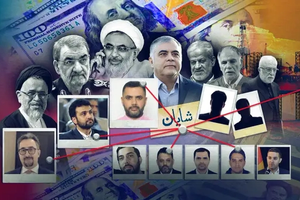
Iran International reported three weeks ago that Momenin was a member of an Intelligence Ministry network known as the Shayan network. Momenin, born in 1989, has failed to return about $2 billion in Iranian oil proceeds, according to Iran International’s previous investigation.
Five traders form Bavand’s network
Momenin is one of five trustees in an oil trading network assembled by Bavand following his return to the Oil Ministry, two ministry sources told Iran International.
Another member is Mostafa Niazazari, the fifth defendant in the corruption case involving former senior judiciary official Akbar Tabari.
Niazazari was accused in the case of giving Tabari 15,000 square meters of land as a bribe. After fleeing to Canada, he returned to Iran four years ago and has since resumed oil trading while residing in a European country.
Niazazari is the son of Kioumars Niazazari, a former Intelligence Ministry director-general in Mazandaran province.
Two businessmen known for importing essential commodities have also joined Bavand’s network after entering the oil trade during the tenure of former NICO chief executive Saeed Sadeghi, according to the Oil Ministry sources.
Hassan Afrashtehpour, also known as Dariush and the owner of Afra Holding, has for years controlled imports of some essential commodities. An Iranian court sentenced him to 25 years in prison for economic corruption in 1997, but he was released four years later.
Masoud Modallal, a major importer of cooking oil and animal feed who has faced large banking debts, is another member of the network, the sources said.
Modallal previously received $985 million in preferential-rate foreign currency for essential-goods imports and owed 5.75 trillion rials to Sarmayeh Bank and 7.82 trillion rials to Pasargad Bank.
Modallal shifted his focus toward oil trading after Iran ended preferential currency allocations, according to the sources.
The fifth member is Ali Bayandorian, a trader sanctioned by the United States six years ago over what Washington described as financing for the Revolutionary Guards’ Quds Force.
Bayandorian uses a network of companies registered in Iran and Southeast Asia to sell oil and petrochemical products outside conventional markets, according to the sources.
Together, the five traders make up what the Oil Ministry sources described as Bavand’s new trustee network.
The two confidential documents obtained by Iran International show members of this network continuing to receive Iranian oil despite outstanding proceeds from previous sales.
From Guards intelligence to oil sales
Bavand studied at Imam Sadiq University, known for combining Islamic studies with modern social sciences, and until 2021, served as deputy to Mostafa Ahadi, the economic deputy of the Revolutionary Guards Intelligence Organization.
Ahadi is a nephew of Ali Akbar Hosseini Mehrab, a security official whose name has appeared in major Iranian corruption cases, including the Crescent gas dispute.
Bavand entered a Supreme National Security Council committee in 2018 following the US withdrawal from the nuclear agreement and Washington’s restoration of sanctions on Iranian oil.
The council created a working group to manage oil sales designed to bypass the restrictions, alongside a security committee composed of representatives from Iranian military and intelligence organizations.
The Revolutionary Guards Intelligence Organization sent Bavand, then deputy head of its economic division, to the security committee.
Bavand built a network of trusted oil intermediaries during his time on the committee, including Majid Azami, chief executive of Sepehr Energy Jahan Nama Pars, Majid Taj, brother of Iranian Football Federation president Mehdi Taj, and trader Hamed Kachoui.
Iran’s oil sales structure changed further after Ebrahim Raisi became president in 2021 and his government authorized the armed forces to participate formally in oil trading.
The Revolutionary Guards subsequently sent Bavand to the Oil Ministry, where he took responsibility for trading oil under sanctions.
A significant part of the problems involving trustees and unreturned oil proceeds emerged during that period.
Following Raisi’s death, Oil Minister Mohsen Paknejad initially entrusted management of sanctioned oil sales to officials with previous links to Shayan, an Intelligence Ministry official involved in fuel operations.
Bavand returned to the Oil Ministry following Shayan’s removal.
Paknejad appointed Bavand special assistant to the oil minister for supervision of oil trading after the previous NICO chief executive was removed following disclosures concerning trustees and unreturned oil proceeds.
Bavand is also related to Hossein Taeb, the former head of the Revolutionary Guards Intelligence Organization, who is currently the commander of the Basij paramilitary unit, and a figure close to Supreme Leader Mojtaba Khamenei.
Bavand now plays a central role in decisions over sanctioned oil sales and has assembled a new group of trusted intermediaries.
The documents show that traders carrying large outstanding debts from earlier oil sales have again been entrusted with millions of barrels of Iranian crude, placing Bavand and his network at the center of the system used to sell Iran’s oil under sanctions.