• العربية
  • فارسی
Brand
  • Iran Insight
  • Politics
  • Economy
  • Analysis
  • Special Report
  • Opinion
  • Podcast
  • Live TV
  • Iran Insight
  • Politics
  • Economy
  • Analysis
  • Special Report
  • Opinion
  • Podcast
  • Live TV
  • Theme
  • Language
    • العربية
    • فارسی
  • Iran Insight
  • Politics
  • Economy
  • Analysis
  • Special Report
  • Opinion
  • Podcast
  • Live TV
All rights reserved for Volant Media UK Limited
volant media logo

Iranian engineer detained after protests presents camera feature at Apple launch

Sep 10, 2026, 09:25 GMT+1
People look at the new Apple devices on display during Apple's event at the Steve Jobs Theater in Cupertino, California on September 9, 2026.

Maryam Azimi, who has written of being driven blindfolded to court in Mashhad in an intelligence vehicle, thinking those were the last minutes of her life, introduced the new iPhone's camera technology at Apple's global launch on Tuesday.

Azimi, identified in Apple's prerecorded presentation as an image-quality engineer, presented a feature called Apple Reference Image during the segment on the iPhone 18 Pro's camera, which the company described as its most advanced to date.

Her appearance drew notice among Iranians for two reasons: her role in developing imaging technology at one of the world's largest companies, and her public opposition to the Islamic Republic, including her account of her own detention.

In a post on January 9, as protests spread across Iran, Azimi shared footage from the Vakilabad area of Mashhad and described being driven along the same street years earlier, blindfolded, in the back of an intelligence vehicle on her way to court.

"At the time, I did not know where we were going and thought these were the final minutes of my life," she wrote.

As the vehicle approached Park Square, she said, an interrogator told her to remove the blindfold, hold her head up and behave naturally. It was the hour she should have been in class at a nearby university. Looking out of the window, she recognized a close friend driving past.

"It felt like a dream," she wrote. "She was going toward her home, the safest place in the world, and I was a prisoner of the demon, with death before my eyes every second."

In the same post she praised those confronting the authorities as people seeking to "take back their rights from the bloodthirsty Islamic government," wrote that "now Vakilabad, Mashhad, Khorasan and all of Iran smell of freedom," and closed with the words Woman, Life, Freedom, the slogan of the uprising that followed Mahsa Amini's death in morality police custody in September 2022.

In a separate post in English after the January killings, addressed to non-Iranian friends and colleagues, Azimi described "the grief, the anger, the helplessness, the not-knowing," listed five Iranian human rights organisations and asked readers to donate.

Azimi's University of British Columbia profile records a bachelor's degree in computer engineering from Ferdowsi University of Mashhad in 2009 and a master's in electrical and computer engineering from UBC in 2014.

The feature she presented on Tuesday captures digitally signed data from the camera sensor and produces an unalterable reference image against which a finished photograph can be checked, in the manner of a digital negative.

Apple said it was intended for photojournalists, photographers and anyone seeking to distinguish an authentic image from one edited or generated by artificial intelligence.

Most Viewed

Secret documents expose new network selling sanctioned Iranian oil
1
EXCLUSIVE

Secret documents expose new network selling sanctioned Iranian oil

2

War conditions curb mandatory hijab crackdown, Iranian official says

3
ANALYSIS

Iran’s gasoline price hike may add to revenues, but can it ease fuel shortage?

4
PODCAST

Why did Iran let back a singer who mocked its ‘sacred’ symbols?

5

Iran exports to Afghanistan fall at least 25% as rivals gain ground, trade official says

Banner
Banner

Spotlight

  • Iran’s hardliners bet on escalation as options narrow
    ANALYSIS

    Iran’s hardliners bet on escalation as options narrow

  • Iranian protester still unable to walk despite 23 operations for gunshot wound
    EXCLUSIVE

    Iranian protester still unable to walk despite 23 operations for gunshot wound

  • Behind Iran’s display of mercy, the gallows keep working
    INSIGHT

    Behind Iran’s display of mercy, the gallows keep working

  • Former presidents push for public say on ending Iran war

    Former presidents push for public say on ending Iran war

  • How body bags came to symbolize Iran's January killings
    ANALYSIS

    How body bags came to symbolize Iran's January killings

Banner
•
•
•

More Stories

Iran routed up to $2.5 billion via China sanctions workaround in past year - Reuters

Sep 10, 2026, 09:00 GMT+1
100%
Chinese President Xi and Iranian President Pezeshkian meet in Beijing, File photo.

Iran routed an estimated $2 billion to $2.5 billion through a China-based trade mechanism over the past year, using proceeds from oil sales to pay for Chinese goods and, at least once, contracts for military equipment, Reuters reported on Thursday.

The barter-like arrangement allowed Tehran to turn payments for Iranian oil into credits for Chinese imports without sending money directly through international banking channels, Reuters said, citing two senior Iranian sources and three other people familiar with the mechanism.

Iran used the system to buy medicines, vehicles and communications equipment, while it was also used in connection with contracts worth millions of dollars to supply Iran with air defense equipment over the past year, the sources said.

  • Iran set to receive Chinese shoulder-fired air defense systems - Reuters

    Iran set to receive Chinese shoulder-fired air defense systems - Reuters

Billions routed outside normal banking channels

The mechanism has been operating since at least 2021 but has become more important as Washington tightened sanctions on Iran and companies doing business with Tehran, according to the report.

A buyer acting on behalf of Chinese state-owned oil trader Zhuhai Zhenrong had, at least until this year, deposited hundreds of millions of dollars a month with a China-based financial entity known as ChuXin, three people familiar with the arrangement told Reuters.

Those payments covered Iranian oil purchases. ChuXin then sent funds to Chinese exporters and companies involved in infrastructure projects in Iran, likely through other Chinese financial institutions, Reuters reported.

Around 70% of the Iranian oil proceeds handled through the arrangement went to infrastructure projects, while the rest entered accounts belonging to a special purpose vehicle, or SPV, used to pay suppliers of goods to Iran, the sources said.

  • Secret documents expose new network selling sanctioned Iranian oil

    Secret documents expose new network selling sanctioned Iranian oil

The two Iranian sources confirmed the existence of the SPV, which Reuters said had not previously been reported.

Oil exchanged for access to Chinese goods

The SPV is managed by two entities, one acting on behalf of China's Ministry of Commerce and another linked to Iran's central bank, according to all five sources.

When Iran's central bank approves an importer to use funds held in the SPV, the Iran-linked entity informs its Chinese counterpart so payments can be made to suppliers, three of the sources said.

The structure gives Chinese manufacturers access to payment without dealing directly with Iran, according to the report. Reuters said there was no indication that the Chinese manufacturers supplying civilian goods had broken sanctions.

Reuters could find no record of a financial institution called ChuXin in Chinese corporate registries, and one source said it may exist only on a spreadsheet.

  • Iran bets on China to blunt Trump’s economic offensive

    Iran bets on China to blunt Trump’s economic offensive

China says unaware of arrangement

China's foreign ministry told Reuters it was "not familiar with the situation you describe" when asked about the mechanism.

"China has consistently opposed unilateral sanctions that have no basis in international law and have not been authorized by the United Nations Security Council," the ministry said.

Iran's UN missions in New York and Geneva did not respond to Reuters requests for comment. Iran's central bank, China's commerce ministry, the National Iranian Oil Company and Zhuhai Zhenrong also did not respond to questions about their reported roles.

  • Iran has only 30 million barrels of oil left for China, Bessent says

    Iran has only 30 million barrels of oil left for China, Bessent says

US pressure raises stakes

China has long been the main buyer of Iranian oil. More than 80% of Iran's shipped crude went to China in 2025, averaging around 1.4 million barrels per day, according to Kpler data cited by Reuters.

The arrangement has helped Tehran keep trade flowing despite years of sanctions, while giving China access to discounted Iranian crude.

Its importance has grown as the United States has increased economic pressure on Iran during the six-month-old war. Treasury Secretary Scott Bessent warned countries in August to cut business ties with Tehran or risk losing access to the dollar-based financial system.

  • Leaked documents link Chinese firms to IRGC missile fuel network

    Leaked documents link Chinese firms to IRGC missile fuel network

Reuters said it could not determine how the US naval blockade on Iranian oil exports had affected the China trade mechanism. No Iranian crude cargoes had successfully passed through the Strait of Hormuz to China since the blockade was reinstated on July 14, according to the news agency.

A UN embargo on exports of most major conventional weapons to Iran was restored in September 2025 along with other sanctions.

Andrea Ghiselli, an international politics lecturer at the University of Exeter who studies China's relations with the Middle East, told Reuters that Beijing wanted to resist US pressure without putting major Chinese banks and companies at risk of exclusion from the international financial system.

"They want plausible deniability," he said.

War conditions curb mandatory hijab crackdown, Iranian official says

Sep 9, 2026, 14:01 GMT+1
100%
Young Iranian women are seen in a shopping center without mandatory hijab.

Iranian authorities are holding back from enforcing mandatory hijab as extensively as they would like because of “war conditions,” a senior official said Wednesday, even as pressure grows for tougher enforcement.

“Look at how the enemy has managed to promote that decadent Western lifestyle in our society. Look at the hijab issue itself. Because of the war conditions, for now we cannot enter this front the way we should,” Gholam-Ali Haddad-Adel, a member of Iran’s Expediency Council, and Supreme Leader Mojtaba Khamenei’s father-in-law said at a gathering of student associations.

The effects would be visible in schools, making the authorities’ task “much harder than in 1981, when we started working,” Haddad-Adel added.

His comments came a day after an official representing supreme leader in Iranian universities announced that mandatory hijab instructions for universities had been drafted and would soon be issued by the ministries of science and health.

100%
Women without mandatory hijab are seen at an outdoor market in Iran.

Universities prepare hijab rules

Existing hijab regulations were already sufficient but needed renewed attention, Saeed Karami, the cultural and political deputy of leader’s representative body in universities, told Mehr news agency Tuesday.

“We certainly will not see the bitter occurrences in universities that we sometimes see on the streets,” Karami said.

The new rules should be described as “instructions” rather than a “hijab charter,” Karami added.

100%
Women without mandatory hijab are seen at a shopping center in Iran.

Lawmaker Mohammad-Taghi Naghdali also criticized the government Tuesday for what he called a “retreat” on hijab and for failing to promulgate legislation known as the Chastity and Hijab Law.

Parliament would continue pursuing the issue, Naghdali added.

The comments are part of a renewed push by officials for greater enforcement after years of disobedience by women against compulsory veiling.

Officials press for tougher enforcement

The secretary of Iran’s Supreme Council of the Cultural Revolution said Wednesday that mandatory dress rules were not being observed in some government offices and pharmacies.

100%
Women without mandatory hijab walk along a street in Iran.

“In some government offices, hijab is not observed, and in some pharmacies things have gone beyond not wearing hijab,” Abdolhossein Khosropanah said at a meeting of university faculty members in Hamedan.

Government agencies and public-service institutions, including offices and facilities such as pharmacies overseen by ministries, were required to monitor compliance with regulations, Khosropanah added.

The Supreme Council of the Cultural Revolution had adopted “comprehensive and sufficient” measures on hijab over the past two decades, meaning new measures were unnecessary, he said.

100%
A woman without mandatory hijab walks along a street in Iran.

Other officials have made similar calls in recent weeks.

Hossein Akbari, the Revolutionary Guards commander in North Khorasan province, announced Saturday that groups tasked with verbally warning people about their dress would be revived and reorganized to promote mandatory hijab.

Lawmaker Mostafa Moeini Arani has called for action against women deemed improperly veiled and urged parliament speaker Mohammad-Bagher Ghalibaf to promulgate the hijab law.

Kayhan, a newspaper overseen by a representative of Khamenei, has also urged the government to address what it described as a failure to enforce hijab requirements.

Government supporters have staged demonstrations in several cities. They formed a human chain in Qom on August 29 demanding enforcement, while Friday prayer attendees demonstrated outside the South Khorasan governor’s office in Birjand a day earlier.

100%
Young Iranians attend a social gathering without mandatory hijab in Iran.

A video sent to Iran International showed a group of women supporting the government demonstrating in Isfahan on August 24 and chanting for the hijab law to be implemented.

Women continue to defy mandatory hijab

Women have continued to appear without mandatory hijab in public despite pressure from authorities, extending a form of civil disobedience that expanded after the 2022 Woman, Life, Freedom protests.

Citizens have sent Iran International videos and messages criticizing renewed enforcement efforts at a time of rising prices and economic hardship.

They have described mandatory-hijab advertisements in Mashhad, confrontations with women in the streets, warnings issued to shops and cafes and the closure of dozens of businesses in cities across the country.

100%
Women without mandatory hijab walk along a street in Iran.

CNN reported in August that authorities had increased pressure on women over mandatory hijab but were avoiding widespread direct street enforcement because of concern that it could trigger another wave of protests.

Authorities were instead relying on legal measures, business closures and economic pressure while women continued their civil disobedience, CNN reported.

Haddad-Adel’s reference to “war conditions” comes as the Islamic Republic faces continuing military conflict alongside a worsening economic crisis and growing pressure on household finances.

The doubling of Iran’s highest petrol price tier has also increased official concern about public discontent and possible protests.

Construction surges at suspected Iran nuclear site – CSIS

Sep 9, 2026, 13:08 GMT+1
100%
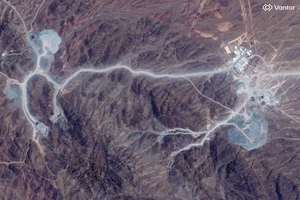
A satellite view shows tunnel entrances at Pickaxe Mountain, of the Natanz nuclear facility, near Natanz, Iran, June 30, 2026. (Reuters file photo)

Construction activity has surged at a deeply buried complex near Iran’s Natanz nuclear facility, but satellite evidence suggests the site may not yet be capable of uranium enrichment, according to a new analysis by the Center for Strategic and International Studies.

CSIS examined six years of satellite imagery of Kuh-e Kolang Gaz La, commonly known as Pickaxe Mountain, an underground complex about two kilometers south of Natanz and roughly 225 kilometers south of Tehran.

The analysis found more road activity at the site in 2026 than at any previous point in its history and what researchers described as a “clear surge in construction activity.”

Recent work included raising and hardening tunnel entrances, paving internal roads, reinforcing access areas and removing excavated soil, according to images taken in July and August.

  • What is Pickaxe Mountain, and why does Trump keep saying he will bomb it?

    What is Pickaxe Mountain, and why does Trump keep saying he will bomb it?

The researchers said the activity indicated that work had shifted from excavation toward probable construction inside the complex, while reinforcement of its exterior continued.

CSIS outlined three possible purposes for Pickaxe Mountain: a centrifuge assembly facility, a uranium enrichment plant or a protected location for other nuclear-related work, including uranium metal conversion.

The report said publicly available evidence was insufficient to determine what Iran intended to place inside the complex. It could neither confirm nor disprove reports that Tehran had moved centrifuges or centrifuge components there.

Continuous construction, the absence of increased internal security and the lack of vehicles or equipment unrelated to building work suggested the site was “not yet capable of enrichment work,” if enrichment was its intended purpose, the analysts said.

CSIS also said the complex would be extremely difficult to destroy using conventional weapons because it is buried deep inside a granite mountain.

Open-source estimates place parts of the facility between 80 and 100 meters underground, but the report cautioned that satellite imagery could not reliably establish its depth or internal design.

The GBU-57 Massive Ordnance Penetrator, the heaviest conventional bunker-busting bomb in the US arsenal, may not be able to reach and destroy the complex, according to the analysis.

A military operation could instead seek to collapse the tunnel entrances, potentially degrading or temporarily disabling the facility without destroying it.

CSIS concluded that military strikes might delay work at the facility but would not offer a sustainable solution to concerns about Iran’s nuclear program, arguing that any lasting resolution would require a verifiable diplomatic agreement.

The IAEA has requested information about Pickaxe Mountain and access to the site, but Iran has not responded, the report said.

Iran began building the facility in 2020 after an aboveground centrifuge assembly workshop at Natanz was damaged in suspected Israeli sabotage. Iranian nuclear chief Ali Akbar Salehi said at the time that a replacement centrifuge assembly facility would be built underground near Natanz.

US President Donald Trump said on September 4 that Washington may strike Pickaxe Mountain “very soon,” reiterating that Iran would not be allowed to have a nuclear weapon.

The Pentagon has made preparations this year to test classified capabilities against deeply buried targets, CNN reported on Wednesday, citing federal contracting records and people familiar with the effort.

Days before the war began on February 28, the Defense Threat Reduction Agency approved an emergency $1.2 million contract to repair a specialized underground testing facility at White Sands Missile Range in New Mexico. The work was intended to prepare the site for a live-fire test against rapidly emerging threats, according to the records.

Three sources told CNN that the planned test was connected to the Iran war and efforts to develop a way to strike Iran’s deepest underground facilities, potentially by simulating attacks on specific nuclear sites.

Satellite imagery reviewed by CNN showed excavation and vehicle activity at the White Sands site beginning in mid-February and continuing into March. CNN said it could not independently verify whether the test occurred or determine its purpose. The Pentagon and the contractor did not provide comment.

The US military also maintains operational plans for striking Pickaxe Mountain, and the facility was included in a target package considered earlier this summer, a source familiar with the matter told CNN. The plan involved some of the largest bombs in the US arsenal, though it remained unclear whether they could penetrate deeply enough to destroy the facility.

Another source told CNN that Defense Department officials recently held a “planning sprint” on options for attacking deeply buried sites. The US Air Force is separately developing a next-generation penetrator to replace its existing bunker-busting bomb, with initial prototype work commissioned in September 2025.

How body bags came to symbolize Iran's January killings

Sep 9, 2026, 13:04 GMT+1
•
Reza Haji Hosseini
100%
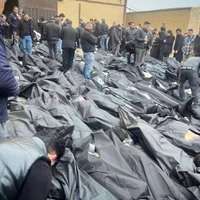
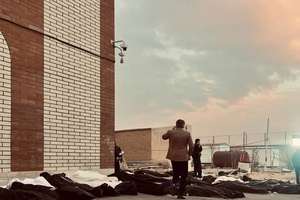
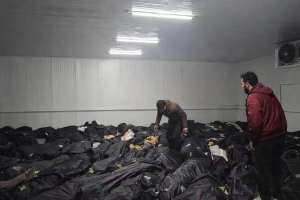
Families look for their loved ones in body bags piled outside a morgue in Iran, January 2026

Rows of black body bags became one of the defining images of Iran’s deadly January 2026 crackdown, as families searched among covered bodies and thousands of photographs for relatives killed or missing during the unrest.

Eight months later, images of the killings and crackdown remain vivid for survivors and the wider public. Iranians describing life after January have spoken of recurring nightmares, crying at night and difficulty returning to ordinary life. Some survivors have attempted suicide.

For many, life is now divided into before and after January.

Body bags have also acquired a place in Iran’s collective memory that they did not have before. Previously associated largely with films, natural disasters and major emergencies, they appeared repeatedly in footage documenting the aftermath of the January killings.

Images from earlier waves of unrest – the 2009 protests, November 2019 and the 2022 Woman, Life, Freedom movement – often showed the bodies of those killed: lying in streets, on hospital beds or wrapped in burial shrouds.

In January 2026, the dead were frequently hidden behind black bags and zippers. Faces disappeared from view and rows of bags remained.

The distinction matters. An object intended to preserve bodies for transportation and identification became one of the most recognizable images of the crackdown.

  • Seven months on, January protests still shape Iranians’ lives

    Seven months on, January protests still shape Iranians’ lives

Amnesty International counted at least 205 separate body bags in verified images from the Kahrizak morgue, south of Tehran. Human Rights Watch identified at least 400 bodies or body bags in three verified videos.

Eurovision News Spotlight, a verification project run by the European Broadcasting Union, also identified the green markings of Tehran’s Behesht-e Zahra cemetery on some of the body bags.

The trauma behind the bags

Part of the disturbing power of such images comes from what the bags conceal.

An exposed body, however difficult to see, retains a face and visible identity. Hundreds of nearly identical bags can instead reduce individuals to units: one package beside another, one number beside another, with the total continuing to rise.

For relatives searching for somebody missing, however, those bags have to be opened. Each zipper brings the possibility of encountering the body of a parent, child, sibling or friend.

This can be understood as a particular trauma associated with body bags: the combination of mass death, the temporary erasure of individual identity, the anxiety of identifying the dead and the repeated return of the same visual image.

There is also the question of dignity. Each bag contains a person whose family may be searching for them, yet footage showed bodies left in rows on the ground as relatives tried to identify them.

Such scenes are not unique to Iran.

  • 36,500 deaths in context: How Iran’s toll compares with wars and crackdowns

    36,500 deaths in context: How Iran’s toll compares with wars and crackdowns

After Egyptian security forces opened fire on protesters around Cairo’s Rabaa Square in the summer of 2013, the El-Iman mosque became a temporary morgue. Bodies were placed in tightly packed rows under white sheets. Volunteers wrote victims’ names on the coverings; some carried names and addresses, while others remained unidentified.

Families also searched morgues in Damascus after the fall of Bashar al-Assad’s government in Syria, opening bags, photographing faces and comparing them with images of missing relatives and acquaintances.

Those bags represented an archive of years of enforced disappearances, torture and deaths in custody.

Iran’s January 2026 images were different in one important respect. The bags appeared during the days and nights of the crackdown itself, within the existing system of hospitals, forensic facilities and cemeteries.

In much of the footage, rows of black bags are visible without names or identifying information that can be seen on their surfaces.

  • Over 36,500 killed in Iran's deadliest massacre, documents reveal

    Over 36,500 killed in Iran's deadliest massacre, documents reveal

The victims’ faces are concealed, but the sheer number of bags makes the scale of death visible.

The bags also did not arrive at morgues by themselves. Behind the images was a system responsible for collecting, transporting, recording and storing bodies.

What happened after the shooting

Mass killing does not end when shooting stops. Bodies have to be moved. That requires ambulances or other vehicles, body bags and labels, morgues or refrigerated containers and lists recording the dead. Decisions also have to be made about where bodies are stored, when they can be identified and under what conditions they are returned to families.

Reports following the killings on January 8 and 9 described shortages of body bags and bodies accumulating in hospitals and morgues.

That raises another question: where did the additional bags come from, and how prepared were authorities for handling large numbers of bodies?

Two procurement notices for body bags appeared around the time of the killings in Alborz province, one of the main centers of the protests and subsequent crackdown.

The Imam Hossein medical center in Alborz sought quotations on January 4, after the protests had begun, for 200 adult body bags and eight bags for children.

Shariati Hospital in Karaj had separately registered a request for 200 adult body bags on December 18, with the procurement notice published two days later.

  • Iranian protester undergoes months of secret treatment to save wounded leg

    Iranian protester undergoes months of secret treatment to save wounded leg

The timing, particularly of the Imam Hossein request, warrants scrutiny. But the records alone do not demonstrate that authorities anticipated mass killings, nor do they establish that these particular bags were subsequently used to carry protesters’ bodies.

Several links in the procurement chain are also missing, including final contracts, delivery receipts, shipment numbers and warehouse release documents.

Body bags are routine supplies for hospitals, cemeteries and emergency services. Purchasing them is therefore not in itself evidence of preparation for a crackdown.

Reports of shortages in cities including Arak, Khorramabad and Gorgan, however, suggest that ordinary stocks were rapidly exhausted. If so, additional supplies would have had to be distributed, potentially following further purchases.

That leaves a narrower but important question: what level of fatalities was the system for handling bodies equipped to manage, and did January’s death toll overwhelm that capacity?

Turning numbers back into names

In hospitals, forensic facilities and disaster operations, body bags serve practical purposes: separating and transporting the dead and protecting workers from contact with blood and bodily fluids.

Joint guidance from the World Health Organization and International Committee of the Red Cross says each body should be placed separately in a bag, with the location and time it was found recorded. Personal belongings should remain with the body and each person should receive a unique identification number.

That number is not intended to erase a name. Its purpose is to help establish an identity and ultimately return the body to relatives.

  • How one Tehran hospital became a window into Iran’s January massacre

    How one Tehran hospital became a window into Iran’s January massacre

For some Iranian families in January, the process appeared to work in reverse: they searched through bags and thousands of photographs in an effort to turn a number back into the name of somebody they knew.

The father of Iman Asadi spent five days searching police stations, prisons and hospitals before finding his son’s photograph among thousands of images of unidentified people.

In that collection, Iman was No. 11838.

A number intended to assist identification had become, at least temporarily, the marker of a person without a name.

Another father, Esmail Shokri, was filmed walking among body bags at the Kahrizak forensic facility in a 12-minute video, calling out for his son.

“Sepehr ... Sepehr, my son ... where are you?” Shokri called.

Every bag could have contained Sepehr. To his family, he had a face, a history and a name. From the outside, each closed black bag looked much like the next.

That is what distinguishes some of the most enduring images of January 2026 from those of earlier Iranian crackdowns. Previously, the victim’s body often occupied the center of the frame. This time, for many Iranians, the body bag stood between the dead and the public looking at them.

18 Iranian prisoners face possible death sentences over prison unrest

Sep 9, 2026, 12:03 GMT+1
100%

Eighteen prisoners held at Dastgerd prison in the central Iranian city of Isfahan could face death sentences over unrest and a fire at the facility, according to a judicial document obtained by Iran International.

The case has been sent to a Revolutionary Court, with some of the defendants accused of “leading the unrest” or “inciting war and killing,” charges that can carry severe penalties under Iranian law.

The document lists 75 prisoners as defendants in the case, while prosecutors in Isfahan have ordered at least 26 of them to stand trial.

The case was opened after unrest and a fire at Isfahan Central Prison, also known as Dastgerd, following an air strike near the prison in March. A military base and ammunition depot behind the prison were hit, while parts of the prison grounds and accommodation areas were also damaged.

Information accompanying the document said some prisoners were killed during the incident, and others died in the fire.

  • At least 916 executed in Iran since January - rights group

    At least 916 executed in Iran since January - rights group

Human rights groups, citing witnesses and relatives of prisoners, have said the unrest began after missiles struck a military site behind the prison and projectiles also hit parts of the prison complex. Guards and prison officials left some posts after the explosions, and inmates came out of their wards fearing the facility could collapse, according to those accounts.

The groups said some prisoners then set fire to blankets, sheets and other materials in an effort to force authorities to open doors and allow them into safer areas. Smoke spread through enclosed corridors as the fires grew.

Human rights groups have also said security forces later entered the prison and used live ammunition, pellet rounds and tear gas against inmates. According to witness accounts cited by the groups, some prisoners were shot, while others died from burns or smoke inhalation during the unrest.

  • Iran executes fifth defendant over January protests in Isfahan

    Iran executes fifth defendant over January protests in Isfahan

Serious charges brought

Prosecutors have brought charges including "inciting people to war and killing each other with the aim of disrupting national security," deliberate arson, destruction of public facilities and taking part in an illegal prison gathering that led to a riot during wartime, according to the document.

Other accusations include destroying surveillance cameras, windows and security doors, taking part in or assisting with property damage and setting fire to the prison infirmary.

Iran International identified 17 prisoners facing such accusations. The documents indicate that 18 prisoners could face death sentences.

  • Iran executes 20-year-old protester as fears grow for other detainees

    Iran executes 20-year-old protester as fears grow for other detainees

Five prisoners executed in separate case

The referral to the Revolutionary Court comes after five protesters held at Dastgerd were executed over the past two months in a separate case known as the "Alikhani Square" case.

Five other people sentenced in that case are at risk of imminent execution.

The latest case comes amid a rise in executions and heavy prison sentences in Iran in recent weeks as tensions with the United States have intensified.

Concerns over prison conditions

Concerns over Dastgerd have also grown over treatment of inmates and health conditions.

Political prisoner Abdolrasoul Mortazavi said in an audio message from the prison in June that some people detained during the January protests had been tortured. He also reported beatings, harsh interrogations, restrictions on contact with families and limits on outdoor exercise.

  • Iran executed at least 56 people since March, UN rights chief says

    Iran executed at least 56 people since March, UN rights chief says

Iran International has also received reports of worsening health conditions and a meningitis outbreak at the prison in recent weeks.

A source familiar with the situation told Iran International in August that several prisoners had died from infectious diseases. Information obtained by Iran International also indicated that meningitis had spread to most prison wards and that some inmates had been taken to Al-Zahra hospital in Isfahan.