US warplanes damaged in Iran strikes on Jordan base
U.S. military personnel pass in front of a U.S. A-10 aircraft, one of a squadron that has arrived to step up the fight against the Taliban, at the Kandahar air base, Afghanistan January 23, 2018
Iranian missiles damaged several American military aircraft at a base in Jordan this week, a US official told Reuters, underscoring the continuing ability of Iranian strikes to penetrate US defenses after more than six months of war.
The attack on Muwaffaq Salti Air Base on Tuesday damaged an A-10 Thunderbolt II, commonly known as the Warthog, as well as about eight F-15 fighter jets, according to the official, who spoke on condition of anonymity.
The F-15s sustained light damage and were returned to service.
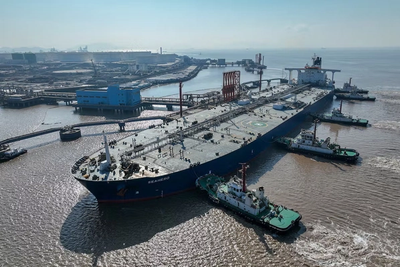
The exchange began after US forces destroyed five Iranian crude oil tankers.
Washington said the strikes were carried out after Iran’s Islamic Revolutionary Guard Corps twice targeted a US Navy warship with ballistic missiles over the previous two days.
Iran then launched ballistic missiles at the American base in Jordan, forcing US forces to fire roughly 30 Patriot interceptors, the official said.
That expenditure comes amid growing concern in Washington over the rate at which the war is consuming some of the US military’s most sophisticated missiles.
Precise stockpile figures are classified, but independent estimates and recent reporting suggest inventories of Patriot, THAAD and other high-end munitions have fallen sharply during the Iran war.
The Center for Strategic and International Studies estimated in July that the United States had expended about 65 percent of its prewar Patriot interceptor inventory, leaving between 759 and 827 missiles from an estimated 2,330 before the conflict.
The concern is less that the United States is about to run out of missiles for the Iran war than that rebuilding inventories could take years, potentially reducing Washington’s ability to respond to another major conflict.
CSIS has estimated that replenishing several key weapons, including Patriot, THAAD and Tomahawk missiles, will be a multiyear undertaking.
The aircraft damaged in Jordan add to mounting US equipment losses since the war began in February.
According to a May report from the Congressional Research Service, 42 US military aircraft had already been lost or damaged in the conflict. The losses included more than two dozen drones, fighter aircraft hit by Iranian strikes and aircraft lost in accidents.
Eighteen US service members have been killed and more than 800 injured since the war began.
Images from Tehran’s Tehranpars neighborhood show special police unit vehicles and forces deployed in the courtyard of a boys’ primary school.
Tehran’s governor has called for schools used by other state bodies to be returned before students begin the new academic year, months after military and security forces deployed at schools during the US-Israeli war.
Mohammad-Sadegh Motamedian did not identify which institutions were using the schools or disclose how many educational facilities had yet to be returned to the Education Ministry.
“These educational spaces must be handed over to the Education Ministry before the start of the school year, and where there are challenges, the relevant institution should inform the province so alternative space can be provided and the issue resolved,” Motamedian said.
The Revolutionary Guards, Basij paramilitary force and police used schools to station personnel during and after the war.
Dozens of schools used during war
An Iran International investigation published in March found that security and military forces moved personnel, weapons and equipment into at least 70 civilian sites across 17 provinces during the US-Israeli strikes from March 2 to 14.
A police vehicle is seen parked in the courtyard of a school in Iran during the US-Israeli war in March 2026.
Nearly half of the locations – 34 – were primary or secondary schools. Other sites included hospitals, stadiums, universities, mosques, parks and government offices.
Footage from several cities showed security vehicles, personnel or military equipment on school grounds.
‘Schools offered greater security’
Journalist Ali Hossein Ghazizadeh said schools offered forces large courtyards, numerous rooms and locations among residential buildings at a time when military bases were being targeted.
“Being in schools provides greater security for them,” Ghazizadeh told.
Schools were particularly useful for relocating personnel after bases and other facilities were struck, and their location among civilian buildings provided additional protection, Ghazizadeh said.
The use of educational facilities did not necessarily end with the fighting, Ghazizadeh said, adding that Iran International had received information indicating that some institutions sought to retain schools for longer-term use.
Civilian protection concerns
Schools are generally protected as civilian objects under international humanitarian law but can lose that protection if their use makes them military objectives. Attacking forces remain bound by rules including distinction, proportionality and precautions to limit civilian harm.
Iranian officials have denied using civilians as shields and accused Israel of targeting civilian infrastructure during the conflict.
The Israeli military confirmed to Iran International in March that it had identified Iranian forces deploying personnel and weapons at civilian sites, including schools, mosques and stadiums.
Smoke rises following a strike during fighting between Houthis and Saudi-backed forces at a location given as Al Jawf, Yemen, in this still image taken from a handout video released September 9, 2026.
Yemen’s Iran-backed Houthis seized the Red Sea port city of Mocha on Thursday as the US-Iran conflict widened across the region, while senior White House advisers reportedly warned President Donald Trump that the war could continue beyond the end of his term in January 2029.
The Houthi advance, the prospect of a protracted US-Iran conflict and renewed international pressure over Tehran’s nuclear program emerged as the three most consequential developments of the day, pointing to a war expanding geographically, placing sustained pressure on US military resources and further threatening global energy supplies.
Three Yemeni government sources told Reuters that the Houthis had taken control of Mocha, a strategically located city on Yemen’s Red Sea coast near the Bab al-Mandab strait, one of the world’s most important shipping routes.
The capture marked a significant territorial advance by the group, which already controls Yemen’s capital, Sanaa, and some of the country’s populous north. It followed a new series of Houthi missile and drone attacks against Saudi Arabia, bringing another major US ally more directly into the conflict.
The Saudi-led coalition said the Houthis attacked Khamis Mushait, Abha and Jazan on Wednesday using ballistic missiles and drones. Saudi authorities issued an early warning in Khamis Mushait on Thursday morning before later announcing that the danger had passed.
Major General Turki al-Maliki, the coalition’s spokesperson, said the Houthis were continuing their attacks on Saudi “national assets and infrastructure.” He said the coalition would respond “responsibly” in defense of Saudi sovereignty, civilians and national resources.
The attacks have also tested the Mecca agreement signed last month by Saudi Arabia, Pakistan and Turkey. Pakistan’s Foreign Ministry described the accord on Thursday as a “defensive alliance” but said there were no plans to expand it.
“There is no such thing under discussion right now,” ministry spokesperson Sajjad Haider Khan said when asked how Islamabad would meet its obligations following the Houthi attacks. “When the time comes, we will act under the agreement.”
Tehran rejected US Secretary of State Marco Rubio’s assertion that Iran was behind the attacks. Iranian Foreign Ministry spokesperson Esmaeil Baghaei said the Houthis, formally known as Ansarallah, made their own decisions.
“Ansarallah is an independent Yemeni actor that makes its own decisions; it takes orders from no one and acts as nobody’s proxy,” Baghaei said.
Rubio had said that the Houthis were “in many ways agents and proxies of the Iranians” and that “behind some of this is clearly the Iranian hand.”
The developments in Yemen unfolded as top US officials privately considered the possibility that the war with Iran could last considerably longer than Trump has suggested publicly.
Vice President JD Vance, Rubio and other senior advisers have discussed with Trump the possibility that Tehran could continue resisting the US naval blockade, sanctions and military pressure through the end of his presidential term and potentially beyond January 2029, the Wall Street Journal reported, citing US officials.
Those assessments contrast sharply with Trump’s public insistence that Iran cannot withstand US pressure much longer. Trump said Wednesday that the war would end “immediately” after November’s congressional elections because Iran “can’t hold out any longer.”
At a Republican event in Dallas, Trump said Iran was “falling apart” and was no longer the dominant power it once was in the Middle East.
“They’ve been the bully of the Middle East for 51 years, and they’re not the bully anymore,” Trump said.
The Journal reported that a prolonged war would strain American military resources and extend disruption to global oil markets. Defense Secretary Pete Hegseth has already extended some US deployments in the Middle East into 2027, while some air-defense units are expected to remain in the region without a firm departure date, according to the report.
The military risks were underlined by reported damage to US aircraft at Muwaffaq Salti Air Base in Jordan following Iranian strikes overnight.
One A-10 Thunderbolt aircraft was left missing a wing and around eight F-15 fighter jets sustained light damage, CBS reported. The F-15s were subsequently returned to service. US forces defending the base launched more than 30 Patriot interceptor missiles during the Iranian attack, according to the report.
Iran said it attacked the base in Jordan as well as US vessels after the United States targeted Iranian oil tankers. US Central Command denied that any American warship had been struck, saying all attempted IRGC attacks against US naval vessels had failed.
The intensifying attacks on military installations, tankers and shipping routes have heightened fears of a prolonged disruption to energy markets.
Only seven vessels passed through the Strait of Hormuz on Wednesday, down from 12 the previous day and half the recent daily average of 14, Reuters reported, citing preliminary ship-tracking data. Some vessels may have crossed with their transponders turned off and would not have appeared in the figures.
Meanwhile, Goldman Sachs warned that escalating attacks in the Persian Gulf and Red Sea could drive Brent crude above $120 a barrel, CBS reported. Trump said oil prices would decline once the United States defeated Iran.
“Oil will be going down as soon as we win the war with Iran, which is taking place right now,” he said.
The third major source of pressure on Tehran came from the International Atomic Energy Agency’s Board of Governors, which reported Iran to the UN Security Council over breaches of its nuclear non-proliferation obligations -the first such action against the country since 2006.
Iranian officials signaled that Tehran could respond by reducing its already limited cooperation with the UN nuclear watchdog.
Iran had the right to adopt “special measures” in response to the resolution and reserved the option of taking any action it deemed necessary, lawmaker Somayeh Rafiei said.
“It is natural for Iran to seek a review and reassessment of any further cooperation with the International Atomic Energy Agency or any other institution in the nuclear field,” said Rafiei, a member of parliament’s presiding board.
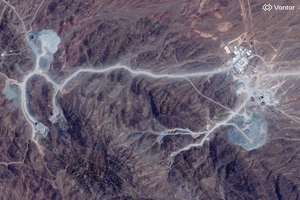
The confrontation over inspections comes amid renewed scrutiny of construction at Pickaxe Mountain, a deeply buried complex near Iran’s Natanz uranium-enrichment facility.
A satellite-imagery analysis by the Center for Strategic and International Studies found a sharp increase in activity at the site during 2026. The work included hardening tunnel entrances, paving internal roads, reinforcing access points and removing soil excavated from inside the mountain.
CSIS said the site appeared to have moved from large-scale excavation toward probable internal construction and further external reinforcement. Its analysts said open-source imagery could neither confirm nor disprove assessments that Iran had transferred centrifuges to the facility.
As diplomatic and military pressure grew, Iran sought to project resilience and signal that it was replenishing its defensive capabilities.
Reuters reported that Tehran routed an estimated $2 billion to $2.5 billion through a China-based trade mechanism during the past year, using proceeds from oil sales to pay for Chinese goods without transferring money through the international banking system.
The barter-like arrangement was used to acquire medicine, vehicles and communications equipment and was also connected to contracts worth millions of dollars for Chinese air-defense equipment, Reuters reported, citing two senior Iranian sources and three other people familiar with the system.
Iran’s Defense Ministry said on Thursday that the country’s military industry remained operational and was “stronger, smarter and more advanced than before.”
“You will soon see a glimpse of the tip of this iceberg,” the ministry said, without identifying the capabilities.
Iranian lawmakers and commanders issued similar warnings. Alireza Salimi, a member of parliament’s presiding board, said Iran possessed “many military surprises” known to the United States.
“If they continue their actions, we will make them regret it,” Salimi said.
The combination of expanding Houthi operations, preparations in Washington for a potentially multiyear conflict and mounting confrontation over Iran’s nuclear program suggested little immediate prospect of de-escalation.
With fighting spreading across the Red Sea, and the Persian Gulf, the risks increasingly extend beyond the direct confrontation between Washington and Tehran.
A screen-grab from a video released by the IRGC purporting to show missiles being launched toward US warships
Iran is seeking to turn the US maritime blockade back on Washington by expanding its retaliation beyond the Strait of Hormuz, threatening shipping across a wider area after US attacks on Iranian tankers.
Nour News, a website close to Iran’s Supreme National Security Council, said Wednesday that the latest escalation showed signs of reversing the logic of the blockade.
“The US naval blockade was supposed to target Iran’s economic resilience by cutting or restricting its export routes,” it said.
But with both sides now attacking tankers and military vessels and traffic through Hormuz again sharply reduced, “the cost of the blockade is no longer distributed solely on the Iranian side.”
The Revolutionary Guards (IRGC) said Wednesday that Iranian forces had responded to US attacks on five Iranian tankers by targeting two US warships and eight oil tankers, as well as 10 “violating vessels” attempting to pass through Iran’s restricted zone in Hormuz.
The US denied that its warships had been hit.
‘An eye for an eye’
Iran is now threatening to widen that confrontation geographically.
IRGC spokesman Hossein Mohebbi said a new restricted area would extend from the direction of Chabahar through parts of the Gulf of Oman and Arabian Sea along routes leading towards Hormuz. Its precise coordinates have yet to be announced.
The IRGC has also warned tankers and other vessels at ports and anchorages in Kuwait and Bahrain to leave, threatening those that remain.
Ships entering without Iranian permission would be placed on a sanctions list and denied maritime, insurance and other services, Mohebbi said, including during future passages through Hormuz.
Conservative political activist Amir Chizari, who is close to parliament speaker Mohammad-Bagher Ghalibaf, advocated going further, calling for Iran to prevent ships from using ports in Persian Gulf countries hosting US military bases.
“Head for head, eye for eye—that means all these ports will be blockaded by Iran,” he wrote on X.
Nour News said the significance lay not simply in creating another restricted zone but “in changing the logic of confrontation with the blockade.”
“Tehran does not necessarily need to seize a ship to change the behaviour of an actor; it is enough for the cost of interacting with a vessel or network to rise so that the other side retreats in advance,” it said.
Diplomacy narrows
The increasingly expansive strategy comes as prospects for reviving diplomacy appear to be shrinking.
Foreign Minister Abbas Araghchi said Tuesday that a US return to its commitments and the Islamabad understanding would “pave the way for a return to normality.”
But Middle East Eye reported Wednesday, citing two sources close to the Iranian government, that President Donald Trump had conveyed through Pakistani and Qatari officials that Washington would not return to the previous understanding.
The absence of a diplomatic route raises the stakes of Iran’s strategy: Tehran is betting that making the blockade more expensive for Washington, commercial shipping and regional states will eventually create pressure to ease it.
A costly gamble
Inside Iran, critics warn that the same strategy could inflict enormous damage on the country itself.
Heshmatollah Falahatpisheh, a conservative former chairman of parliament’s National Security and Foreign Policy Commission, accused hardliners of risking Iran’s tanker fleet.
“The National Iranian Tanker Company is the largest tanker company in the world. They are setting the country’s unparalleled wealth on fire. This Iran-burning must end,” he wrote on X.
Hardliners counter that such economic calculations make little sense when they believe Iran faces an existential threat.
One user responding to Falahatpisheh asked what guarantee Iran had that peace would last if it compromised now, or that the United States would not attack again months later.
The costs of escalation are already becoming apparent. Brent crude rose above $100 a barrel Wednesday, while flows through Hormuz fell as low as two million barrels a day after reaching eight to nine million before fighting resumed.
In Iran, the dollar rose above 2.33 million rials on the foreign exchange market, another record low for the national currency.
Iran’s strategy amounts to a gamble that widening the geographic and economic costs of the blockade will eventually make it harder to sustain. But the deeper Tehran extends the confrontation beyond Hormuz, the greater the risk that those costs return to Iran itself.
Young Iranian women are seen in a shopping center without mandatory hijab.
Iranian authorities are holding back from enforcing mandatory hijab as extensively as they would like because of “war conditions,” a senior official said Wednesday, even as pressure grows for tougher enforcement.
“Look at how the enemy has managed to promote that decadent Western lifestyle in our society. Look at the hijab issue itself. Because of the war conditions, for now we cannot enter this front the way we should,” Gholam-Ali Haddad-Adel, a member of Iran’s Expediency Council, and Supreme Leader Mojtaba Khamenei’s father-in-law said at a gathering of student associations.
The effects would be visible in schools, making the authorities’ task “much harder than in 1981, when we started working,” Haddad-Adel added.
His comments came a day after an official representing supreme leader in Iranian universities announced that mandatory hijab instructions for universities had been drafted and would soon be issued by the ministries of science and health.
Women without mandatory hijab are seen at an outdoor market in Iran.
Universities prepare hijab rules
Existing hijab regulations were already sufficient but needed renewed attention, Saeed Karami, the cultural and political deputy of leader’s representative body in universities, told Mehr news agency Tuesday.
“We certainly will not see the bitter occurrences in universities that we sometimes see on the streets,” Karami said.
The new rules should be described as “instructions” rather than a “hijab charter,” Karami added.
Women without mandatory hijab are seen at a shopping center in Iran.
Lawmaker Mohammad-Taghi Naghdali also criticized the government Tuesday for what he called a “retreat” on hijab and for failing to promulgate legislation known as the Chastity and Hijab Law.
Parliament would continue pursuing the issue, Naghdali added.
The comments are part of a renewed push by officials for greater enforcement after years of disobedience by women against compulsory veiling.
Officials press for tougher enforcement
The secretary of Iran’s Supreme Council of the Cultural Revolution said Wednesday that mandatory dress rules were not being observed in some government offices and pharmacies.
Women without mandatory hijab walk along a street in Iran.
“In some government offices, hijab is not observed, and in some pharmacies things have gone beyond not wearing hijab,” Abdolhossein Khosropanah said at a meeting of university faculty members in Hamedan.
Government agencies and public-service institutions, including offices and facilities such as pharmacies overseen by ministries, were required to monitor compliance with regulations, Khosropanah added.
The Supreme Council of the Cultural Revolution had adopted “comprehensive and sufficient” measures on hijab over the past two decades, meaning new measures were unnecessary, he said.
A woman without mandatory hijab walks along a street in Iran.
Other officials have made similar calls in recent weeks.
Hossein Akbari, the Revolutionary Guards commander in North Khorasan province, announced Saturday that groups tasked with verbally warning people about their dress would be revived and reorganized to promote mandatory hijab.
Lawmaker Mostafa Moeini Arani has called for action against women deemed improperly veiled and urged parliament speaker Mohammad-Bagher Ghalibaf to promulgate the hijab law.
Kayhan, a newspaper overseen by a representative of Khamenei, has also urged the government to address what it described as a failure to enforce hijab requirements.
Government supporters have staged demonstrations in several cities. They formed a human chain in Qom on August 29 demanding enforcement, while Friday prayer attendees demonstrated outside the South Khorasan governor’s office in Birjand a day earlier.
Young Iranians attend a social gathering without mandatory hijab in Iran.
A video sent to Iran International showed a group of women supporting the government demonstrating in Isfahan on August 24 and chanting for the hijab law to be implemented.
Women continue to defy mandatory hijab
Women have continued to appear without mandatory hijab in public despite pressure from authorities, extending a form of civil disobedience that expanded after the 2022 Woman, Life, Freedom protests.
Citizens have sent Iran International videos and messages criticizing renewed enforcement efforts at a time of rising prices and economic hardship.
They have described mandatory-hijab advertisements in Mashhad, confrontations with women in the streets, warnings issued to shops and cafes and the closure of dozens of businesses in cities across the country.
Women without mandatory hijab walk along a street in Iran.
CNN reported in August that authorities had increased pressure on women over mandatory hijab but were avoiding widespread direct street enforcement because of concern that it could trigger another wave of protests.
Authorities were instead relying on legal measures, business closures and economic pressure while women continued their civil disobedience, CNN reported.
Haddad-Adel’s reference to “war conditions” comes as the Islamic Republic faces continuing military conflict alongside a worsening economic crisis and growing pressure on household finances.
The doubling of Iran’s highest petrol price tier has also increased official concern about public discontent and possible protests.
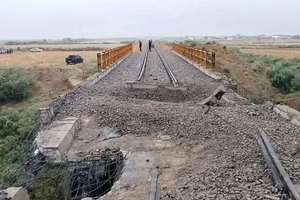
A US cruise missile strike on a railway bridge 700 miles from the war's main front has a puzzle at its center: Iranian media said it hit the China corridor, Iran's own figures say the line is minor and points at Russia, and Washington has not said why.
In the early hours of July 9, cruise missiles hit the Aq Tekeh Khan railway bridge near Aqqala in Golestan province, in Iran's far north-east. The Revolutionary Guards' regional corps and state media attributed the strike to US forces. Damage was limited, as it has been at other bridges hit in the war, and trains were running again within days. Washington has not commented, which is common for many strikes in this conflict.
The bridge sits on the Gorgan–Incheh Borun line, one of two railways connecting Iran's network to Central Asia through Turkmenistan. Iranian outlets described the strike as an attack on the corridor linking Iran to China through Kazakhstan and Turkmenistan, a reading that spread widely.
What the line actually carries
Iran's official statistics are opaque and frequently incomplete, and under nearly five decades of sanctions the state has had every incentive to blur figures that touch on trade, let alone anything with a military dimension. But even taken at face value, the numbers do not support the corridor claim.
Iran has two main rail gateways to Central Asia: Sarakhs, in the north-east, and Incheh Borun. Shortly before the war, in early 2026, the head of the Khorasan railway said 75 percent of all rail transit into and out of the country passed through Sarakhs, which handled 1.27 million tons in the ten months to late January. The Incheh Borun line's entire nominal capacity is around 500,000 tons a year, and how much of that is actually used is unknown.
Rail was never central to Iranian trade in any case. Before the war, the bulk moved by sea and road, with high-value, low-weight goods going by air.
Nor does the line point at China. Opened during Hassan Rouhani's first term as the Iranian section of a 930-kilometre Kazakhstan–Turkmenistan–Iran railway, completed in 2014 at a cost of about $1.4 billion, it was designed to link Russia and the Caspian region to warm-water ports through Iran, connecting northward toward Astrakhan and the Russian network.
The natural, cheaper route for Chinese rail freight is Sarakhs. Chinese traffic on the Incheh Borun line is not zero, with some reports counting several dozen freight trains from China over the past year, but it is marginal, and the line matters far more to Russia and Turkmenistan, notably for minerals, than to Iranian trade with the east.
Which leaves the question. If the bridge was not hit for what it carries for Iran, one possibility is what it carries for someone else.
Where Russia and Iran meet
Turkmenistan's neutrality is written into its constitution and recognized by the United Nations, and it has taken no side in Iran's wars. It has also become, since the US naval blockade closed Iran's ports, one of the country's principal overland routes to the east. That gives a small, closed and rarely reported state an unusual position: the place where Iranian and Russian logistics physically meet.
The Islamic Republic has a long, documented history of military exchanges with Russia and China. Alongside the rail and road routes, which carry their own risks, combined routes for moving equipment are routine.
Ashgabat's airport is the nearest major airfield to Iran's north-eastern border. Iran International reviewed data on roughly 6,500 flights that landed there between the start of November 2025 and early July 2026, a window running from before the war through the ceasefires and the resumption of strikes.
The review has limits, and they should be stated first. Flight-tracking data depends on aircraft transmitting their position and on receivers within range picking it up, so gaps occur. The pre-war portion of the window is short, less than four months. And a change in what tracking systems record after a war begins may reflect changed behavior across a whole region rather than anything specific to one airport.
One category in the data carries more meaning than it might appear to. Scheduled passenger and cargo flights file public flight plans, so their origin and destination almost always appear in tracking records.
Flights that show no origin at all are therefore disproportionately state, military and private operations, which do not file in the same way. The category cannot tell a military transport from a government delegation or a private charter, and some freight operators also fall into it, but it does separate the traffic that files paperwork from the traffic that does not.
The Antonov from China
The most concrete item is a single flight. On April 13, an Antonov An-124, the largest transport aircraft in regular service, landed at Ashgabat from Urumqi in western China, paused, and left early the same day for Cairo. Nothing like it appears elsewhere in the nine months of data.
The aircraft belongs to Volga-Dnepr Airlines, which is designated by the United States, the European Union, Britain, Canada, Australia, Switzerland, Ukraine and France. Britain listed it in June 2024 for "the provision of heavy airlift capacity to the Russian Armed Forces."
The EU, listing the group's owners and directors the same month, said Volga-Dnepr has been "playing a crucial role in servicing Russia's military-industrial complex and providing air transportation services for Russian military purposes," importing electronics and communications equipment for the war on Ukraine and receiving Russian government subsidies for doing so. The US designation carries a secondary sanctions risk, which applies in principle to any third party that does business with the airline, including by servicing its aircraft.
The specific aircraft carries the registration RA-82074. A Ukrainian investigation named it among Volga-Dnepr An-124s that sharply increased flights to countries friendly to Russia, including China, after the 2022 invasion, in transport the investigators linked to sanctioned goods and military products.
The website openDemocracy reported in 2023 on the company's role in carrying equipment critical to the Russian military from China. Only three of the company's An-124s are currently active.
There is an ordinary explanation available. Egypt is a major destination for commercial heavy cargo, and an An-124 routing from China through Central Asia to Cairo is consistent with legitimate project freight. Egypt is also a longstanding Russian arms customer. Volga-Dnepr has said it stopped carrying military cargo in 2018; Western governments that have examined its record disagree, and the Islamic Republic has spent more than four decades perfecting the art of moving sensitive goods under commercial cover.
The pattern around it
Around that flight, several categories of traffic rose after the war began.
Local callsigns in the 795 series, searchable under identifiers such as 795M12 and 795A01, were rare before the war and rose sharply from April: 11 in April, 7 in May and 15 in June. Most were logged with no recorded origin or as Mil Mi-8 military transport helicopters, sometimes several times in a day.
On July 6, three days before the bridge was struck, three such flights were logged. One caveat matters here: the same callsign sometimes appears several times within minutes, which may mean genuine repeat flights or may mean several ground receivers logging one signal, so these counts may be inflated.
Flights with no recorded origin rose from a single instance in January to 8, 6, 4, 9 and 7 in the months from February to June, with two more in the first nine days of July. Given what that category captures, this is the closest the data comes to a measure of non-commercial traffic, and it went from one a month before the war to an average of nearly seven a month after it began.
Callsigns in the RSD series, used by Russian state and military flights, together with Tupolev Tu-204 and Ilyushin Il-96 aircraft, increased noticeably in May. Ilyushin Il-76 heavy transports arriving from within Turkmenistan were logged twice in February and twice in May, with none in the pre-war months. Three AgustaWestland AW139 helicopters, a type used in government and military roles, landed in May and June, though similar flights also appeared in November.
None of this is evidence of military transfers through Ashgabat. There is no official statement or document to that effect, and the relative rise in irregular traffic could have explanations that have nothing to do with the bridge 100 kilometers to the south.
What the data does show is a change in the rhythm of arrivals at Turkmenistan's main airport that coincides with the intensification of the war, and that was building in the weeks before a railway line to Russia was hit.
Iran International has asked US Central Command to confirm the strike and explain the choice of target. It had not responded at the time of publication; this report will be updated if it does.